Triumph Spitfire History
From a prototype kept under a dust sheet in 1960 to the last car built at Canley in August 1980: how a small sports car made from Herald parts came through a takeover and the American rules, in five versions.
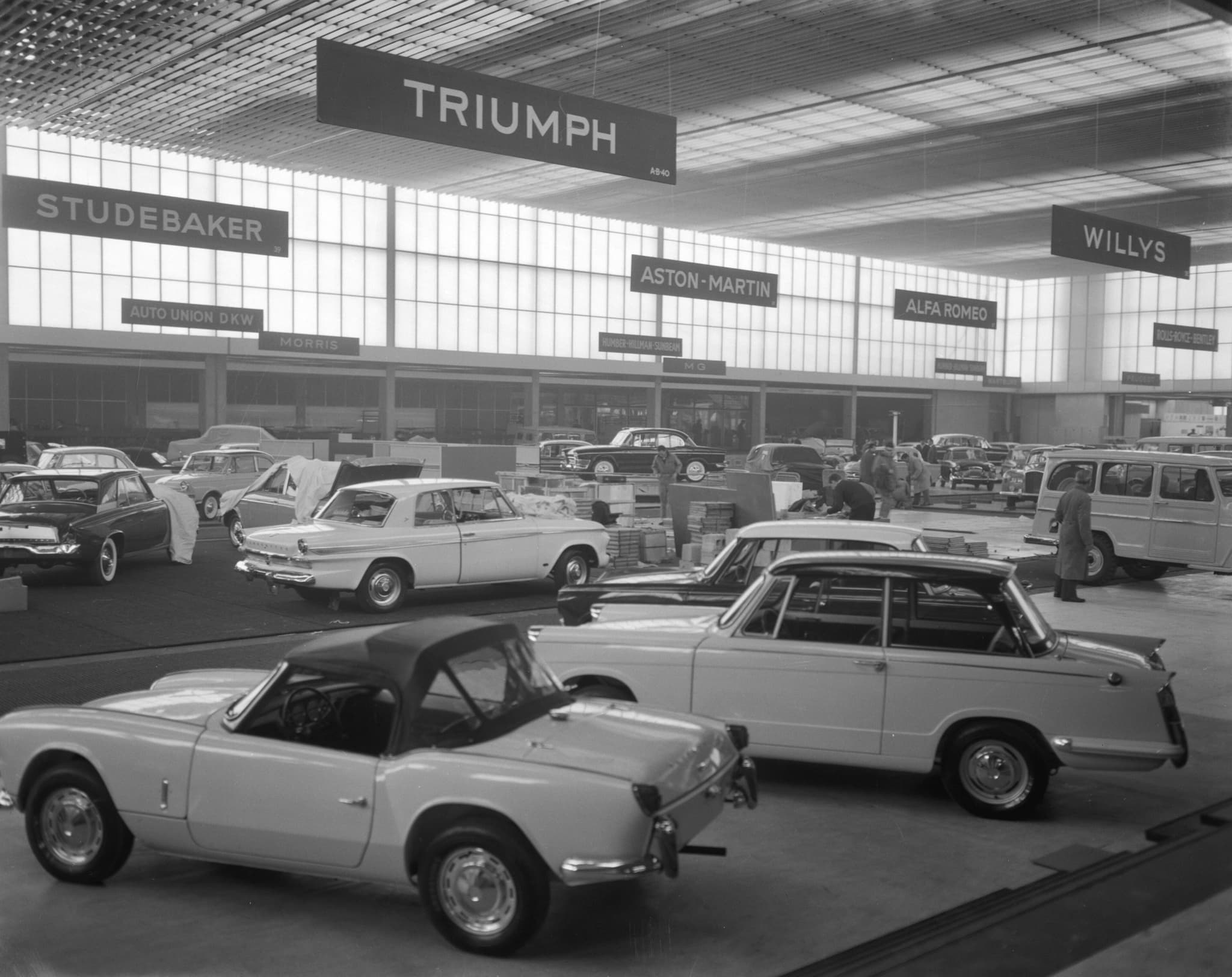
The Spitfire's prototype was finished at a bad moment. Giovanni Michelotti built it in 1960 for Standard-Triumph, a company running out of money, and it was put away under a dust sheet in a corner of the design department.
Within a year Leyland Motors had taken the company over and the little car had been brought out and approved. Some 15 months after that it was on show in London as the Triumph Spitfire 4. Canley built it, in five versions, until August 1980.source 1source 2source 3source 4source 5source 6
Standard-Triumph in 1960
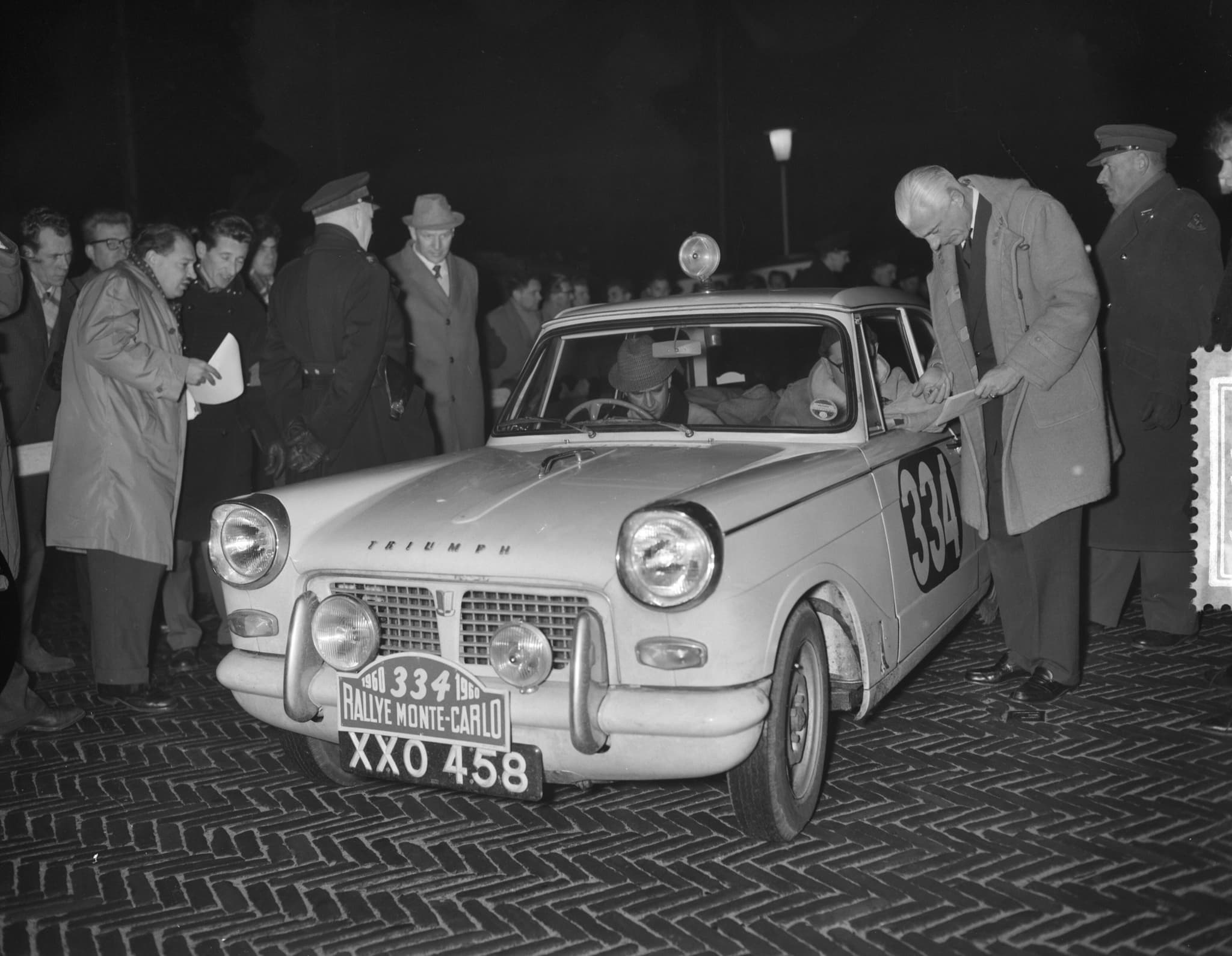
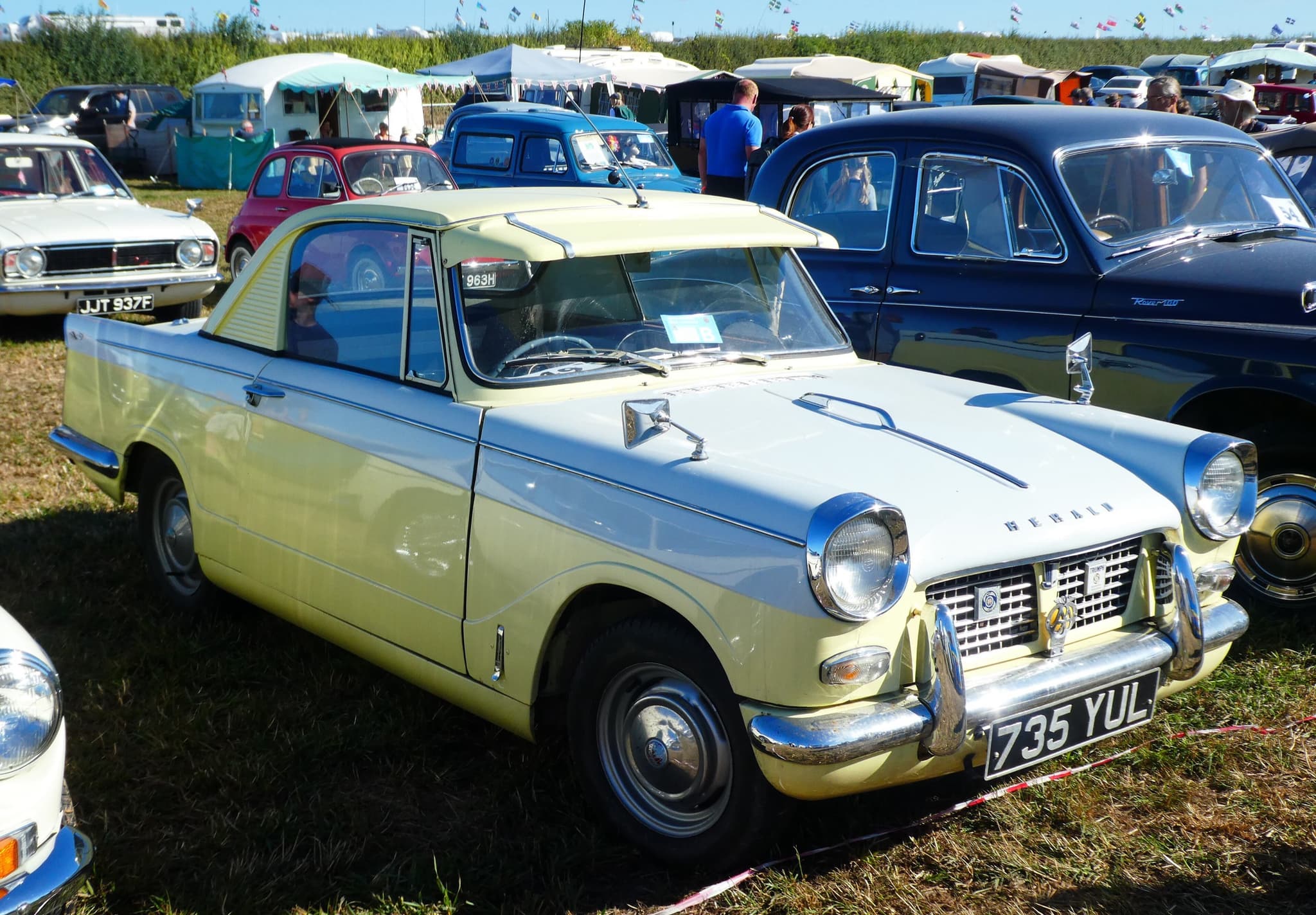
Standard-Triumph made its cars at Canley, Coventry. Its Triumph Herald, launched at the Royal Albert Hall in London on 22 April 1959, was built on a separate backbone chassis, so that one frame could carry a range of bodies, and Michelotti had styled it. AROnline traces the frame to a supply problem: BMC had bought Fisher & Ludlow, Standard-Triumph's body maker, in 1953, and its bodies would stop once the contracts ran out, so the engineers' answer was a chassis to which smaller firms' panels could be fitted. In time the same platform carried the Vitesse, the Spitfire and the GT6 as well.
Nothing in the range answered the Austin-Healey Sprite. The Herald was a family car, and in the American showrooms, by Graham Robson's account, the TR3A was Triumph's only sports car in 1961.
Robson's account of the company describes one that had planned for growth. The planners of its managing director, Alick Dick, expected to build more than 220,000 cars a year and ordered a £2.5 million assembly hall, due in 1960. Then a government credit squeeze turned profit into loss: by Robson's account the company was then losing about £600,000 a month, and Herald production was cut to three days a week.
Leyland Motors rescued it. Leyland's bid came at the end of 1960 and it took control during 1961. Robson records that three months after the takeover Dick and six of his board colleagues were dismissed and 800 staff went; healthy profits returned only in 1962.source 7source 8source 1source 9source 2source 3
Bomb
The Spitfire was Harry Webster's idea. He ran Standard-Triumph's engineering, as director of engineering from 1957 (Robson dates his time in charge from 1956), and he wanted to get more from the Herald and to give the company a rival to the Austin-Healey Sprite. Michelotti, who had styled the Herald and the TR4 for him, drew the car. Robson puts it from Webster's side:
Michelotti reacted to his dreams of building a 'Herald sports car' (the Spitfire) by building a single prototype in 1960.
The prototype was code-named Bomb. TRaction, a club magazine, dates the start of its construction to September 1960, in Michelotti's studio in Turin, on the chassis of a 948 cc Herald.
A date of 1957, often repeated for the Spitfire's styling, has no source behind it. Michelotti's first work for Triumph, a TR3 Speciale shown at Geneva, dates from that year, which may be the source of the confusion.source 1source 3source 10source 8source 4source 9
Under the dust sheet
Then the money ran out. Robson writes that Standard's financial collapse meant the car had to be stored under a dust sheet, and that it was Webster's powers of persuasion that won Leyland's approval for it, the first of many new projects. Others tell it as a discovery.
The prototype was kept hidden away and was only revealed when a Leyland executive asked what that little car under the dust sheets in the corner of the design department was.
One account, Lancaster Insurance's history of the car, names the executive as Stanley Markland, the newly appointed managing director, who removed the cover, sat in the car and ordered it into production. However it happened, the go-ahead is dated 13 July 1961.
What followed was fast. Webster's deputy, John Lloyd, later told Robson that they took Bomb from prototype to production car in 15 months, which matches the time from the go-ahead to the London Motor Show of October 1962.source 1source 4source 3
The Spitfire 4, 1962–64
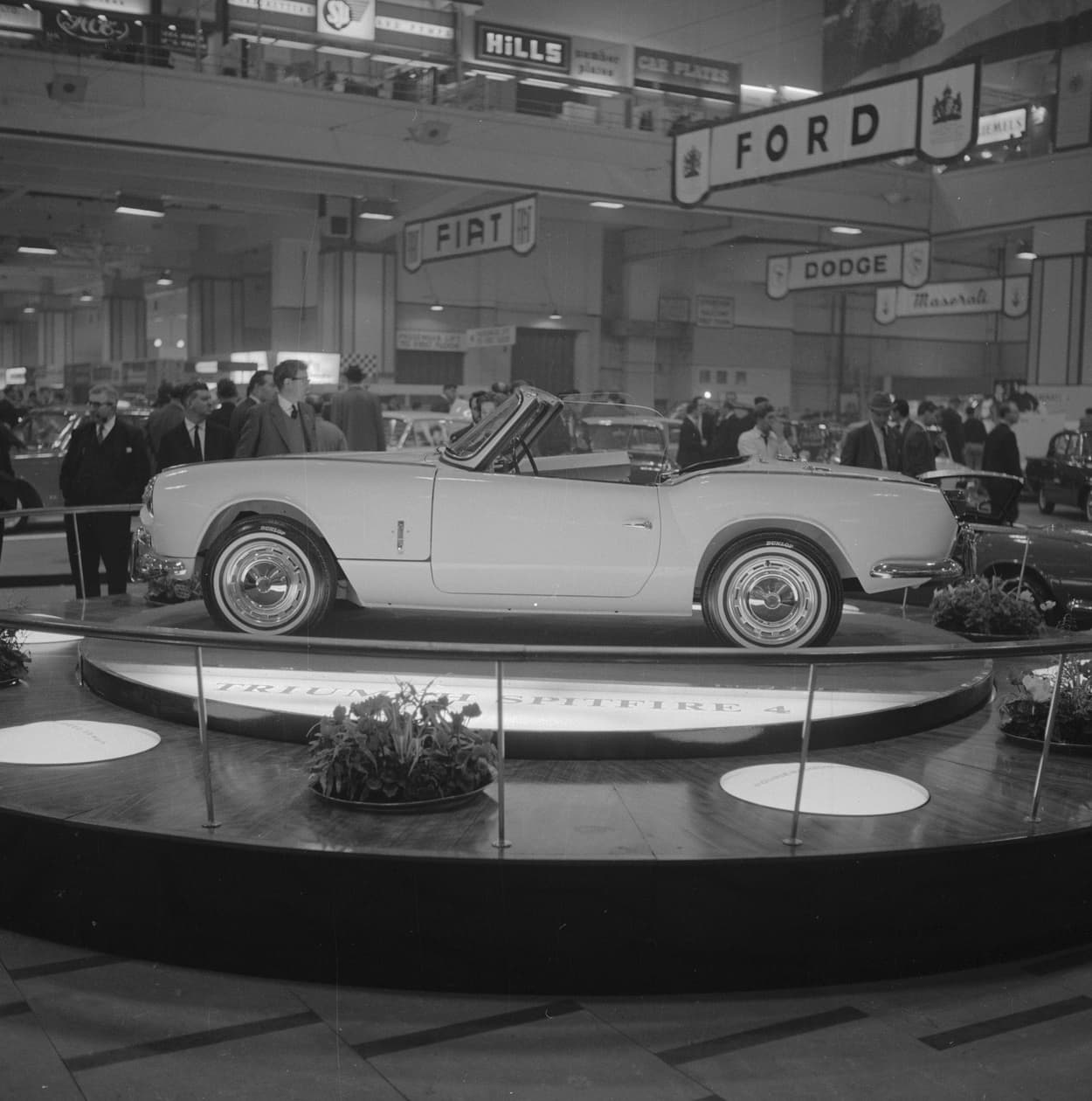
The Spitfire 4 was shown at the London Motor Show at Earls Court in October 1962, and Canley built it from that month. The 4 stood for its four cylinders. Lancaster Insurance's history says Standard-Triumph took £6 million of orders by the end of the show.
It was engineering by subtraction. The Herald's backbone chassis was shortened and lost its outer rails and rear outriggers, and the body's structural sills (rocker panels) gave back the stiffness. The engine, gearbox (transmission), steering and swing-axle rear suspension were the Herald's, and so was the way the whole bonnet (hood) and front wings (fenders) tipped forward in one piece. The engine breathed through twin SU carburettors, and the car had front disc brakes and rack-and-pinion steering.
Against the Austin-Healey Sprite and the MG Midget it offered two things a buyer could see at once: wind-up windows and exterior door handles, which the Sprite and Midget of the day lacked. Writing about the American market, Graham Robson said that it began at once to outsell the Sprite and Midget combined and went on doing so for 17 years; triumphspitfire.com says instead that it outsold the Midget every year but one. Neither cites a sales table.
How the name was chosen is not recorded. Lancaster Insurance's history suggests the name was probably Donald Stokes's choice. A story repeated on triumphspitfire.com, and told as a legend in Moss Motoring, has Vickers offering Standard-Triumph one of its aircraft names in return for the name Vanguard. The link with the wartime fighter is the maker's own: British Leyland's US advertising for the 1973 model year said the car honoured the plane that saved Britain.
By April 1963 the price had come down, after purchase tax on new cars was cut to 25% late in 1962. Overdrive was offered from October 1963, for the 1964 model year, and wire wheels and a factory hardtop came for the same model year. Bill Boddy, testing the car for Motor Sport in April 1963, found mild understeer that turned to oversteer as the swing axle took on positive camber, a trait the car kept until 1970. His verdict:
The Triumph Spitfire 4, with its handsome styling, advanced specification, good performance and sensible weather equipment and luggage accommodation, if it stands up to hard driving, should soon be a best-seller in the small sports-car class.
A month after the launch, Lloyd recalled, he and Webster took two Spitfires to the Turin show and were stuck in snow on the Mont Cenis pass.source 5source 3source 11source 9source 8source 12source 13source 14source 15source 16source 17source 18source 19source 20source 1
Le Mans and the works rallies, 1964–65
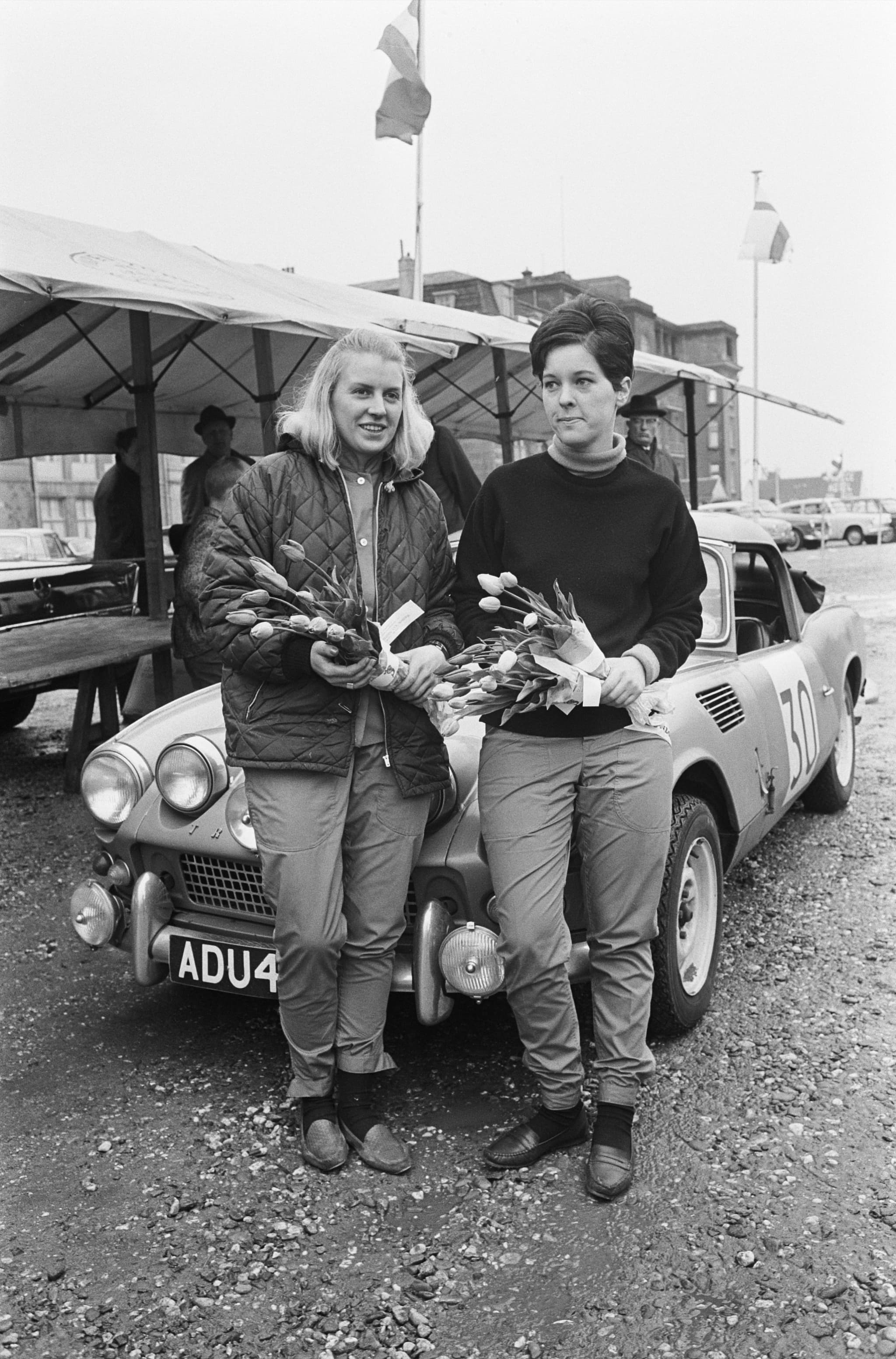
Webster wanted Triumph back at Le Mans on his own terms. A colleague told Robson that Webster got the money from Stanley Markland and chose the Spitfire, and his engineer Ray Bates made its engine give about 100 reliable horsepower with a prototype eight-port cylinder head. Four aluminium-and-glass-fibre fastbacks were built in the experimental department and registered ADU 1B to ADU 4B.
Three started at Le Mans in 1964 and one finished, David Hobbs and Rob Slotemaker's No. 50: 21st overall, and 4th of the prototypes up to 3 litres as racingsportscars groups them. In 1965 they did better. No. 60, ADU 4B, driven by Jean-Jacques Thuner and Simo Lampinen, won the 1.15-litre GT class and finished 13th overall, and No. 54 was 2nd in class and 14th overall.
The rally cars were production-based steel cars with aluminium panels. Their best results came in the same two seasons: Rob Slotemaker and Terry Hunter won the GT class for cars up to 1,300 cc on the 1964 Tour de France and finished 15th overall; Hunter was 2nd overall on the 1964 Geneva Rally; and works Spitfires took 1st and 2nd places in the Prototype category of the 1965 Coupe des Alpes.
The works programme ended after 1965, and Bill Bradley kept the circuit cars racing with factory help into 1966 and 1967. The whole competition story, car by car, is on the racing page.source 1source 21source 22source 23source 24source 25source 26source 27source 28source 29source 30source 31
The Mk II and the GT6, 1964–67
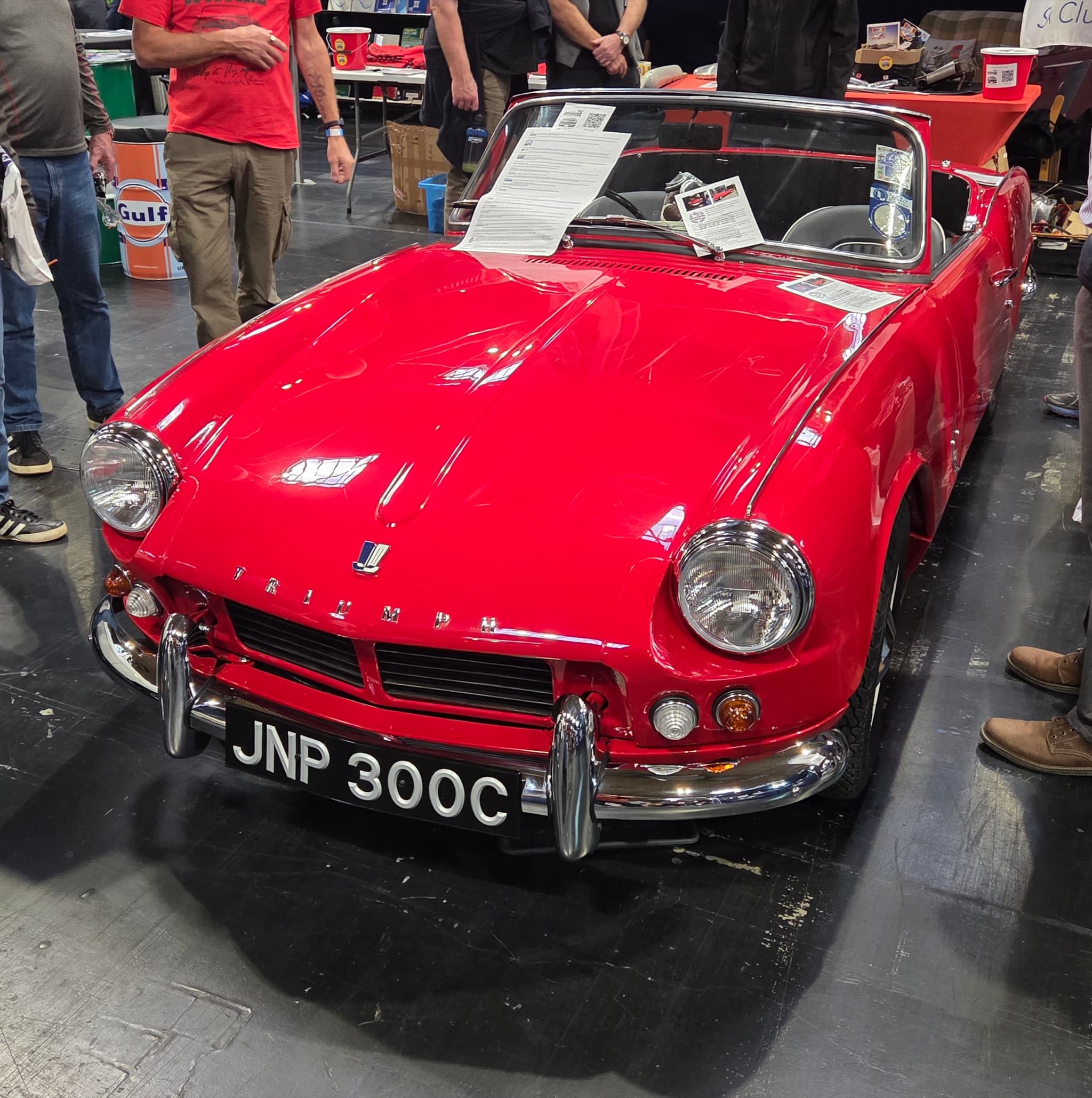
The Spitfire 4 Mk II went into production in December 1964 and was launched in March 1965. It was a development, not a new car. A new camshaft and a four-branch exhaust manifold gave more power, a diaphragm-spring clutch reduced the pedal effort, and the cabin gained better seats, moulded carpets in place of rubber mats and trim over the bare metal. A grille of horizontal bars told it apart.
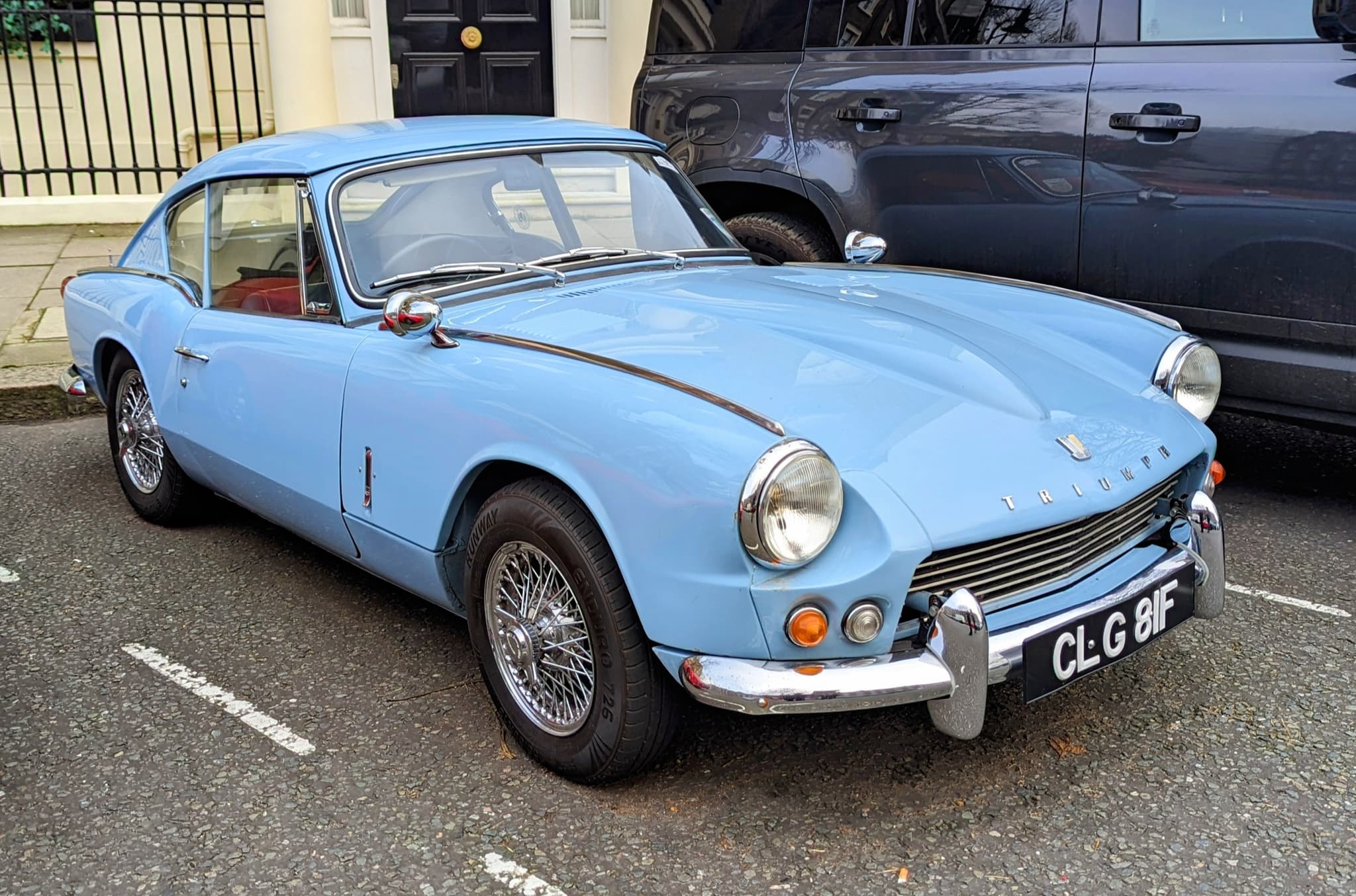
In 1966 the chassis found a second use, and the Spitfire a sister. The GT6, built from July 1966, put the six-cylinder engine of the Triumph Vitesse into a fastback coupé on the Spitfire's chassis, and Robson ties it to the works fastbacks. Motor Sport, reporting its debut at Earls Court that October, thought it had been a long time coming:
When the Triumph Spitfire Four was announced it seemed only a matter of time before the Vitesse Six engine was dropped in.
The first GT6s were reserved for export, and British buyers, the same report said, would have to wait until the spring. It was a separate model, not a version of the Spitfire; its production, and the Bond Equipe, a cousin on the Herald's chassis, are on in culture.source 5source 18source 19source 11source 8source 32
The Mk III and the American rules, 1967–70
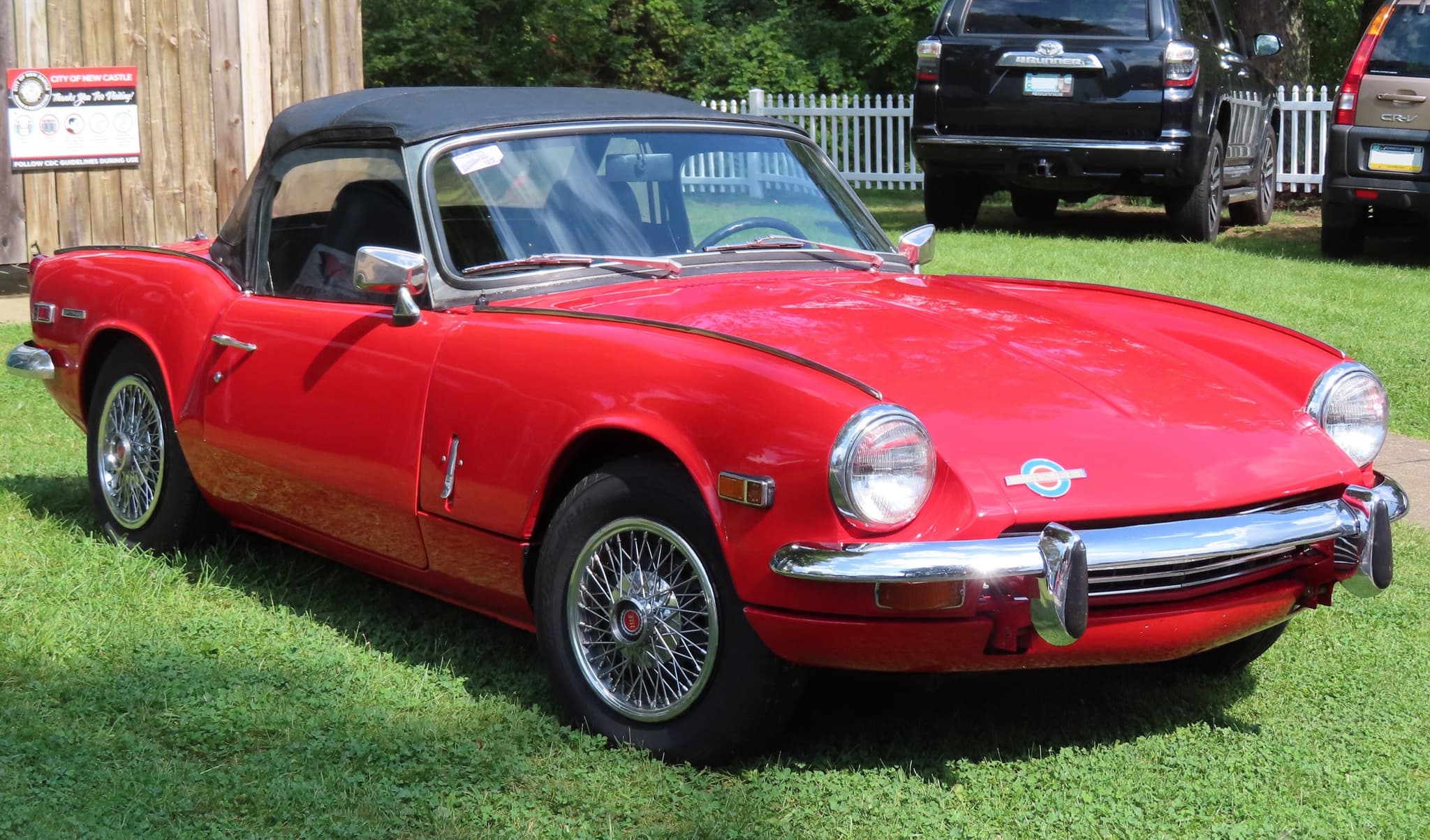
The Mk III, built from January 1967 and introduced that March, was the first big change. Its engine was bigger, with an eight-port head related to that of Triumph's front-drive 1300 saloon (sedan). Its front bumper rose to cross the middle of the grille, a change made for American safety legislation, and a folding hood (soft top) that stayed on the car replaced the old removable frame. Its power was quoted as a gross figure, a detail that matters to the Mk IV's story.
The United States was the Spitfire's biggest market: Classic & Sports Car puts the US share at 80%. Cars for the US were built to federal safety and emission rules from the 1968 model year, according to AROnline; from the 1969 model year, by the Vintage Triumph Register's account, they carried their instruments in front of the driver, and for the 1970 model year most had a single Zenith-Stromberg carburettor and a bonnet badge set over an RAF roundel. The US cars are covered on North American Spitfires.
In 1968 Leyland became British Leyland, which, Robson notes, put both Triumph and MG, and so the Spitfire and the Midget, under Lord Stokes. Webster moved to Longbridge, as technical director of Austin-Morris from 1969, and Spen King took his place at Triumph. Mk III production ended in December 1970.source 5source 19source 18source 11source 33source 9source 34source 6source 8source 1source 10
The Mk IV, 1970–74
Michelotti restyled the car for the 1970s. The Mk IV, announced in October 1970 and built from November, had a cut-off tail like the Triumph Stag's, a smoother bonnet, flared wheel arches and recessed door handles; the Triumph Sports Six Club says only the sills and door skins were carried over.
The restyle came as the Spitfire's parent bowed out. Motor Sport reported that the Toledo and Triumph 1500 saloons of autumn 1970 brought "the death of the Herald and its variants", and the last Heralds were built in 1971; the Spitfire, in AROnline's words, "outlasted its parent car by nine years".
Underneath, it dealt at last with the swing axle. The new "swing spring" clamped only the bottom leaf of the transverse rear spring to the differential and let the upper leaves pivot, and with a stiffer front anti-roll bar it tamed the tuck-under of the earlier cars. Canley Classics says Triumph had worked the idea out in the 1960s but judged it too expensive. The gearbox gained synchromesh on first, and the instruments moved in front of the driver. Its quoted power was lower than the Mk III's, and it has been called detuned ever since; the Mk IV's own page explains why that is mostly a myth.
British Leyland build sports cars primarily for the American market and it is not difficult to see how such cars must appeal in a country of flabbily-suspended monster automobiles.
The American market soon had its own Spitfire. From the 1973 model year, US cars took the longer-stroke engine of the coming 1500 in the Mk IV body and were sold as the Spitfire 1500, while the rest of the world kept the Mk IV's engine until late 1974. In 1973 the rear track was widened for every market and a wood dashboard arrived, with a front spoiler for 1974.source 5source 9source 18source 35source 7source 36source 37source 38source 6source 39source 40source 41
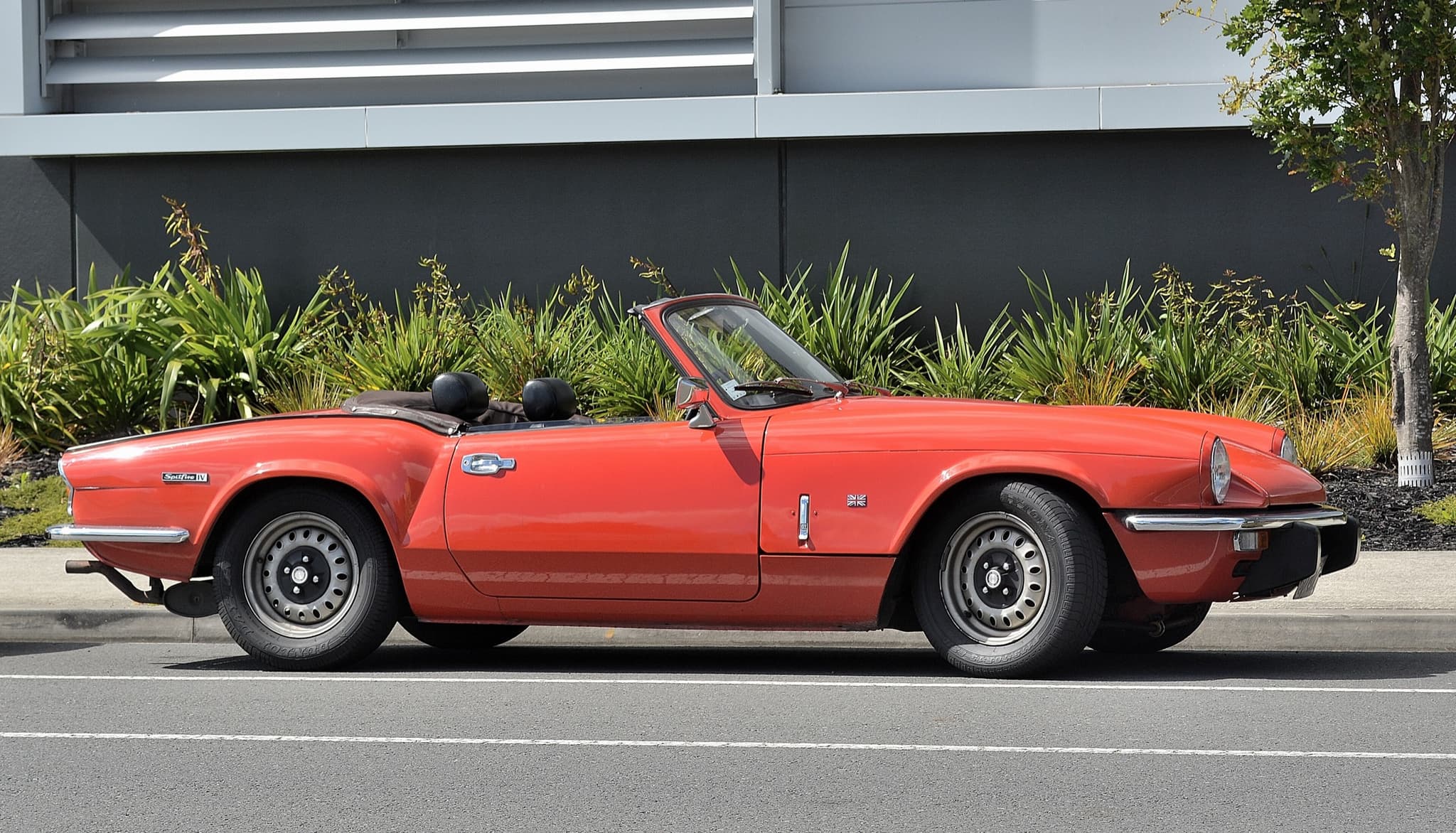
The Spitfire 1500, 1974–80
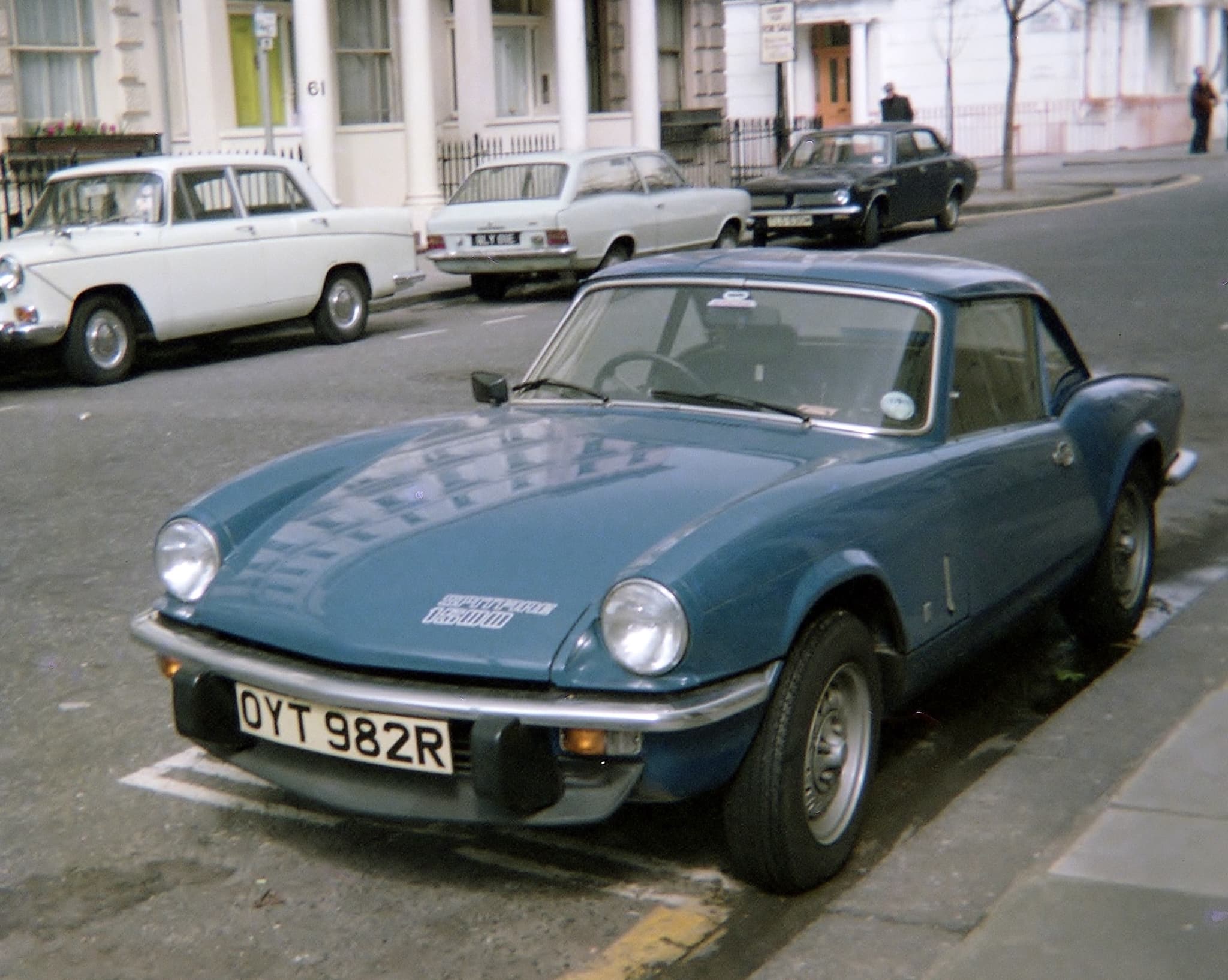
From late 1974 (December, in Canley Classics' table) every Spitfire had the longer-stroke engine, and the car became the Spitfire 1500. The MG Midget received the same engine in the same year, so the old rivals now shared a power unit. With the GT6 dropped at the end of 1973, Robson notes, the Spitfire carried on alone.
In Europe the 1500 kept the Mk IV's looks, which Clive Richardson counted a blessing:
The attractive appearance of the European version has not had to suffer from the US-bumper disease afflicting its Abingdon brethren.
In America it did suffer. US cars wore large rubber overriders (bumper guards) from the mid-1970s and black rubber bumpers for the 1979 and 1980 model years, and their engines, with lower compression and a single carburettor, were detuned. Robson saw the American rules wearing the car down: to pay for them, prices had to rise while performance fell. At home the changes were details, among them TR7-type column stalks and houndstooth seat cloth in early 1977, and a laminated windscreen (windshield) as standard from 1978.source 5source 42source 19source 8source 40source 39source 6source 43
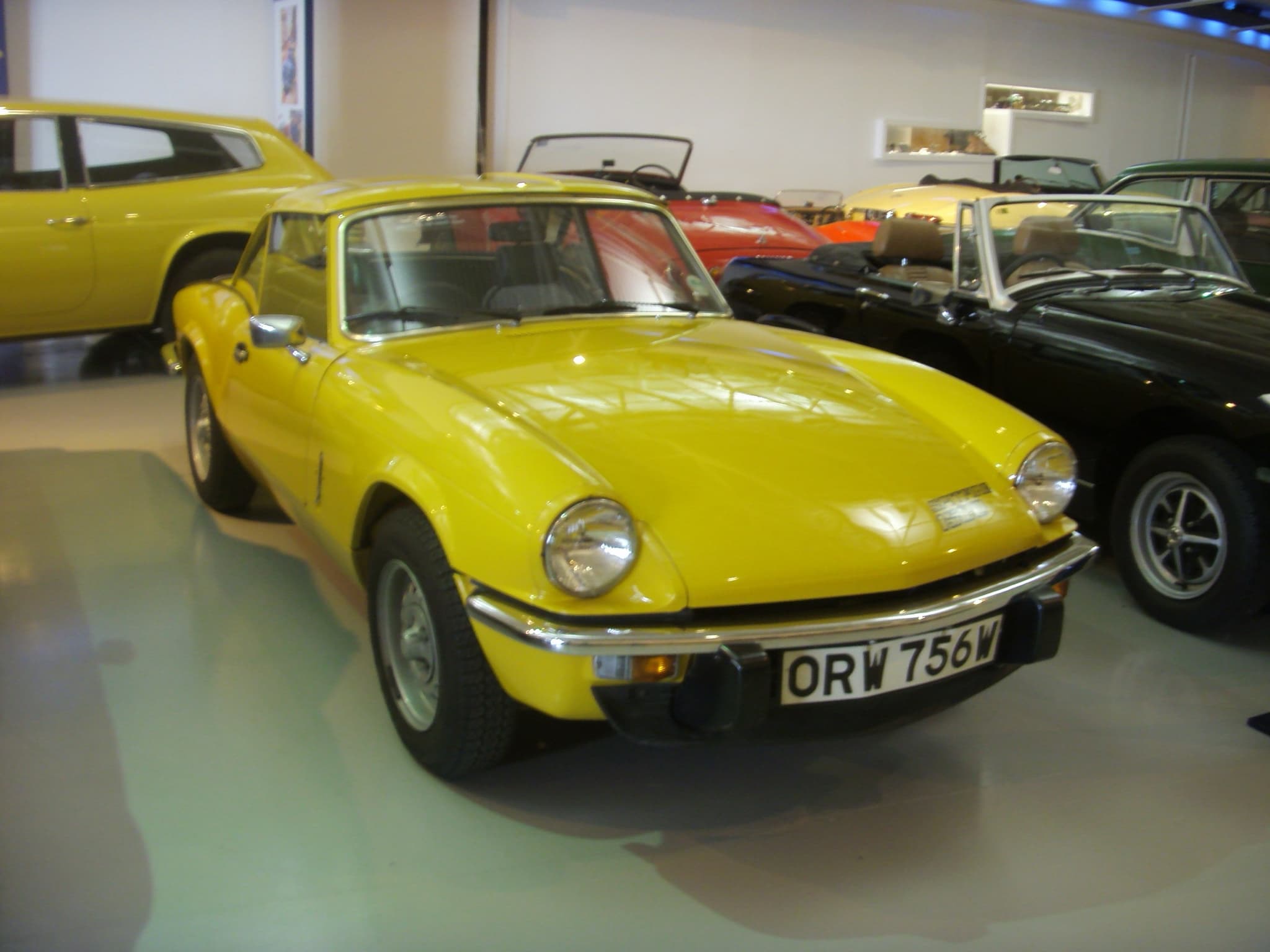
The last Spitfire, 1980
British Leyland ended car production at Canley in 1980. Motor reported on 6 September 1980, as quoted by Driven To Write, that Triumph production there had ended, and that the Spitfire and the Dolomite would be phased out of the range. The last Spitfire was built there in August 1980.
It was a yellow 1500 with a hardtop (Inca Yellow, according to triumphspitfire.com). The British Motor Museum keeps it, and its record calls it the last one. Why the line ended depends on who tells it. This is the Vintage Triumph Register's verdict:
Spitfire production ended in August 1980 as the car fell victim to short-sighted management at British Leyland, U.S. safety and emissions regulations, and an unfavorable dollar/pound exchange rate.
Classic & Sports Car adds that, like the Midget, it lived on because British Leyland could not replace it.source 44source 5source 6source 45source 16source 9
After the Spitfire
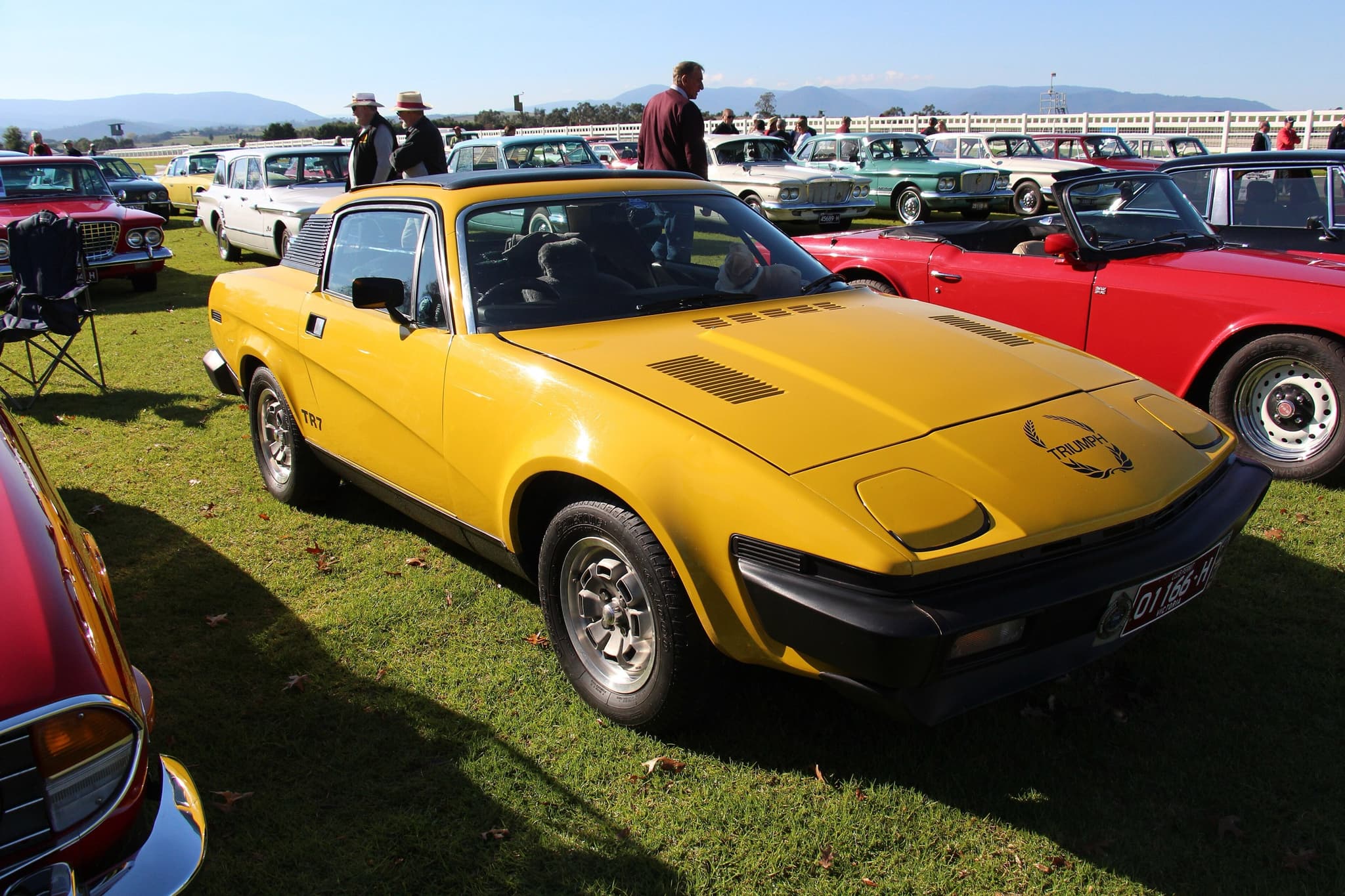
British Leyland had tried, and the first attempt was MG's. AROnline reports that in mid-1969 the engineers at Abingdon began work on ADO21, a mid-engined sports car meant "to replace the MG Midget (and Triumph Spitfire)", though its larger engines soon moved it towards the MGB's class. The company's management viewed a full-size model on 3 November 1970, and the minutes of that meeting, as AROnline quotes them, stopped the work "in view of the Corporate Sports Car Policy"; the project made way, AROnline says, for the car that became the Triumph TR7.
The Spitfire appears in British Leyland's plans once more. AROnline reports that earlier, undated product-strategy documents proposed a sports car, SC1, that "would have come in two body sizes to replace the Spitfire/Midget as well as the MGB/TR7". In the product plan for 1979–87 that AROnline reproduces, SC1 had become a single car, the Broadside, meant to replace the TR7 and the MGB, and the sports-car line held one entry for the Spitfire, for the autumn of 1980: "Spitfire model run out". In AROnline's summary, the Spitfire and the MG Midget were to go unreplaced. The Broadside never went into production either.
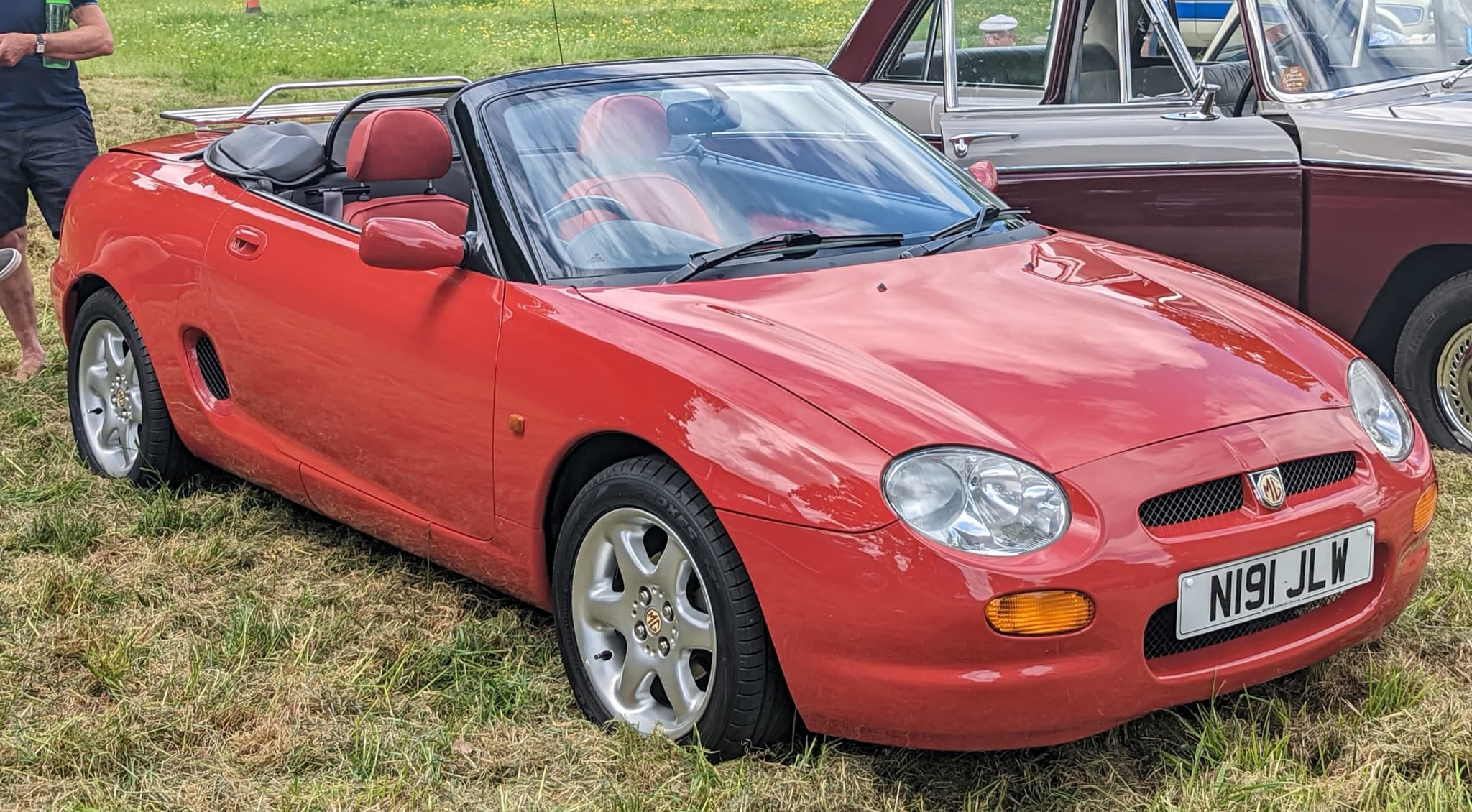
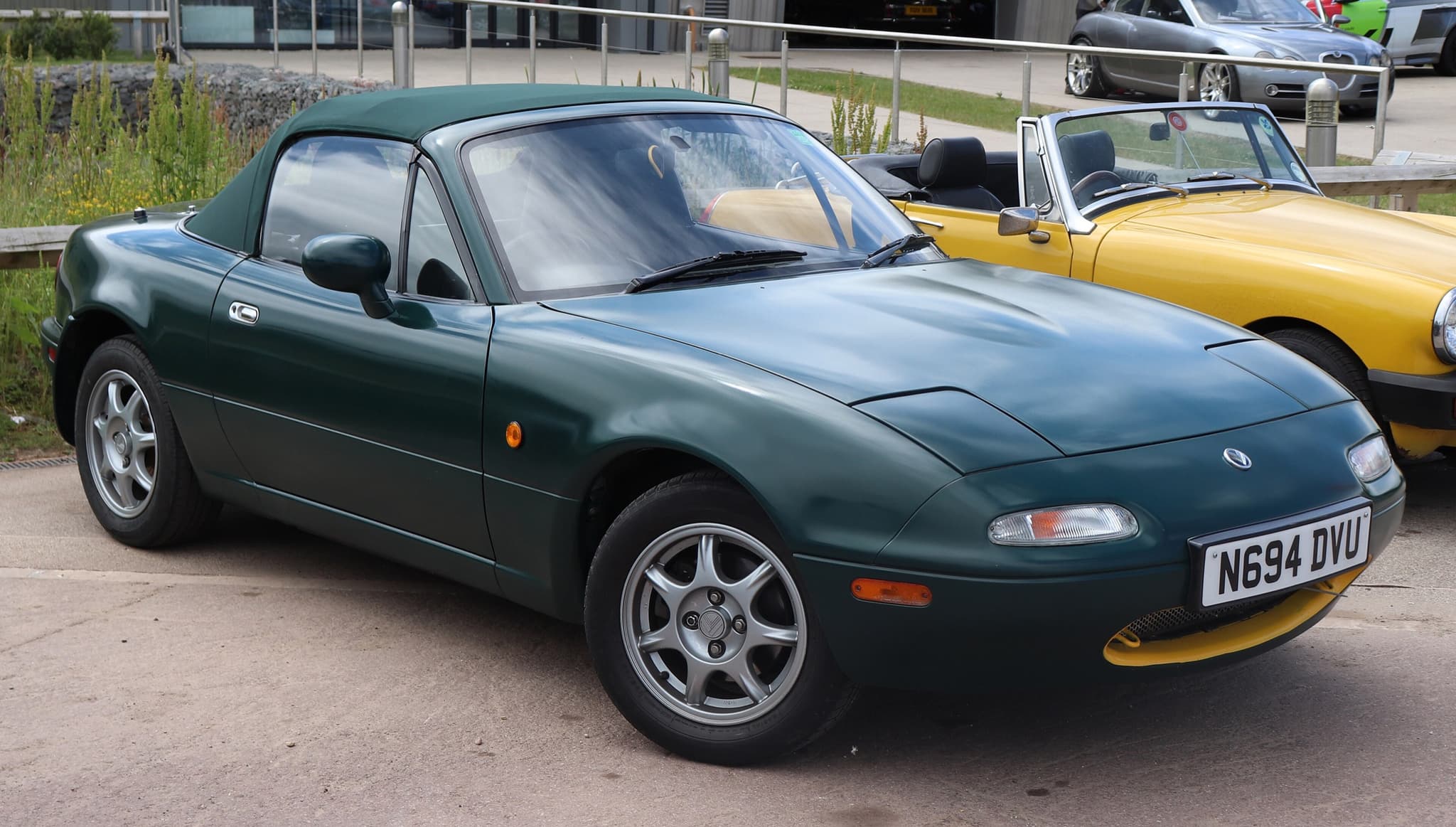
MG's next all-new sports car was the MGF, in 1995. Motor Sport, testing it the next year, wrote of "the 33-year gap between the launch of the MGB and that of the MGF", and gave Mazda's MX-5 the credit for having brought the reasonably priced, real sports car back, in modern form, six years before.
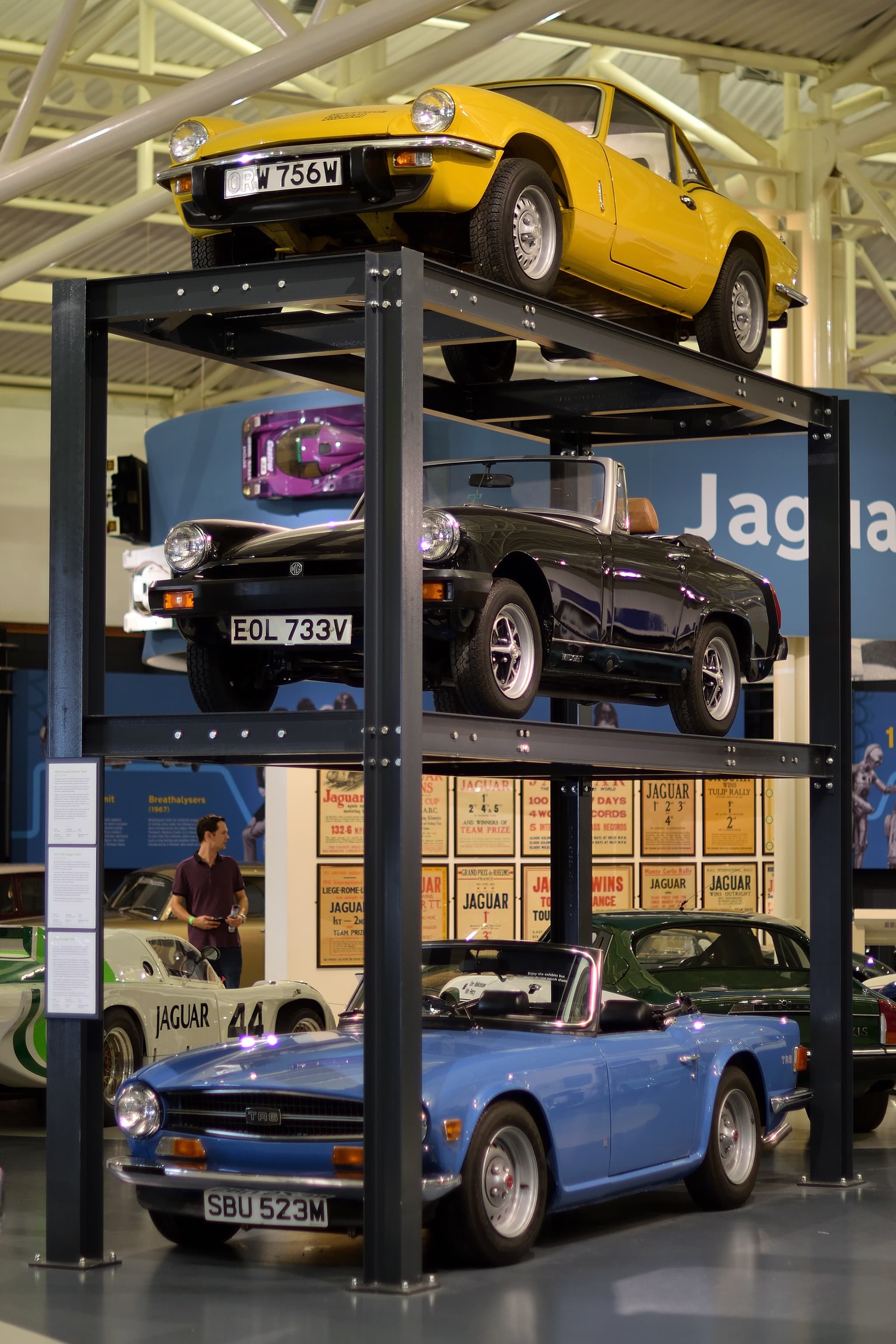
Spitfire vs Midget: the rivals, 1962–80
Motor Sport saw at once whom the Spitfire was for. Driving the first two cars off the production line for its November 1962 issue, it called the car "a new small-capacity sports car to challenge the Sprite and Midget market", dearer than the Midget but with a "more advanced specification" that might "sway those enthusiasts who are tired of the rigid axle". In the same issue it priced the field: Sprites and Midgets "well under £700", the new MGB under £1,000, and the Spitfire between them.
Bill Boddy, who tested the Spitfire and the Midget for the magazine in 1963, found that the Midget's sliding sidescreens, missing door handles and manually cancelled indicators made "a price of £42 below that charged for the Triumph seem disadvantageously disproportionate", and the magazine's review of the year recalled that the Midget had at first "seemed cramped and a bit old-fashioned, after the Spitfire". In 1967 Mike Cotton linked the move of both British makers up a class, to engines under 1,300 cc, with the arrival of Fiat's and Honda's sports cars "in the 800-850-c.c. category". That August, Boddy found the Spitfire £62 cheaper than the Honda S800, the Sprite and Midget on average £101 cheaper and an MGB £140 dearer. Motor compared the Spitfire, the Honda and the Sprite in October 1967, but that test has not been read, and no source read gives the Fiat 850 Spider's British price or tests it beside the Spitfire.
The table gives the rivals as Motor Sport tested or priced them, each at one date and each figure labelled as the magazine labelled it. Purchase tax was cut late in 1962, so the 1963 prices cannot be set against those of the launch. The Spitfire's own figures are in the specifications on its version pages, and specifications sets them side by side.
| Rival | When | Price with tax | Engine | Power, as labelled | Weight, as labelled |
|---|---|---|---|---|---|
| MG Midget | April 1963 | £598 13s 7d | 1,098 cc four | 55 bhp, rating not stated | Not in the passages read |
| MGB | September 1963 | £834 6s 0d | 1,798 cc four | 94 bhp net | 864 kg (17 cwt) unladen, the maker's figure |
| Austin-Healey Sprite | August 1967 | £672, and £15 for a heater | In the 1,300 cc class | Not in the item read | 685 kg (1,510 lb) dry |
| Honda S800 | August 1967 | £779 | 791 cc four | 70 bhp, gross to one writer and SAE to another | 706 kg (1,556 lb) dry |
When the Mk IV was shown to the press in the autumn of 1970, Motor Sport's J. W. noted that the Spitfire now had synchromesh on all its forward gears, "while the Sprite and Midget do without", and summed up the drive:
Our driving impressions of the Spitfire were simply that the changes were all worthwhile: the handling is now beyond reproach—even if the crude Spridget can run rings round it—and the car is quieter than before.
In America in 1971, by AROnline's figures, an MGB cost $2,875 and a TR6 $3,275, and the Spitfire less than either. In Britain in October 1975, Motor Sport priced the MG Midget 1500, which now had the Spitfire's own engine, at £1,649 and the MGB at £2,251, with the Spitfire 1500 between them, and a month later, writing of sports cars, it concluded that "British Leyland have a monopoly, in the inexpensive car field". By the late 1970s, AROnline writes, British Leyland was "almost the only company able to offer an open-top sports car" in the United States and Canada.
On the track the record is mixed. At Le Mans in 1964 the one Spitfire to finish was a place ahead, in its class, of an Austin-Healey Sprite, which racingsportscars lists as a "Sebring Sprite"; at Sebring in 1965 a works MG Midget won the GT class for cars up to 1,300 cc from two Spitfires.
What the sources read cannot give is the count: no reliable source read gives a production total for the Sprite, the Midget, the MGB or the Honda, and none read gives one for the Alpine or the Fairlady. Nor does any source read give the Spitfire's sales year by year, so Robson's claim about the Sprite and Midget, and triumphspitfire.com's, in the Spitfire 4's years above, cannot be checked.source 52source 53source 54source 55source 14source 56source 33source 57source 58source 59source 60source 49source 34source 61source 48source 62source 63source 64source 65source 23source 66
Spitfire and rivals 9
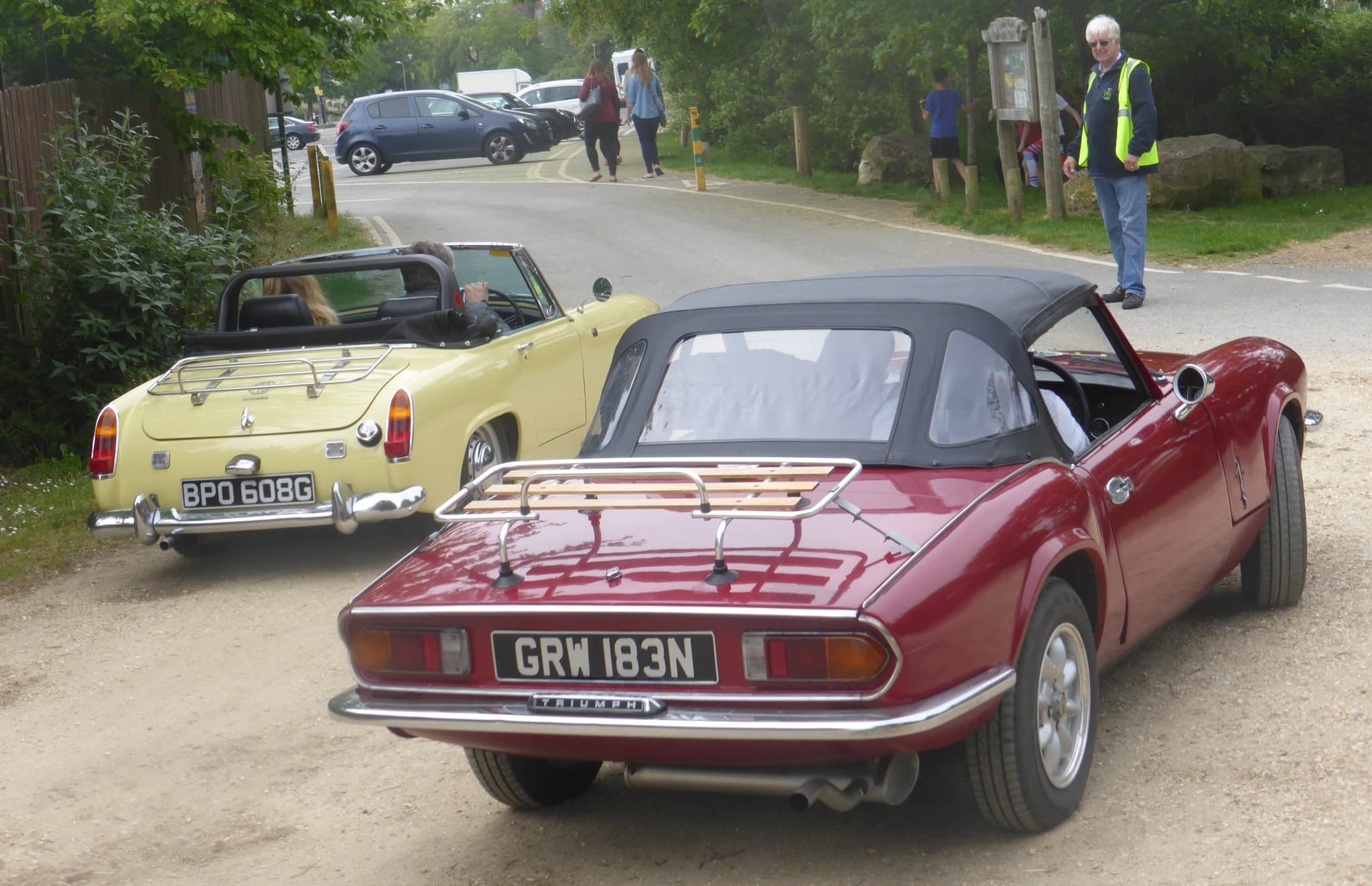
1 An MG Midget Mk III and a Spitfire in the Mk IV/1500 body, side by side as they left the start of the Dorset Tour in 2019.
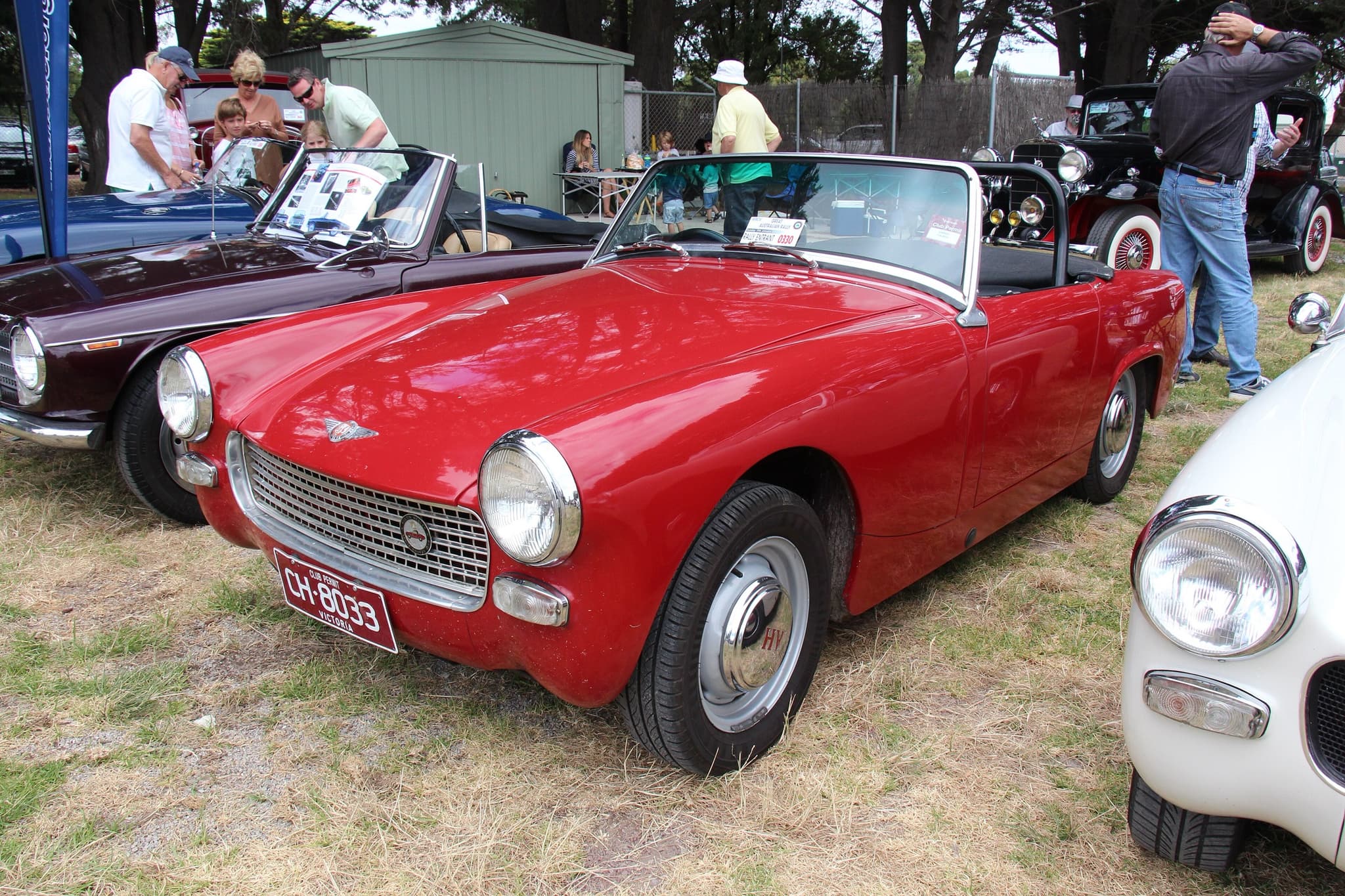
2 An Austin-Healey Sprite Mk II, the Sprite the Spitfire 4 met in 1962, at a club show in Victoria, Australia, in January 2014.
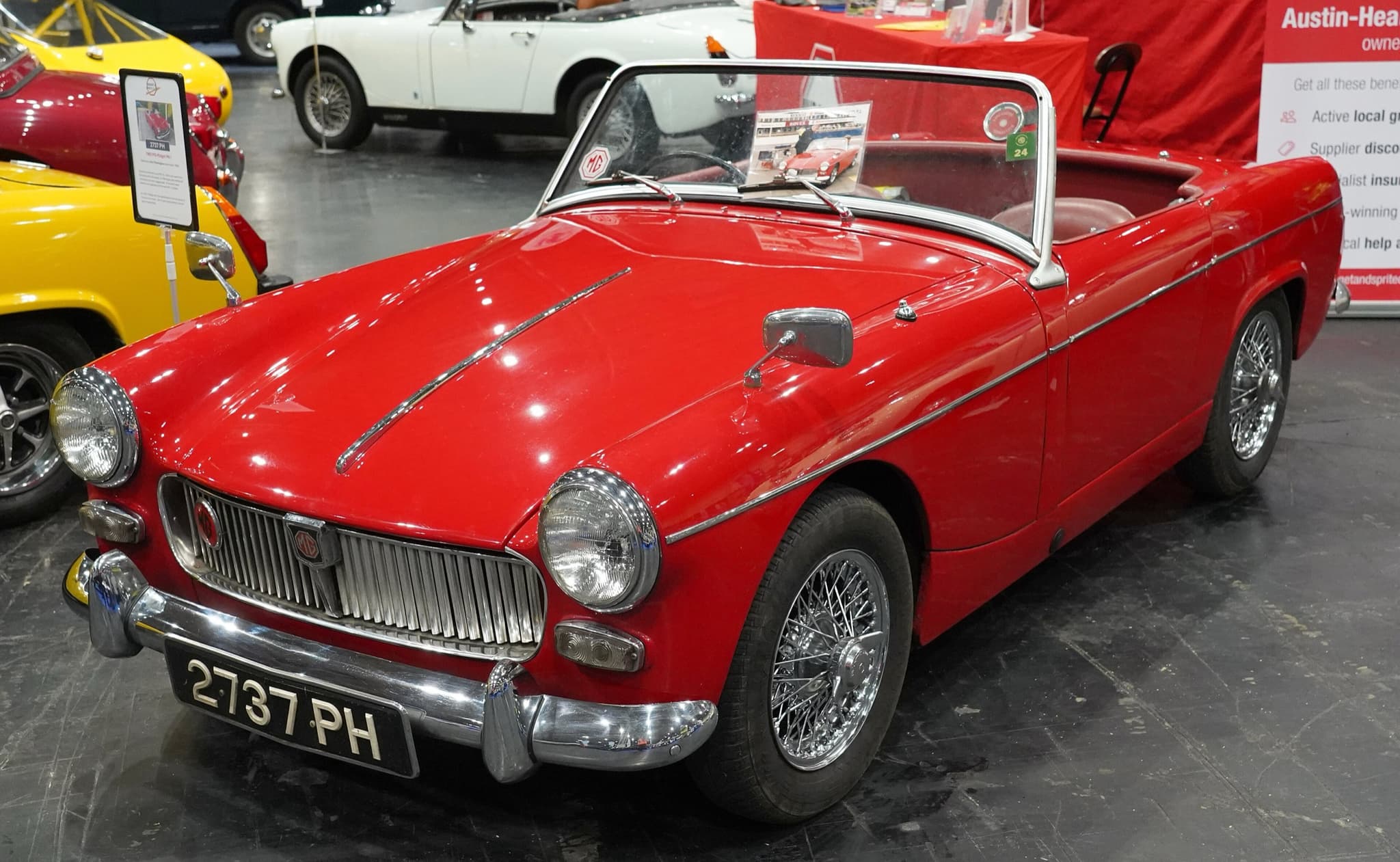
3 An MG Midget Mk I, the version Bill Boddy compared with the Spitfire in 1963, on a stand at the Classic Motor Show, NEC Birmingham, in November 2025.
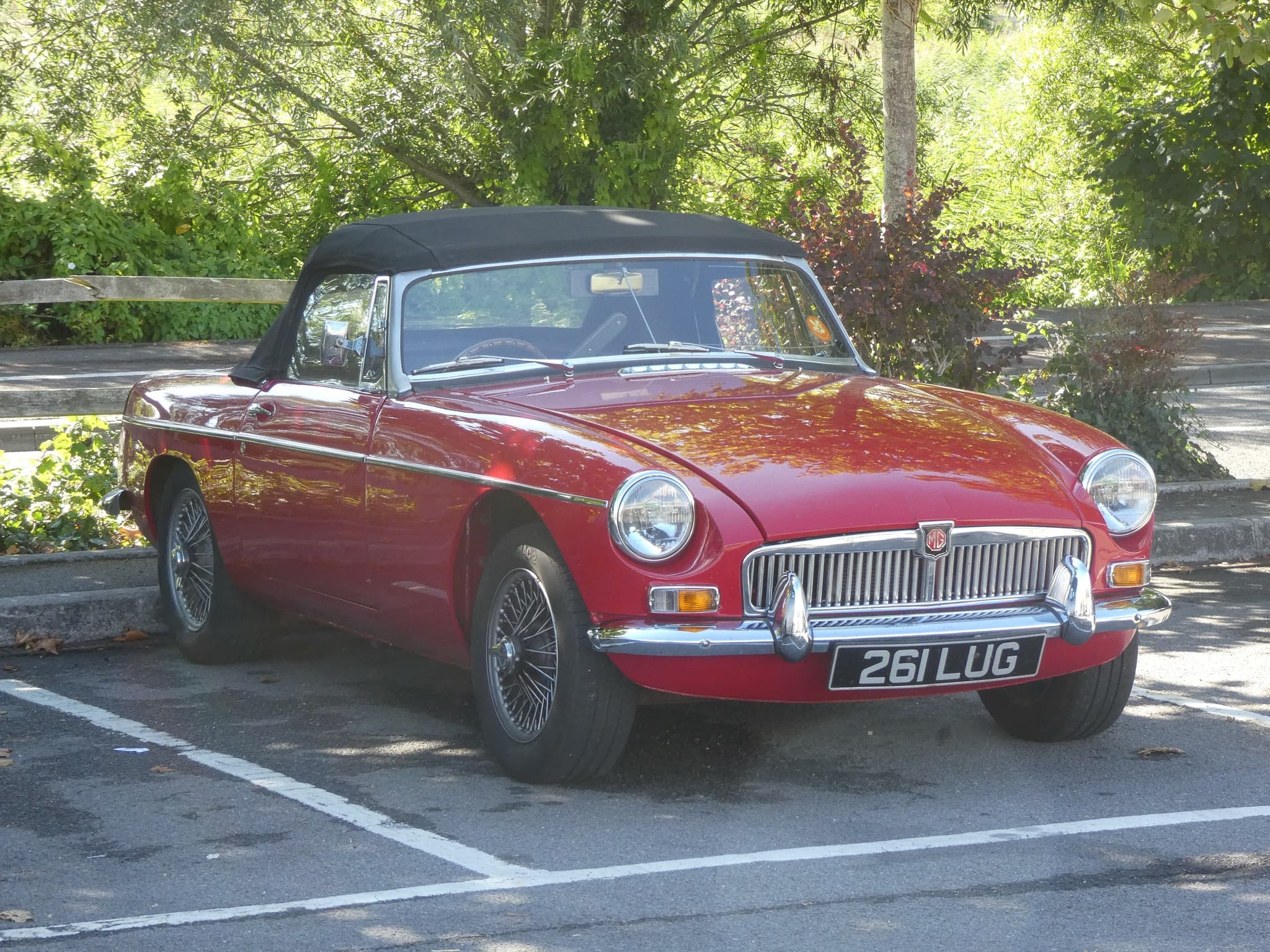
4 An early MGB roadster, the step up from the Spitfire in price and engine size, photographed in Dorset in August 2020.
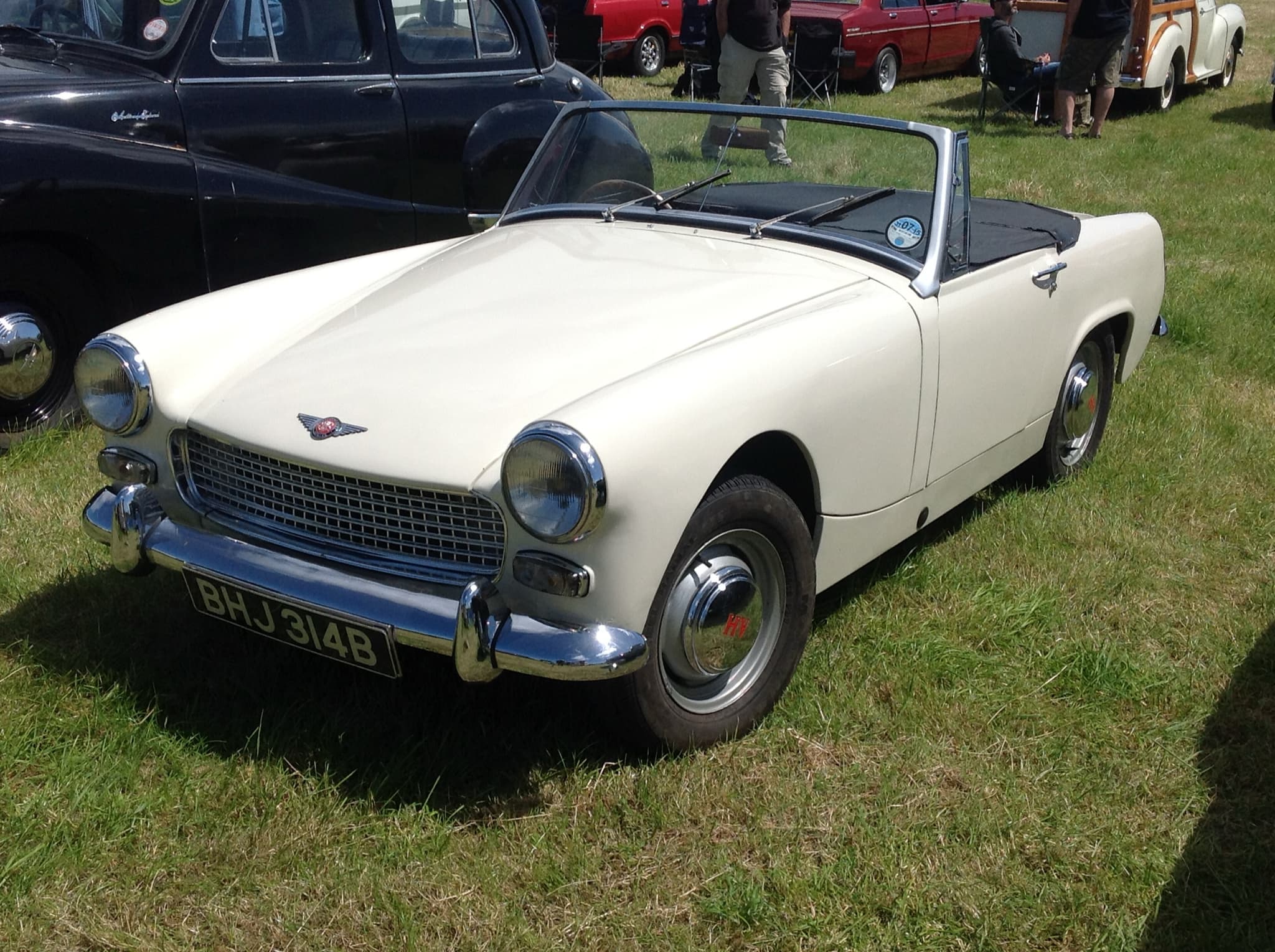
5 A later Austin-Healey Sprite, a Mk III or Mk IV, with wind-up windows and outside door handles, at the Chickerell Steam and Vintage Rally, Weymouth, Dorset, in July 2016.
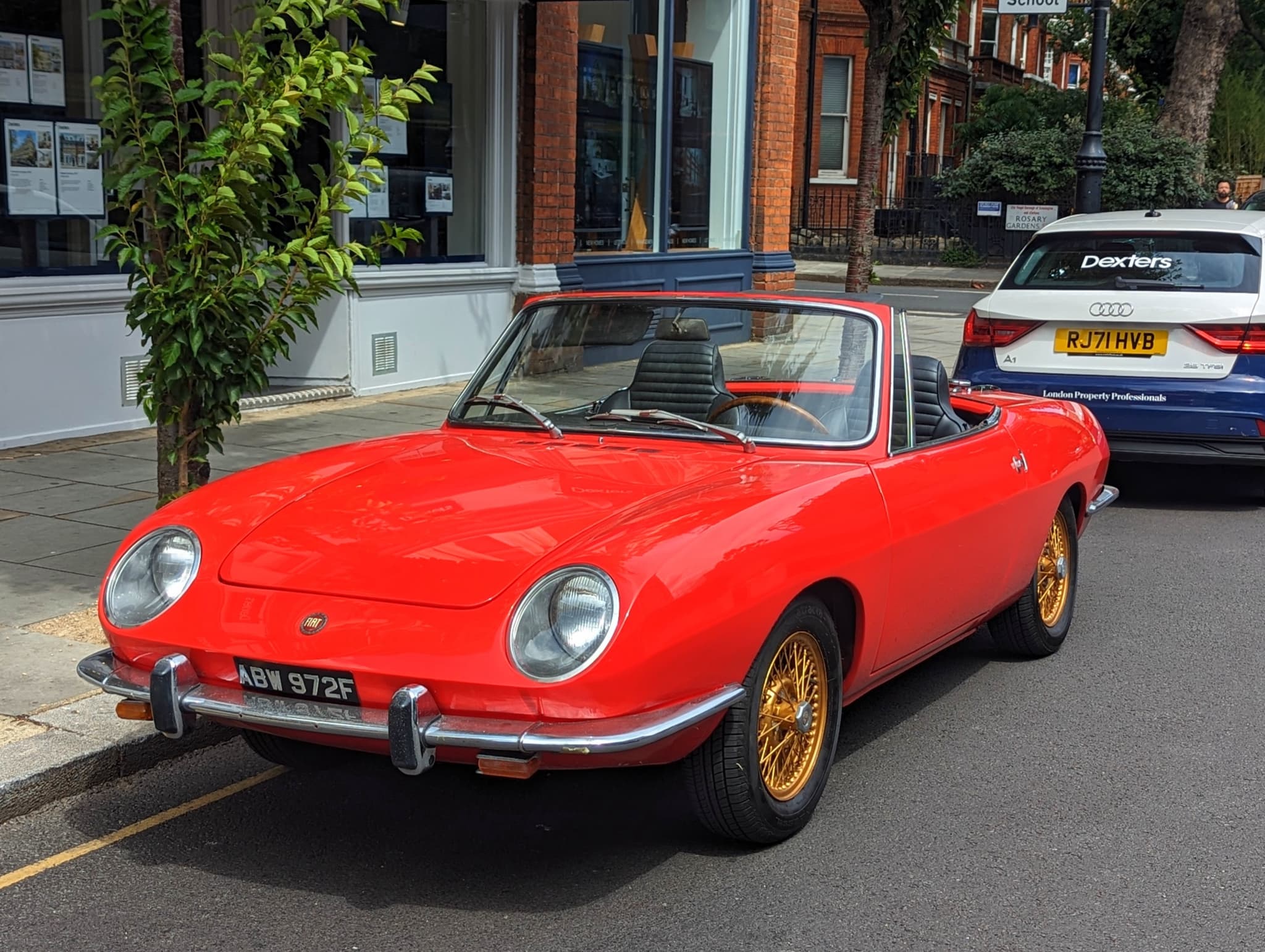
6 A first-series Fiat 850 Spider, one of the small Fiat and Honda sports cars Mike Cotton linked to the British move up a class, at a London kerb in July 2023; its gold wire wheels are not original.
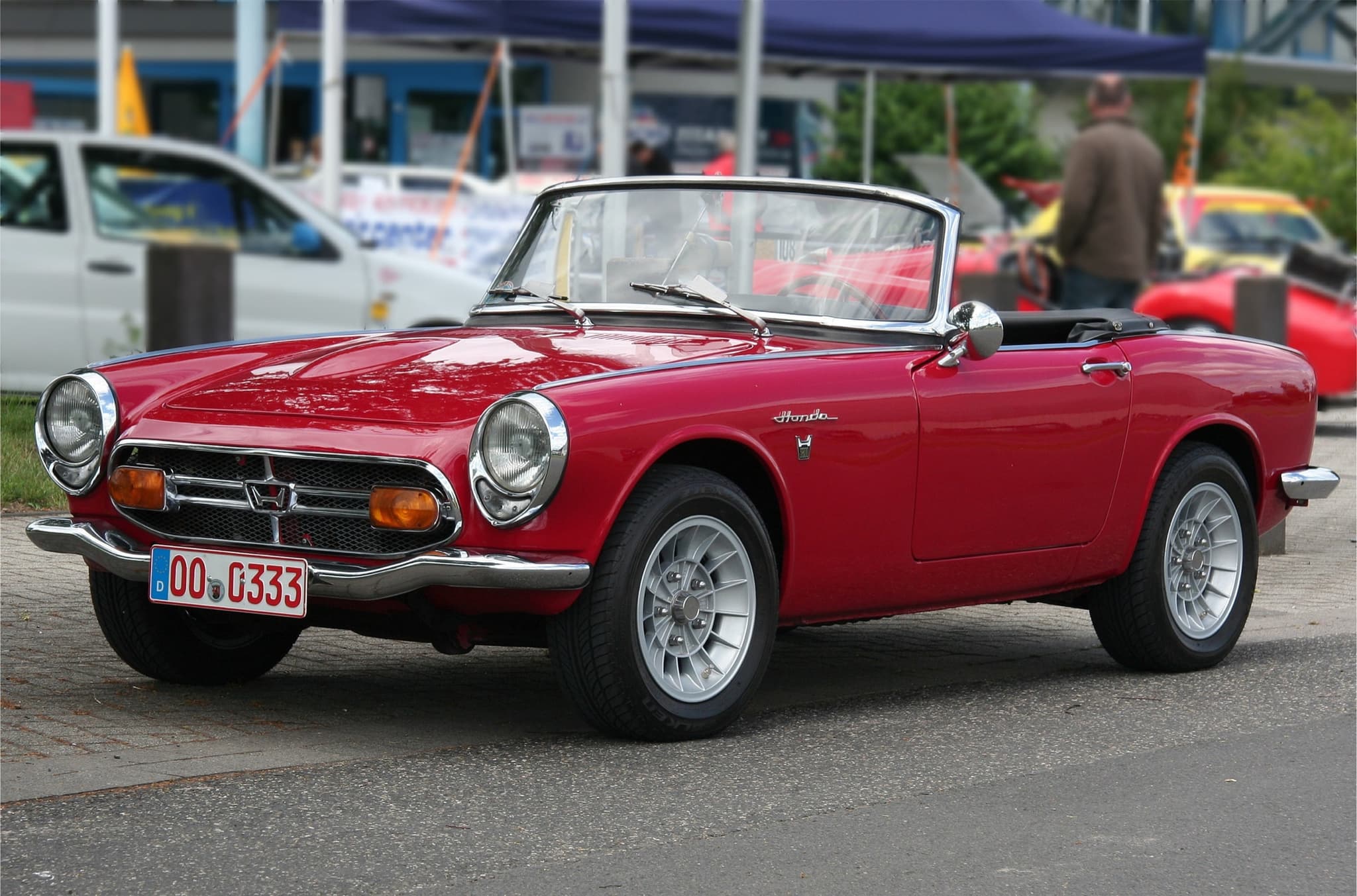
7 A Honda S800 roadster, the car Motor Sport priced against the Spitfire, the Sprite and the MGB in 1967, at a show in Germany in June 2011; its alloy wheels are later.
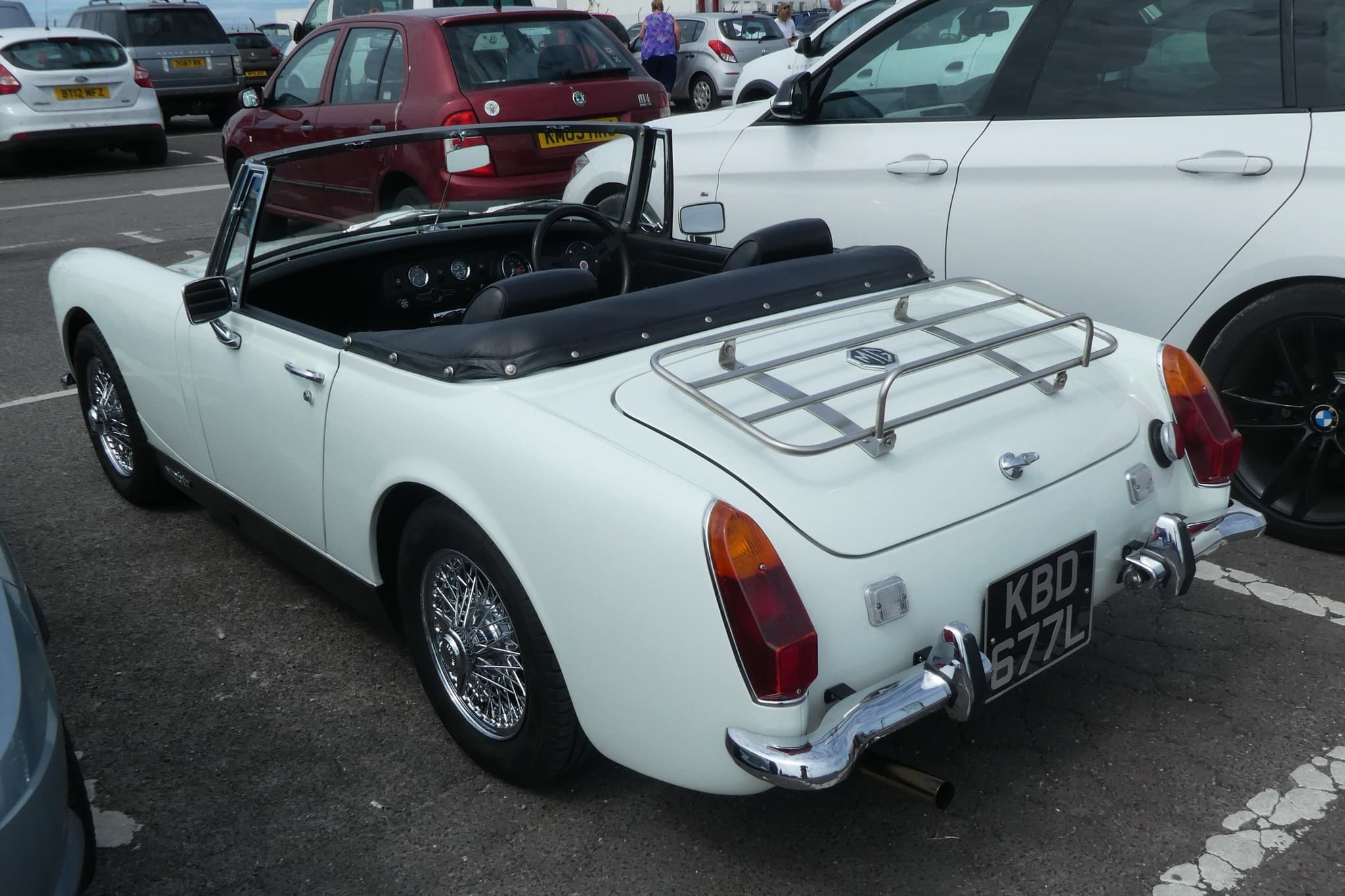
8 An MG Midget of 1972–74, dated by its round rear wheel arches and chrome bumpers, near Weymouth, Dorset, in August 2020.
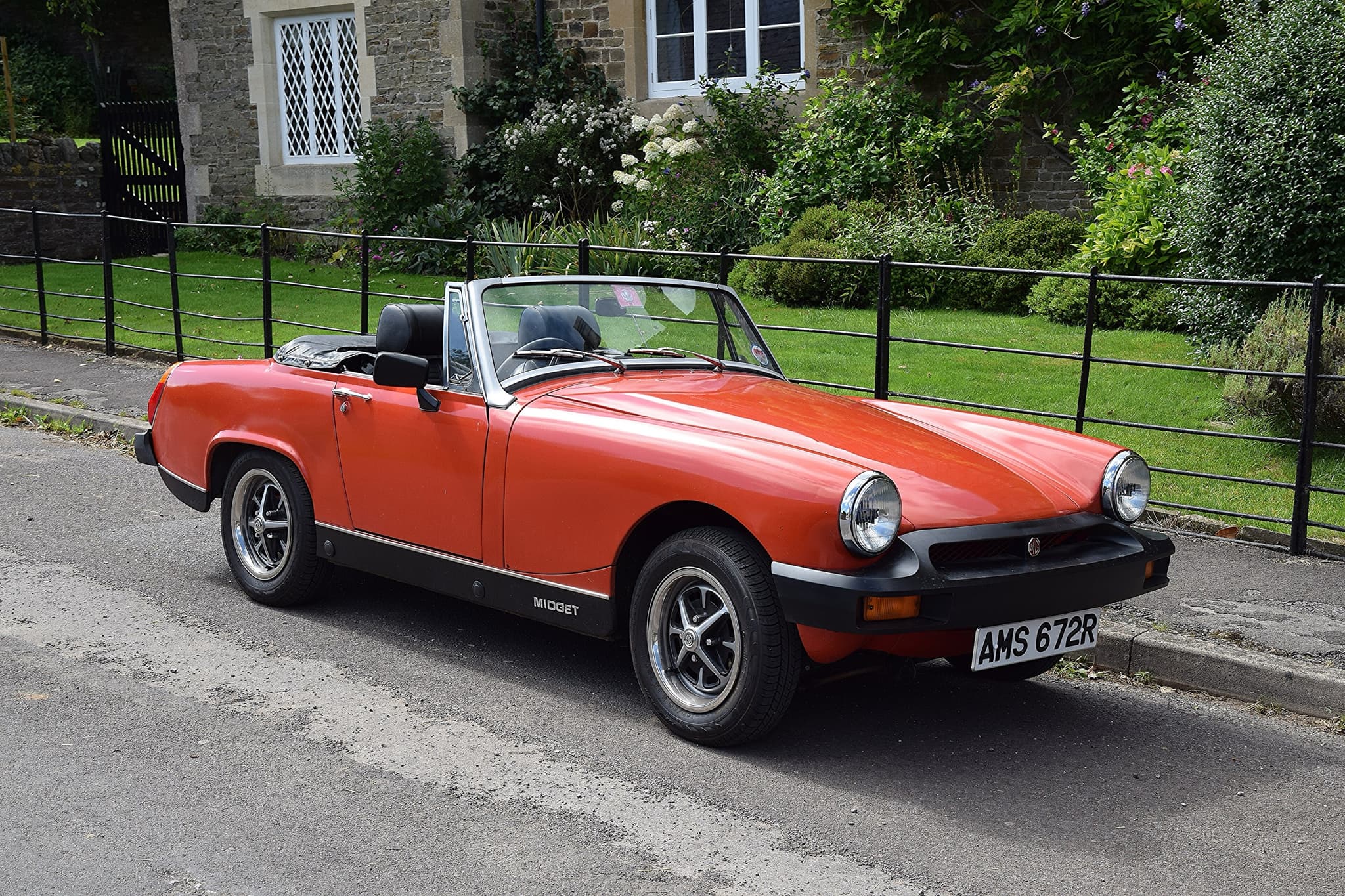
9 An MG Midget 1500, the Midget that shared the Spitfire's engine from late 1974, with its black rubber bumpers, at Compton Dando, Somerset, in August 2016.
Picture credits (9)
- 1 Andrew Bone, CC BY 2.0
- 2 Sicnag, CC BY 2.0
- 3 Steve Knight (kitmasterbloke), CC BY 4.0
- 4 Andrew Bone, CC BY 2.0
- 5 Andrew Bone, CC BY 2.0
- 6 Calreyn88, CC BY-SA 4.0
- 7 Lothar Spurzem, CC BY-SA 2.0 de
- 8 Andrew Bone, CC BY 2.0
- 9 Hugh Llewelyn, CC BY-SA 2.0
Built and sold abroad
Exports mattered from the start. According to a report in Autocar (15 February 1968), as cited by Wikipedia, more than 75% of the first 100,000 had been exported, and 25% of all of them had gone to mainland Europe. The biggest market of all has its own page, North American Spitfires, which covers Canada too.
A tester who tried a tuned Spitfire at Goodwood for Motor Sport's December 1964 issue wrote:
All the same the idling was a little rough and it probably isn't much fun in town, but I can well see why the Spitfire is all the rage on the Continent just now.
In Italy the distributor in 1966 was Ducati Meccanica of Bologna, as that year's Italian brochure shows. For West Germany the sources read are thin: German Wikipedia gives list prices there from 1963 to 1979, citing Seeliger and Automobil Revue.
Not every Spitfire was finished at Canley. Some went abroad as completely knocked-down kits, to be assembled where import rules favoured local work.
In Belgium, Spitfires were assembled at Mechelen (Malines), in a plant that opened in 1961, according to AROnline, to give Standard-Triumph extra capacity when demand was high. Many of them were sold in the United States, and AROnline adds that "33,000 such Belgian cars had been delivered to the USA by 1973", without saying whether all of them were Spitfires. A news report of June 1974 said the plant, which then employed 200, had been producing "a small number of Triumph Spitfires" and would close that December.
In South Africa, Motor Assemblies in Durban built the Spitfire 4 from July 1963 and the Mk II until 1967. Leykor took over with the Mk III in 1968 and by 1969–70 had brought assembly together at Blackheath, near Cape Town. Local-content rules and import permits kept the numbers small, and the Mk IV, the 1500 and the GT6 were never assembled or sold there.
In Australia, Australian Motor Industries assembled the first three versions alongside its other makes, painting them in its own Dulux colours, and the Standard Triumph Car Club there records that Triumphs assembled from such kits used Australian parts to meet local-content rules. Assembly in Ireland is also reported, but no reliable source confirms it.source 67source 68source 69source 70source 71source 34source 48source 72source 11source 73source 74
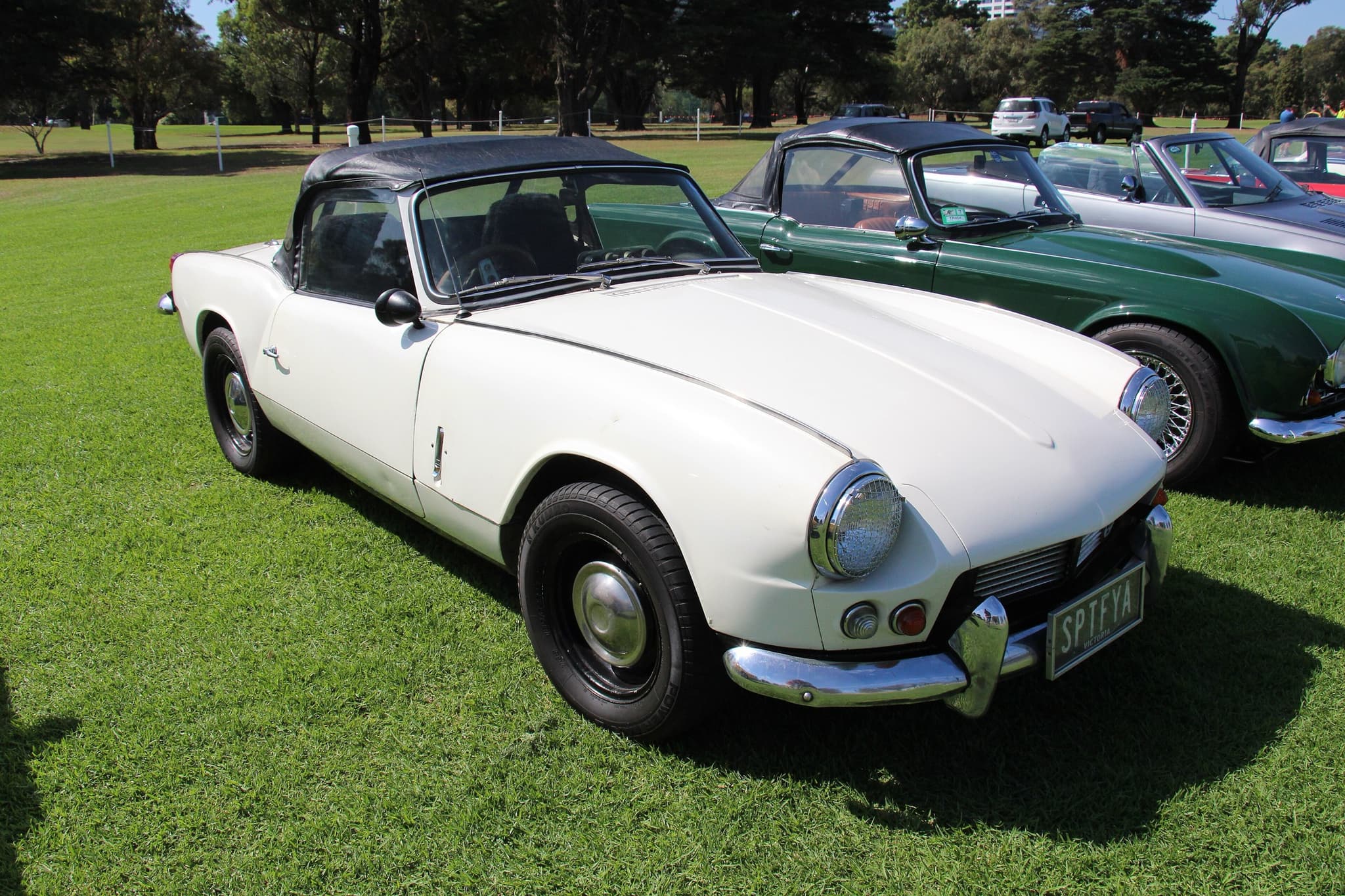
Afterlife
Clubs keep the car going on both sides of the Atlantic. The Triumph Sports Six Club in Britain keeps a register for each version, the Vintage Triumph Register publishes its guide to the car in the United States, and the Triumph Spitfire Club in the Netherlands was founded in 1982. The Vintage Triumph Register calls the supply of parts excellent; parts and specialists has the detail. For a Triumph built from 1946 to 1981, the British Motor Industry Heritage Trust issues a Heritage Certificate from the factory records, with the car's build and despatch dates, and identification explains the numbers it confirms.
The Triumph name passed to BMW, which bought it with the Rover Group in 1994 and kept it when Rover was sold in 2000. The badge was last used on a car in 1984, on the Acclaim saloon.
Two of the story's landmarks are kept. Canley Classics bought ADU 4B, the 1965 class winner and the only Le Mans car to survive complete, in 2004; the British Motor Museum at Gaydon has the last Spitfire.source 18source 6source 75source 76source 22source 77source 78source 45
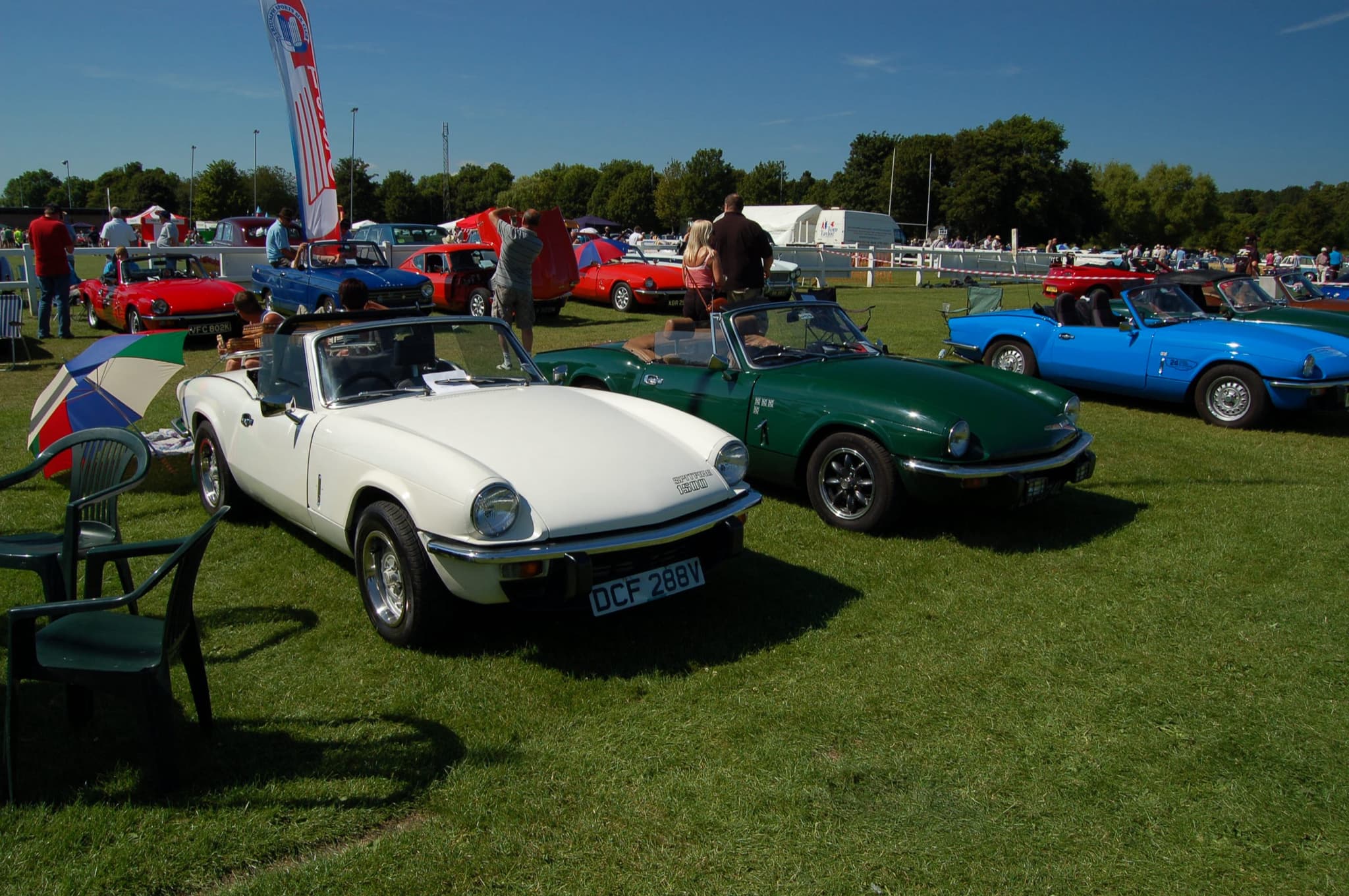
Sources
Sources are given as plain text; their addresses are on the sources page.
- Primarymade at the time, by the maker or by people who were there
- Referenceserious later work: clubs, specialists, magazines, books
- Databaseresults and listings, entry by entry
- Uncheckedencyclopaedias and enthusiast sites: cited beside a good source, named in the sentence, or marked Unchecked
- Graham Robson, "Harry Webster – My Technical Mentor", Moss Motoring (Moss Motors), 12 Jun 2019, the "Herald sports car" and the Sprite. Reference
- Graham Robson, "Alick Dick: Triumph's Managing Director 1954–1961", Moss Motoring, 18 Jan 2021, "Then came two major miscalculations". Reference
- Lancaster Insurance, "The Triumph Spitfire: a celebration", 29 Dec 2021, para. 4; paras 5–6. Reference
- Fran Madigan (ed.), "Giovanni Michelotti", TRaction (Triumph Sports Owners Association Victoria), Apr–May 2023, p. 26; pp. 24–26. Reference
- Canley Classics, "Production Figures", Spitfire table; Spitfire 4 row; Spitfire 4 Mk II and GT6 rows; Spitfire Mk III row; Spitfire Mk IV row; Herald rows; Spitfire 1500 row. Reference
- Vintage Triumph Register, "Spitfire" (production history, production dates and numbers, buyer's guide tabs), production history; 1969–70 identification; production dates and numbers; buyer's guide tab. Reference
- AROnline, "The Cars: Triumph Herald/Vitesse development story", 4 Dec 2022, updated 16 May 2026, "Project Zobo: problems with BMC"; "A (not-so) radical body solution"; the launch; "How to maximise a platform"; "Sporting off-shoots". Reference
- Graham Robson, "One Design, Many Derivatives", Moss Motoring, 26 Oct 2022, the American dealers in 1961. Reference
- Malcolm McKay, "Triumph Spitfire buyer's guide: what to pay and what to look for", Classic & Sports Car, 10 May 2019, introduction; US section. Reference
- Giles Chapman, "Harry Webster" (obituary), The Independent, 17 Feb 2007. Reference
- Classic Car Africa, "The Wallflower", Mk I section; Mk II section; Mk III section. Reference
- Standard-Triumph, "New Triumph Spitfire" (Standard-Triumph advertisement), Motor Sport, Nov 1962, p. 32. Primary
- Bill Boddy ("W.B."), "Sports cars under £700: the £641 Triumph Spitfire 4", with data panel "The Triumph Spitfire 4", Motor Sport, Apr 1963, pp. 20, 26. Primary
- Motor Sport, "What are the small firms doing?", Apr 1963, p. 48, para. 1, purchase tax "reduced to 25%"; para. 1, purchase tax. Primary
- Wiley Davis, "Filling the Void", Moss Motoring, 1 Mar 2002. Reference
- triumphspitfire.com, "Did You Know?", modified 3 Aug 2023. Unchecked
- British Leyland Motors Inc., Leonia NJ, "You not only get a car and a girl but a piece of history." (advertisement, Triumph Spitfire 1500), US, 1973 model year, 1972. Primary
- Triumph Sports Six Club, Model pages: Spitfire 4/Mark II (model_ID=24), Mark III (23), Mark IV (25), 1500 (26), Spitfire 4/Mark II page; Mark III page; Mark IV page. Reference
- Classic & Sports Car, A–Z of classics: Triumph Spitfire I, II, III, MkIV, 1500, Spitfire I; Spitfire II; Spitfire III; Spitfire 1500. Reference
- triumphspitfire.com ("Spitfire & GT6 Magazine and Information Warehouse"), Reference pages (group): models and options; Mk I–1500 options-and-changes logs; engine numbers; 1979–80 VINs; what year is my car; final drive; general specification data; stock tyres; wheel alignment; lubrication; tuning; fuses; paint and trim codes; side stripes; decal and badge placements; wire wheels; head swaps; substitute parts; suppliers; new owner; pre-purchase checklist; spotters guide, pages modified 2023, models and options. Unchecked
- New Zealand Classic Car, "Getting the facts straight: Spitfires at Le Mans", 4 Nov 2015. Reference
- Canley Classics, "Spitfire ADU 4B Le Mans". Reference
- racingsportscars.com, Le Mans 24 Hours 1964, results, results, 21st; results, P3.0, 4th and 5th. Database
- racingsportscars.com, Le Mans 24 Hours 1965, results, results, 13th and 14th. Database
- Denis Jenkinson, "Le Mans 24-hour race", Motor Sport, Jul 1965, p. 11. Primary
- Canley Classics, "Spitfire ADU 5B Rally". Reference
- racingsportscars.com, Tour de France Automobile 1964, results, No. 131. Database
- John Davenport, "Geneva Rally", Motor Sport, Dec 1964, p. 45. Primary
- John Davenport, "Coupe des Alpes", Motor Sport, Sep 1965, p. 30. Primary
- Canley Classics, "Spitfire ADU 1B Le Mans". Reference
- Canley Classics, "ERW 412C". Reference
- Motor Sport, "Earls Court debuts", Nov 1966, p. 38, "Triumph GT6": the opening sentence; export first, home buyers "until next Spring". Primary
- Mike Cotton ("M.L.C."), "Triumph Spitfire to Monaco", Motor Sport, Jun 1967, p. 26; opening paragraph. Primary
- Chris Cowin, "History: Exporting British cars to the USA – Part One", AROnline, 31 May 2025, updated 20 Feb 2026, "The rise of regulation": federal rules from 1968; Rootes and the Alpine, 1968; the Mechelen/Malines plant. Reference
- H. G. W., "A pair of new Triumphs", Motor Sport, Sept 1970, p. 45, last paragraph. Primary
- Bill Boddy ("W.B."), "Road test: The Triumph Spitfire Mk. IV", Motor Sport, Jan 1971, p. 59. Primary
- John Kipping (overdrive articles), Technical articles (group): "Swing Springs", "Rear End Noises", "Propshaft Problems", "Oil Consumption", "Unleaded Engines", "The D-Type Overdrive", "The J-Type Overdrive", "Different Differentials", "Close Ratio Gearboxes For Spitfire MkIV/1500", "Chrome Bumpers", "Spitfire Tuning Kits", "Fitting Le Mans Style Bonnet Vents", Canley Classics, "Swing Springs". Reference
- Sam Skelton, "Buying Guide: Triumph Spitfire (1962–1980)", Hagerty UK, 3 Feb 2021, the MX-5. Reference
- British Leyland Motors Inc., Spitfire 1500 (sales brochure), USA, 1974 model year, SP741, 1973, p. USA-5. Primary
- Clive Richardson ("C.R."), "Road Impressions – The Triumph Spitfire 1500", Motor Sport, Mar 1975, p. 25. Primary
- British Leyland (France), Triumph Spitfire Mk4 (sales brochure), France, 11/1973, T.919. Primary
- Canley Classics, "Engine Number Identification Chart", FP prefix. Reference
- BL Cars / Jaguar Rover Triumph Ltd, Triumph Spitfire 1500 (sales brochure), UK, 12/1978, Publication No. 3254/D, specification pages. Primary
- Richard Herriott, "Still Stands Stanley's Hat Stand In The Spruce Stand?", Driven To Write, 31 May 2020, quoting Motor, 6 September 1980. Reference
- British Motor Museum, "Spitfire 1500 (last of line), 1980", accession 1980-1-190, accession 1980-1-190. Primary
- AROnline, "Concepts and Prototypes: MG ADO21 (1969–1970)", 4 May 2024, mid-1969 brief; "The MG ADO21 is viewed by management": the minutes of 3 November 1970; caption, cancellation. Reference
- Keith Adams, "History: Secret Rover and Triumph model plans (1978–1987)", AROnline, 15 May 2024, "Rover Triumph 1979-1987 Product Planning"; sports car line, 1980 autumn; Broadside entry and editor's note on SC1. Reference
- Chris Cowin, "History: Exporting British cars to the USA – Part Two", AROnline, 31 May 2025, updated 21 Oct 2025, 1980: the Triumph trio's sales; 1971 prices; Belgian cars delivered by 1973. Reference
- Robertas Parazitas, "Elemental Spirit Part 3: When Donald Met Donald", Driven To Write, 27 Oct 2022, the corporate sports car; the Datsun. Unchecked
- Mark Hughes, "The Octagon Returns", Motor Sport, Jun 1996, p. 40, opening paragraphs: the MGF and the MX-5. Reference
- Sam Dawson, "1962 Triumph Spitfire 4" (Sam Dawson; reprint of a Classic Cars feature), drives.today (scraped reprint), posted 18 Nov 2021, the Mazda story. Unchecked
- Motor Sport, "Some Of The New Cars" (Triumph Spitfire 4 section), Nov 1962, p. 49, Triumph Spitfire 4 section. Primary
- Motor Sport, "Matters Of Moment, November 1962", Nov 1962, p. 9, the price ladder. Primary
- Bill Boddy ("W.B."), "Sports cars under £700: the 1,098 c.c. M.G. Midget", Motor Sport, Apr 1963, p. 23, price; comparison with the Spitfire; engine. Primary
- the Editor (Bill Boddy and ATTRIBUTED), "My Year's Motoring", Motor Sport, Feb 1964, p. 36, the Midget paragraph. Primary
- Bill Boddy ("W.B."), "The 1.8-litre M.G.-B", Motor Sport, Sept 1963, p. 22, data panel. Primary
- Bill Boddy ("W.B."), "The Honda S800", Motor Sport, Aug 1967, p. 30, the price comparison. Primary
- Mike Cotton ("M.L.C." and ATTRIBUTED), "Japan v. U.K.", Motor Sport, Aug 1967, p. 34, engines, power, weights and prices. Primary
- Motor, via Internet Archive, Motor 1967, vol. 132, index, 1967, 14 October 1967, pp. 95, 96, 99. Primary
- readers (private and not named), "Letters from Readers, November 1968", Motor Sport, Nov 1968, p. 68, the Which? report. Primary
- J. W., "British Leyland at Silverstone", Motor Sport, Nov 1970, p. 54, the Spitfire and GT6 paragraph. Primary
- Motor Sport, "Around and About, January 1975" ("A 1500 c.c. Spitfire"), Jan 1975, p. 29, "A 1500 c.c. Spitfire". Primary
- Motor Sport, "Matters of Moment, October 1975", Oct 1975, p. 19, the prices. Primary
- Motor Sport, "Matters of Moment, November 1975", Nov 1975, p. 23, "a monopoly". Primary
- Chris Cowin, "History: Exporting British cars to Canada – Part Two: The British Leyland Years", AROnline, 19 Aug 2025, the late 1970s. Reference
- racingsportscars.com, Sebring 12 Hours 1965, results, results, GT1.3. Database
- Wikipedia (EN), "Triumph Spitfire", 2026, Mk III section, citing Autocar, 15 February 1968; assembly plants. Unchecked
- Motor Sport, "Trying the new cars at Goodwood", Dec 1964, p. 20, the Spitfire paragraph. Primary
- Standard-Triumph, Spitfire Mk. II (sales brochure), Italy, Ref. 352/666/IT-DUC, 1966, the distributor. Primary
- Wikipedia (DE), "Triumph Spitfire", 2026, prices. Unchecked
- Chris Cowin, "History: Exporting British cars to Canada – Part One: Commonwealth Preference?", AROnline, 2 Aug 2025, 1968; "carbon copy". Reference
- Honest John Classics news archive (period news reproduced; original paper not named), "Belgian set-back" (news item, 29 June 1974), 29 Jun 1974, para. 1. Reference
- Triumph Sportscars (Australia; closed end of 2016), "Spitty Tips" 2, 3, 4, 5, 6, 8, 19, Spitty Tips 19. Reference
- Standard Triumph Car Club (Australia), "Vehicles Covered", history paragraph. Reference
- Triumph Spitfire Club (Netherlands), "Spitfire modellen", "Aankoop informatie", "Clubinfo", home, Clubinfo. Reference
- British Motor Museum (BMIHT), "Heritage Certificates". Primary
- Classic Car Weekly, "Le Mans Spitfire comes home after extended holiday", 2004. Reference
- Hilton Holloway, "Triumph revival on again", Autocar, 29 Feb 2012, paras 1–2. Reference