Triumph Spitfire Images
The Triumph Spitfire in pictures, inside and out: every version from the first Spitfire 4 to the last 1500, the cars built for North America, the hardtops, interiors and engine bays, four period photographs, and the racers and replicas.
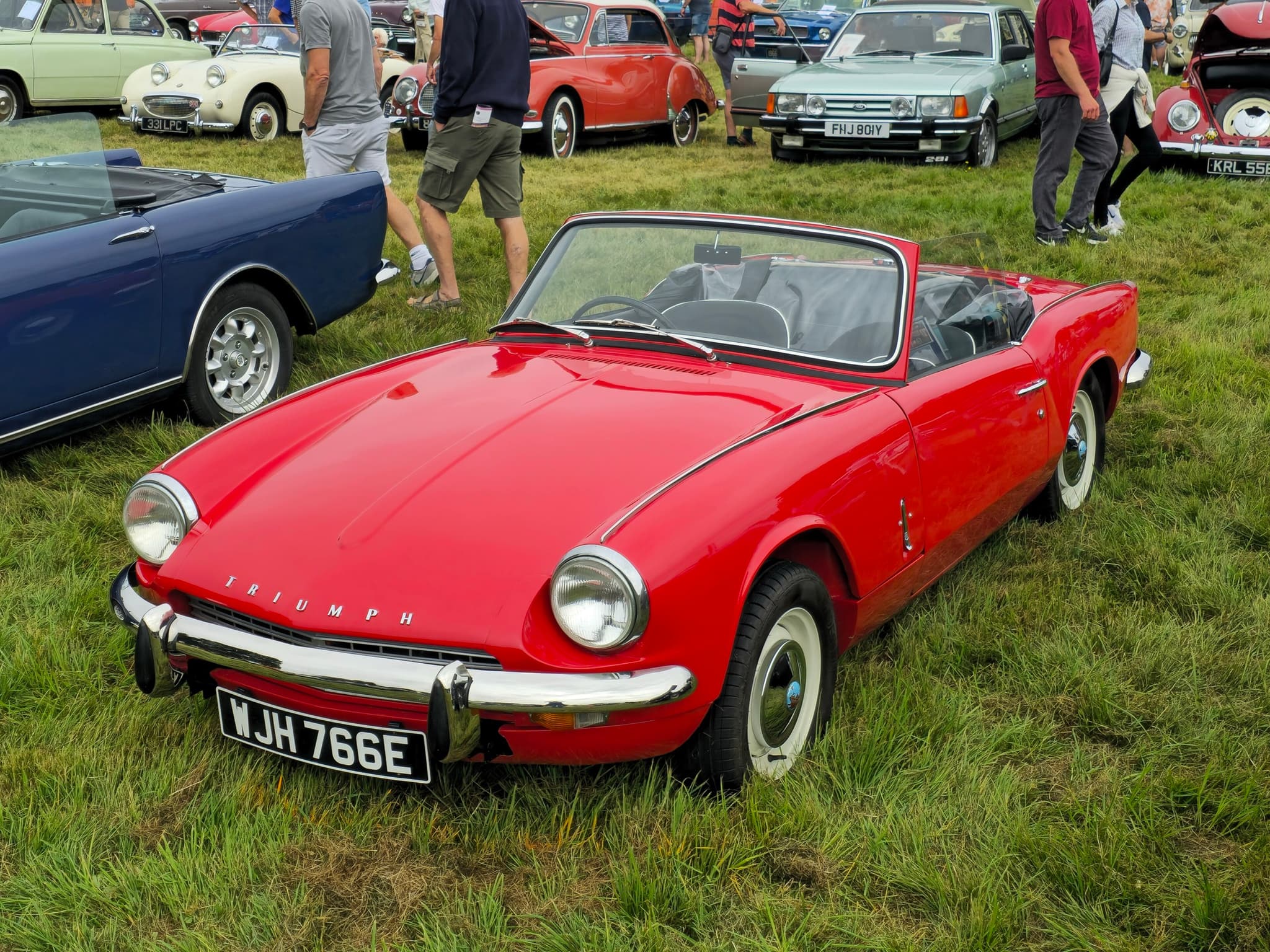
Canley built the Spitfire from 1962 to 1980 and changed it often enough that a photograph will usually show which version a car is. The pictures here are grouped to help tell the cars apart: the five versions in order, with their badges, then the cars built for North America, the hardtops, the interiors and engine bays, a few photographs from the years the car was built, the racers and replicas, and the last Spitfire. Each picture opens a larger view.
The captions say what each picture shows and, where its record gives them, where and when it was taken; a year is the year of the photograph, not of the car. Where nothing settles whether a car is a Mk IV or a 1500, which share a body, the caption says only that it is in the Mk IV body. Colours are as the camera saw them, and light and repainting both change a colour, so the factory's names for them are on colours.source 1source 2source 3
The five versions
The Spitfire 4 and the Mk II that replaced it share one body, with a low bumper beneath the grille and overriders (bumper guards) at both ends. The Mk II can be told by a new grille of horizontal bars and by its Mark, lettered on the boot (trunk) lid. The Mk III of 1967 raised the front bumper to cross the grille, raised the rear bumper as well and dropped the overriders at the back.
Giovanni Michelotti's restyle made the Mk IV of 1970: a cut-off tail, a smoother bonnet (hood) without the raised seams along the tops of the wings (fenders), flared wheel arches and door handles set into the doors. The 1500, of late 1974 (and of the 1973 model year in the United States), kept that body and changed little outside but for the "Spitfire 1500" transfers (decals) on bonnet and boot, so a picture without them seldom tells the two apart; those cars have a group of their own. Close-ups of badges and details come last.source 4source 5source 6source 2source 1source 7source 8source 3
Spitfire 4 8
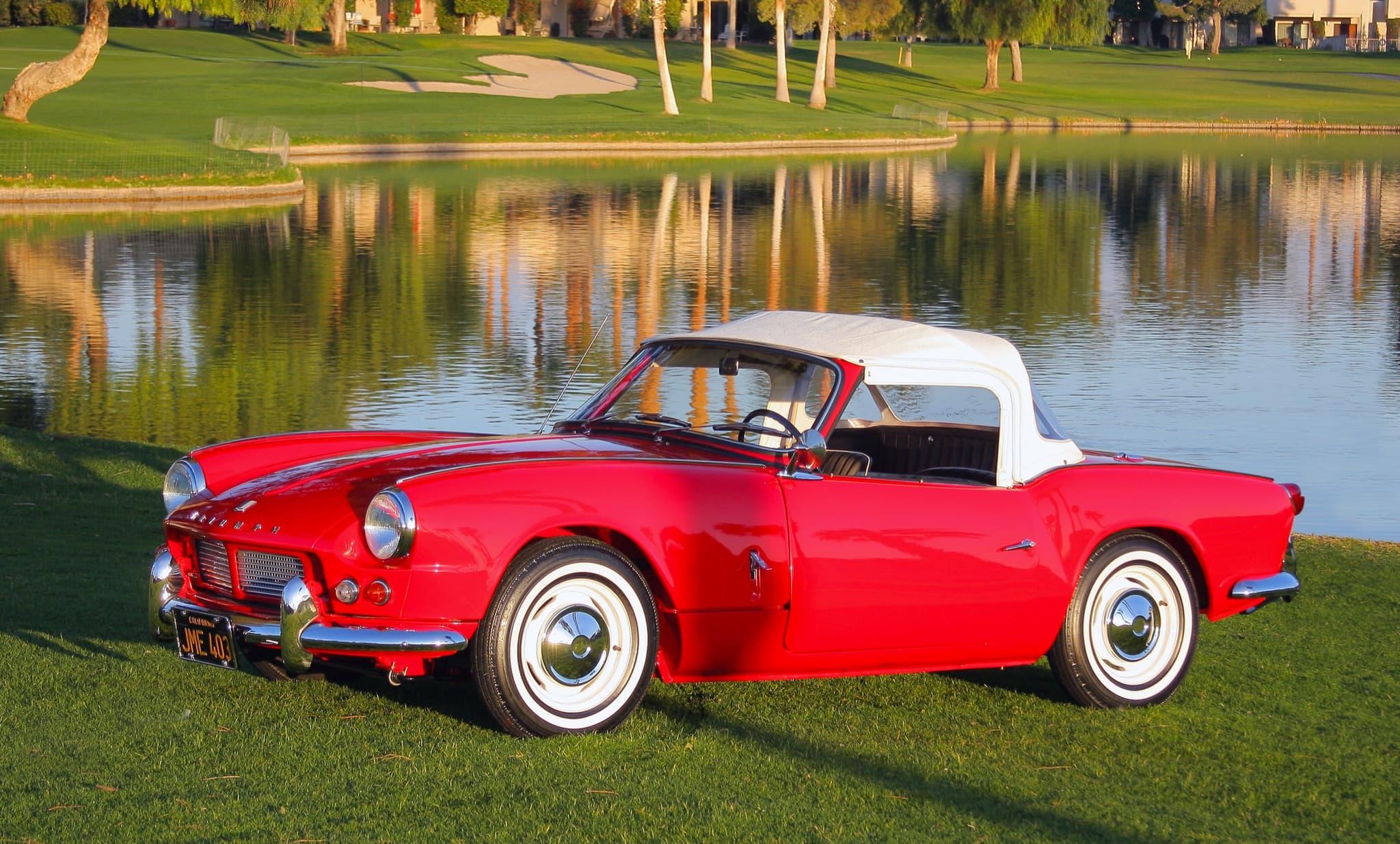
1 A red Spitfire 4 with a white hood and whitewall tyres beside a lake at the Desert Classic Concours d'Elegance, Palm Springs, California, in February 2014.
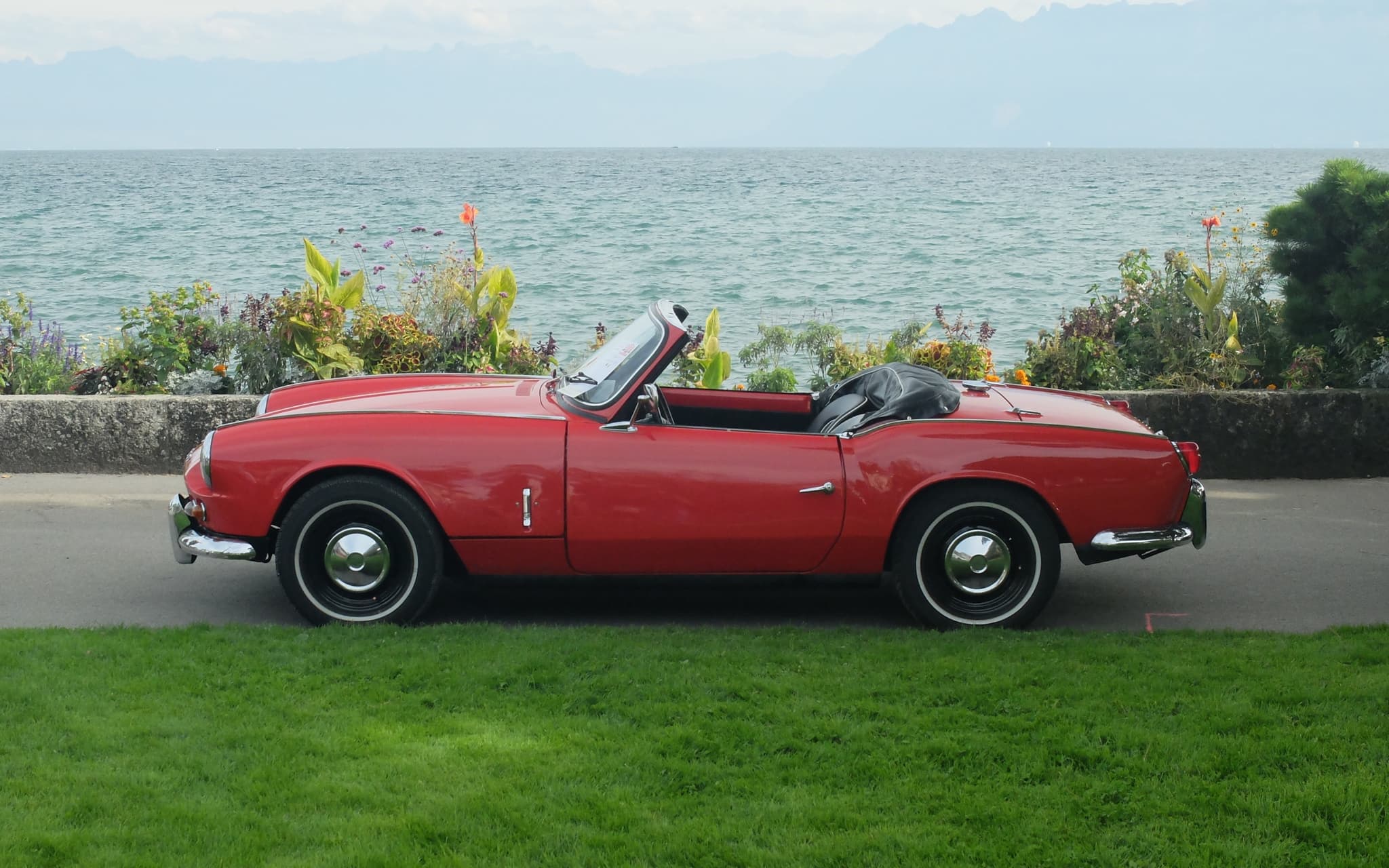
2 A red Spitfire 4 seen side on beside Lake Geneva at Morges, Switzerland, in October 2021, its hood folded under a cover.
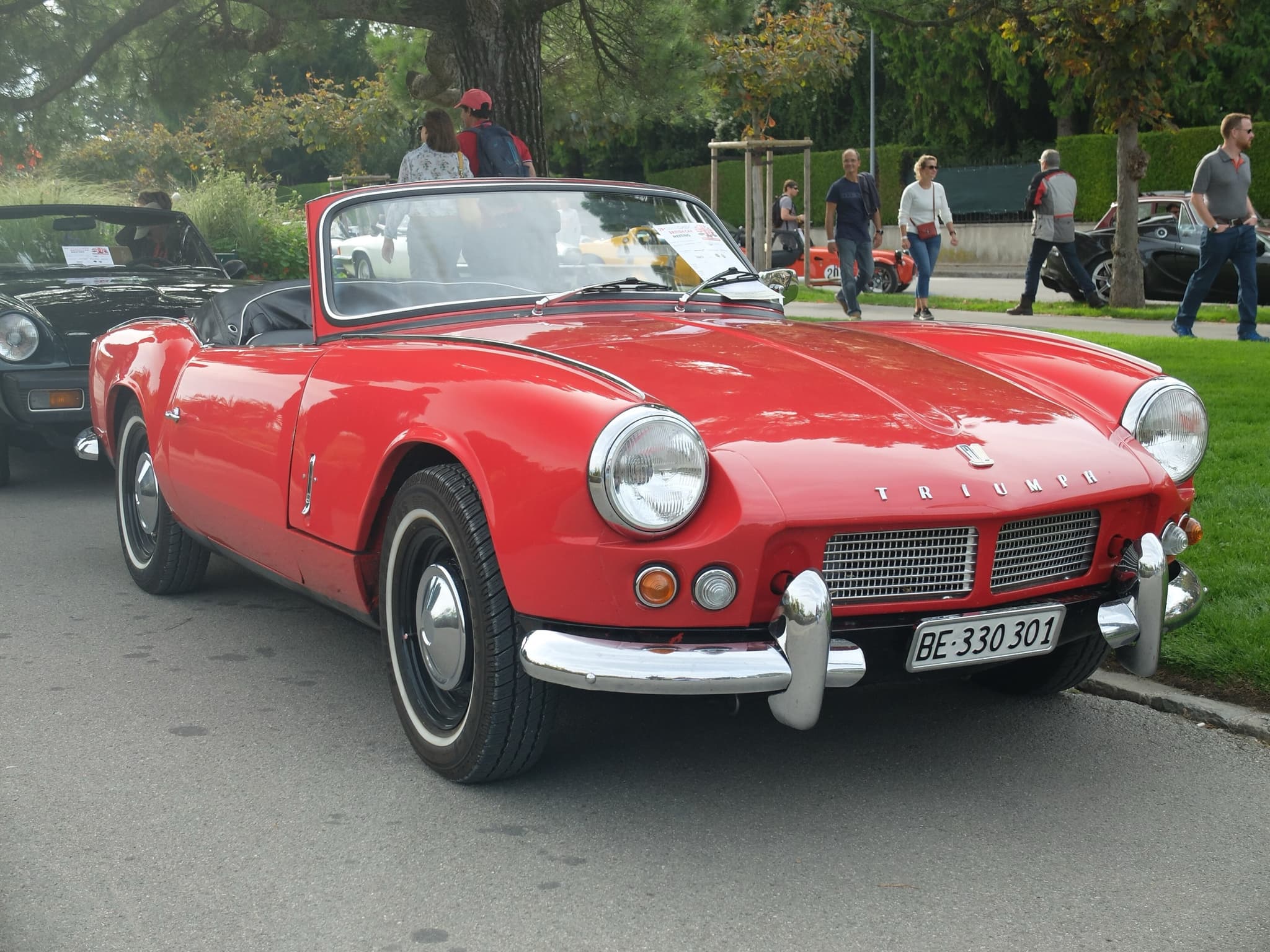
3 A red Spitfire 4, on non-original black wheels with whitewall tyres, at the Swiss Classic British Car Meeting in Morges, Vaud, in October 2021.
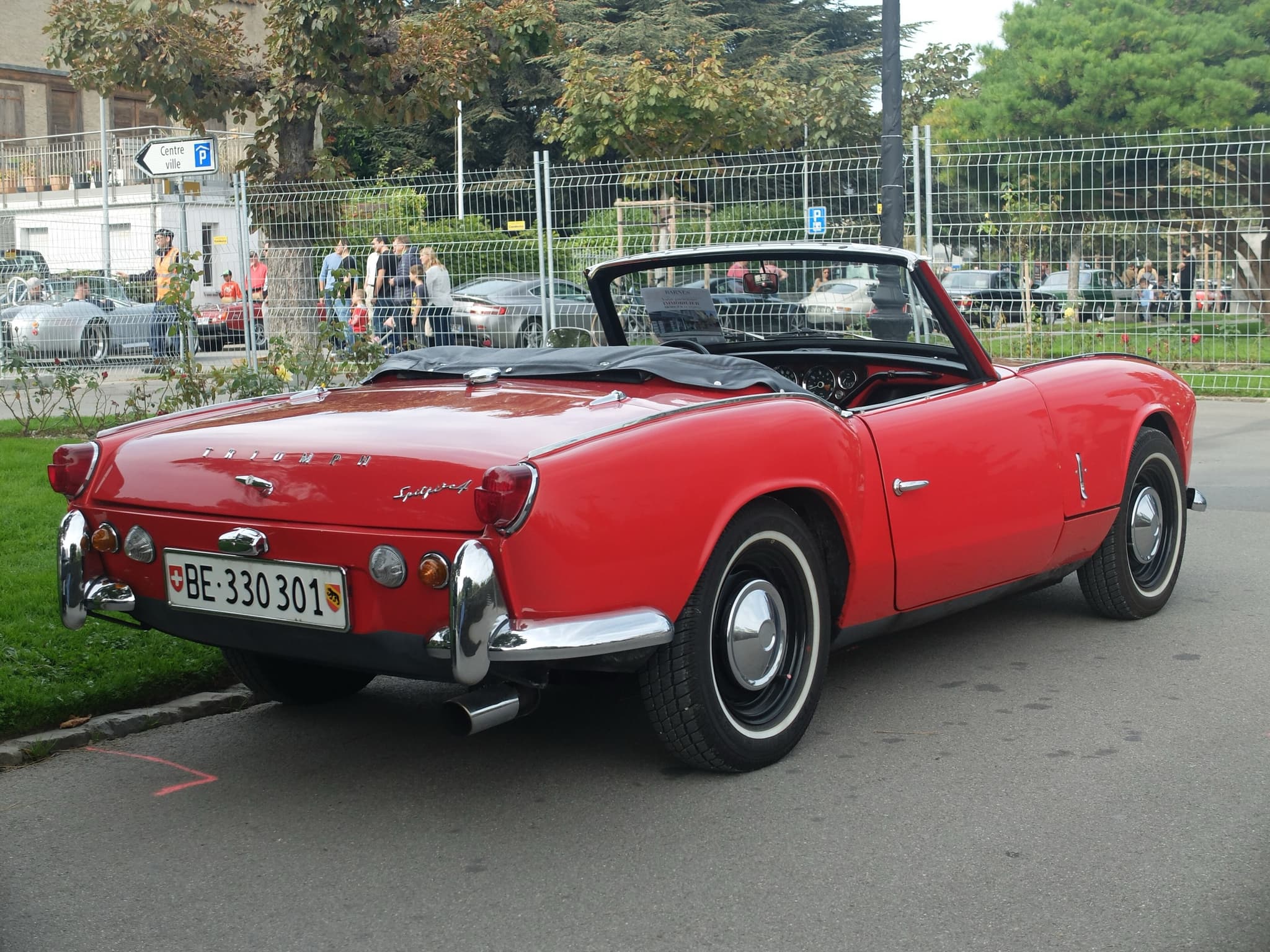
4 A red Spitfire 4 from the rear, with non-original black wheels and reversing lamps, at the Swiss Classic British Car Meeting in Morges, Vaud, in October 2021.
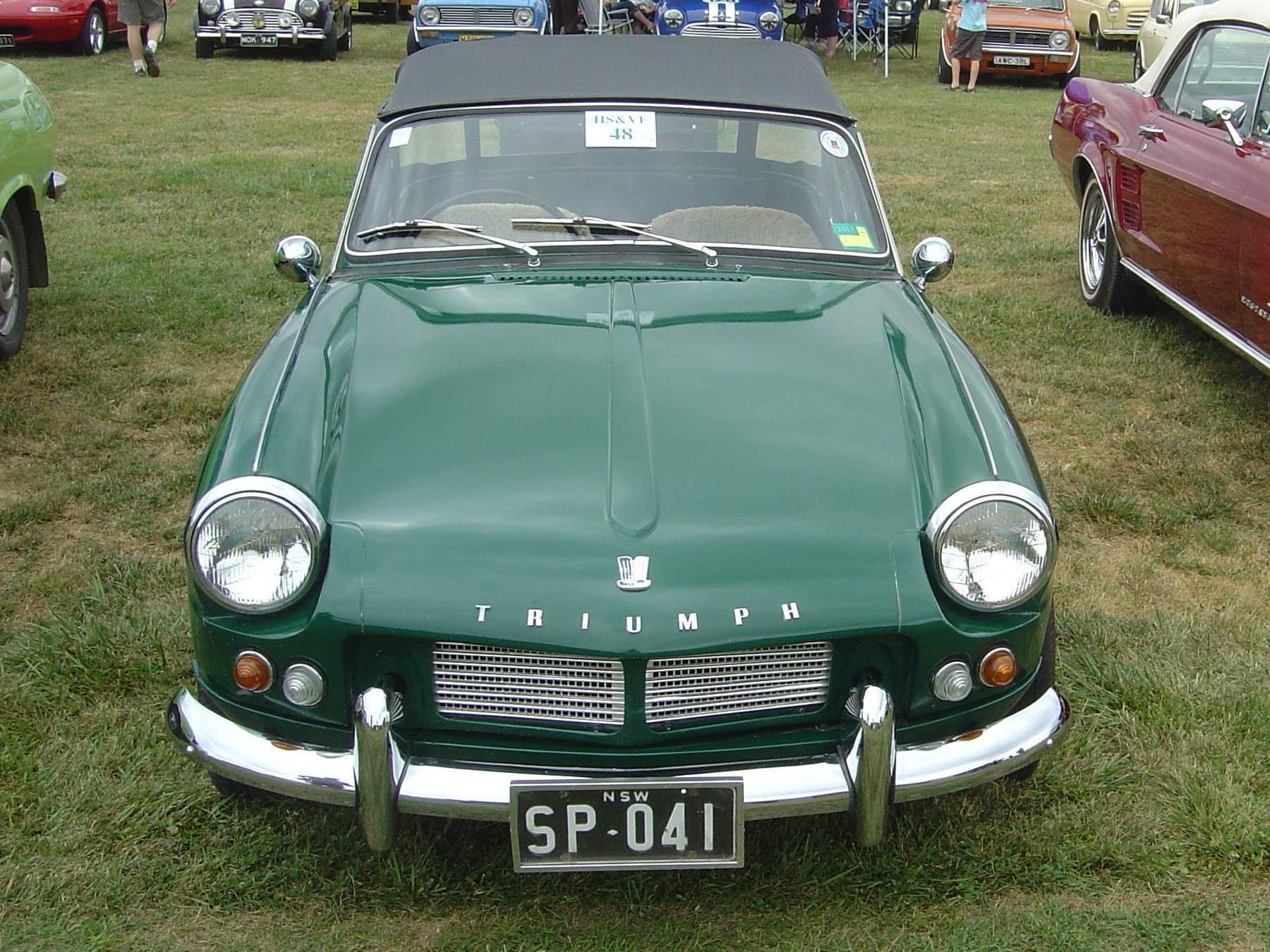
5 A green Spitfire 4, its two-piece mesh grille and low bumper square on, at the Highlands Steam & Vintage Fair in February 2011.
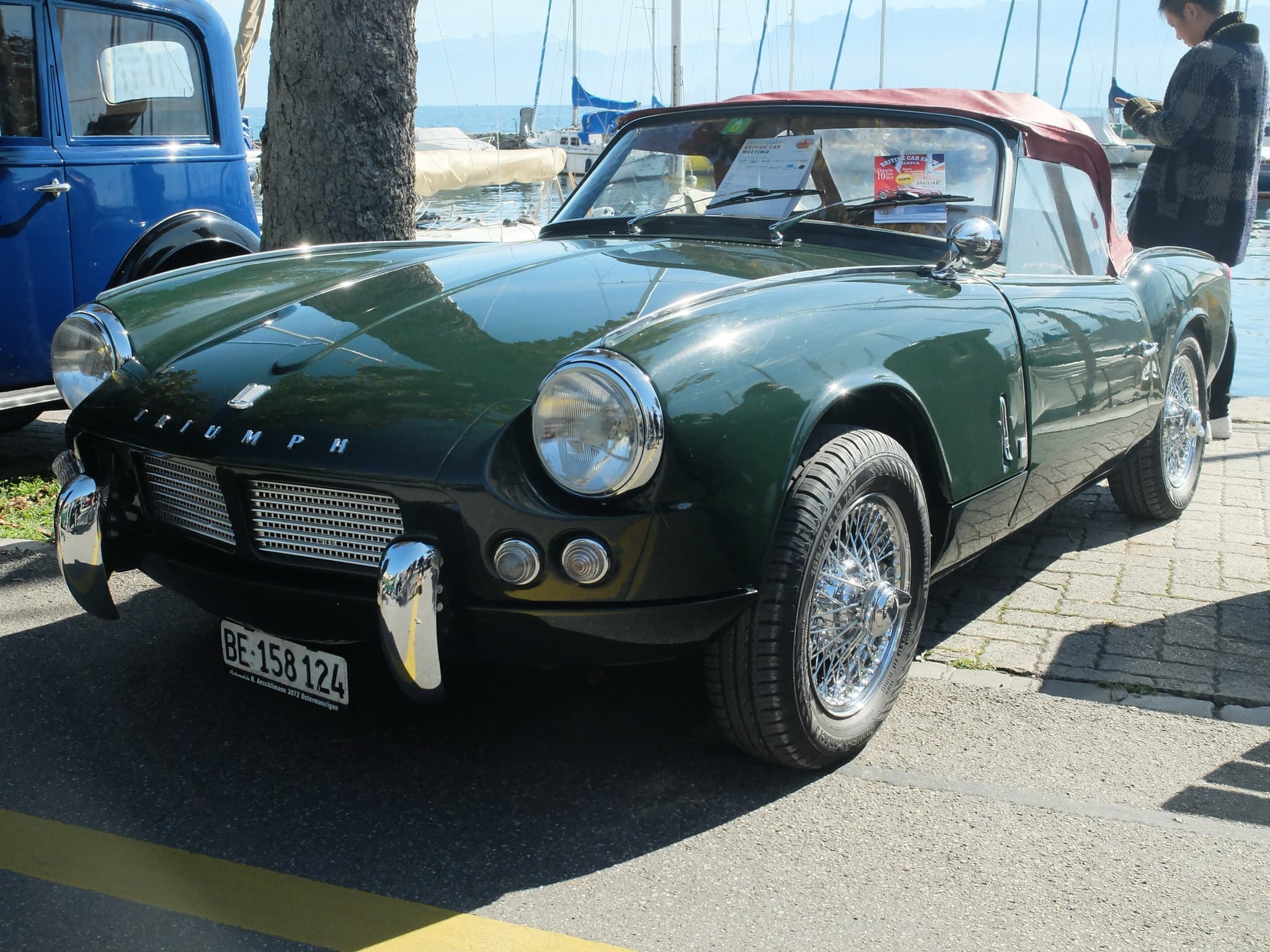
6 A green Spitfire 4, modified with its front bumper removed, on wire wheels at the Swiss Classic British Car Meeting in Morges, Vaud, in October 2017.
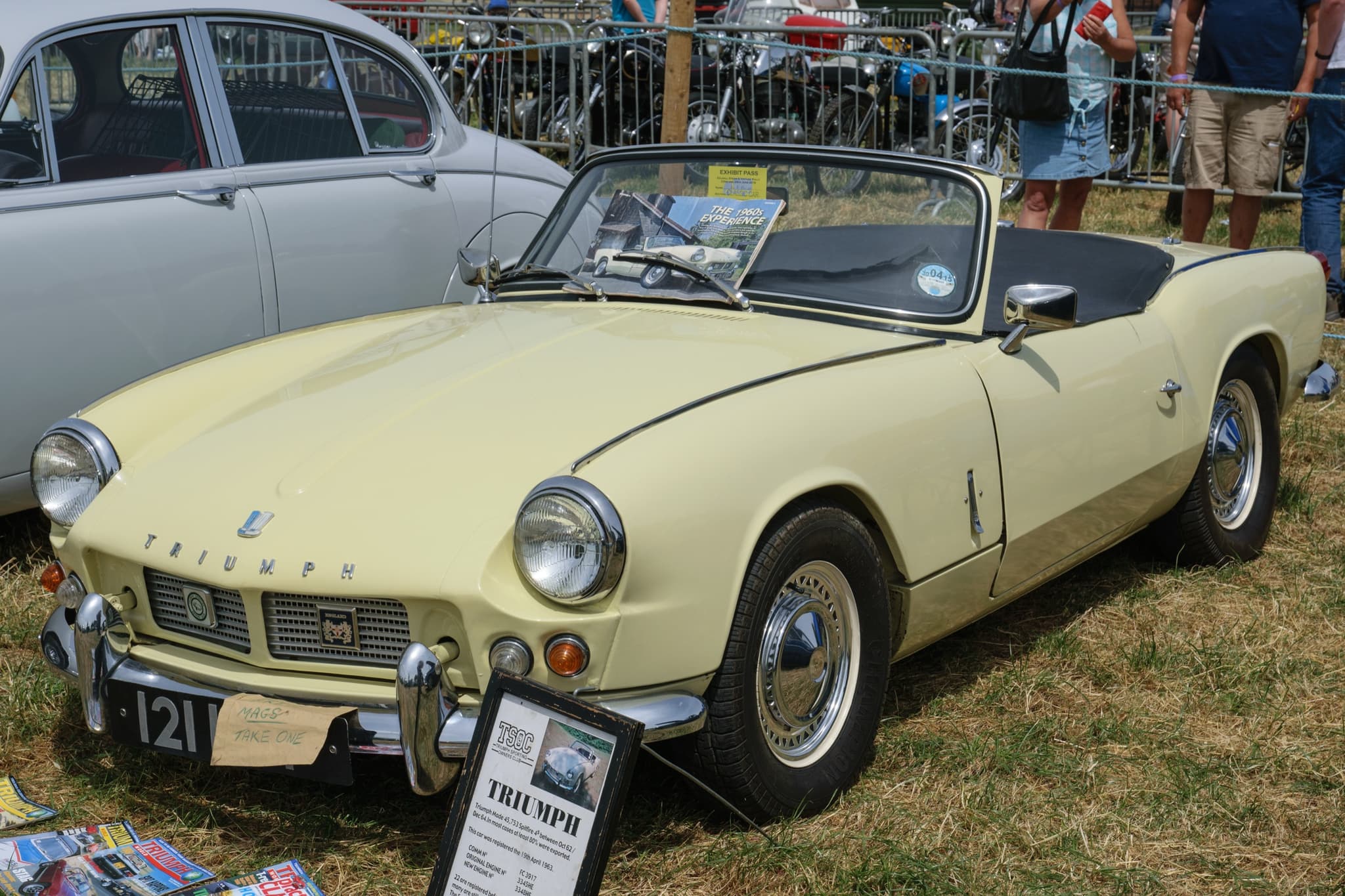
7 A cream Spitfire 4 with its hood stowed at the Kelsall Steam Rally, Cheshire, in June 2018.
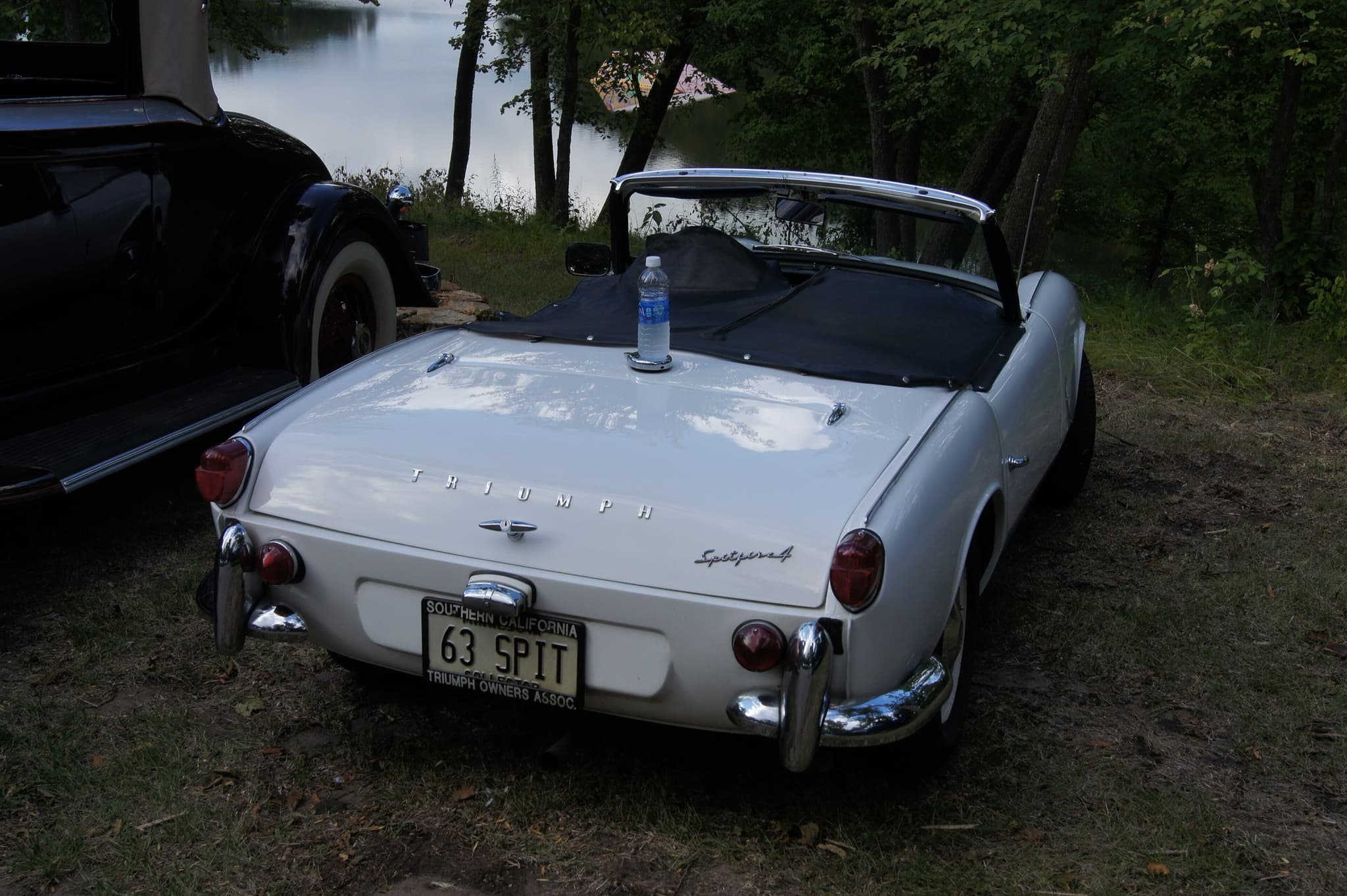
8 A white Spitfire 4 from the rear, parked on grass beside a lake in August 2013.
Spitfire 4 Mk II 9
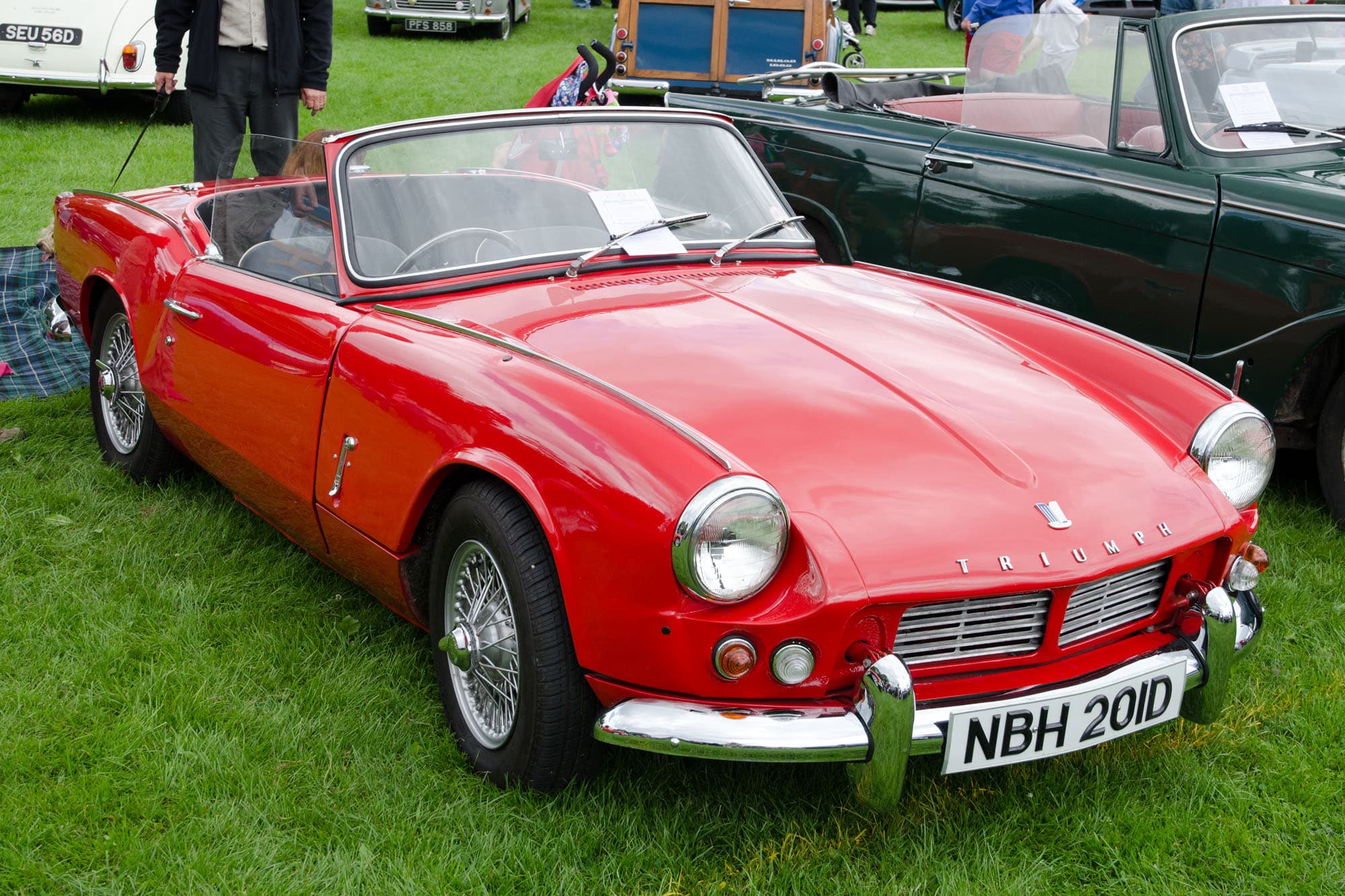
9 A red Spitfire 4 Mk II on wire wheels, with its horizontal-bar grille, at the Burnley Classic Car Show at Towneley Park, Lancashire, in June 2014.
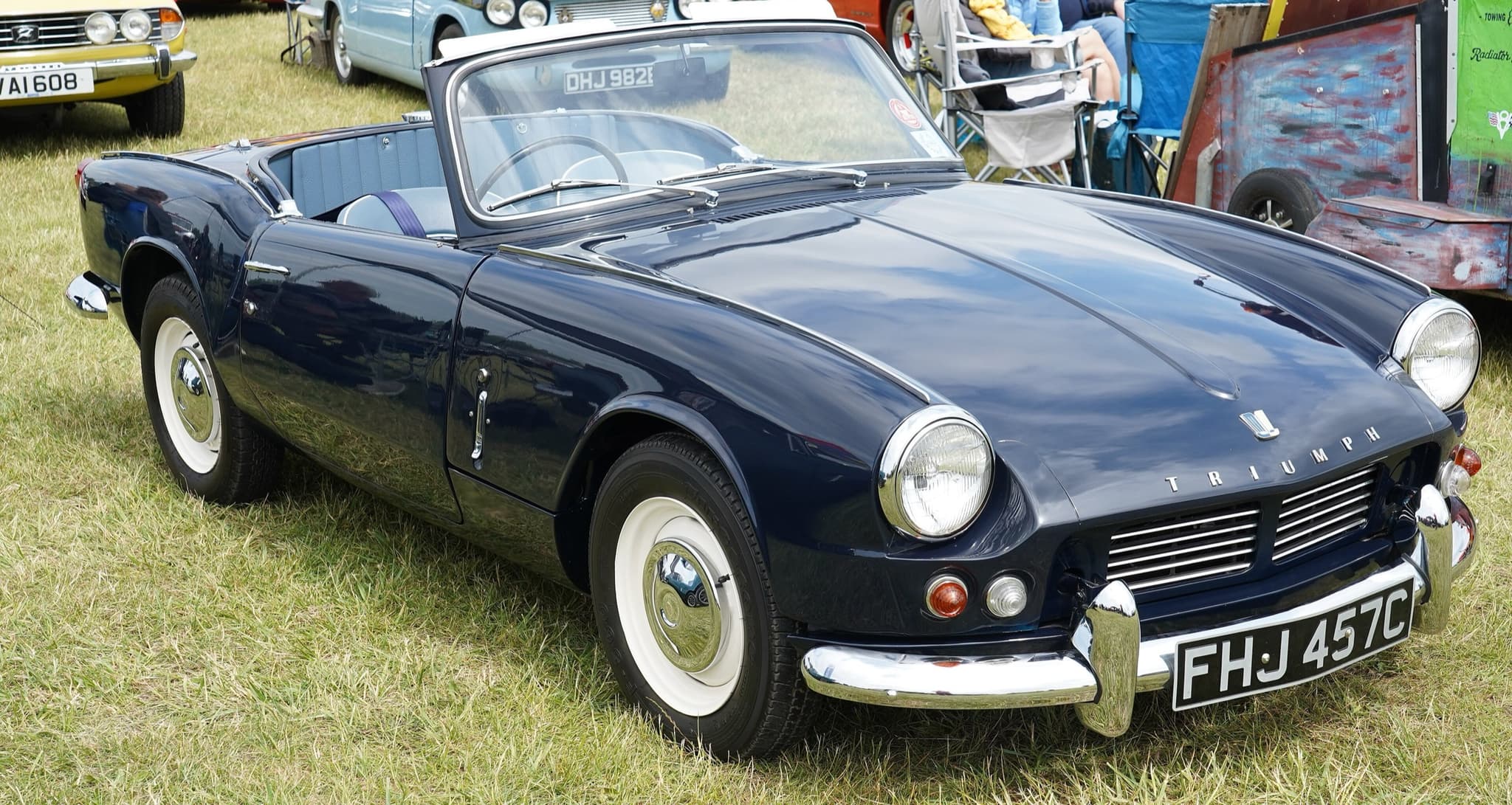
10 A dark blue Spitfire 4 Mk II on white-painted wheels with chrome hub caps, at a show in June 2026.
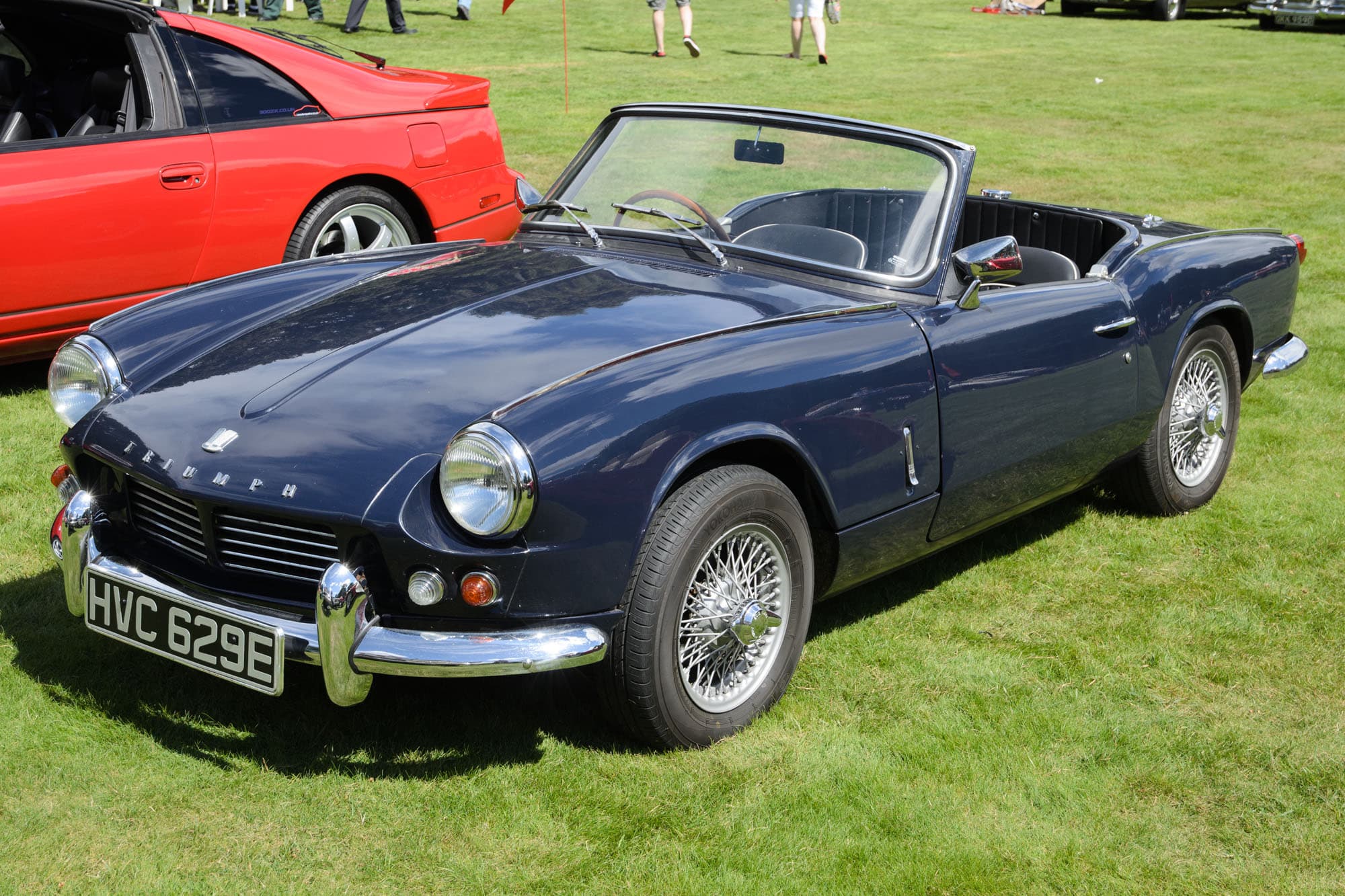
11 A dark blue Spitfire 4 Mk II on wire wheels at the Lytham Hall classic car show, Lancashire, in July 2016.
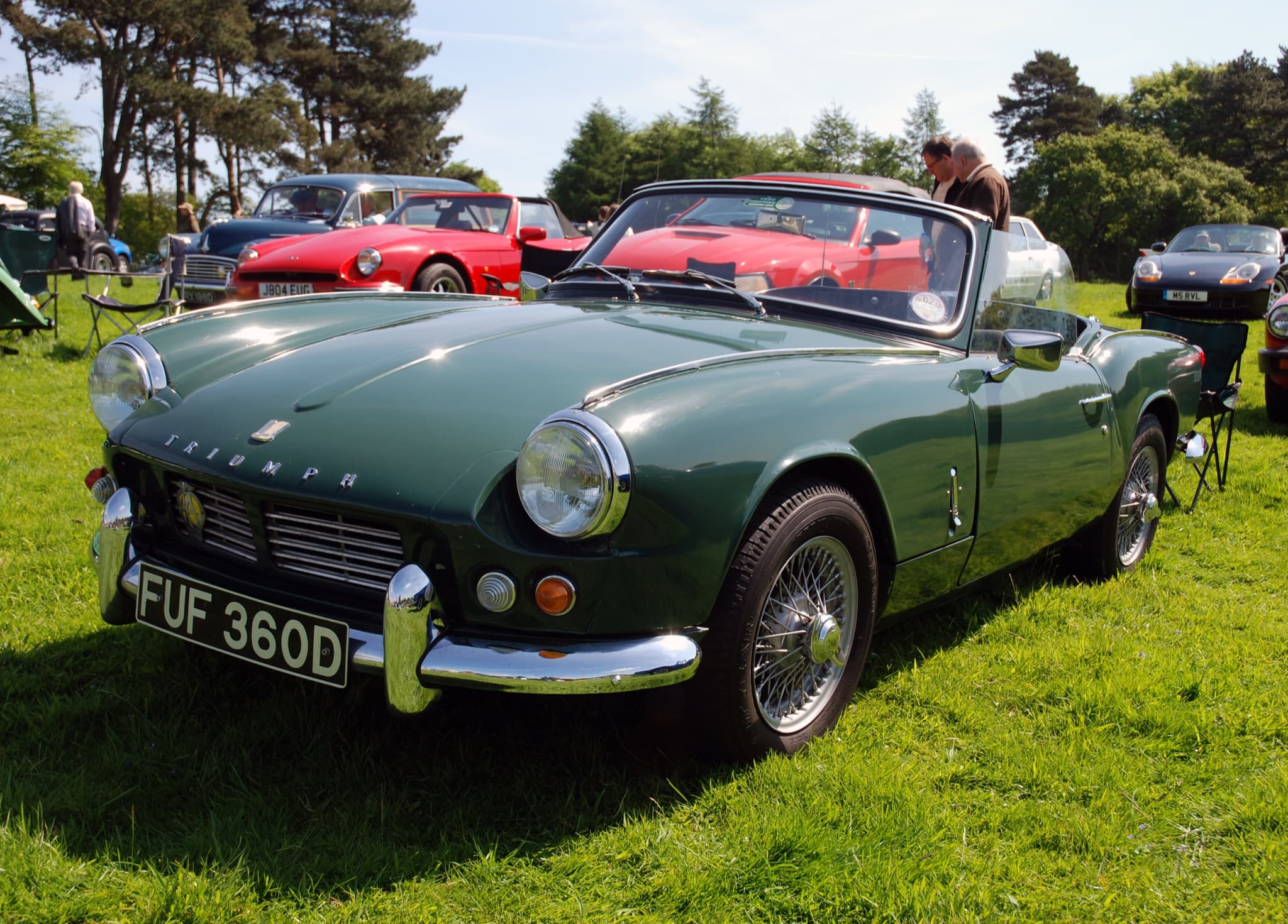
12 A green Spitfire 4 Mk II on wire wheels at the classic vehicle show at Capesthorne Hall, Cheshire, in May 2009.
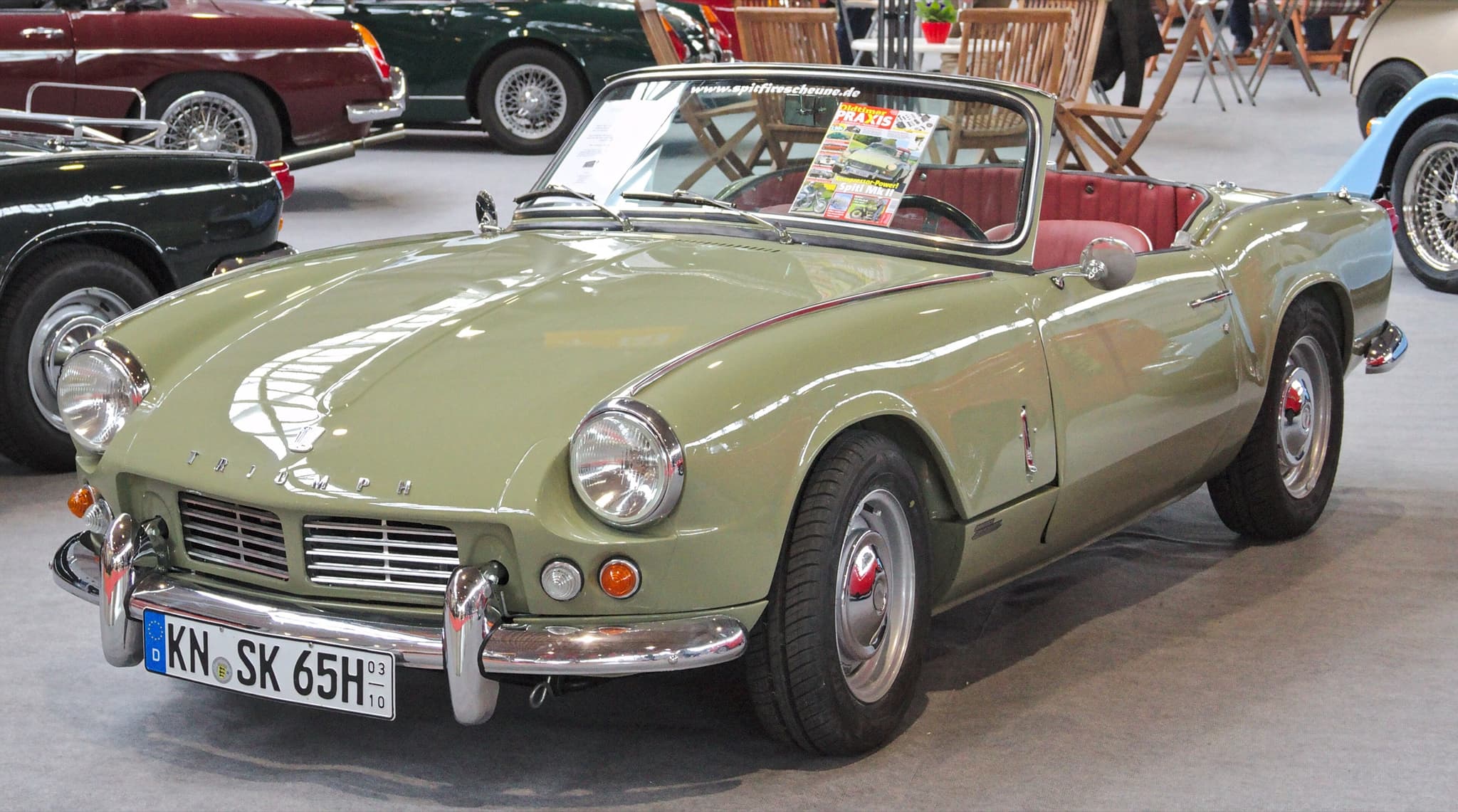
13 A pale sage-green Spitfire 4 Mk II with a red interior at the Retro Classics show in February 2020.
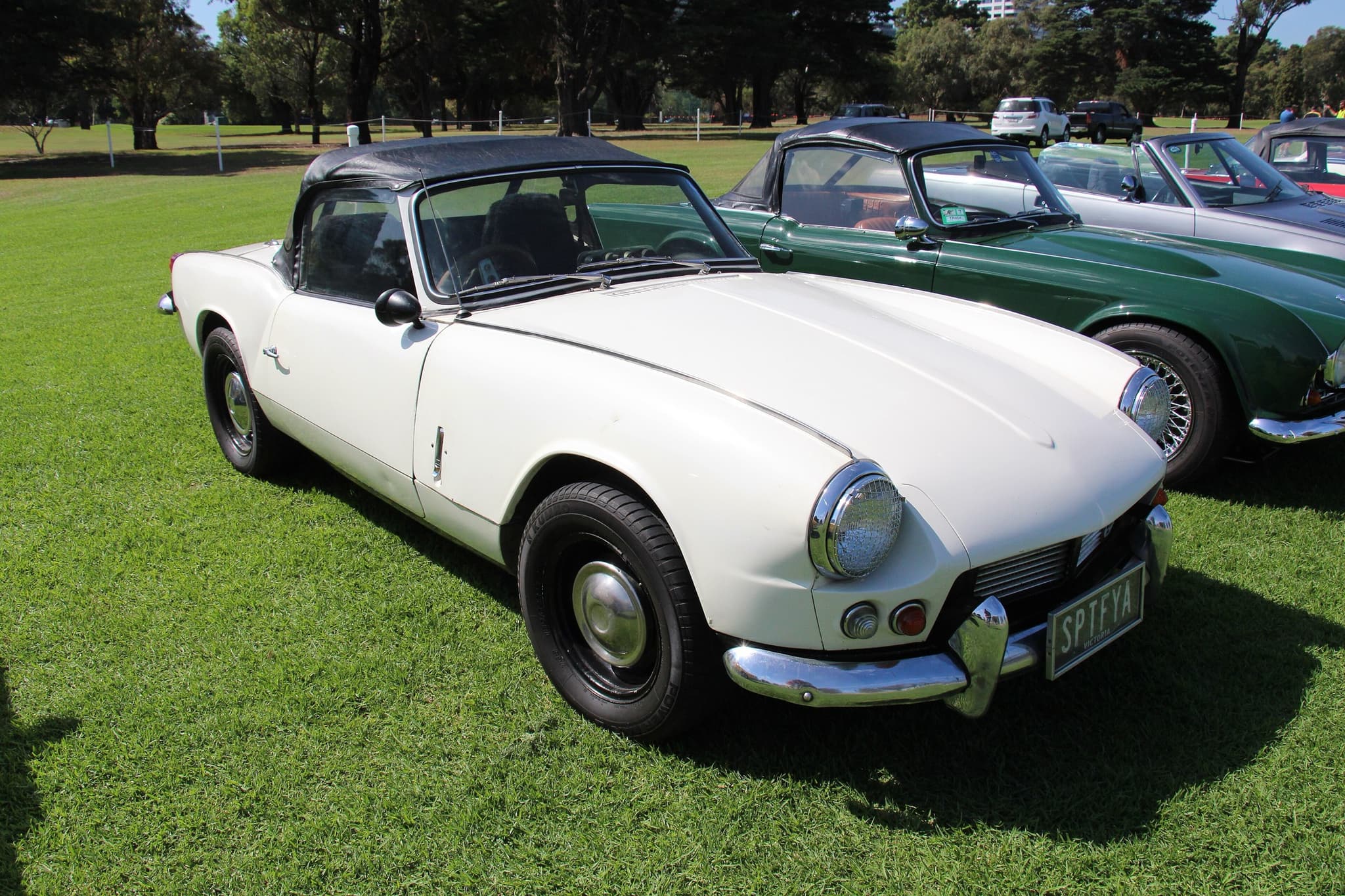
14 A white Spitfire 4 Mk II with its hood up, the low bumper under its barred grille, at a car display in Australia in March 2016.
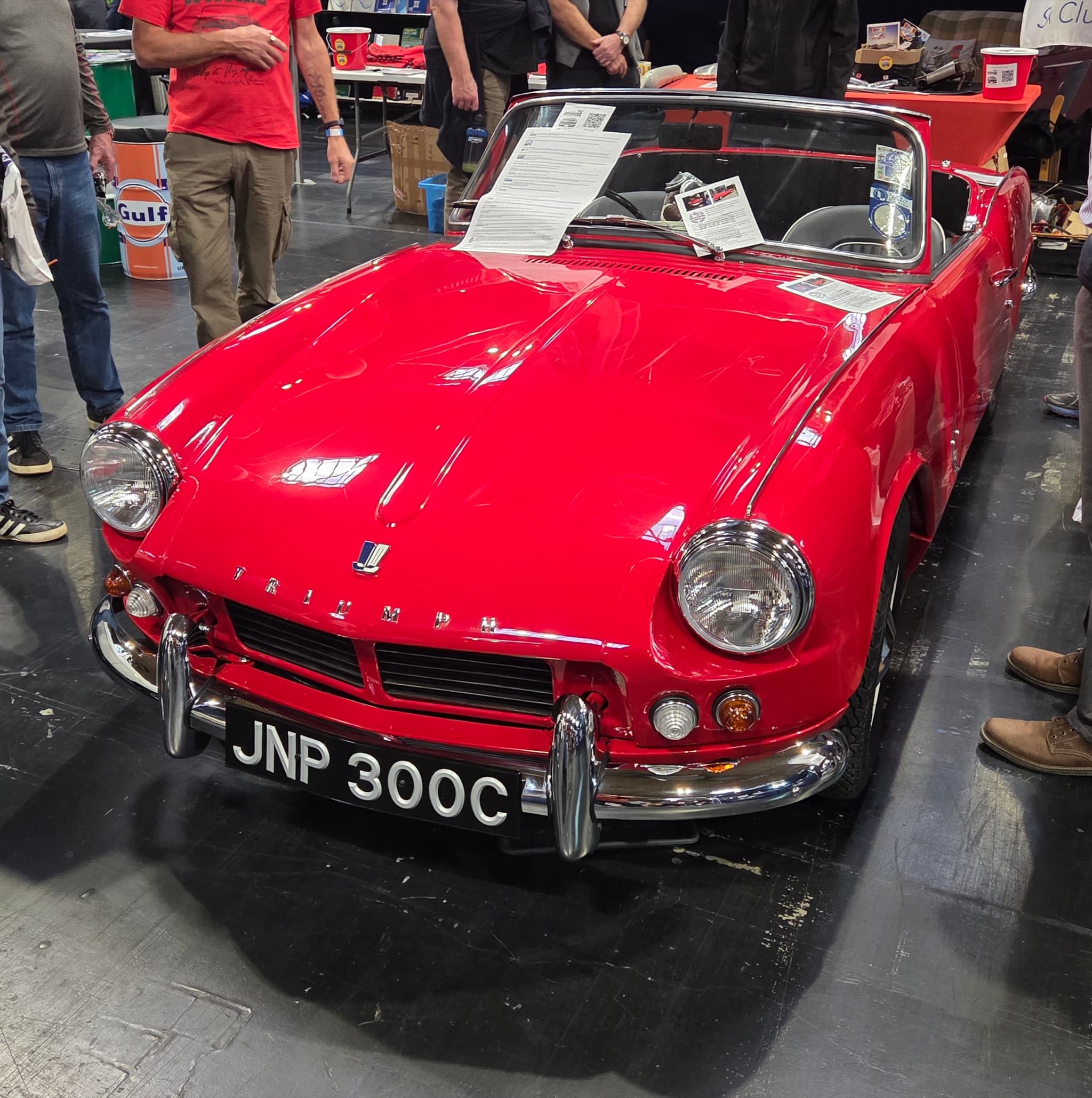
15 A red Spitfire 4 Mk II on a stand at the Classic Motor Show, NEC Birmingham, in November 2025.
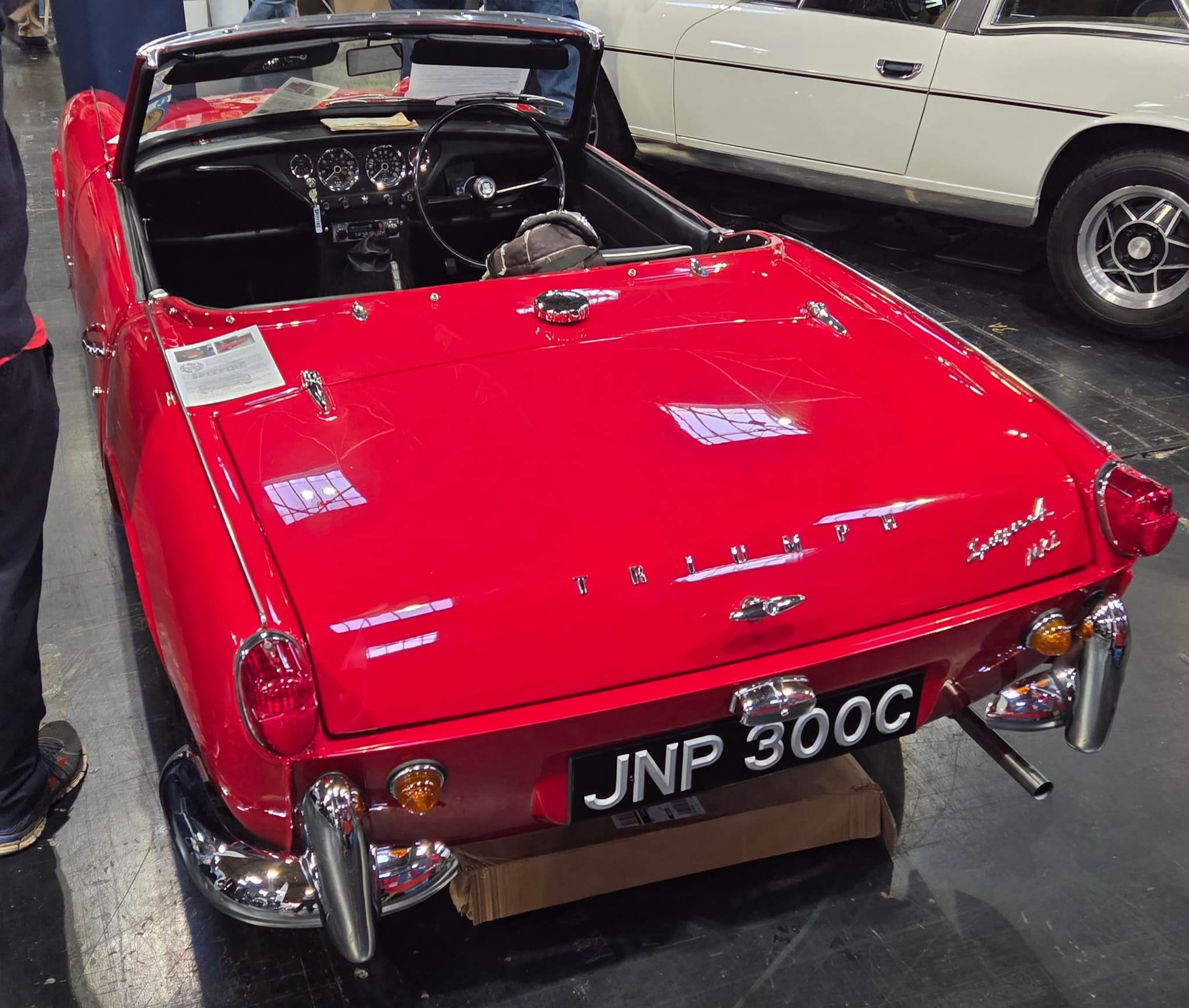
16 A red Spitfire 4 Mk II from behind, showing its round tail and 'Spitfire 4 Mk 2' boot script, at the Classic Motor Show, NEC Birmingham, in November 2025.
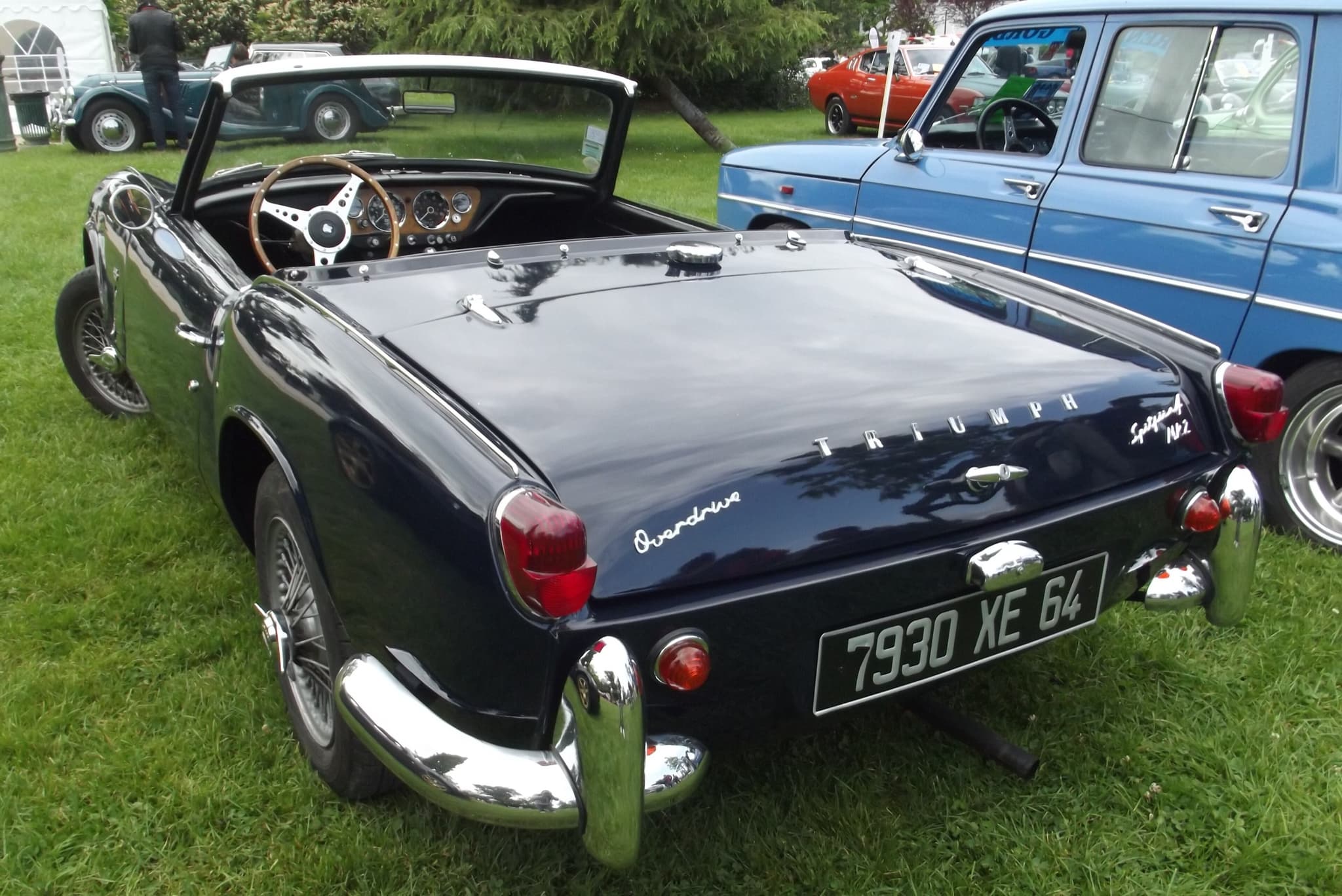
17 A dark blue Spitfire 4 Mk II from the rear, its boot carrying the Mk 2 and Overdrive scripts, at a show in May 2015.
Mk III 9
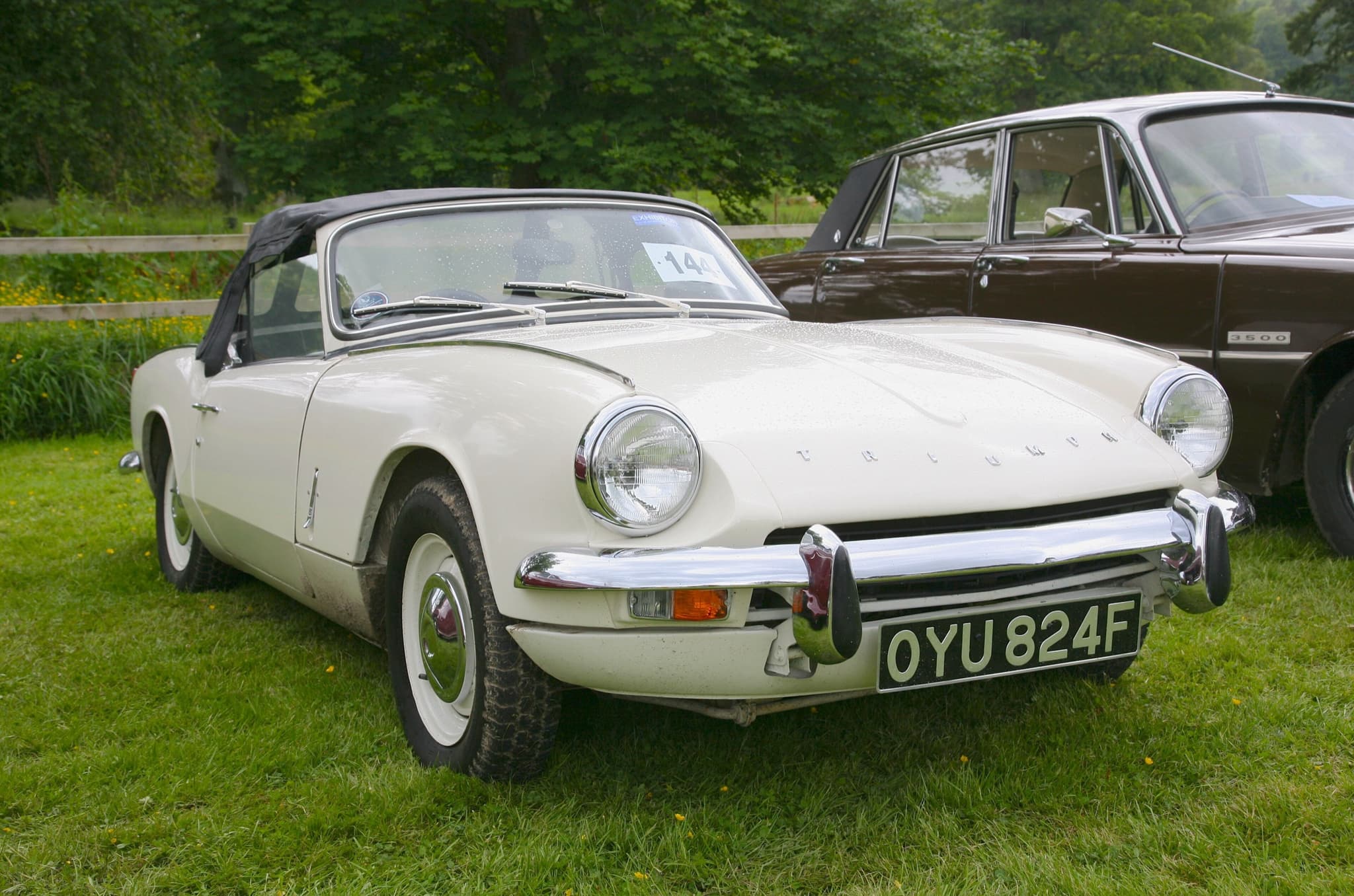
18 A white Spitfire Mk III with its hood up and its bumper across the grille, on a show field in June 2011.
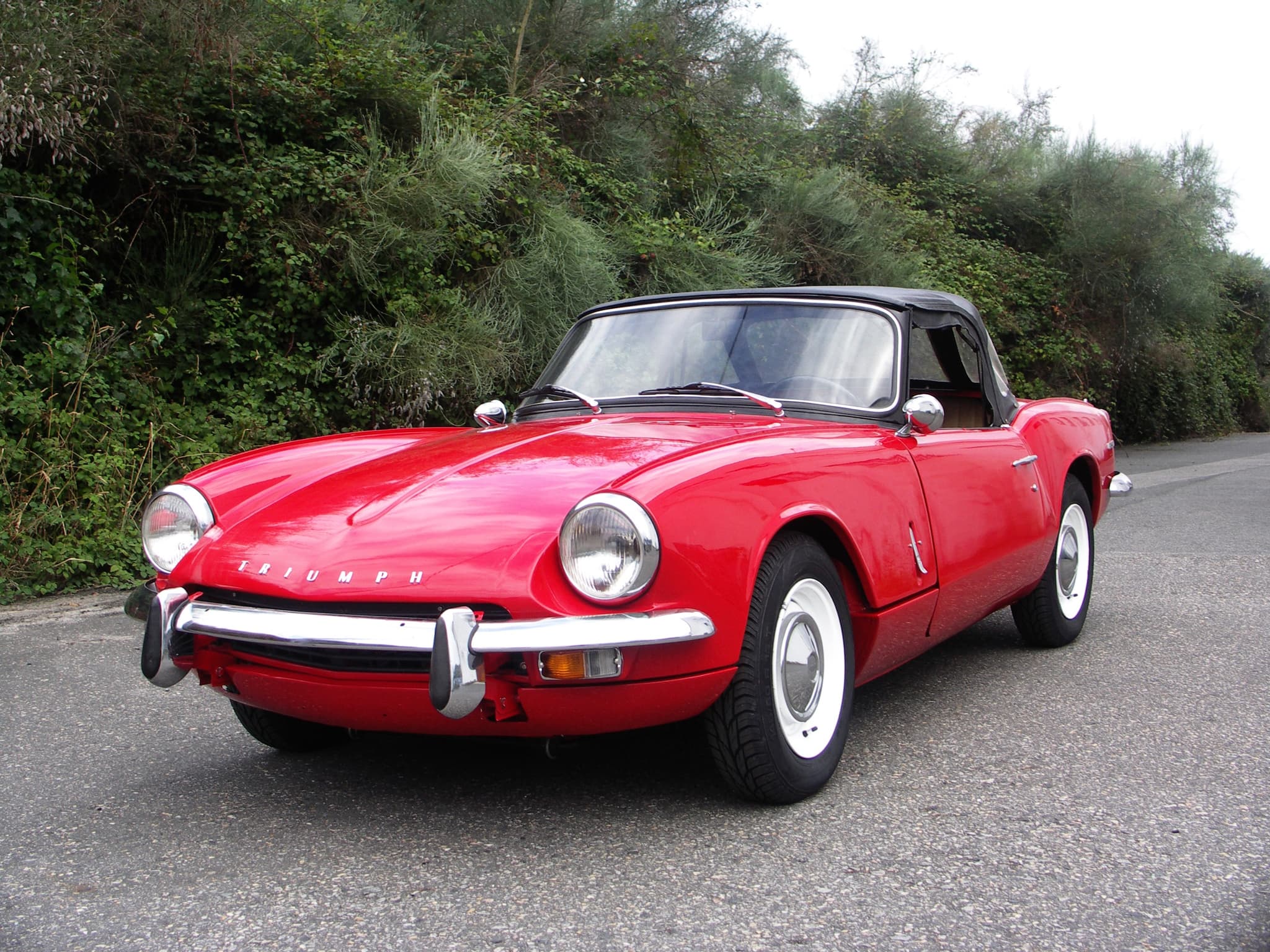
19 A red Spitfire Mk III with its hood up and white-painted wheels, on a quiet lane in August 2011.
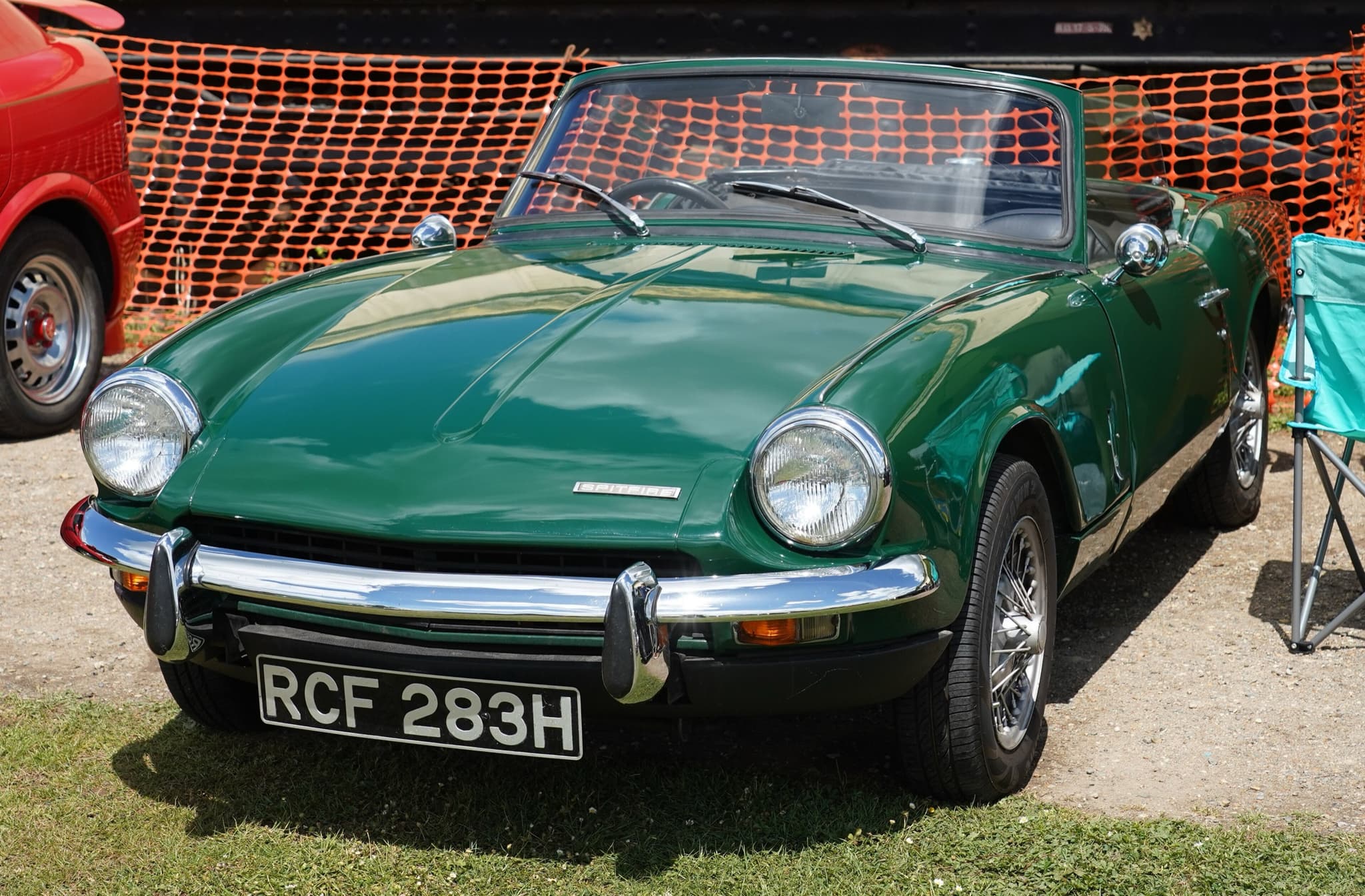
20 A green Spitfire Mk III on wire wheels at the East Anglian Railway Museum's Transport Extravaganza in 2025.
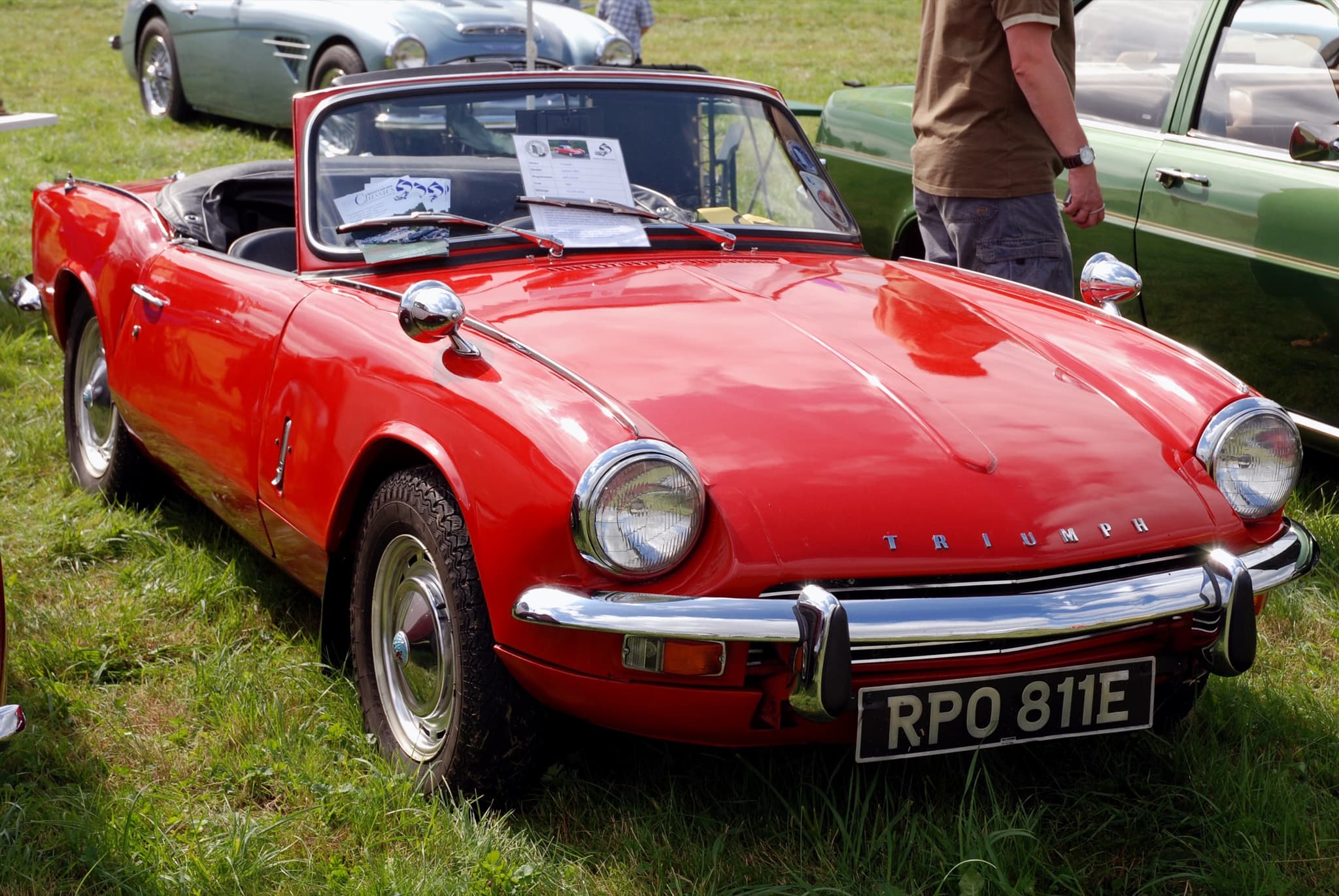
21 A red Spitfire Mk III at Dunsfold Wheels and Wings, Surrey, in August 2007.
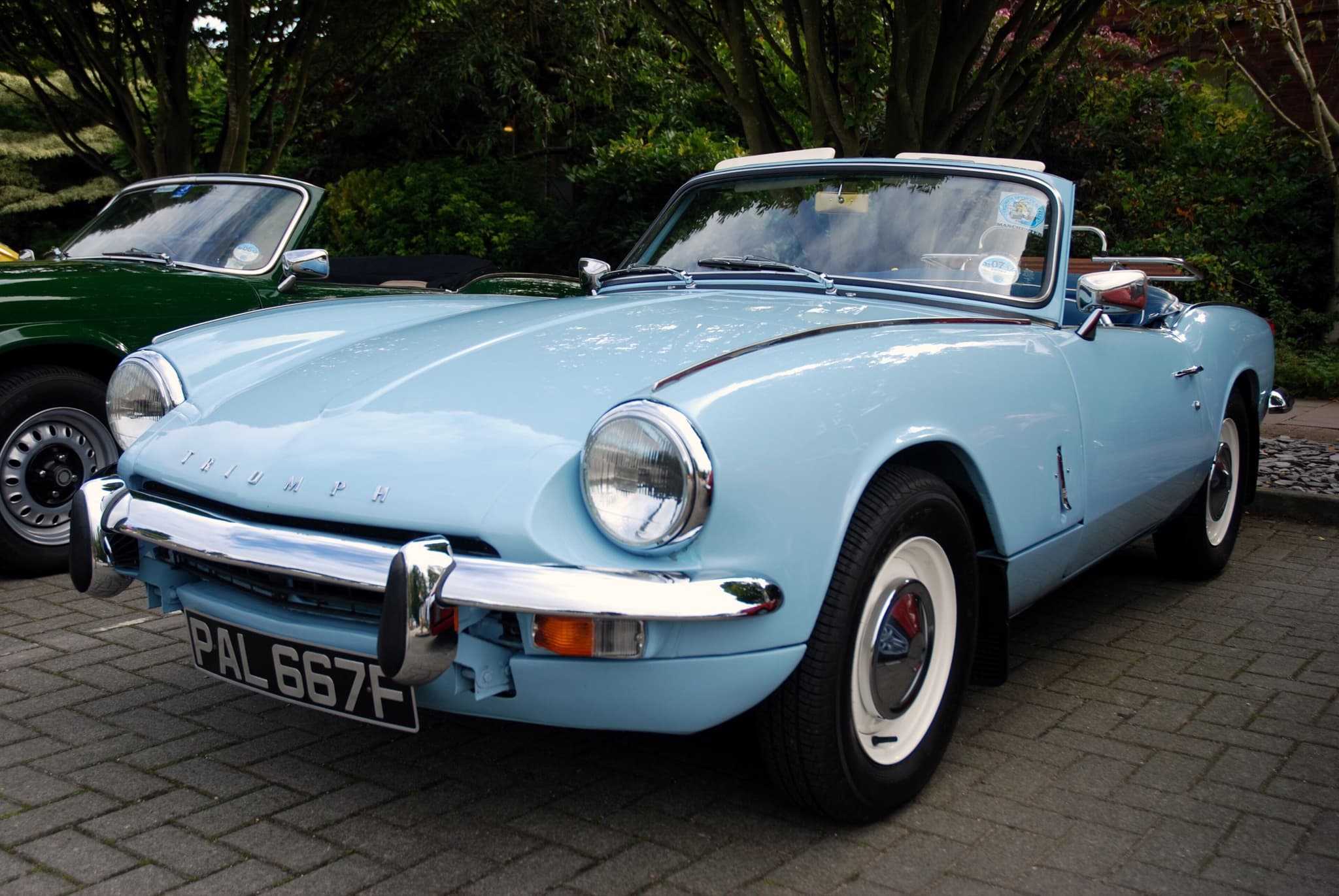
22 A pale blue Spitfire Mk III, its bumper across the grille, at High Legh, Cheshire, in September 2011.
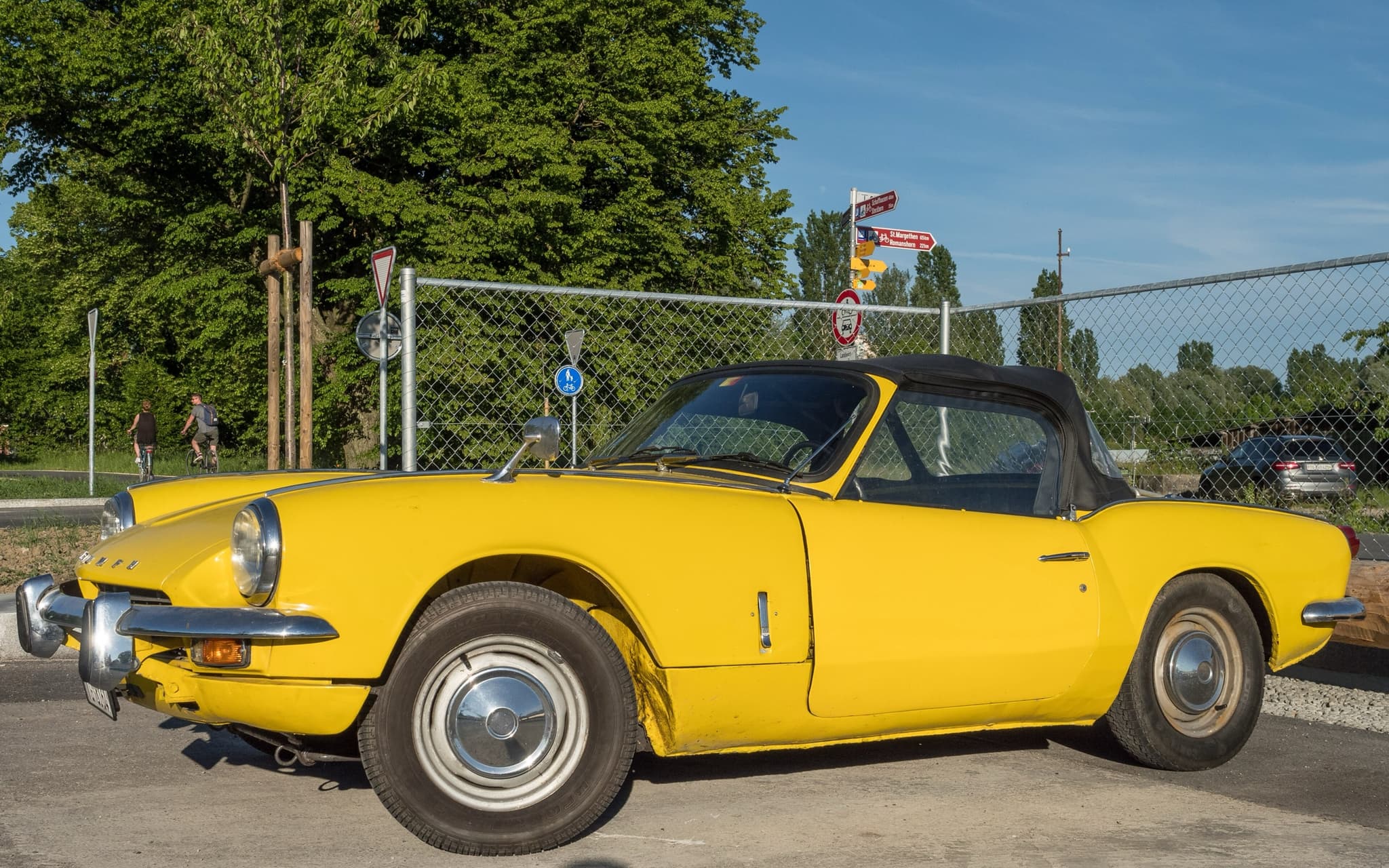
23 A yellow Spitfire Mk III with its hood up, photographed in June 2019.
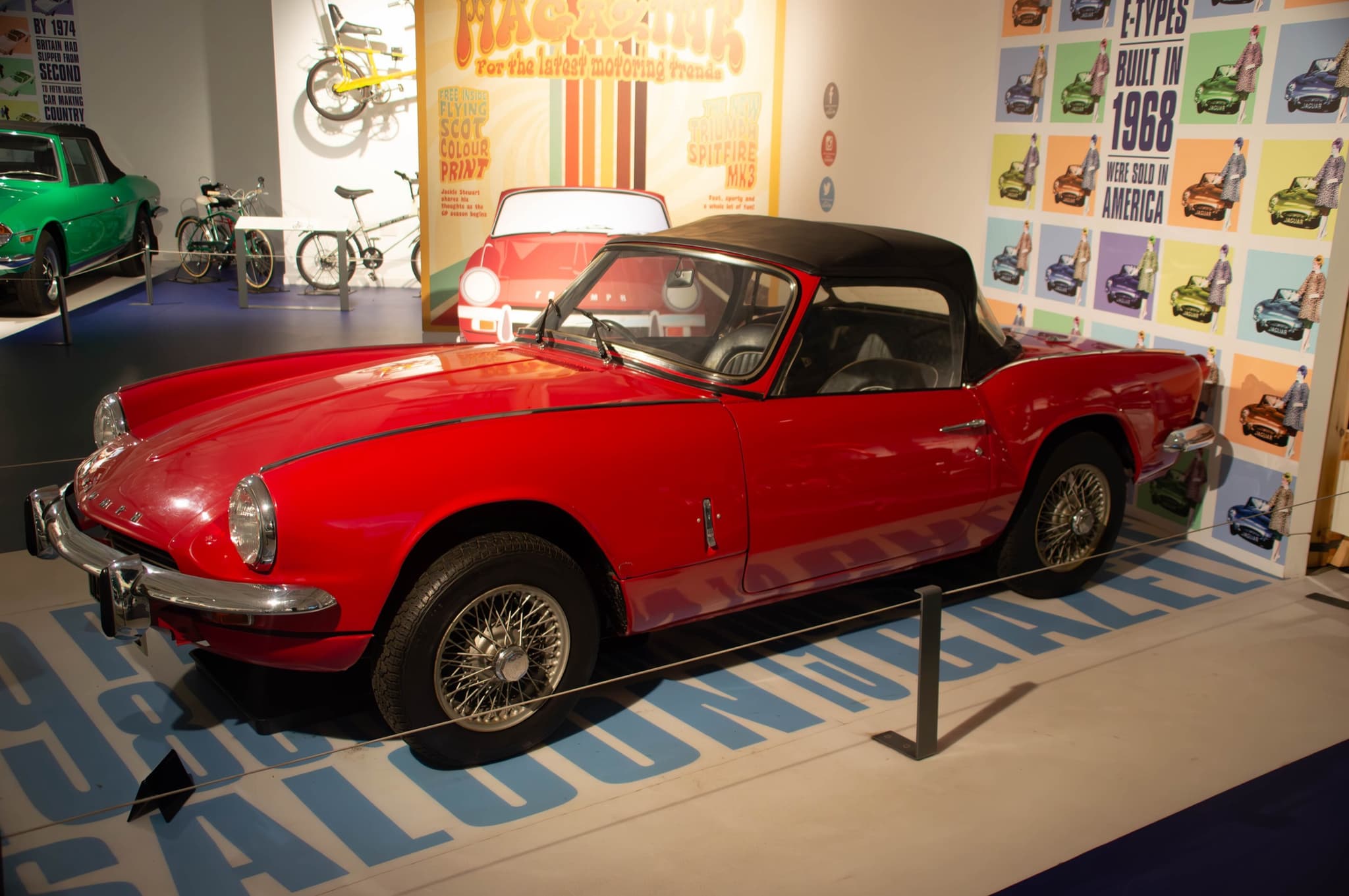
24 A red Spitfire Mk III with wire wheels, displayed at the Coventry Transport Museum in September 2020.
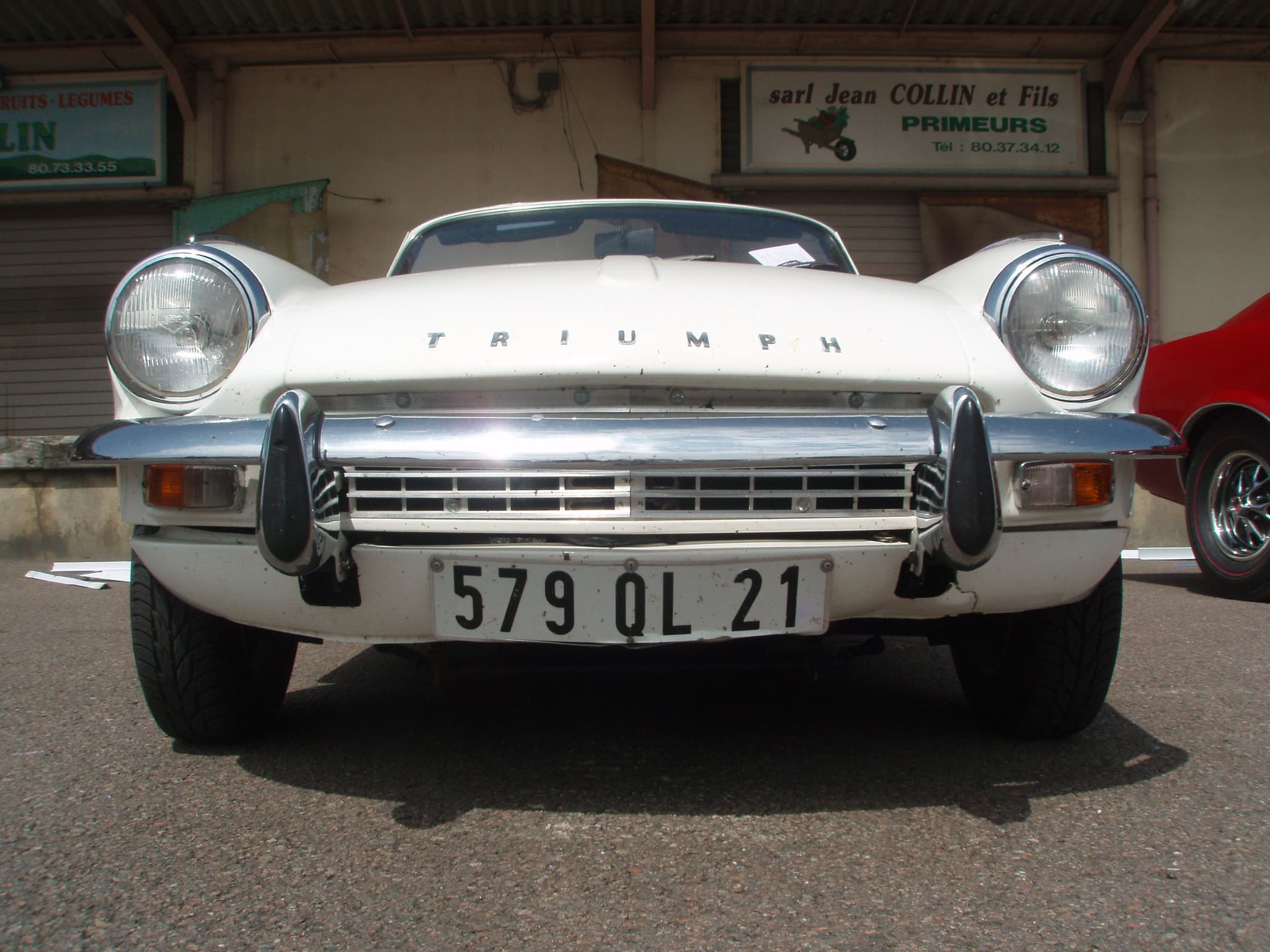
25 A white Spitfire Mk III, its front bumper raised across the grille, photographed in France in June 2012.
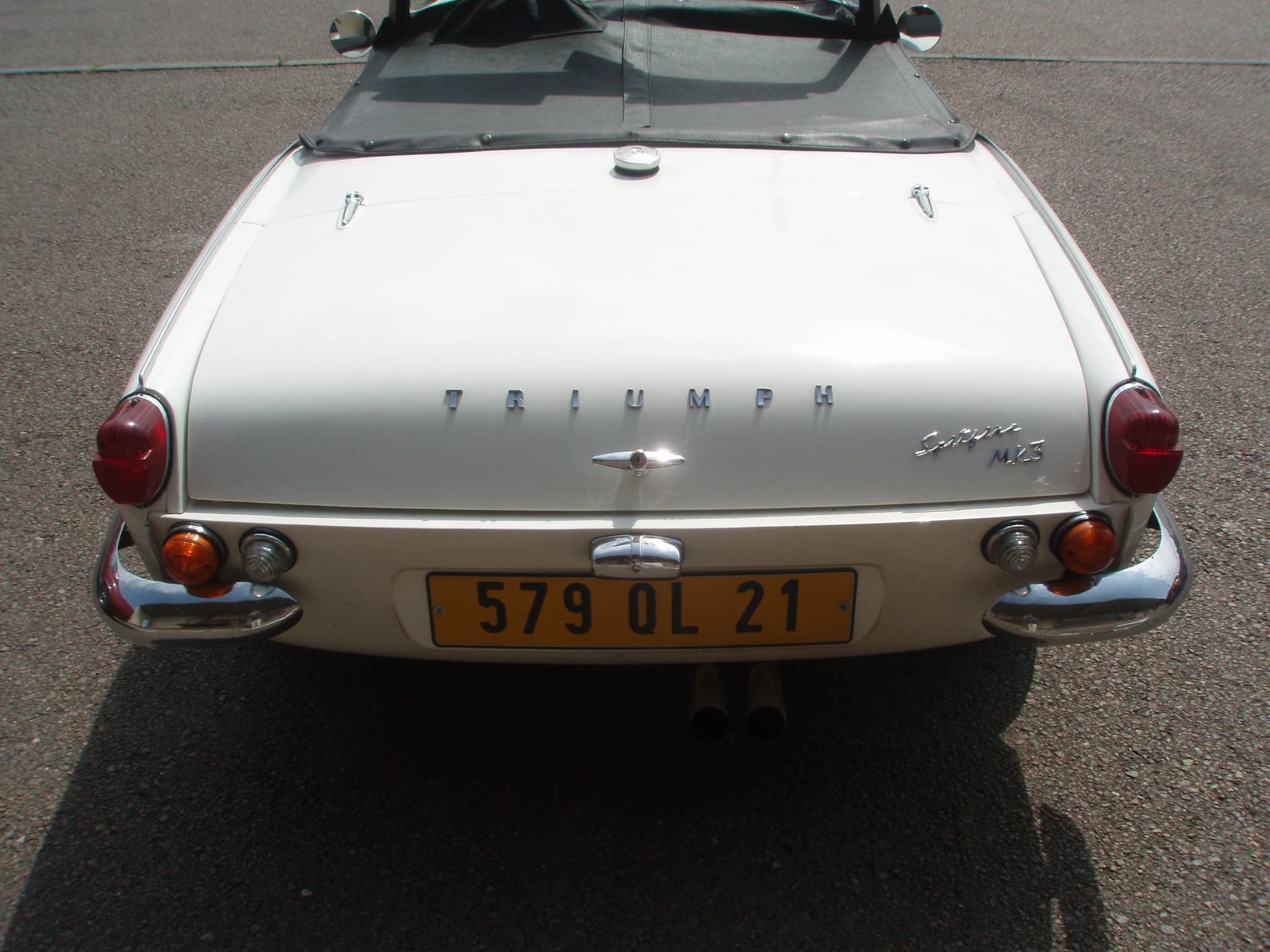
26 The round tail of a white Spitfire Mk III with its 'Spitfire Mk3' boot script and hood folded, photographed in France in June 2012.
Mk IV 3
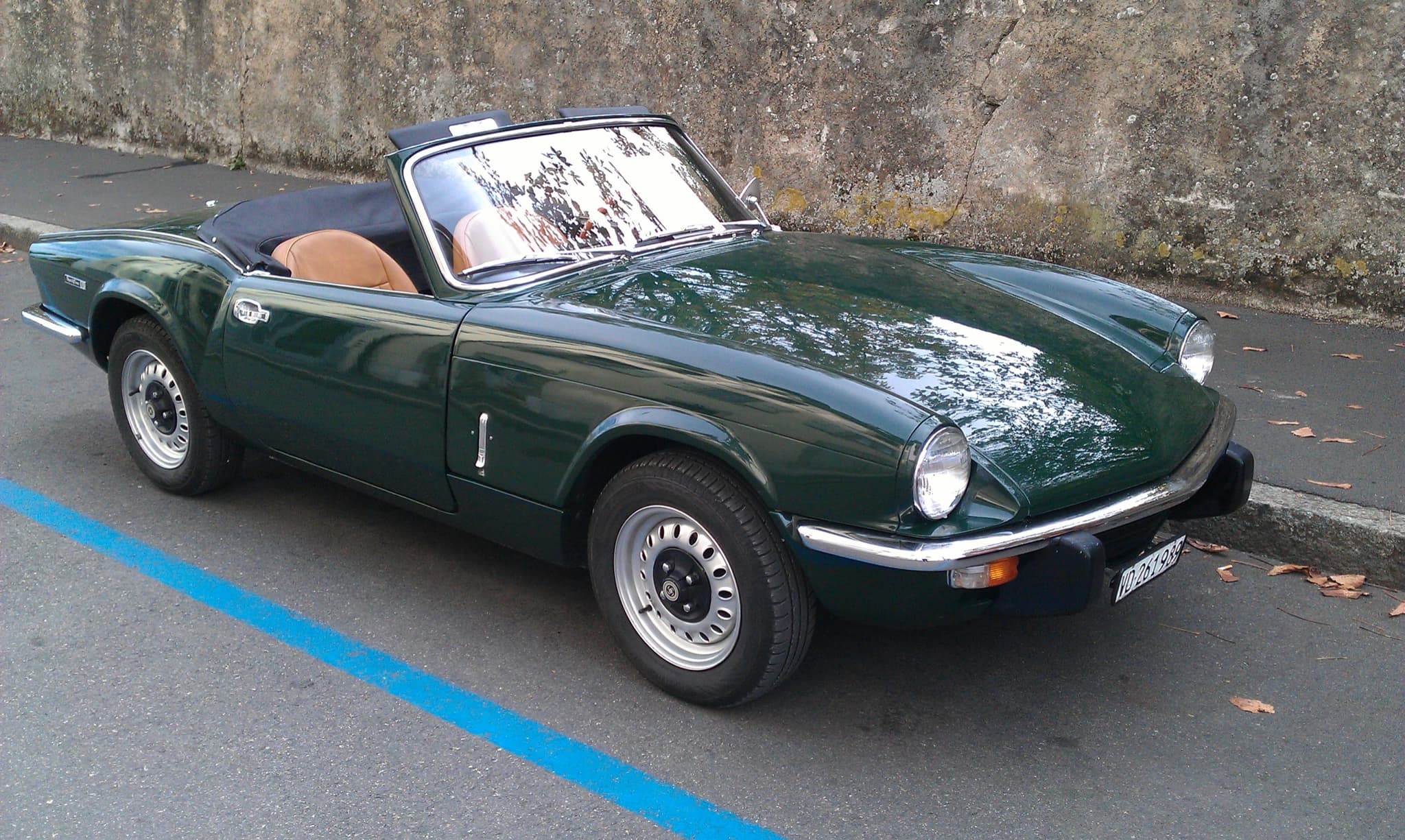
27 A dark green Spitfire Mk IV with tan seats and its hood folded, at the kerb of a street in Morges, Switzerland, in October 2012.
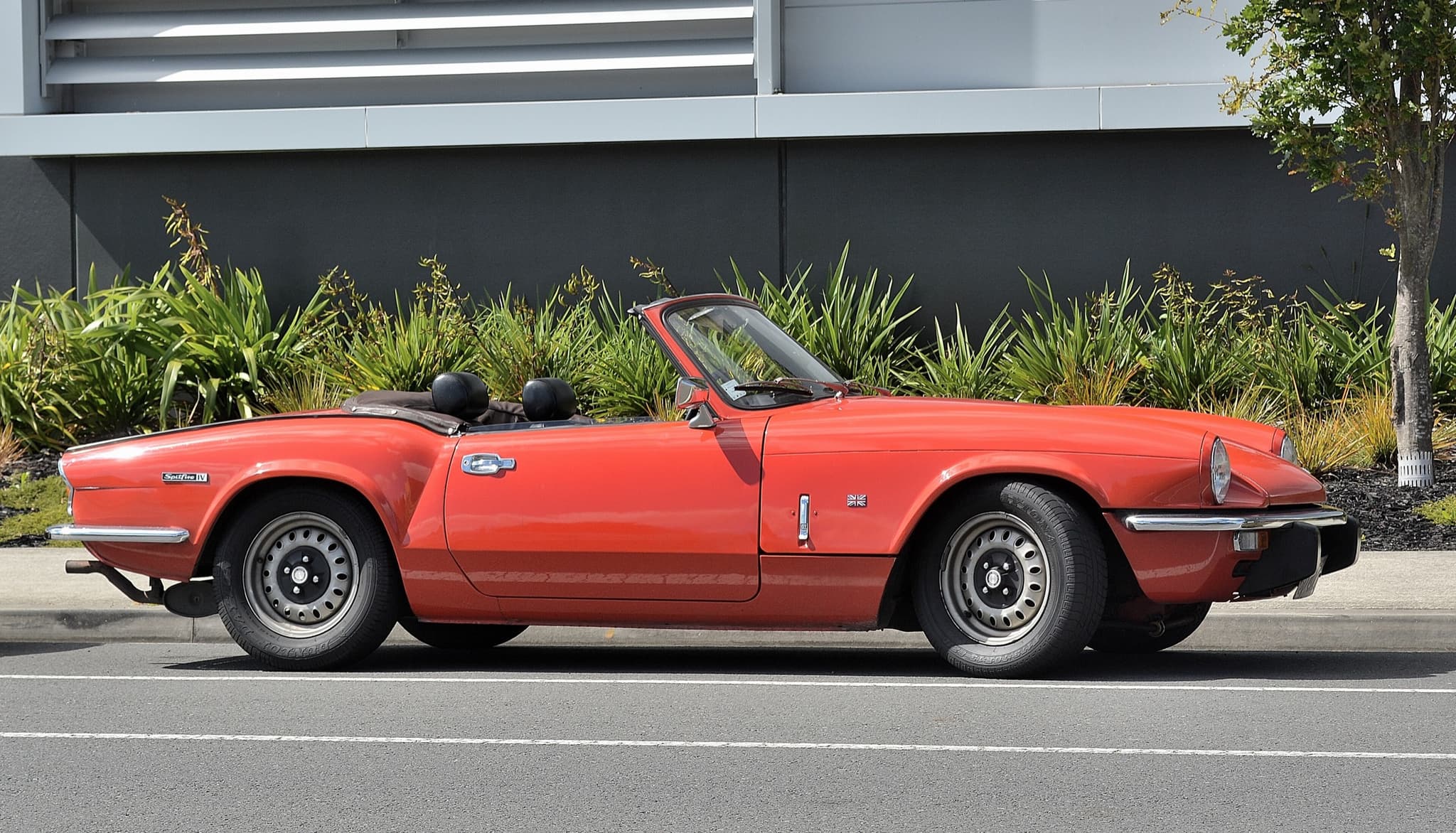
28 A red Spitfire Mk IV with its hood folded under a brown cover and a Union flag badge on its front wing, in New Zealand in December 2014.
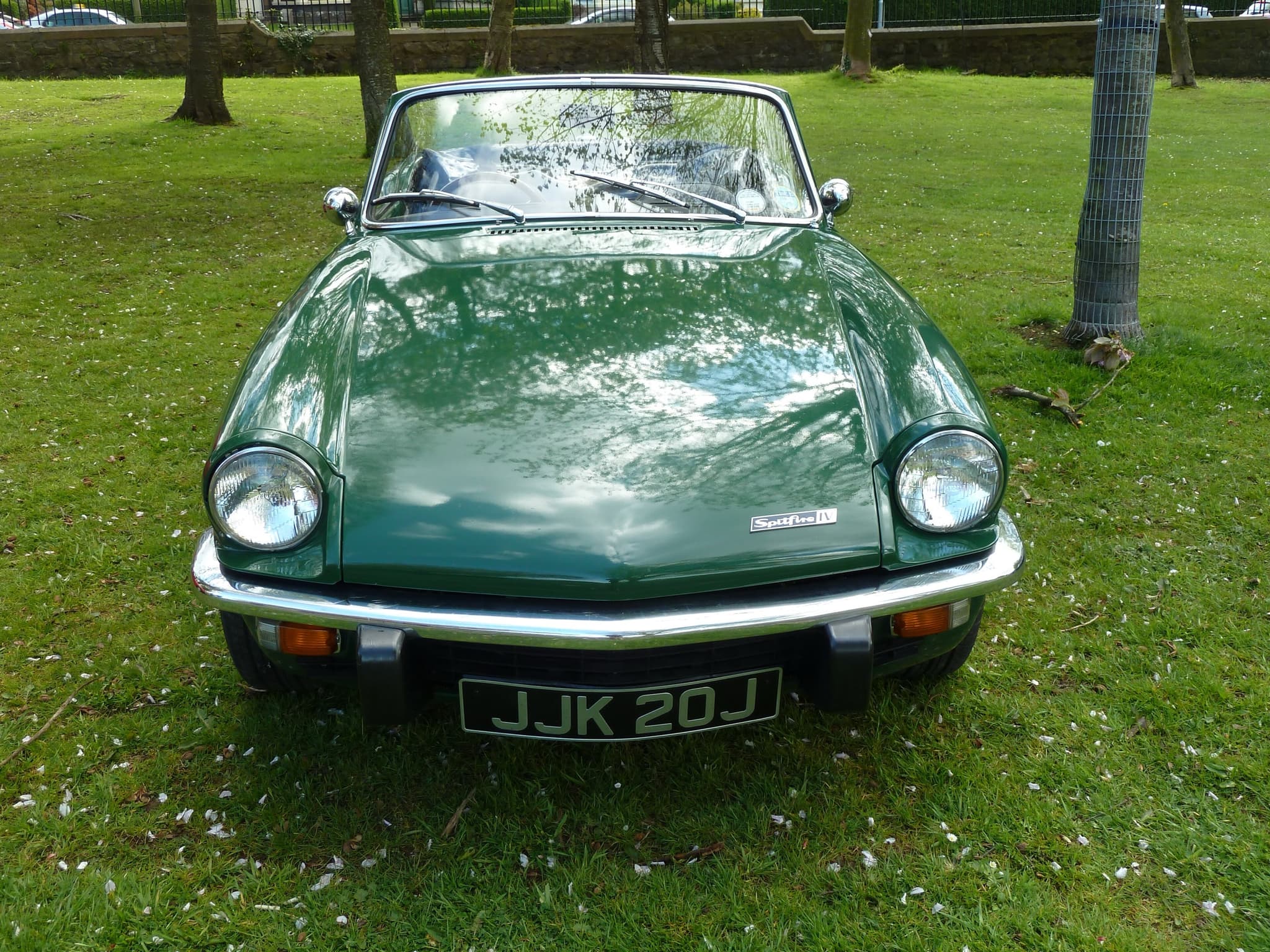
29 A green Spitfire Mk IV with its 'Spitfire IV' bonnet badge, at a Triumph car event in Wallace Park, Lisburn, County Antrim.
Mk IV or 1500 7
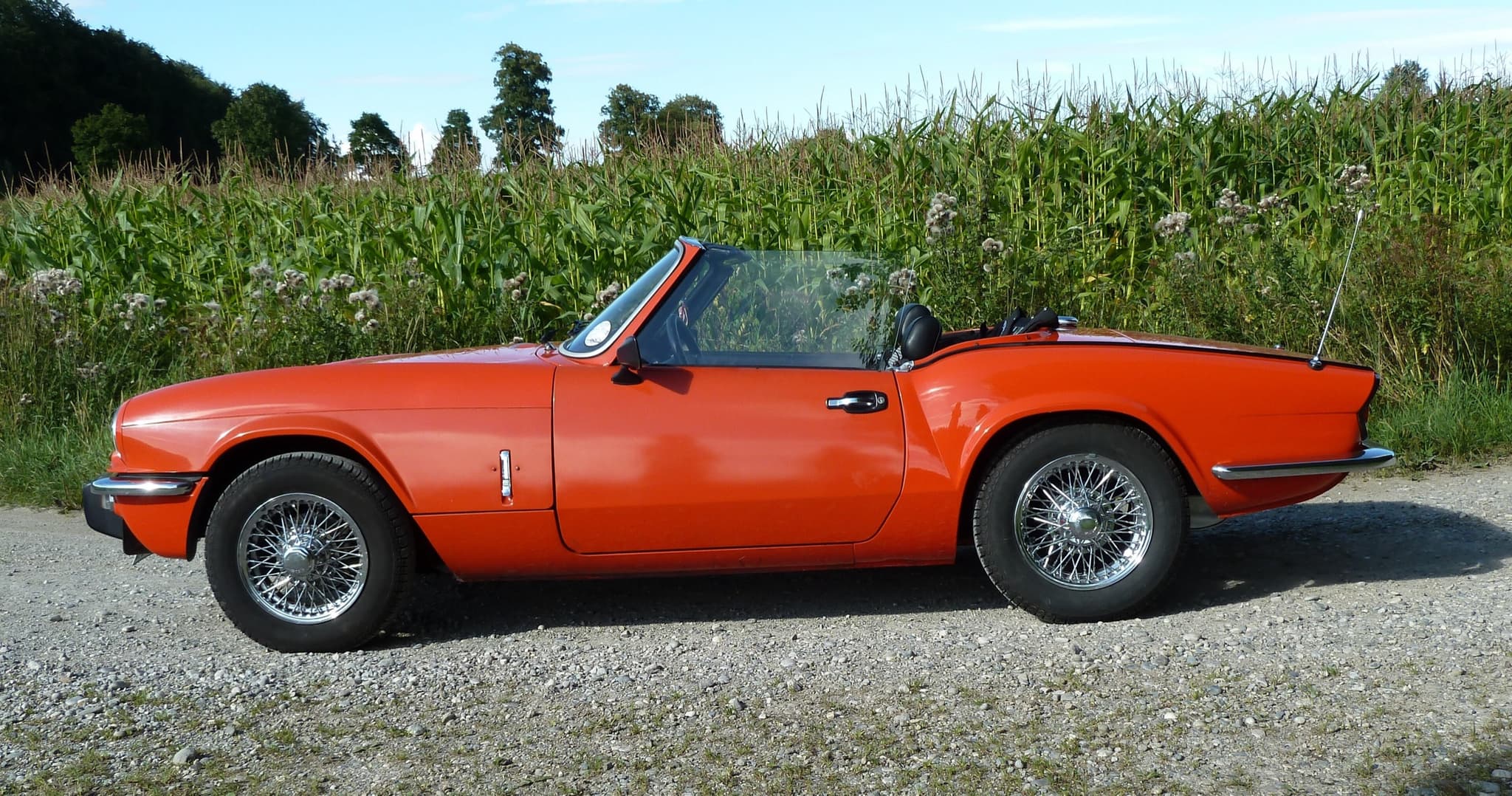
30 An orange Spitfire in the Mk IV body, on wire wheels, in profile before a maize field in August 2011.
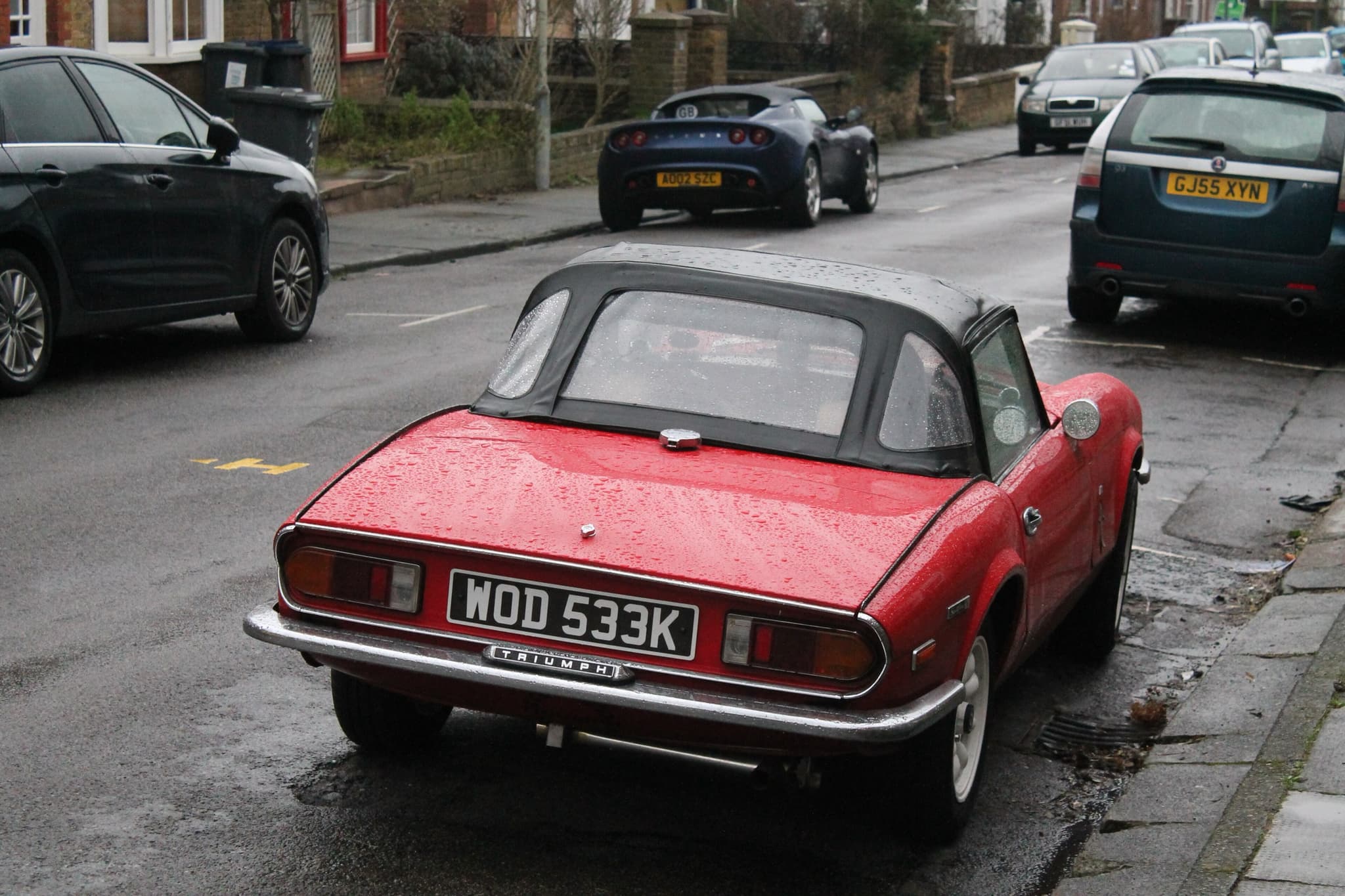
31 A red Spitfire in the Mk IV body with its hood up, on a wet street in January 2015.
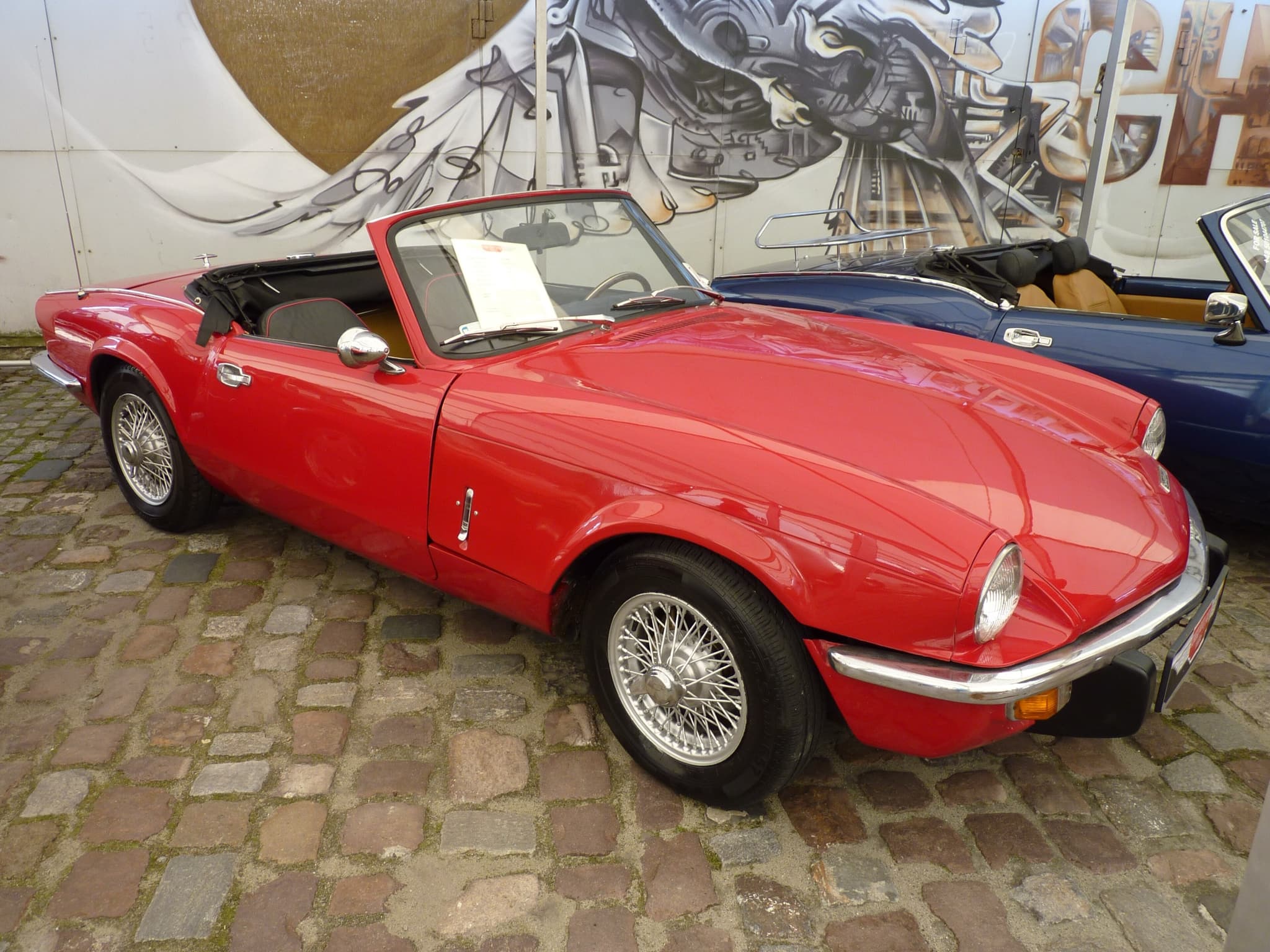
32 A red Spitfire in the Mk IV body, on wire wheels, at the Classic Moto Show in Kraków, Poland, in September 2014.
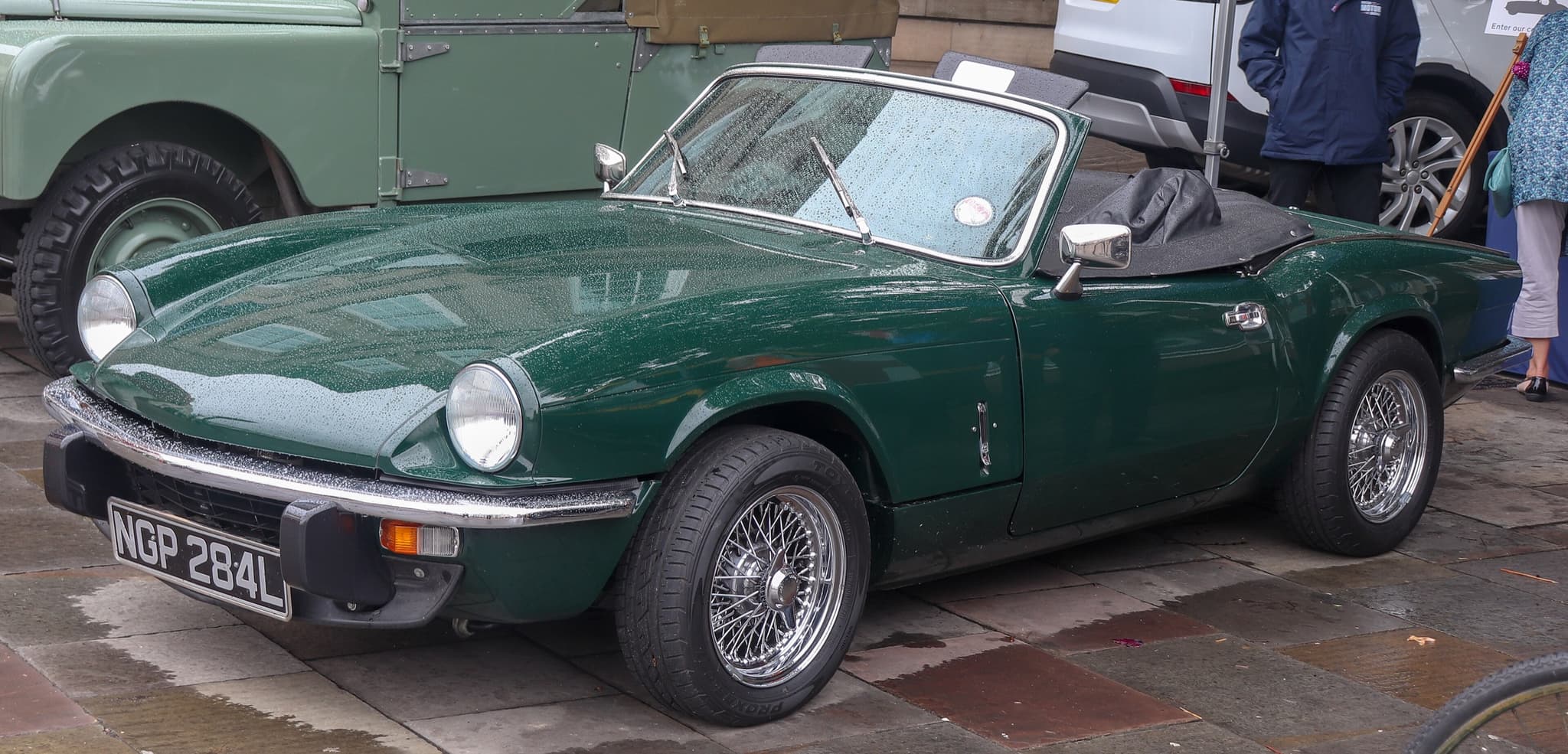
33 A green Spitfire in the Mk IV body on wire wheels, wet with rain, at the Warwick Classic Car Show in August 2018.
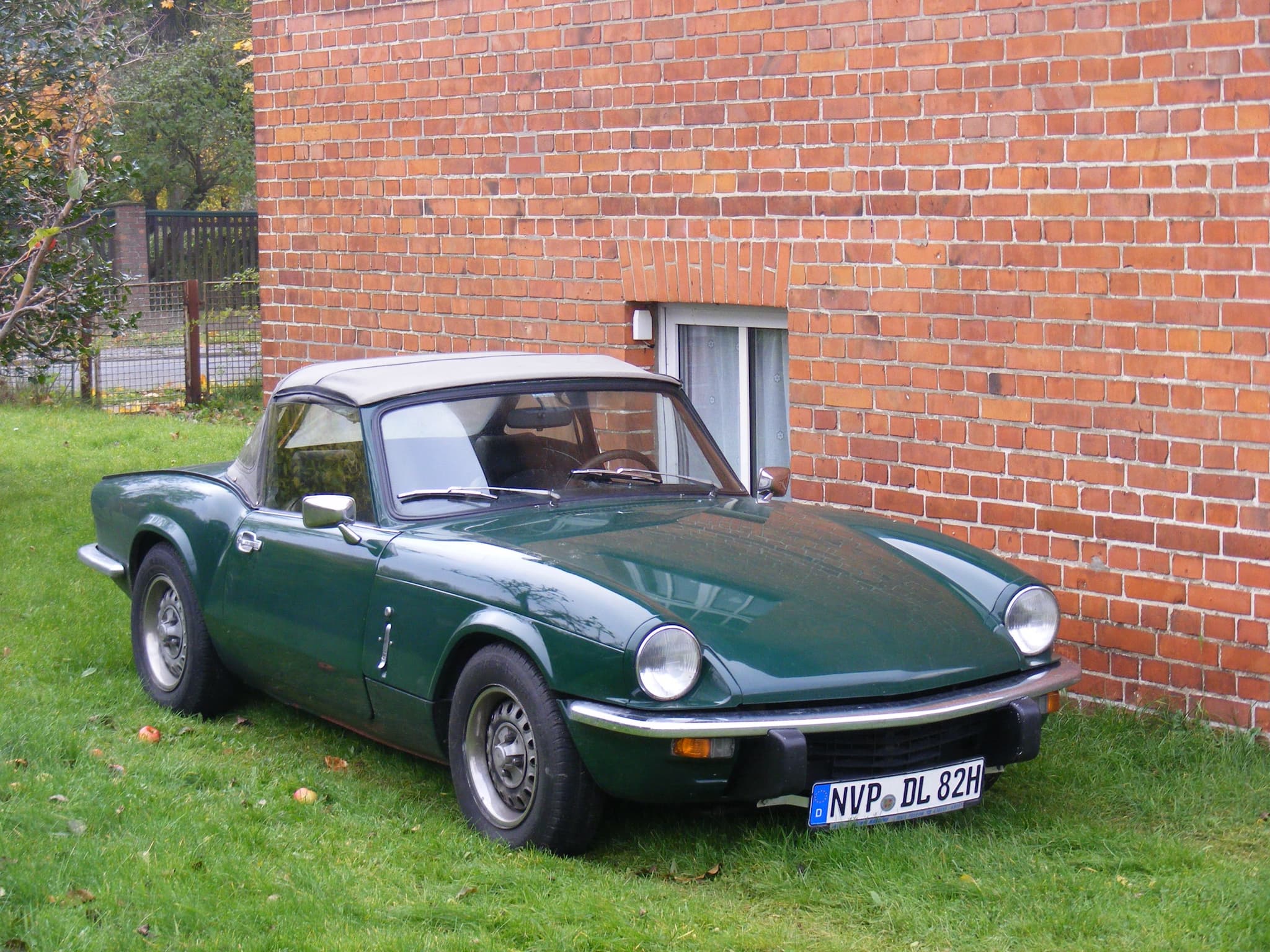
34 A green Spitfire in the Mk IV body with its hood up, beside a brick house in Barth, Germany, in October 2011.
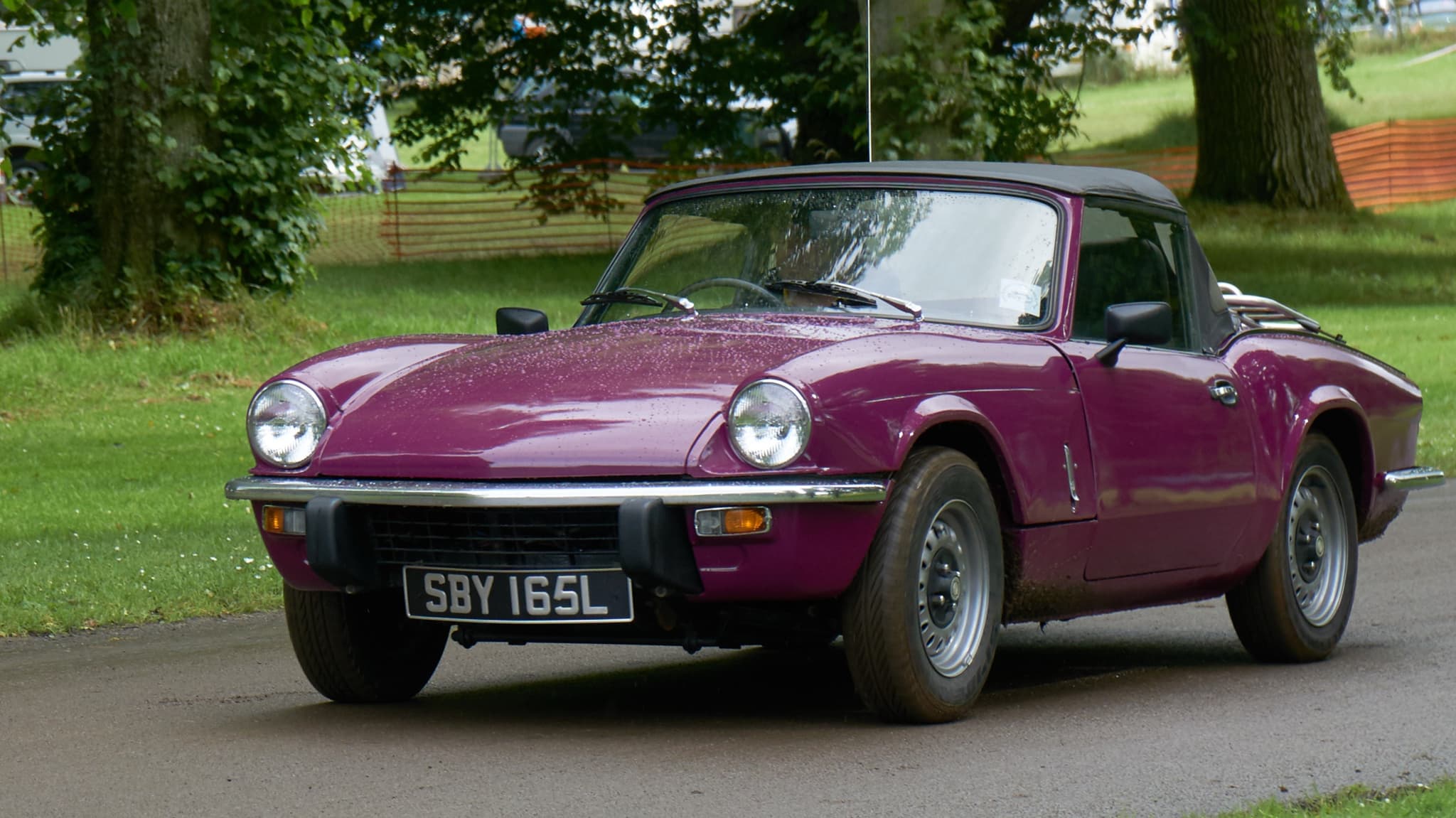
35 A purple Spitfire in the Mk IV body with its hood up, on a wet road through parkland in July 2016.
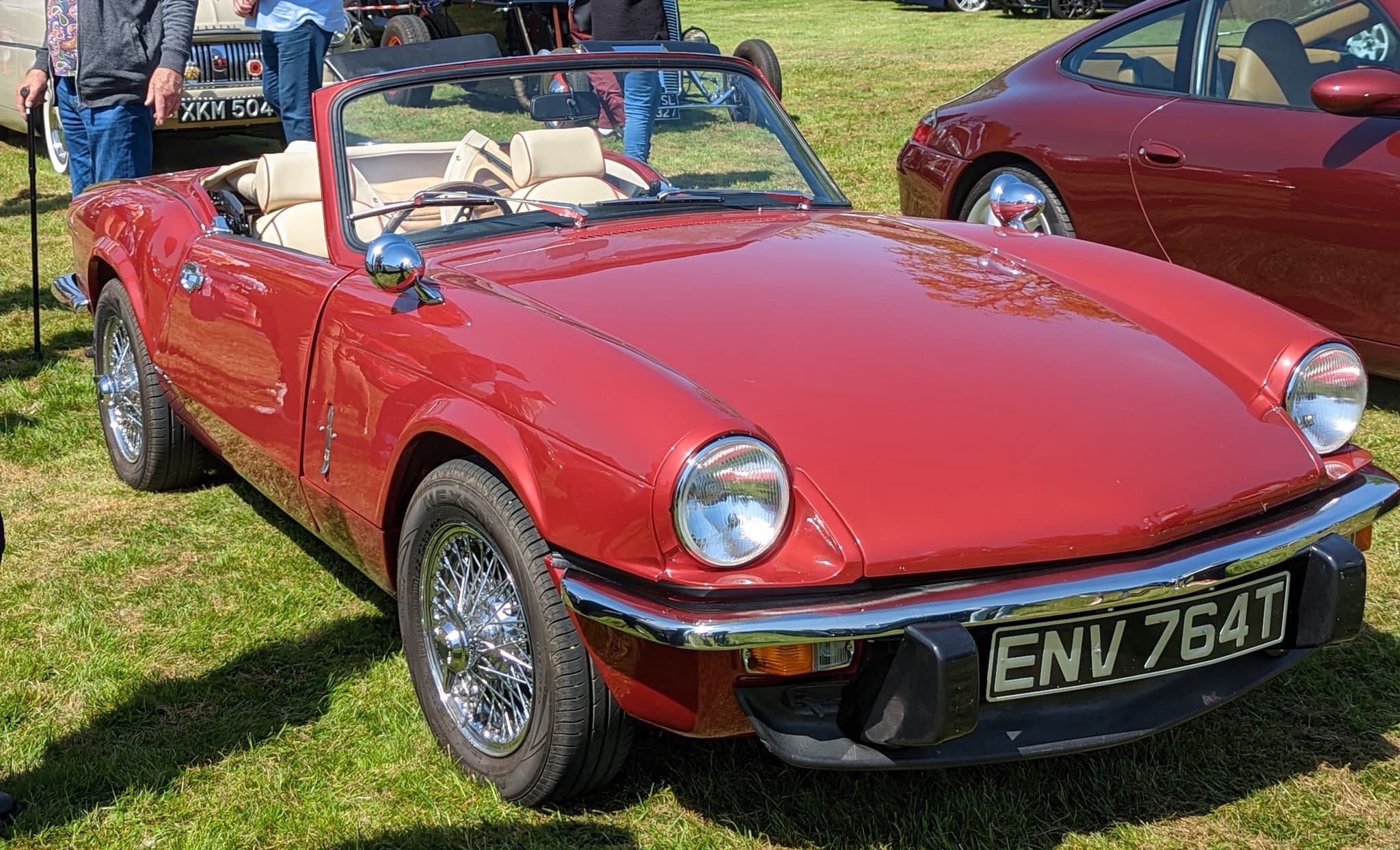
36 A red Spitfire in the Mk IV body on wire wheels, its hood folded, on a show field in May 2022.
Spitfire 1500 8
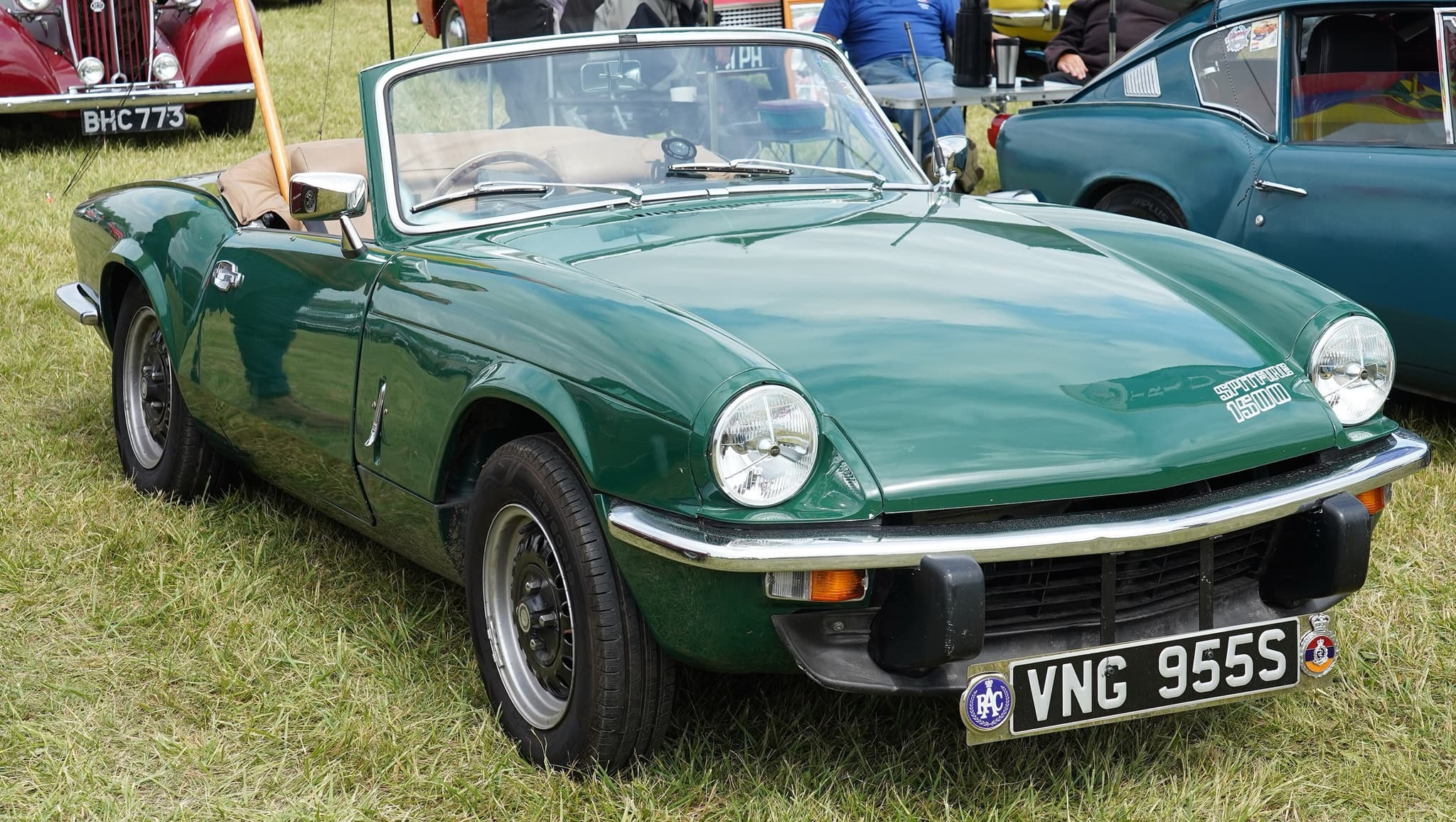
37 A dark green Spitfire 1500 with its hood folded, on the show field of the Aldham Old Time Rally in June 2026.
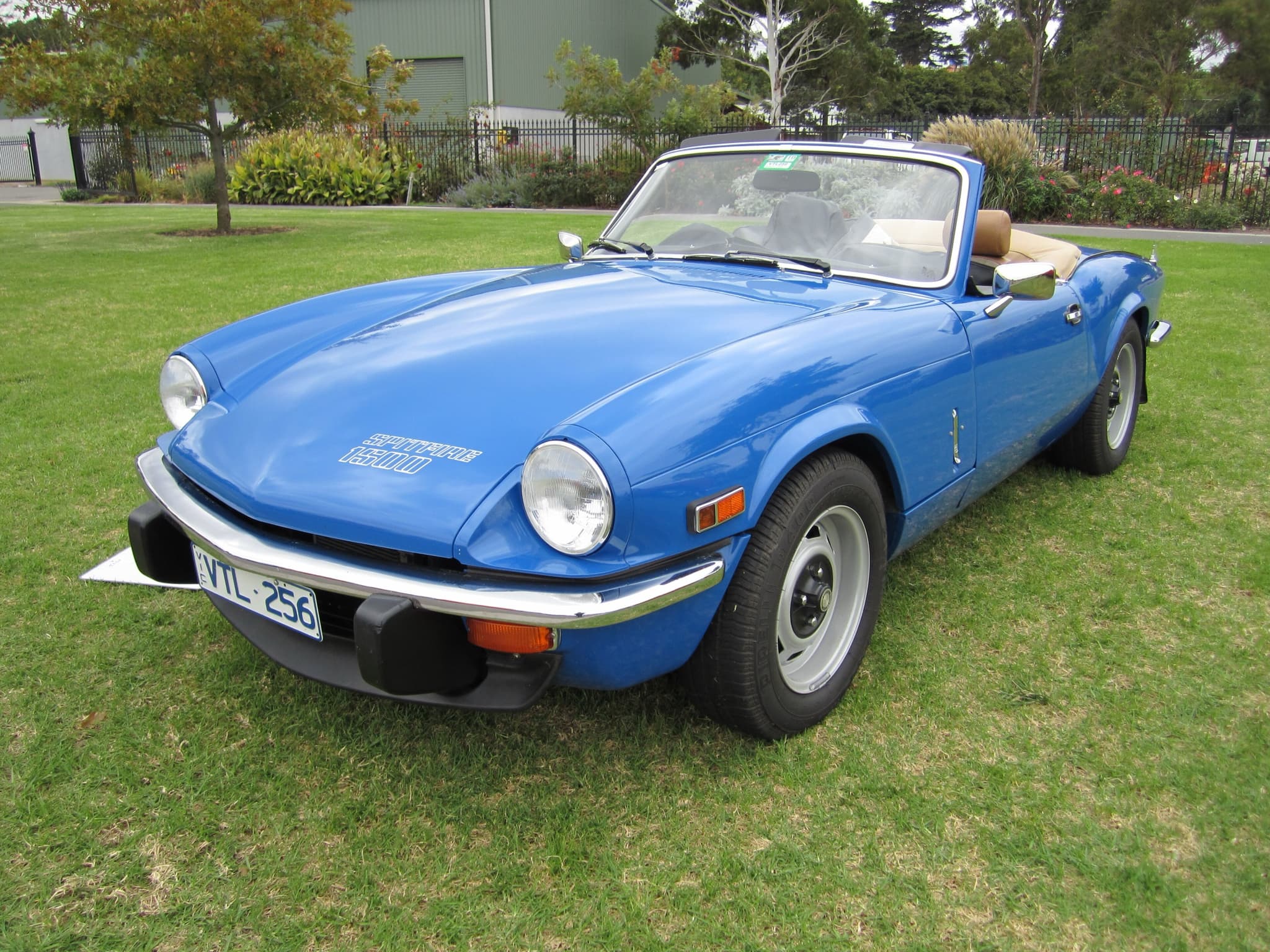
38 A blue Spitfire 1500, with its bonnet decal and black under-riders, on a lawn in April 2011.
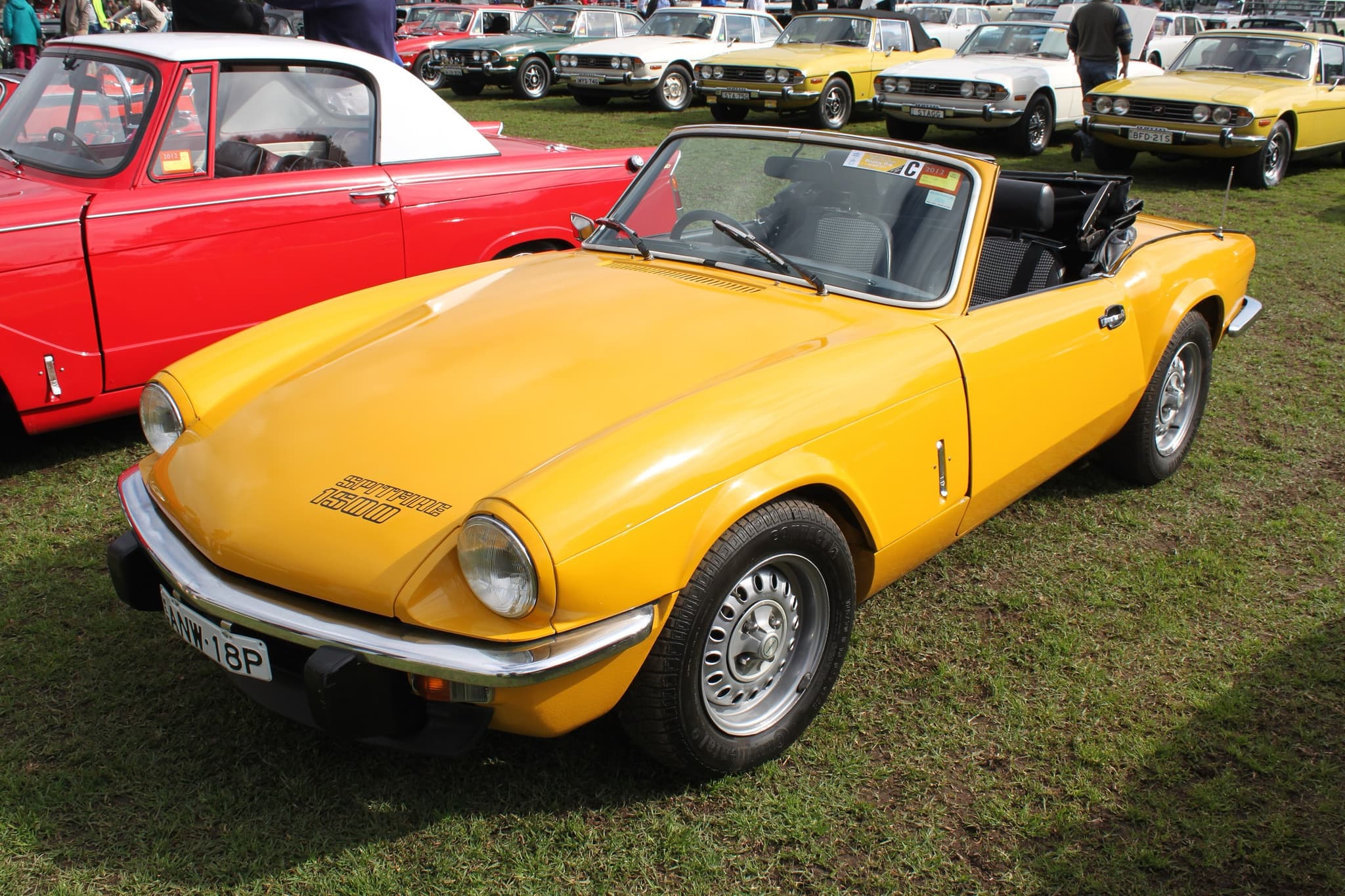
39 A yellow Spitfire 1500 on a show field, with Triumph Stags parked behind, in August 2011.
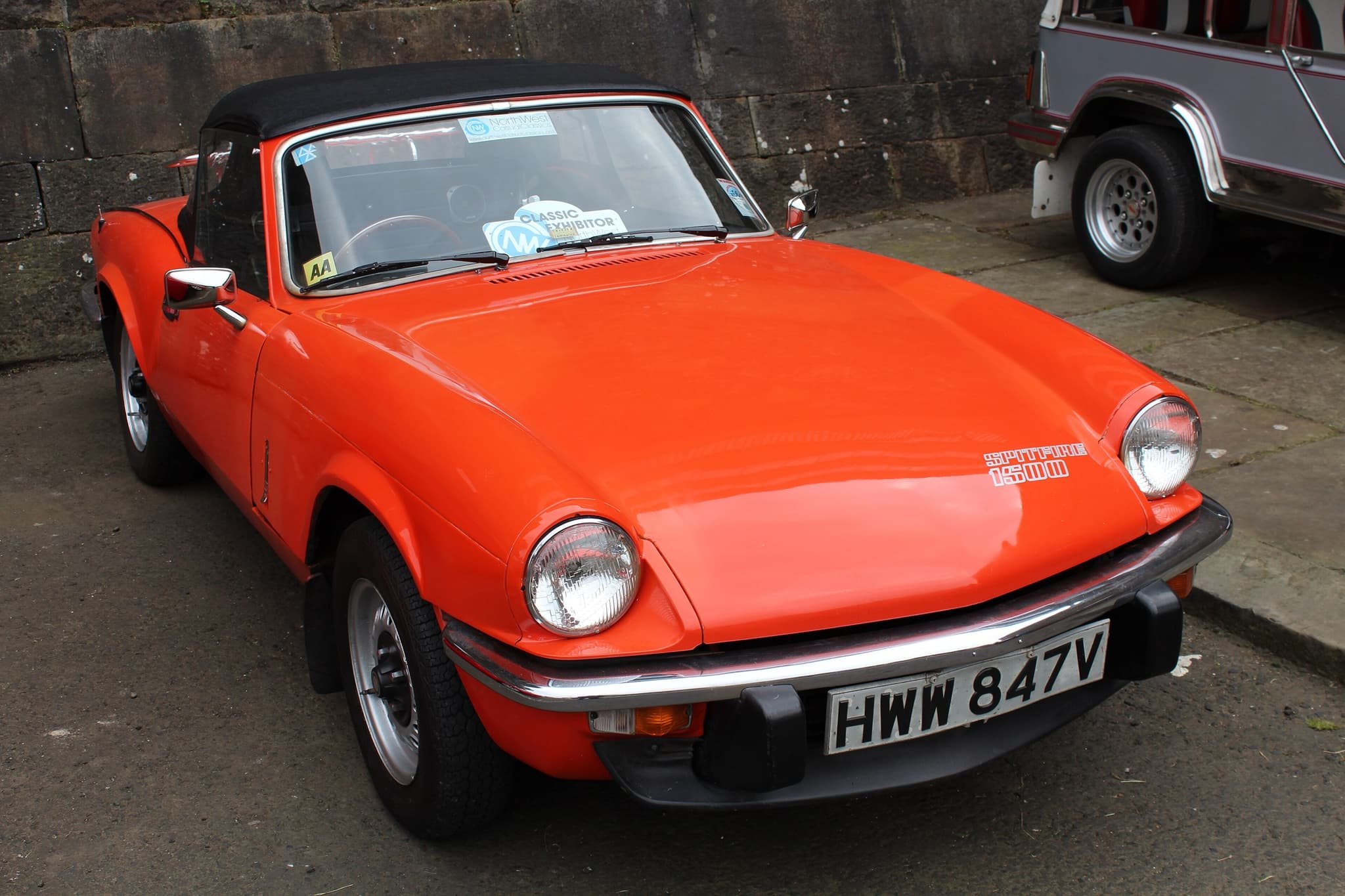
40 An orange Spitfire 1500 with its hood up and black bumper under-riders, parked by a stone wall in September 2014.
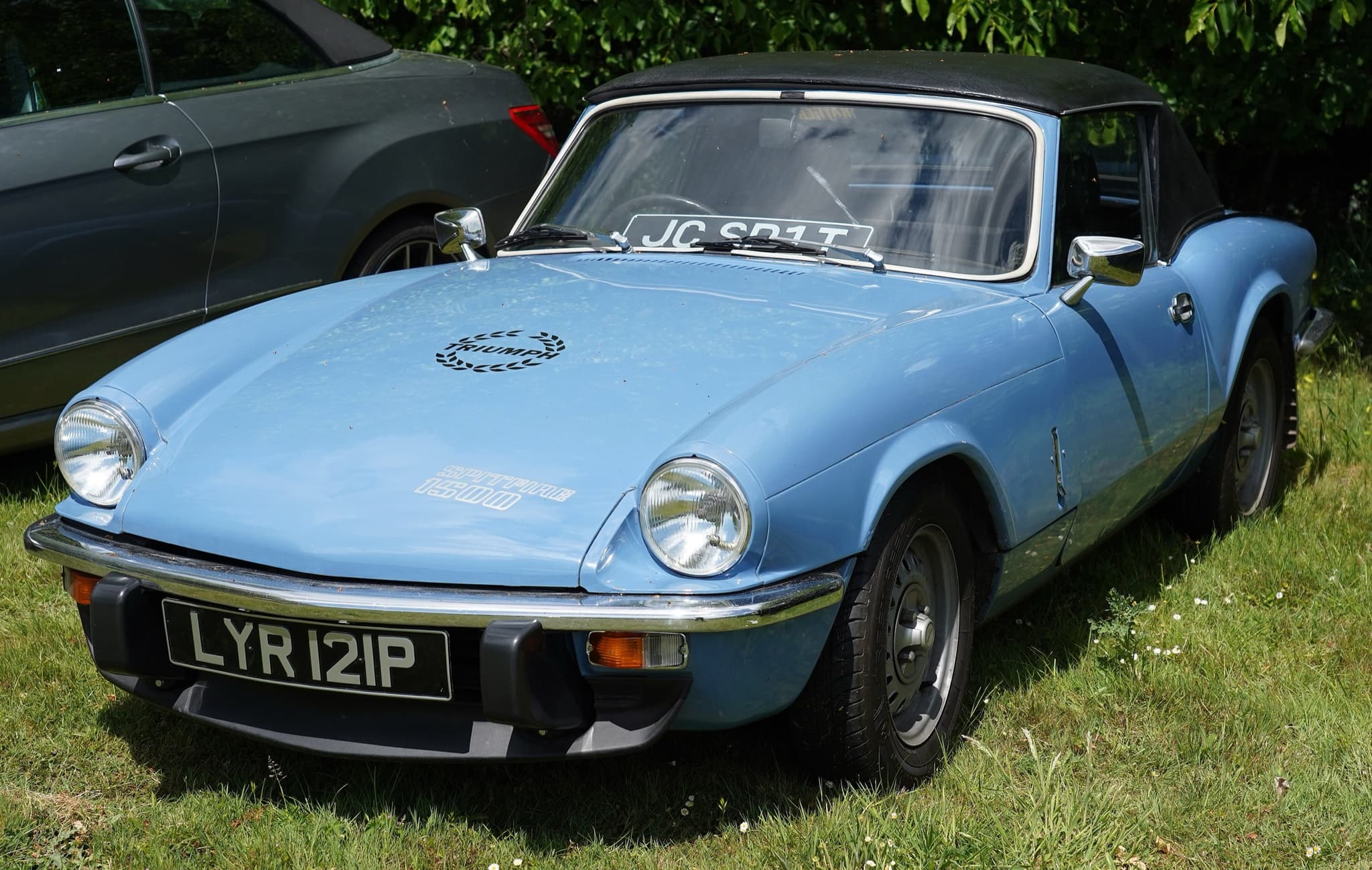
41 A pale blue Spitfire 1500 with its hood up at the East Anglian Railway Museum's Transport Extravaganza in 2025.
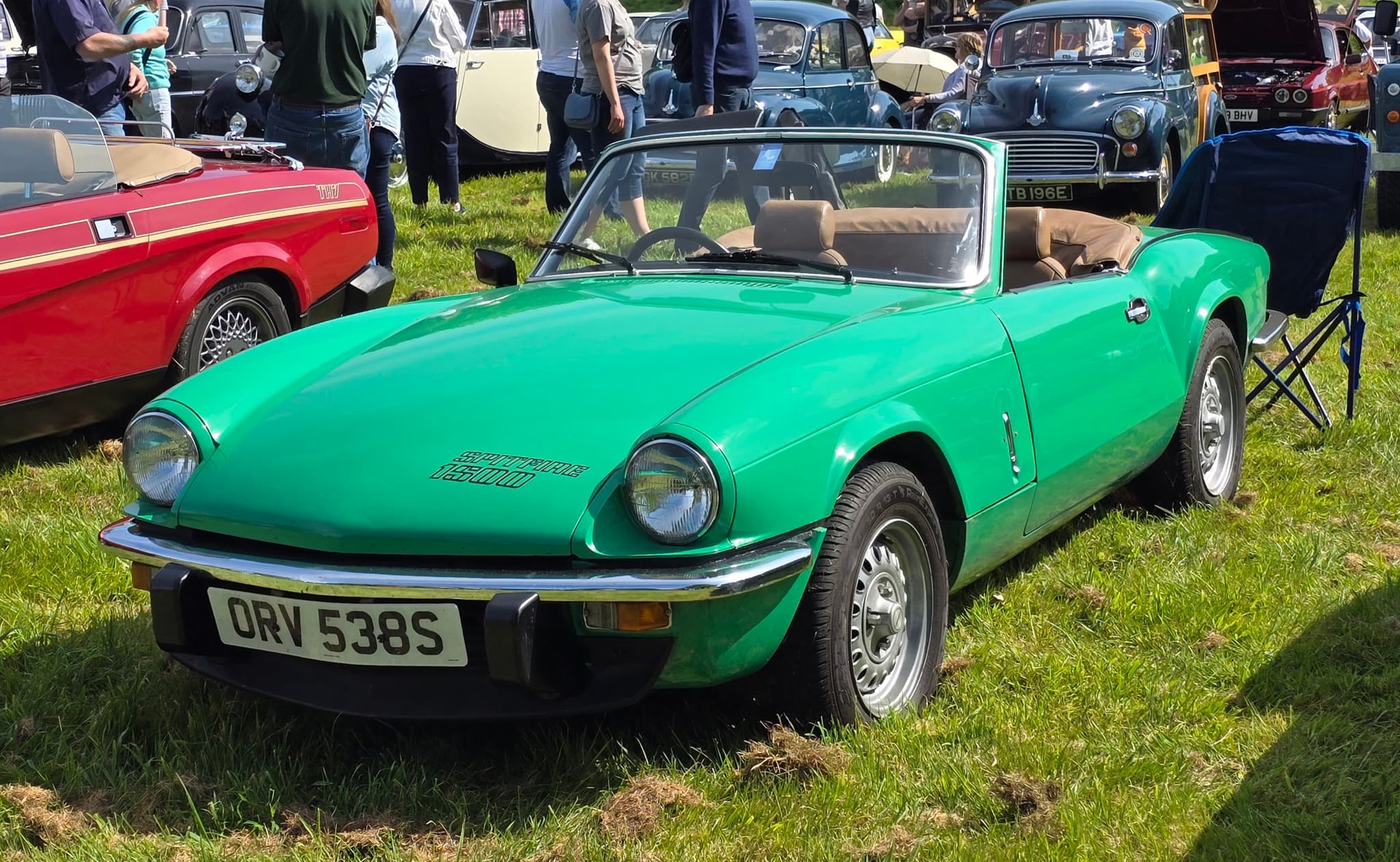
42 A bright green Spitfire 1500, decal on the bonnet, at a show in England in May 2024.
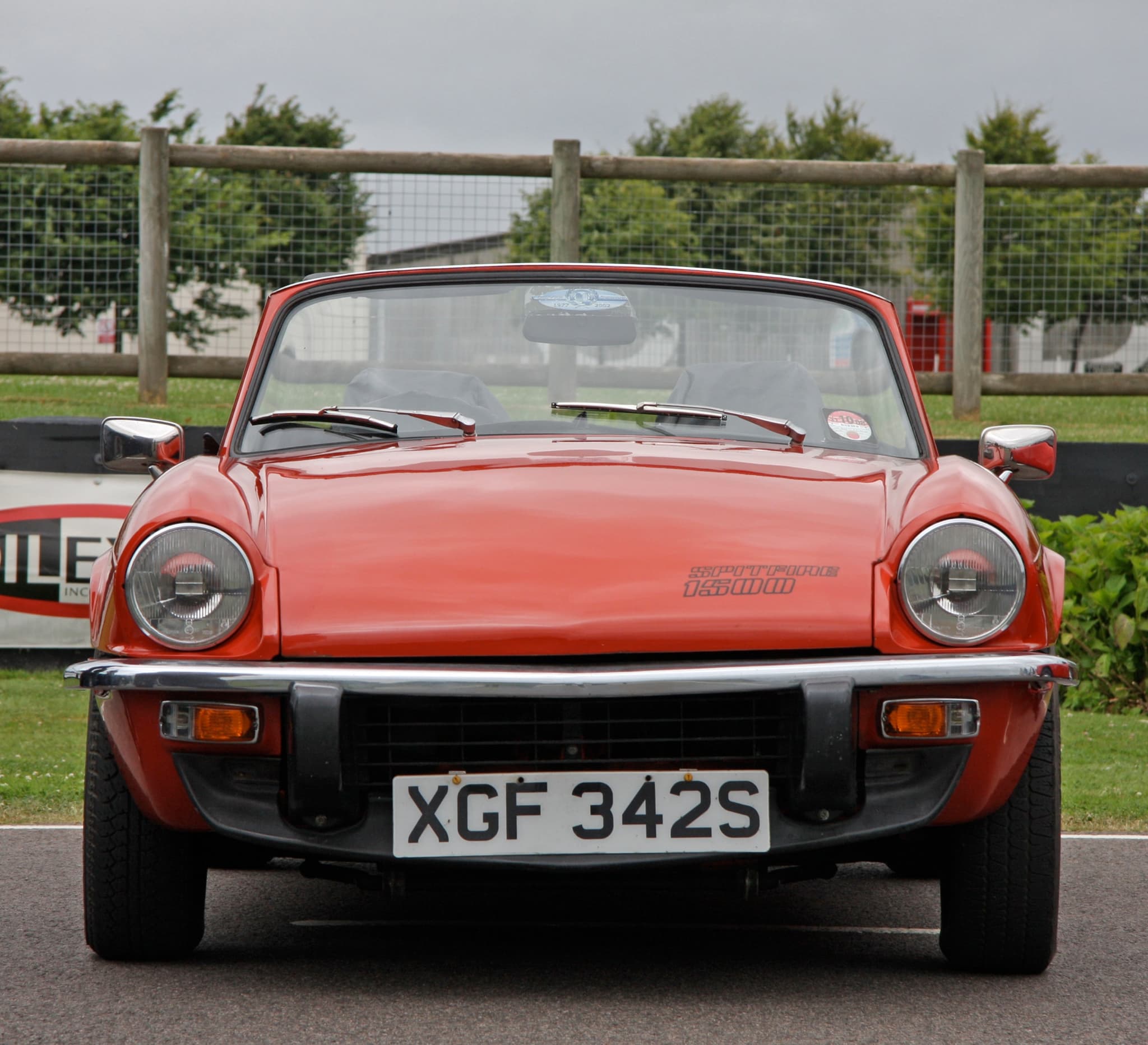
43 A red Spitfire 1500 with its 'Spitfire 1500' bonnet decal and chin spoiler, square on, photographed in July 2008.
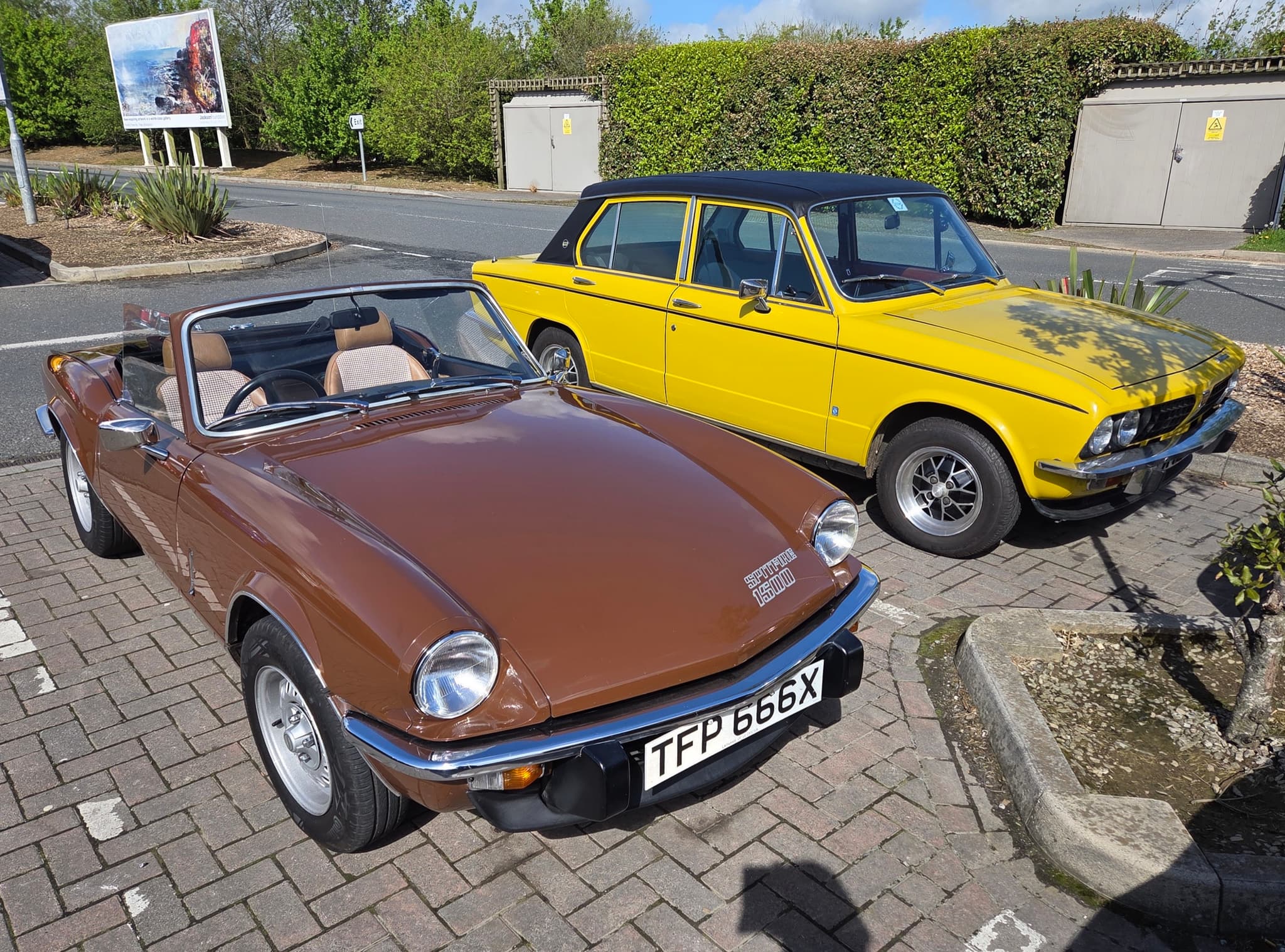
44 A brown Spitfire 1500 parked beside a yellow Triumph Dolomite Sprint in Cornwall in April 2025.
Badges and details 9
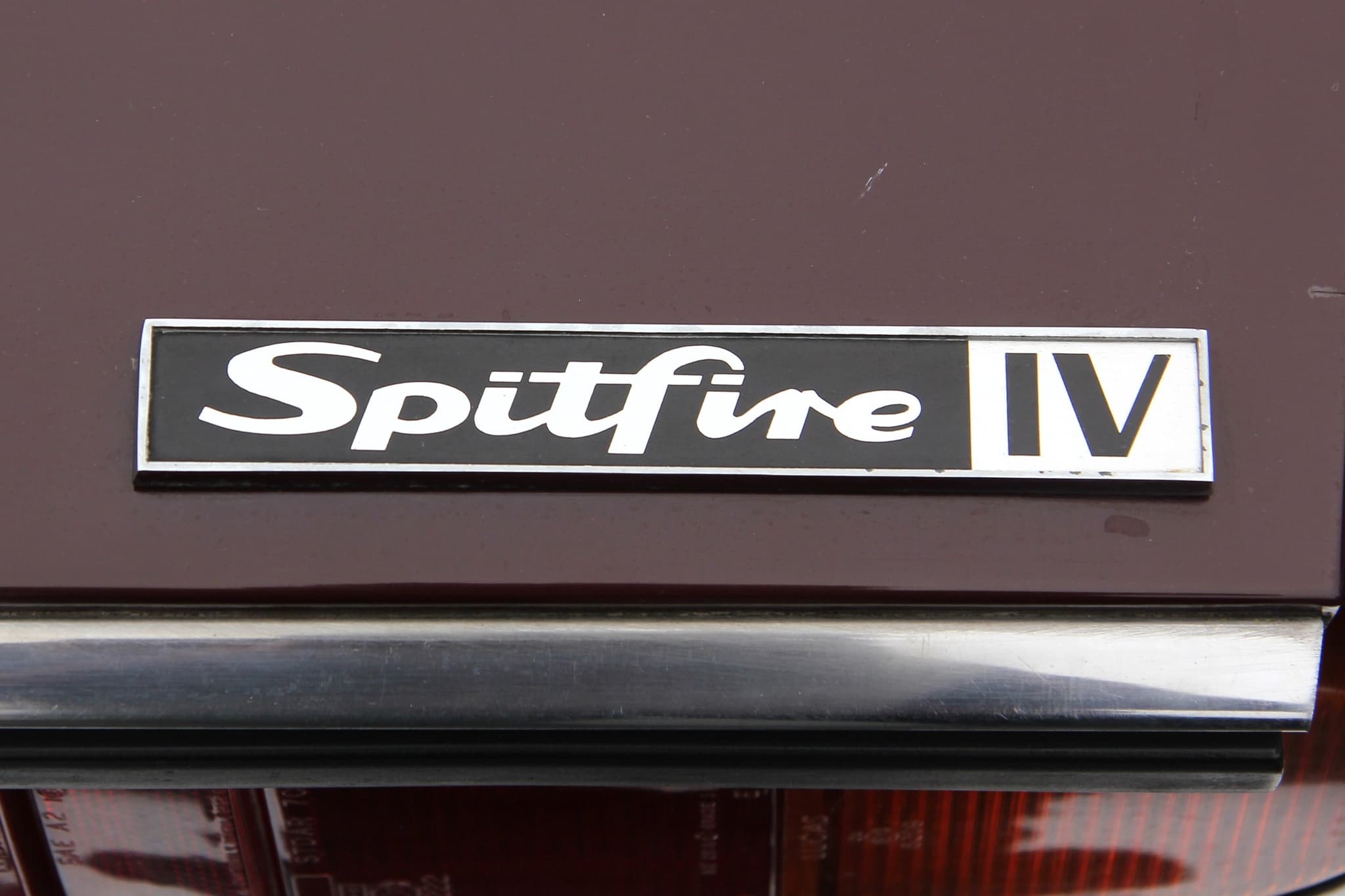
45 A 'Spitfire IV' badge on a dark red boot panel, above the bumper, in September 2014.
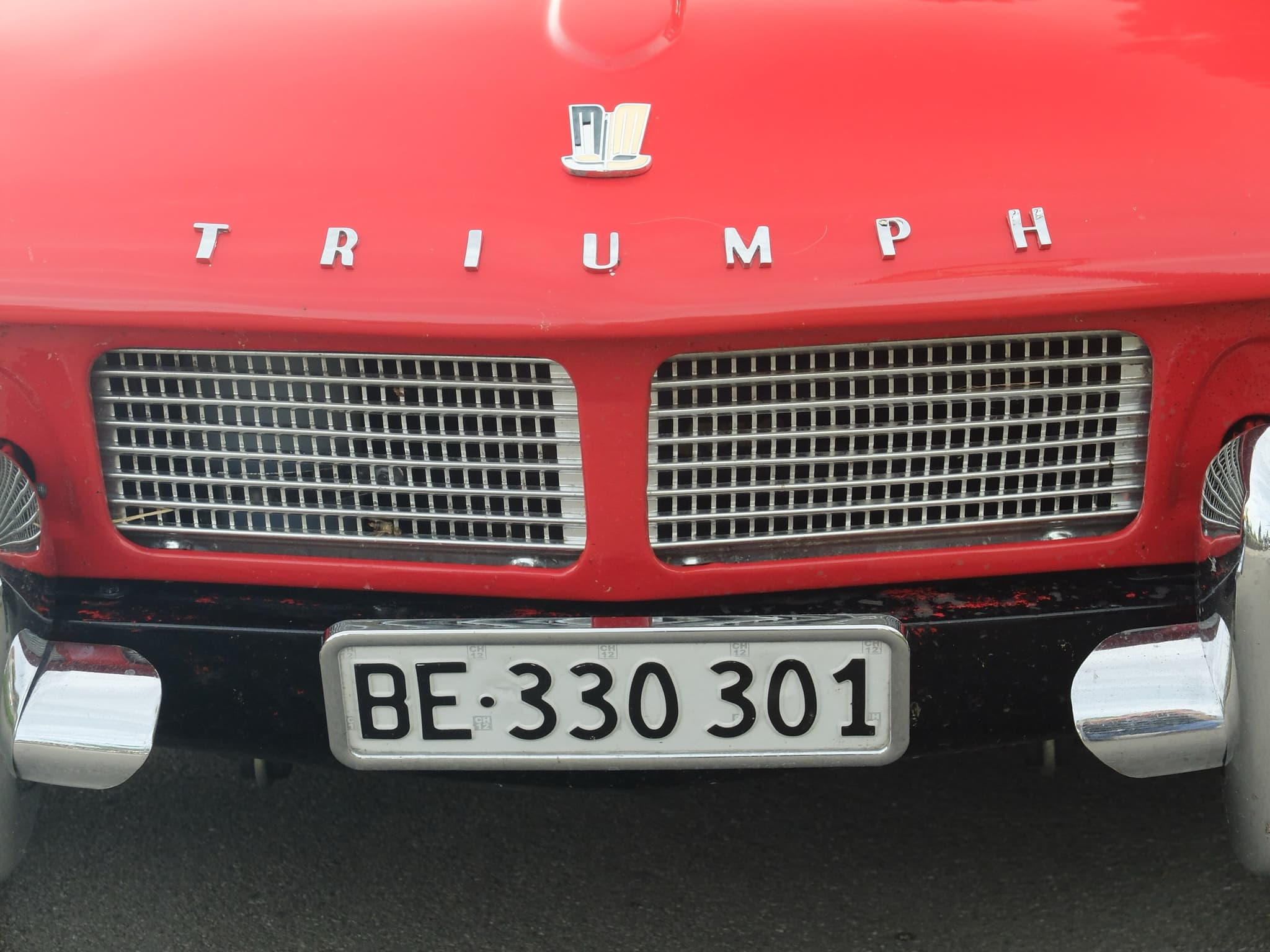
46 A red Spitfire 4's nose close up, with its bonnet badge, TRIUMPH letters and two fine-mesh grille halves, at Morges in October 2021.
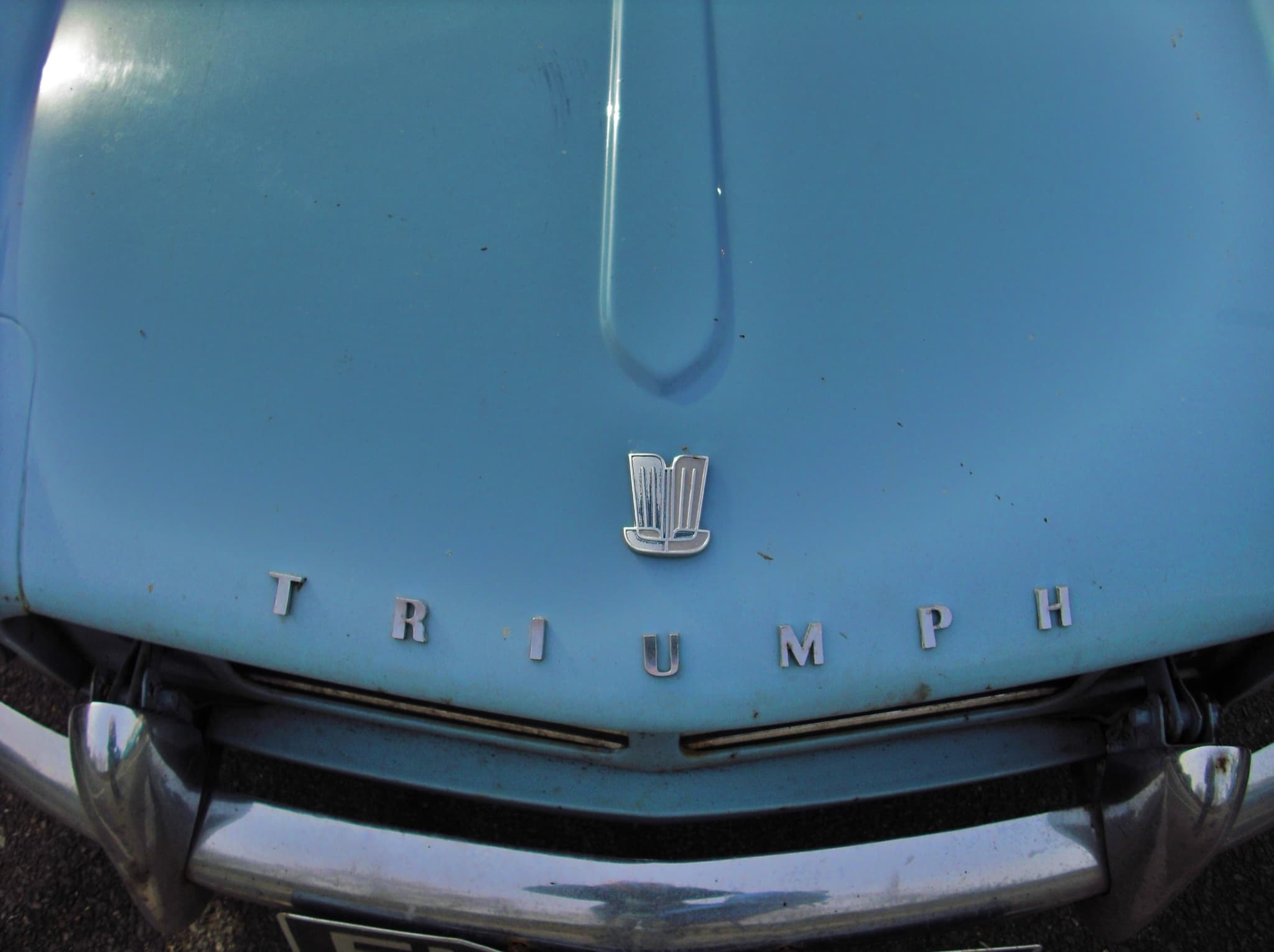
47 The badge and TRIUMPH letters on the bonnet of a pale blue Spitfire 4 Mk II in March 2009.
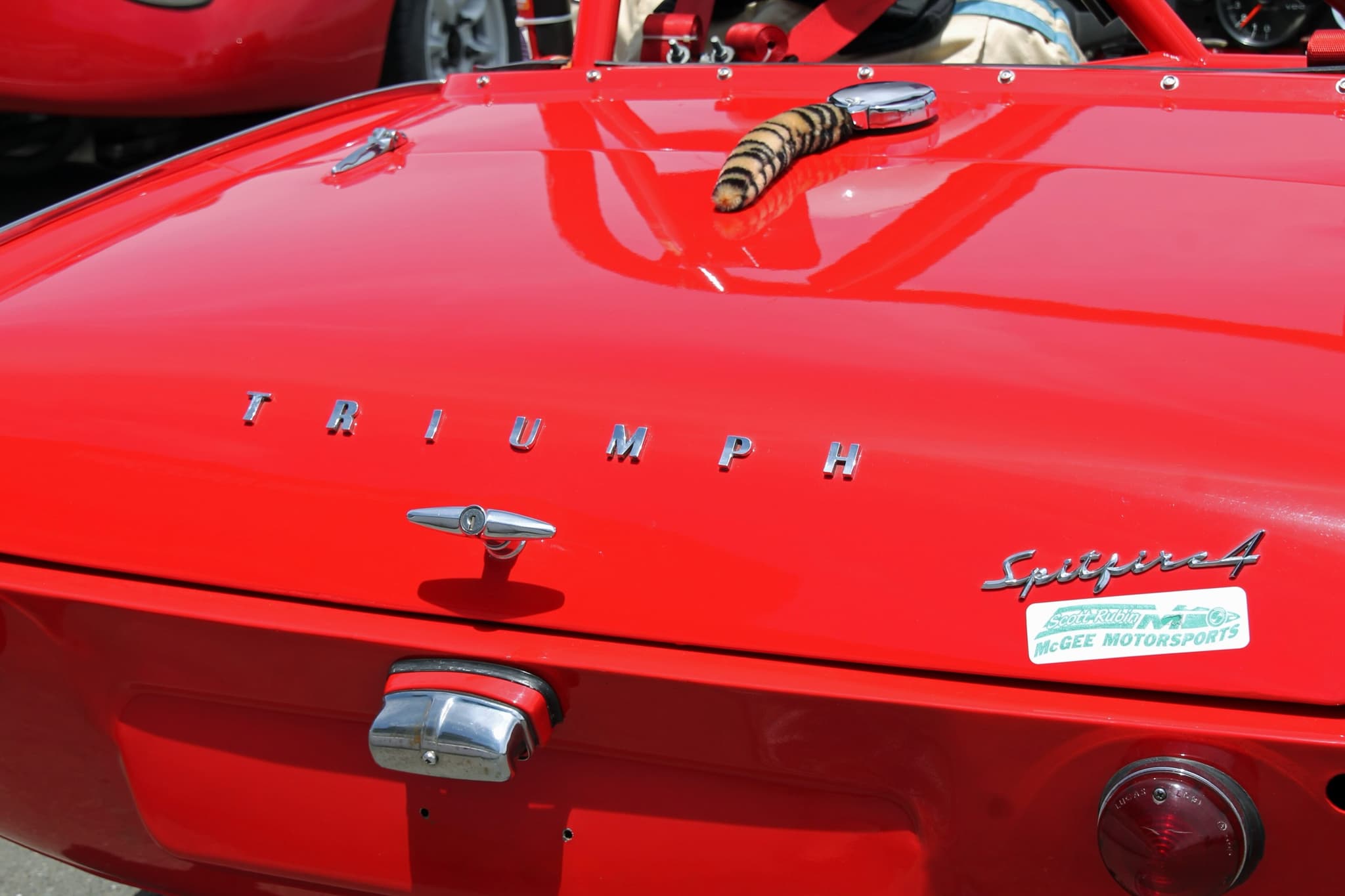
48 The boot of a red Spitfire 4 race car, with its TRIUMPH letters and 'Spitfire 4' script, at the Sonoma Historic Motorsports Festival, California, in May 2015.
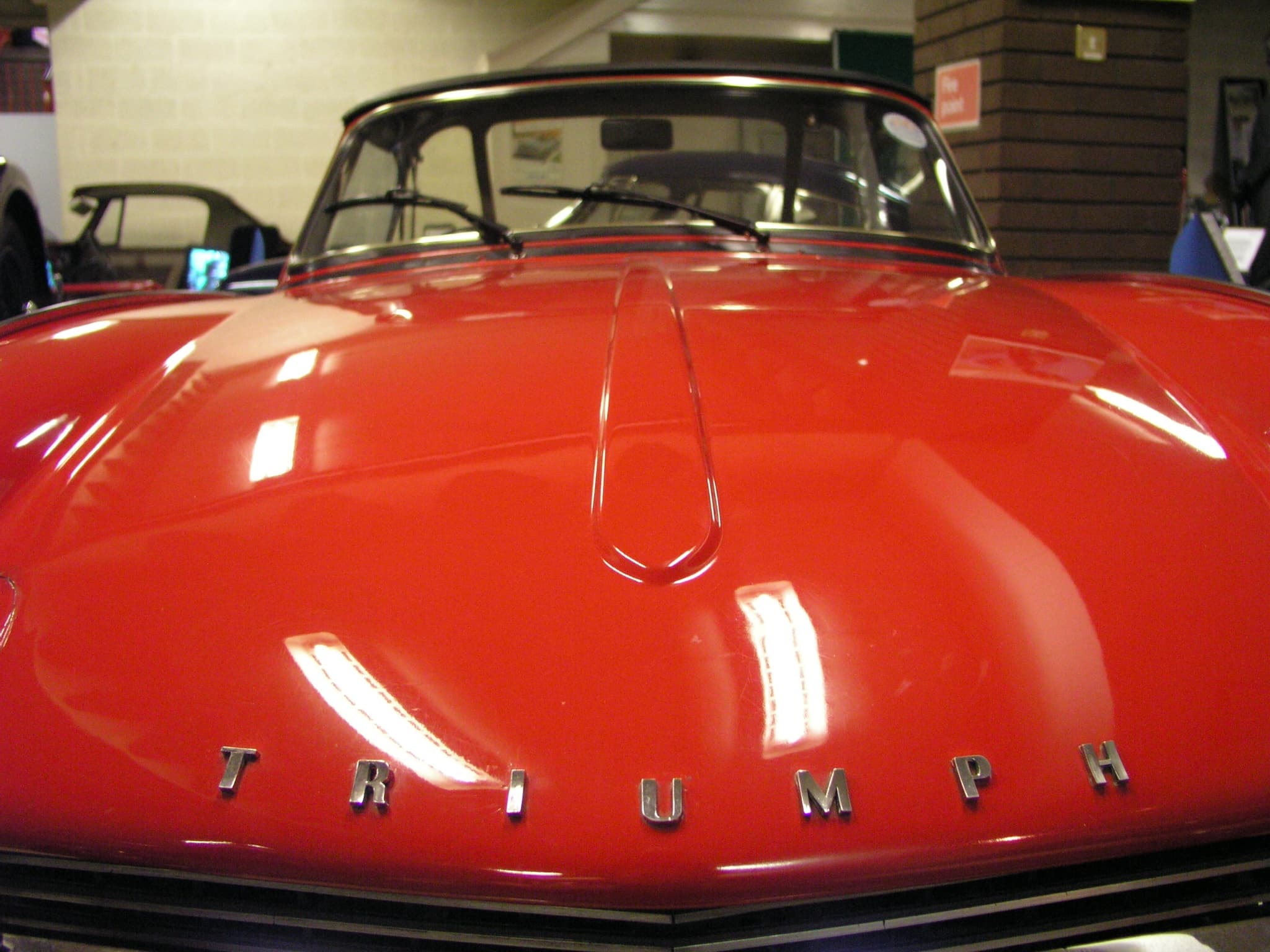
49 The TRIUMPH letters and centre bulge on the bonnet of a red Spitfire at the Coventry Transport Museum, photographed in October 2004.
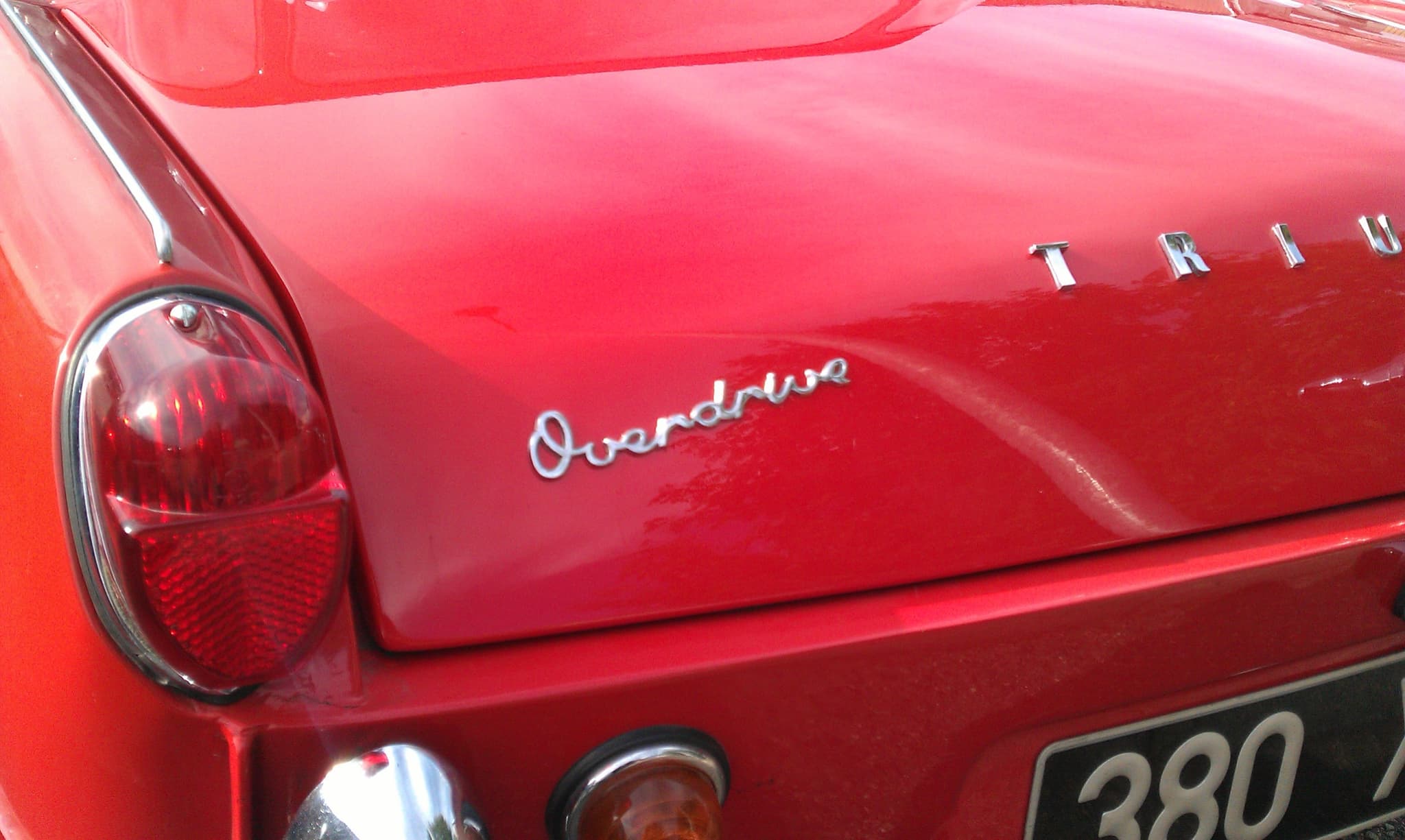
50 The Overdrive script on the boot lid of a red Spitfire, beside the rear lamp, photographed in September 2012.
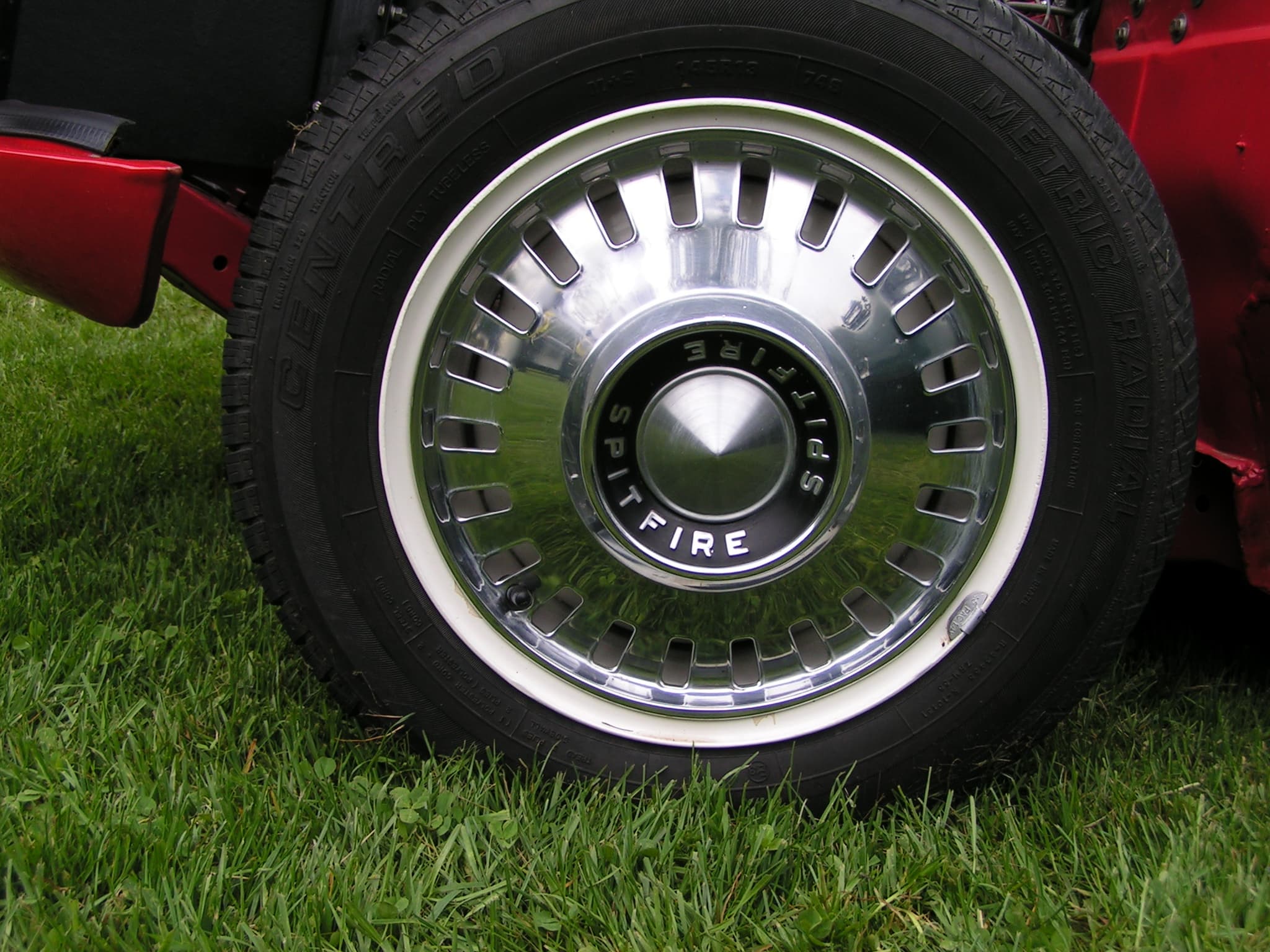
51 A Spitfire hub cap with its lettered centre, on a white-painted wheel, photographed in May 2007.
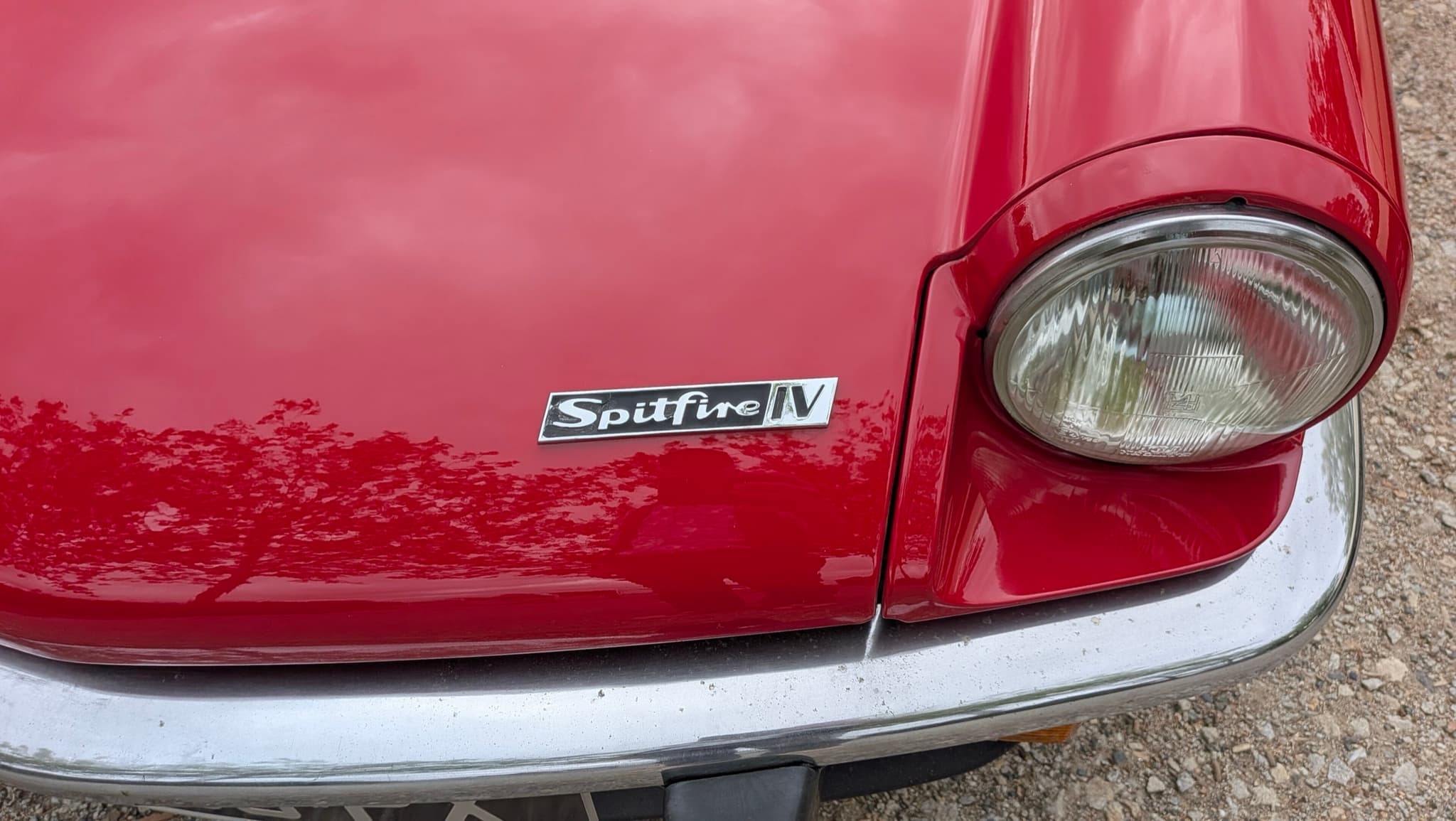
52 The 'Spitfire IV' badge on the nose of a red Mk IV, at Les Dérouillés 2026 in Vallet, France, in July 2026.
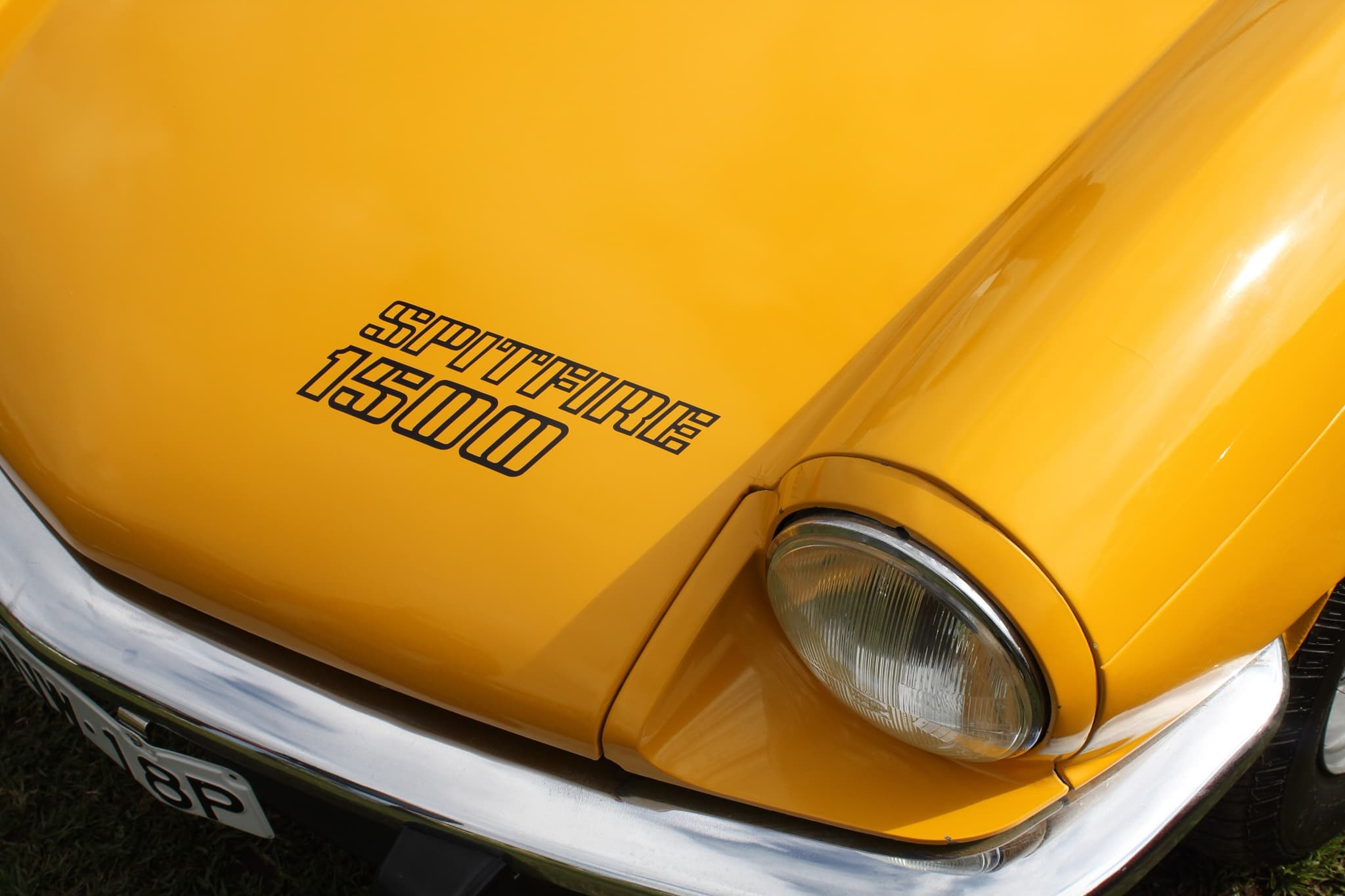
53 The 'Spitfire 1500' decal on the bonnet of a yellow Spitfire 1500, beside the headlamp, photographed in August 2011.
Picture credits (53)
- 1 Rex Gray, CC BY 2.0
- 2 Akela NDE, CC BY-SA 2.0 fr
- 3 Akela NDE, CC BY-SA 2.0 fr
- 4 Akela NDE, CC BY-SA 2.0 fr
- 5 Ian Sutton, CC BY 2.0
- 6 Akela NDE, CC BY-SA 2.0 fr
- 7 Steve Glover, CC BY 2.0
- 8 Greg Gjerdingen, CC BY 2.0
- 9 SG2012, CC BY 2.0
- 10 kitmasterbloke, CC BY 4.0
- 11 SG2012, CC BY 2.0
- 12 allen watkin, CC BY-SA 2.0
- 13 Alexander Migl, CC BY-SA 4.0
- 14 Sicnag, CC BY 2.0
- 15 Andrea Boano, CC BY 4.0
- 16 Andrea Boano, CC BY 4.0
- 17 Handelsgeselschaft, CC BY-SA 4.0
- 18 Graham Robertson, CC BY 2.0
- 19 Avaldia, CC BY-SA 3.0
- 20 kitmasterbloke, CC BY 2.0
- 21 allen watkin, CC BY-SA 2.0
- 22 allen watkin, CC BY-SA 2.0
- 23 JoachimKohler-HB, CC BY-SA 4.0
- 24 www.mgaylard.co.uk and thanks for looking, CC BY 2.0
- 25 Akela NDE, CC BY-SA 2.0 fr
- 26 Akela NDE, CC BY-SA 2.0 fr
- 27 Akela NDE, CC BY-SA 2.0 fr
- 28 GPS 56 from New Zealand, CC BY 2.0
- 29 Notafly, CC BY-SA 4.0
- 30 WORhausen, CC BY-SA 3.0
- 31 Charlie from United Kingdom, CC BY 2.0
- 32 Dawid783, CC BY-SA 4.0
- 33 Vauxford, CC BY-SA 4.0
- 34 Felix O, CC BY-SA 2.0
- 35 Tap Tapzz, CC0 1.0
- 36 Calreyn88, CC BY-SA 4.0
- 37 kitmasterbloke, CC BY 4.0
- 38 Sicnag, CC BY 2.0
- 39 Jeremy, CC BY 2.0
- 40 Thomas's Pics, CC BY 2.0
- 41 kitmasterbloke, CC BY 2.0
- 42 Calreyn88, CC BY-SA 4.0
- 43 Brian Snelson from Hockley, Essex, England, CC BY 2.0
- 44 Andrew Bone, CC BY 2.0
- 45 Lothar Spurzem, CC BY-SA 2.0 de
- 46 Akela NDE, CC BY-SA 2.0 fr
- 47 Dave Howes, CC BY-SA 2.0
- 48 SarahStierch, CC BY 4.0
- 49 Chris Bloom, CC BY-SA 2.0
- 50 Akela NDE, CC BY-SA 2.0 fr
- 51 dave_7, CC BY-SA 2.0
- 52 Llann Wé², CC BY-SA 4.0
- 53 Jeremy, CC BY 2.0
Cars for North America
North American Spitfires changed as American safety and emissions rules arrived, and the changes show. For the 1970 model year the Vintage Triumph Register lists what to look for: side-marker lamps, no TRIUMPH letters on the bonnet or boot, and a one-year SPITFIRE badge on an RAF roundel, which Wikipedia says only a limited number of cars carried. American dealers offered stripe kits, which British Leyland's American brochure for the 1974 model year lists among the dealer options. According to Wikipedia, the last cars, of the 1979 and 1980 model years, had black rubber bumpers, and Classic & Sports Car counts the impact bumpers of the later American cars among their handicaps.source 7source 2source 9source 10source 11
North American cars 6
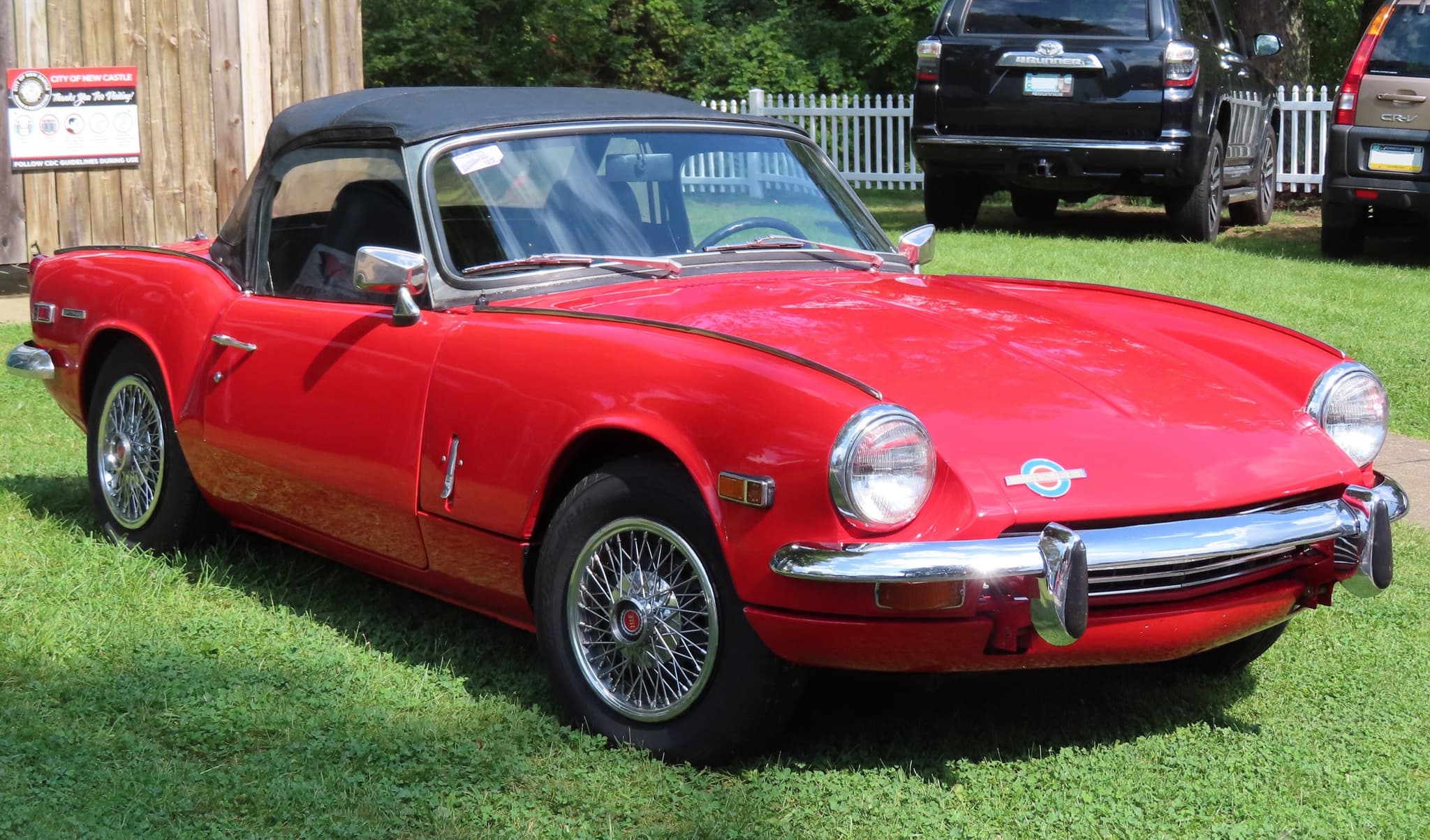
54 A red Spitfire Mk III built for the United States in the 1970 model year, with a roundel badge on its bonnet, at New Castle, Pennsylvania, in September 2021.
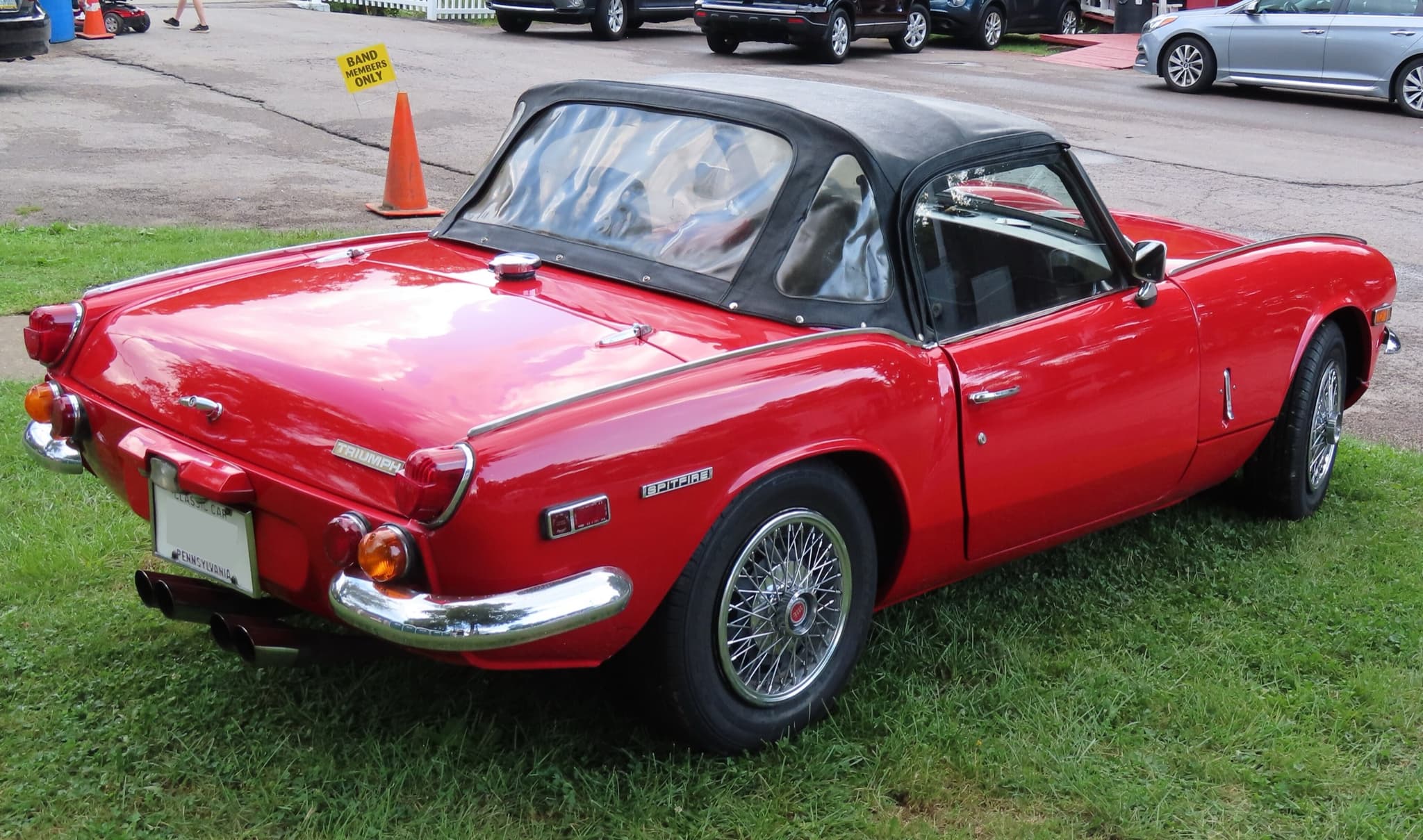
55 A red US-market Spitfire Mk III with its hood up, showing the side-marker reflector on its rear wing, at a car show in New Castle, Pennsylvania, in September 2021.
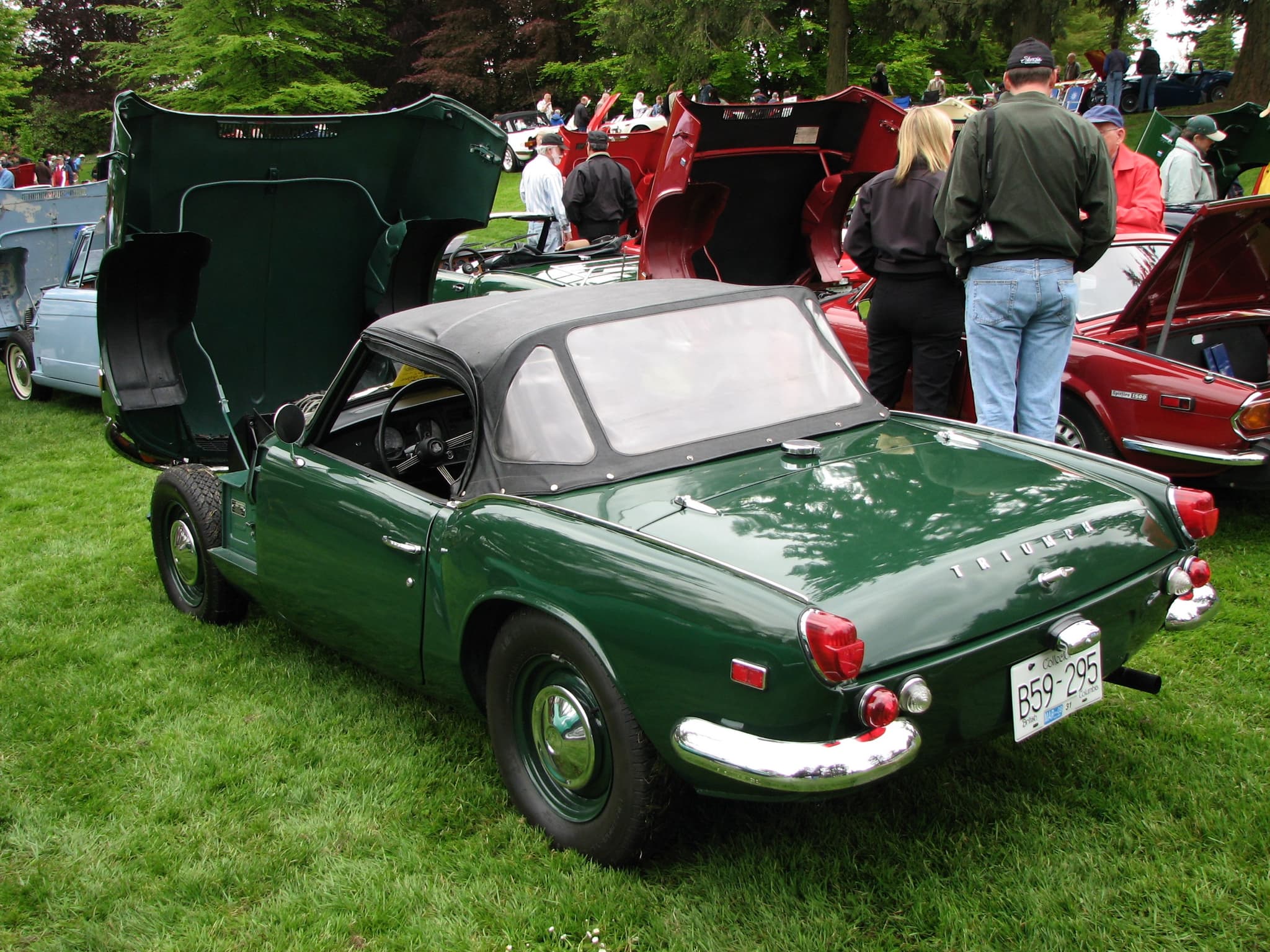
56 A dark green North American-specification Spitfire Mk III with its bonnet raised, at the Vancouver All British Field Meet in VanDusen Botanical Garden, in May 2007.
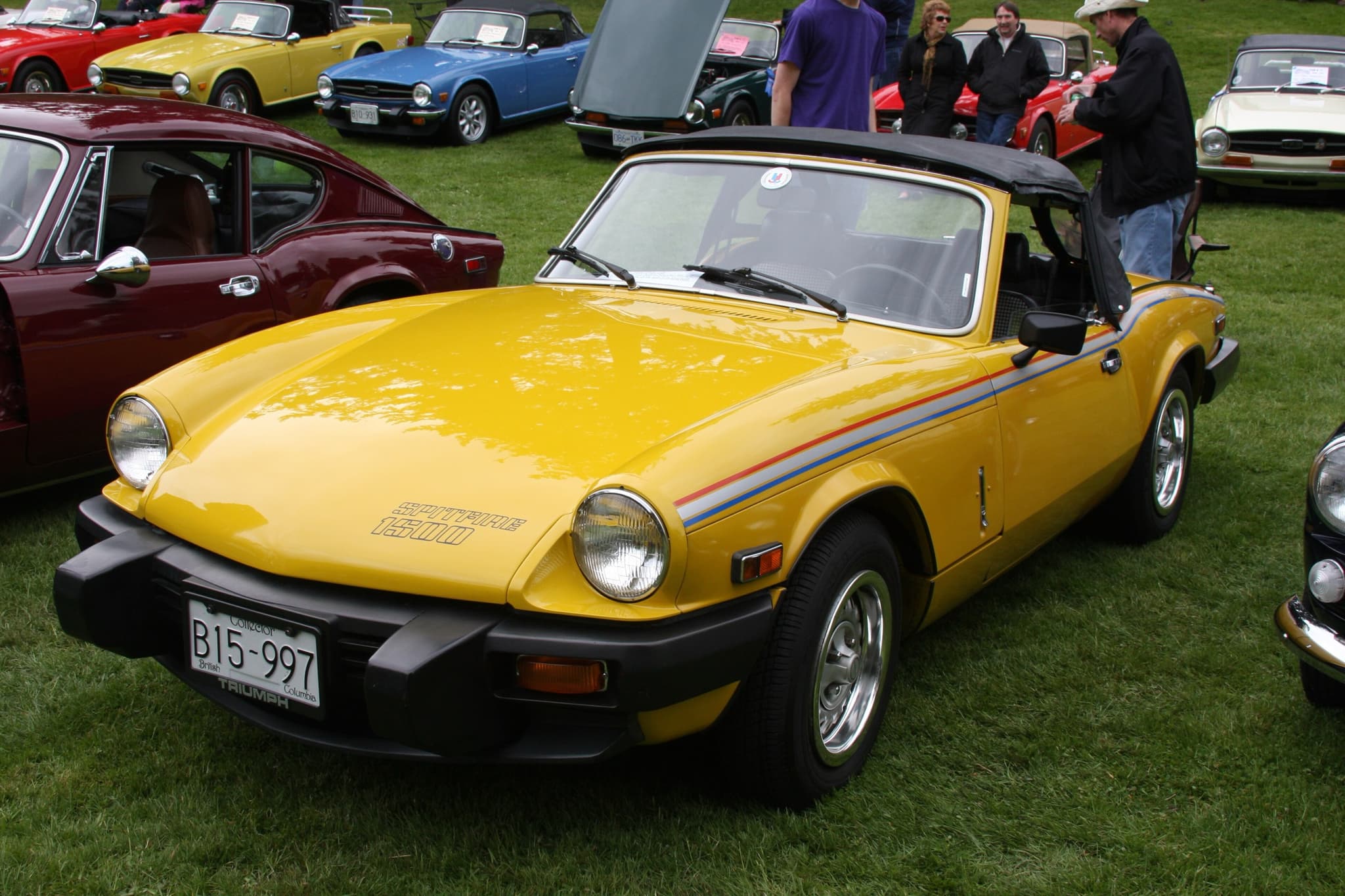
57 A yellow North American Spitfire 1500 with the black rubber bumpers of the last US cars and a side stripe, at a car show in May 2010.
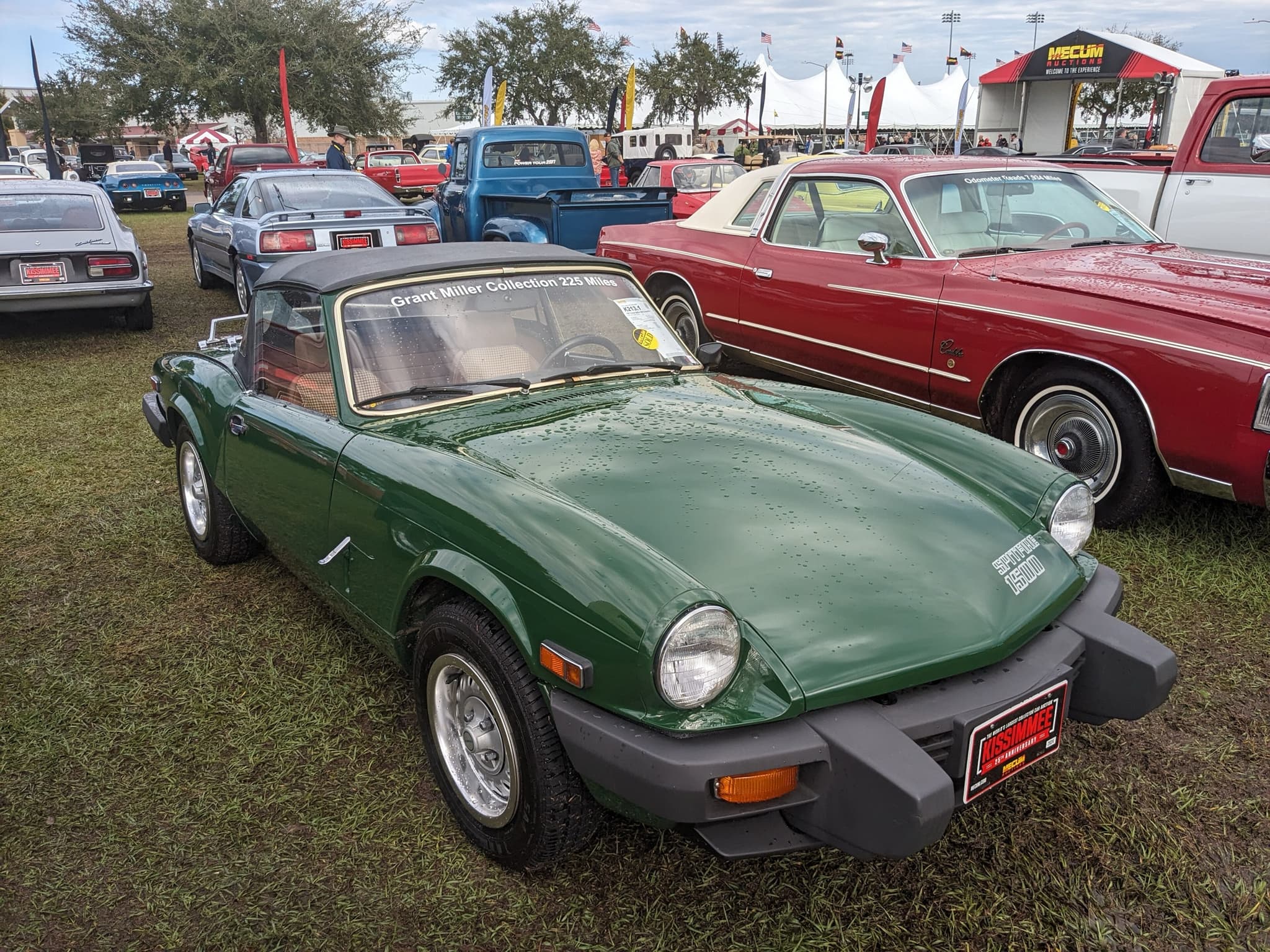
58 A dark green Spitfire 1500 with the black rubber bumpers of the last North American cars, at Kissimmee, Florida, in January 2024.
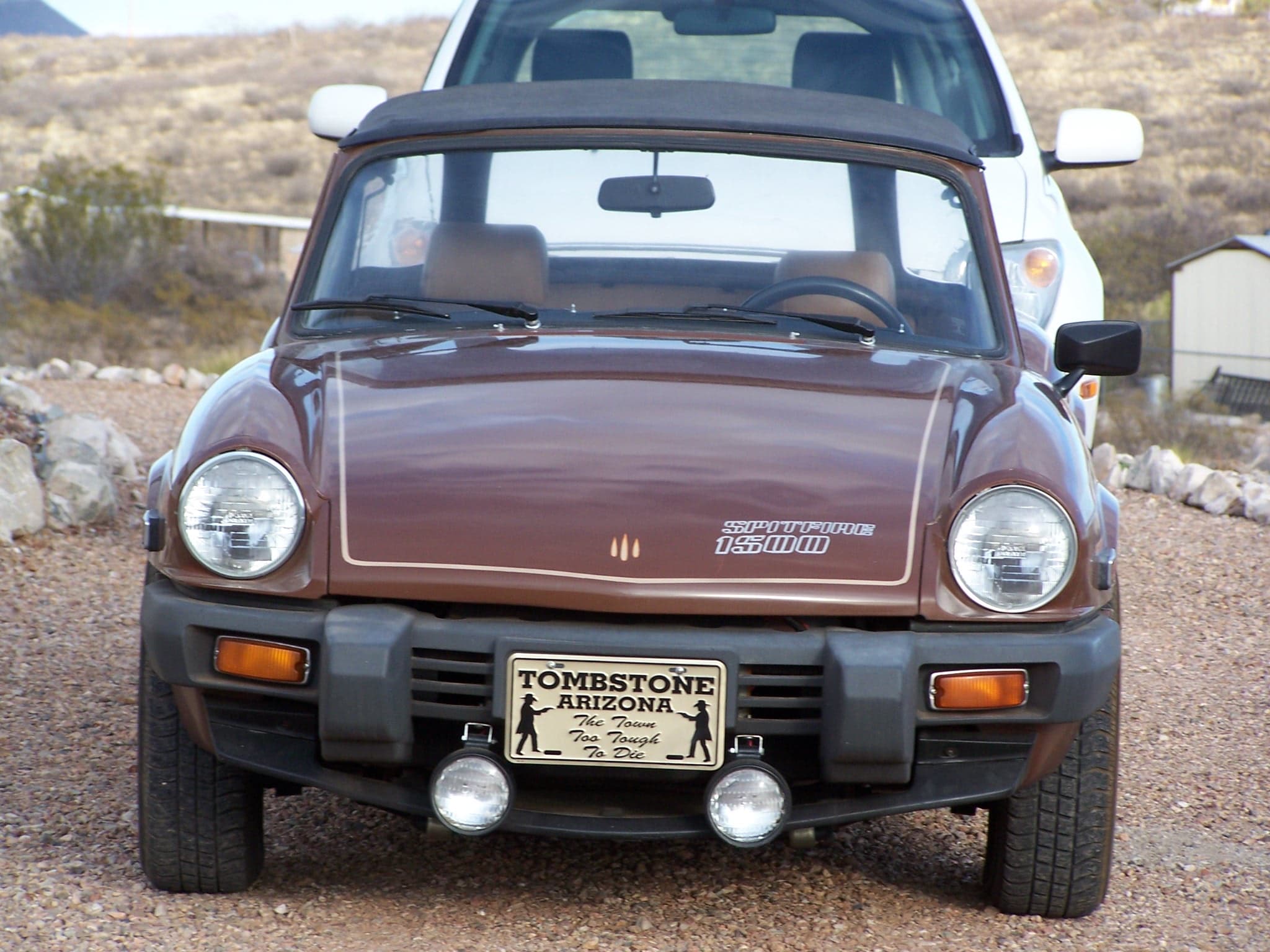
59 A brown US-market Spitfire 1500 with black rubber bumpers and added driving lamps, hood up, in Arizona.
Picture credits (6)
- 54 MercurySable99, CC BY-SA 4.0
- 55 MercurySable99, CC BY-SA 4.0
- 56 SqueakyMarmot, CC BY 2.0
- 57 dave_7, CC BY 2.0
- 58 Pokemonprime, CC BY 4.0
- 59 jillnjer, CC BY 2.0
Hardtops
The factory offered a hardtop for each body. The first, for the cars up to the Mk III, was pressed steel with a large curved rear window. The restyled Mk IV needed a different top, and got one with rear quarter windows that hinged at the front to open. A photograph cannot show whether a top came from the factory, so these captions say only that a car has one.source 12source 13source 14source 10
Spitfire 4 Mk II and Mk III 5
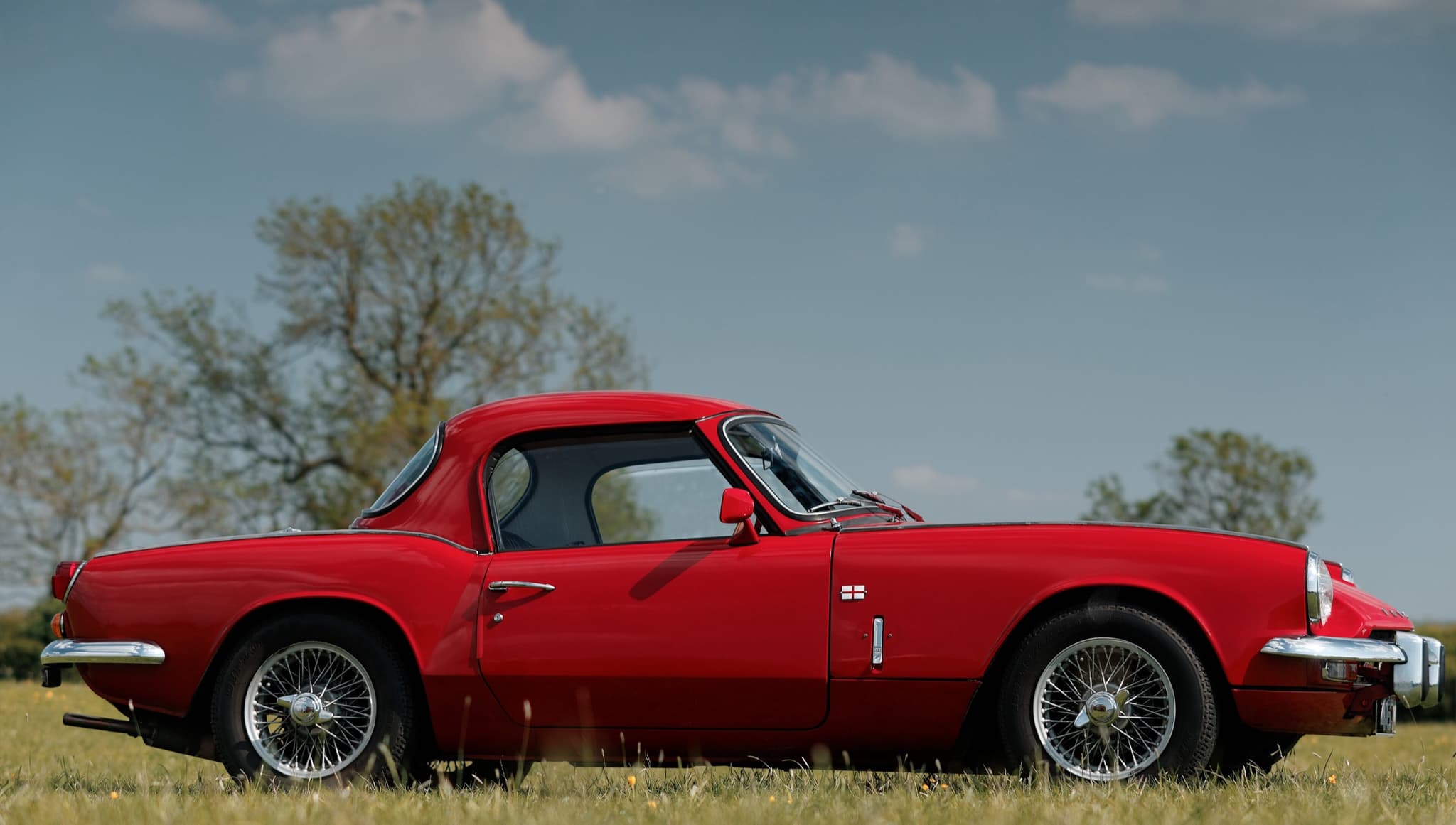
60 A red Spitfire Mk III wearing a hardtop, on wire wheels, in profile among buttercups in May 2014.
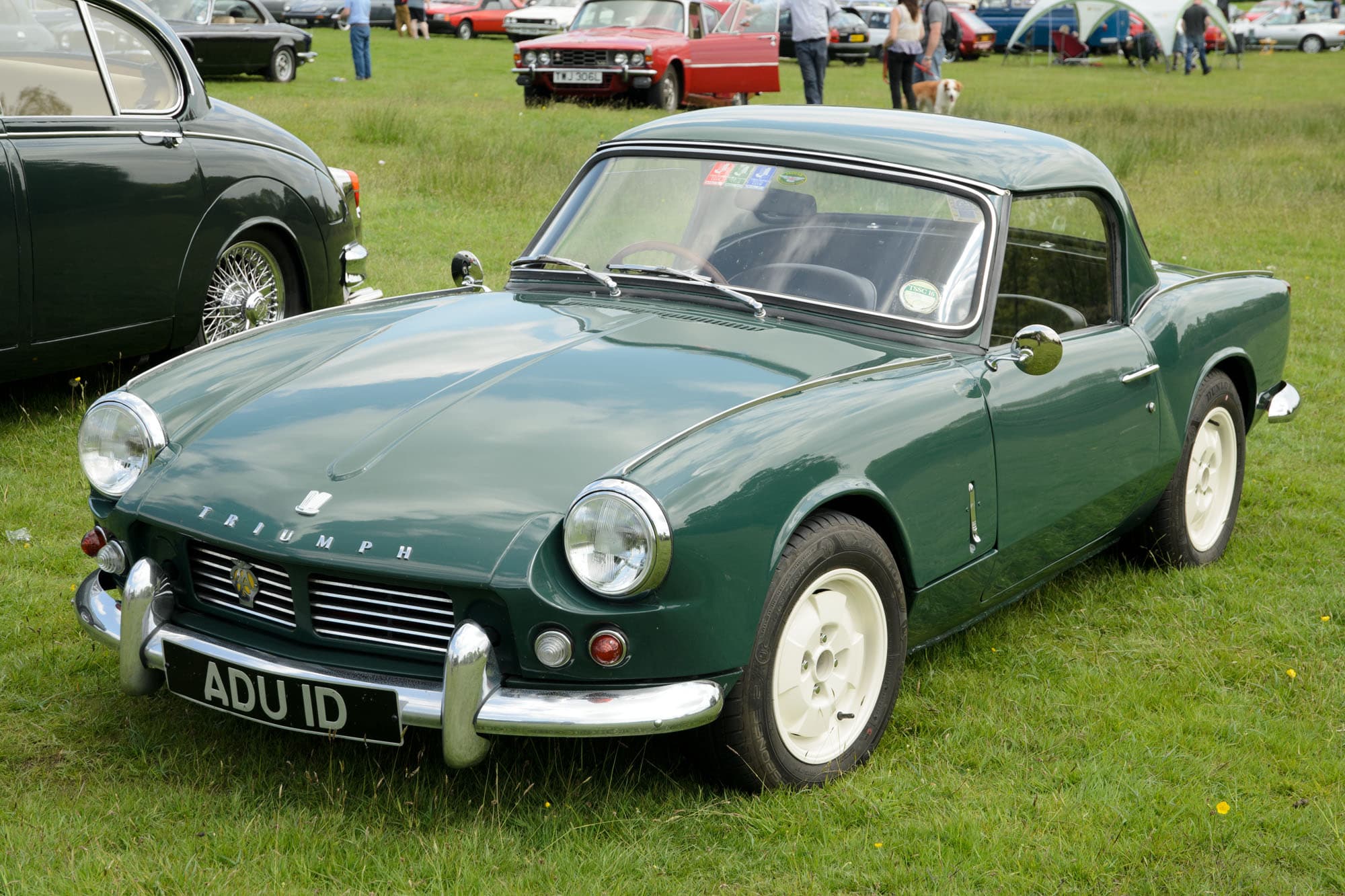
61 A dark green Spitfire 4 Mk II with its hardtop fitted, modified with white five-spoke wheels, at the Capesthorne Hall classic car show, Cheshire, in May 2016.
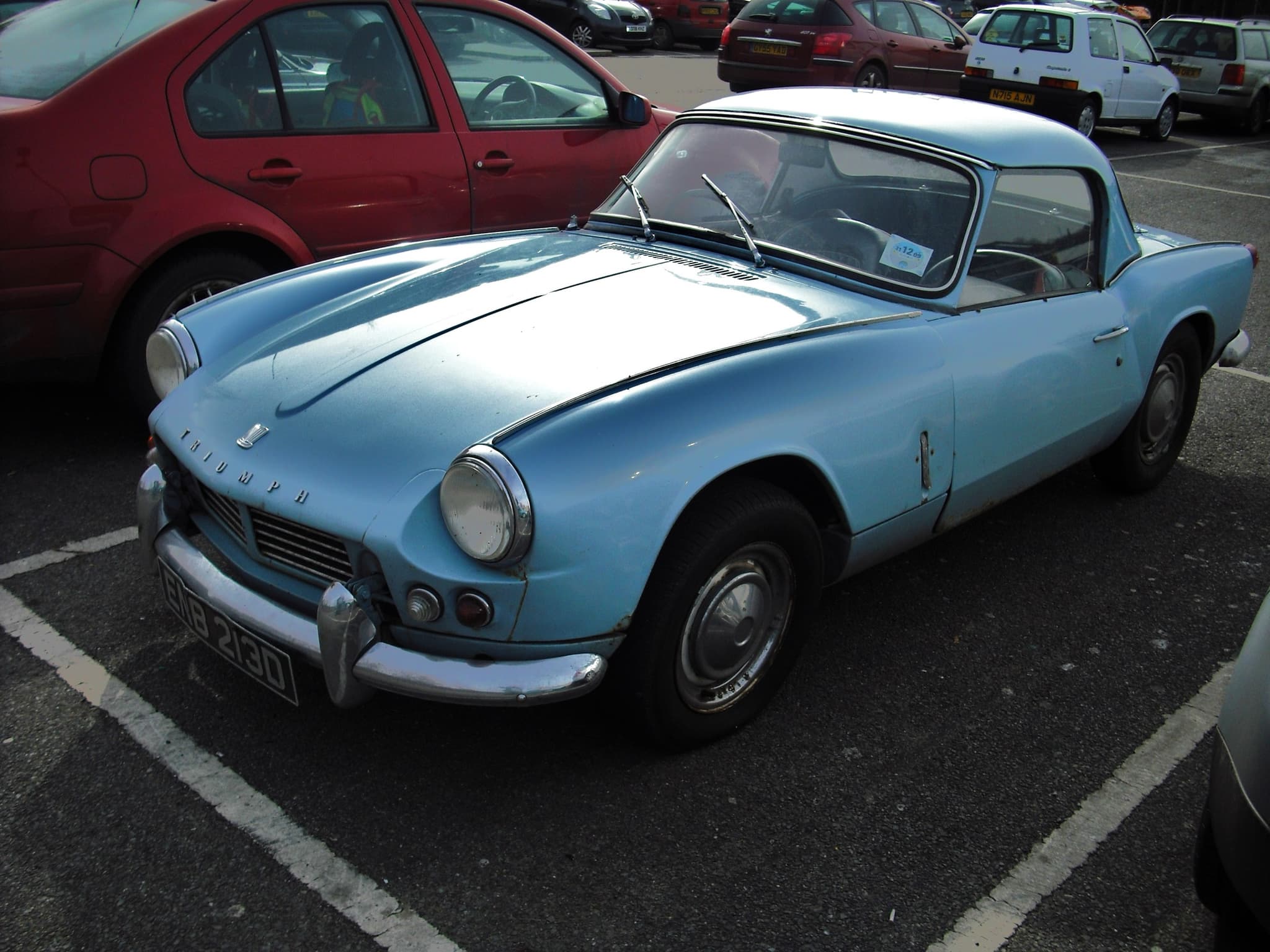
62 A pale blue Spitfire 4 Mk II with its hardtop fitted, in a car park in March 2009.
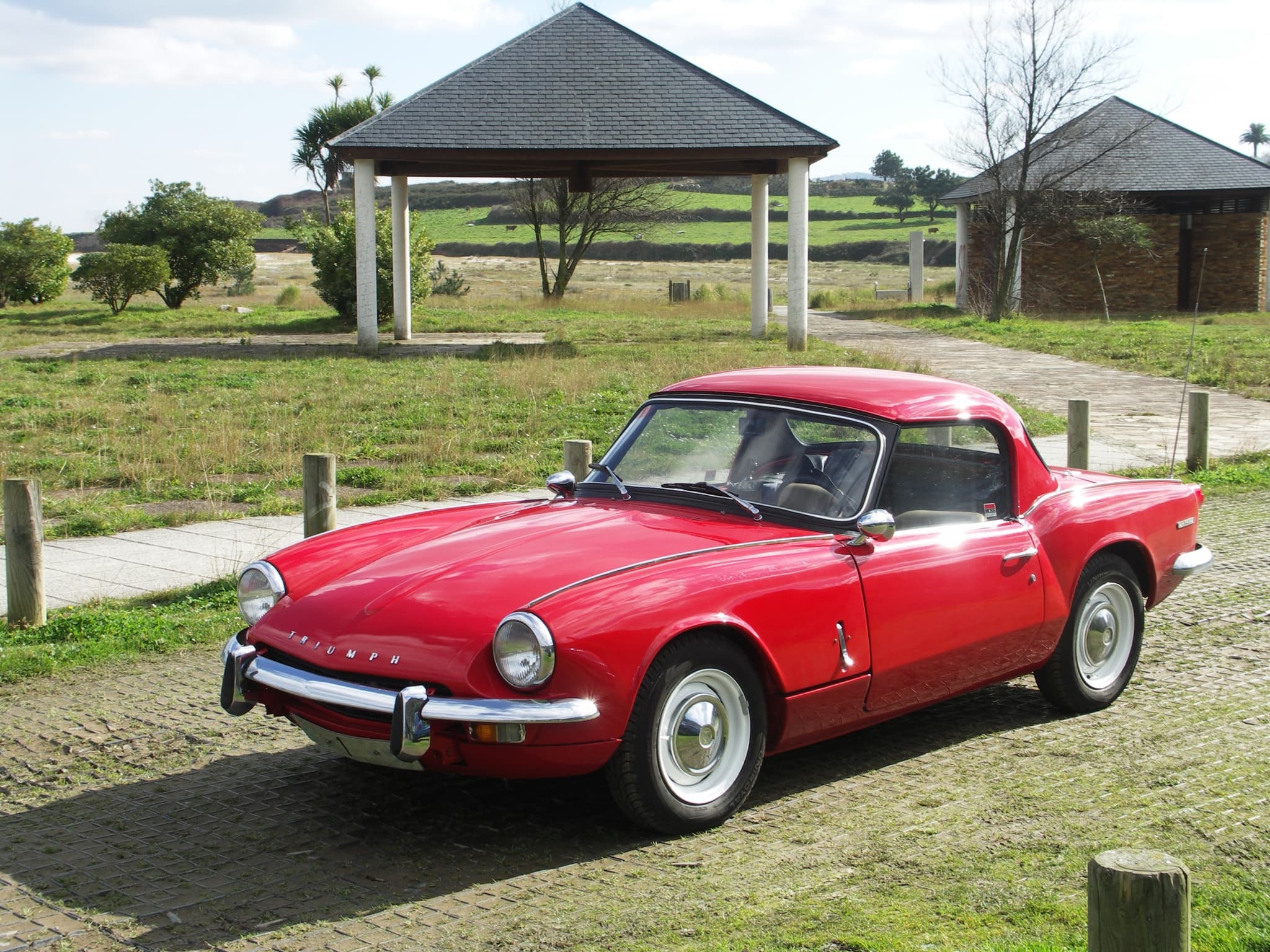
63 A red Spitfire Mk III with a hardtop, parked beside a shelter in a park in December 2011.
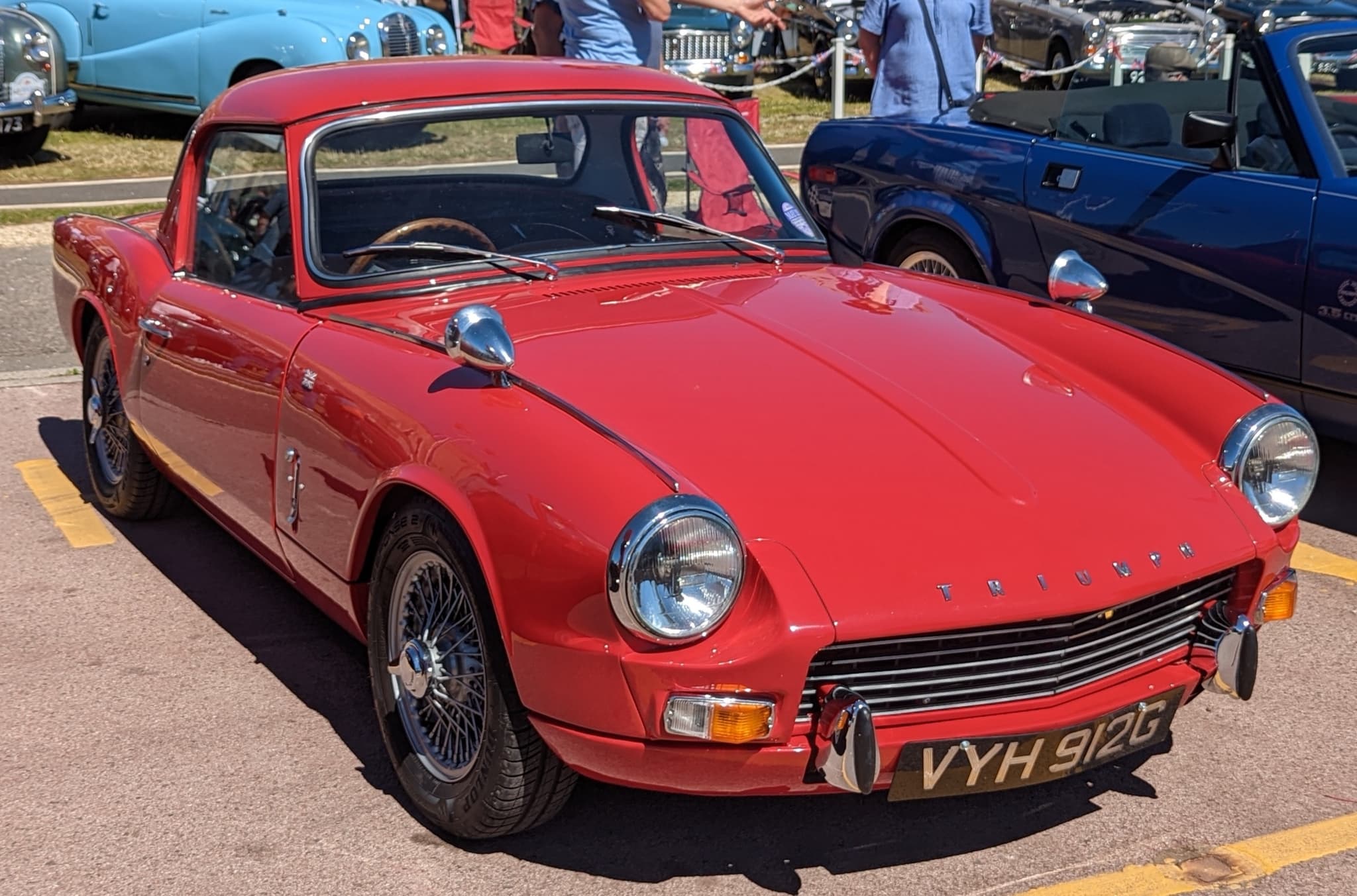
64 A red Spitfire Mk III with a hardtop and wire wheels, modified to run without its front bumper blade, photographed at a car show in July 2022.
Mk IV and 1500 3
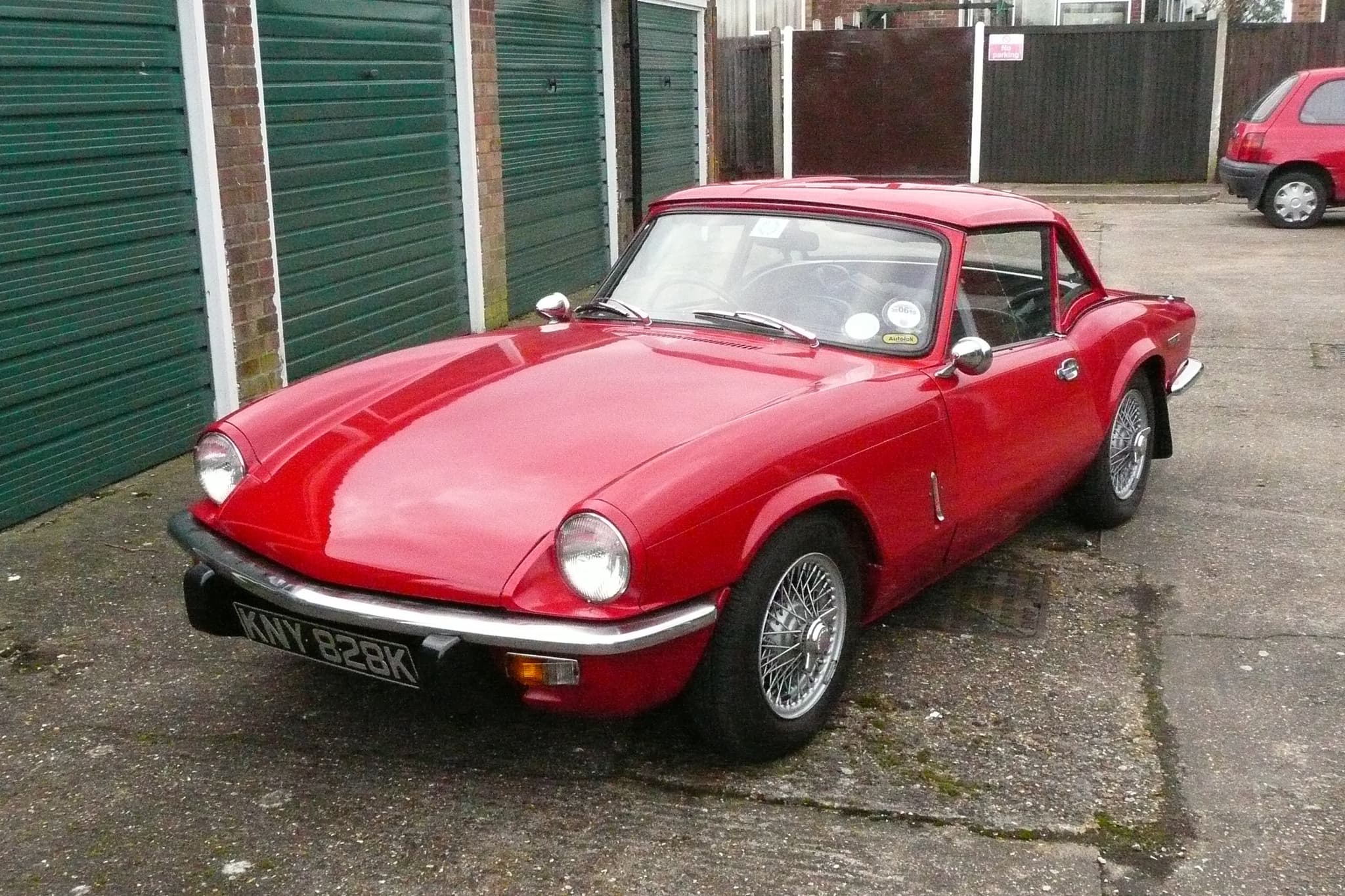
65 A red Spitfire in the Mk IV body with its hardtop fitted and wire wheels, beside lock-up garages in January 2010.
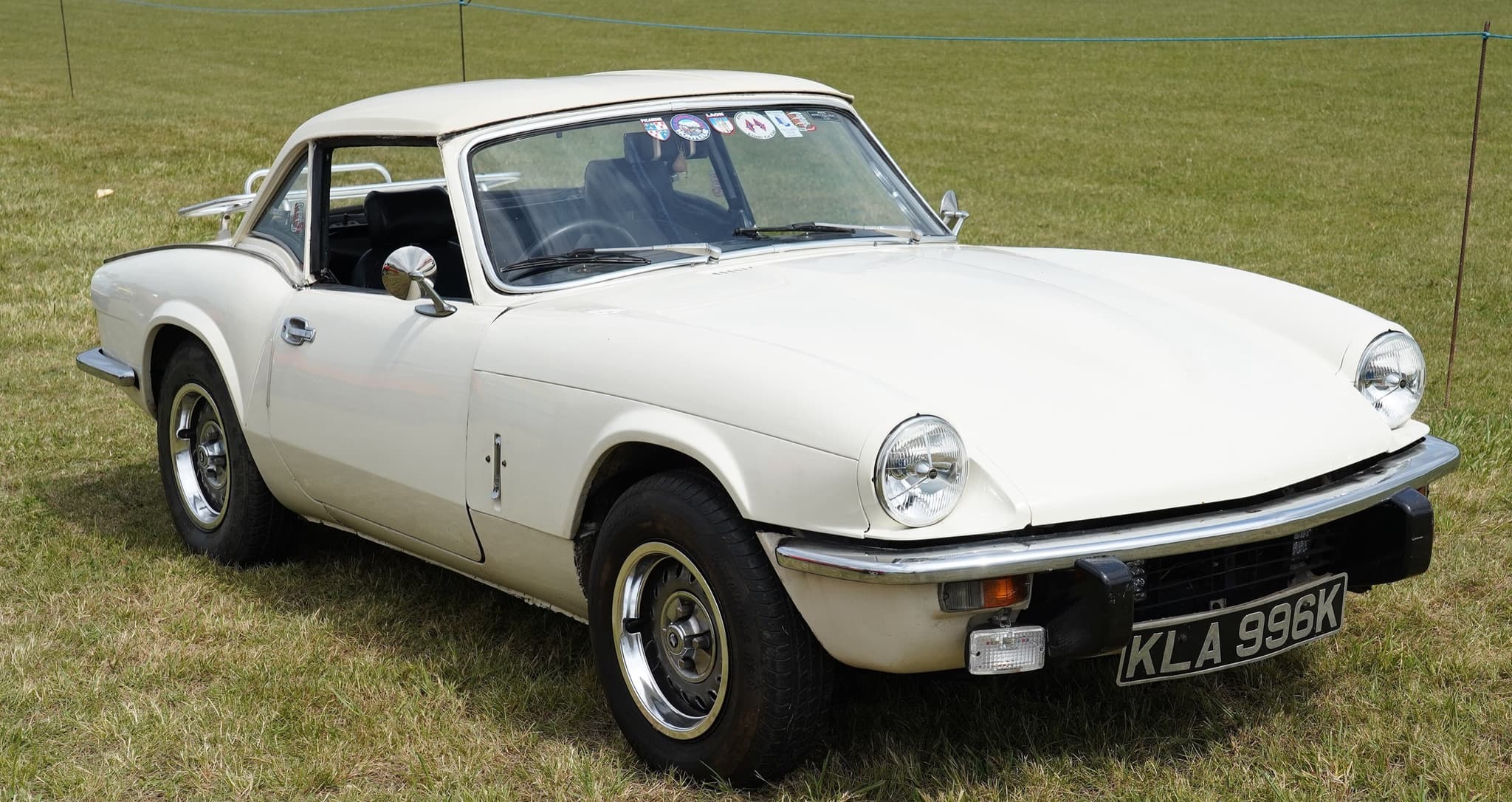
66 A white Spitfire in the Mk IV body with a matching hardtop at the Aldham Old Time Rally, Essex, in June 2026.
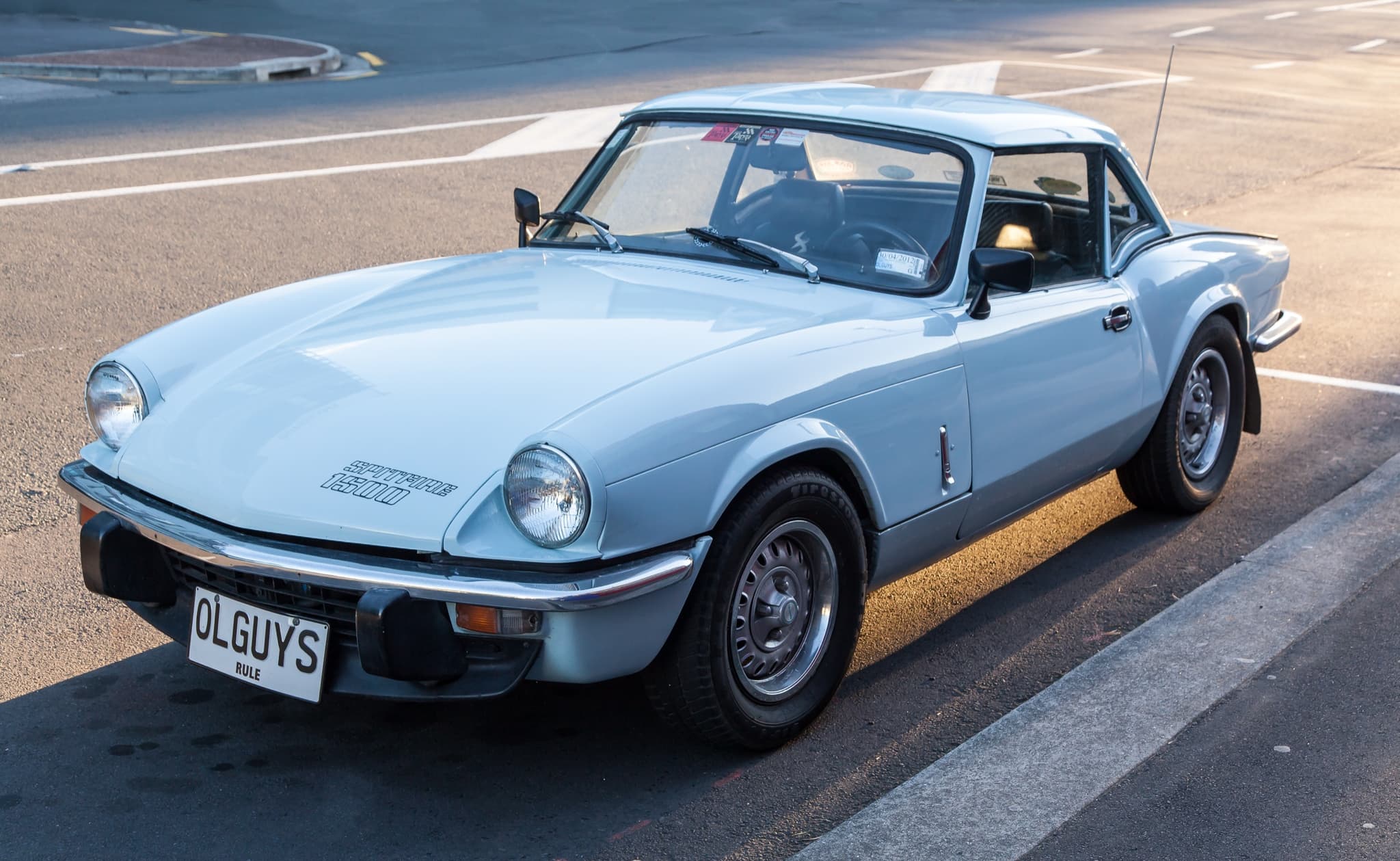
67 A pale blue Spitfire 1500 with its hardtop fitted, parked at a kerb in low evening sun in April 2012.
Picture credits (8)
- 60 pyntofmyld, CC BY 2.0
- 61 SG2012, CC BY 2.0
- 62 Dave Howes, CC BY-SA 2.0
- 63 Avaldia, CC BY-SA 3.0
- 64 Calreyn88, CC BY-SA 4.0
- 65 Jonnyk5614, CC BY 3.0
- 66 kitmasterbloke, CC BY 4.0
- 67 russellstreet, CC BY-SA 2.0
Interiors
The early cars grouped their instruments in the middle of the fascia (dashboard). The Mk III set them in a wood-veneer panel, still in the middle on cars sold outside the United States; American cars had them moved in front of the driver for the 1969 model year. On the Mk IV they sat in front of the driver, in a matt-black fascia that gave way to wood veneer in 1973, and the 1500's British brochure of December 1978 lists a walnut-veneer fascia and houndstooth seat facings. Several of the cockpits here have later steering wheels or radios, as their captions say.source 4source 5source 6source 2source 8source 14source 15
Instruments in the middle 4
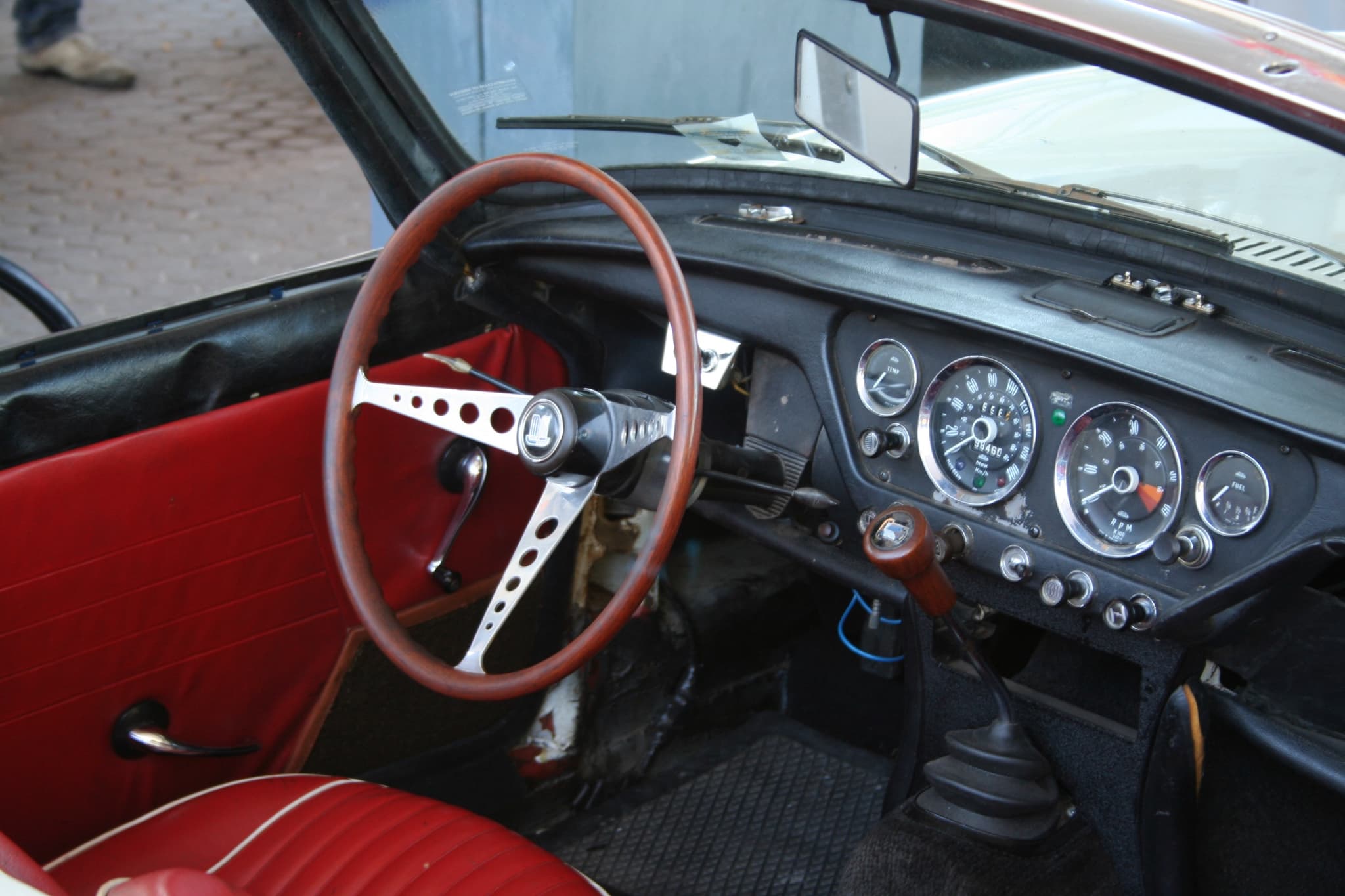
68 The cockpit of an early Spitfire, its instruments grouped in the centre of the dashboard, with an aftermarket wood-rim steering wheel.
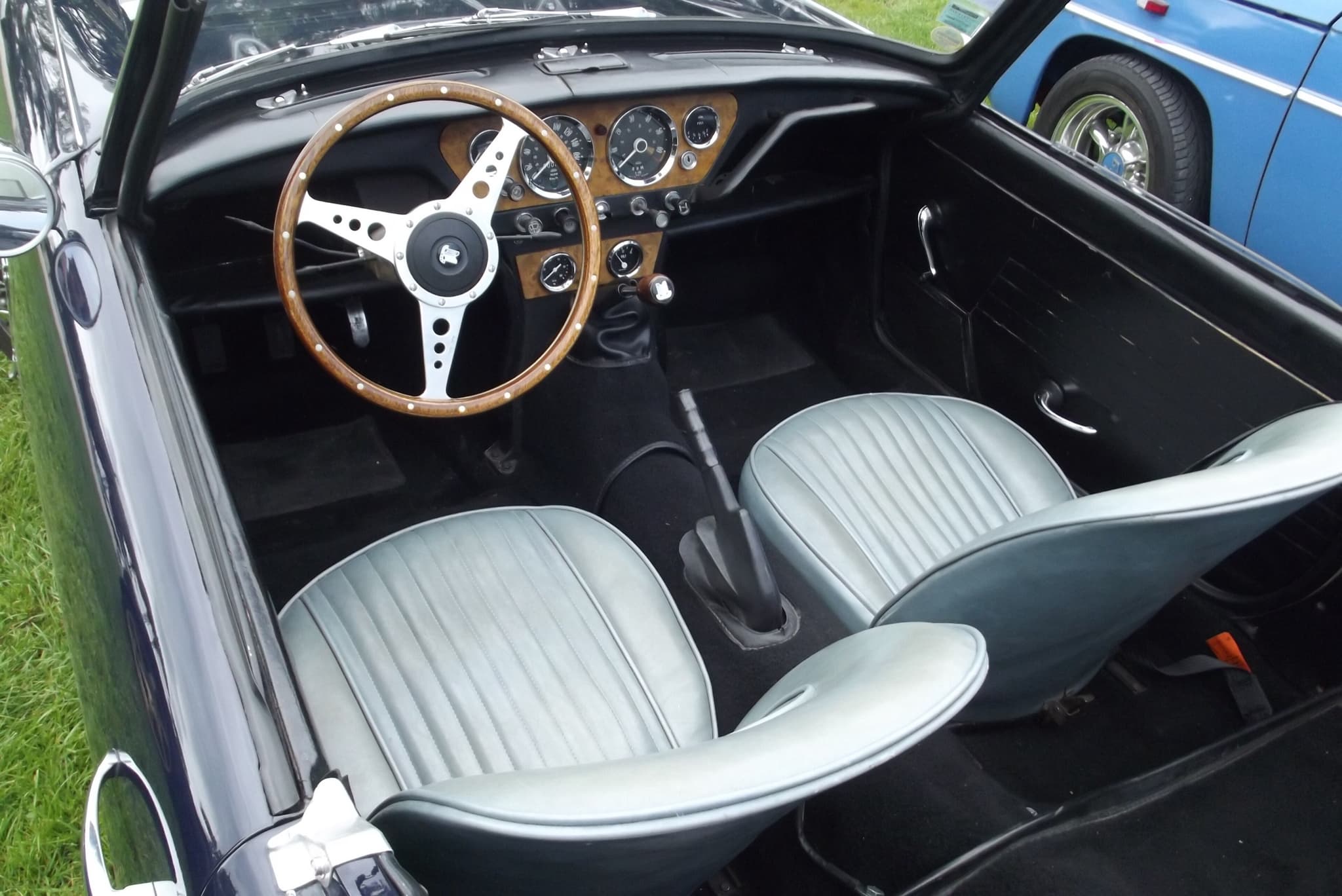
69 The cockpit of an early Spitfire, with grey seats, its instruments in a central wood panel and an aftermarket wood-rim steering wheel, in May 2015.
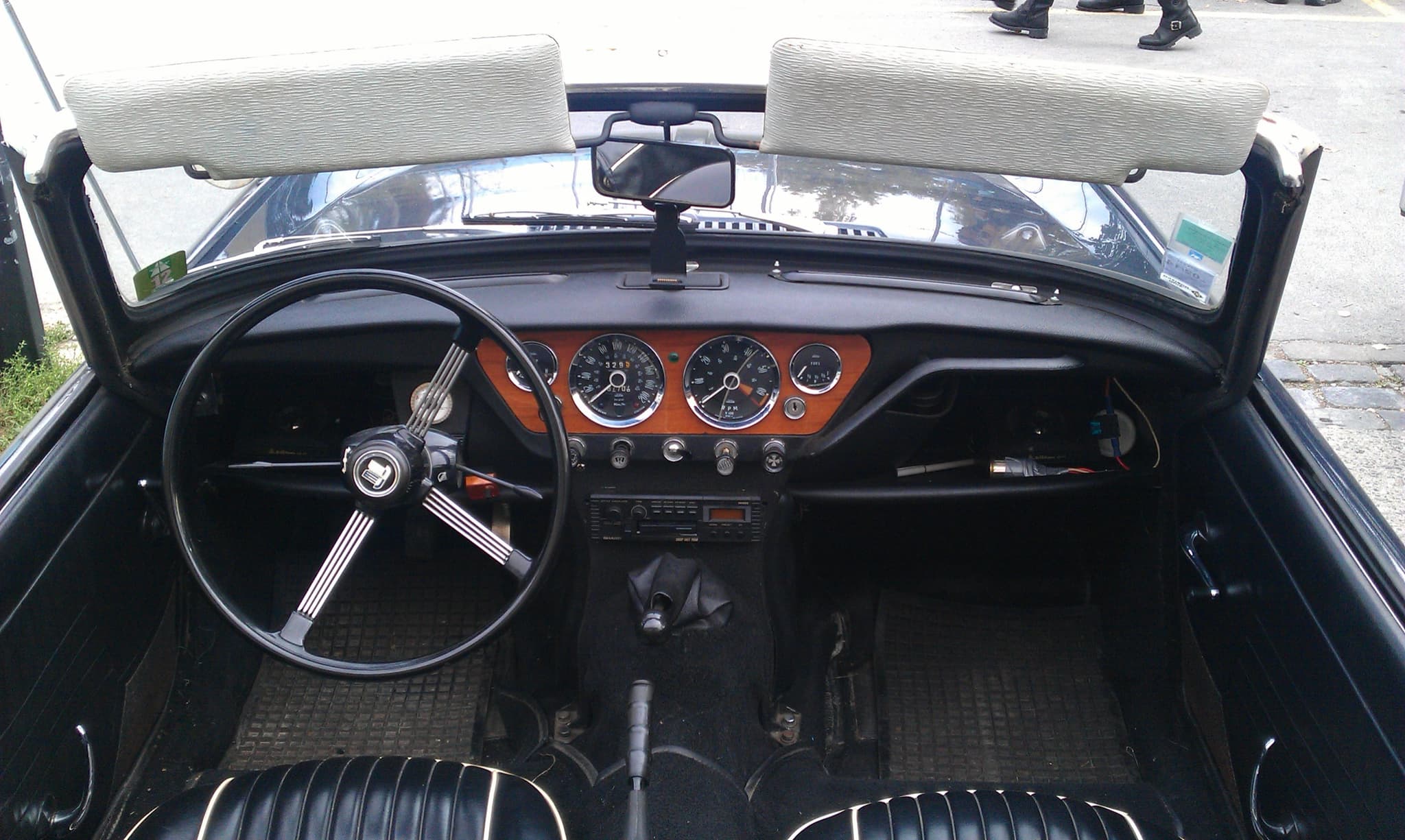
70 The cockpit of a Spitfire Mk III, with its wood-veneer centre instrument panel and three-spoke wheel, in Morges, Switzerland, in October 2012.
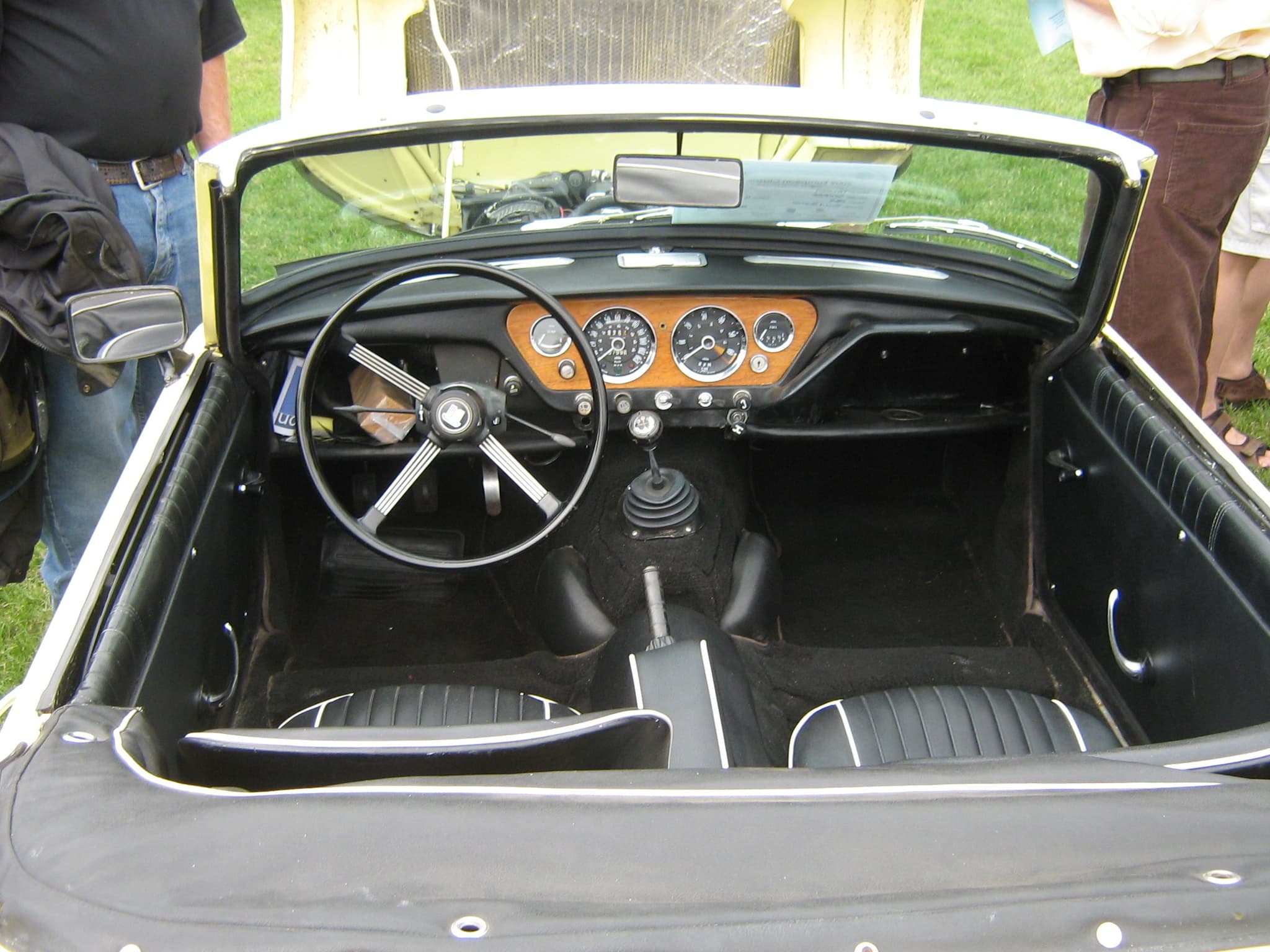
71 The cockpit of a pale yellow Spitfire Mk III, its instruments grouped in a wood panel at the centre of the fascia, at a car show in July 2009.
Instruments before the driver 5
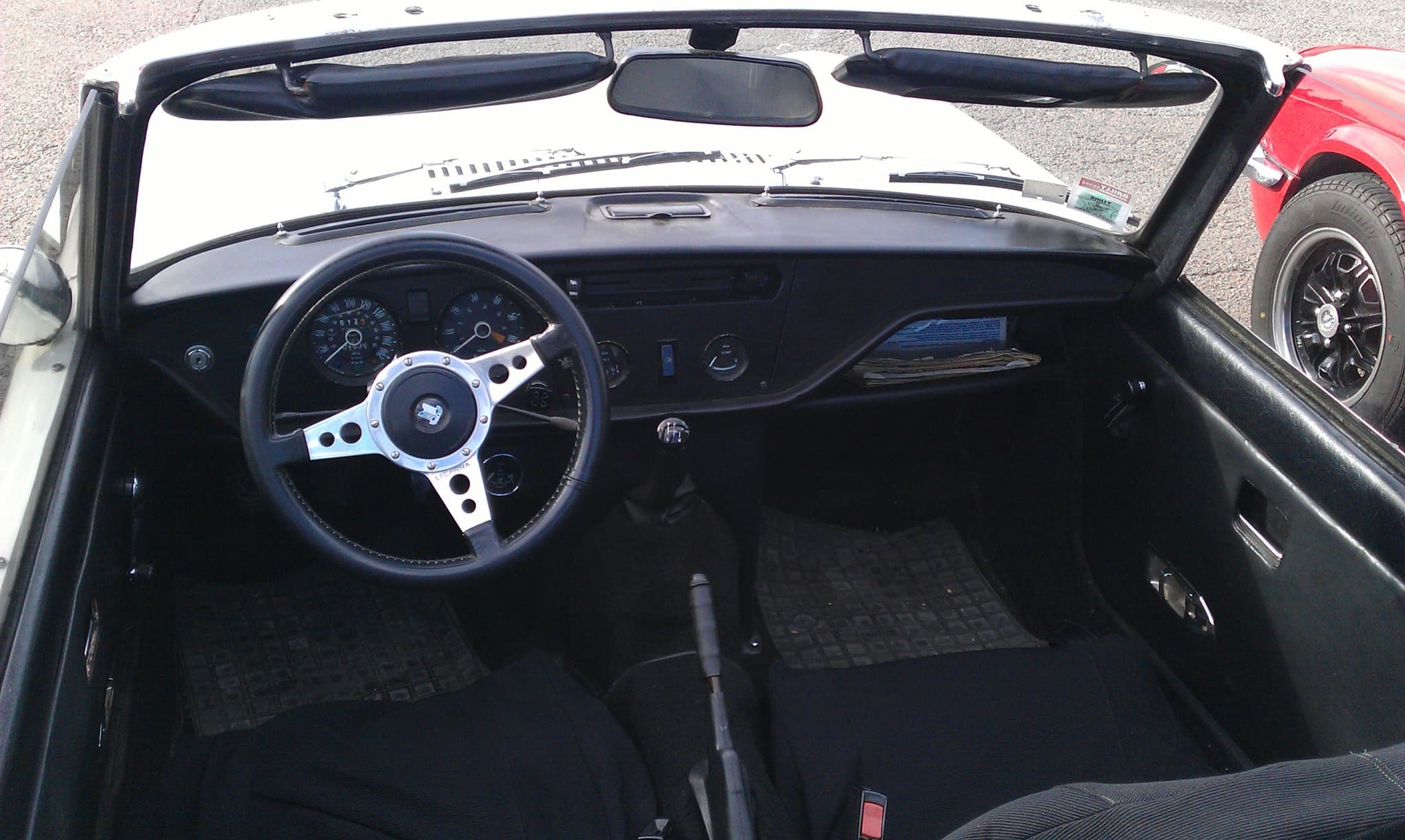
72 The black fascia of an early Spitfire Mk IV, with its instruments ahead of the driver and an aftermarket steering wheel, photographed in September 2012.
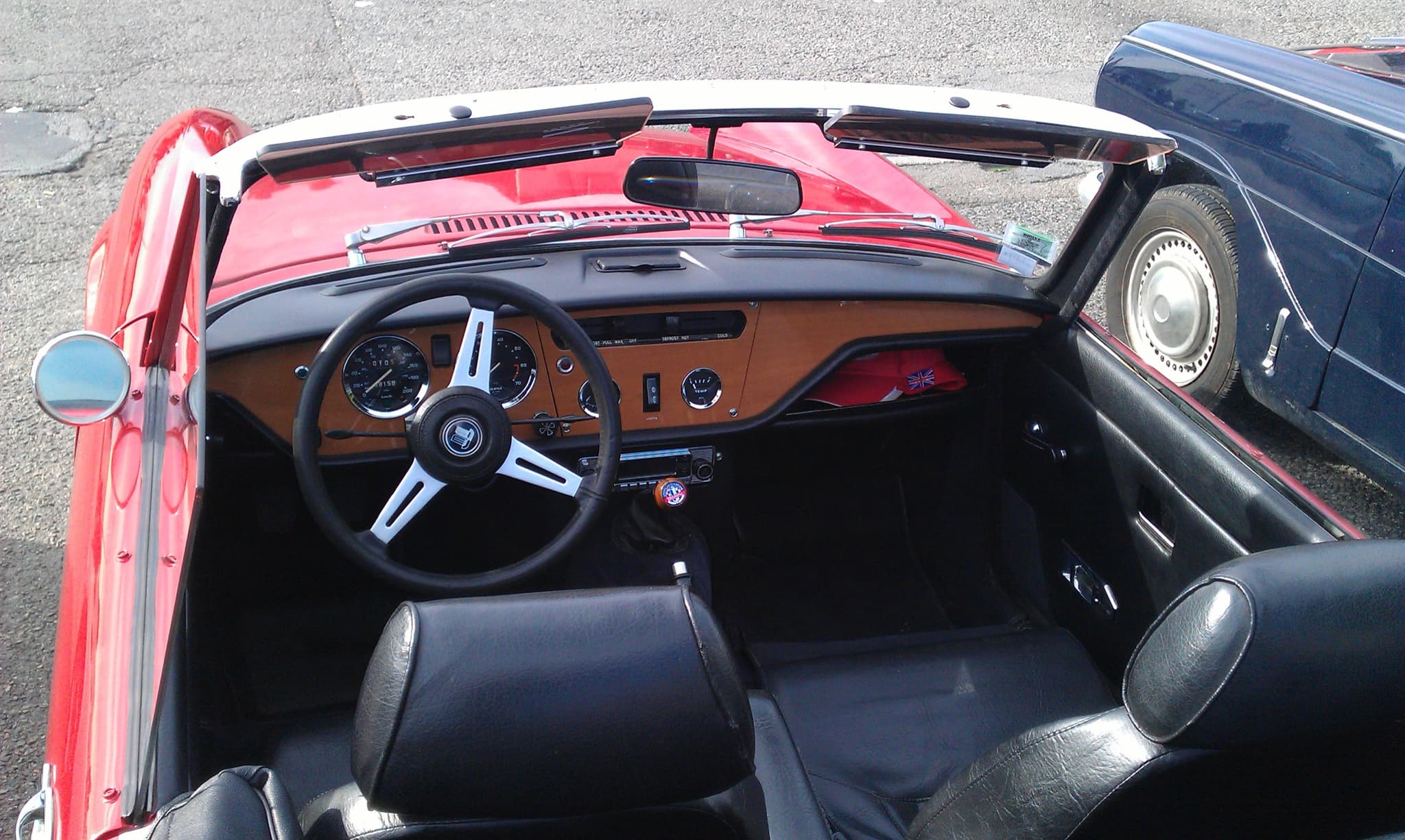
73 The wood fascia of a red Spitfire in the Mk IV body, with its instruments ahead of the driver, photographed in September 2012.
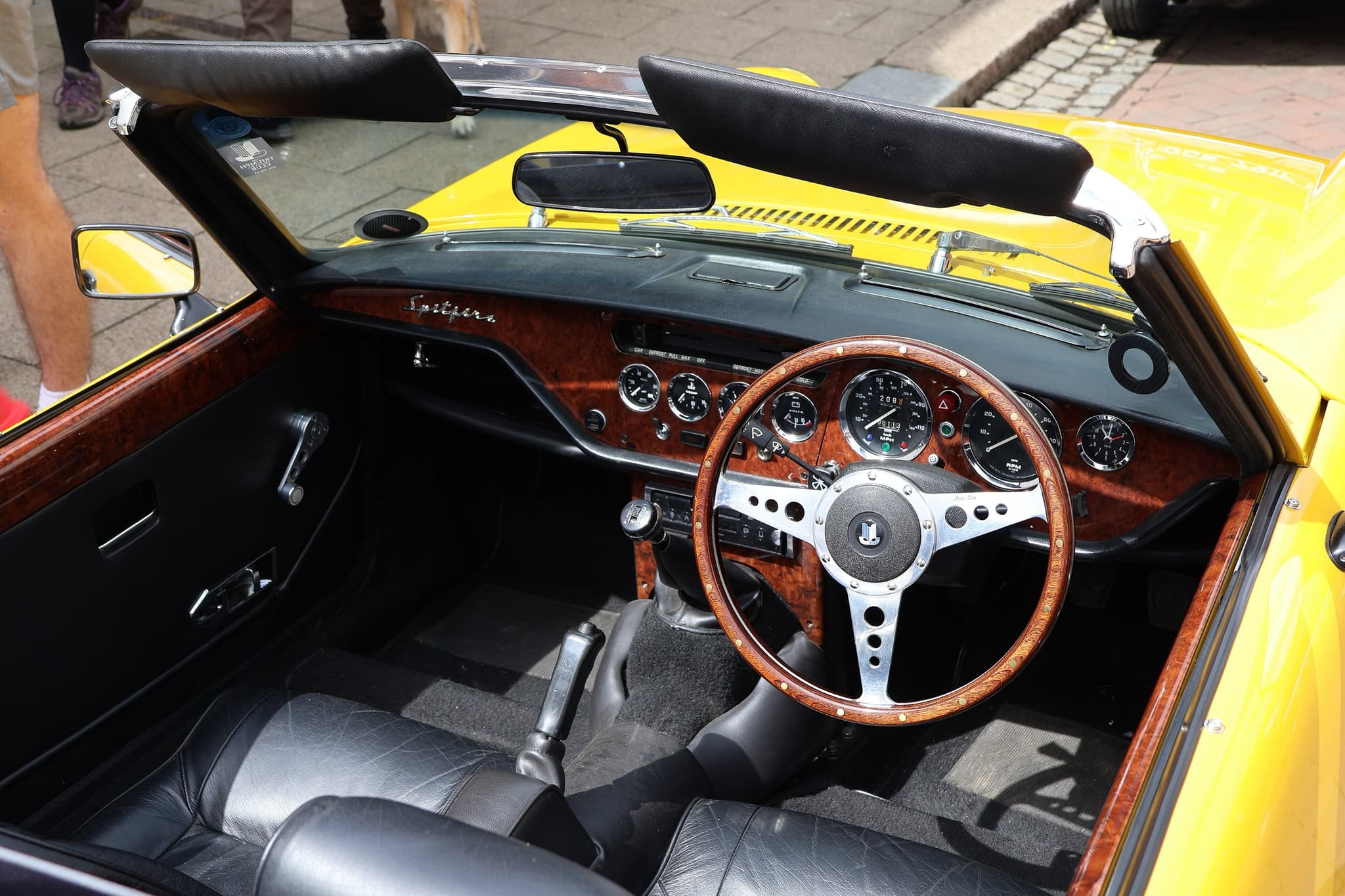
74 The cockpit of a yellow Spitfire in the Mk IV body, with a burr-wood fascia and an aftermarket wood-rim wheel, at the Faversham Festival of Transport, Kent, in May 2026.
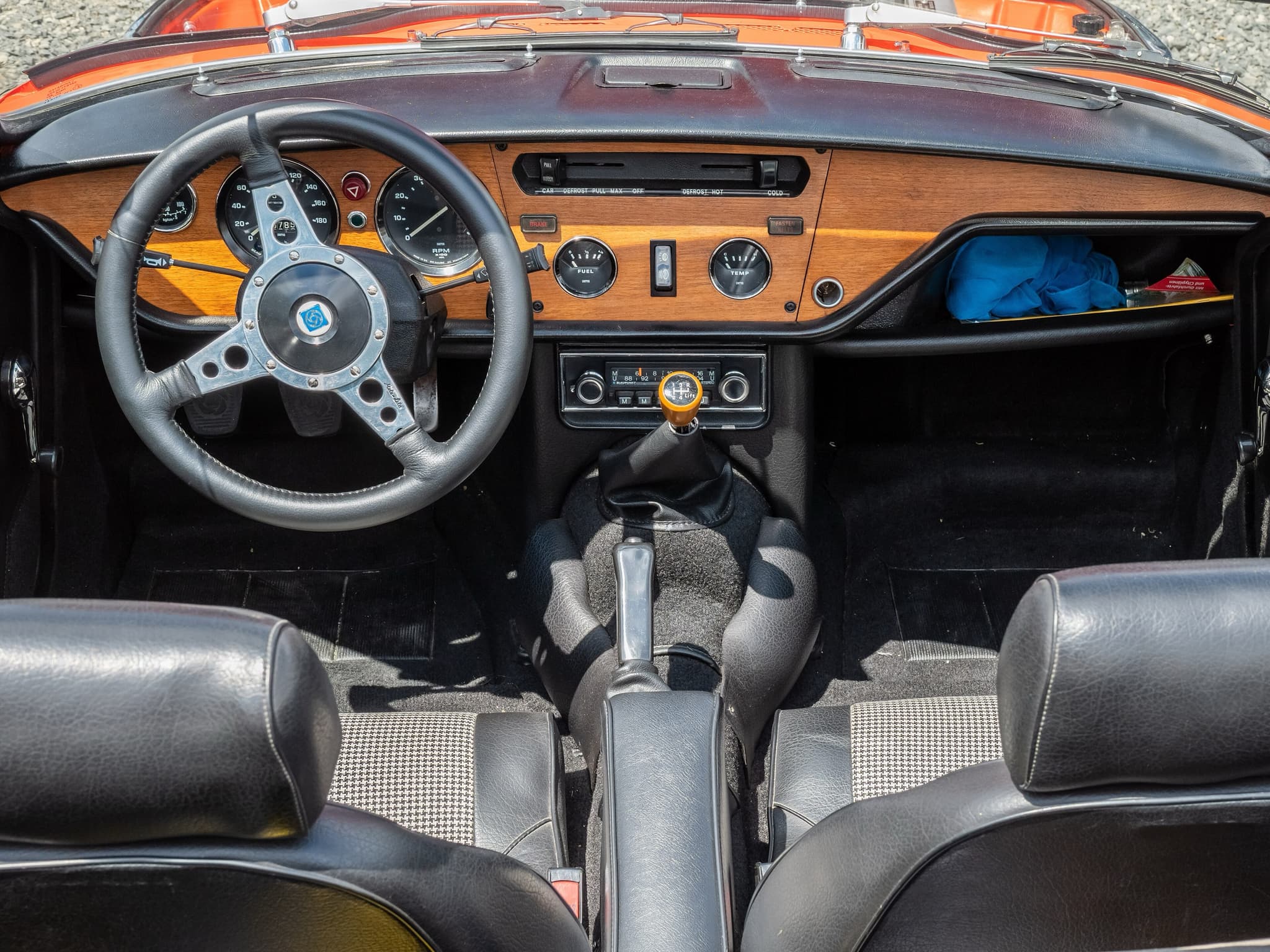
75 The cockpit of a Spitfire 1500, with houndstooth seat facings and a later leather-rimmed steering wheel, at a vintage car meeting in Ebern, Germany, in June 2019.
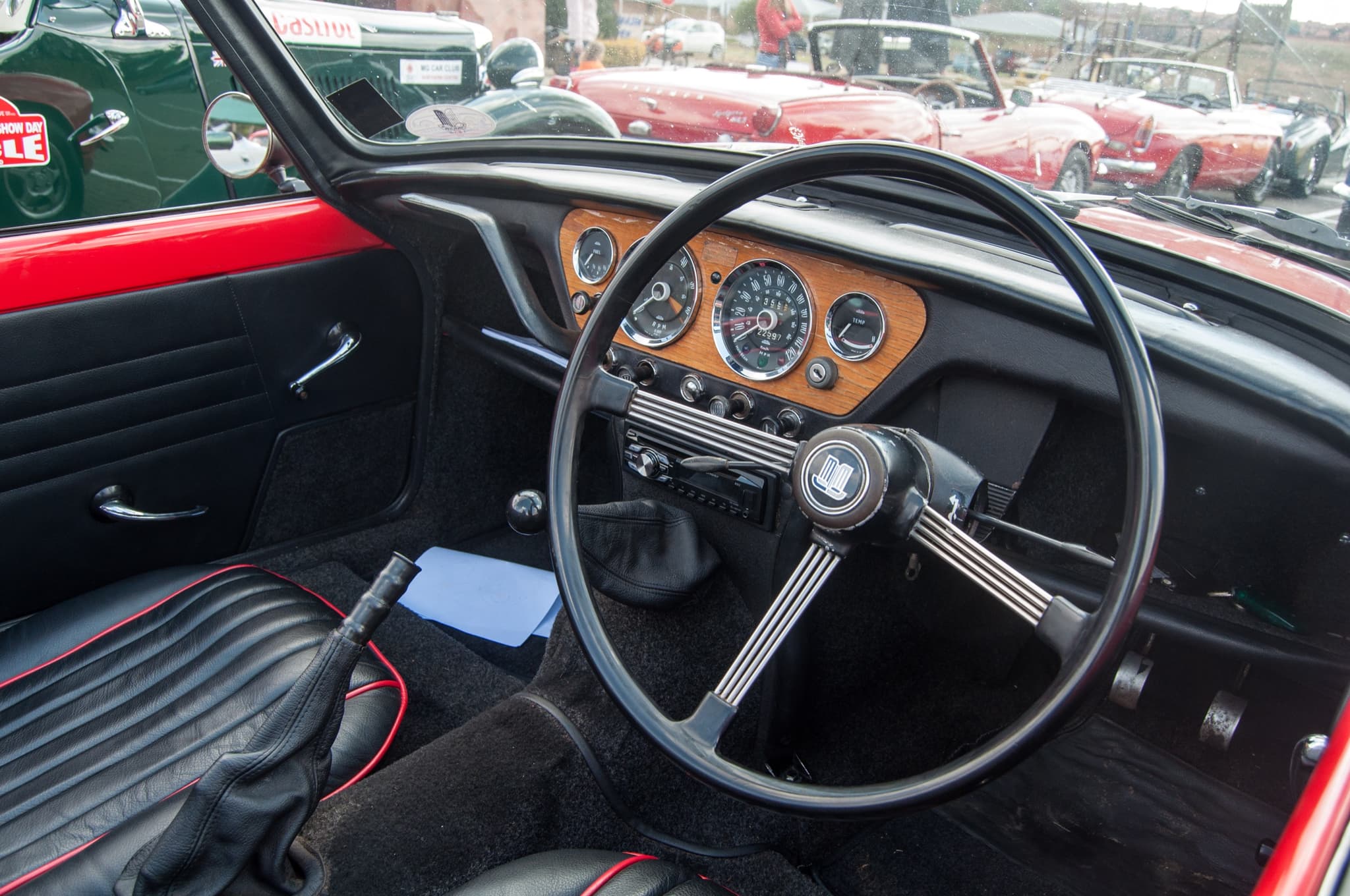
76 The cockpit of a red right-hand-drive Spitfire, its instruments in a wood panel ahead of the driver and a modern radio below, at a Triumph and MG club event in South Africa in May 2013.
Picture credits (9)
- 68 jimmyroq, CC BY-SA 2.0
- 69 Handelsgeselschaft, CC BY-SA 4.0
- 70 Akela NDE, CC BY-SA 2.0 fr
- 71 dave_7, CC BY 2.0
- 72 Akela NDE, CC BY-SA 2.0 fr
- 73 Akela NDE, CC BY-SA 2.0 fr
- 74 hugh llewelyn, CC BY-SA 4.0
- 75 Ermell, CC BY-SA 4.0
- 76 Meraj Chhaya, CC BY 2.0
Engine bays
Lift the front of a Spitfire and the engine and front suspension lie open: bonnet and front wings hinge forward together, in one piece, as on the Herald whose shortened chassis the car was built on. The four-cylinder engine was enlarged twice, for the Mk III and for the 1500, and the specifications give each size. Some of these engines wear later parts, such as chrome air filters, as their captions say.source 4source 8source 5source 7source 6
Under the bonnet 5
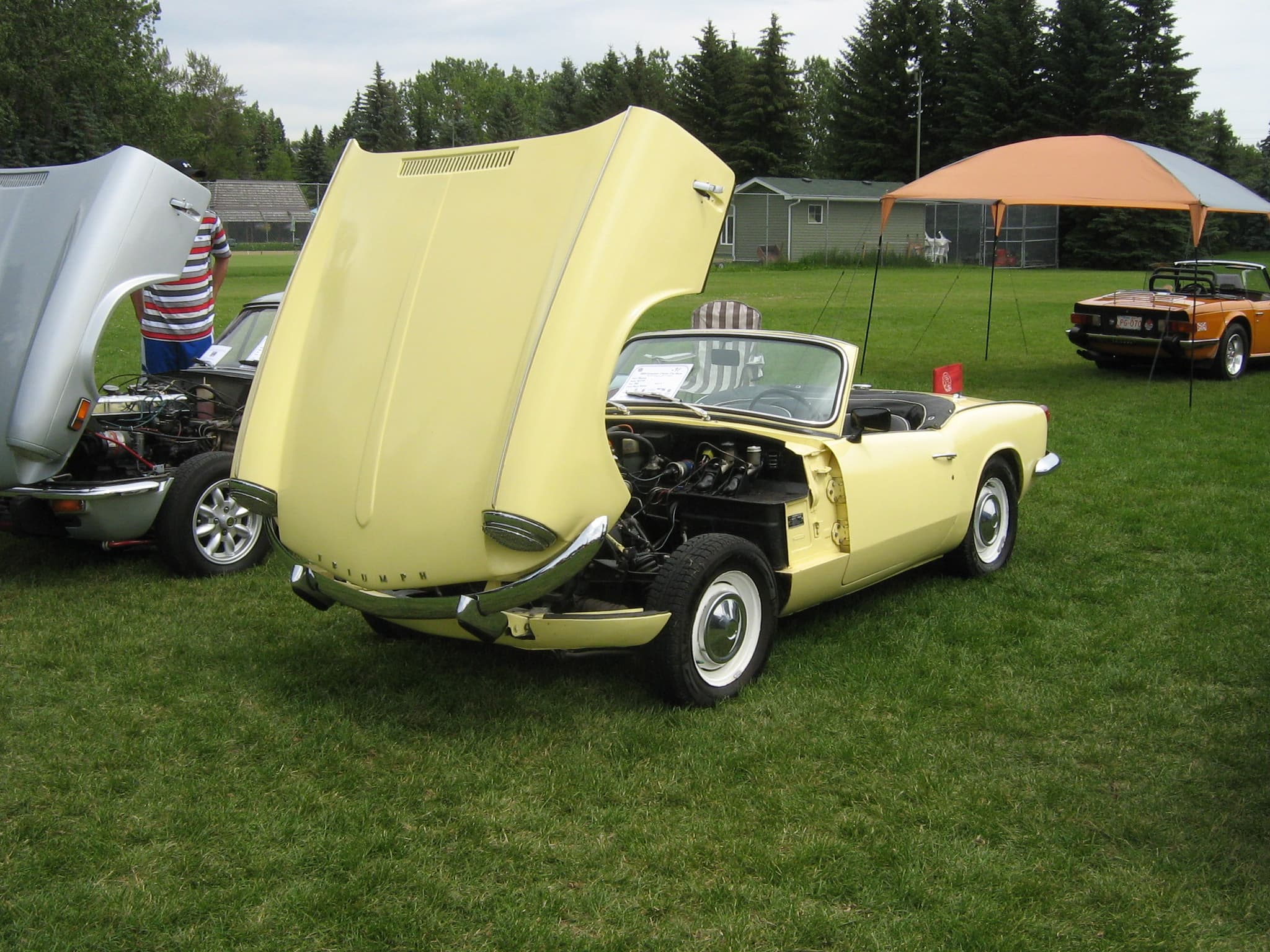
77 A pale yellow Spitfire Mk III with its one-piece bonnet tipped forward to show the engine and front suspension, at a car show in July 2009.
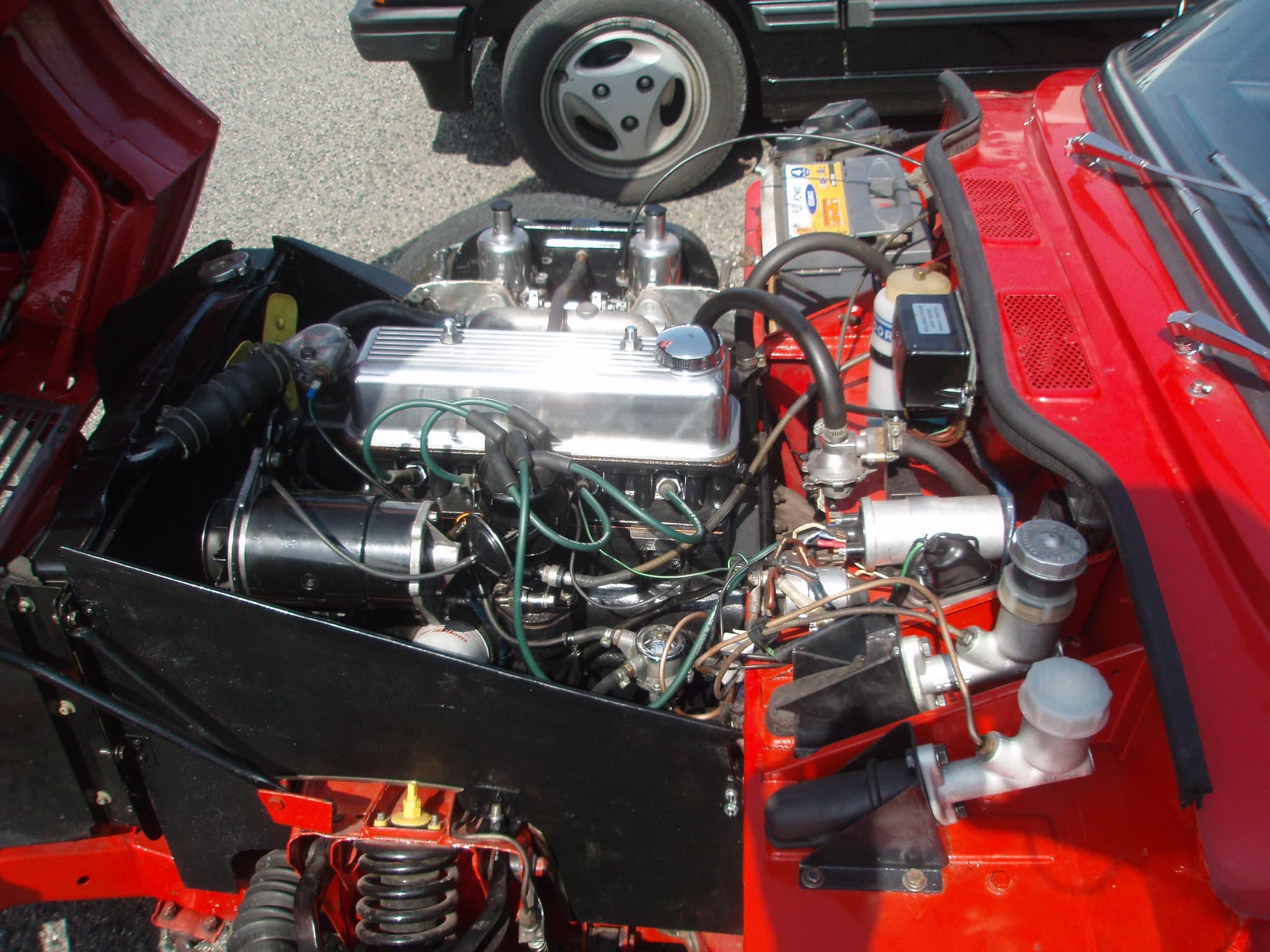
78 The engine bay of a red early Spitfire with its bonnet tipped forward, showing the twin SU carburettors and front suspension, in June 2012.
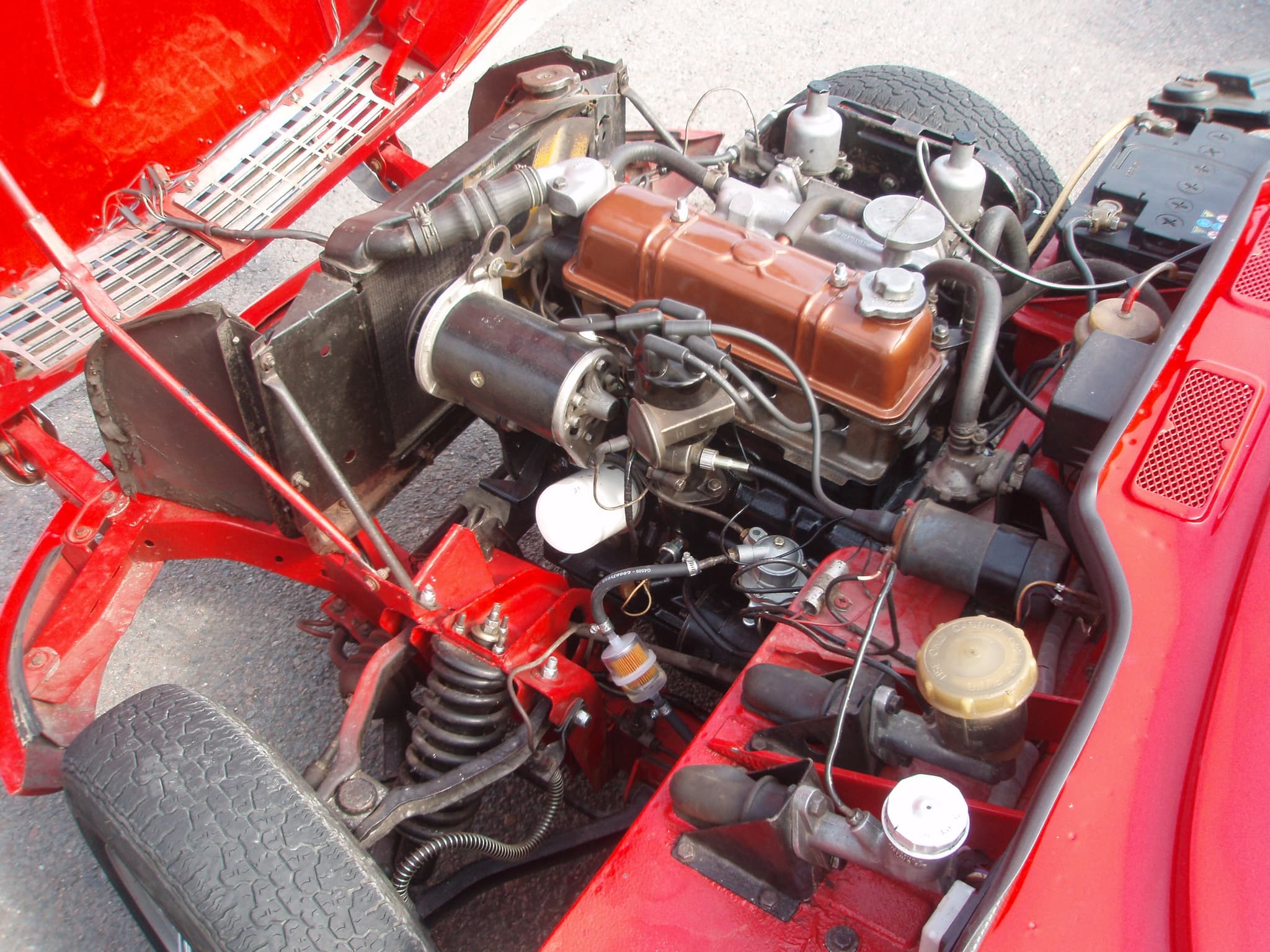
79 The engine bay of a red Spitfire with its bonnet tipped forward, showing the twin carburettors and front suspension, in June 2012.
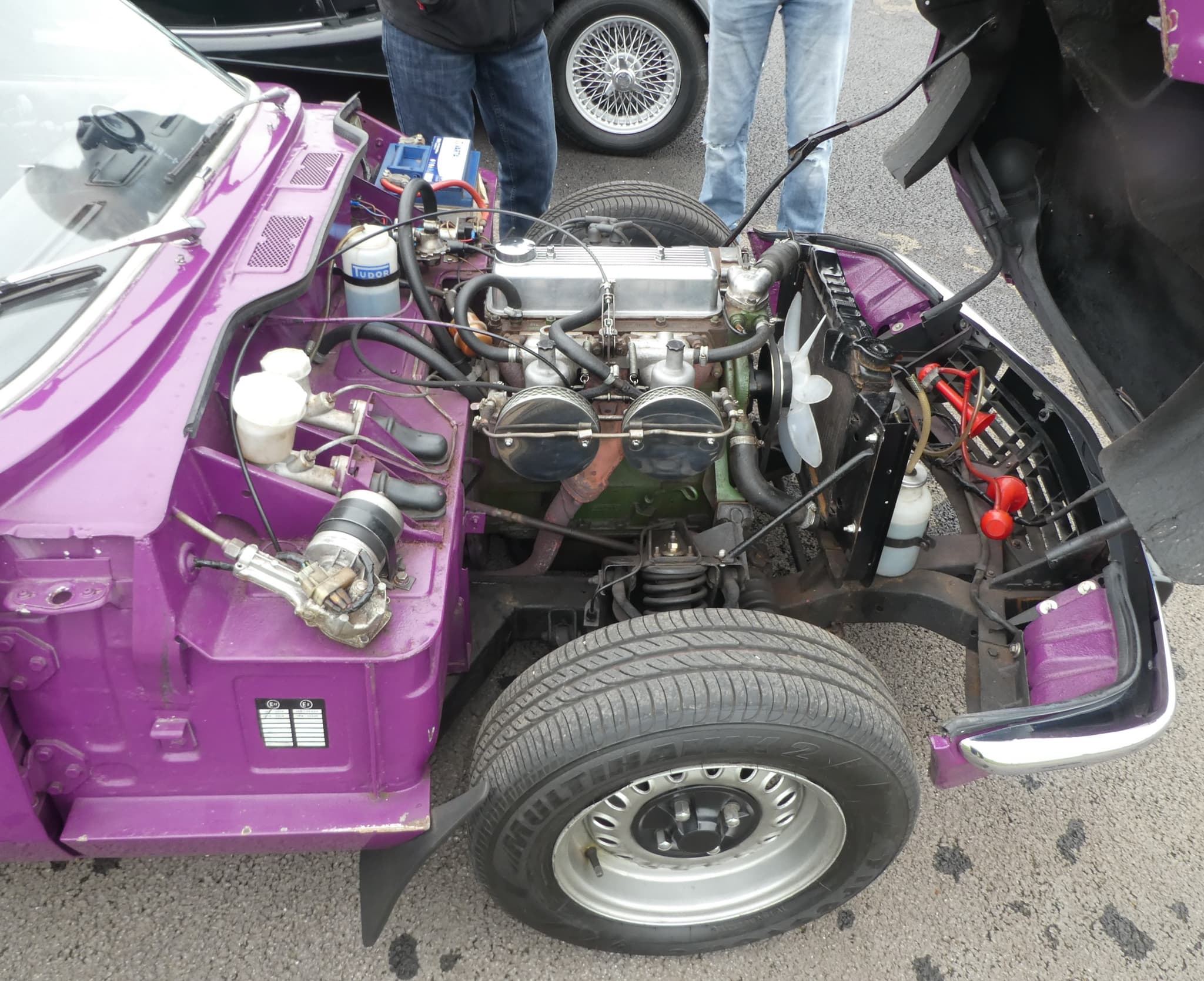
80 The engine bay of a purple Spitfire in the Mk IV body, its one-piece bonnet tipped forward, with aftermarket chrome air filters, at the Haynes International Motor Museum, Sparkford, in June 2022.
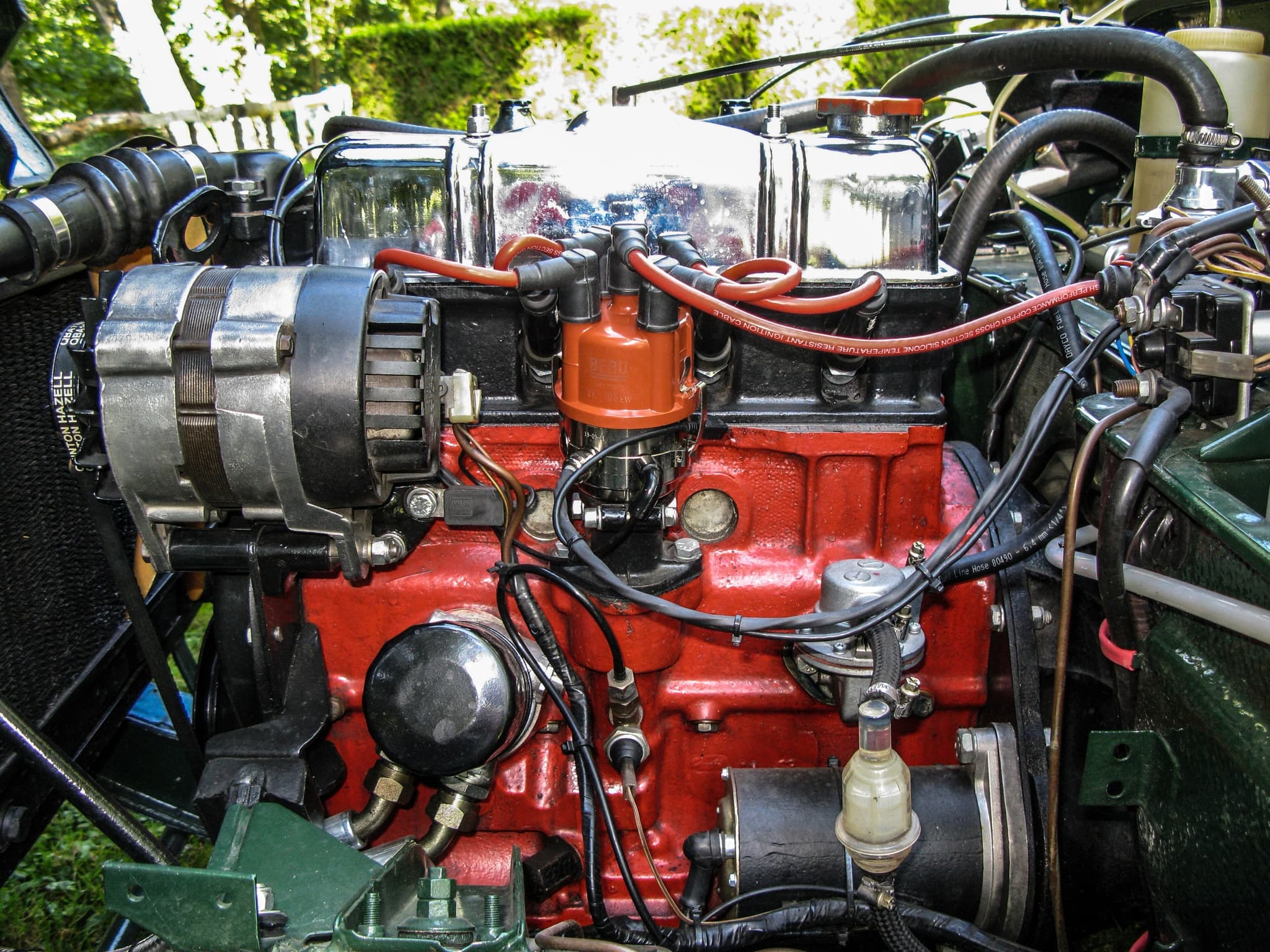
81 The engine of a dark green Spitfire, with a polished rocker cover and aftermarket ignition parts, photographed in July 2012.
Picture credits (5)
- 77 dave_7, CC BY 2.0
- 78 Akela NDE, CC BY-SA 2.0 fr
- 79 Akela NDE, CC BY-SA 2.0 fr
- 80 Andrew Bone, CC BY 2.0
- 81 Sunappu-shashin, CC BY-SA 4.0
Period photographs
All four were taken while the Spitfire was still being built, from a new Spitfire 4 at the Amsterdam motor show in February 1963 to a 1500 in a London street in about 1977. The rally picture shows Valerie Pirie, who drove ADU 467B for Stirling Moss's SMART team; the plate on the car she and Susan Reeves lean on begins ADU 4, and the rest is hidden.source 1source 2source 16
1963 to 1977 4
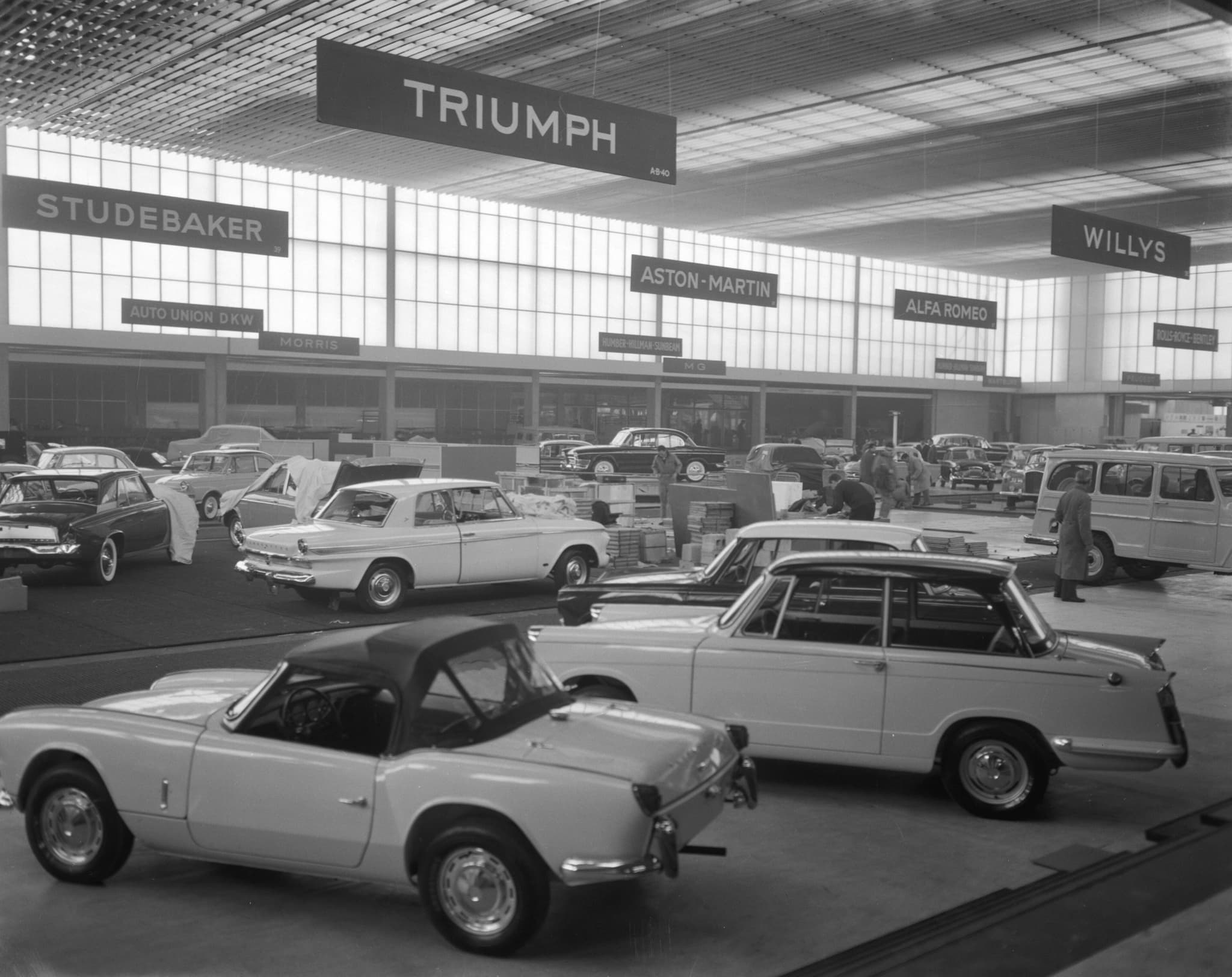
82 The Triumph stand at the Amsterdam motor show on 5 February 1963, with a new Spitfire 4, hood up, and a Herald in a hall still being set up.
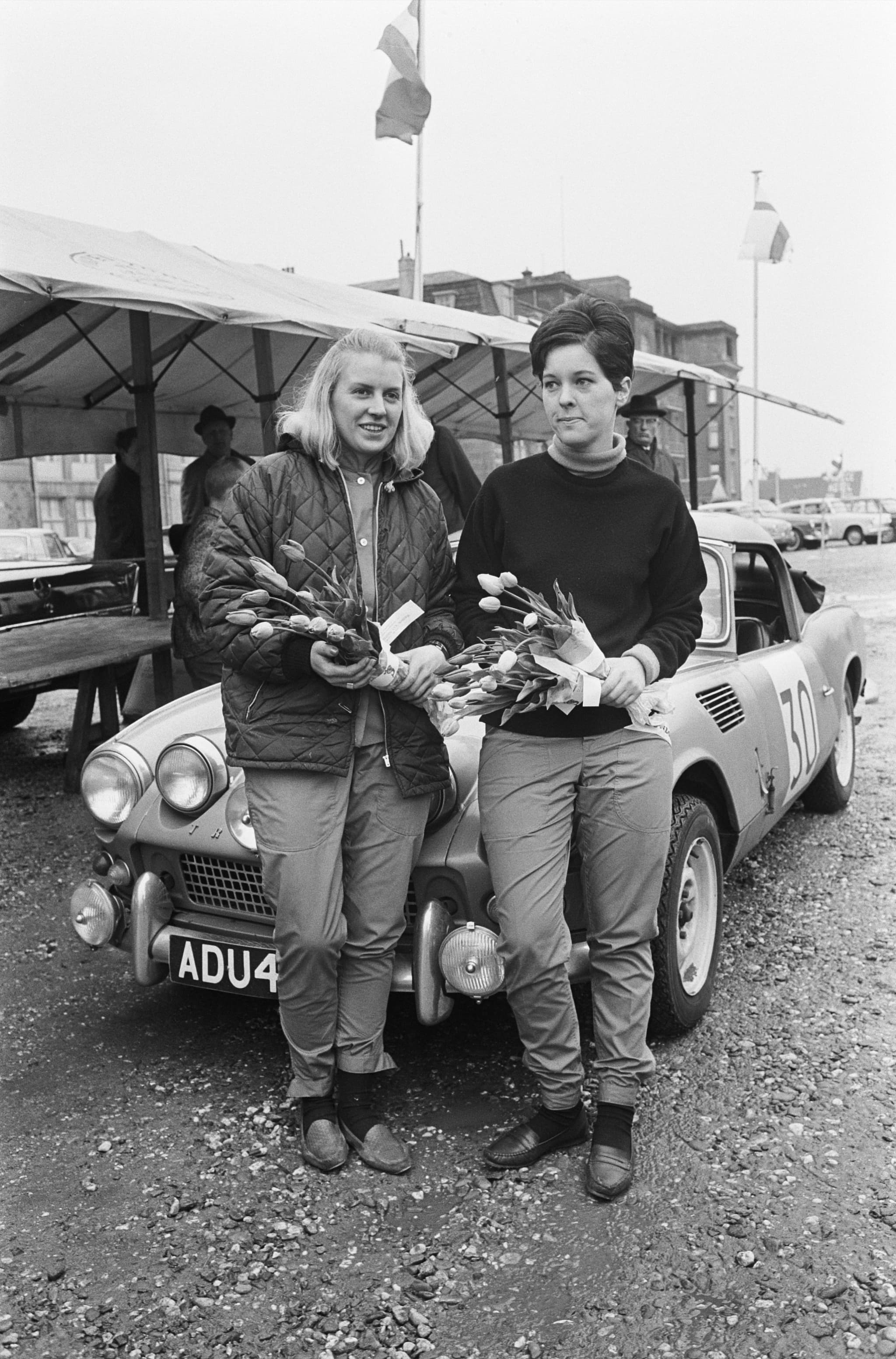
83 Valerie Pirie (left) and Susan Reeves holding tulips and leaning on a rally Spitfire 4, No. 30, at the Tulip Rally, Noordwijk, 28 April 1965.
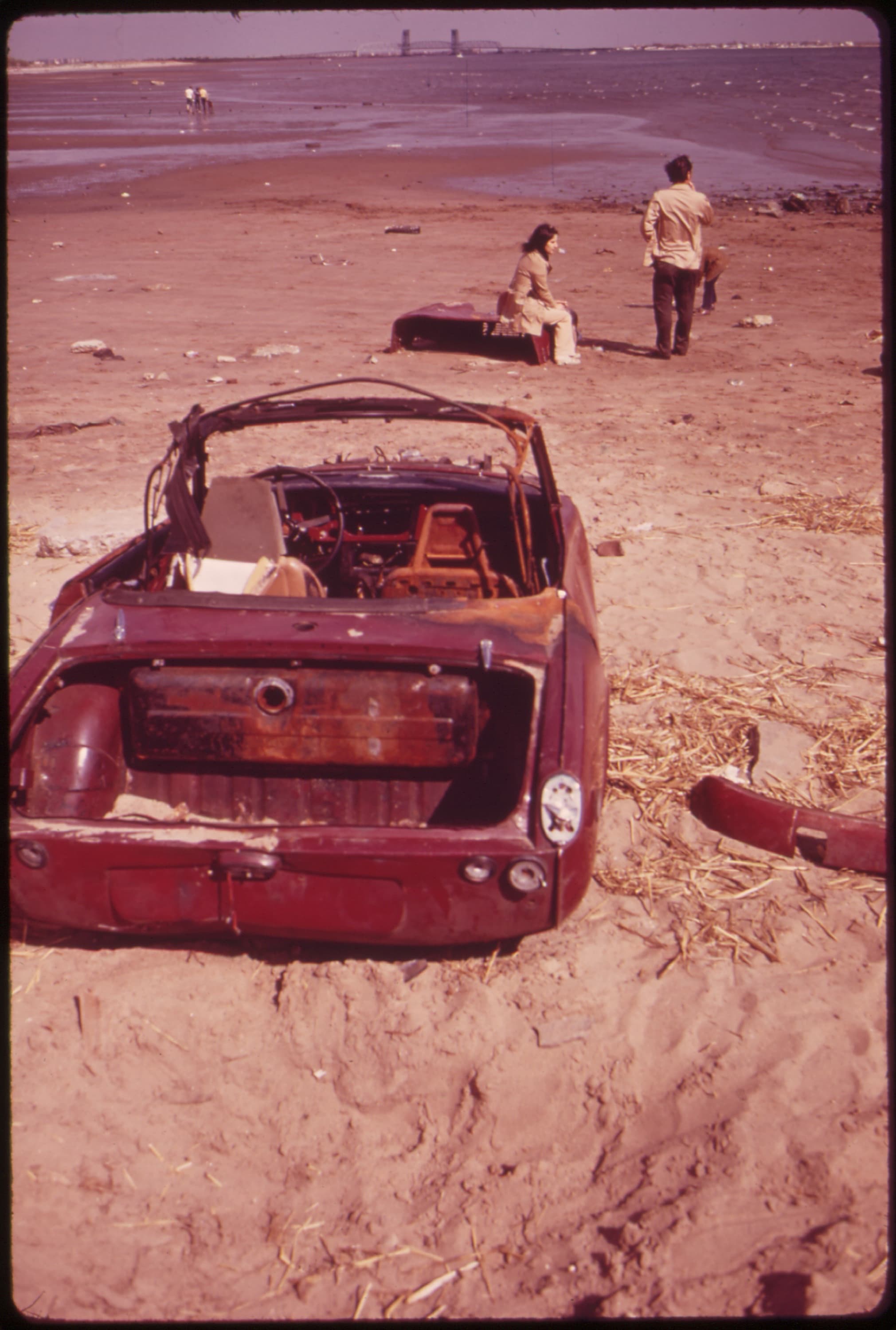
84 A stripped round-tail Spitfire abandoned on Plum Beach, Sheepshead Bay, Brooklyn, New York, in May 1973, photographed for the US Environmental Protection Agency's DOCUMERICA project.
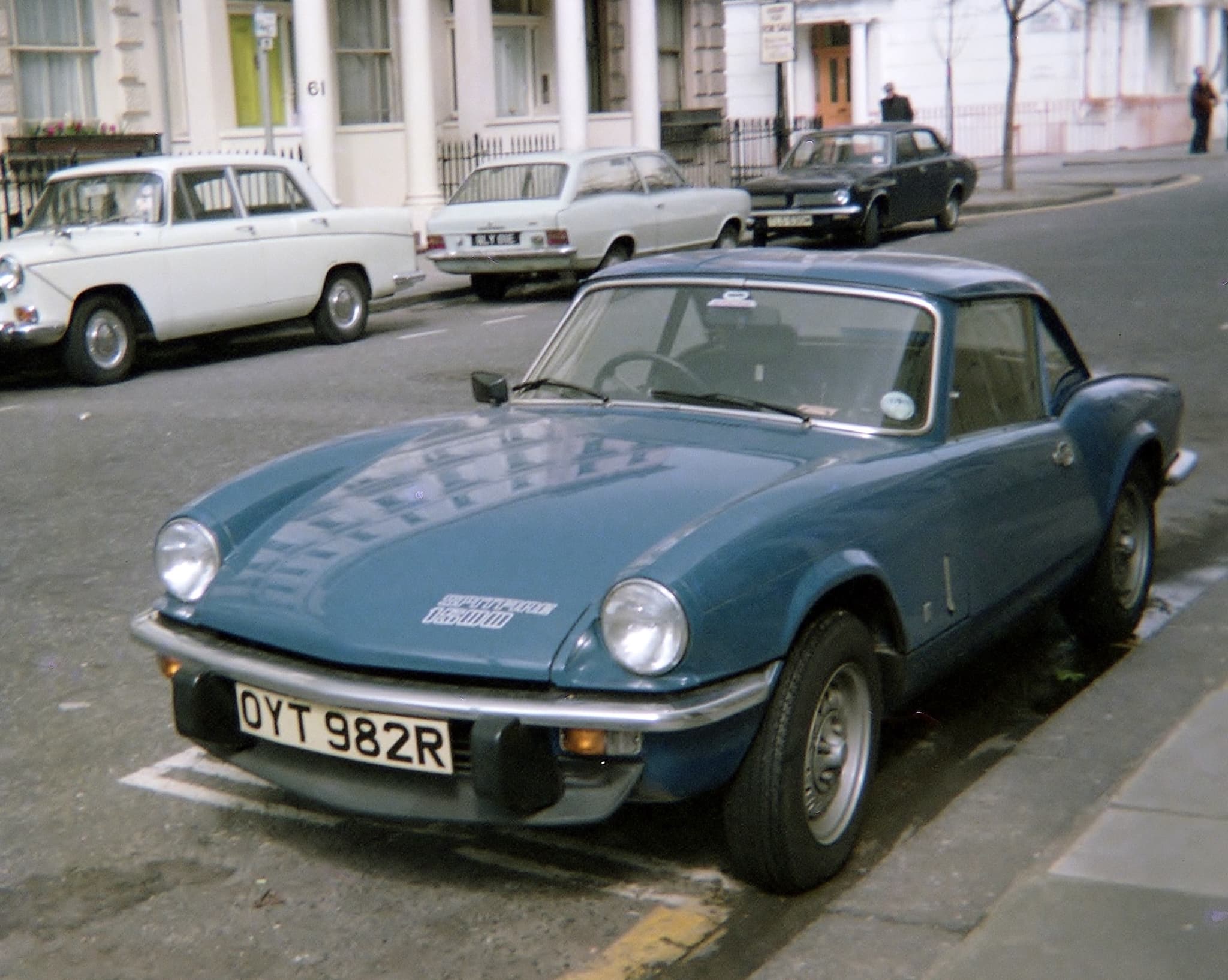
85 A blue Spitfire 1500 with a hardtop, parked in a London street believed to be in Pimlico, in about April 1977.
Picture credits (4)
- 82 Joop van Bilsen for Anefo, CC0
- 83 Anefo, CC0
- 84 Arthur Tress, Public domain
- 85 Bahnfrend, CC BY-SA 4.0
Racing and replicas
Standard-Triumph's experimental department built four fastback Spitfires of aluminium and glass fibre for Le Mans, and the works team raced them there in 1964 and 1965; in 1965 two of them finished first and second in the 1.15-litre GT class. The fastbacks here are replicas, built since and raced or shown at historic meetings; the racing page tells the works cars' story. The other cars are club racers and a Spitfire 4 dressed for rallying, none of them a works car.source 17source 18source 19source 20source 21source 22
Le Mans replicas 4
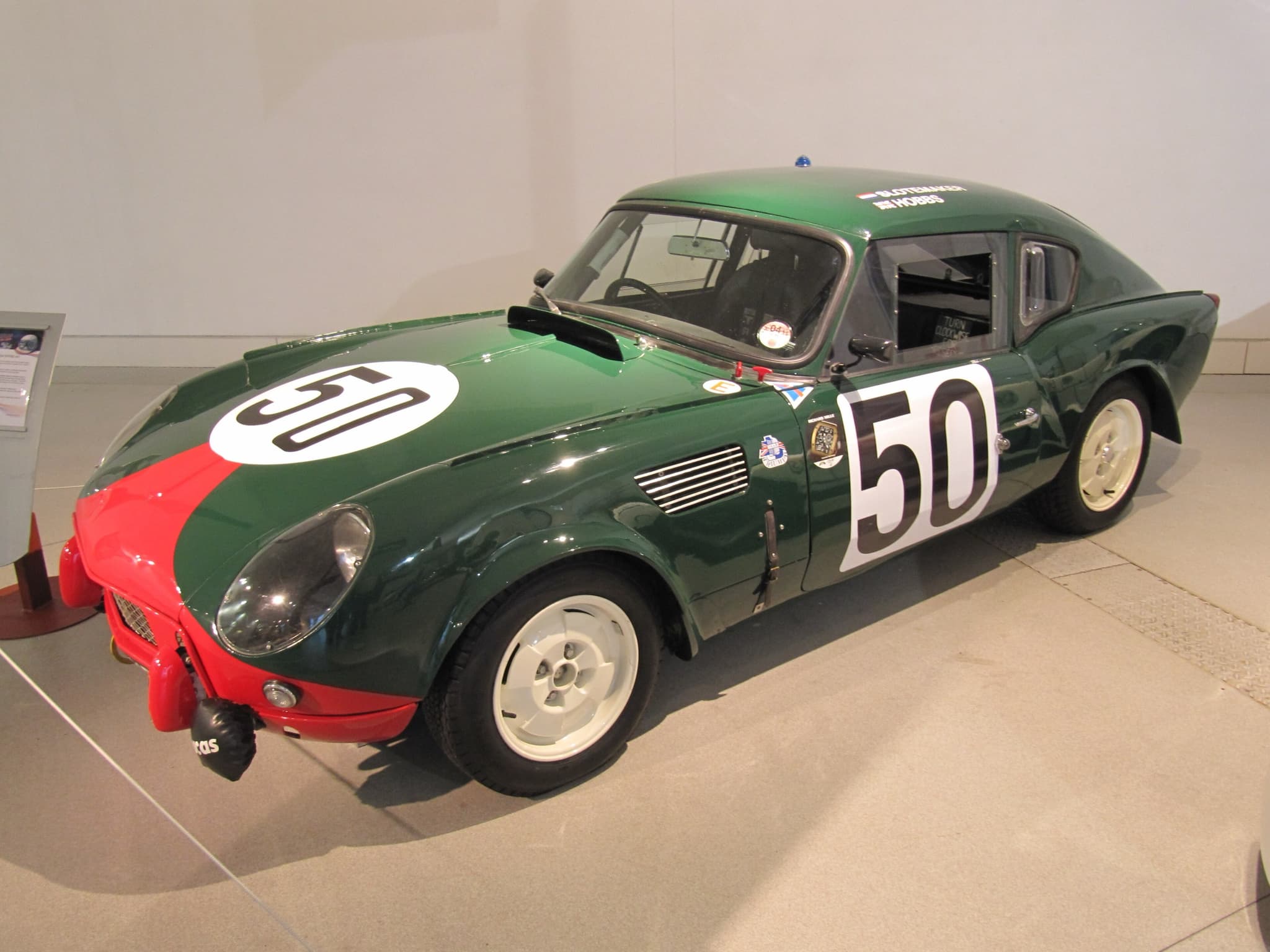
86 A replica of a works Le Mans Spitfire, No. 50, at the Coventry Transport Museum in February 2011.
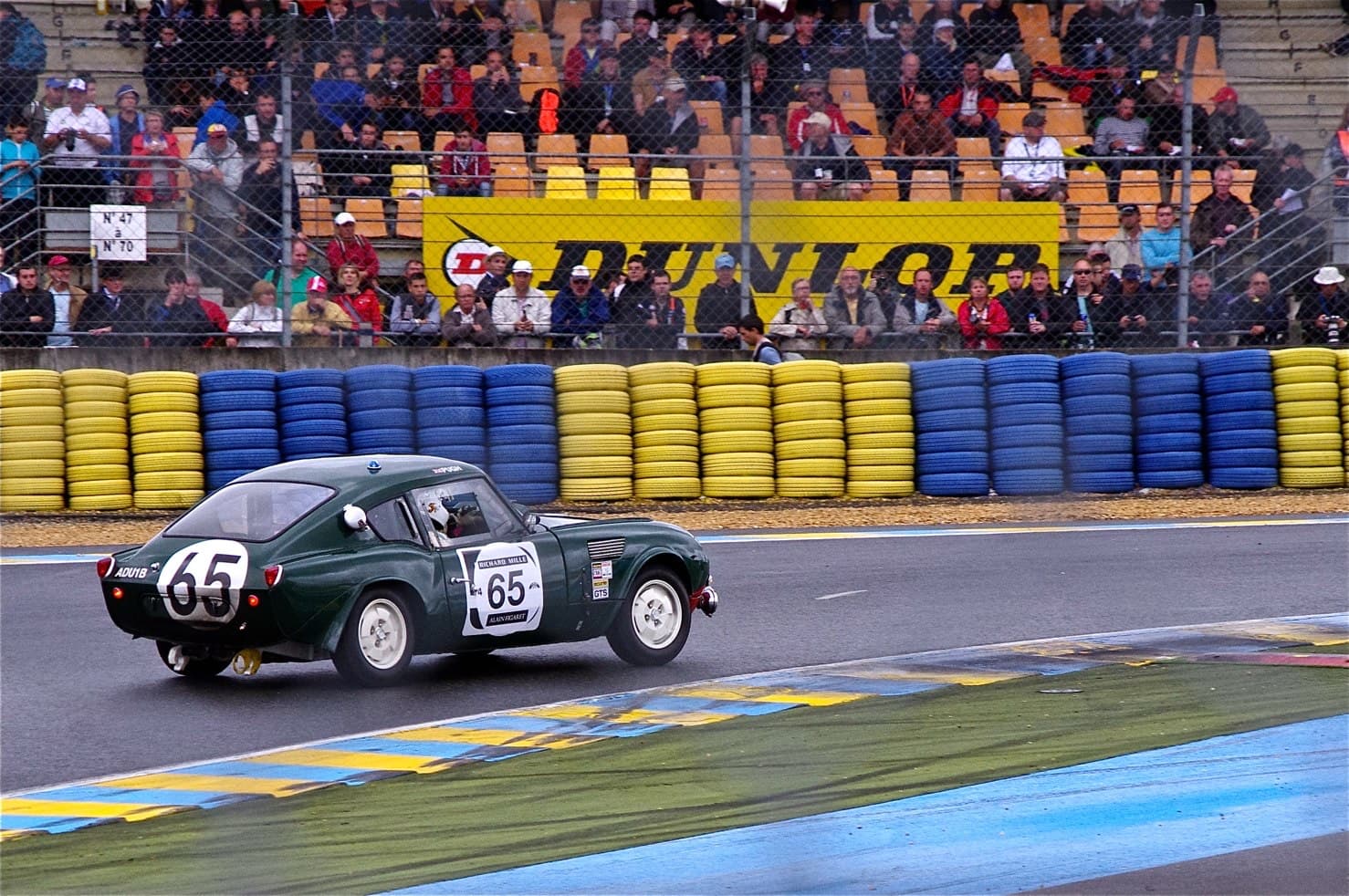
87 A Le Mans fastback replica numbered 65, past the tyre walls at the Le Mans Classic in July 2014.
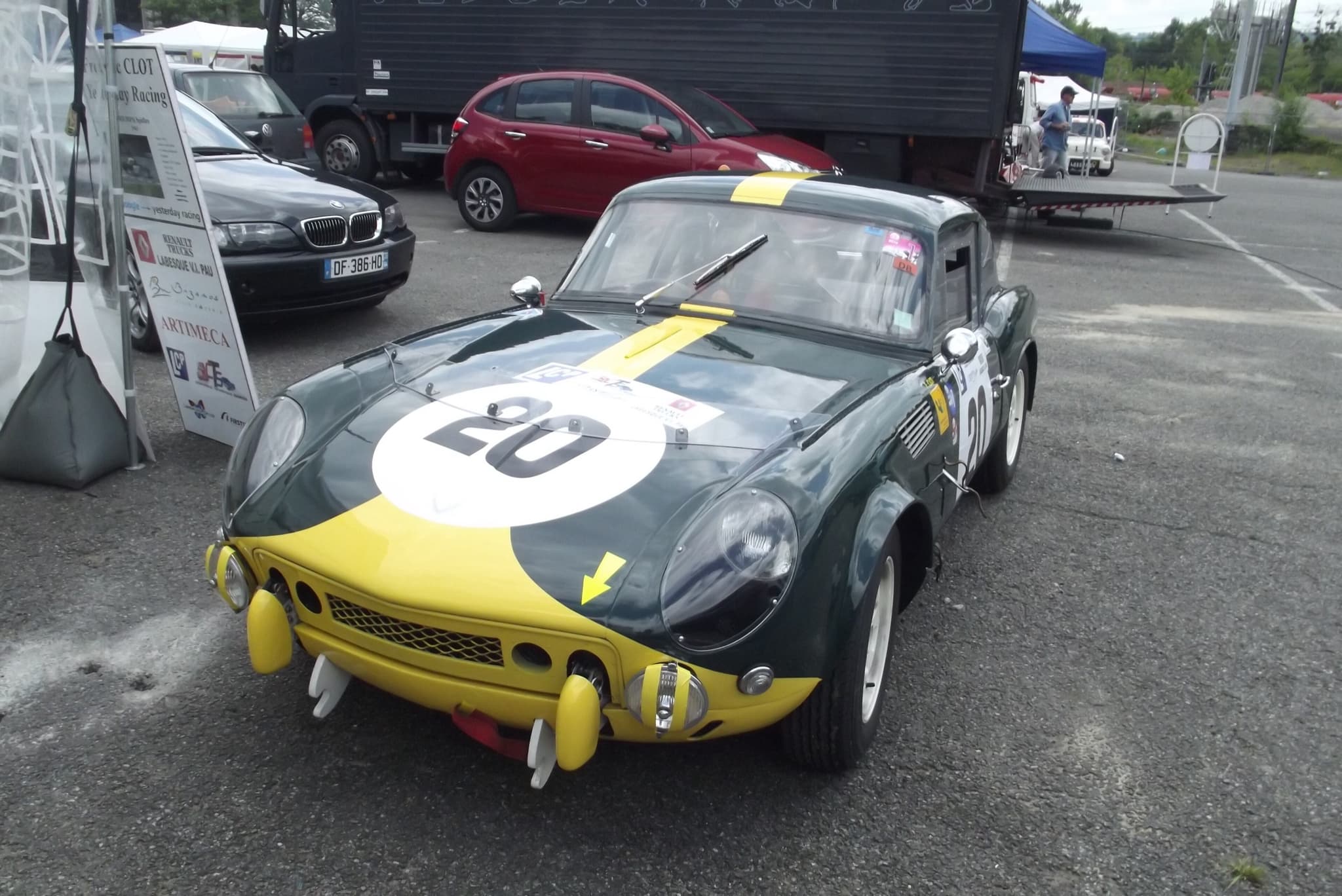
88 A fastback replica of the 1965 works Le Mans cars, No. 20, in the paddock at Pau, France, in May 2015.
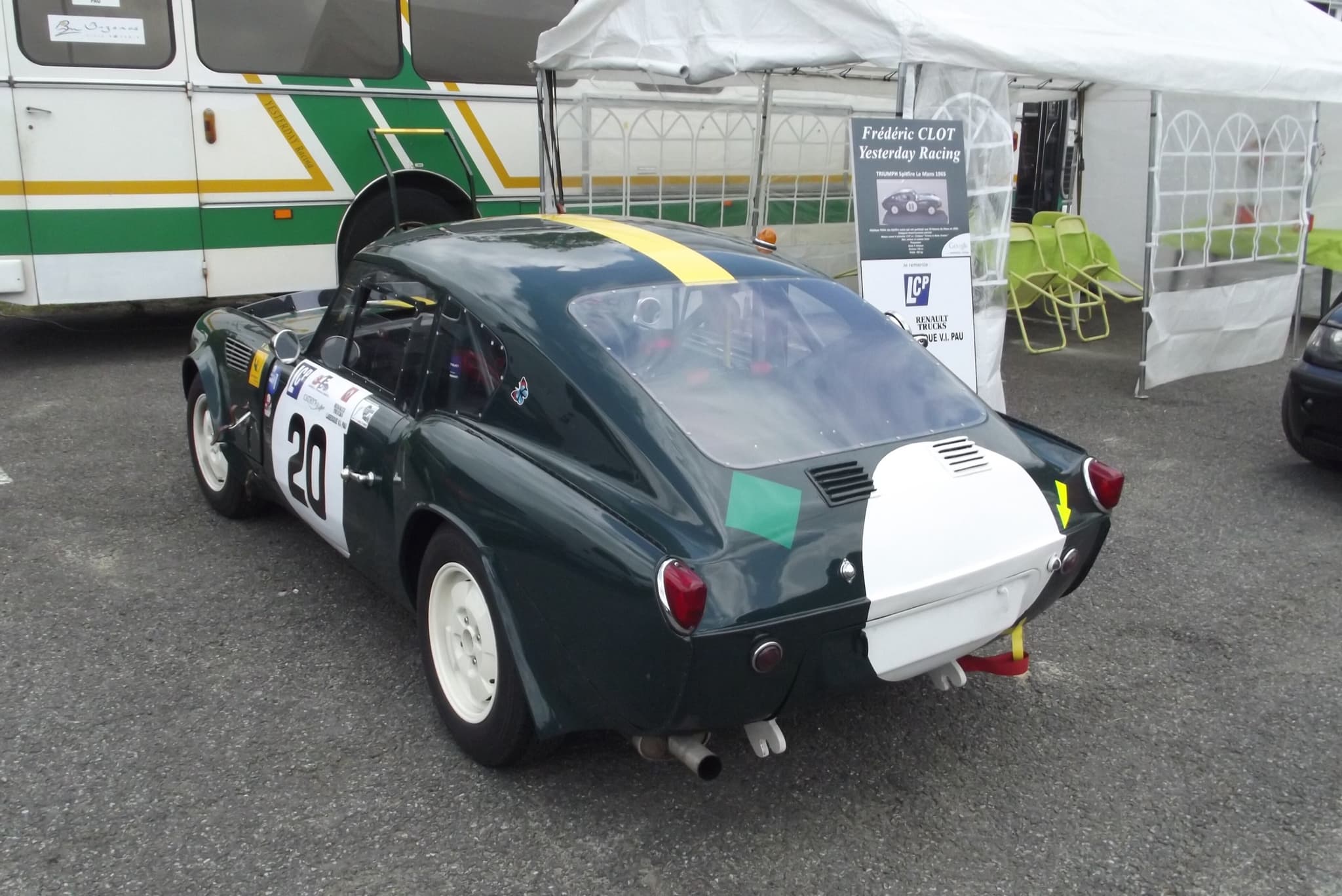
89 The same replica from behind, with its cut-off tail and fastback window, at Pau in May 2015.
Club racing and rallying 5
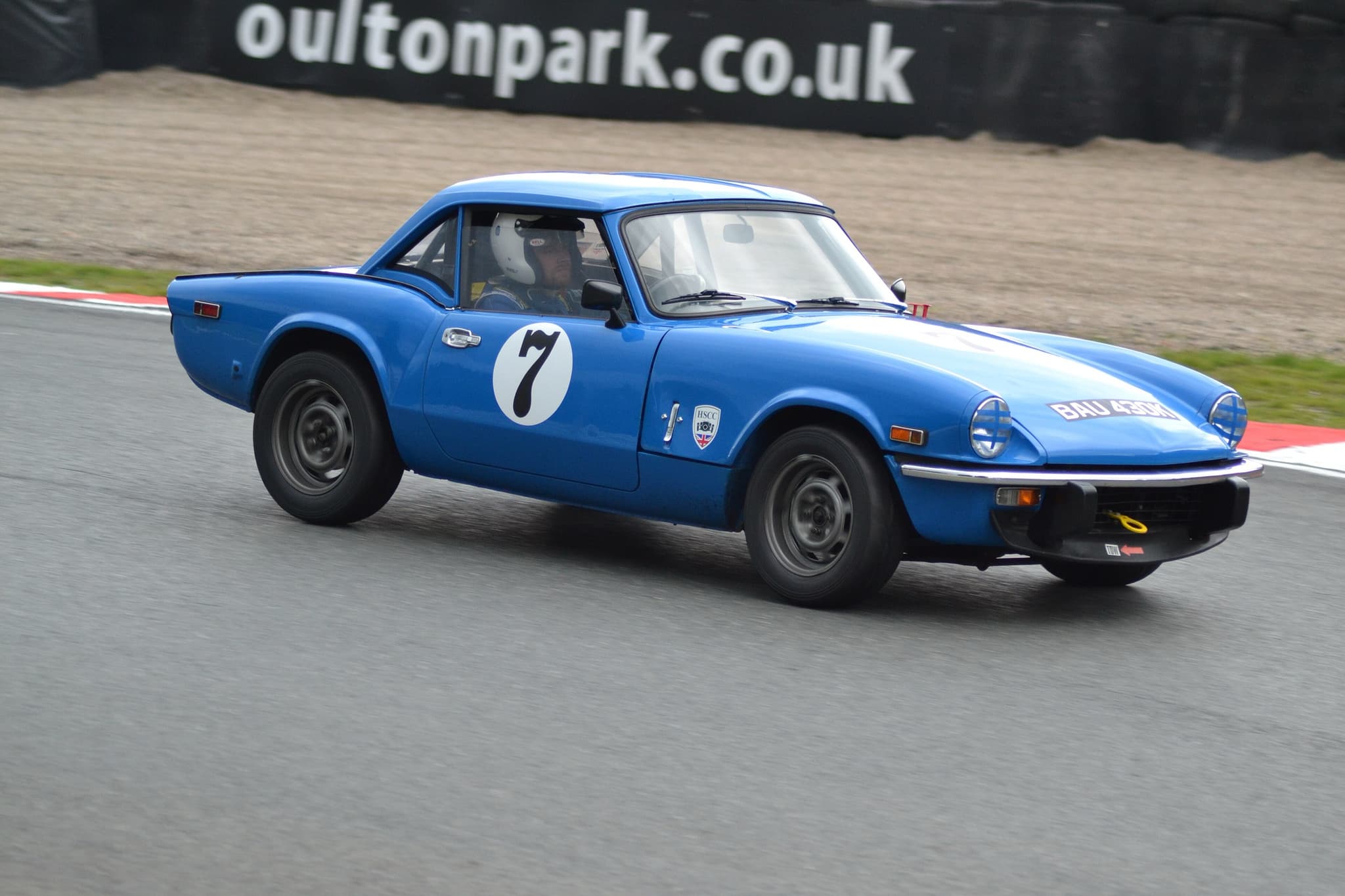
90 A hardtop Spitfire in the Mk IV body, blue and numbered 7, cornering in a club race at Oulton Park, Cheshire, in August 2014.
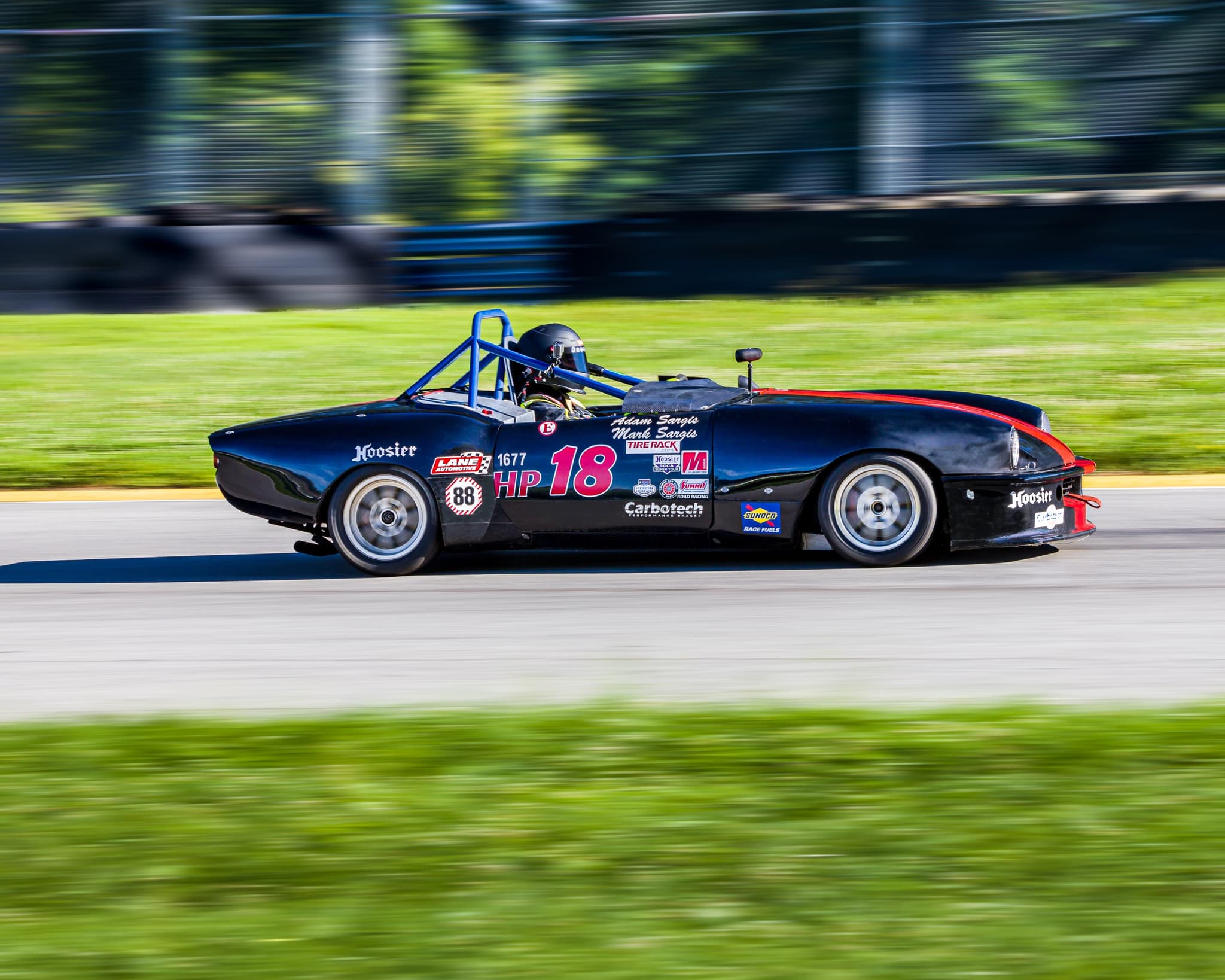
91 A black, race-modified Spitfire in the American SCCA H Production class, panned at speed in a club race in July 2022.
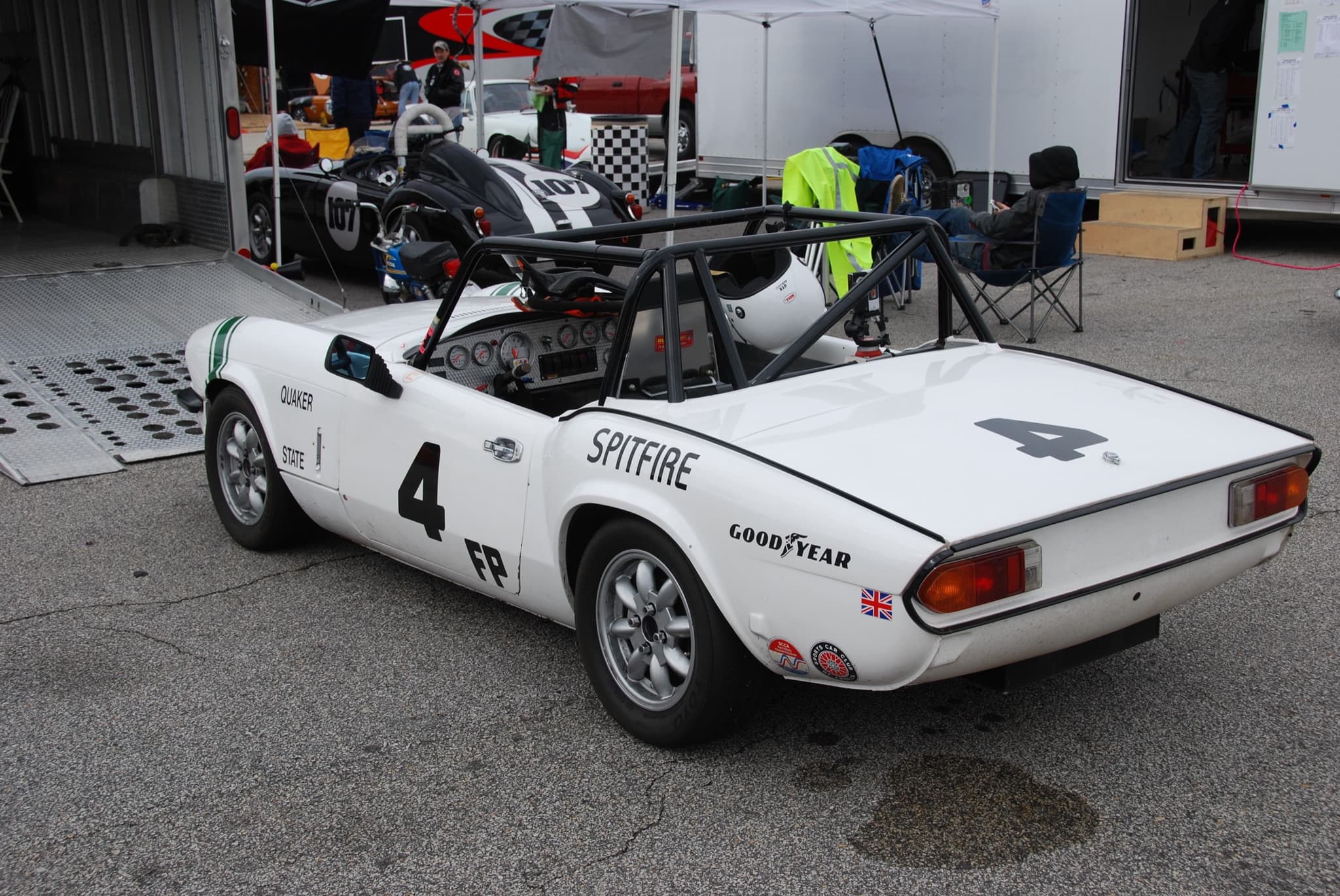
92 A white Spitfire race car in the Mk IV body, number 4 with F Production class letters, in a race paddock in February 2011.
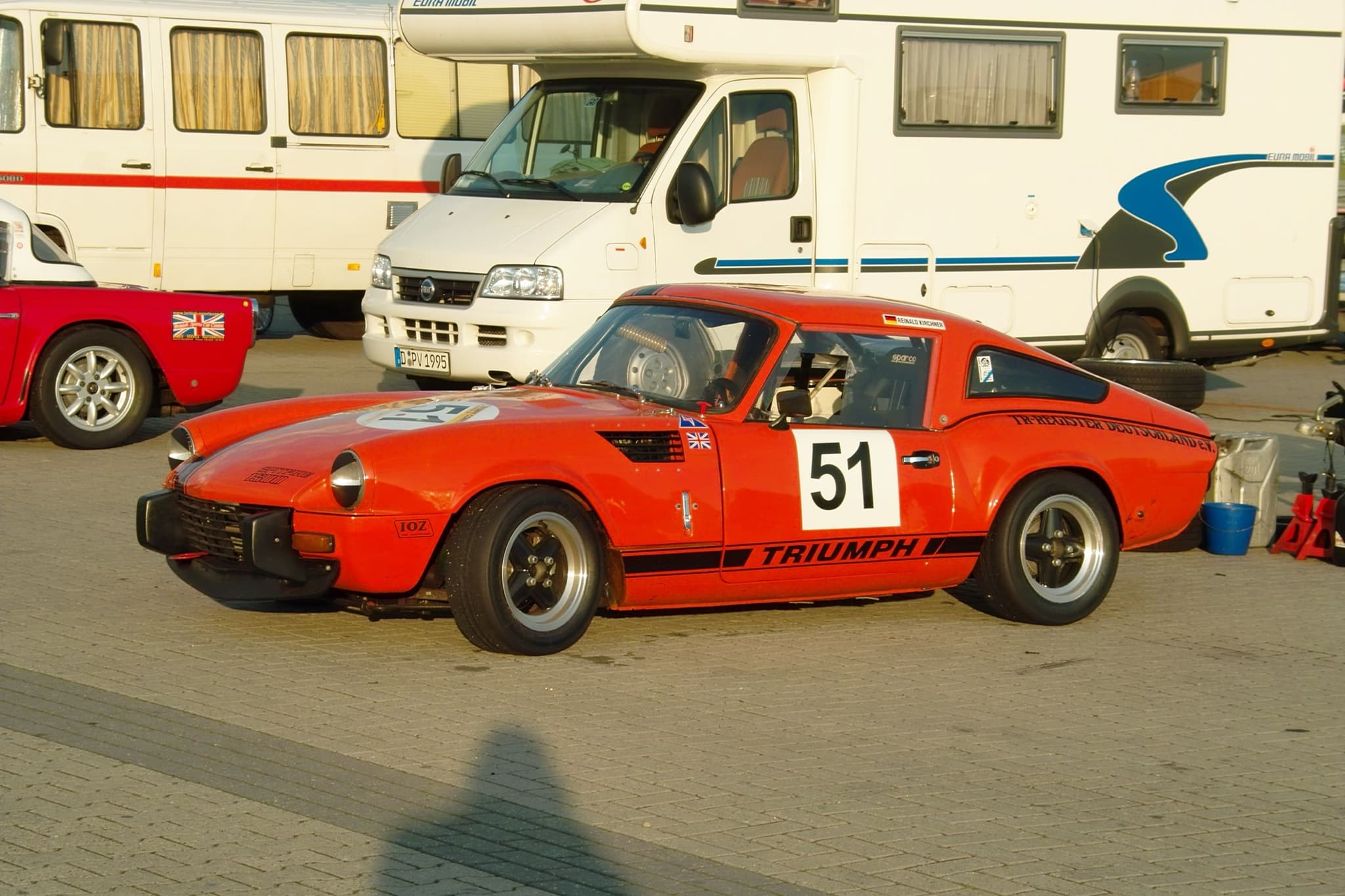
93 A Spitfire 1500 race car with a Williams & Pritchard fastback hardtop at a race meeting in Assen, the Netherlands, in December 2008.
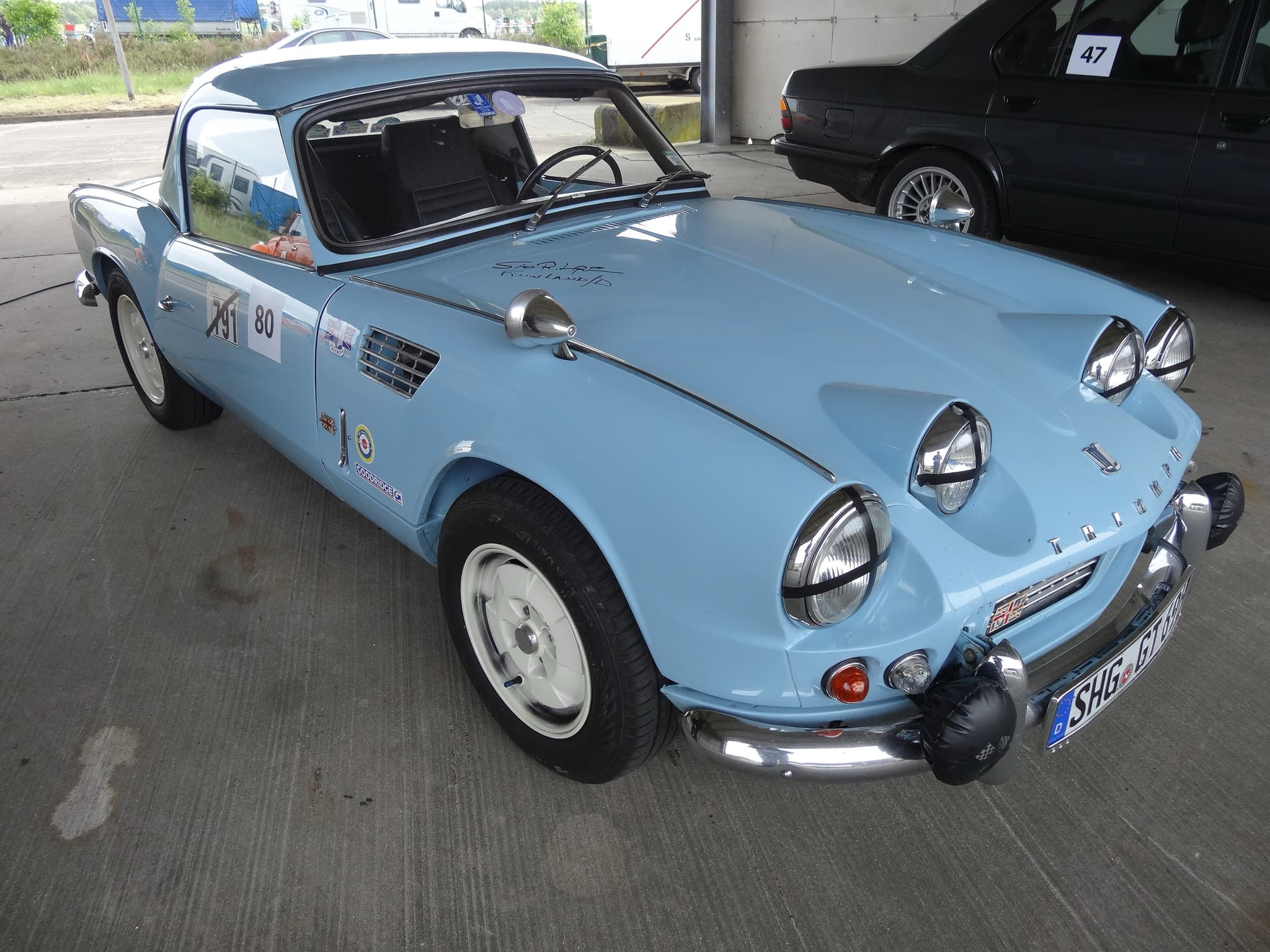
94 Door numbers and four extra lamps on a pale blue Spitfire 4 with a hardtop, under a shelter at Hohenlockstedt, Germany, during the Classic Motor Days of June 2013.
Picture credits (9)
- 86 kitmasterbloke, CC BY 2.0
- 87 David Merrett, CC BY 2.0
- 88 Handelsgeselschaft, CC BY-SA 4.0
- 89 Handelsgeselschaft, CC BY-SA 4.0
- 90 Darren Garlick, CC0
- 91 Robert Yorde, CC BY 2.0
- 92 Hans J E, CC BY-SA 2.0
- 93 Reinald Kirchner, CC BY-SA 2.0
- 94 Nightflyer, CC BY 3.0
The last Spitfire
At Gaydon 3
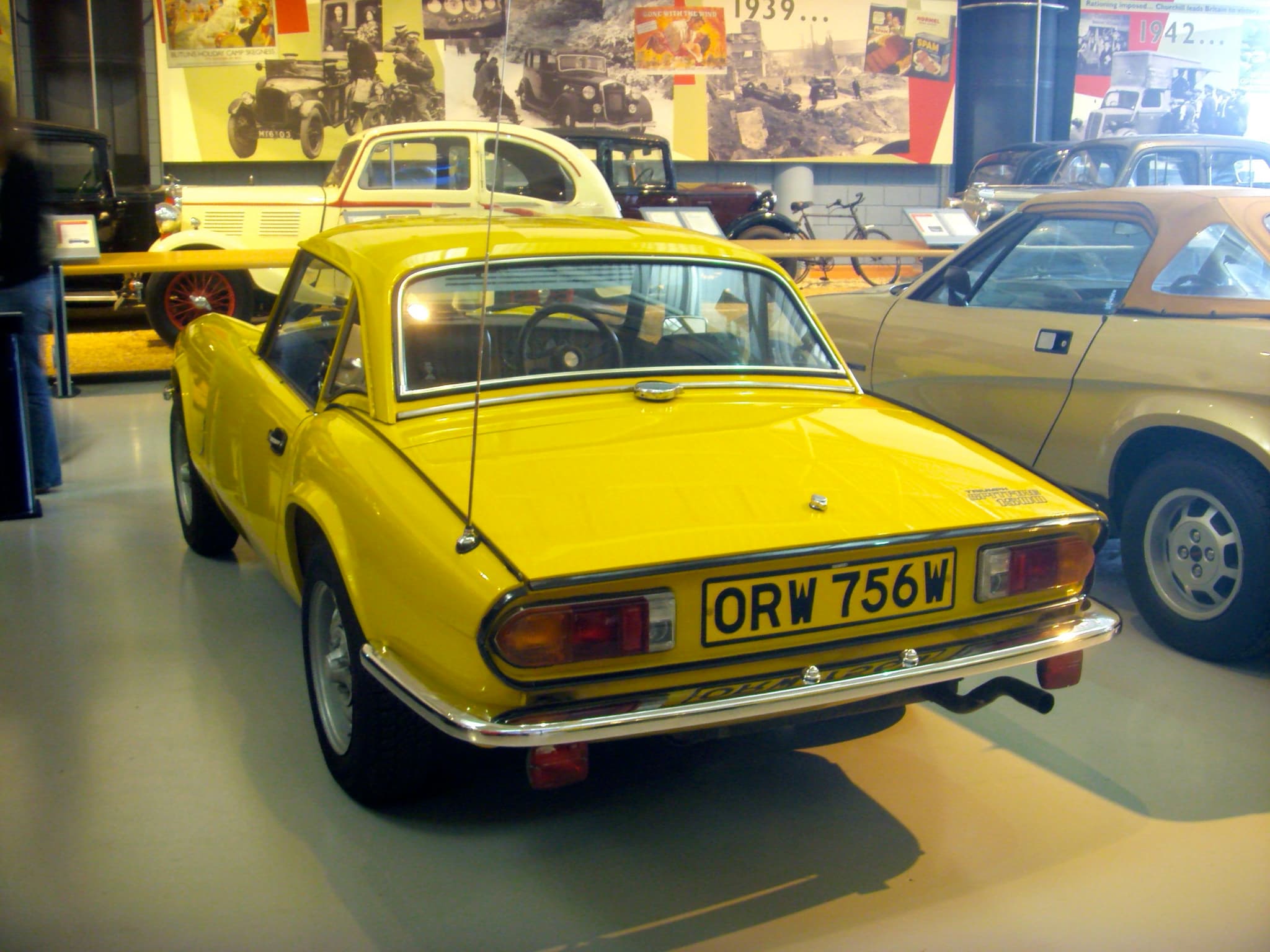
95 The last Spitfire built, a yellow 1500 with a hardtop, on display at the Heritage Motor Centre, Gaydon, in July 2009.
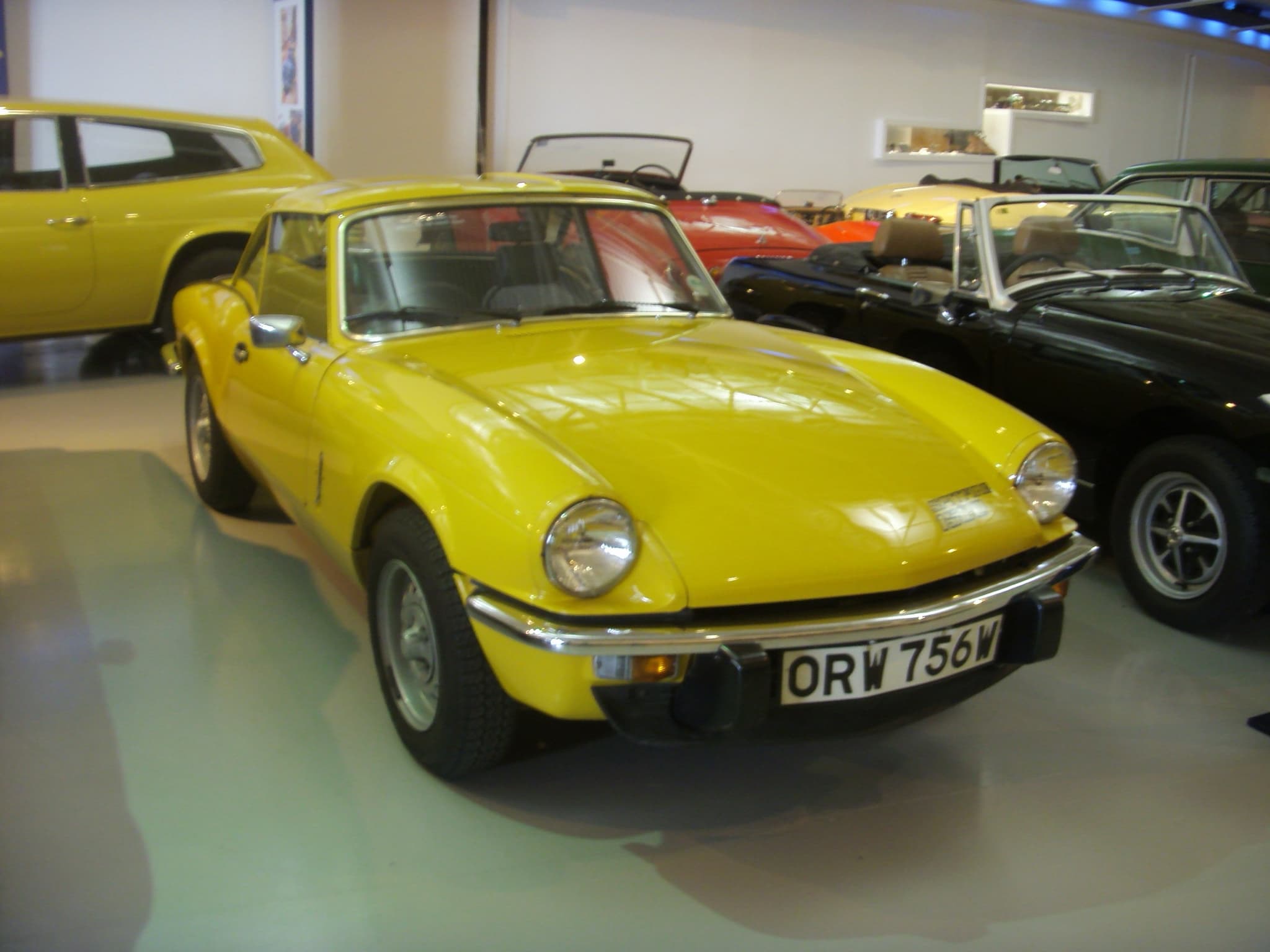
96 The same car from the front, with black rubber overriders on its chrome bumper, at Gaydon in July 2009.
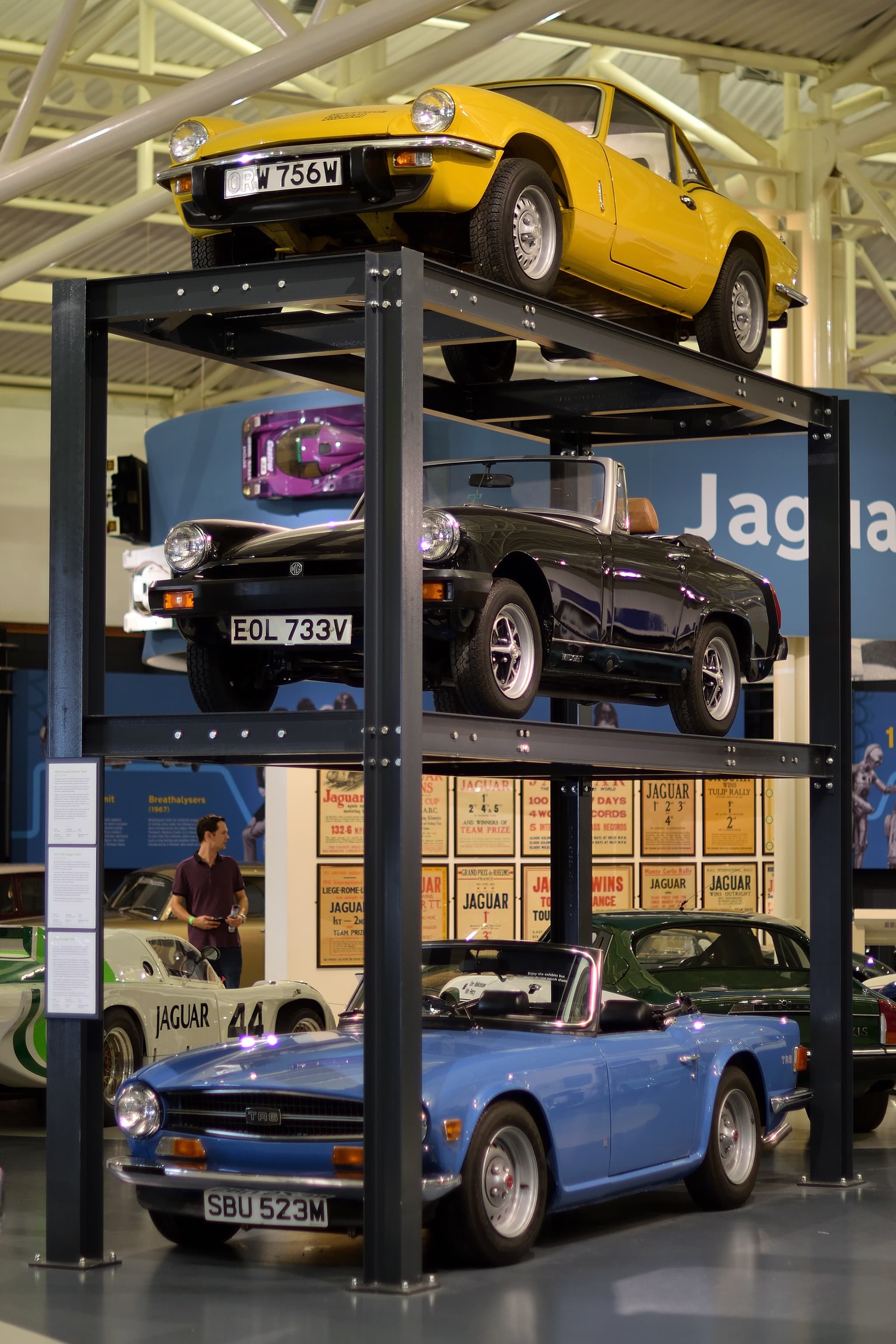
97 A three-tier display rack at the British Motor Museum, Gaydon, in August 2021: the last Spitfire on top, an MG Midget below it and a Triumph TR6 at the bottom.
Picture credits (3)
- 95 Mark Brown from Hampton, New Brunswick, Canada, CC BY-SA 2.0
- 96 Mark Brown from Hampton, New Brunswick, Canada, CC BY-SA 2.0
- 97 35mmMan, CC BY 2.0
Sources
Sources are given as plain text; their addresses are on the sources page.
- Primarymade at the time, by the maker or by people who were there
- Referenceserious later work: clubs, specialists, magazines, books
- Databaseresults and listings, entry by entry
- Uncheckedencyclopaedias and enthusiast sites: cited beside a good source, named in the sentence, or marked Unchecked
- Canley Classics, "Production Figures", Spitfire table, dates; Spitfire 1500 row. Reference
- Vintage Triumph Register, "Spitfire" (production history, production dates and numbers, buyer's guide tabs), production history; Mk II, "Emblem on rear deck lid"; production dates and numbers, 1973–1974 "Spitfire 1500"; 1969–70 identification. Reference
- Clive Richardson ("C.R."), "Road Impressions – The Triumph Spitfire 1500", Motor Sport, Mar 1975, p. 25. Primary
- Bill Boddy ("W.B."), "Sports cars under £700: the £641 Triumph Spitfire 4", with data panel "The Triumph Spitfire 4", Motor Sport, Apr 1963, p. 20; p. 20, instruments; p. 20, the bonnet. Primary
- Classic Car Africa, "The Wallflower", Mk II and Mk III sections; Mk I section. Reference
- Classic & Sports Car, A–Z of classics: Triumph Spitfire I, II, III, MkIV, 1500, Spitfire II; Spitfire III; Spitfire III; Spitfire III; Spitfire 1500. Reference
- Triumph Sports Six Club, Model pages: Spitfire 4/Mark II (model_ID=24), Mark III (23), Mark IV (25), 1500 (26), Mark III, Mark IV and 1500 pages; Mark III page; Mark III and 1500 pages. Reference
- Bill Boddy ("W.B."), "Road test: The Triumph Spitfire Mk. IV", Motor Sport, Jan 1971, p. 59; p. 59, instruments and carburetters. Primary
- Wikipedia (EN), "Triumph Spitfire", 2026, US-market badge; 1500 section. Unchecked
- British Leyland Motors Inc., Spitfire 1500 (sales brochure), USA, 1974 model year, SP741, 1973, dealer options; options list. Primary
- Malcolm McKay, "Triumph Spitfire buyer's guide: what to pay and what to look for", Classic & Sports Car, 10 May 2019, US section. Reference
- Standard-Triumph, Spitfire Mk. II (sales brochure), Italy, Ref. 352/666/IT-DUC, 1966, "Accessori a richiesta: Capote rigida". Primary
- Mike Cotton ("M.L.C."), "Triumph Spitfire to Monaco", Motor Sport, Jun 1967, p. 26. Primary
- British Leyland (France), Triumph Spitfire Mk4 (sales brochure), France, 11/1973, T.919, coachwork; supplements; "un tableau de bord en bois". Primary
- BL Cars / Jaguar Rover Triumph Ltd, Triumph Spitfire 1500 (sales brochure), UK, 12/1978, Publication No. 3254/D, standard equipment. Primary
- Canley Classics, "Spitfire ADU 467B Rally", para. 1. Reference
- New Zealand Classic Car, "Getting the facts straight: Spitfires at Le Mans", 4 Nov 2015. Reference
- Canley Classics, "Spitfire ADU 4B Le Mans", para. 1. Reference
- racingsportscars.com, Le Mans 24 Hours 1964, results, results and DNF table. Database
- racingsportscars.com, Le Mans 24 Hours 1965, results, results, 13th and 14th. Database
- Denis Jenkinson, "Le Mans 24-hour race", Motor Sport, Jul 1965, p. 11. Primary
- Canley Classics, "Spitfire ADU 2B Le Mans", the current "ADU 2B". Reference
- British Motor Museum, "Spitfire 1500 (last of line), 1980", accession 1980-1-190, record and photograph. Primary