Triumph Spitfire VIN Decoder
Only the very last Spitfires carry a VIN. Every earlier car is known by its commission number, the "chassis number" of many papers and club guides: how to read it, with the suffix letters, the engine number, the late VINs and the Heritage Certificate that ties them together.
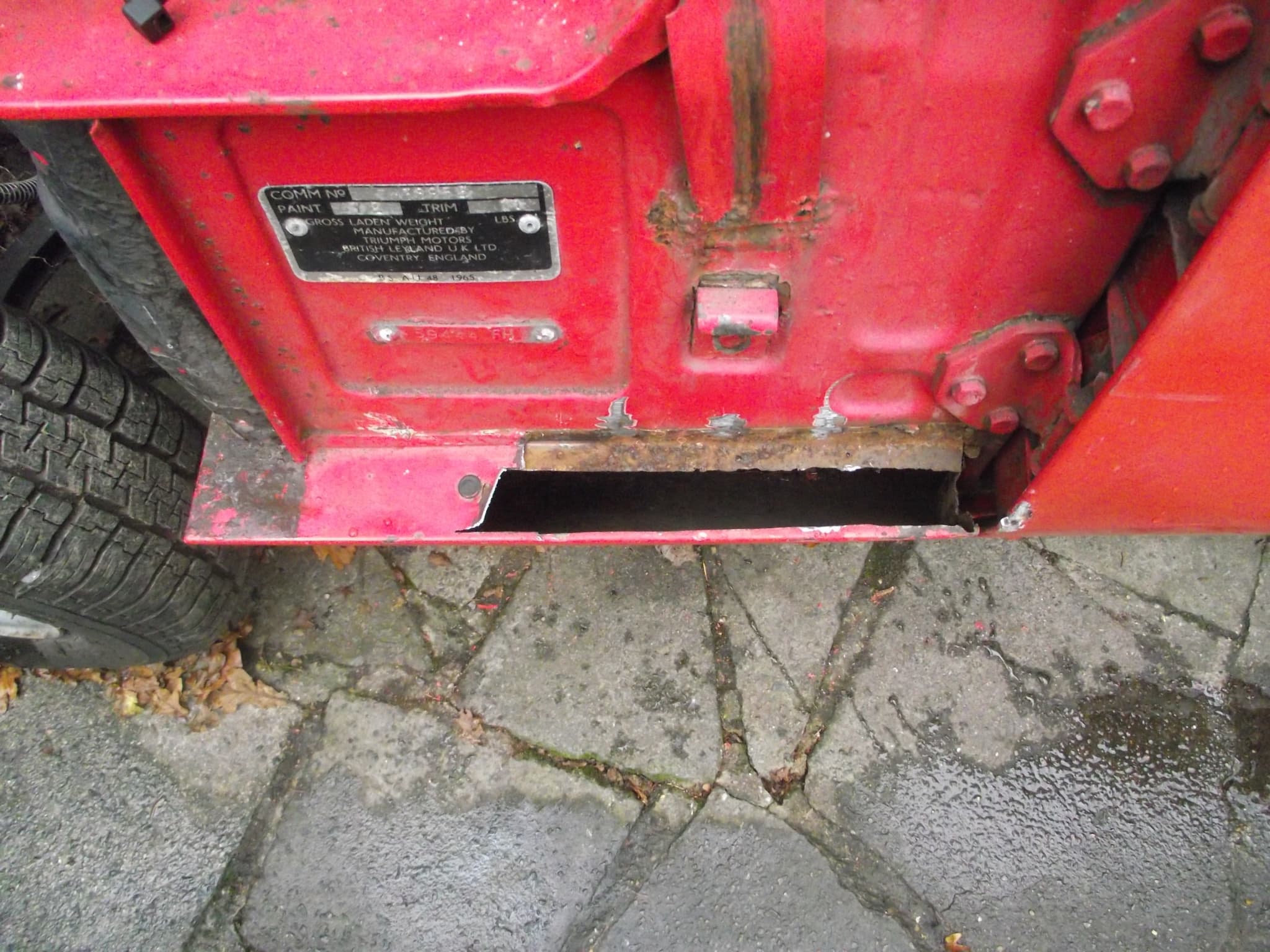
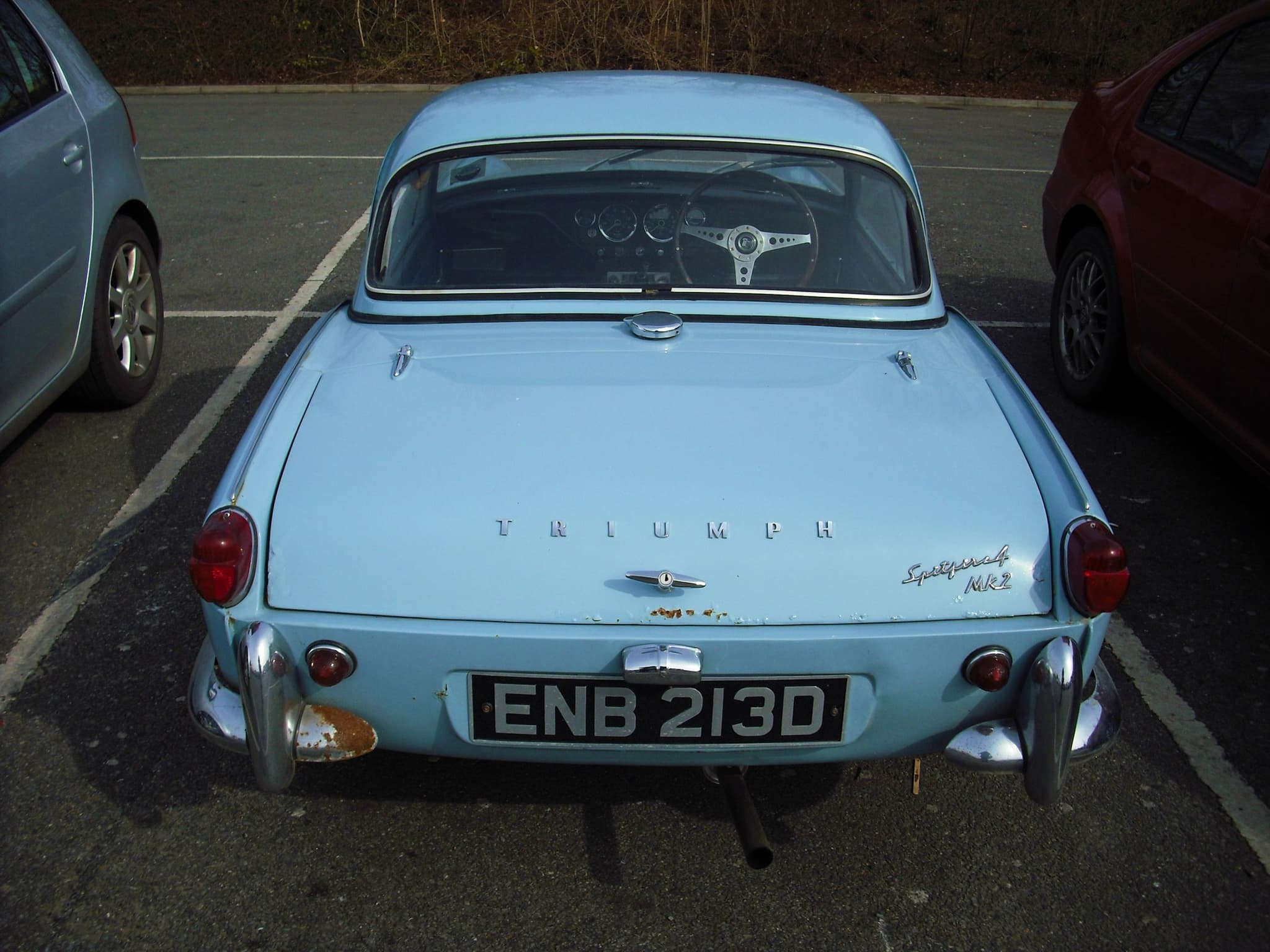
The number that identifies a Spitfire is stamped on a small alloy plate under the bonnet (hood), and for all but the last cars it is not a VIN. Triumph identified its cars by commission number, and plates with a VIN replaced the commission plates only at the very end of production. Owners, and even the clubs' guides, often call the commission number the chassis number; they mean the same thing. Read with the engine number, and with the factory's own ledger behind them, it tells a buyer which version a car is, where it was meant to be sold and how it left the factory.source 1source 2source 3source 4
Reading a commission number
Lift the bonnet and look at the left side of the bulkhead (firewall), just above the sill (rocker panel): the plate is riveted there. A commission number has up to three parts. Its prefix names the version and, for the American cars, the market; the serial places the car in its run; and the letters after it, where there are any, record how it left the factory.
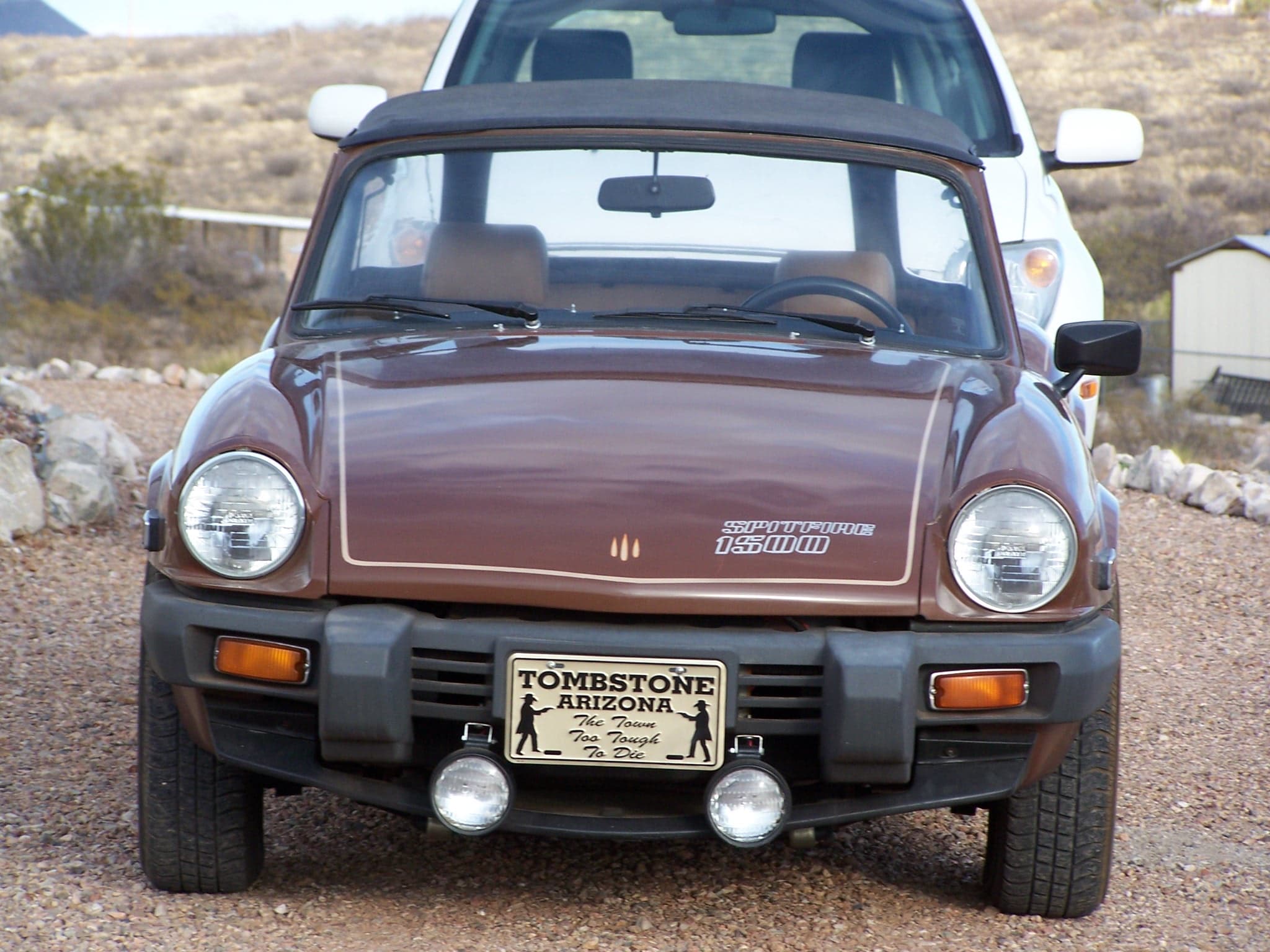
On later cars for the United States, Moss Motors' data for the US Mk IV and 1500 put the vehicle number beside the left-hand door striker plate. A plate of February 1976 pictured on triumphspitfire.com gives the month and year the car was made, with the American safety statement. The same site pictures an early plate, which names the Standard Motor Company as maker.
The plate also has boxes for the paint and trim codes. Colours decodes them, and explains why the plate of an early Spitfire 4 may hold no code at all.source 1source 5source 2source 6source 7source 8
FM28001U
- FMThe prefix: a Spitfire 1500 for North America
- 28001The serial: the first car of the 1975 model year
- UThe suffix: built to US specification
Commission numbers by version
The Vintage Triumph Register, the guide of the Triumph Sports Six Club (TSSC) and the Dutch Triumph Spitfire Club print the same ranges, though the Dutch club gives the Mk III's as one run, FD1–FD92803. The Register says its list was collected from various sources, so the three may share an origin.
| Version | Built | Commission numbers | Notes |
|---|---|---|---|
| Spitfire 4 | October 1962 to December 1964 | FC1–FC44656 | Fewer numbers than cars: see below |
| Spitfire 4 Mk II | December 1964 to January 1967 | FC50001–FC88904 | triumphspitfire.com gives the last as FC88912 |
| Mk III | January 1967 to December 1970 | FD1–FD15306, FD20000–FD51967, FD75000–FD92803 | One triumphspitfire.com page ends the run at FD99203, which would give more numbers than any production figure in print (our arithmetic); the same site lists FDU for the federal US cars |
| Mk IV | November 1970 to late 1974 | FH3–FH64995 | Outside North America; triumphspitfire.com lists FK for US cars of the 1971 and 1972 model years |
| 1500 | Late 1974 to August 1980 | From FH75001 | Outside North America; the TSSC's guide runs to FH130001, then VINs |
| 1500 for North America | 1973 to 1980 model years | From FM1 | The cars of the 1973 and 1974 model years have the Mk IV body; FM28001 starts the 1975 model year |
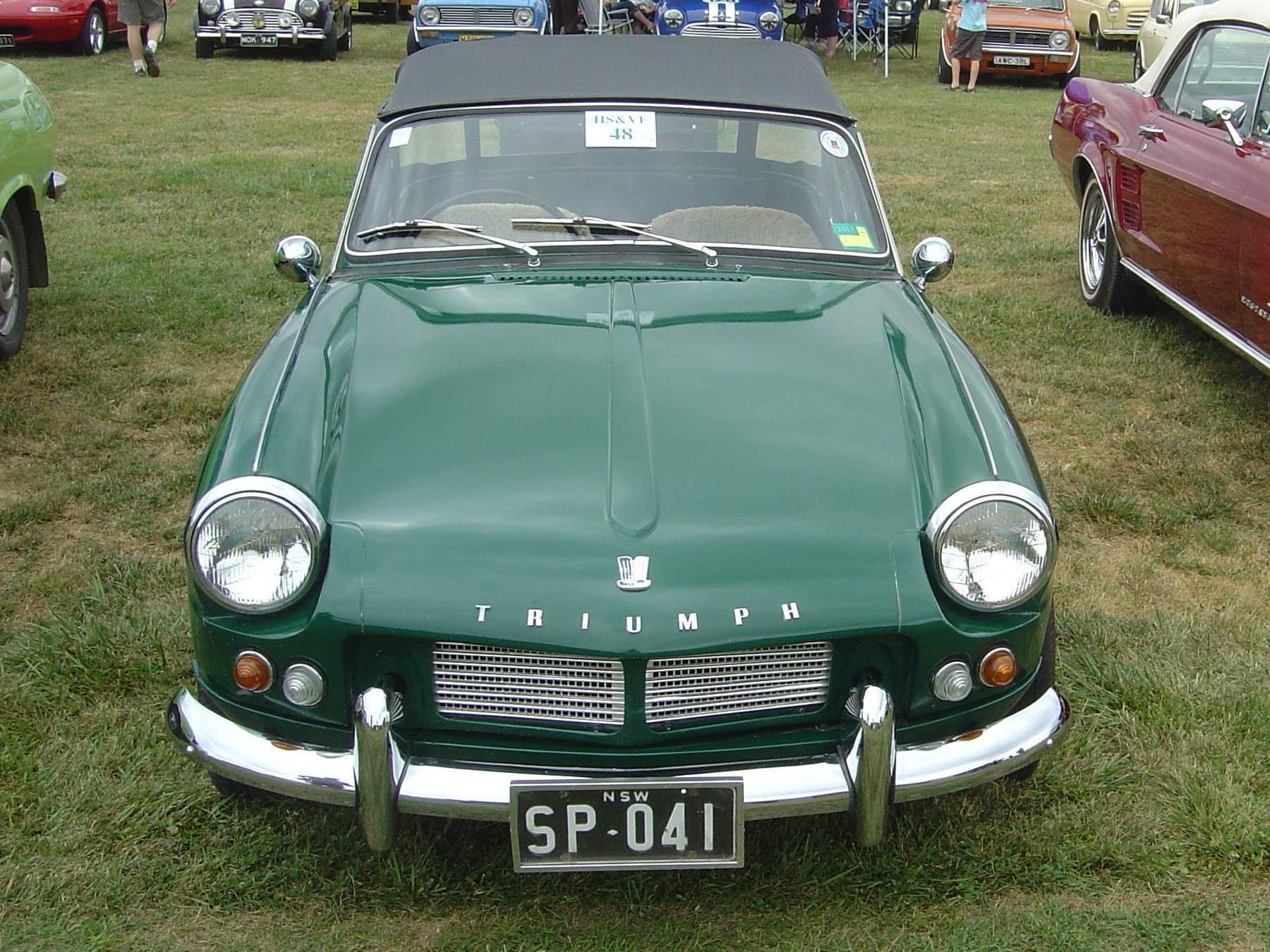
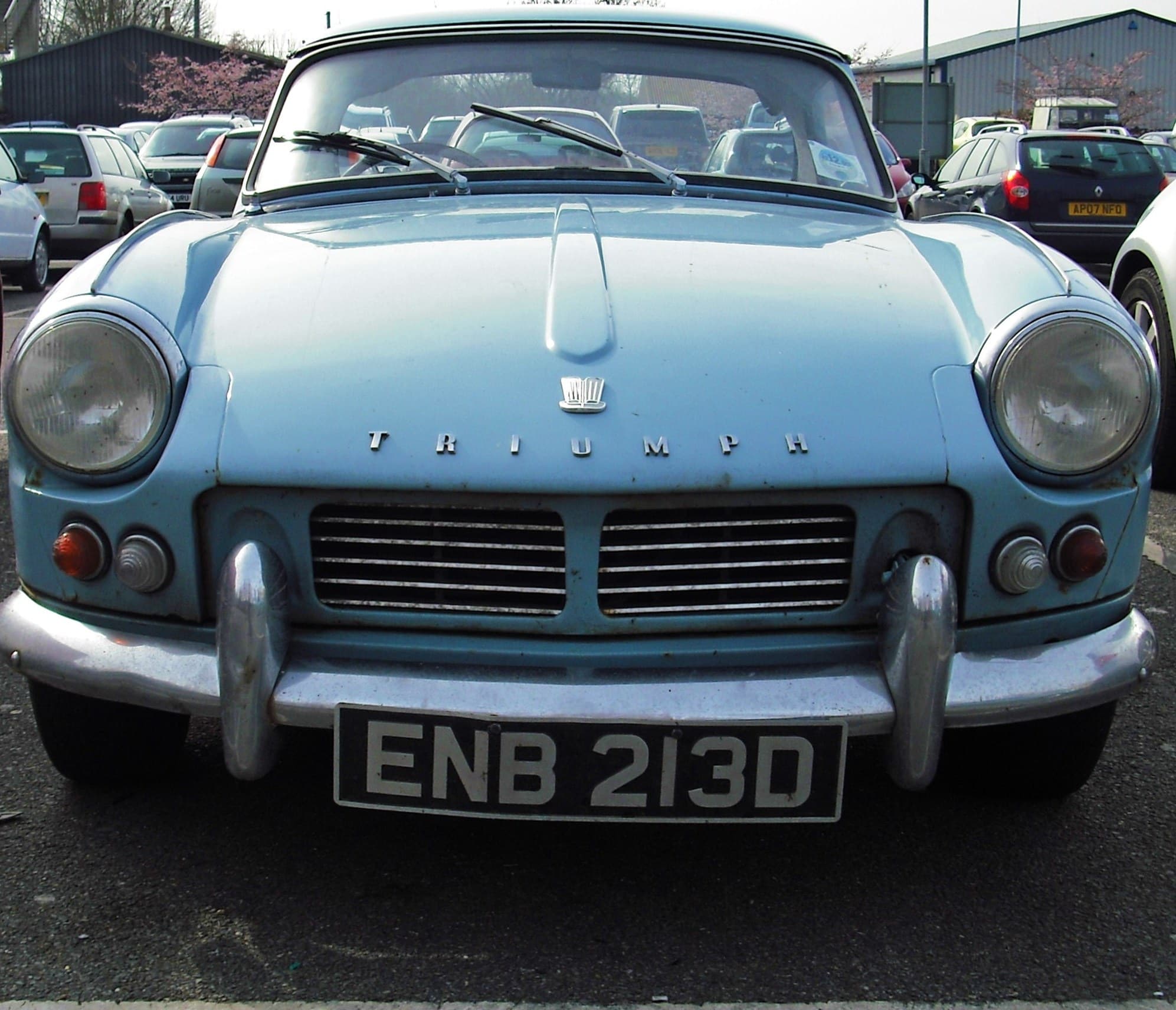
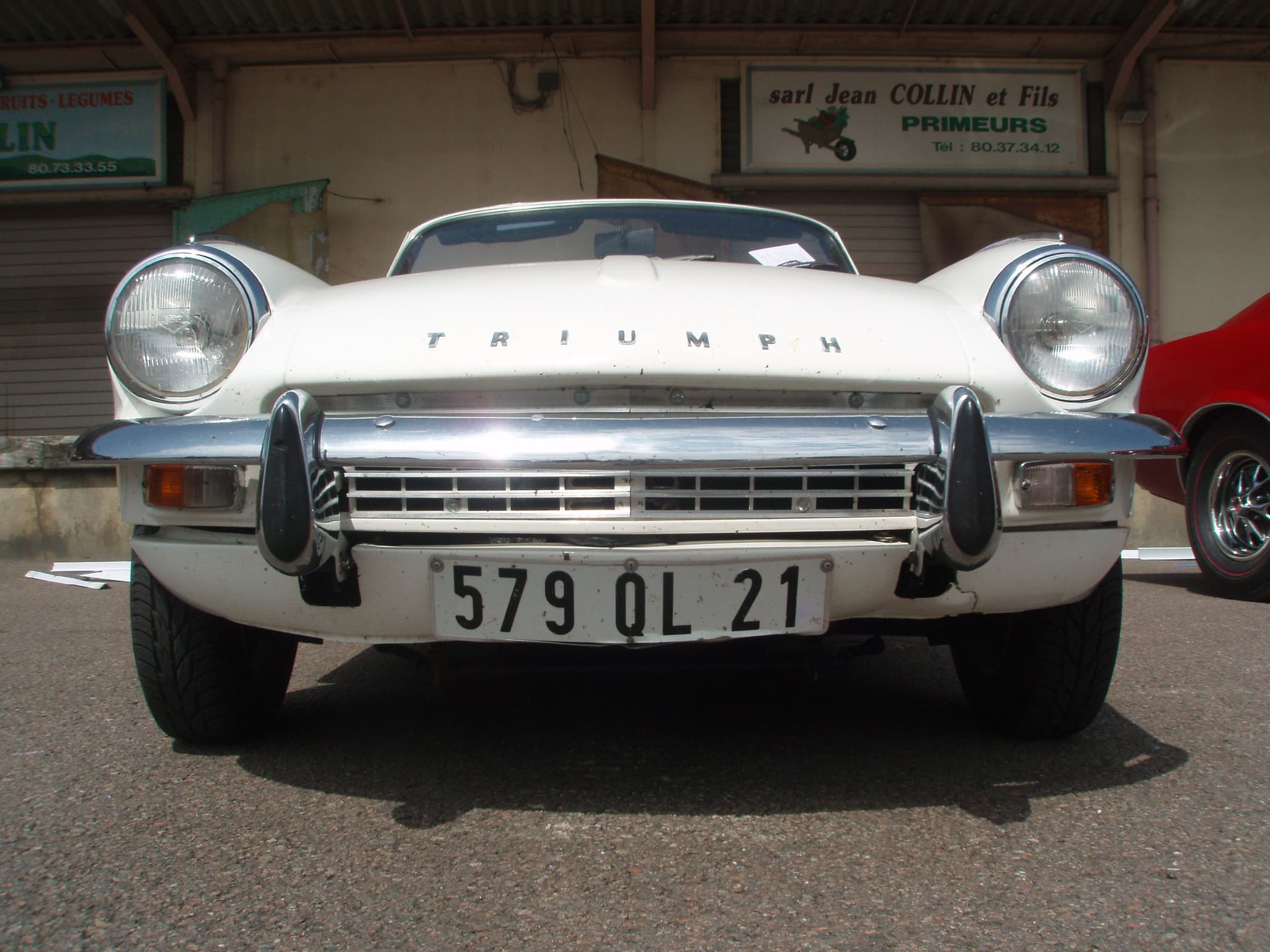
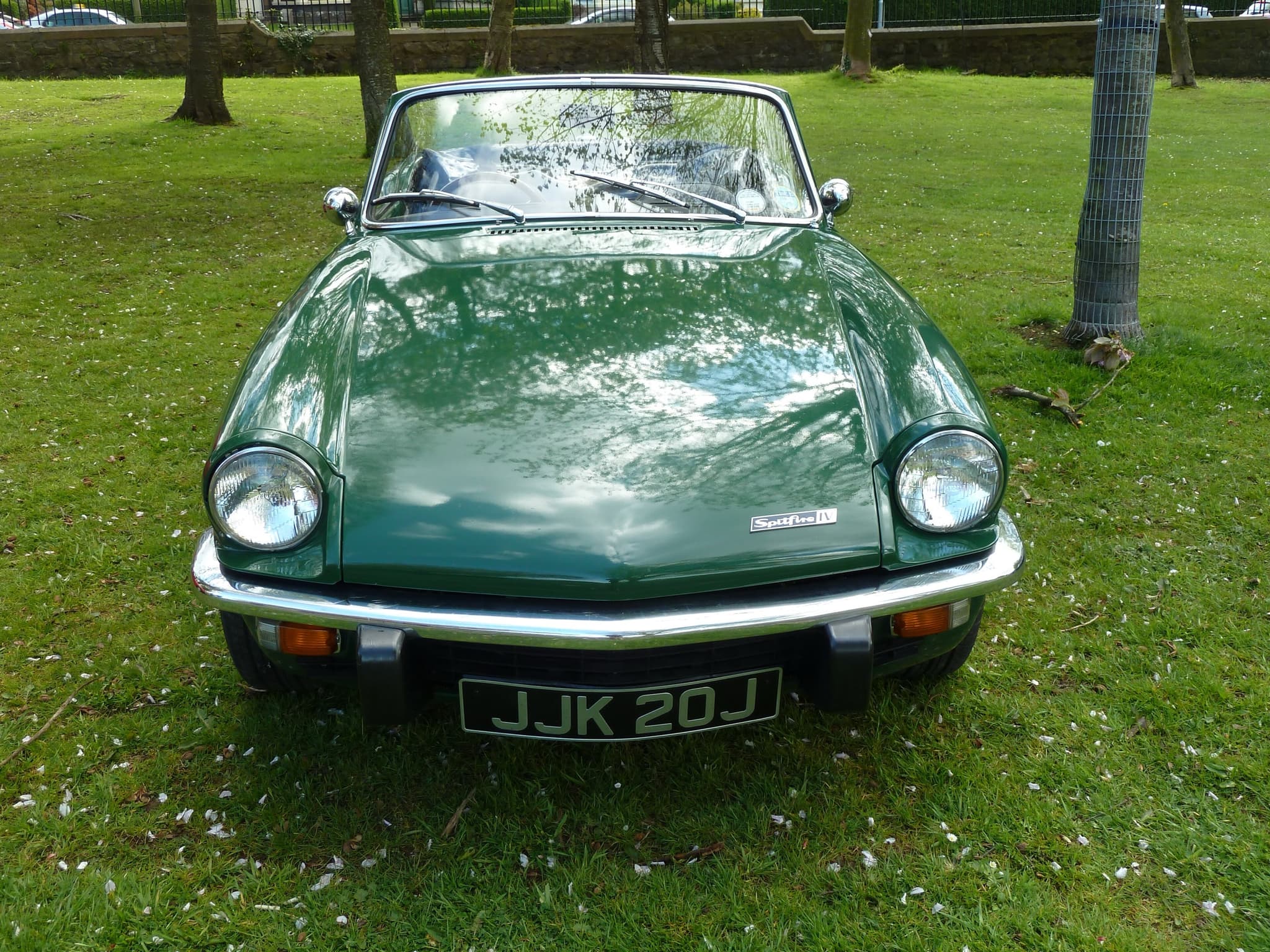
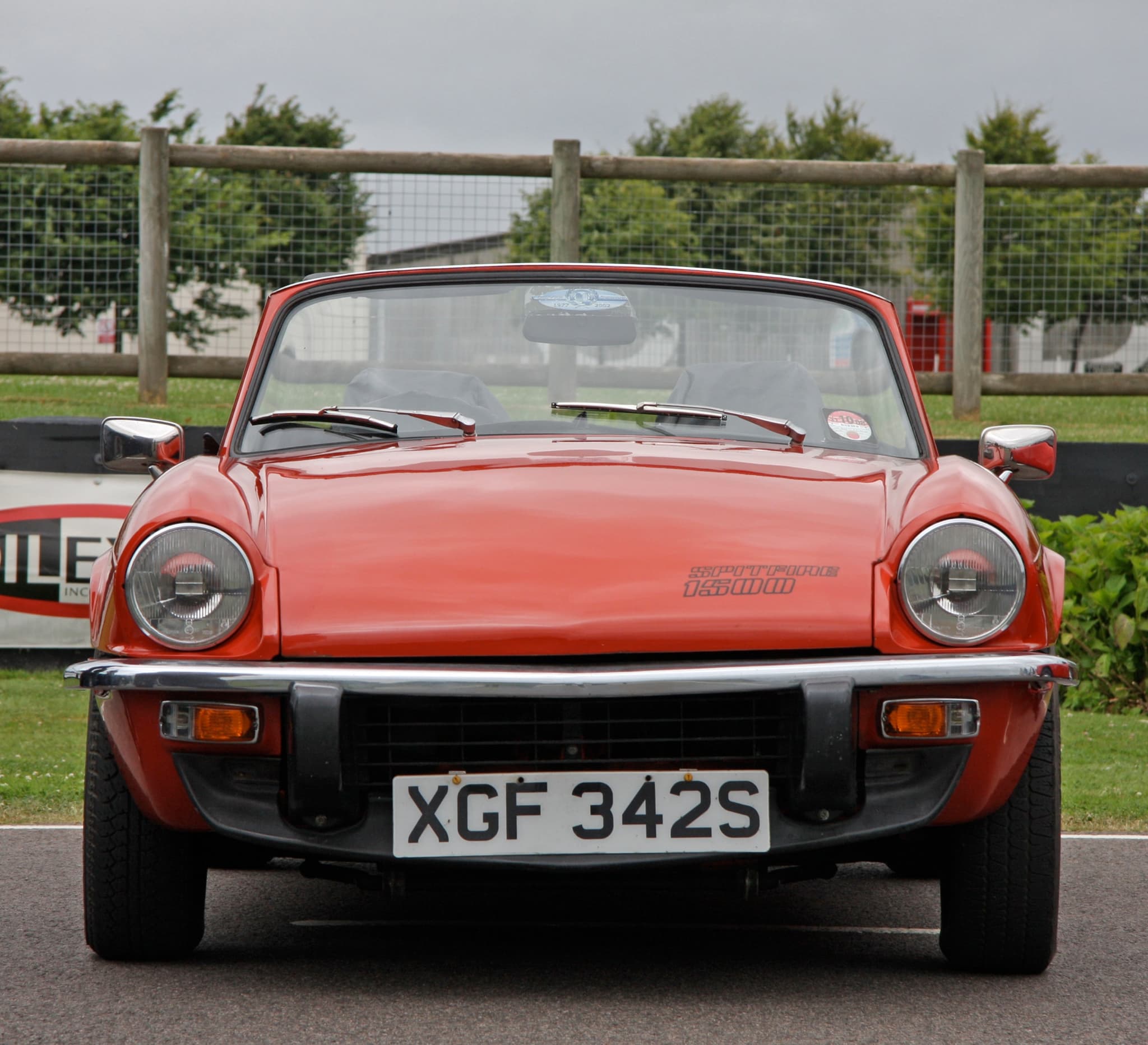
Numbers and cars
A range is a run of numbers issued, not a count of cars built, and the two do not always agree. The Spitfire 4's range, FC1 to FC44656, holds 44,656 numbers by our arithmetic: 917 to 1,097 fewer than the two production figures in print, which the production tables below give with their sources. The Mk II's range runs the other way, with some 1,500 more numbers than cars, and the Mk III's three ranges come within a few hundred of its production figure.
Suffixes
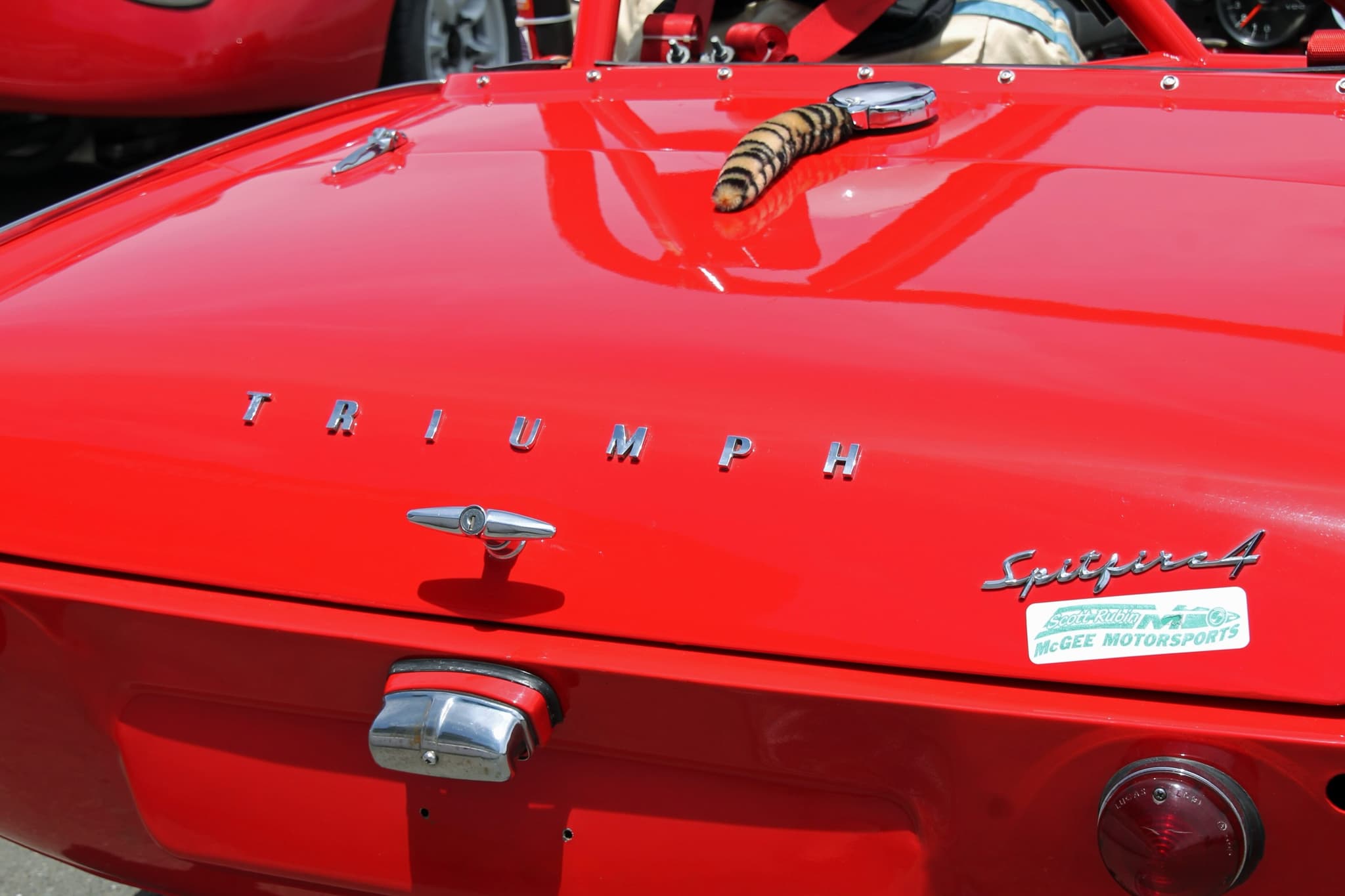
Letters after the serial record how the car left the factory. Practical Classics gave buyers the key in 2000:
Triumph used commission, not chassis, numbers: 'O' after the commission number indicates Overdrive; 'U' stands for USA spec ('UC' for California); 'L' for lefthand-drive.
triumphspitfire.com lists more, among them IU on American 1500s that it says were assembled in Belgium in 1974; no reliable source read confirms them.
The engine number
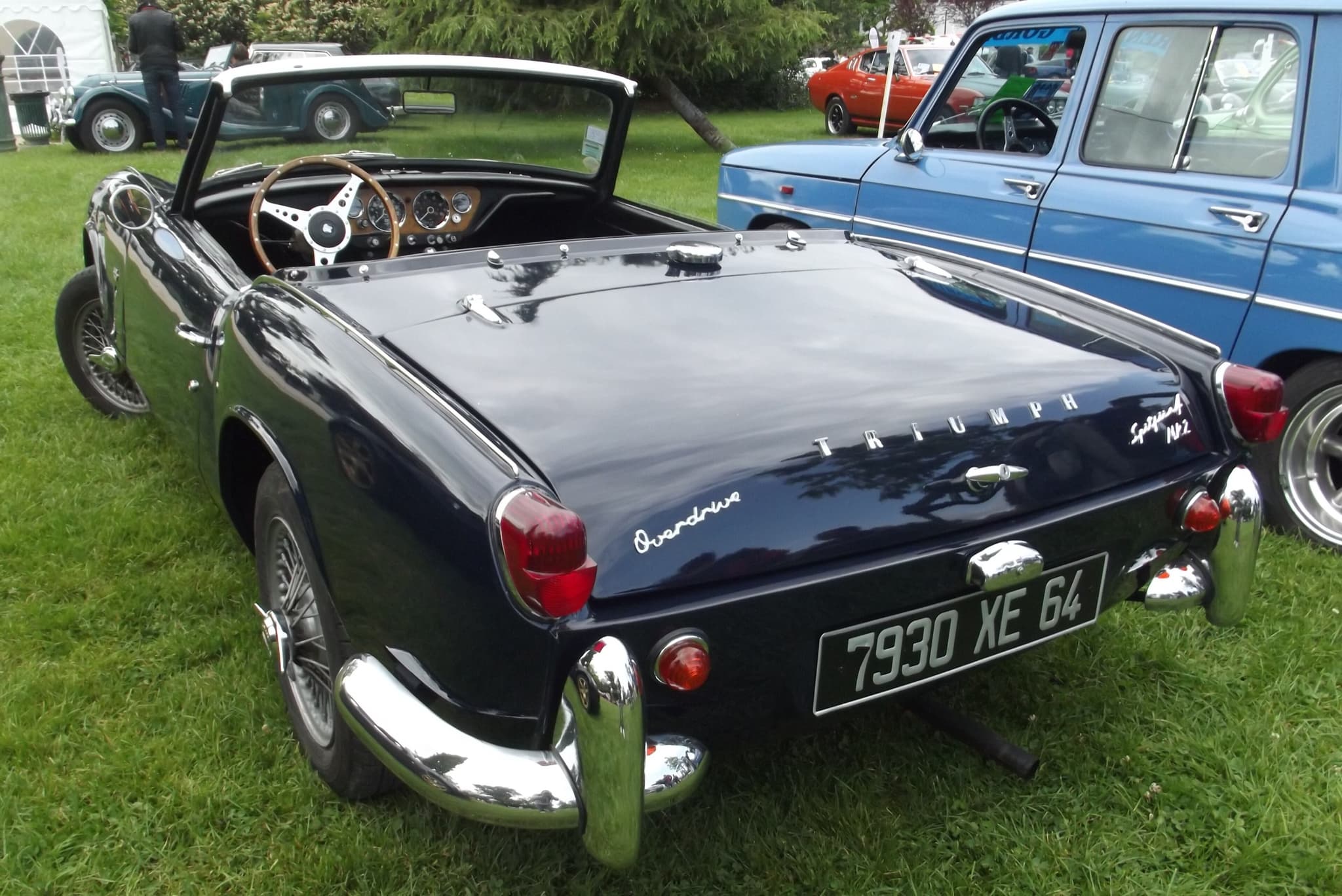
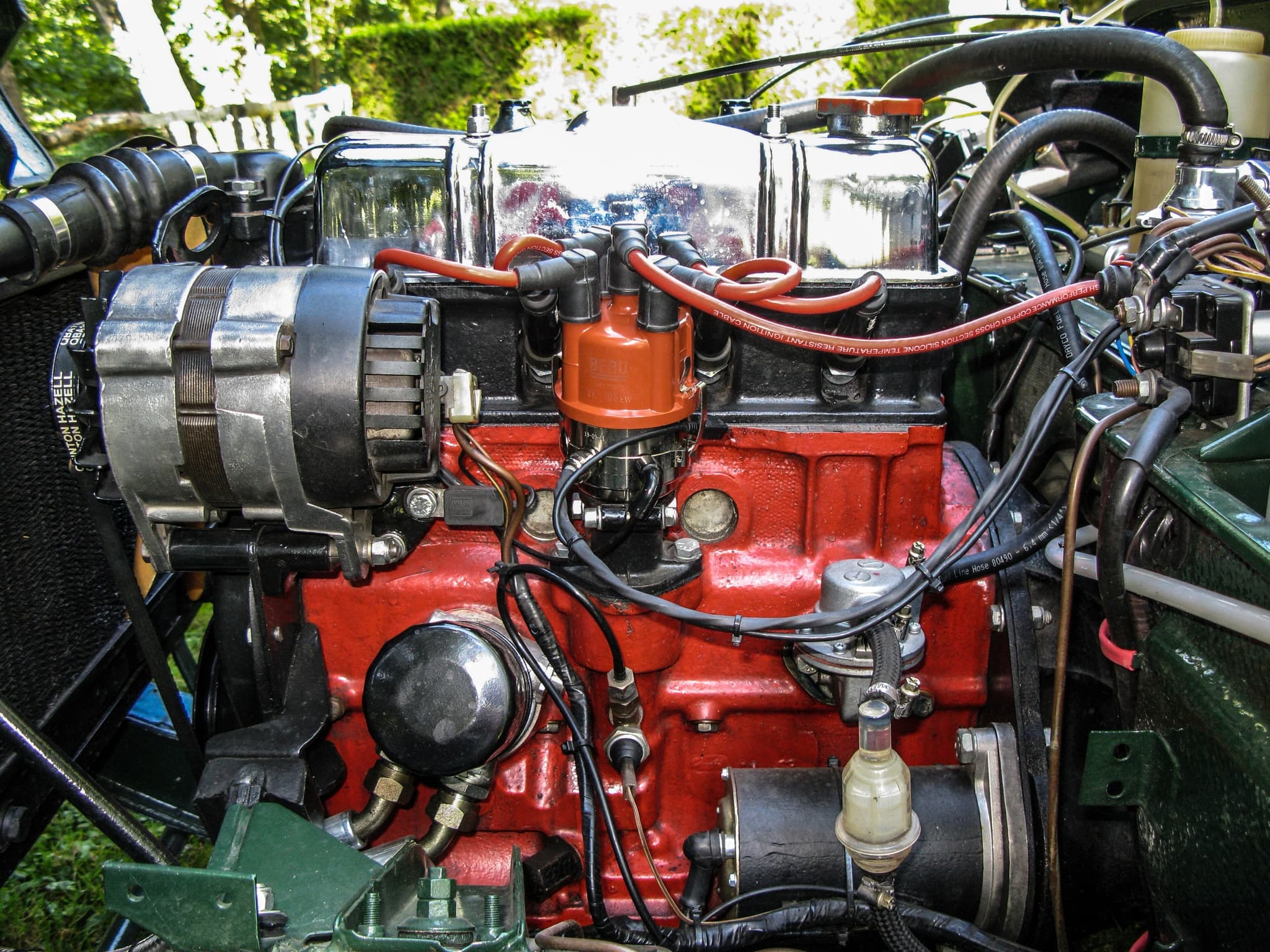
The engine number is stamped on a machined face high on the left of the cylinder block, where the head meets the block. Its prefix names the engine, so it shows at once whether a car still has the kind it was built with. Canley Classics' chart of the prefixes leaves out American engines.
| Prefix | Fitted to |
|---|---|
| FC | Spitfire 4 and Mk II |
| FD | Mk III; triumphspitfire.com instead labels FD the US Mk III's engine and lists FE for engines with emission controls |
| FH | Mk IV |
| FK | US Mk IV, as triumphspitfire.com lists it |
| FM | 1500, in every market; in the United States from the 1973 model year |
| FP | MG Midget 1500: the same engine, so in a Spitfire it is a swap |
| KC, KE | Triumph GT6, a six: in a Spitfire, a conversion |
Letters follow the number too. triumphspitfire.com reads H and L as high and low compression and E as engine, so that HE marks a high-compression engine, with U and C for American and Californian engines and FR for one reconditioned at the factory; no other source read confirms the list.source 5source 6source 14source 1source 7
Where the other numbers are
Other parts carry numbers of their own:
| Number | Where | Who says |
|---|---|---|
| Body number | A small plate below the commission plate | triumphspitfire.com |
| Gearbox number | The upper right of the gearbox (transmission) casing | Moss Motors, for the US Mk IV and 1500 |
| Rear axle number | The bottom flange of the axle housing | Moss Motors, for the US Mk IV and 1500 |
| Frame number | Original Dutch-market cars only: stamped in the frame on the right, under the rear carburettor | The Dutch club |
| Late VIN plate | After October 1979, a small plate welded to the right-hand boot (trunk) gutter | triumphspitfire.com |
VINs, 1979–80
triumphspitfire.com dates the change from commission plates to VIN plates to October 1979. Practical Classics explained the new numbers:
Very late 1500s were given VIN numbers beginning TF. A figure 1 in the number is righthand-drive; 5 is rhd with overdrive.
The TSSC's guide lists the VINs after its last commission numbers, from TFADW1AT onwards. The rest of the decoding is triumphspitfire.com's: an eight-character prefix, each letter or figure standing for a fact about the car, then a six-figure serial, 14 characters in all.
Decoded, it describes a right-hand-drive car with overdrive for Britain and Europe, built at Canley, with the letter for the 1980 model year: the last Spitfire, which the British Motor Museum keeps. The museum's record gives no VIN, so the number rests on triumphspitfire.com alone.source 1source 3source 7source 15
TFADW5AT009898
- TTriumph
- FSpitfire
- AThe market: A Britain and Europe, V the United States, Z California, L Canada
- DThe body: a two-seat convertible
- WThe engine: the 1500's
- 5Drive and gearbox: 1 right-hand drive, 2 left-hand drive, 5 and 6 the same with overdrive
- AThe model year: 9 for 1979, A for 1980
- TThe plant: Canley
- 009898The serial
Heritage Certificates
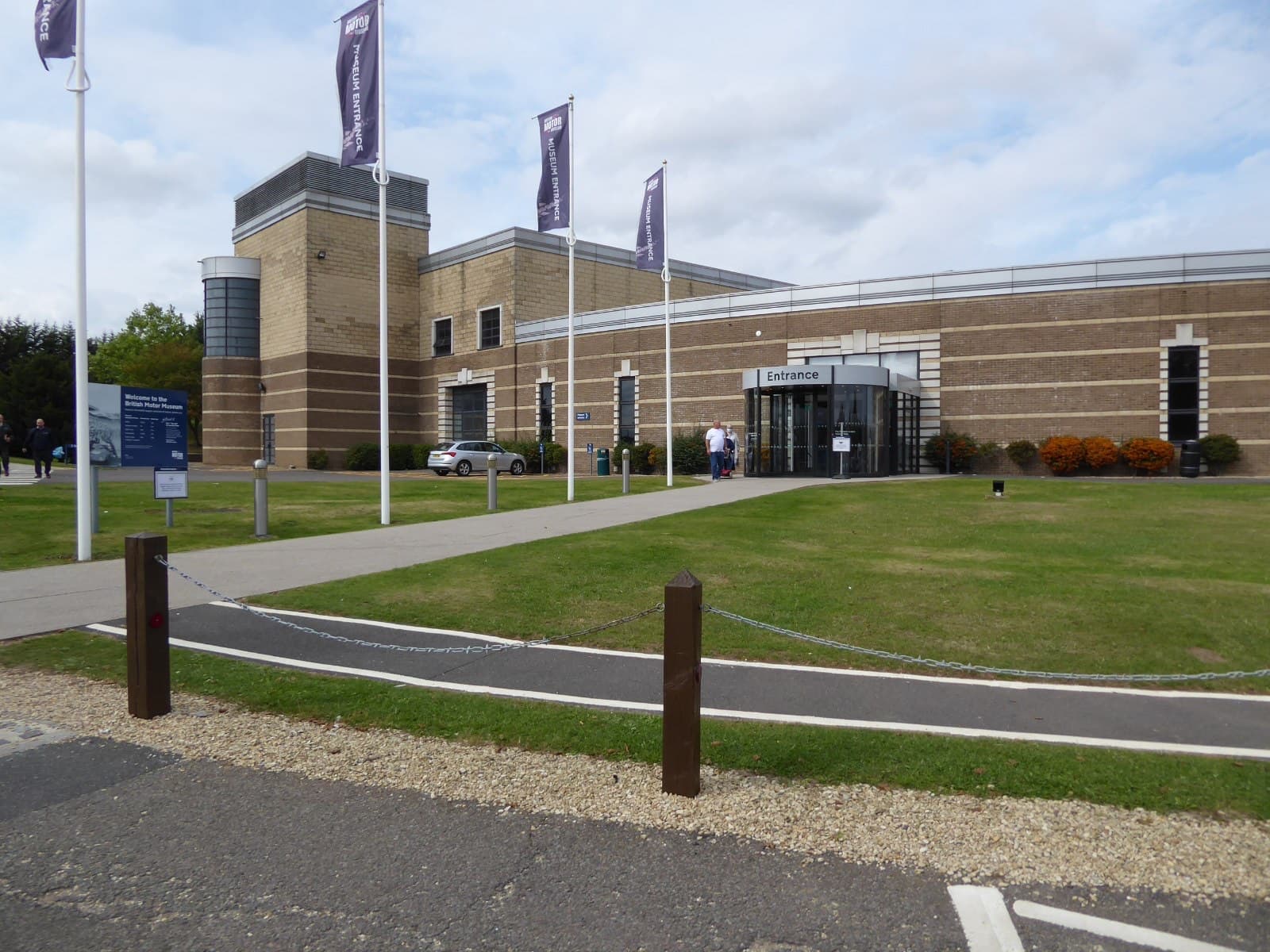
The archive of the British Motor Industry Heritage Trust, at the British Motor Museum in Gaydon, holds the factory records of Triumph cars from 1946 to 1981. A Heritage Certificate is a certified copy of one car's entry in the original ledger, and the museum describes what it can show:
Discover details such as build and despatch dates, engine and body numbers, colour scheme, and details of factory fitted equipment.
The museum adds that the ledgers vary, so not every detail is recorded for every model, and names the uses: confirming a car's identity, tax exemption, an age-related registration, and import and export. The body number is a check of its own; triumphspitfire.com describes it as close to the commission number but not the same.
A certificate cannot prove that the car in front of you is the car in the ledger. Only the numbers on the car can do that, by agreeing with the certificate and with each other.source 4source 7
Checking a car's numbers
Plate and papers
The commission number on the plate should match the car's papers, and the engine and body numbers should belong with it; a Heritage Certificate gives the factory's pairing.
Close, not identical
triumphspitfire.com notes that a car's commission, body, engine, differential and frame numbers differ but run close, and that only a large difference should worry a buyer.
The engine prefix
FC, FD, FH and FM are Spitfire engines. An FP engine is a Midget 1500's, a swap; a KC or KE engine is a GT6's, and it and any other engine are conversions, which the buying guide describes.
The plate itself
It should be riveted to the left of the bulkhead. An American door-pillar plate on a car presented as a British one, or a later American car without one, needs explaining.
The sill joint
The weld runs where each sill meets the bulkhead show whether a sill has been replaced; the buying guide explains.
Dutch cars
Original Dutch-market cars also carry their number stamped in the frame, the Dutch club says: a second check that the frame belongs to the car.
American cars
How an American car's commission number relates to its model year and its title is on North American Spitfires.
Production
Production: how far the sources agree
- 45,753, Spitfire 4 (Mk I), 1962–64
- Disputed.
- 45,573, Spitfire 4 (Mk I), Oct 1962–Dec 1964
- Disputed.
- 626, Spitfire 4, of which sold in South Africa to Dec 1965 (NAAMSA-based estimate)
- One good source.
- 37,409, Spitfire 4 Mk II, Dec 1964–Jan 1967
- Good sources agree.
- 257, Mk II, of which built in South Africa (Motor Assemblies)
- One good source.
- 265, Mk II, of which sold in South Africa (NAAMSA)
- One good source.
- 65,320, Mk III, Jan 1967–Dec 1970 (federal 1969–70 cars included)
- Good sources agree.
- 632, Mk III, of which sold in South Africa, 1968–71 (NAAMSA)
- One good source.
- 70,021, Mk IV, Nov 1970–Dec 1974; whether the US 1973–74 FM cars are included is not stated
- Good sources agree.
- 95,829, 1500, Dec 1974–Aug 1980; whether the US 1973–74 FM cars are included is not stated
- Disputed.
- 91,137, 1500, 1974–80
- Disputed.
- over 314,000, Spitfire, all versions, 1962–80
- Good sources agree.
- 314,342, "Canley built 314,342 Spitfires"
- One good source.
- more than 310,000, Spitfire, all versions
- One good source.
- approximately 315,000, Spitfire, all versions
- Not yet confirmed.
- 1,523, Spitfire, sold in South Africa, Jul 1963–early 1972, all Marks
- One good source.
45,753Spitfire 4 (Mk I), 1962–64
Triumph Sports Six Club, Model pages: Spitfire 4/Mark II (model_ID=24), Mark III (23), Mark IV (25), 1500 (26)source 12; Classic & Sports Car, A–Z of classics: Triumph Spitfire I, II, III, MkIV, 1500source 18; Wikipedia (EN), "Triumph Spitfire", 2026source 11; triumphspitfire.com ("Spitfire & GT6 Magazine and Information Warehouse"), Reference pages (group): models and options; Mk I–1500 options-and-changes logs; engine numbers; 1979–80 VINs; what year is my car; final drive; general specification data; stock tyres; wheel alignment; lubrication; tuning; fuses; paint and trim codes; side stripes; decal and badge placements; wire wheels; head swaps; substitute parts; suppliers; new owner; pre-purchase checklist; spotters guide, pages modified 2023source 7
45,573Spitfire 4 (Mk I), Oct 1962–Dec 1964
Canley Classics, "Production Figures"source 9; Triumph Spitfire Club (Netherlands), "Spitfire modellen", "Aankoop informatie", "Clubinfo", homesource 5; triumphspitfire.com ("Spitfire & GT6 Magazine and Information Warehouse"), Reference pages (group): models and options; Mk I–1500 options-and-changes logs; engine numbers; 1979–80 VINs; what year is my car; final drive; general specification data; stock tyres; wheel alignment; lubrication; tuning; fuses; paint and trim codes; side stripes; decal and badge placements; wire wheels; head swaps; substitute parts; suppliers; new owner; pre-purchase checklist; spotters guide, pages modified 2023source 7
626Spitfire 4, of which sold in South Africa to Dec 1965 (NAAMSA-based estimate)
Classic Car Africa, "The Wallflower"source 19
37,409Spitfire 4 Mk II, Dec 1964–Jan 1967
Canley Classics, "Production Figures"source 9; Triumph Sports Six Club, Model pages: Spitfire 4/Mark II (model_ID=24), Mark III (23), Mark IV (25), 1500 (26)source 12; Classic & Sports Car, A–Z of classics: Triumph Spitfire I, II, III, MkIV, 1500source 18; Wikipedia (EN), "Triumph Spitfire", 2026source 11; Triumph Spitfire Club (Netherlands), "Spitfire modellen", "Aankoop informatie", "Clubinfo", homesource 5; triumphspitfire.com ("Spitfire & GT6 Magazine and Information Warehouse"), Reference pages (group): models and options; Mk I–1500 options-and-changes logs; engine numbers; 1979–80 VINs; what year is my car; final drive; general specification data; stock tyres; wheel alignment; lubrication; tuning; fuses; paint and trim codes; side stripes; decal and badge placements; wire wheels; head swaps; substitute parts; suppliers; new owner; pre-purchase checklist; spotters guide, pages modified 2023source 7
257Mk II, of which built in South Africa (Motor Assemblies)
Classic Car Africa, "The Wallflower"source 19
265Mk II, of which sold in South Africa (NAAMSA)
Classic Car Africa, "The Wallflower"source 19
65,320Mk III, Jan 1967–Dec 1970 (federal 1969–70 cars included)
Canley Classics, "Production Figures"source 9; Triumph Sports Six Club, Model pages: Spitfire 4/Mark II (model_ID=24), Mark III (23), Mark IV (25), 1500 (26)source 12; Classic & Sports Car, A–Z of classics: Triumph Spitfire I, II, III, MkIV, 1500source 18; Wikipedia (EN), "Triumph Spitfire", 2026source 11; Triumph Spitfire Club (Netherlands), "Spitfire modellen", "Aankoop informatie", "Clubinfo", homesource 5; triumphspitfire.com ("Spitfire & GT6 Magazine and Information Warehouse"), Reference pages (group): models and options; Mk I–1500 options-and-changes logs; engine numbers; 1979–80 VINs; what year is my car; final drive; general specification data; stock tyres; wheel alignment; lubrication; tuning; fuses; paint and trim codes; side stripes; decal and badge placements; wire wheels; head swaps; substitute parts; suppliers; new owner; pre-purchase checklist; spotters guide, pages modified 2023source 7
632Mk III, of which sold in South Africa, 1968–71 (NAAMSA)
Classic Car Africa, "The Wallflower"source 19
70,021Mk IV, Nov 1970–Dec 1974; whether the US 1973–74 FM cars are included is not stated
Canley Classics, "Production Figures"source 9; Triumph Sports Six Club, Model pages: Spitfire 4/Mark II (model_ID=24), Mark III (23), Mark IV (25), 1500 (26)source 12; Classic & Sports Car, A–Z of classics: Triumph Spitfire I, II, III, MkIV, 1500source 18; Wikipedia (EN), "Triumph Spitfire", 2026source 11; Triumph Spitfire Club (Netherlands), "Spitfire modellen", "Aankoop informatie", "Clubinfo", homesource 5; triumphspitfire.com ("Spitfire & GT6 Magazine and Information Warehouse"), Reference pages (group): models and options; Mk I–1500 options-and-changes logs; engine numbers; 1979–80 VINs; what year is my car; final drive; general specification data; stock tyres; wheel alignment; lubrication; tuning; fuses; paint and trim codes; side stripes; decal and badge placements; wire wheels; head swaps; substitute parts; suppliers; new owner; pre-purchase checklist; spotters guide, pages modified 2023source 7
95,8291500, Dec 1974–Aug 1980; whether the US 1973–74 FM cars are included is not stated
Canley Classics, "Production Figures"source 9; Classic & Sports Car, A–Z of classics: Triumph Spitfire I, II, III, MkIV, 1500source 18; Malcolm McKay, "Triumph Spitfire buyer's guide: what to pay and what to look for", Classic & Sports Car, 10 May 2019source 20; Wikipedia (EN), "Triumph Spitfire", 2026source 11; Triumph Spitfire Club (Netherlands), "Spitfire modellen", "Aankoop informatie", "Clubinfo", homesource 5; triumphspitfire.com ("Spitfire & GT6 Magazine and Information Warehouse"), Reference pages (group): models and options; Mk I–1500 options-and-changes logs; engine numbers; 1979–80 VINs; what year is my car; final drive; general specification data; stock tyres; wheel alignment; lubrication; tuning; fuses; paint and trim codes; side stripes; decal and badge placements; wire wheels; head swaps; substitute parts; suppliers; new owner; pre-purchase checklist; spotters guide, pages modified 2023source 7
91,1371500, 1974–80
Triumph Sports Six Club, Model pages: Spitfire 4/Mark II (model_ID=24), Mark III (23), Mark IV (25), 1500 (26)source 12
over 314,000Spitfire, all versions, 1962–80
Vintage Triumph Register, "Spitfire" (production history, production dates and numbers, buyer's guide tabs)source 2; Sam Skelton, "Buying Guide: Triumph Spitfire (1962–1980)", Hagerty UK, 3 Feb 2021source 21
314,342"Canley built 314,342 Spitfires"
British Motor Museum, "Spitfire 1500 (last of line), 1980", accession 1980-1-190source 15; Triumph Spitfire Club (Netherlands), "Spitfire modellen", "Aankoop informatie", "Clubinfo", homesource 5
more than 310,000Spitfire, all versions
Graham Robson, "One Design, Many Derivatives", Moss Motoring, 26 Oct 2022source 22
approximately 315,000Spitfire, all versions
Wikipedia (EN), "Triumph Spitfire", 2026source 11
1,523Spitfire, sold in South Africa, Jul 1963–early 1972, all Marks
Classic Car Africa, "The Wallflower"source 19
Sources
Sources are given as plain text; their addresses are on the sources page.
- Primarymade at the time, by the maker or by people who were there
- Referenceserious later work: clubs, specialists, magazines, books
- Uncheckedencyclopaedias and enthusiast sites: cited beside a good source, named in the sentence, or marked Unchecked
- Practical Classics, "Buyers Guide: Triumph Spitfire", May 2000, p. 84, "Where are the identifying marks?"; p. 84; p. 81, engine; pp. 81, 84. Reference
- Vintage Triumph Register, "Spitfire" (production history, production dates and numbers, buyer's guide tabs), "Production Dates and Numbers"; "Production Dates and Numbers", 1975; Spitfire page, production summary. Reference
- Triumph Sports Six Club, Spitfire Buyers Guide (two-page PDF, undated), p. 1, numbers; p. 1. Reference
- British Motor Museum (BMIHT), "Heritage Certificates". Primary
- Triumph Spitfire Club (Netherlands), "Spitfire modellen", "Aankoop informatie", "Clubinfo", home, "Aankoop informatie"; "Spitfire modellen"; "Aankoop informatie"; "Spitfire modellen"; "Spitfire modellen" page, production figures; "Spitfire modellen" page. Reference
- Moss Motors, "Car Specifications – Triumph Spitfire Mk IV 1971–1974"; "…Spitfire 1500 (1975–1980)", Spitfire Mk IV 1971–74 and 1500 1975–80, identification; identification. Reference
- triumphspitfire.com ("Spitfire & GT6 Magazine and Information Warehouse"), Reference pages (group): models and options; Mk I–1500 options-and-changes logs; engine numbers; 1979–80 VINs; what year is my car; final drive; general specification data; stock tyres; wheel alignment; lubrication; tuning; fuses; paint and trim codes; side stripes; decal and badge placements; wire wheels; head swaps; substitute parts; suppliers; new owner; pre-purchase checklist; spotters guide, pages modified 2023, "Decal & Badge Placements" (plate photographs); models and options; Mk 3 options-and-changes log; models and options; 1500 options-and-changes log; "Triumph Engine Numbers"; "1979-80 Triumph Vehicle Identification Numbers"; "Decal & Badge Placements"; "1979-80 Triumph Vehicle Identification Numbers"; models and options; "New Owner (or want to be)?"; "Decal & Badge Placements"; "New Owner (or want to be)?"; Mk I page; models page; models page, "95829 cars made". Unchecked
- Rimmer Bros, "Triumph Paint & Trim Identification Codes". Reference
- Canley Classics, "Production Figures", Spitfire table, dates; Spitfire table; Production Figures table, row "Spitfire 4"; Production Figures table, row "Spitfire 4 MK II"; Production Figures table, row "Spitfire MK III"; Production Figures table, row "Spitfire MK IV"; Production Figures table, row "Spitfire 1500". Reference
- British Leyland Motors Inc., Spitfire 1500 (sales brochure), USA, 1974 model year, SP741, 1973. Primary
- Wikipedia (EN), "Triumph Spitfire", 2026, assembly plants; production figures, citing Robson 1982 p. 187; lead section. Unchecked
- Triumph Sports Six Club, Model pages: Spitfire 4/Mark II (model_ID=24), Mark III (23), Mark IV (25), 1500 (26), Spitfire 4/Mark II page, quantity; model_ID=24, "Quantity: 45,753/37,409"; model_ID=23, "Quantity"; model_ID=25, "Quantity"; model_ID=26, "Quantity". Reference
- Canley Classics, "Macau Spitfire", the L suffix. Reference
- Canley Classics, "Engine Number Identification Chart". Reference
- British Motor Museum, "Spitfire 1500 (last of line), 1980", accession 1980-1-190, accession 1980-1-190; accession 1980-1-190, object record. Primary
- Chic Doig and John Kipping, "Survivors, replicas, fakes, and other funny business", Canley Classics. Reference
- Canley Classics, "Spitfire ADU ~B Le Mans". Reference
- Classic & Sports Car, A–Z of classics: Triumph Spitfire I, II, III, MkIV, 1500, A–Z entry "Spitfire 4"; A–Z entry. Reference
- Classic Car Africa, "The Wallflower", Mk I section; Mk II section; Mk III section; summary. Reference
- Malcolm McKay, "Triumph Spitfire buyer's guide: what to pay and what to look for", Classic & Sports Car, 10 May 2019, production figures. Reference
- Sam Skelton, "Buying Guide: Triumph Spitfire (1962–1980)", Hagerty UK, 3 Feb 2021, buying guide, history paragraph. Reference
- Graham Robson, "One Design, Many Derivatives", Moss Motoring, 26 Oct 2022, Robson, "One design", total. Reference