Triumph Spitfire Buyers Guide
The sills carry the body's strength and rot before the chassis does, and the front trunnions want oil, not grease: what to check on any Spitfire of 1962–80.
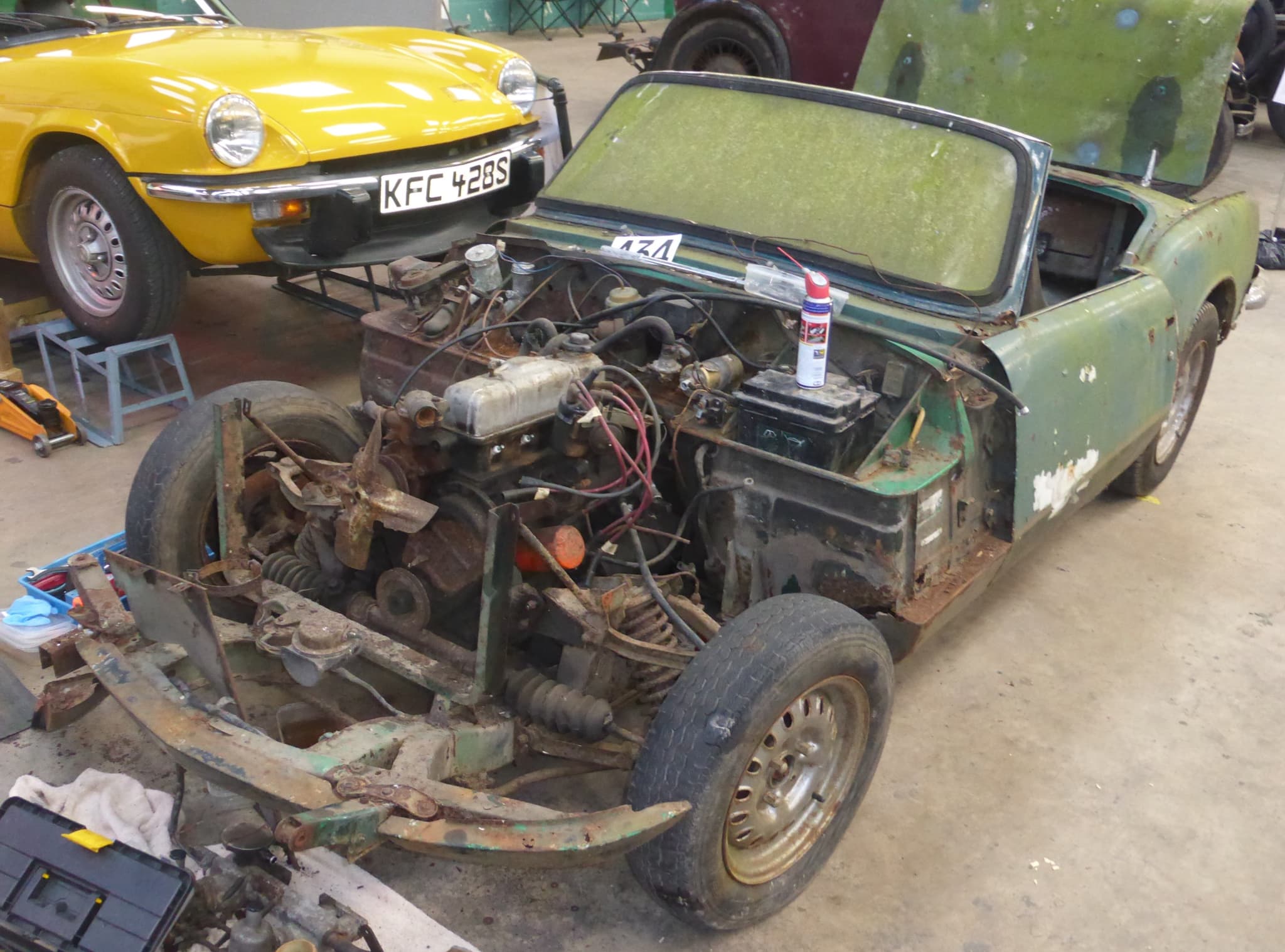
The first thing to check on a Spitfire is not its chassis. The car is built on a separate steel backbone, but the specialists who talked to Practical Classics in 2000 and to Hagerty in 2021 agreed that the chassis seldom rots badly and that the sills (rocker panels), which carry much of the body's strength, do. So start with the sills; after them come the front trunnions, and then the engine number, which says whether the engine is the kind the car left the factory with.
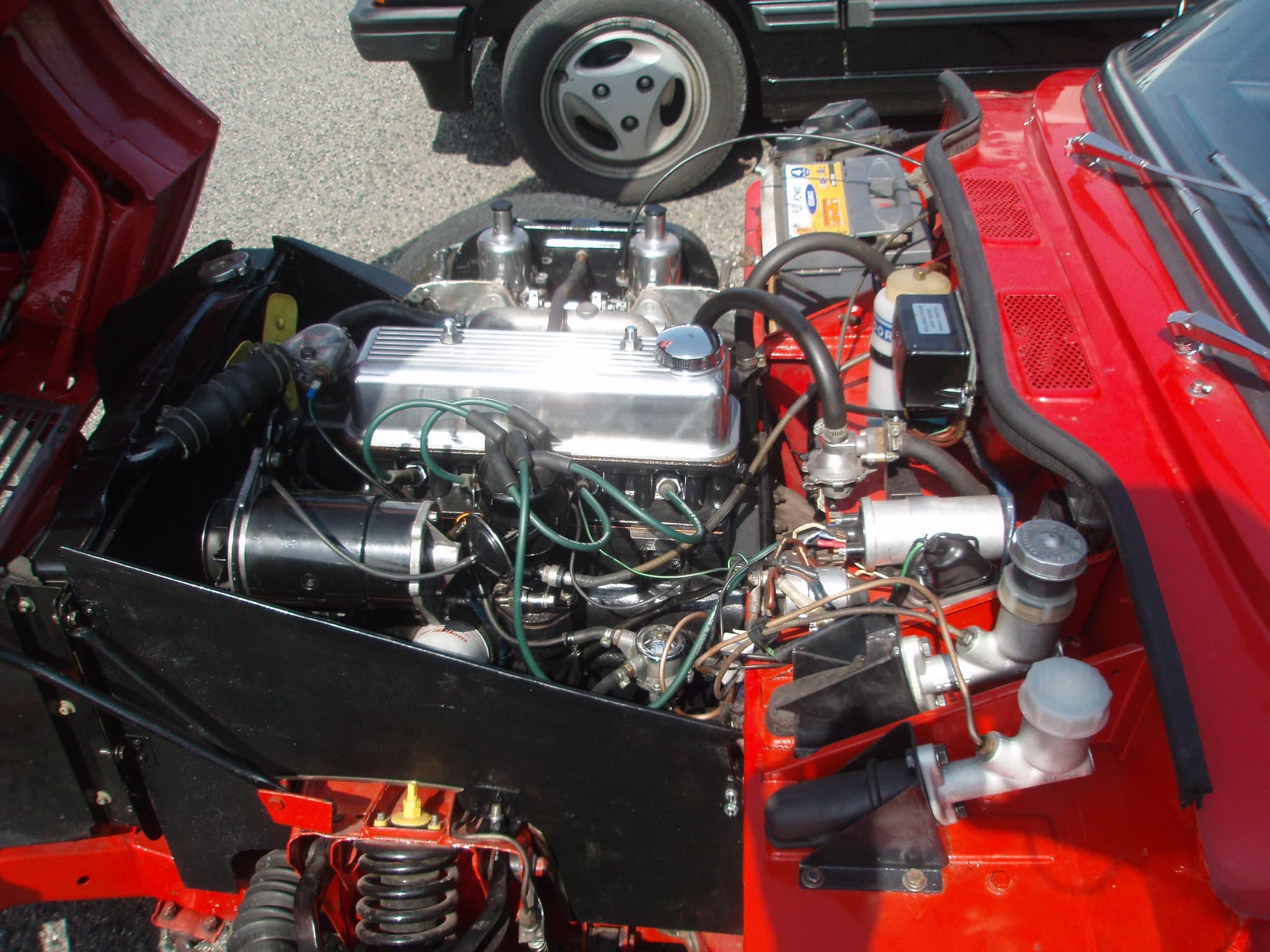
Much of this can be seen without tools, because the one-piece bonnet (hood) tips forward on hinges at the front and opens up the engine, the front suspension and the front of the chassis at once. The guide covers every Spitfire, from the Spitfire 4 of 1962 to the Spitfire 1500 of 1980.source 1source 2source 3source 4source 5
Structure first
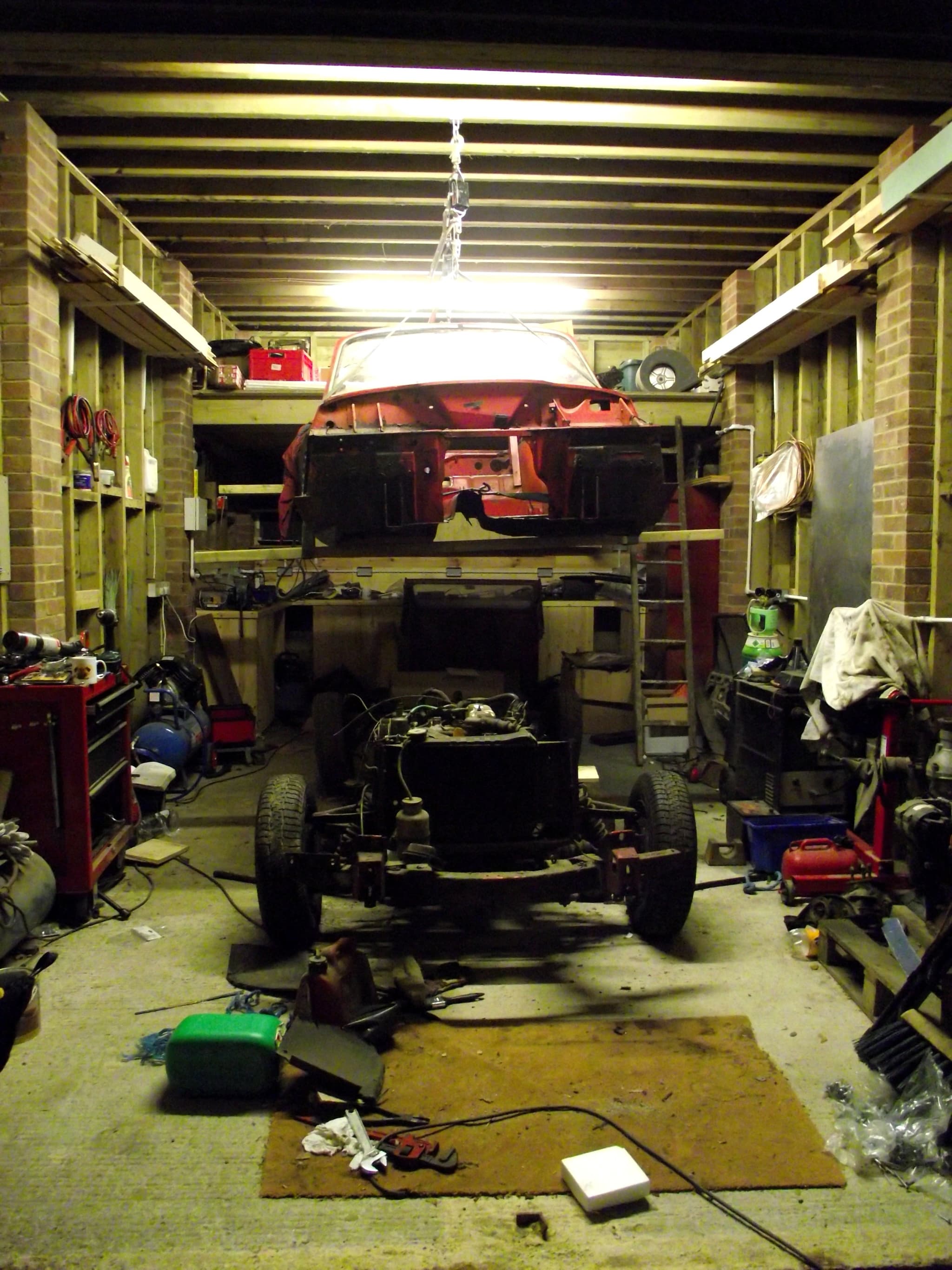
A Spitfire's chassis is a backbone of two box-section steel beams with outriggers that carry the body tub, a modified form of the Herald's. The Herald's frame ran out to either side of its central members; the Spitfire's has only a handful of outriggers, so, as Practical Classics explained, its body depends on strong sills. Hagerty makes the same point from the other side: because the strength was built into the sills, rust there can be bad news.
The chassis checks still matter, chiefly for crash damage. The guide of the Triumph Sports Six Club (TSSC) says that kinks, cracks or distortion in the main members where the suspension is mounted mean crash damage, in which case "the car is best avoided". It calls the rails around the differential "a well known rust-trap" and says the centre section hardly ever rusts badly. The front outriggers, which hold up the bulkhead (firewall), take the water and dirt thrown up by the front wheels. Practical Classics noted that they have a drain hole and can be replaced without lifting the body; the TSSC adds that corrosion of the body where it sits on them is hard to repair properly unless the body comes off. On a Mk IV or 1500, check the short chassis extensions behind the front bumper too, for rust and for accident damage.source 6source 4source 1source 2source 3
The body, panel by panel
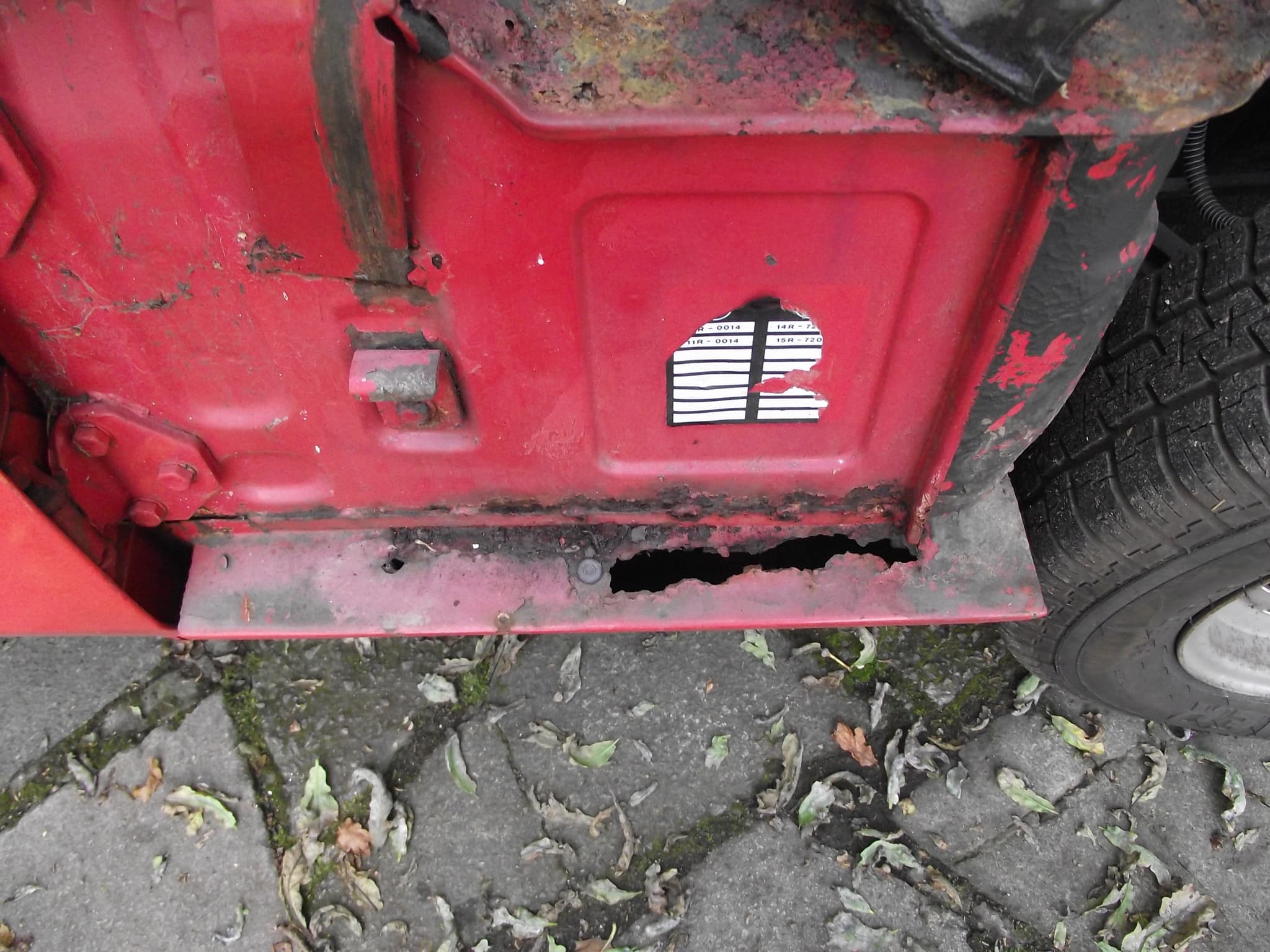
Look at the body with the car on level ground, then with it jacked up, and lift the carpets and the seats: Practical Classics warned that a carpet stuck down may be hiding the floor. Anglian Triumph Services, a Norfolk specialist, told Hagerty where the rot is found:
Chassis don't tend to rot, but sills can, floors and boot floors can. Screen frames can be structural and need to be checked. In the past, we've found 1976-1978 cars to have issues – the steel wasn't as good.
The sills
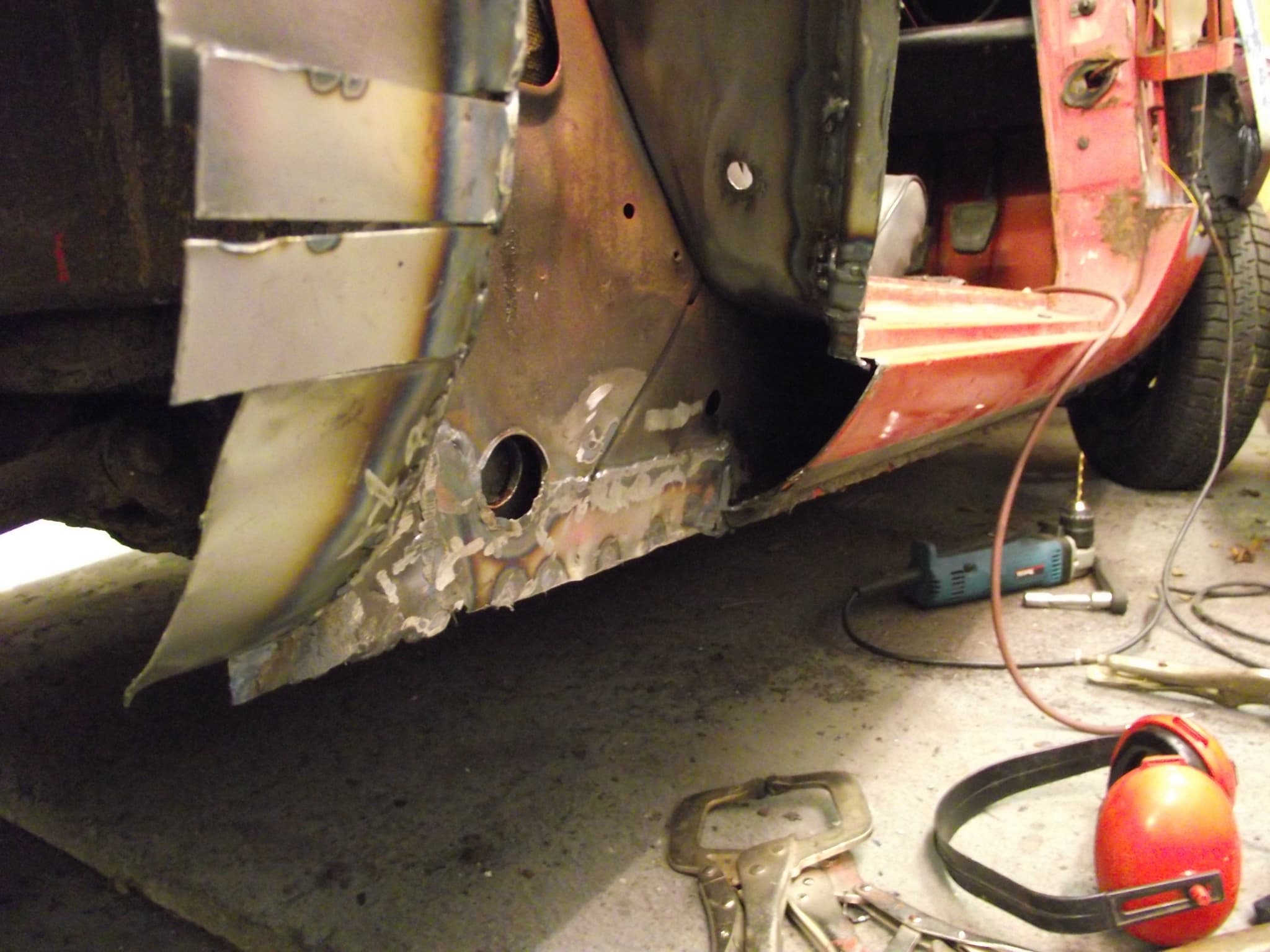
Each is made of three parts, an inner and an outer sill with a stiffener between them, and they rot first at the front. Run a magnet along them and over the door bottoms, the wheel-arch lips, the joint of rear wing (fender) and sill and the foot of the door's rear pillar, to find filler.
The door gaps
Each door should sit squarely between its pillars and close without being lifted. A rear gap narrower at the top than at the bottom suggests the car is sagging in the middle; one wider at the top can mean the bulkhead is pressing down on a weak sill.
The sill joint
Except on the Spitfire 4 and early Mk IIs, which were spot-welded, the outer sill was joined to the side of the bulkhead with seven short runs of weld, Practical Classics found: more or fewer means the sill has been repaired or replaced. Where the rear wing tucks under the outer sill there should be a visible step, and filler there is a warning.
Floors and heelboard
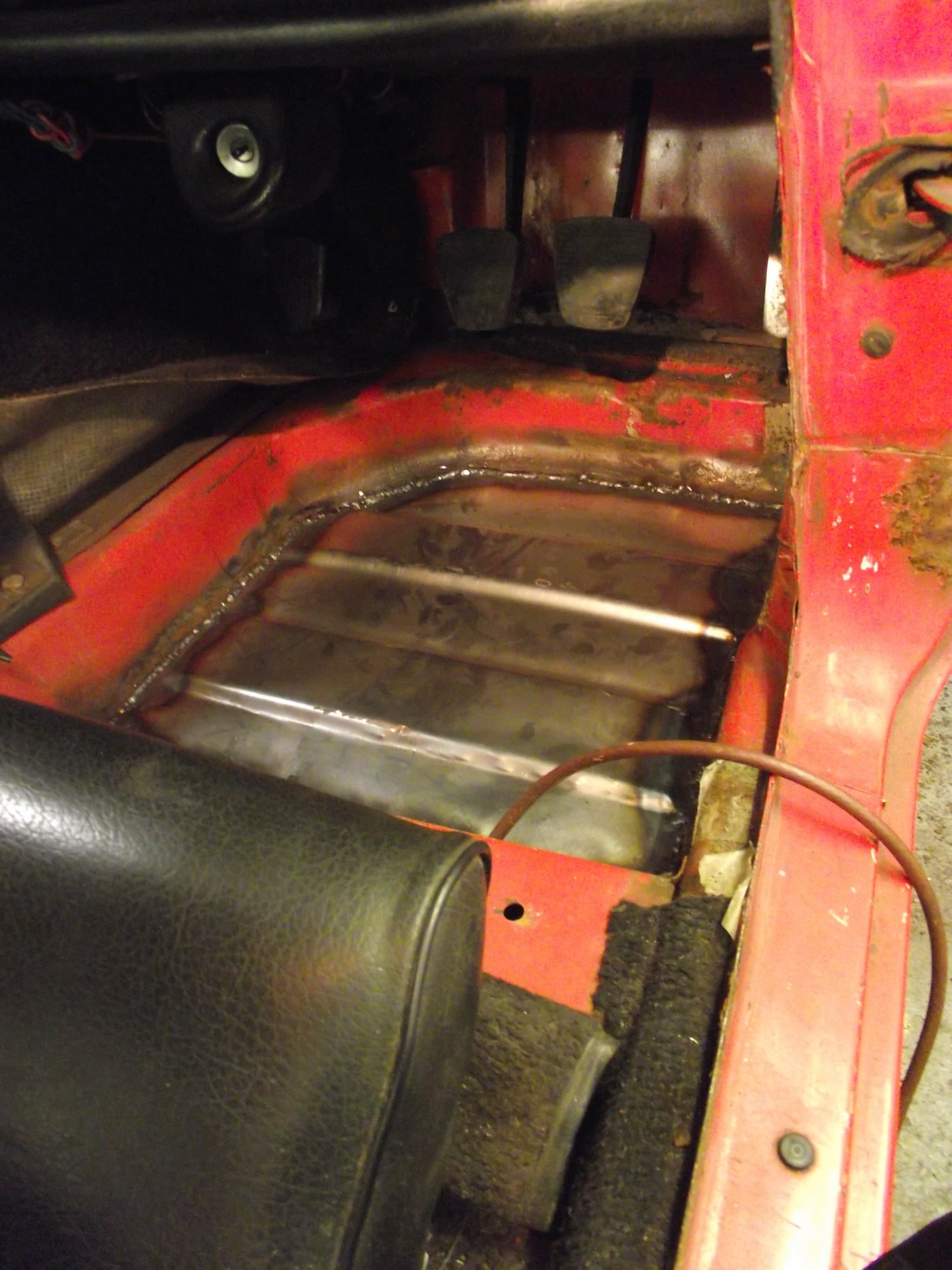
Floors and inner sills are often replaced, and the TSSC's advice is to be satisfied that the work was done well. Look at the front of the footwells, under the pedals, along the seat rails and where floor meets sill, then at the ends of the heelboard, the panel behind the seats, and at the mounting points of the rear radius arms.
Windscreen pillars
Filler in the windscreen (windshield) pillars is a known bodge. On the Spitfire 4, Mk II and Mk III the frame can be taken off and rusts at its base, where it sits on the body: lift the rubber to look, because replacements are scarce. Check the foot of each pillar where it meets the sill.
The bonnet
Look behind the front wheels, at the hinge mounts where the bonnet meets the frame, around the lamps at its front and at the front inner wheel arches. On a Mk IV or 1500 the bonnet's seams trap rust that only blasting removes, so look along them for filler.
Rear wings and valances
Check the outer arches, the inner wings and the joint of boot (trunk) floor, side panel and wing. An inner arch can rust right away from the outer one, and a rotten rear arch is often best replaced whole. On a Mk IV or 1500 the rear quarter valances are double-skinned and rot from the inside.
Boot and battery tray
Check the boot floor and the rear seam of the boot lid, which is hard to repair; good lids are scarce. Under the bonnet, look at the battery tray and at the panel below the master cylinders, where spilt fluid strips the paint.source 1source 2source 3source 7source 8source 9
Trunnions and steering
At the foot of each front vertical link, the upright that carries the stub axle, a brass trunnion joins the link to the lower wishbone; as the wheel is steered, the link screws up and down the trunnion's thread. British Leyland's brochure for the 1974 model year in the United States called them "patented screw-type lower bushings with built-in oil reservoirs". Starved of oil, the thread corrodes, tight spots develop and the vertical link is strained, Practical Classics warned, "to the point of breakage".
This is the most safety-critical aspect of the car, … If it's neglected, the front suspension will literally fall apart and drop one corner of the car onto the tarmac.
The rear suspension has trunnions too, about a third of the way up each rear vertical link. They can partly seize, but the only sure test is to disconnect the link from the spring and pull it in and out, which Practical Classics conceded no buyer would do while viewing a car. In 2021 Hagerty reported that Canley Classics sold a conversion that does away with the front trunnions; no source read says whether it is still made.
Rock the steering to feel for play between the steering wheel and the road wheels, and in the column and the rack. Vibration through the wheel, the TSSC's guide says, usually means worn wheel bearings, a worn rack or wheels out of balance. Bounce each corner of the car: it should rise and settle once.source 1source 6source 9source 2source 3
The swing axle and the swing spring
The Spitfire 4, Mk II and Mk III have swing axles at the back. Each driveshaft is the lower link, and the transverse leaf spring bolted to the top of the differential is the upper one. Because the spring is longer than the shaft, a rising wheel gains a large positive camber, and the high roll centre lets cornering forces lift, or jack, the back of the car. Canley Classics describes what follows:
The now infamous 'wheel tuck' results in a sudden (and sometimes unpredictable) loss of rear end grip if the driver 'lifts-off' or if a rear wheel hits a bump mid-corner.
The period testers met the same habit, and road tests has what they wrote. The Mk IV and 1500 kept the swing axles and changed the spring to what Canley calls a swing spring: only the bottom leaf is bolted to the differential, and the upper leaves sit in a box on a pivot, so the roll centre can move and the jacking loads fall. Because the back of the car then resisted roll less, a thicker front anti-roll bar was fitted. In 1973 a longer spring and longer driveshafts widened the rear track by about 50 mm (2 in), and Motor Sport found in 1975 that the rear wheels' old habit had gone.
An early car may have been converted. Swing-spring kits for the Spitfire 4 to Mk III copy Triumph's own cure, and Triumph Sportscars, an Australian specialist that closed at the end of 2016, recommended a Mk IV rear spring and front anti-roll bar for early cars. Some owners fit the GT6 Mk II's rear suspension instead, which Triumph Sportscars thought gained little over a well set-up Mk IV or 1500 rear. None of these is original, so ask what has been done. triumphspitfire.com's alignment notes say that rear camber cannot be adjusted, and that camber outside the factory limits generally points to a weak or wrongly set spring, or to worn vertical-link bushes.
Hubs, shafts and noises
The rear wheel bearings were designed to be greased through a nipple, but the cars left the factory with blanking plugs where the nipples should be, Practical Classics found; left dry, the bearings fail, and the shafts follow them. A hub should come off with a proper puller or with heat, not a three-legged puller, and Canley Classics, which warns that a worn needle roller can eat into a shaft until it is scrap, found only the original Churchill tool reliable. On top of the differential a split pin in a hole serves as the breather: if it is blocked, oil is forced out past the flange seals.
On the test drive, noises point to their causes, from the wheel bearings to the propshaft that runs from the gearbox (transmission) to the differential:source 1source 10source 3
| Noise | Likely cause | Who says |
|---|---|---|
| A rhythmic knock on the over-run, coasting with the throttle shut | The universal joints | Canley Classics |
| A knock when moving off | The axle or propshaft universal joints | The TSSC's guide |
| A steady noise, louder on one side | A wheel bearing | Canley Classics |
| A whine, loudest under power | The crownwheel and pinion (ring and pinion) | Canley Classics |
| A rumble when lifting off at 80 km/h (50 mph) | The differential | The TSSC's guide |
| Vibration at about 90 km/h (55 mph) | Worn or misaligned propshaft joints, or a shaft out of balance after a joint was changed | Canley Classics |
The engine
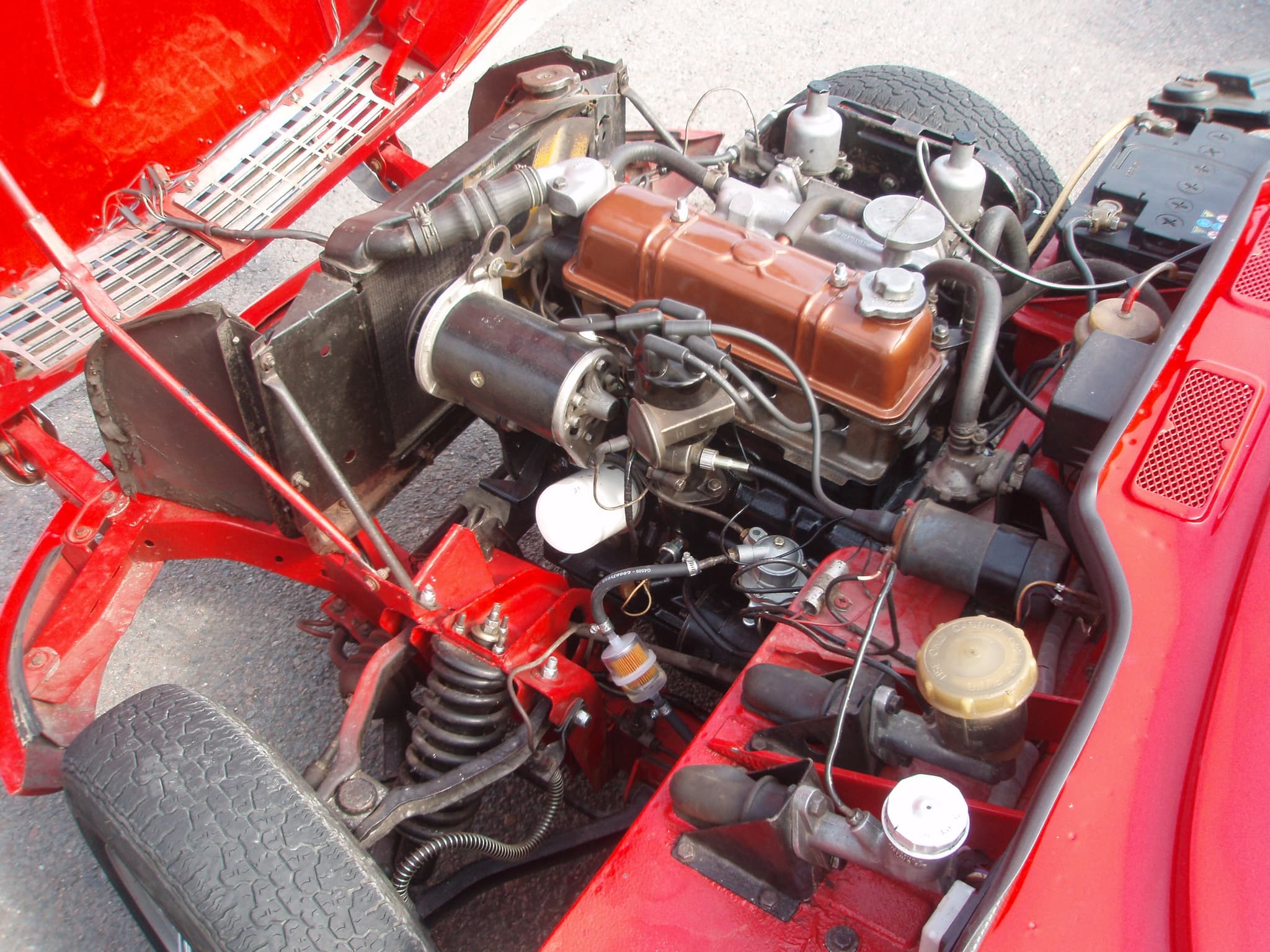
Every Spitfire engine is an overhead-valve four with three main bearings, developed from the Standard Eight's 803 cc design. On the Spitfire 4 to Mk IV engines, Practical Classics warned, the thrust washers that control the crankshaft's end-float can drop into the sump. Watch the crankshaft pulley while a helper presses the clutch, or push and pull the pulley: caught early, the fix needs no engine removal, but left too long the crankshaft grinds into the rear main bearing cap. The Mk IV and 1500 engines are more prone to crankshaft wear and bearing rattle; the TSSC adds that the 1500's longer stroke was harder on the crankshaft bearings, and Motor Sport found its engine rough at the top of the rev range in 1975.
From cold, a few seconds of rumble before the oil pressure builds is normal, the TSSC's guide says. Listen for the tappets and the timing chain, watch for blue smoke under acceleration, look inside the rocker cover for a mayonnaise-like sludge, and check the head, sump and rocker-cover gaskets for leaks. Spitfires left the factory with an oil-pressure warning light, not a gauge, as Practical Classics and Motor Sport's testers noted. No valve-stem oil seals were fitted at the factory either. Canley Classics says seals can be added to the inlet valves, and that worn piston rings need a rebore.
Cars for Britain had twin SU carburettors; most American cars from the 1970 model year had a single Zenith-Stromberg. The "Waxstat" jets of later 1500s gave poor starting when hot, Practical Classics found, and the cure was the earlier jet with its choke linkage. For cooling, Pearson advised against an electric fan in front of the radiator and suggested a full-width radiator in place of the "slightly undersized" original. The engines run on unleaded petrol (gas): new exhaust valves and seat inserts are needed only if the valve seats start to recede, and the ignition timing need not change, according to Canley Classics and Practical Classics.source 1source 16source 13source 3source 4source 12source 10source 17source 7source 6
Gearbox, overdrive, clutch and brakes
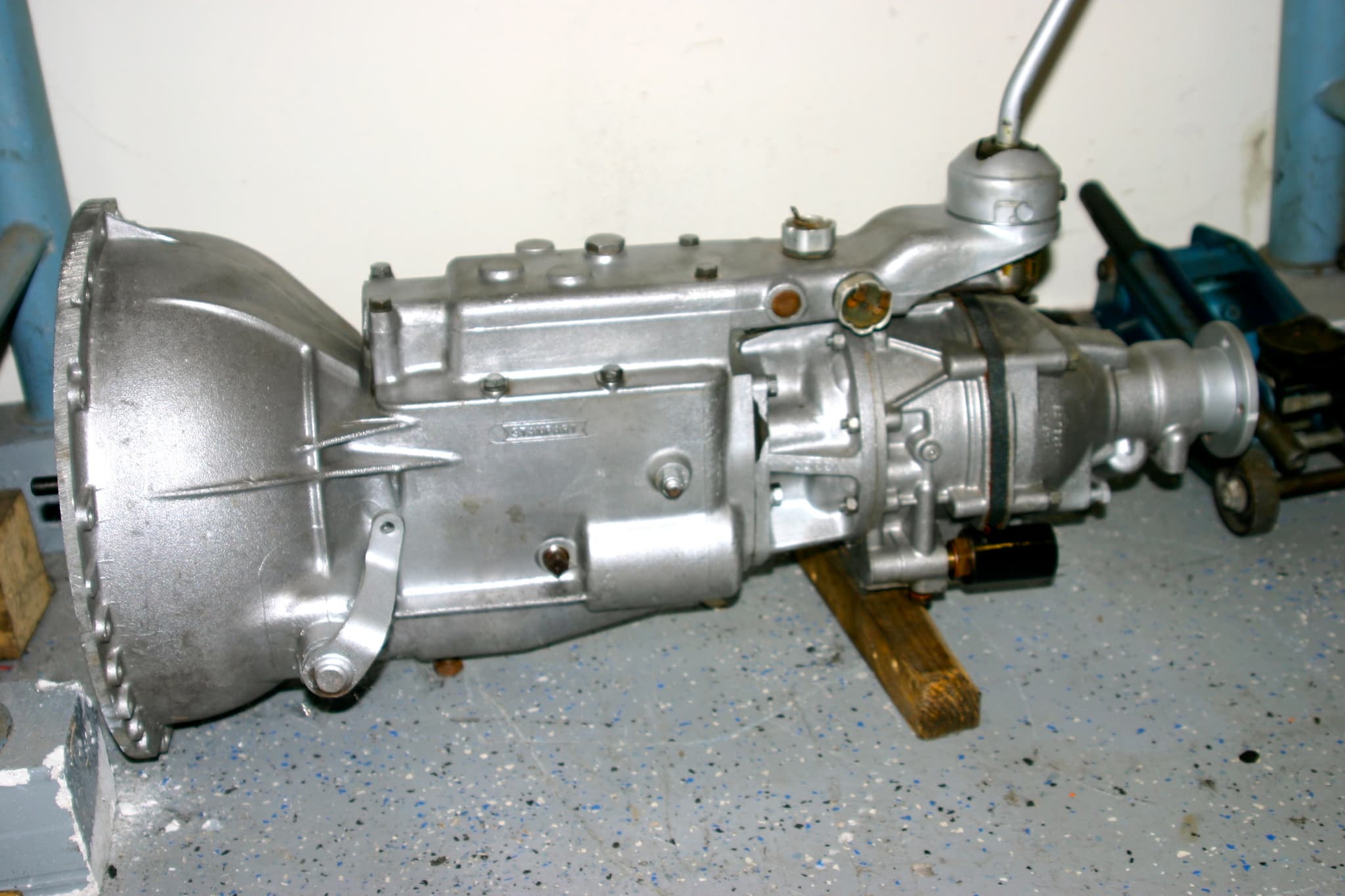
The Spitfire 4, Mk II and Mk III have no synchromesh on first gear; the Mk IV gained it. The 1500's single-rail gearbox was shared with the MG Midget 1500 and, in developed form, the Triumph TR7. Practical Classics noted that its internals fit the Mk IV's casing, that the casing fits the drivelines of the earlier cars, and that the gearboxes got better as the model evolved. The oil level matters, because the box holds little.
On the test drive every gear should engage cleanly and stay in, and the overdrive, if fitted, should engage and drop out cleanly in third and top. Overdrive was a Laycock D-type until a J-type replaced it at commission number FH60000, late in the Mk IV's run; John Kipping, writing for Canley Classics, tells them apart by the solenoid, on the right of a D-type and on the left of a J-type. A D-type's faults are often electrical, in the relay or the solenoid's contacts, and black, hairy particles in its filter mean its clutch lining is breaking up. On a J-type the solenoid causes most trouble, and the late units have a flaw of their own:
Later Dolomite and Spitfire overdrives (after 1978) have a badly made centre to the one way bearing and from around 30000 miles can give the impression of clutch slip
Kipping advised changing the overdrive's oil at least every 80,000 km (50,000 miles), without additives. The clutch is hydraulic, and the TSSC's test is to try to make it slip at 80 km/h.
Every Spitfire has disc brakes at the front and drums at the back. According to Triumph Sportscars, Girling 12P calipers were fitted to the Spitfire 4 and Mk II and 14LF calipers from the Mk III on, and a dual-circuit system came with the Mk III for American cars and about 10 years later for British ones; the 1978 British brochure lists dual circuits. Motor Sport noted in 1975 that the 1500 had no servo as standard.source 1source 11source 12source 8source 10source 3source 15source 17source 13
Original or modified?
Start with the numbers. The commission plate on the left of the bulkhead should match the car's papers, and the engine number's prefix should fit the car: FP is an MG Midget 1500 engine, and KC or KE a GT6 six. Identification explains the numbers and what a Heritage Certificate adds, and how American model years and titles work is on North American Spitfires.
Then look for what has been changed. Danny Hopkins surveyed Spitfires with other engines for Practical Classics in 2003, from the fitting of a 1500 engine to an earlier car to a Rover V8. Of the six-cylinder cars he wrote:
Commonly known as Gitfires (GT6 engine, Spitfire body) these hybrids were often really Vitfires (Vitesse engines)
| Change | What it involves | How to tell |
|---|---|---|
| A 1500 engine in an earlier car | What Hopkins called "the simple drop-in Triumph four-pot upgrade" | An engine number beginning FM in a car whose commission number begins FC or FD, or FH below FH75001 |
| A GT6 or Vitesse six | A six-cylinder engine, often a Vitesse's or a saloon's (sedan's), which needs the GT6's bonnet bulge | The bulge; a GT6 engine number begins KC or KE |
| Dolomite Sprint 16-valve | With a TR7 five-speed gearbox, the engine mounts reset with welded box sections | Welded-in mounts and box sections |
| Ford Zetec 16-valve | With a Sierra five-speed gearbox, box-section chassis extensions, a Transit propshaft and GT6 brake calipers | A cable clutch, where Triumph's was hydraulic |
| Other twin-cams and V8s | Fiat, Alfa Romeo and Toyota twin-cams, the Rover K-series, and the Rover V8, which needs a longer chassis | A non-Triumph engine, often with a non-Triumph radiator |
| Mazda MX-5 engine | Owners' builds with new mounts and a shorter propshaft, described only in online forums | A Mazda engine; a cut tunnel and bulkhead |
| A five-speed gearbox | Kits built round a Ford Type 9 gearbox, from Moss Motors and from Frontline | Not the gear lever, which the Frontline kit keeps in place; the speedometer needs recalibrating |
| A swing spring on an early car | Triumph's Mk IV layout fitted to an earlier car | A pivoting rear spring on a Spitfire 4, Mk II or Mk III |
Restoration
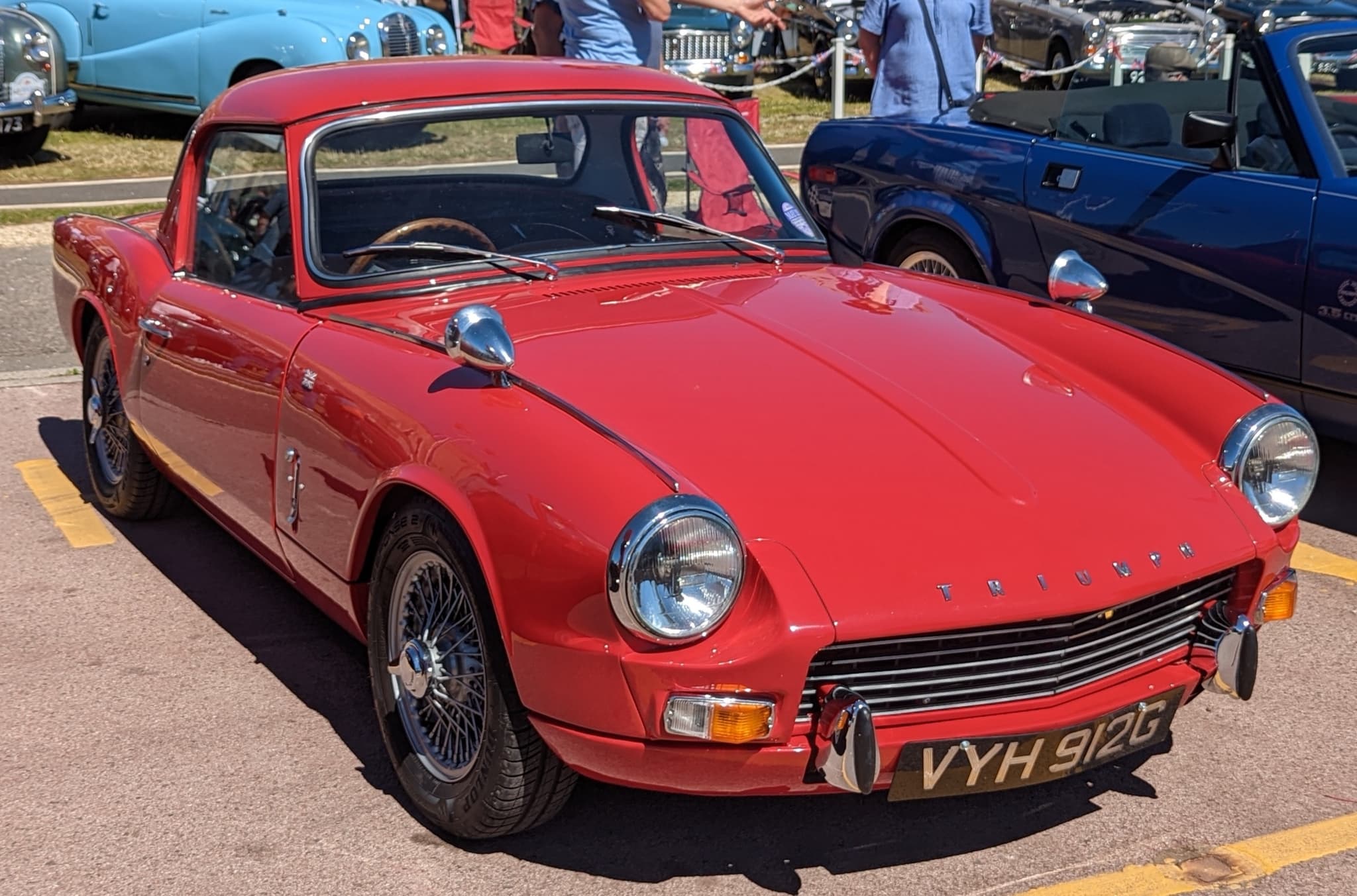
A Spitfire is simple to work on, with its body on a separate chassis, and most of its panels are made again: parts and specialists sets out what is made and what is hard to find. Replacement sills do not all fit alike, Hagerty's specialist said. The original hoods (soft tops) were vinyl, and mohair is a popular replacement, Hagerty says; check that it fits. The restoration manuals and buyer's guides in print are listed on the sources page.
In an advertisement, "restored" can mean only refurbished, and the Dutch Triumph Spitfire Club warns buyers that new sills painted over a rotten car are not a restoration.source 3source 1source 2source 8
Sources
Sources are given as plain text; their addresses are on the sources page.
- Primarymade at the time, by the maker or by people who were there
- Referenceserious later work: clubs, specialists, magazines, books
- Uncheckedencyclopaedias and enthusiast sites: cited beside a good source, named in the sentence, or marked Unchecked
- Practical Classics, "Buyers Guide: Triumph Spitfire", May 2000, pp. 81, 83; p. 81, "Body and chassis"; pp. 81–82, text and captions; p. 83, "Running gear"; p. 83; pp. 81–83, engine; p. 82; p. 84; p. 81. Reference
- Sam Skelton, "Buying Guide: Triumph Spitfire (1962–1980)", Hagerty UK, 3 Feb 2021, sills; body; David Aspinall; suspension; modifications; hoods. Reference
- Triumph Sports Six Club, Spitfire Buyers Guide (two-page PDF, undated), "Chassis & Bodywork"; suspension and steering; transmission and axle; engine; road test. Reference
- Bill Boddy ("W.B."), "Sports cars under £700: the £641 Triumph Spitfire 4", with data panel "The Triumph Spitfire 4", Motor Sport, Apr 1963, p. 20, the bonnet; p. 20; p. 20, handling; p. 20, instruments. Primary
- Canley Classics, "Engine Number Identification Chart". Reference
- British Leyland Motors Inc., Spitfire 1500 (sales brochure), USA, 1974 model year, SP741, 1973, chassis description; suspension; specifications, carburettor; specifications, clutch. Primary
- Vintage Triumph Register, "Spitfire" (production history, production dates and numbers, buyer's guide tabs), buyer's guide tabs; 1969–70 identification. Reference
- Triumph Spitfire Club (Netherlands), "Spitfire modellen", "Aankoop informatie", "Clubinfo", home, "Aankoop informatie"; "Spitfire modellen". Reference
- triumphspitfire.com ("Spitfire & GT6 Magazine and Information Warehouse"), Reference pages (group): models and options; Mk I–1500 options-and-changes logs; engine numbers; 1979–80 VINs; what year is my car; final drive; general specification data; stock tyres; wheel alignment; lubrication; tuning; fuses; paint and trim codes; side stripes; decal and badge placements; wire wheels; head swaps; substitute parts; suppliers; new owner; pre-purchase checklist; spotters guide, pages modified 2023, "Triumph Pre-Purchase Inspection Checklist"; "Lubrication Specifications"; "Wheel Alignment Specs". Unchecked
- John Kipping (overdrive articles), Technical articles (group): "Swing Springs", "Rear End Noises", "Propshaft Problems", "Oil Consumption", "Unleaded Engines", "The D-Type Overdrive", "The J-Type Overdrive", "Different Differentials", "Close Ratio Gearboxes For Spitfire MkIV/1500", "Chrome Bumpers", "Spitfire Tuning Kits", "Fitting Le Mans Style Bonnet Vents", Canley Classics, "Swing Springs"; "Rear End Noises"; "Rear End Noises"; "Propshaft Problems"; "Oil Consumption"; "Unleaded Engines"; John Kipping, "The D-Type Overdrive" and "The J-Type Overdrive"; "Swing Springs". Reference
- Mike Cotton ("M.L.C."), "Triumph Spitfire to Monaco", Motor Sport, Jun 1967, pp. 26–27; p. 26. Primary
- Bill Boddy ("W.B."), "Road test: The Triumph Spitfire Mk. IV", Motor Sport, Jan 1971, p. 59; p. 59, instruments and carburetters. Primary
- Clive Richardson ("C.R."), "Road Impressions – The Triumph Spitfire 1500", Motor Sport, Mar 1975, p. 25. Primary
- Moss Motors, "Car Specifications – Triumph Spitfire Mk IV 1971–1974"; "…Spitfire 1500 (1975–1980)", Spitfire Mk IV 1971–74, rear track. Reference
- Triumph Sportscars (Australia; closed end of 2016), "Spitty Tips" 2, 3, 4, 5, 6, 8, 19, Spitty Tips 3, "Suspension Combinations"; Spitty Tips 4, "Brakes". Reference
- Triumph Sports Six Club, Model pages: Spitfire 4/Mark II (model_ID=24), Mark III (23), Mark IV (25), 1500 (26), 1500 page. Reference
- BL Cars / Jaguar Rover Triumph Ltd, Triumph Spitfire 1500 (sales brochure), UK, 12/1978, Publication No. 3254/D, specification pages; specification pages, clutch. Primary
- Danny Hopkins, "Spit Roast", Practical Classics, Feb 2003, pp. 66–73. Reference
- Moss Motors, "Conversion Kit, 5 Speed Gearbox" (440-187). Reference
- Rimmer Bros, Product pages TT30431, TT30430 (5-speed kits), RL1100 (Lenham hardtop), TT30430, TT30431. Reference
- various, Forum threads: britishv8.org "Miata 1.6 into a 78 Spitfire"; locostbuilders.co.uk threads 192042 and Canley front end; forum.triumphdolomite.co.uk p=278123; grassrootsmotorsports.com reader ride 7279; britishcarforum.com "Triumph assembly plants", MX-5 conversion threads. Unchecked