Triumph Spitfire Paint Codes
Carmine Red has two codes, 82 and CAA, and Mallard is called both green and blue. How to read the paint and trim codes on a Spitfire's commission plate, and every colour in Rimmer Bros' chart from 1962 to 1980, with the years two sources give each one.
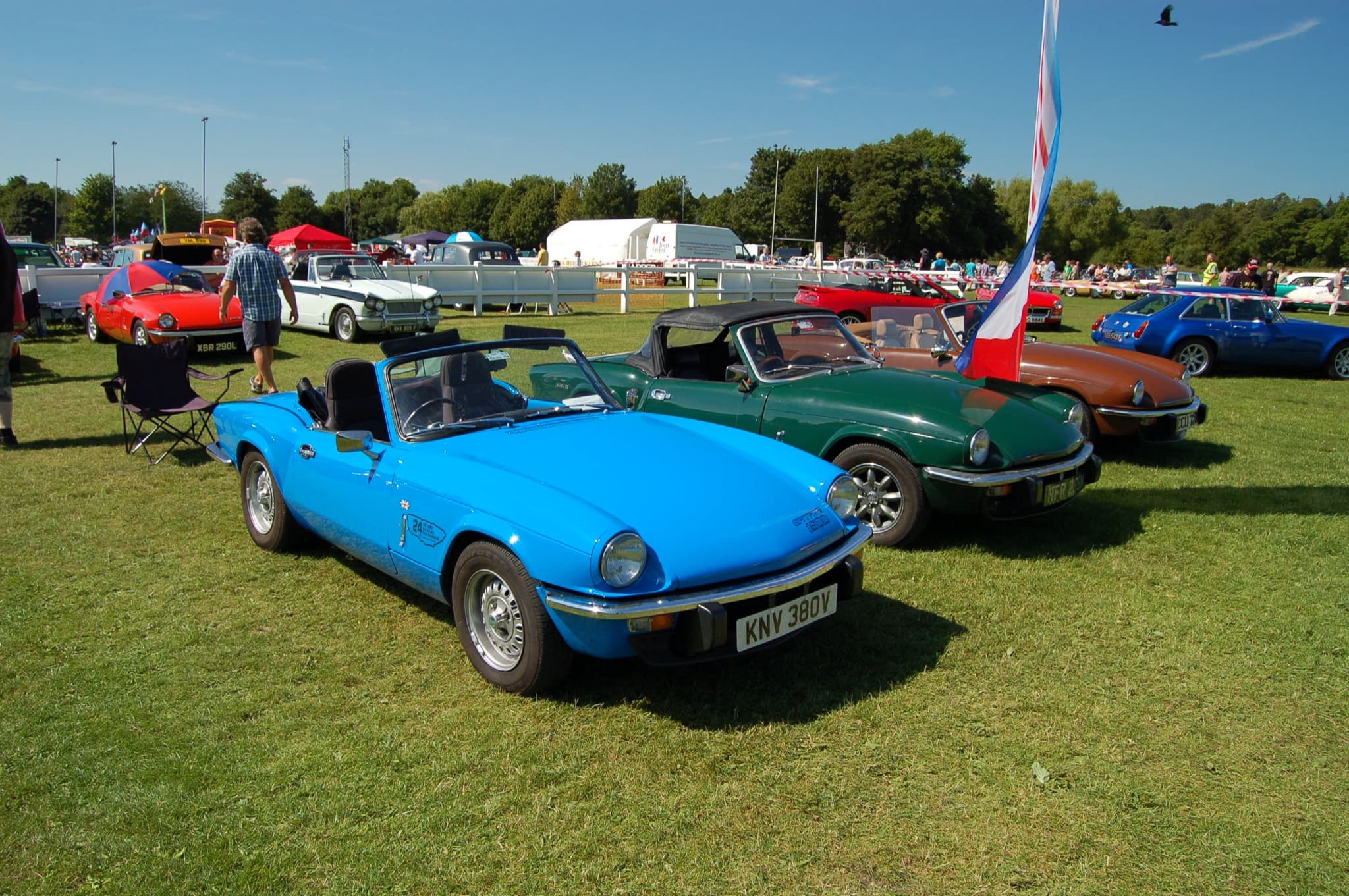
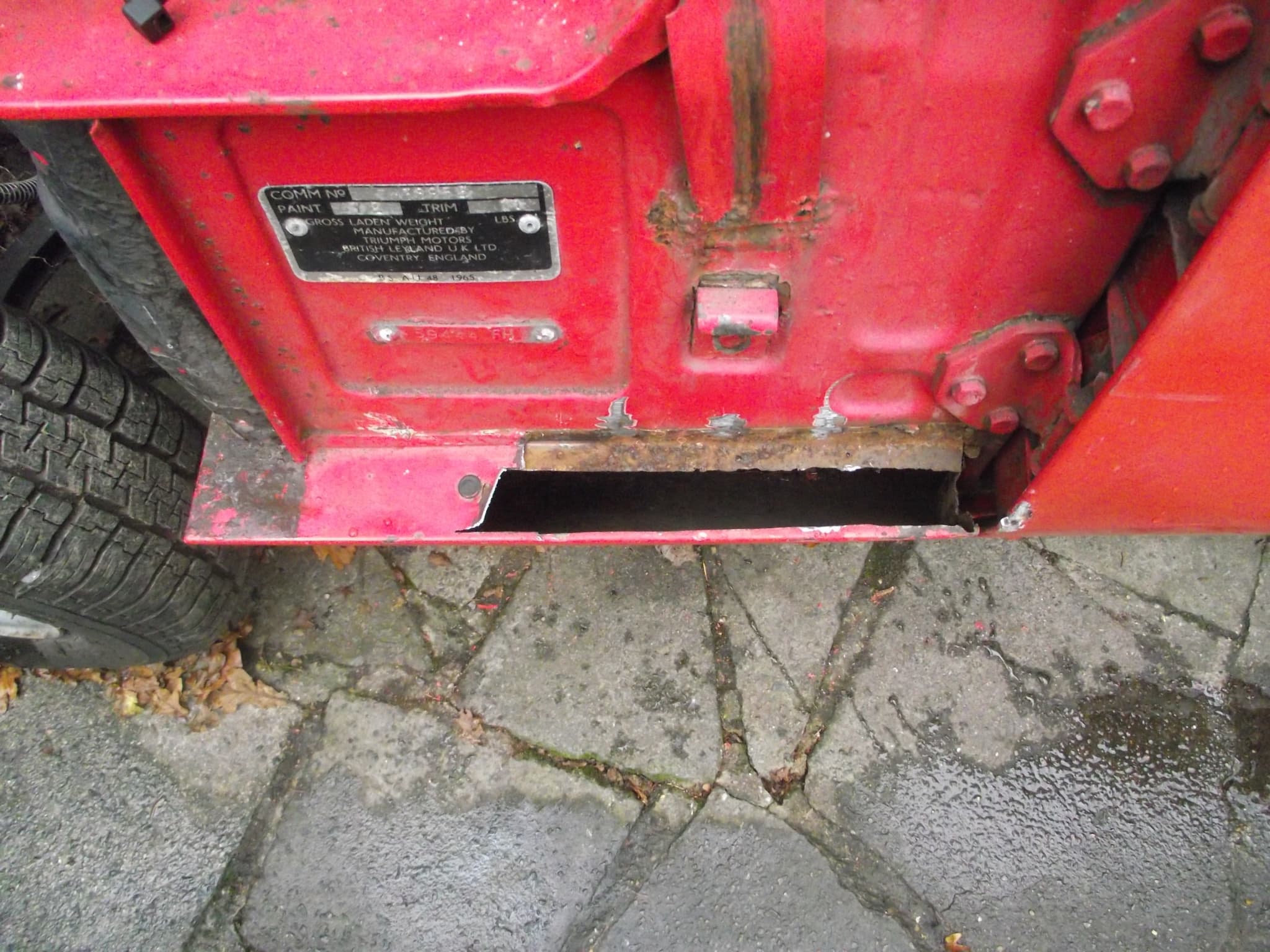
A Spitfire's commission plate, the alloy plate riveted to the bulkhead under the bonnet (hood), has two small boxes marked PAINT and TRIM. On most cars they hold codes: one for the colour the car was built in, one for the material and colour of its trim.
Rimmer Bros' paint chart lists the Spitfire's exterior colours from Powder Blue on the first cars to Russet Brown on the last. This page explains how the codes are read, lists every one of those paints with the years two sources give it, and shows real cars by colour family.source 1source 2source 3source 4source 5source 6
- Colours in Rimmer's Spitfire chart
- 40from Powder Blue to Russet Brown
- US paints, 1974 model year
- 10each with one to three trim colours, in the factory brochure
How the codes work
Until the mid-1970s the codes were numbers. The last digit gives the colour group, 1 for black, 2 red, 3 brown, 4 yellow, 5 green, 6 blue, 7 purple, 8 grey and 9 white, and the digits before it give the paint's place in that group's sequence.
Taking reds for example, Signal Red has a code of 32 (i.e. the third red), Pimento 72 (seventh red) and Carmine 82 (the eighth colour in the red range).
In the mid-1970s, under Leyland Cars, the codes became three letters, the first again giving the group: P black, C red, A brown, F yellow, H green, J blue and N white, with G gold, E orange, K purple, L grey and M silver. A paint offered on both sides of the change has two codes, so Carmine is 82 and also CAA. triumphspitfire.com dates the change to March 1977, and says some cars carry both.
The first cars may not help. Rimmer says Triumphs of the early 1960s carried no colour codes on the plate; triumphspitfire.com says the codes arrived with the Mk II, yet gives codes for some colours of 1963–64. A Spitfire 4's plate may therefore show a paint's name, its code or nothing at all. Identification explains the rest of the plate.
Trim codes use the same numbers, with a letter for the material: H for leather, C for cloth and none for leathercloth (vinyl). Cloths checked in more than one colour have codes beginning with R.
82
- 8The eighth paint in the red sequence
- 2The red group
Paint by version
Each paint below sits under the version that introduced it, with the versions its years span in Rimmer's chart, Rimmer's years and triumphspitfire.com's years. The Code column gives Rimmer's codes; triumphspitfire.com's other codes are in its column. On our count the two sources' years differ for 24 of the 39 paints both date, and neither says whether it counts calendar or model years, so both are given.
Introduced on the Spitfire 4, 1962–64. Rimmer's chart gives the Mk II no paint of its own.
| Paint | Code | Versions | Rimmer | triumphspitfire.com |
|---|---|---|---|---|
| Powder Blue | none | Spitfire 4 | 1962–63 | 1962–63 |
| Spa White | none | Spitfire 4 | 1962–63 | no years given |
| Lichfield Green | 45 | Spitfire 4 | 1962–63 | 45: 1963–67; without a code: 1962–65 |
| Phantom Grey | 38 | Spitfire 4 | 1962–63 | 1962–63 |
| Pale Yellow, or Primrose | none | Spitfire 4 | 1962–63 | 1962–63 |
| Black | 11 | Spitfire 4, Mk II | 1962–67 | 1962–65 |
| Cherry Red | 22 | Spitfire 4 | 1963–64 | 1963–64 |
| Jonquil Yellow | 14 | Spitfire 4 | 1963–64 | 1963–64 |
| Conifer Green | 25 | Spitfire 4 to Mk III | 1963–68 | 1963–68 |
| Royal Blue | 56 | Spitfire 4 to Mk III | 1964–70 | 1964–70 |
| Signal Red | 32 | Spitfire 4 to Mk IV | 1962–71 | 1962–72 |
| Wedgwood Blue | 26 | Spitfire 4 to Mk IV | 1963–71 | 1962–72; without a code to 1966 |
| White, or New White | 19, NAB | Spitfire 4 to 1500 | 1963–77 | 19: 1963–77; NAB: 1963–78 |
Rimmer notes that paint makers often treat Pale Yellow and Primrose as the same colour, and that Conifer Green was often called Triumph Racing Green.
Introduced on the Mk III, 1967–70.
| Paint | Code | Versions | Rimmer | triumphspitfire.com |
|---|---|---|---|---|
| Jasmine Yellow | 34 | Mk III | 1968–69 | from 1968, with no settled end |
| Valencia Blue | 66 | Mk III, Mk IV | 1968–71 | 1968–72 |
| Laurel Green | 55 | Mk III, Mk IV | 1968–71 | 1968–72 |
| Damson | 17 | Mk III, Mk IV | 1968–72 | 1968–74 |
| Sienna Brown | 23 | Mk III, Mk IV | 1969–74 | 1969–74 |
| Saffron Yellow | 54 | Mk III, Mk IV | 1970–71 | 1969–74 |
Introduced on the Mk IV, 1970–74.
| Paint | Code | Versions | Rimmer | triumphspitfire.com |
|---|---|---|---|---|
| Sapphire Blue | 96 | Mk IV | 1970–74 | 1971–74, as Sapphire or Imperial Blue |
| Mallard | 106 | Mk IV | 1972–74, as Mallard Blue | 1971–74, as Mallard Green and Mallard Blue |
| Emerald Green | 65 | Mk IV | 1972–74 | 1971–74 |
| Magenta | 92 | Mk IV | 1973–74 | 1973–74 |
| Mimosa Yellow | 64 | Mk IV, 1500 | 1973–77 | 1972–77; letter code FAA |
| Carmine Red | 82, CAA | Mk IV, 1500 | 1972–80 | 1973–80 |
| Pimento Red | 72 | Mk IV, 1500 | 1972–77 | 1972–77; letter code CAB |
| French Blue | 126 | Mk IV, 1500 | 1972–77 | 1973–76; letter code JAA |
Introduced on the Spitfire 1500, 1974–80.
| Paint | Code | Versions | Rimmer | triumphspitfire.com |
|---|---|---|---|---|
| Maple | 83 | 1500 | 1974–77 | 83: 1975; AAC, as Sepia (Maple) |
| Topaz | 84 | 1500 | 1974–77, as Topaz Orange | 1975–76, as Topaz Yellow (orange); letter code EAA |
| Delft Blue | 136 | 1500 | 1974–77 | 1974–77; letter code JAB |
| Java Green | 85, HAB | 1500 | 1974–77 | 85: 1974–77; HAB: 1975–78 |
| British Racing Green | 75 | 1500 | 1974–77 | 1974–77; letter code HAA |
| Flamenco Red | CAD | 1500 | 1977 | 1977 |
| Tahiti Blue | 146, JAE | 1500 | 1977 | 146: 1976–77; JAE: 1977 |
| Leyland White | NAF | 1500 | 1977–80 | 1977–80 |
| Inca Yellow | 94, FAB | 1500 | 1977–80 | 94: 1976–80; FAB: 1977–80 |
| Vermilion Red | CAE | 1500 | 1977–80 | 1977–80 |
| Pageant Blue | JNA | 1500 | 1977–80 | 1978–80; also printed JAG and JMA |
| Brooklands Green | HAE | 1500 | 1977–80 | HAE: 1977–80; HMM: 1976–80 |
| Russet Brown | 93, AAE | 1500 | 1977–80 | 93: 1976–80; AAE: 1977–80 |
Rimmer equates Leyland White with Austin Morris's Ermine White, and triumphspitfire.com notes that the 1500's British Racing Green is not BMC's paint of that name.
triumphspitfire.com's table also names paints that Rimmer's chart does not give the Spitfire, among them Ice Blue, Tara Green Metallic and Astral Blue Metallic. Its notes say that some of its codes were never offered on Spitfires, but the published table no longer shows which.source 5source 4source 3
Was Mallard green or blue?
Fact check
Green
British Leyland's US brochure for the 1974 model year, which prints "Mallard (green)"
Blue
Rimmer Bros' paint chart, which lists Mallard Blue
Our reading. The factory's own brochure is the stronger evidence, so this page calls Mallard (paint code 106) green. Rimmer's chart is not consistent with itself, since it lists a Mallard Green for the GT6, and triumphspitfire.com uses both names. The code ends in 6, the blue group's digit, which may explain the blue; no source read gives a paint chip to settle the shade.source 6source 5source 4
Paints in Australia
The Spitfires that Australian Motor Industries assembled at Port Melbourne, from the Spitfire 4 to the Mk III, wore Dulux paints that AMI shared with the Toyotas and Ramblers it assembled. Triumph Sportscars of Australia listed them.
| Paint | Dulux code | Compared with Triumph's paint |
|---|---|---|
| Glade Green | P22 | Conifer Green, but darker |
| Safety Wattle | P49 | the equivalent of Pale Yellow |
| Signal Red | P16 | lighter and more orange than Triumph's Signal Red |
| White | P18 | – |
| Black | P17 | – |
| Havannah Gold, on some evidence | P51 | – |
| Vintage Wine, on some evidence | P45 | – |
On the Mk III, Glade Green and White came in more than one formula, and the Dulux stickers that should identify the paint often fell off or were never fitted.source 7
Trim, hoods and decals
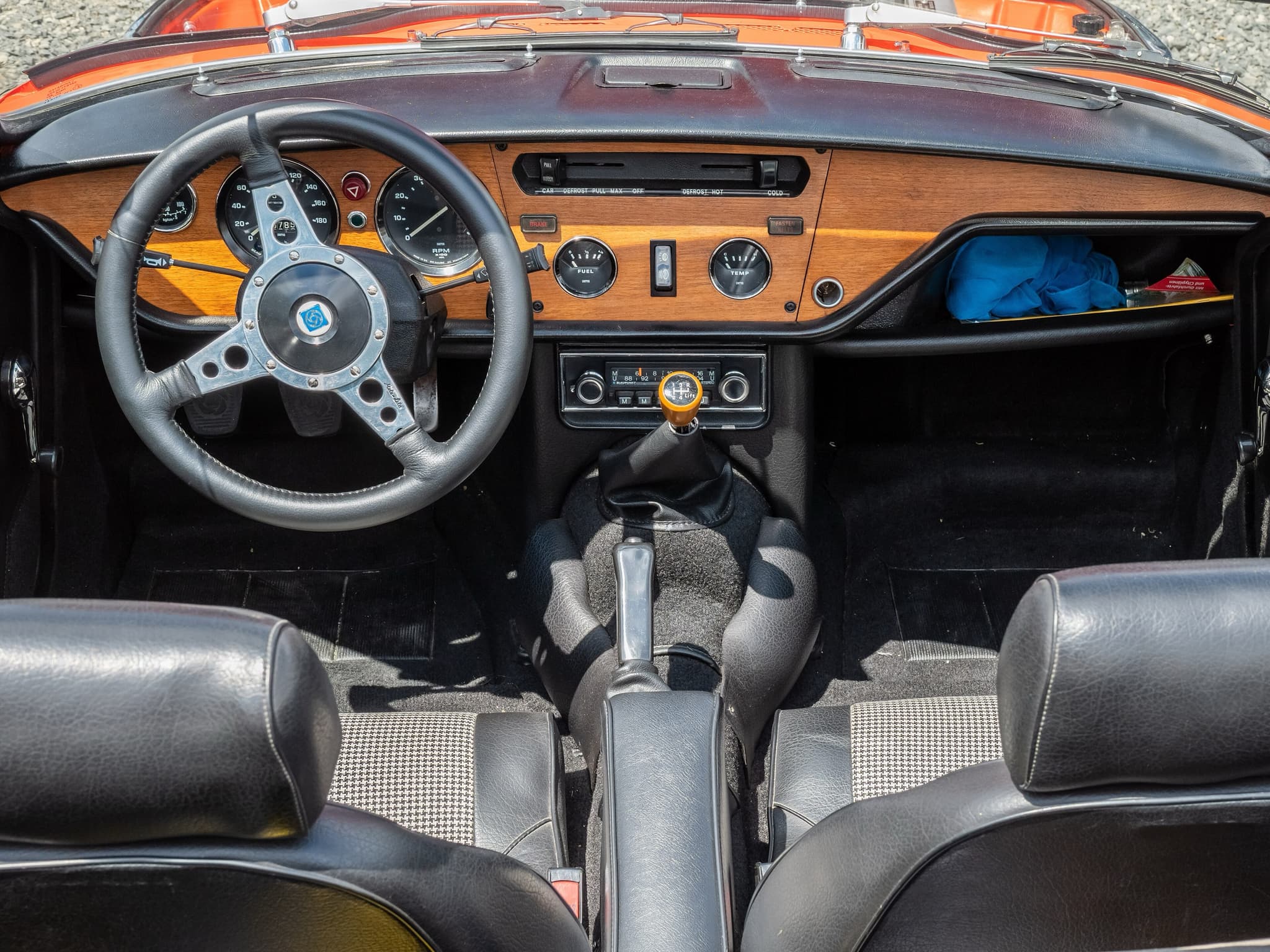
The first Spitfires had rubber floor mats, and triumphspitfire.com says leather seats in red, blue or black were a special order on the Spitfire 4. The Mk II brought carpets, better seats and leathercloth trim. On the Mk IV the upholstery was leathercloth, with moulded carpet and a rubber heel mat, and the fascia (dashboard) was black at first and wood from 1973.
For the 1974 model year, British Leyland's US brochure offered four trim colours, Black, Blue, Chestnut and Tan, in "these combinations of exterior color/interior trim color":
| Paint | Trim |
|---|---|
| Emerald | Black |
| Sapphire | Black or Blue |
| French Blue | Black |
| Mallard (green) | Tan |
| White | Black, Blue or Chestnut |
| Pimento | Black or Chestnut |
| Carmine | Black or Tan |
| Magenta | Black |
| Maple | Black or Tan |
| Mimosa | Black or Chestnut |
By December 1978 the UK brochure described the 1500's seats as faced in "flame retardant houndstooth patterned brushed nylon fabric with vinyl side panels", and the hood (soft top) of the car it describes was black vinyl. triumphspitfire.com dates the houndstooth cloth from about FH100020, in March 1977, in black or tan, with a smaller check from about FH113678.
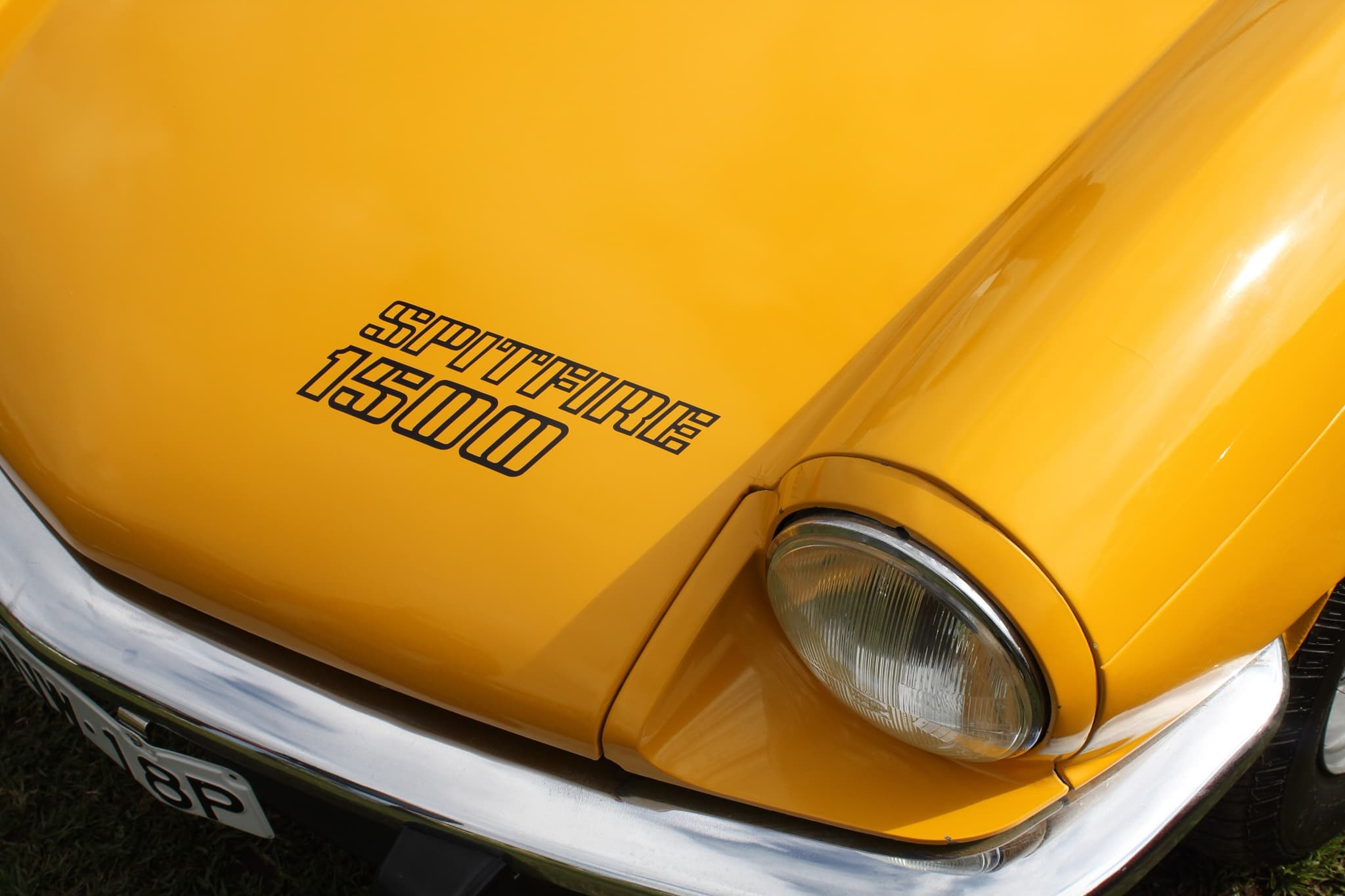
The 1500 carried "Spitfire 1500" transfers (decals) on its bonnet and boot (trunk). triumphspitfire.com's colour table marks the bonnet transfer black on some paints, among them Inca Yellow, Java Green, White and Mimosa, and silver on others, among them Carmine, British Racing Green, Russet Brown and Brooklands Green.source 1source 2source 8source 9source 6source 10source 11source 12source 4
Real cars, by colour family
These are real Spitfires, grouped by the family of their colour. A photograph cannot show which factory paint a car wears, or whether its paint is original, so the captions name a paint only where a source does: triumphspitfire.com gives the paint of the last Spitfire, which the British Motor Museum keeps, as Inca Yellow.source 13source 14
Reds 3
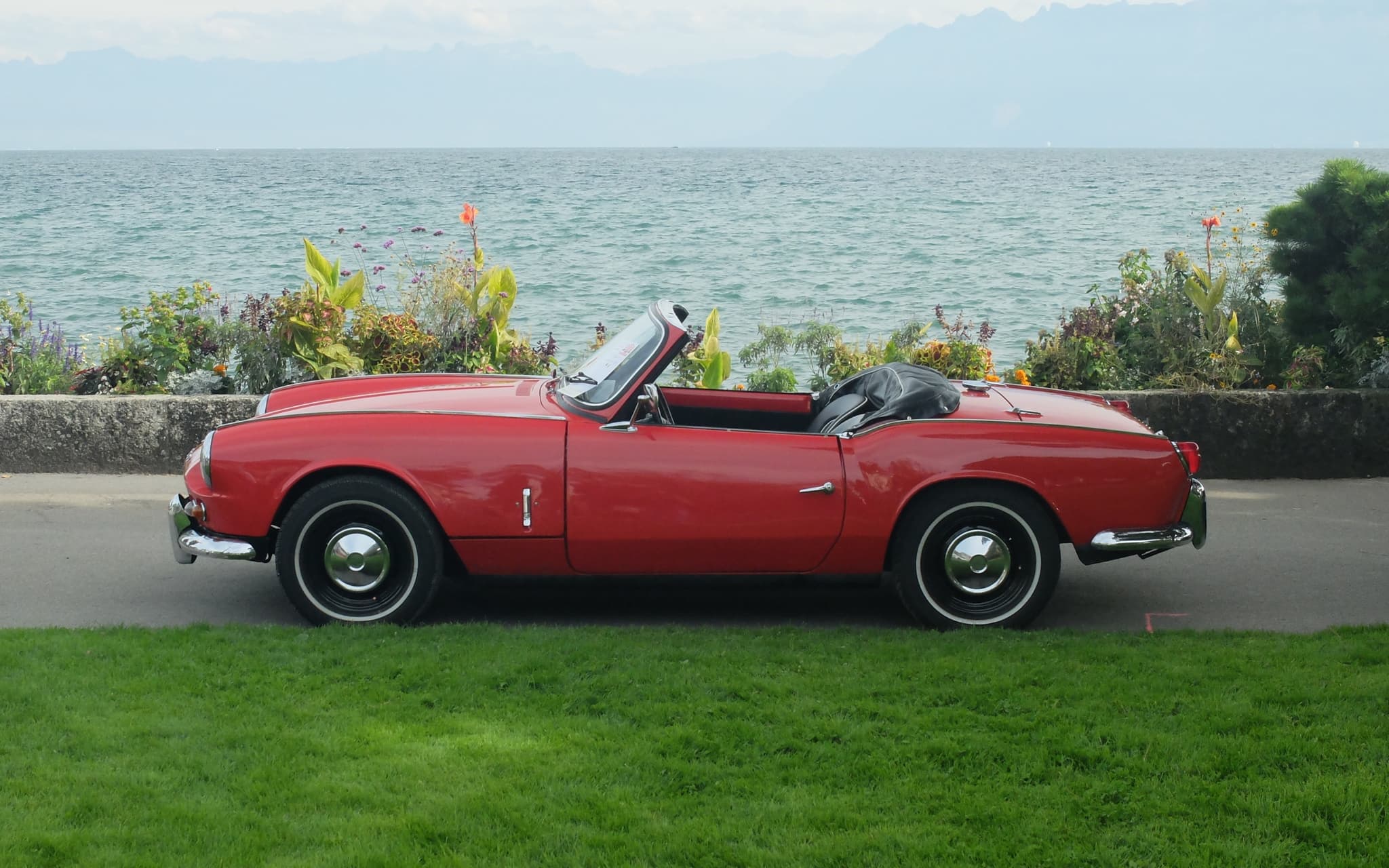
1 A red Spitfire 4 on the lakeside at Morges, Switzerland, in October 2021.
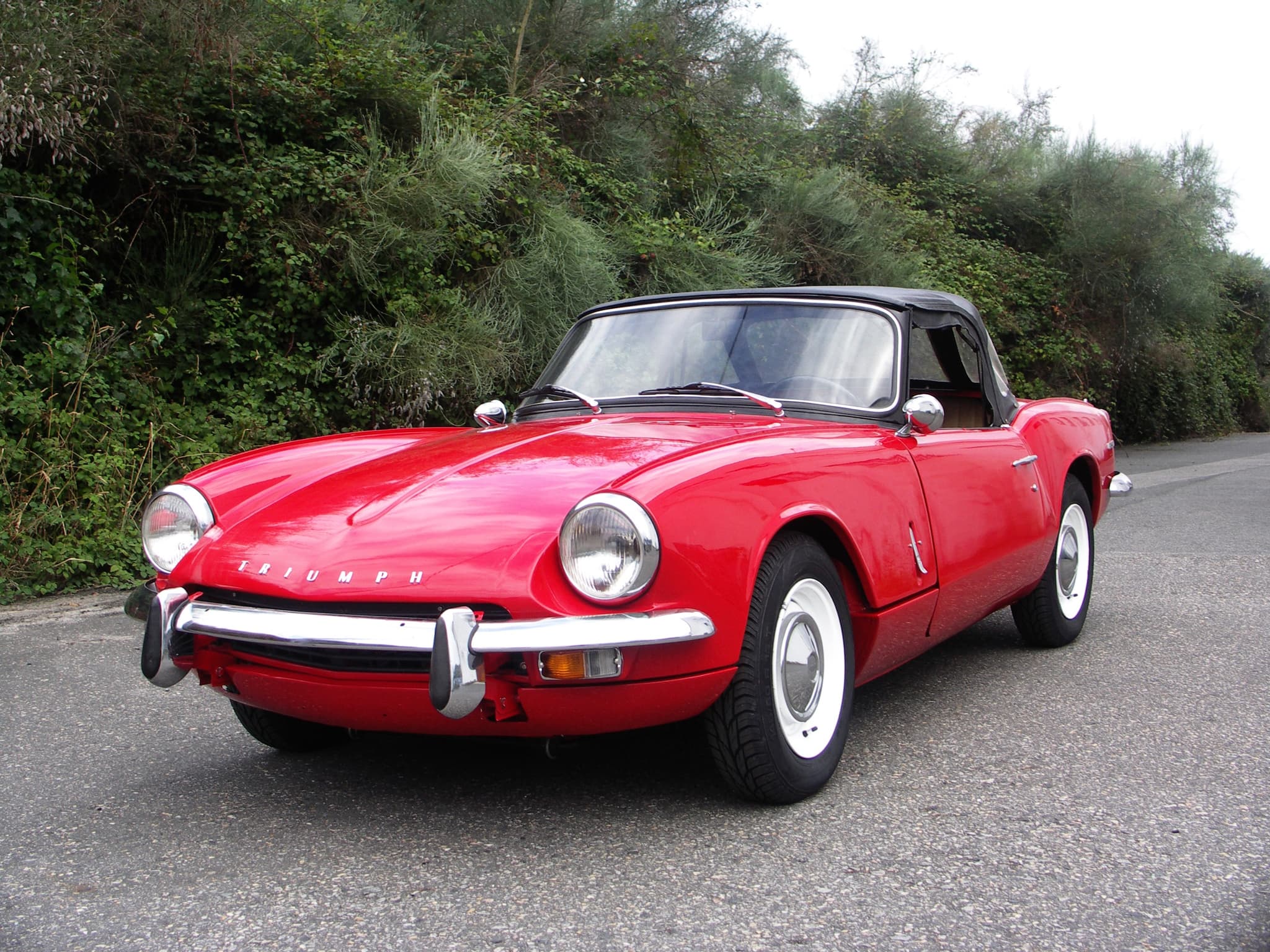
2 A red Mk III with its hood up, on a quiet lane in 2011.
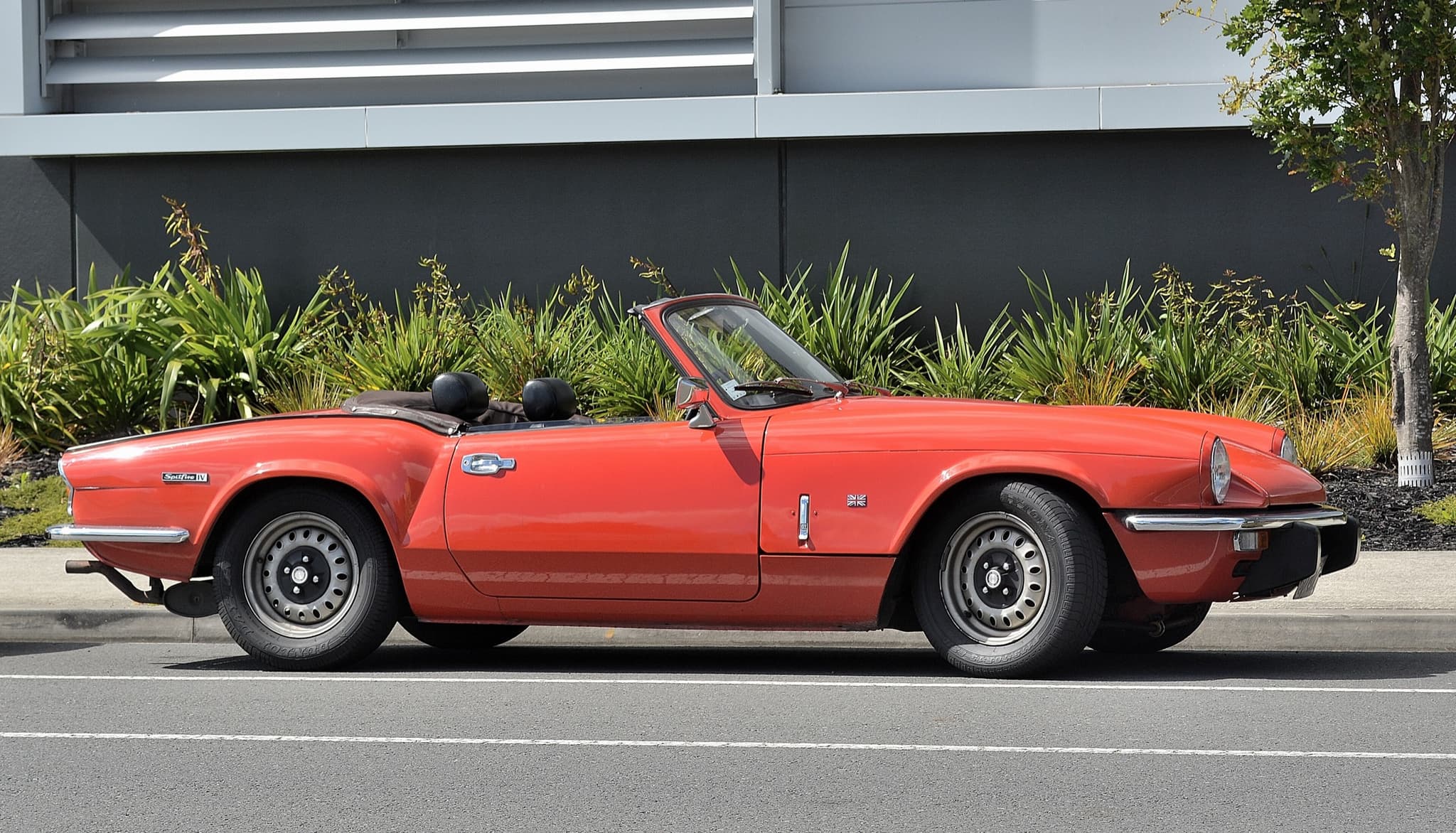
3 A red Mk IV at a kerb in New Zealand in December 2014.
Blues 2
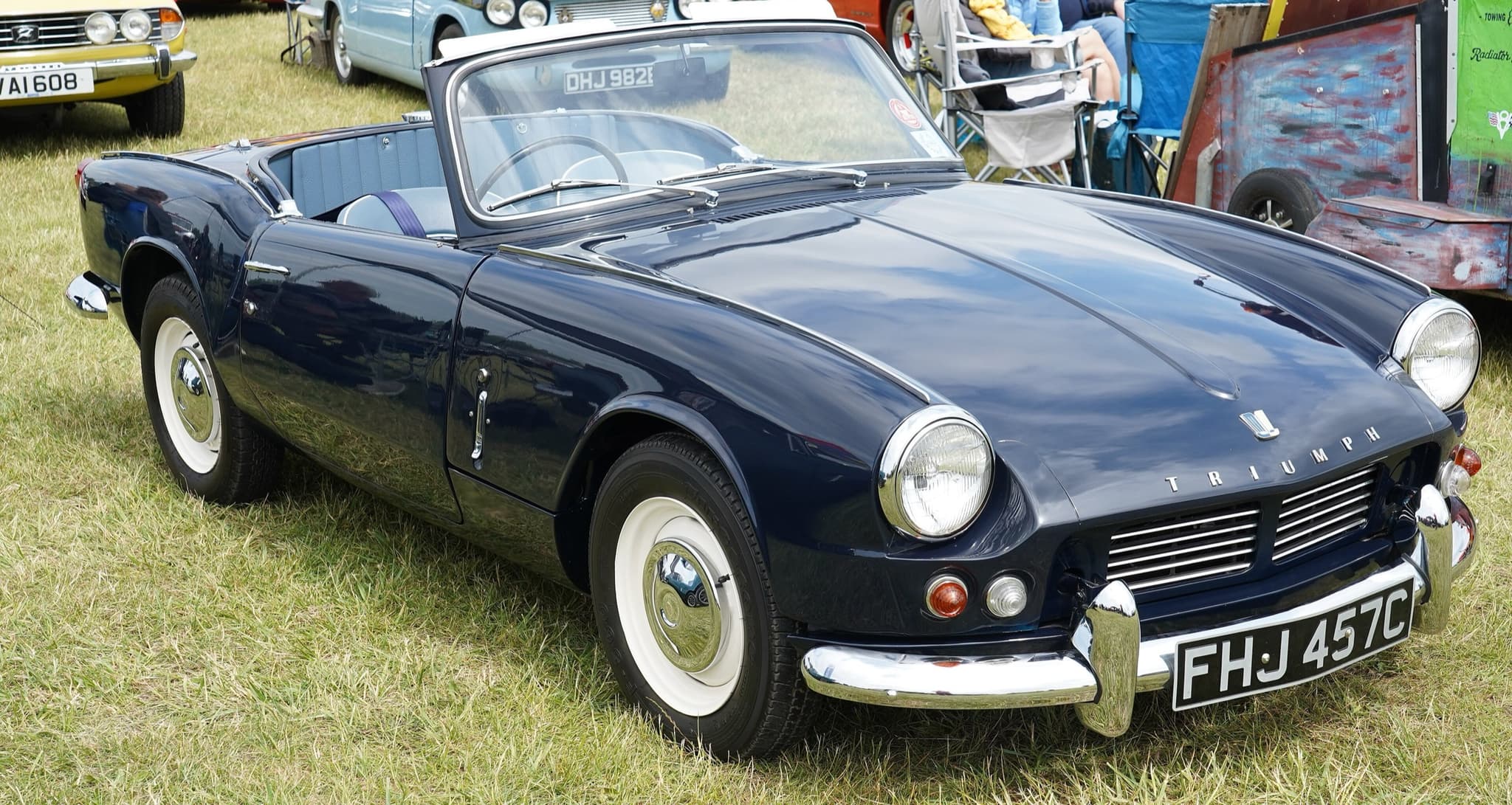
4 A dark blue Spitfire 4 Mk II with its hood folded, on a show field in June 2026.
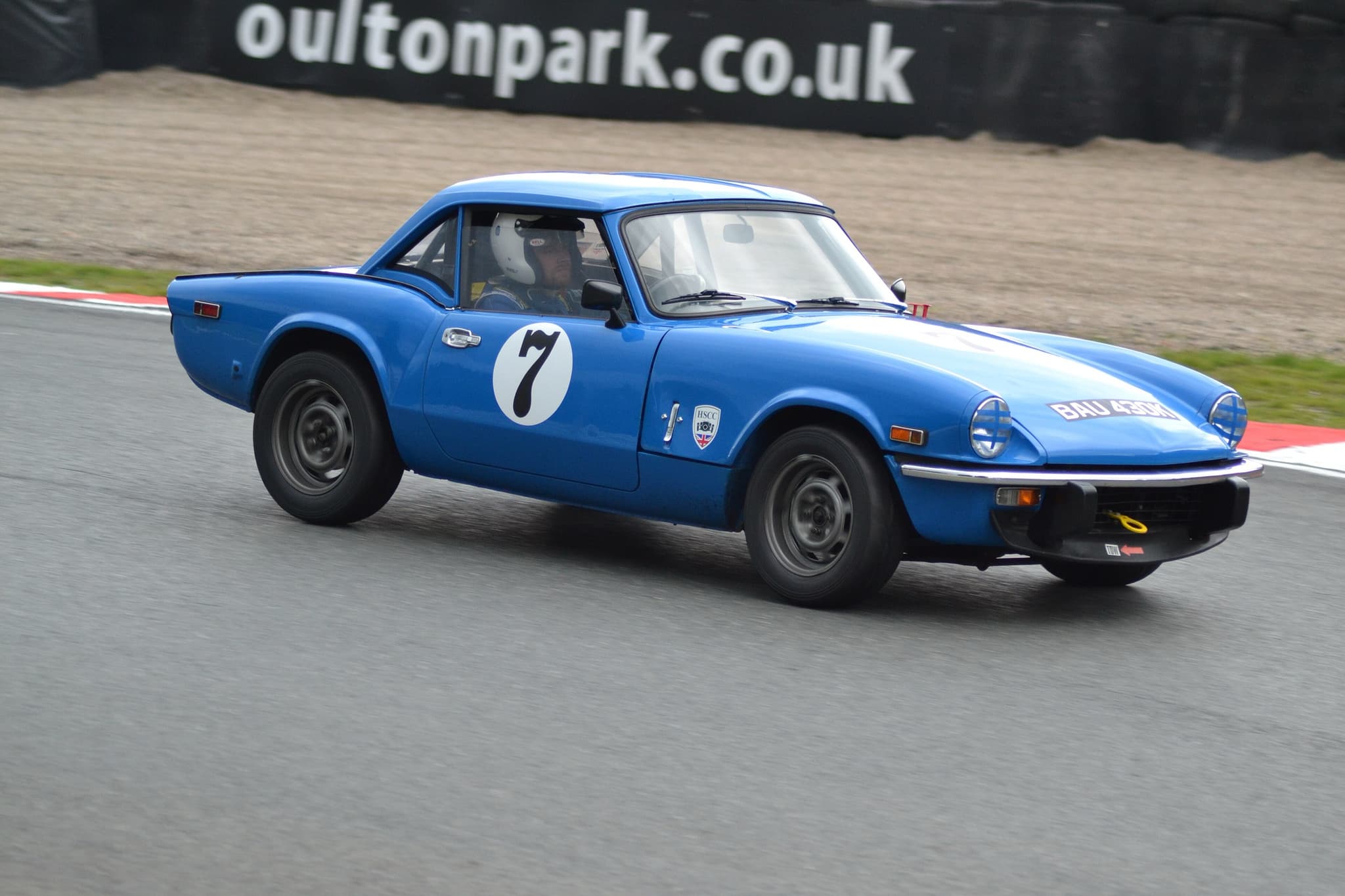
5 A blue club racer in the Mk IV body on the circuit at Oulton Park, Cheshire, in August 2014.
Greens 2
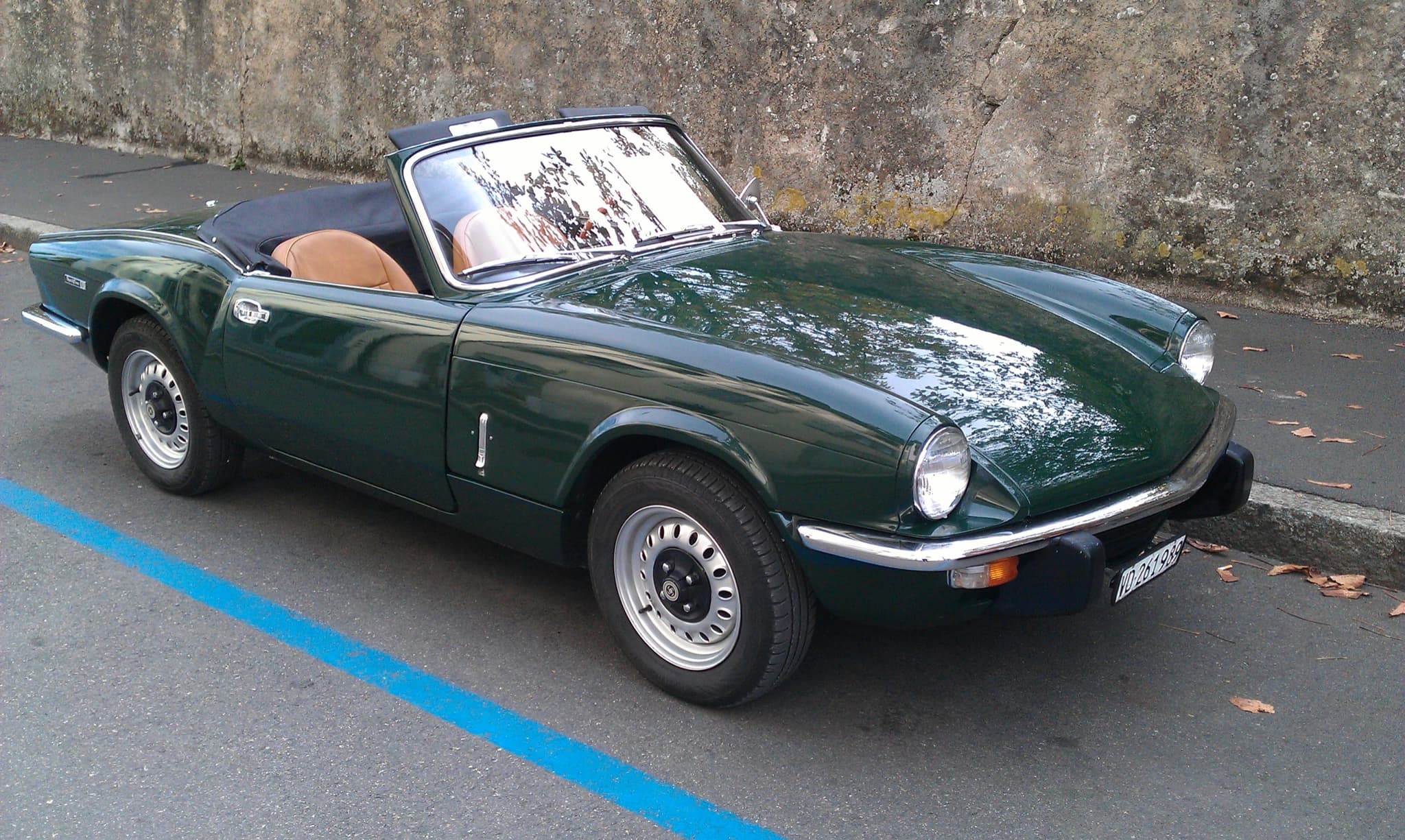
6 A dark green Mk IV by a stone wall in Morges, Switzerland, in October 2012.
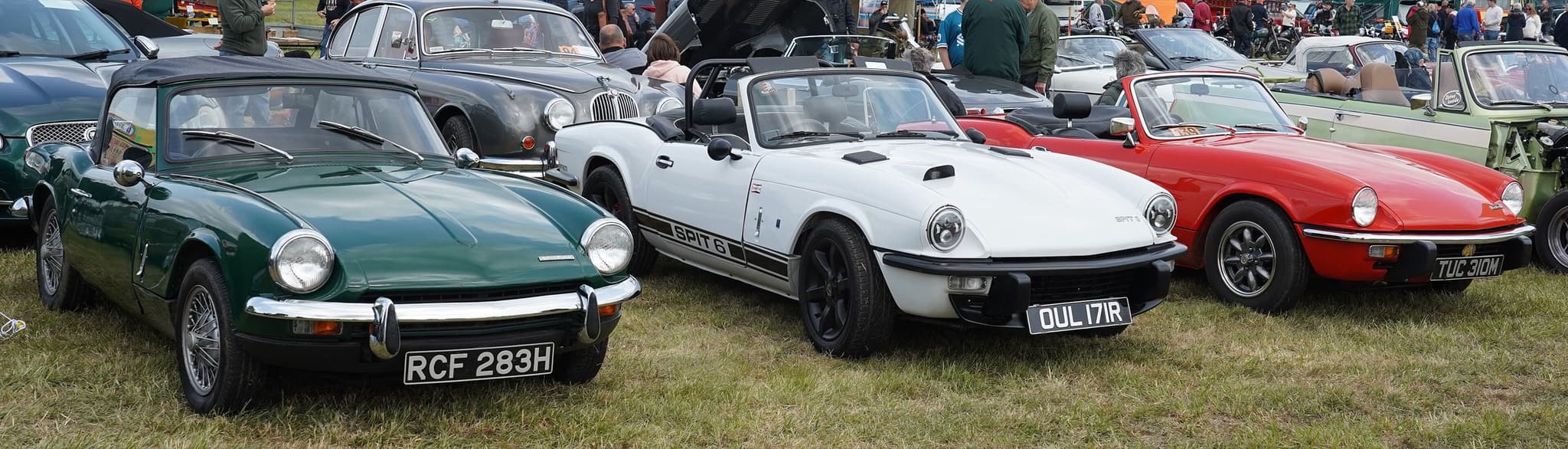
7 A dark green Mk III beside a white and a red Spitfire at the Aldham Old Time Rally, Essex, in June 2025.
Yellows 2
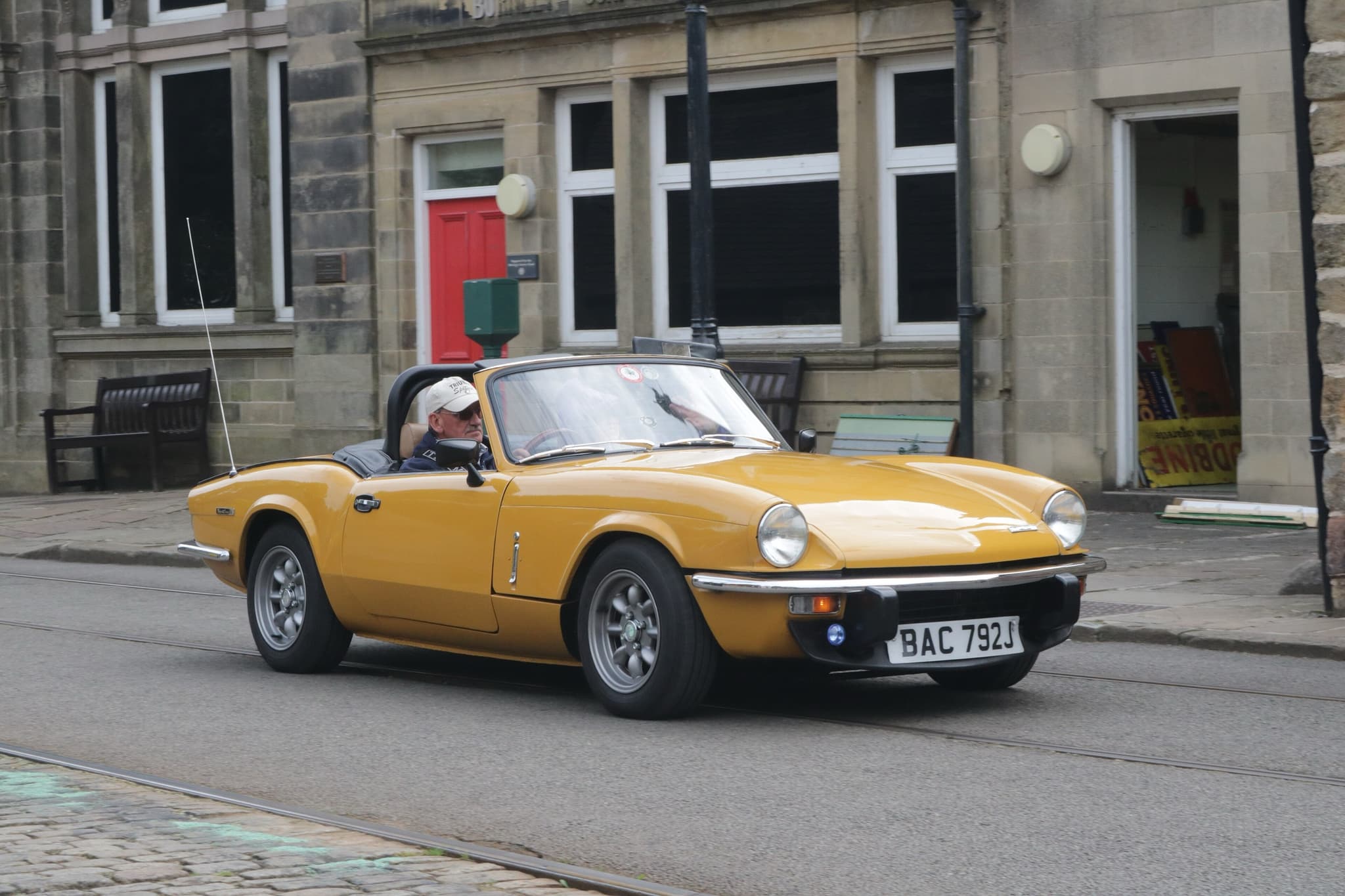
8 A yellow Spitfire in the Mk IV body, driven through the Crich Tramway Village, Derbyshire, in July 2019.
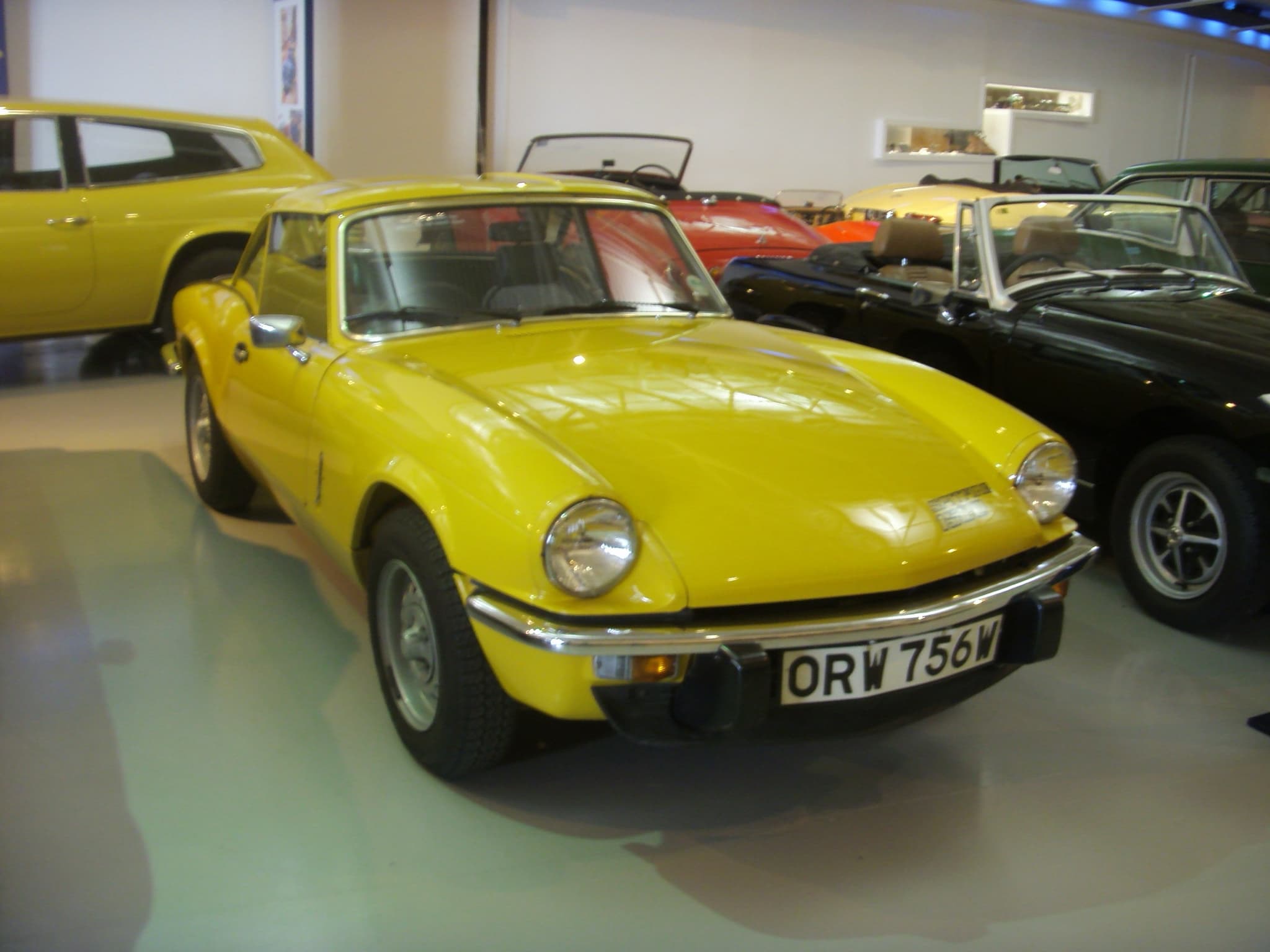
9 The last Spitfire of all, a 1500, at the Heritage Motor Centre, Gaydon, in July 2009; triumphspitfire.com gives its paint as Inca Yellow.
Whites 2
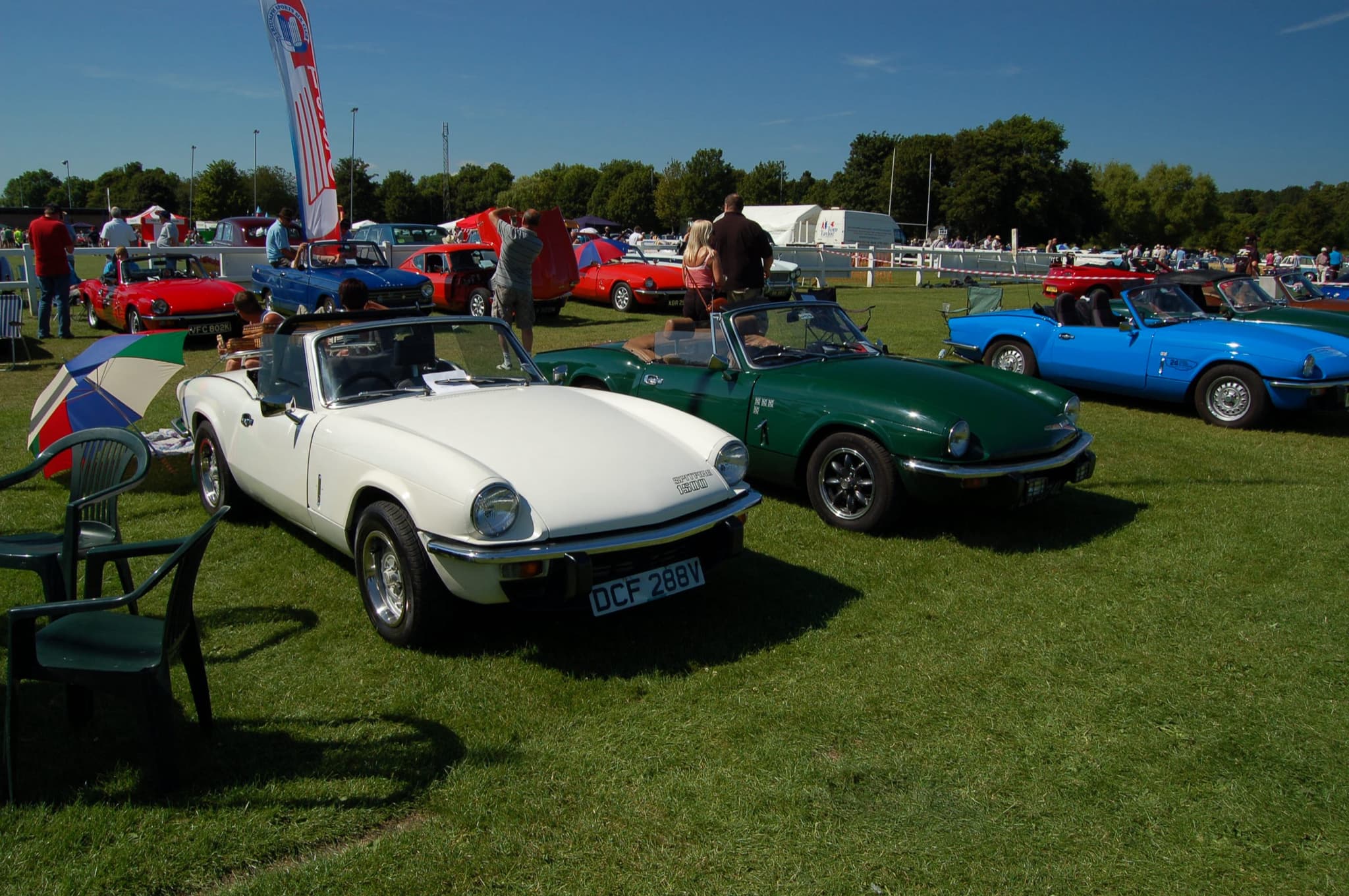
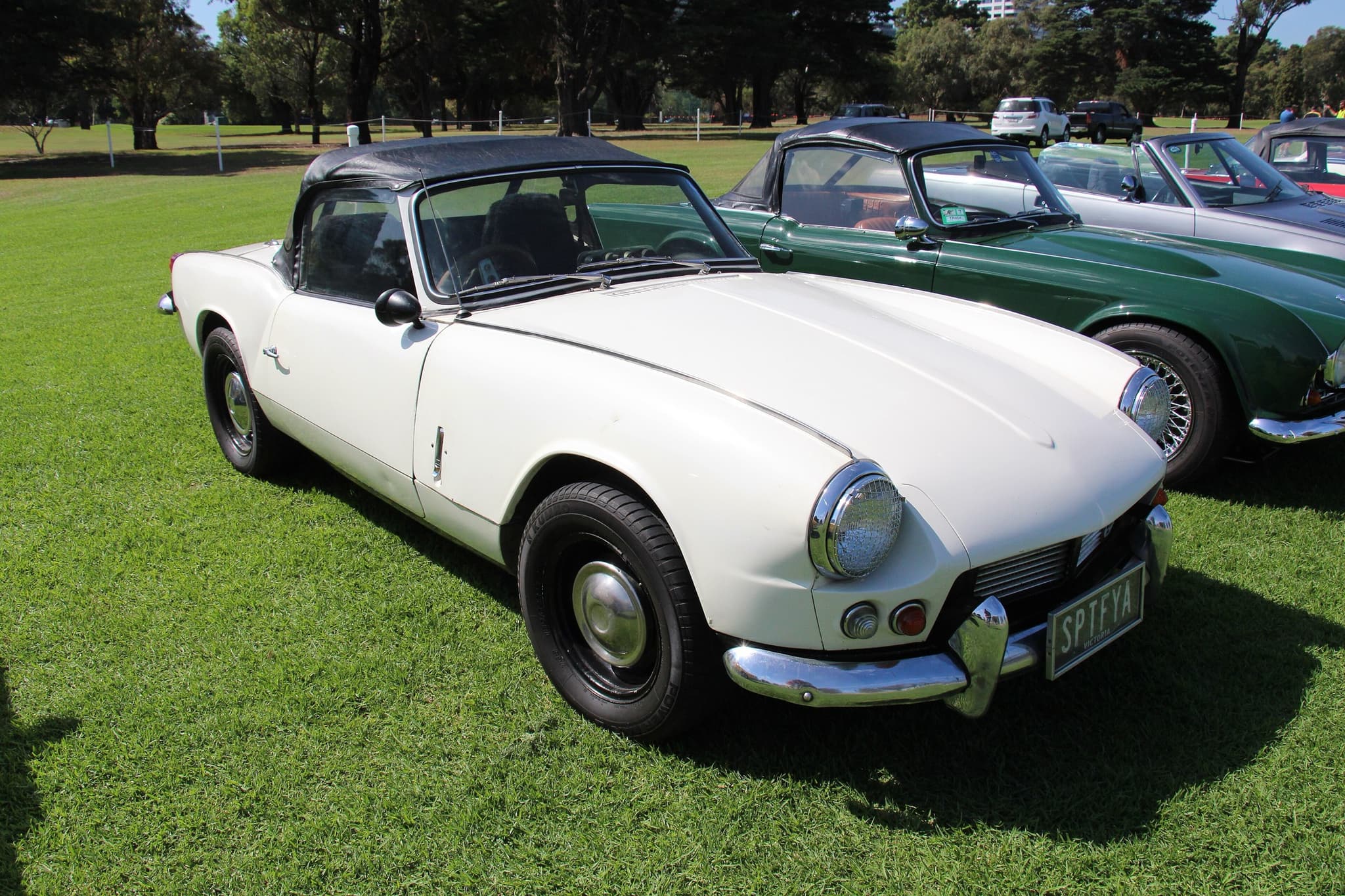
10 A white Spitfire 1500 in front of a green and a blue Spitfire at the Corbridge Classic Car Show, Northumberland, in July 2011.
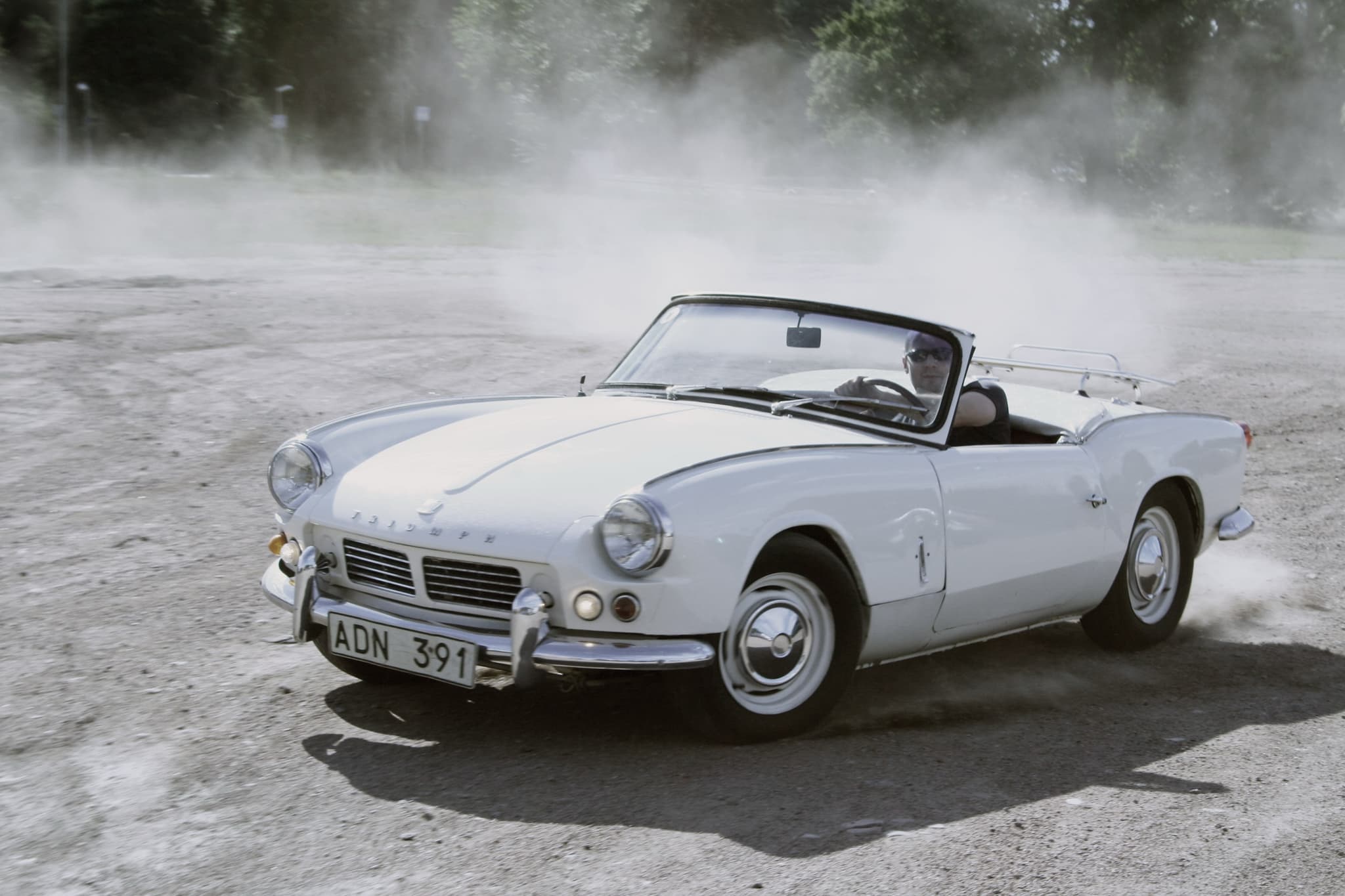
11 A white Spitfire 4 Mk II sliding on loose gravel, photographed in 2006 or earlier.
Picture credits (11)
- 1 Akela NDE, CC BY-SA 2.0 fr
- 2 Avaldia, CC BY-SA 3.0
- 3 GPS 56 from New Zealand, CC BY 2.0
- 4 kitmasterbloke, CC BY 4.0
- 5 Darren Garlick, CC0
- 6 Akela NDE, CC BY-SA 2.0 fr
- 7 kitmasterbloke, CC BY 2.0
- 8 Steven's Transport Photos, CC BY 2.0
- 9 Mark Brown from Hampton, New Brunswick, Canada, CC BY-SA 2.0
- 10 Draco2008, CC BY 2.0
- 11 jimmyroq, CC BY-SA 2.0
Sources
Sources are given as plain text; their addresses are on the sources page.
- Primarymade at the time, by the maker or by people who were there
- Referenceserious later work: clubs, specialists, magazines, books
- Uncheckedencyclopaedias and enthusiast sites: cited beside a good source, named in the sentence, or marked Unchecked
- Practical Classics, "Buyers Guide: Triumph Spitfire", May 2000, p. 84, "Where are the identifying marks?"; p. 82, model panel. Reference
- Triumph Spitfire Club (Netherlands), "Spitfire modellen", "Aankoop informatie", "Clubinfo", home, Aankoop informatie; Spitfire modellen. Reference
- Rimmer Bros, "Triumph Paint & Trim Identification Codes", the commission plate; colour groups; letter codes; BLVC; trim codes; Conifer Green. Reference
- triumphspitfire.com ("Spitfire & GT6 Magazine and Information Warehouse"), Reference pages (group): models and options; Mk I–1500 options-and-changes logs; engine numbers; 1979–80 VINs; what year is my car; final drive; general specification data; stock tyres; wheel alignment; lubrication; tuning; fuses; paint and trim codes; side stripes; decal and badge placements; wire wheels; head swaps; substitute parts; suppliers; new owner; pre-purchase checklist; spotters guide, pages modified 2023, paint and trim codes; decal and badge placements (plate photographs); paint and trim codes; Mk II options and changes; paint and trim codes; Spitfire 4 and 1500 options and changes; decal and badge placements. Unchecked
- Rimmer Bros, "Triumph Paint Chart", Spitfire table; Spitfire and GT6 tables. Reference
- British Leyland Motors Inc., Spitfire 1500 (sales brochure), USA, 1974 model year, SP741, 1973, p. USA-5, "Color Choices". Primary
- Triumph Sportscars (Australia; closed end of 2016), "Spitty Tips" 2, 3, 4, 5, 6, 8, 19, Spitty Tips 19. Reference
- British Leyland (France), Triumph Spitfire Mk4 (sales brochure), France, 11/1973, T.919, trim. Primary
- Bill Boddy ("W.B."), "Road test: The Triumph Spitfire Mk. IV", Motor Sport, Jan 1971, p. 59. Primary
- BL Cars / Jaguar Rover Triumph Ltd, Triumph Spitfire 1500 (sales brochure), UK, 12/1978, Publication No. 3254/D, "Coachwork". Primary
- Clive Richardson ("C.R."), "Road Impressions – The Triumph Spitfire 1500", Motor Sport, Mar 1975, p. 25. Primary
- Triumph Sports Six Club, Model pages: Spitfire 4/Mark II (model_ID=24), Mark III (23), Mark IV (25), 1500 (26), 1500 page. Reference
- British Motor Museum, "Spitfire 1500 (last of line), 1980", accession 1980-1-190, record and photograph. Primary
- triumphspitfire.com, "Did You Know?", modified 3 Aug 2023. Unchecked