Triumph Spitfire Mk2
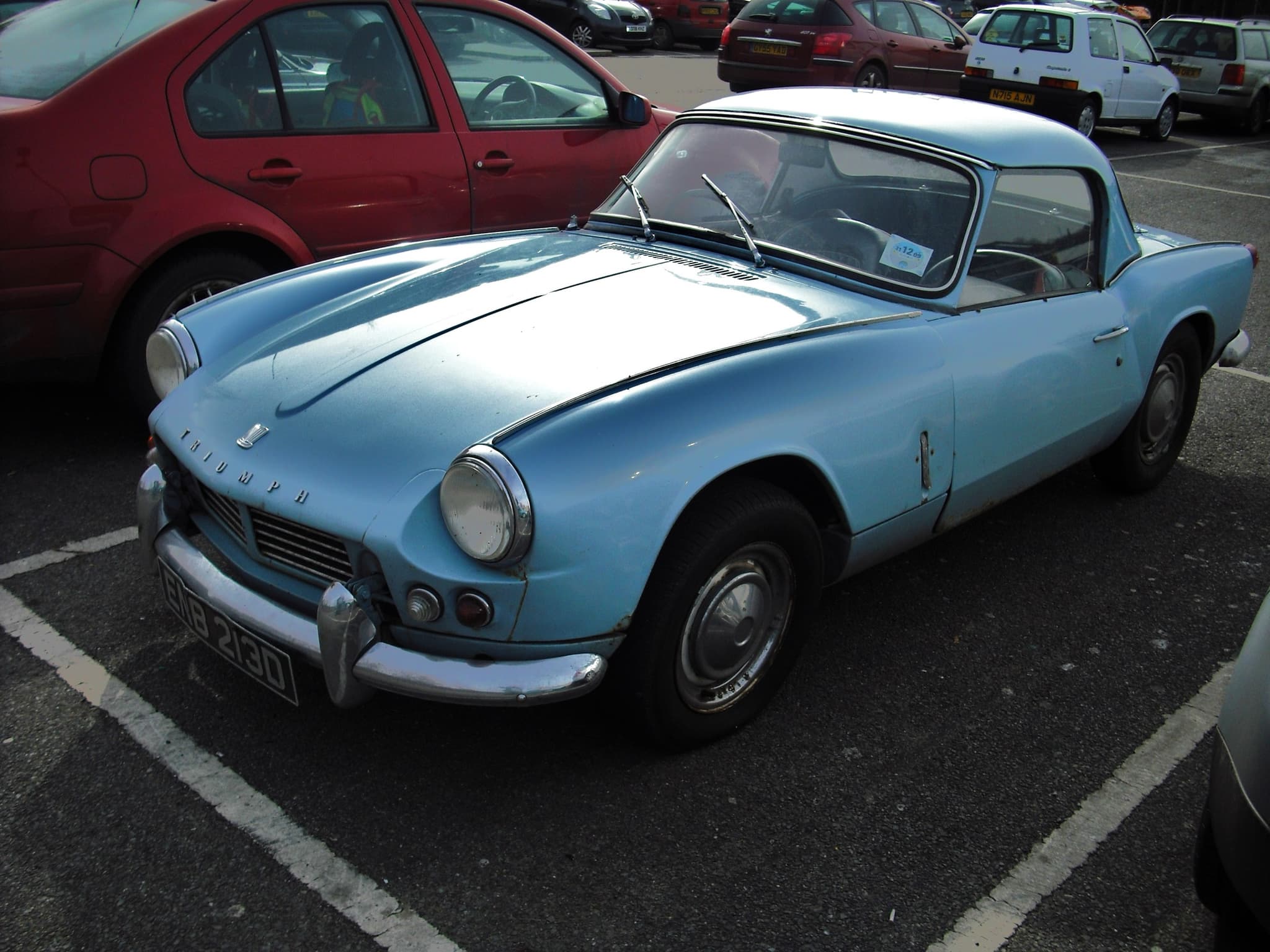
The second Spitfire, sold as the Spitfire 4 Mk II and built from December 1964 to January 1967: the first car's body, with more power, a lighter clutch, a better-trimmed cabin and a grille of horizontal bars. It is also written Mk2 or Mark 2.
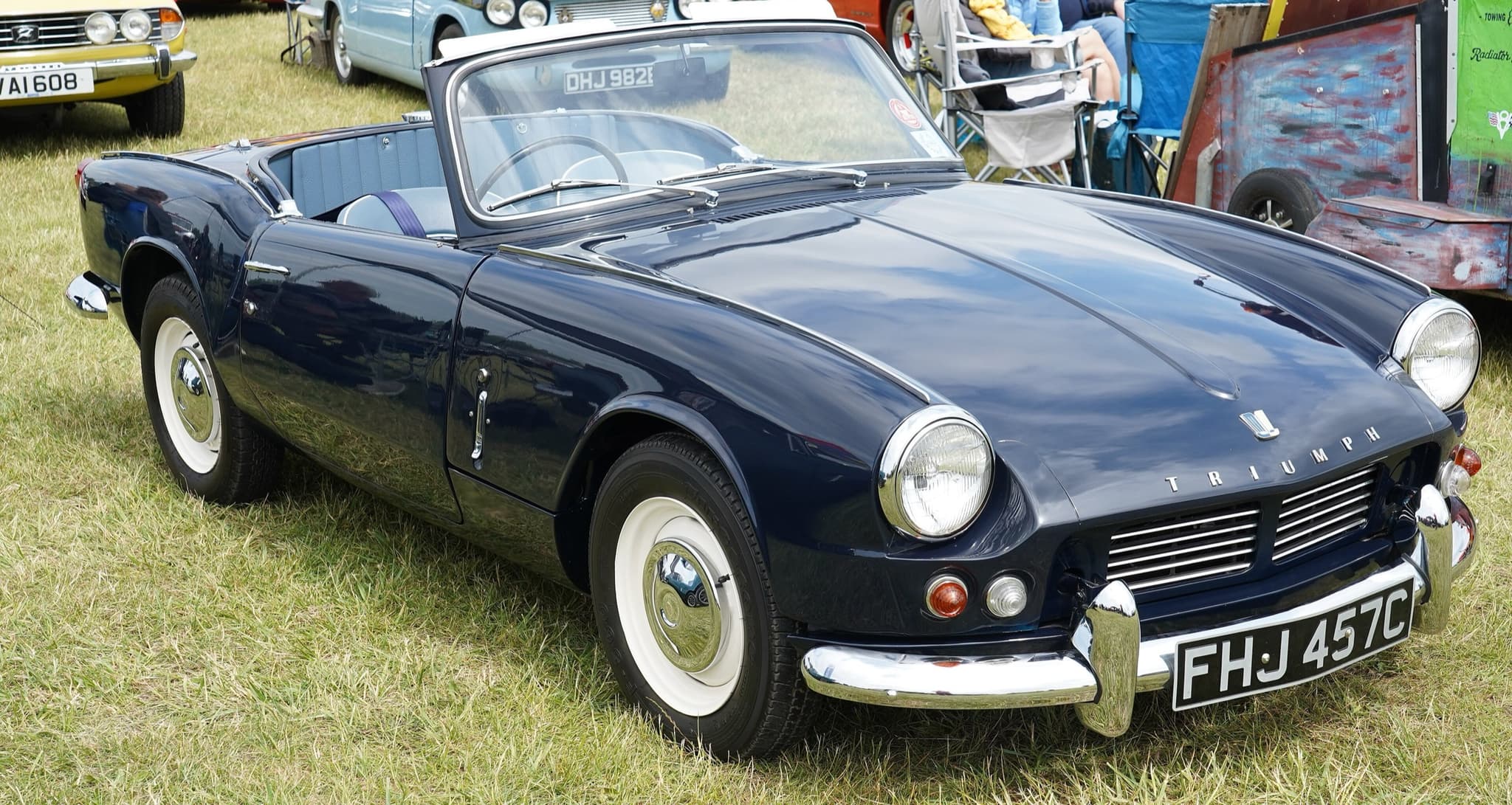
Canley began building the Spitfire 4 Mk II in December 1964, at commission number FC50001, and Standard-Triumph launched it in March 1965. In most things it was still the Spitfire 4: the body, the chassis and the size of the engine stayed the same, and the work went into the engine's breathing, the clutch and the cabin.source 1source 2source 3source 4source 5
What changed
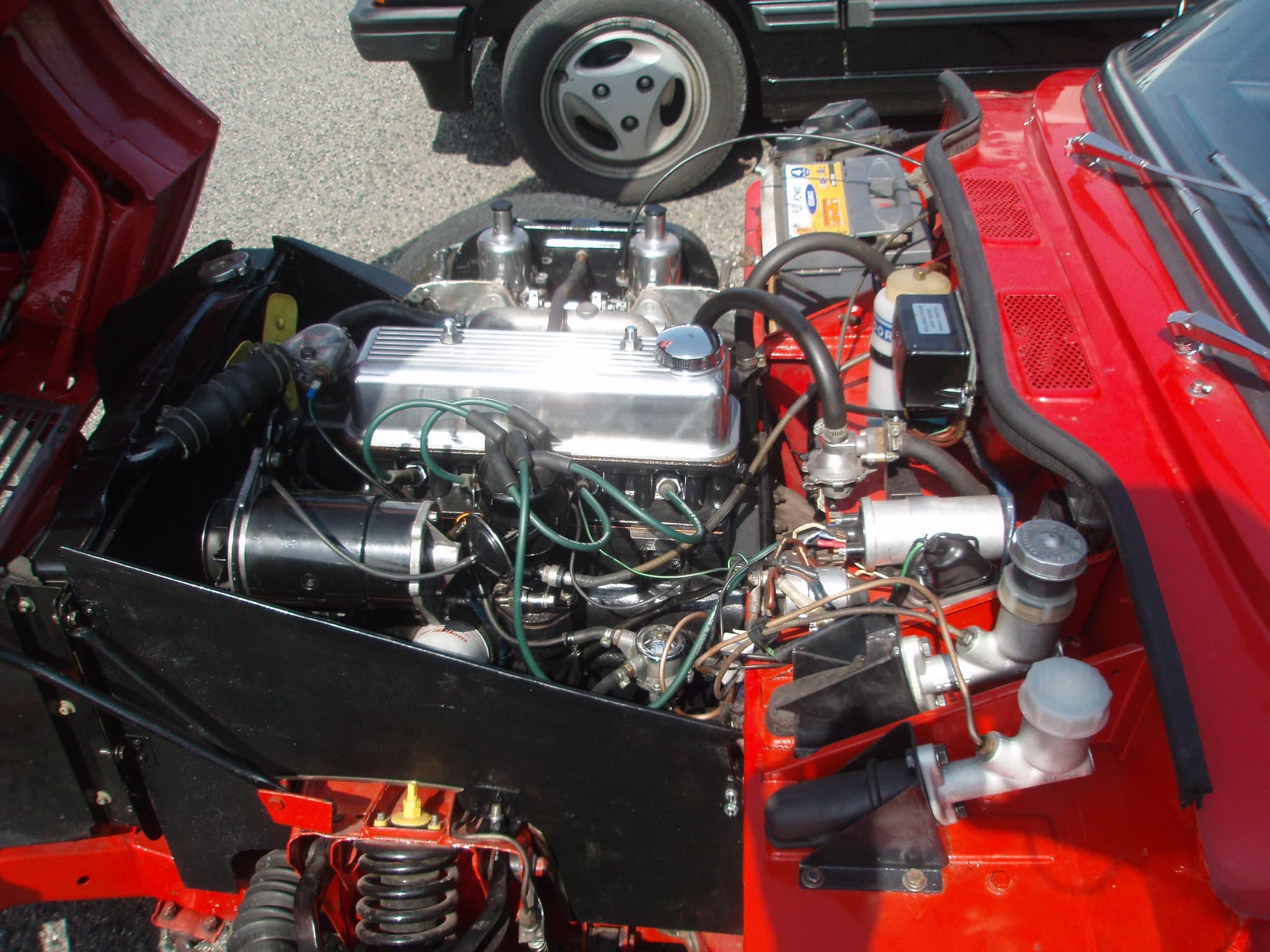
A new camshaft and a four-branch tubular exhaust manifold let the engine breathe better, and a water-heated inlet manifold warmed it up more quickly. The specification below gives the power it made. A no-loss cooling system came in, and a Borg & Beck clutch with a diaphragm spring took the place of the coil-spring type, lightening the pedal.
Standard-Triumph's Italian brochure of 1966 put the changes in one headline:
PIU' POTENZA SOTTO IL COFANO — PIU' LUSSO SOTTO IL TETTO
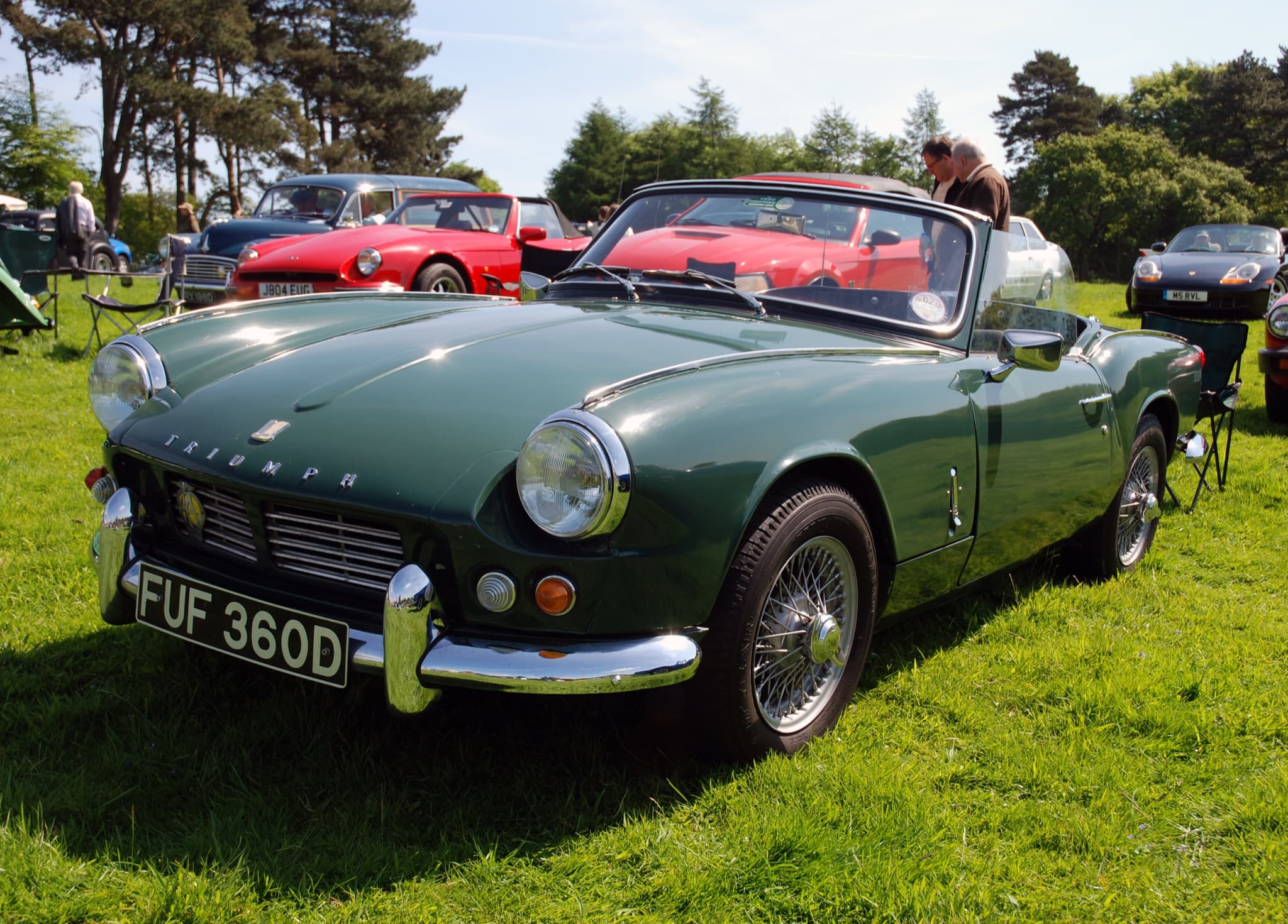
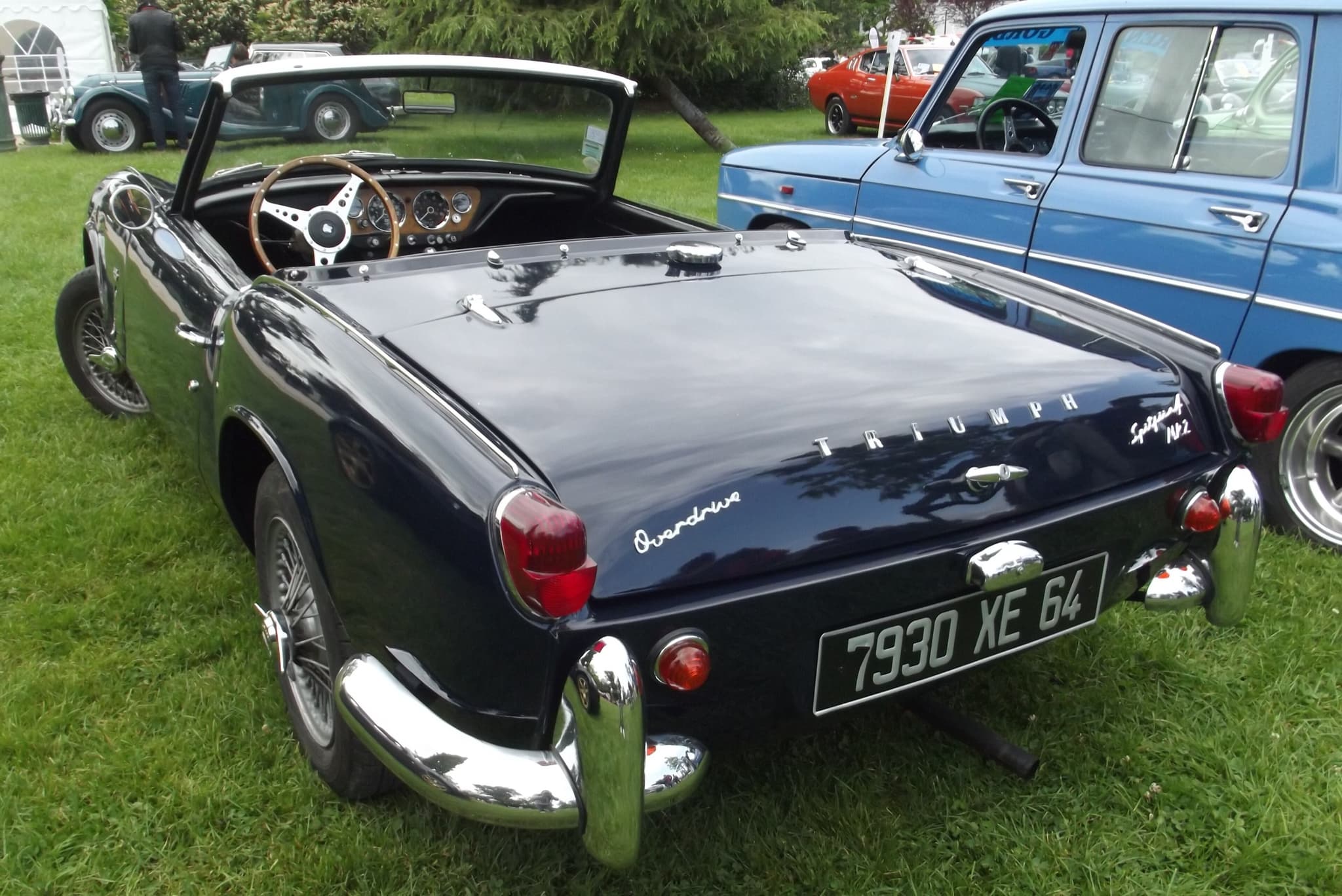
Translated, that is more power under the bonnet (hood), more luxury under the roof. The luxury was in the cabin. The seats had thicker padding and were covered in Ambla, a soft PVC; moulded carpets took the place of rubber mats; black vinyl trim covered metal that had been bare, on the fascia (dashboard) around the instruments, the parcel rail and the windscreen (windshield) surround; and the passenger's grab handle was padded. Outside, a new grille of horizontal bars and the Mark on the boot (trunk) lid were the signs.
The chassis, the swing-axle rear suspension, the brakes, the steering and the gearbox (transmission) stayed as they were, so first gear still had no synchromesh.source 2source 4source 5source 6source 7
How to spot a Mk II
Outside, the Mk II has the Spitfire 4's body and its low bumpers, so the checks are the details it changed, and the number.
The grille
Horizontal bars, in two halves.
The boot lid
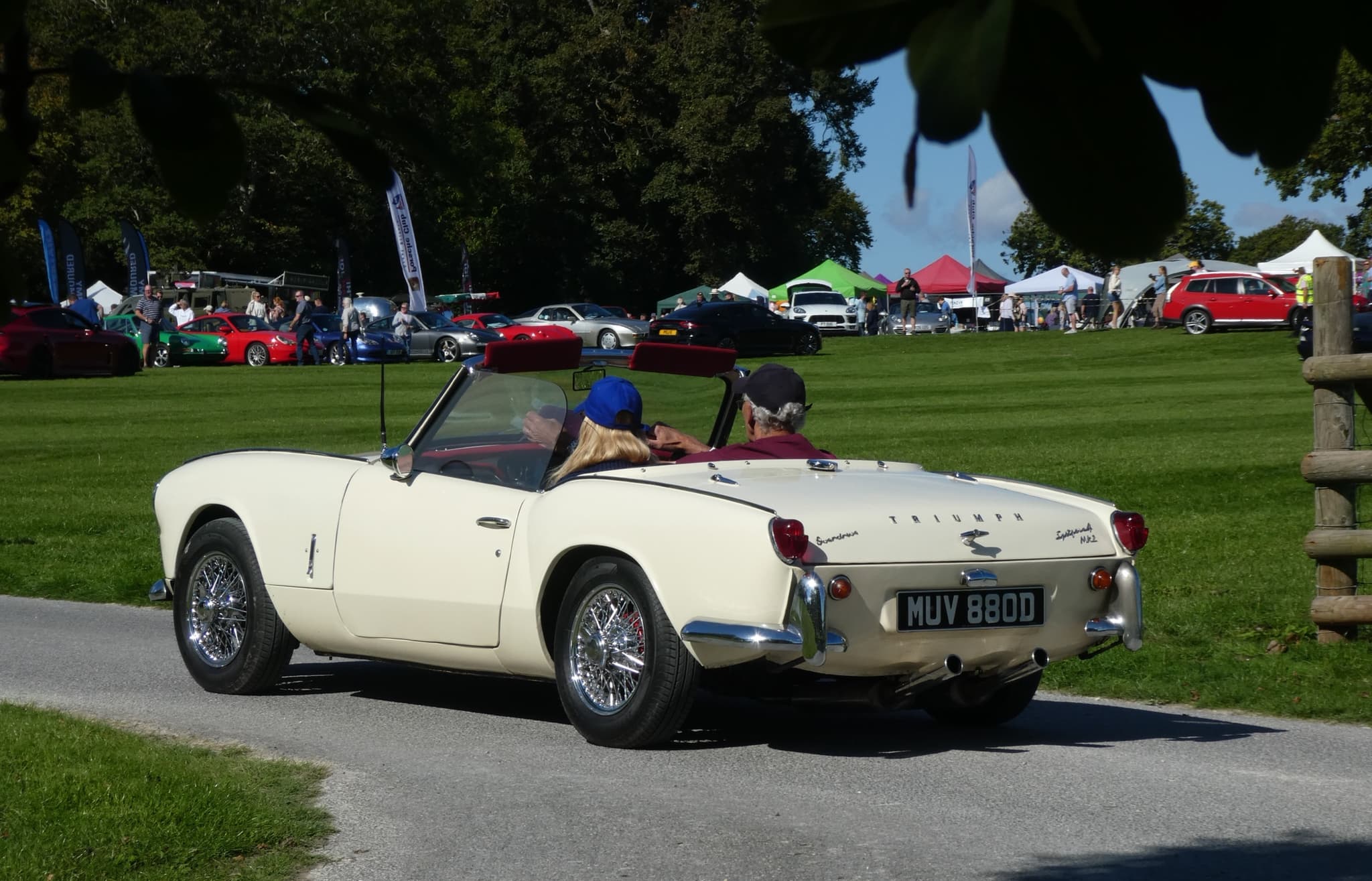
The Mark is lettered on it.
The cabin
Moulded carpets and thicker-padded seats, where the Spitfire 4 has rubber mats.
The number
A commission number from FC50001. The last Mk II is FC88904 in the Vintage Triumph Register's list and FC88912 in triumphspitfire.com's.
Production, price and options
Canley Classics, the Triumph Sports Six Club and Classic & Sports Car's A–Z agree on how many Mk IIs were built, and the production figures below give their count with the other sources that print it. Classic & Sports Car's buyer's guide of 2019 prints a figure one car lower, which looks like a slip. The commission numbers issued run well ahead of the cars counted, and the identification page sets the two side by side.
In South Africa the Mk II was announced in July 1966 and assembled from kits by Motor Assemblies of Durban until September 1967. Classic Car Africa gives the number built there, from the firm's records, and the number sold, from NAAMSA's figures; both are among the production figures below. In Australia it was assembled by Australian Motor Industries, as the earlier car had been.
No source read gives a UK price including purchase tax for the Mk II. How it compared with its rivals is on the history page. The Triumph Sports Six Club gives a single "cost when new" for the Spitfire 4 and the Mk II together.
Overdrive, wire wheels and the steel hardtop stayed on the options list. The Italian brochure describes the hardtop as bolted on, with a trimmed lining and a large curved rear window.source 1source 2source 5source 9source 3source 4source 10source 6
On the road
No source read reprints a full road test of the Mk II from its own day. Road & Track tested one in June 1965 and Autocar tested one too, but their figures reach us only through triumphspitfire.com's uncited table, and the factory's own through the Italian brochure; the specification below shows them all, each with its source, and they do not agree. The nearest a period writer comes is Mike Cotton, who in Motor Sport in June 1967 set the new Mk III's power against the Mk II's. The road tests page gathers every period test of the Spitfire.
In January 1967 the Mk III took its place, with a front bumper raised across the grille and a hood (soft top) that folded down on the car. The Mk II was the last Spitfire with the low bumpers and the detachable hood frame.source 11source 6source 7source 2source 5
Specification
Engine
Sources for Engine, Mk II
- Capacity
- Good sources agree.Engine prefix FC. Canley Classics, "Engine Number Identification Chart"source 12; Triumph Spitfire Club (Netherlands), "Spitfire modellen", "Aankoop informatie", "Clubinfo", homesource 13; Classic & Sports Car, A–Z of classics: Triumph Spitfire I, II, III, MkIV, 1500source 5
- Bore × stroke
- One good source.Standard-Triumph, Spitfire Mk. II (sales brochure), Italy, Ref. 352/666/IT-DUC, 1966source 6
- Compression ratio
- Several figures in print.Standard-Triumph, Spitfire Mk. II (sales brochure), Italy, Ref. 352/666/IT-DUC, 1966source 6; triumphspitfire.com ("Spitfire & GT6 Magazine and Information Warehouse"), Reference pages (group): models and options; Mk I–1500 options-and-changes logs; engine numbers; 1979–80 VINs; what year is my car; final drive; general specification data; stock tyres; wheel alignment; lubrication; tuning; fuses; paint and trim codes; side stripes; decal and badge placements; wire wheels; head swaps; substitute parts; suppliers; new owner; pre-purchase checklist; spotters guide, pages modified 2023source 8
- Carburettors
- One good source.Standard-Triumph, Spitfire Mk. II (sales brochure), Italy, Ref. 352/666/IT-DUC, 1966source 6
| Capacity | 1,147 cc |
|---|---|
| Bore × stroke | 69.3 × 76 mm |
| Compression ratio | 9:1 Compression ratio, Mk II Several figures in print.
|
| Carburettors | twin SU |
Performance
Sources for Performance, Mk II
- Power
- Good sources agree.At 6,000 rpm; rating not stated. Standard-Triumph, Spitfire Mk. II (sales brochure), Italy, Ref. 352/666/IT-DUC, 1966source 6; Triumph Sports Six Club, Model pages: Spitfire 4/Mark II (model_ID=24), Mark III (23), Mark IV (25), 1500 (26)source 2; Classic & Sports Car, A–Z of classics: Triumph Spitfire I, II, III, MkIV, 1500source 5; Mike Cotton ("M.L.C."), "Triumph Spitfire to Monaco", Motor Sport, Jun 1967source 7; Classic Car Africa, "The Wallflower"source 4
- Torque
- Several figures in print.Triumph Sports Six Club, Model pages: Spitfire 4/Mark II (model_ID=24), Mark III (23), Mark IV (25), 1500 (26)source 2; Standard-Triumph, Spitfire Mk. II (sales brochure), Italy, Ref. 352/666/IT-DUC, 1966source 6; Wikipedia (DE), "Triumph Spitfire", 2026source 14
- Top speed
- Good sources disagree.Standard-Triumph, Spitfire Mk. II (sales brochure), Italy, Ref. 352/666/IT-DUC, 1966source 6; Classic Car Africa, "The Wallflower"source 4; Triumph Sports Six Club, Model pages: Spitfire 4/Mark II (model_ID=24), Mark III (23), Mark IV (25), 1500 (26)source 2; Wikipedia (EN), "Triumph Spitfire", 2026source 15; Malcolm McKay, "Triumph Spitfire buyer's guide: what to pay and what to look for", Classic & Sports Car, 10 May 2019source 9; triumphspitfire.com, "Top Speed and Track Test Results", 2023source 11
- 0–60 mph
- Several figures in print.Standard-Triumph, Spitfire Mk. II (sales brochure), Italy, Ref. 352/666/IT-DUC, 1966source 6; triumphspitfire.com, "Top Speed and Track Test Results", 2023source 11; Wikipedia (EN), "Triumph Spitfire", 2026source 15; Malcolm McKay, "Triumph Spitfire buyer's guide: what to pay and what to look for", Classic & Sports Car, 10 May 2019source 9
- Standing start
- One good source.Standing ¼ mile. Standard-Triumph, Spitfire Mk. II (sales brochure), Italy, Ref. 352/666/IT-DUC, 1966source 6
| Power | 67 bhp |
|---|---|
| Torque | 67 lb ft Torque, Mk II Several figures in print.
|
| Top speed | 92 mph Top speed, Mk II Good sources disagree.
|
| 0–60 mph | 15.5 s 0–60 mph, Mk II Several figures in print.
|
| Standing start | 19.5 s |
Running gear
Sources for Running gear, Mk II
- Gears
- Good sources agree.4-speed, synchromesh on 2nd–4th. Standard-Triumph, Spitfire Mk. II (sales brochure), Italy, Ref. 352/666/IT-DUC, 1966source 6; Mike Cotton ("M.L.C."), "Triumph Spitfire to Monaco", Motor Sport, Jun 1967source 7
- Overdrive
- One good source.Triumph Sports Six Club, Model pages: Spitfire 4/Mark II (model_ID=24), Mark III (23), Mark IV (25), 1500 (26)source 2; triumphspitfire.com ("Spitfire & GT6 Magazine and Information Warehouse"), Reference pages (group): models and options; Mk I–1500 options-and-changes logs; engine numbers; 1979–80 VINs; what year is my car; final drive; general specification data; stock tyres; wheel alignment; lubrication; tuning; fuses; paint and trim codes; side stripes; decal and badge placements; wire wheels; head swaps; substitute parts; suppliers; new owner; pre-purchase checklist; spotters guide, pages modified 2023source 8
- Front brakes
- Several figures in print.Standard-Triumph, Spitfire Mk. II (sales brochure), Italy, Ref. 352/666/IT-DUC, 1966source 6; Triumph Sportscars (Australia; closed end of 2016), "Spitty Tips" 2, 3, 4, 5, 6, 8, 19source 10
- Rear brakes
- Several figures in print.Standard-Triumph, Spitfire Mk. II (sales brochure), Italy, Ref. 352/666/IT-DUC, 1966source 6; Triumph Sportscars (Australia; closed end of 2016), "Spitty Tips" 2, 3, 4, 5, 6, 8, 19source 10
- Tyres
- One good source.Standard-Triumph, Spitfire Mk. II (sales brochure), Italy, Ref. 352/666/IT-DUC, 1966source 6; triumphspitfire.com ("Spitfire & GT6 Magazine and Information Warehouse"), Reference pages (group): models and options; Mk I–1500 options-and-changes logs; engine numbers; 1979–80 VINs; what year is my car; final drive; general specification data; stock tyres; wheel alignment; lubrication; tuning; fuses; paint and trim codes; side stripes; decal and badge placements; wire wheels; head swaps; substitute parts; suppliers; new owner; pre-purchase checklist; spotters guide, pages modified 2023source 8
- Wheels
- Several figures in print.Triumph Sportscars (Australia; closed end of 2016), "Spitty Tips" 2, 3, 4, 5, 6, 8, 19source 10; triumphspitfire.com ("Spitfire & GT6 Magazine and Information Warehouse"), Reference pages (group): models and options; Mk I–1500 options-and-changes logs; engine numbers; 1979–80 VINs; what year is my car; final drive; general specification data; stock tyres; wheel alignment; lubrication; tuning; fuses; paint and trim codes; side stripes; decal and badge placements; wire wheels; head swaps; substitute parts; suppliers; new owner; pre-purchase checklist; spotters guide, pages modified 2023source 8
- Clutch
- Several figures in print.Standard-Triumph, Spitfire Mk. II (sales brochure), Italy, Ref. 352/666/IT-DUC, 1966source 6; Classic Car Africa, "The Wallflower"source 4
| Gears | 4 |
|---|---|
| Overdrive | Laycock, optional |
| Front brakes | 9 in discs Front brakes, Mk II Several figures in print. |
| Rear brakes | 7 × 1¼ in drums Rear brakes, Mk II Several figures in print. |
| Tyres | 5.20 × 13 in |
| Wheels | 13 × 3½ in Wheels, Mk II Several figures in print.
|
| Clutch | single dry plate, hydraulic, diaphragm spring, 161 mm Clutch, Mk II Several figures in print. |
Dimensions and weight
Sources for Dimensions and weight, Mk II
- Length
- One good source.Spitfire 4 / Mk II. Triumph Sports Six Club, Model pages: Spitfire 4/Mark II (model_ID=24), Mark III (23), Mark IV (25), 1500 (26)source 2
- Width
- One good source.Spitfire 4 / Mk II. Triumph Sports Six Club, Model pages: Spitfire 4/Mark II (model_ID=24), Mark III (23), Mark IV (25), 1500 (26)source 2
- Height
- One good source.Spitfire 4 / Mk II. Triumph Sports Six Club, Model pages: Spitfire 4/Mark II (model_ID=24), Mark III (23), Mark IV (25), 1500 (26)source 2
- Kerb weight
- Several figures in print.Standard-Triumph, Spitfire Mk. II (sales brochure), Italy, Ref. 352/666/IT-DUC, 1966source 6; Triumph Sports Six Club, Model pages: Spitfire 4/Mark II (model_ID=24), Mark III (23), Mark IV (25), 1500 (26)source 2; Wikipedia (DE), "Triumph Spitfire", 2026source 14
- Wheelbase
- One good source.83 in. Triumph Sports Six Club, Model pages: Spitfire 4/Mark II (model_ID=24), Mark III (23), Mark IV (25), 1500 (26)source 2
- Ground clearance
- One good source.Laden. Standard-Triumph, Spitfire Mk. II (sales brochure), Italy, Ref. 352/666/IT-DUC, 1966source 6
- Fuel tank
- Several figures in print.Standard-Triumph, Spitfire Mk. II (sales brochure), Italy, Ref. 352/666/IT-DUC, 1966source 6; triumphspitfire.com ("Spitfire & GT6 Magazine and Information Warehouse"), Reference pages (group): models and options; Mk I–1500 options-and-changes logs; engine numbers; 1979–80 VINs; what year is my car; final drive; general specification data; stock tyres; wheel alignment; lubrication; tuning; fuses; paint and trim codes; side stripes; decal and badge placements; wire wheels; head swaps; substitute parts; suppliers; new owner; pre-purchase checklist; spotters guide, pages modified 2023source 8
- Dry weight
- One good source.Standard-Triumph, Spitfire Mk. II (sales brochure), Italy, Ref. 352/666/IT-DUC, 1966source 6
| Length | 3,683 mm |
|---|---|
| Width | 1,448 mm |
| Height | 1,207 mm |
| Kerb weight | 735 kg Kerb weight, Mk II Several figures in print.
|
| Wheelbase | 2,108 mm |
| Ground clearance | 125 mm |
| Fuel tank | 37.6 L Fuel tank, Mk II Several figures in print.
|
| Dry weight | 700 kg |
Production
Production: how far the sources agree
- 37,409, Spitfire 4 Mk II, Dec 1964–Jan 1967
- Good sources agree.
- 257, of which built in South Africa (Motor Assemblies)
- One good source.
- 265, of which sold in South Africa (NAAMSA)
- One good source.
37,409Spitfire 4 Mk II, Dec 1964–Jan 1967
Canley Classics, "Production Figures"source 1; Triumph Sports Six Club, Model pages: Spitfire 4/Mark II (model_ID=24), Mark III (23), Mark IV (25), 1500 (26)source 2; Classic & Sports Car, A–Z of classics: Triumph Spitfire I, II, III, MkIV, 1500source 5; Wikipedia (EN), "Triumph Spitfire", 2026source 15; Triumph Spitfire Club (Netherlands), "Spitfire modellen", "Aankoop informatie", "Clubinfo", homesource 13; triumphspitfire.com ("Spitfire & GT6 Magazine and Information Warehouse"), Reference pages (group): models and options; Mk I–1500 options-and-changes logs; engine numbers; 1979–80 VINs; what year is my car; final drive; general specification data; stock tyres; wheel alignment; lubrication; tuning; fuses; paint and trim codes; side stripes; decal and badge placements; wire wheels; head swaps; substitute parts; suppliers; new owner; pre-purchase checklist; spotters guide, pages modified 2023source 8
257of which built in South Africa (Motor Assemblies)
Classic Car Africa, "The Wallflower"source 4
265of which sold in South Africa (NAAMSA)
Classic Car Africa, "The Wallflower"source 4
Sources
Sources are given as plain text; their addresses are on the sources page.
- Primarymade at the time, by the maker or by people who were there
- Referenceserious later work: clubs, specialists, magazines, books
- Uncheckedencyclopaedias and enthusiast sites: cited beside a good source, named in the sentence, or marked Unchecked
- Canley Classics, "Production Figures", row "Spitfire 4 MK II", December 1964–January 1967; row "Spitfire 4 MK II"; Production Figures table, row "Spitfire 4 MK II". Reference
- Triumph Sports Six Club, Model pages: Spitfire 4/Mark II (model_ID=24), Mark III (23), Mark IV (25), 1500 (26), Spitfire 4/Mark II page; Spitfire 4/Mark II page, "Quantity" and "Cost when new"; Mark III page; model_ID=24 (Spitfire 4/Mark II page); model_ID=24, "Dimensions"; model_ID=24, "Weight"; model_ID=24, "Quantity: 45,753/37,409". Reference
- Vintage Triumph Register, "Spitfire" (production history, production dates and numbers, buyer's guide tabs), production dates and numbers; production dates and numbers; Mk II emblem. Reference
- Classic Car Africa, "The Wallflower", Mk II section. Reference
- Classic & Sports Car, A–Z of classics: Triumph Spitfire I, II, III, MkIV, 1500, Spitfire II; Spitfire III; A–Z entry. Reference
- Standard-Triumph, Spitfire Mk. II (sales brochure), Italy, Ref. 352/666/IT-DUC, 1966, cover heading; "Motore"; interior; interior; hardtop; "Prestazioni"; "Accelerazione"; 1966 brochure, "Motore"; 1966 brochure, "Motore" ("Rapporto di compressione 9:1"); 1966 brochure, "Prestazioni"; 1966 brochure, "Velocità massima"; 1966 brochure, text; 1966 brochure, "Accelerazione"; 1966 brochure; 1966 brochure, "Freni"; 1966 brochure, "Ruote"; 1966 brochure, "Peso"; 1966 brochure, "Dimensioni"; 1966 brochure, "Capacità". Primary
- Mike Cotton ("M.L.C."), "Triumph Spitfire to Monaco", Motor Sport, Jun 1967, p. 26, gearbox; p. 26; Jun 1967 p. 26, text. Primary
- triumphspitfire.com ("Spitfire & GT6 Magazine and Information Warehouse"), Reference pages (group): models and options; Mk I–1500 options-and-changes logs; engine numbers; 1979–80 VINs; what year is my car; final drive; general specification data; stock tyres; wheel alignment; lubrication; tuning; fuses; paint and trim codes; side stripes; decal and badge placements; wire wheels; head swaps; substitute parts; suppliers; new owner; pre-purchase checklist; spotters guide, pages modified 2023, Mk 2 options-and-changes log; models page, last number; engine page; options log; stock tyre page; Mk IV change log; models page. Unchecked
- Malcolm McKay, "Triumph Spitfire buyer's guide: what to pay and what to look for", Classic & Sports Car, 10 May 2019, timeline. Reference
- Triumph Sportscars (Australia; closed end of 2016), "Spitty Tips" 2, 3, 4, 5, 6, 8, 19, AMI cars; Spitty Tips 5, wire wheels; Spitty Tips, brakes; Spitty Tips 5. Reference
- triumphspitfire.com, "Top Speed and Track Test Results", 2023, Road & Track and Autocar tables; test-results table. Unchecked
- Canley Classics, "Engine Number Identification Chart", engine chart, prefix FC. Reference
- Triumph Spitfire Club (Netherlands), "Spitfire modellen", "Aankoop informatie", "Clubinfo", home, engine-number table, prefix FC; "Spitfire modellen" page, production figures. Reference
- Wikipedia (DE), "Triumph Spitfire", 2026, Datenblatt. Unchecked
- Wikipedia (EN), "Triumph Spitfire", 2026, Mk II section; production figures, citing Robson 1982 p. 187. Unchecked