Triumph Spitfire Mk3
The Spitfire of 1967–70, known at a glance by the front bumper across its grille: a bigger engine, a folding top that stays with the car and, from the 1969 model year, the first federal cars for the United States. Triumph called it the Mk III; it is also written Mark 3 or MkIII.
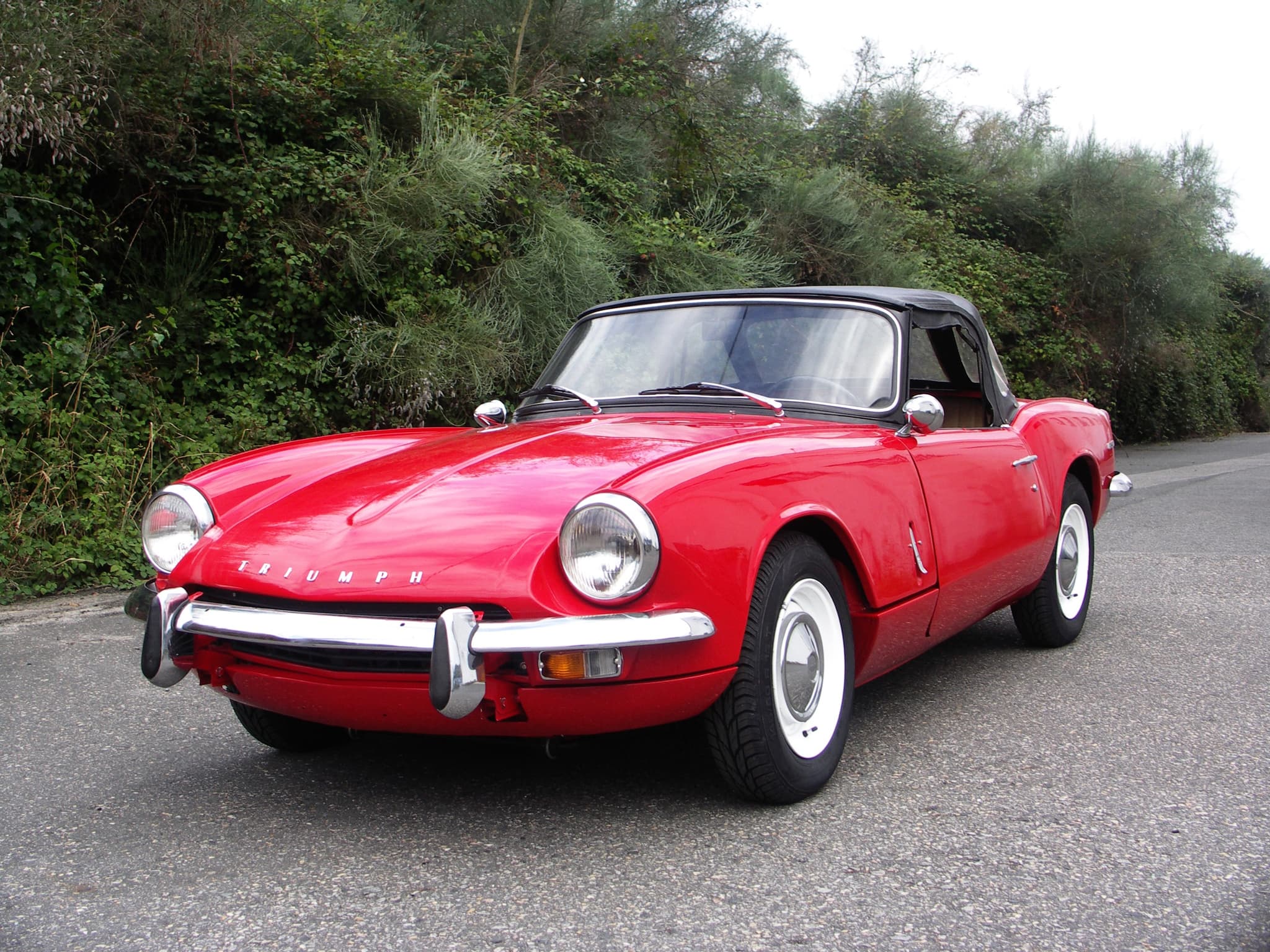
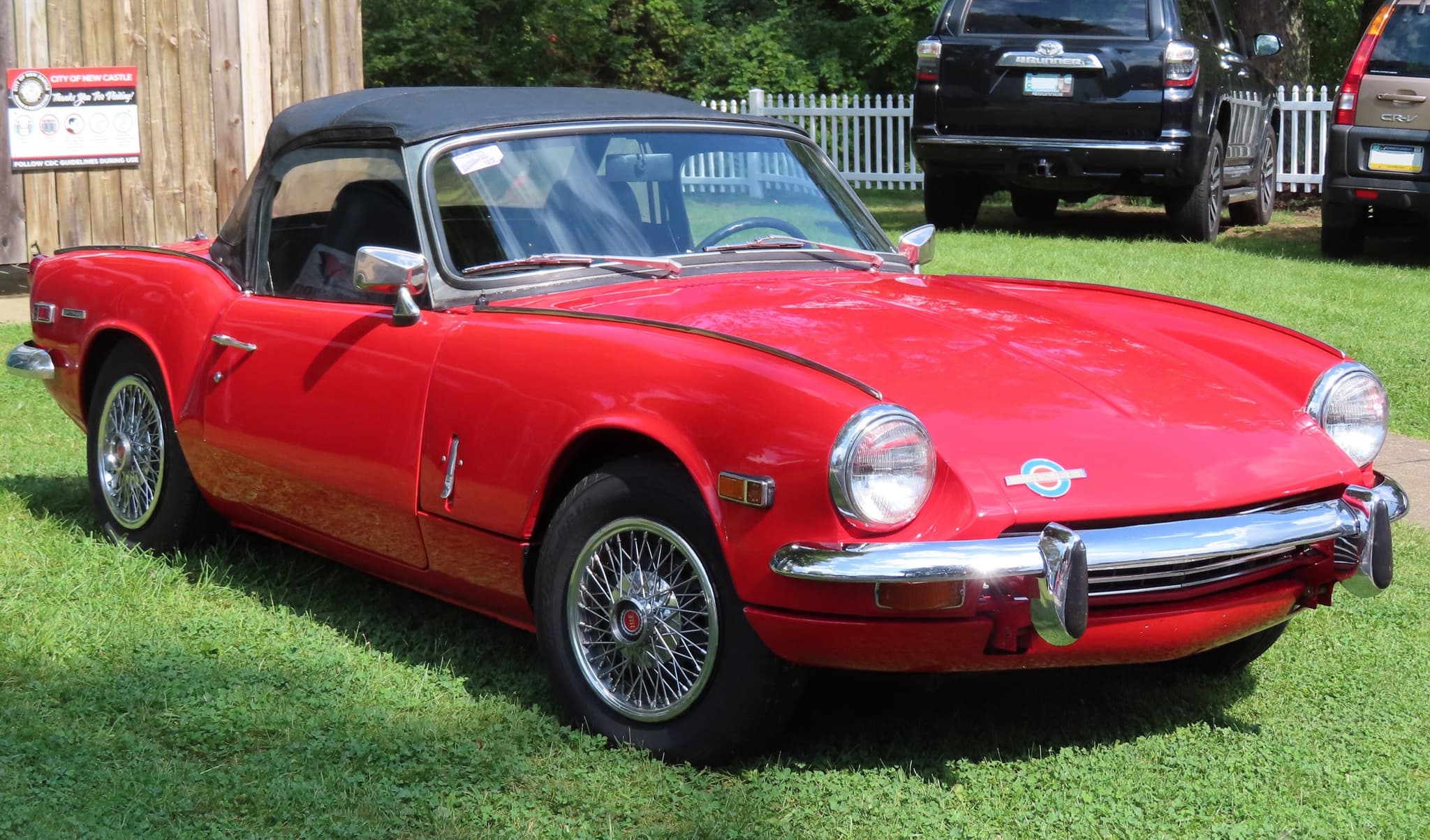
Look at the front bumper. On the Mk III it runs across the middle of the grille instead of beneath it, the most visible sign of the first big revision of the Spitfire. Canley built the Mk III from January 1967 to December 1970, and it was introduced to the public in March 1967.
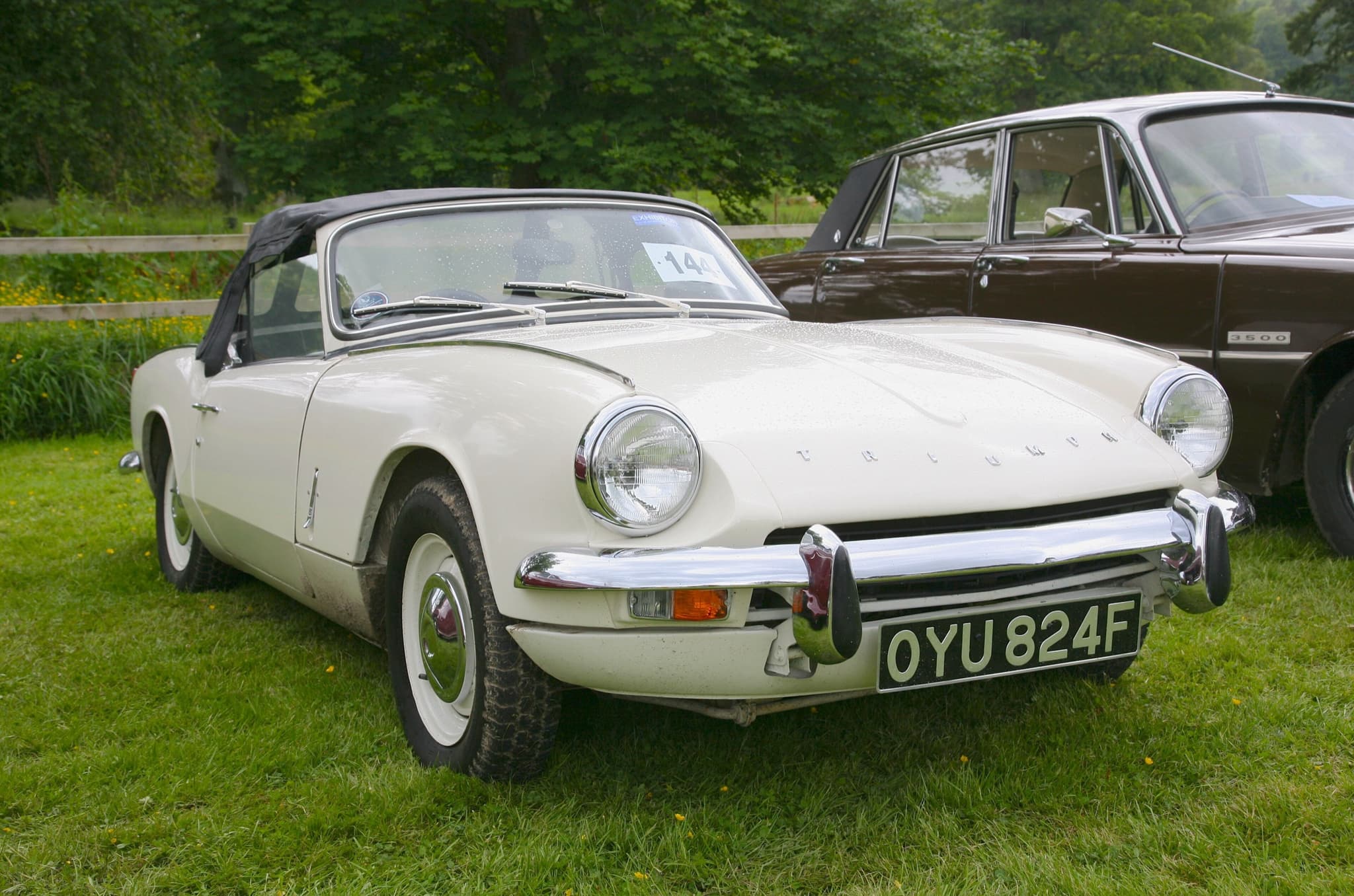
Instantly recognisable by the raised front bumper (by nine inches) that adds a hint of Lotus Elan, the MkIII Spitfire may count as the only car in history to have its looks improved by trying to meet American regulations.
What changed
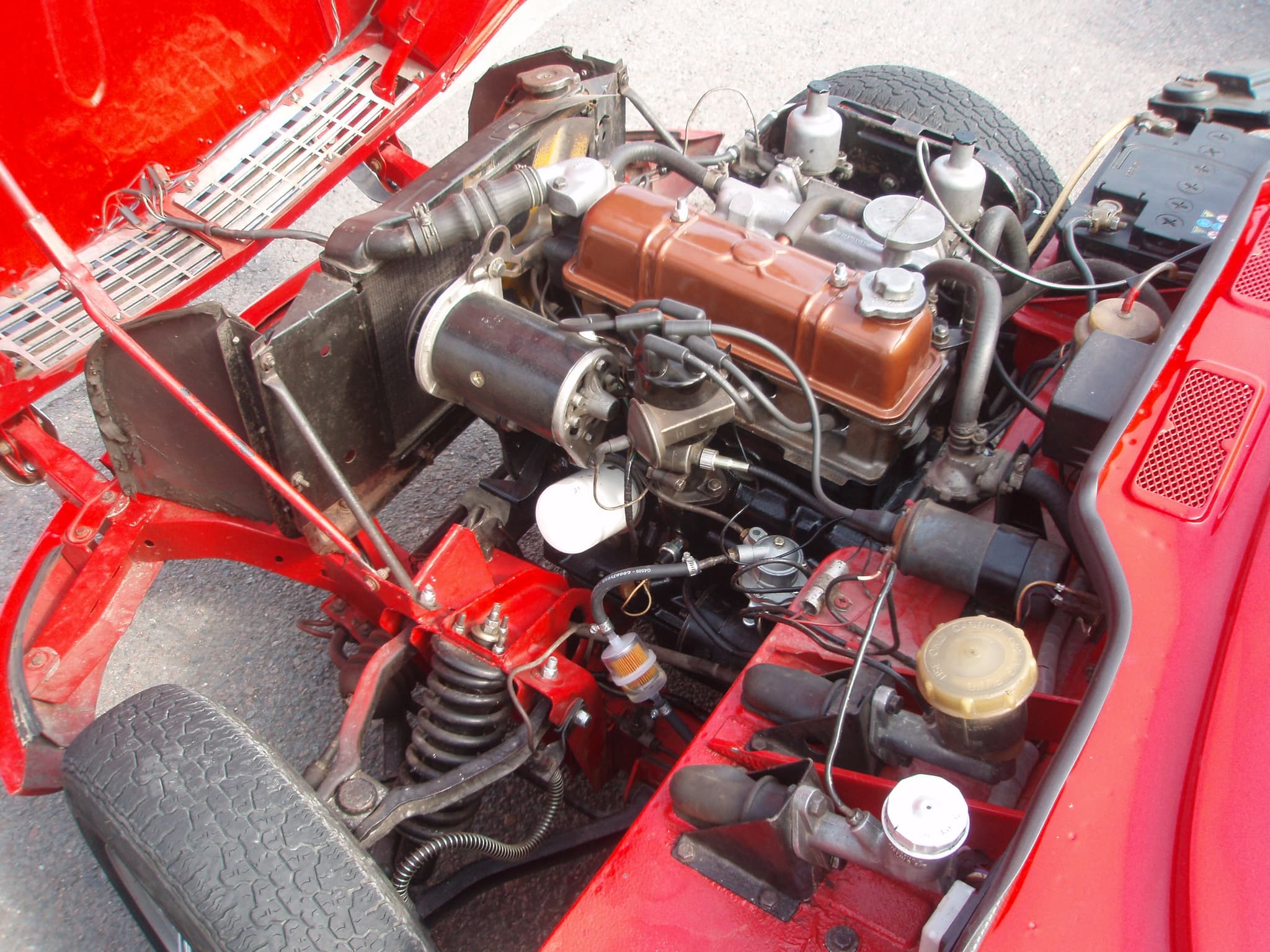
The engine grew. Triumph bored out the four-cylinder engine of the Spitfire 4 and Mk II, kept its stroke, and gave it an eight-port cylinder head: the same family of engine as the front-drive Triumph 1300 saloon (sedan) and the Herald 13/60. Mike Cotton explained the move in Motor Sport: with Fiat and Honda arriving with smaller-engined cars, BMC and Triumph were taking theirs up a class.
Fitted with the Mark II camshaft and a pair of S.U. HS2 carburetters, the engine develops 75 b.h.p. (rather a gross figure) at 6,000 r.p.m., compared with 67 b.h.p. of the 1,147-c.c. Herald-based engine.
His "rather a gross figure" matters later. The Mk IV of 1970 was rated on a different basis, which is why its lower figure gave it a reputation as a detuned car.
With the extra power came a larger, stronger clutch, larger front brake calipers like the 1300 saloon's and stiffer front springs. The suspension's layout was not altered: swing axles at the back, the Herald's wishbones and coil springs at the front.
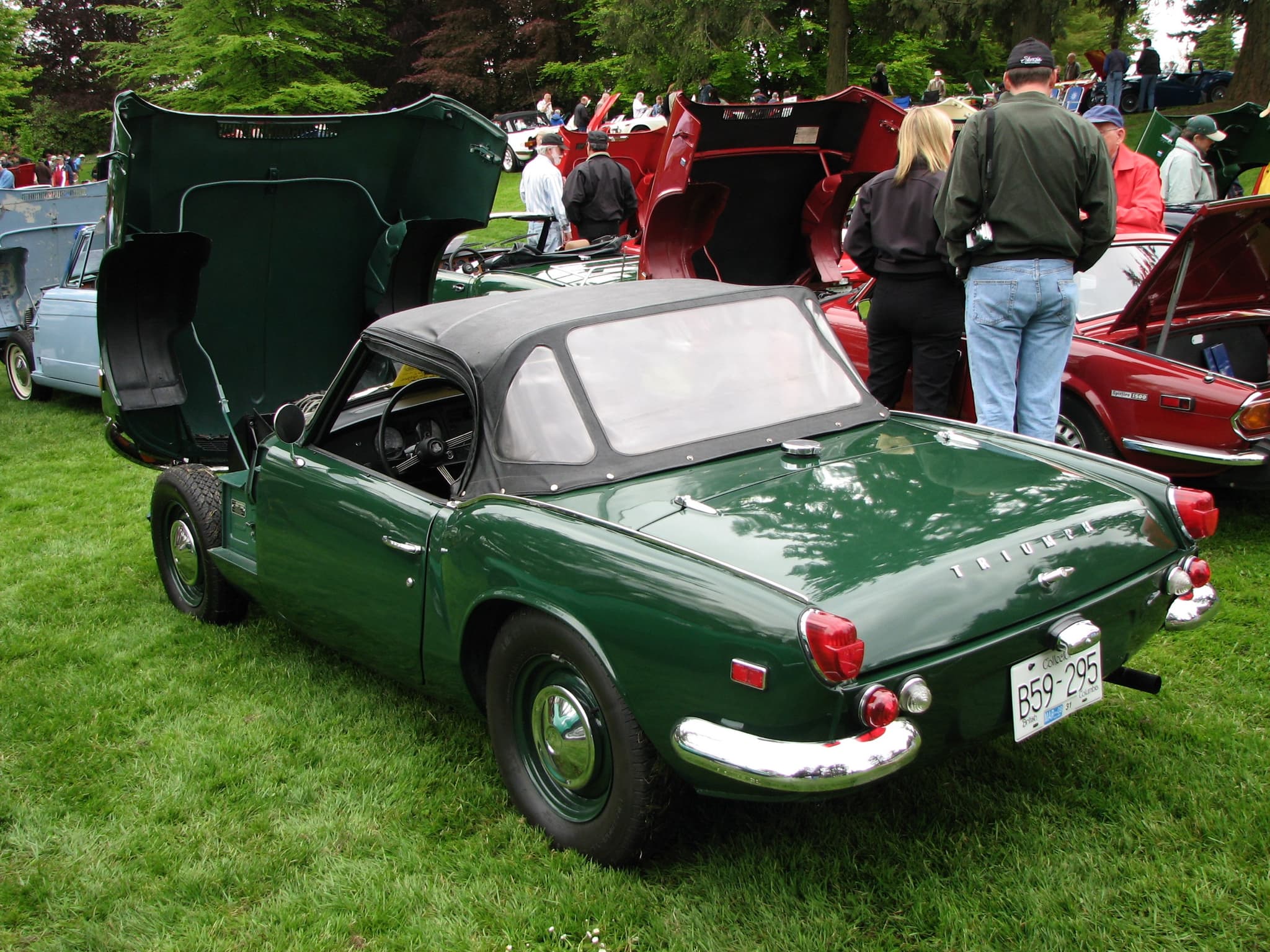
Outside, the front bumper was raised to cross a one-piece grille, with the sidelamps and indicators in units beneath it and rubber-faced overriders (bumper guards). At the back the bumper went up too, the overriders were dropped and two reversing lamps were added. Classic Car Africa's history says American safety legislation required the change.
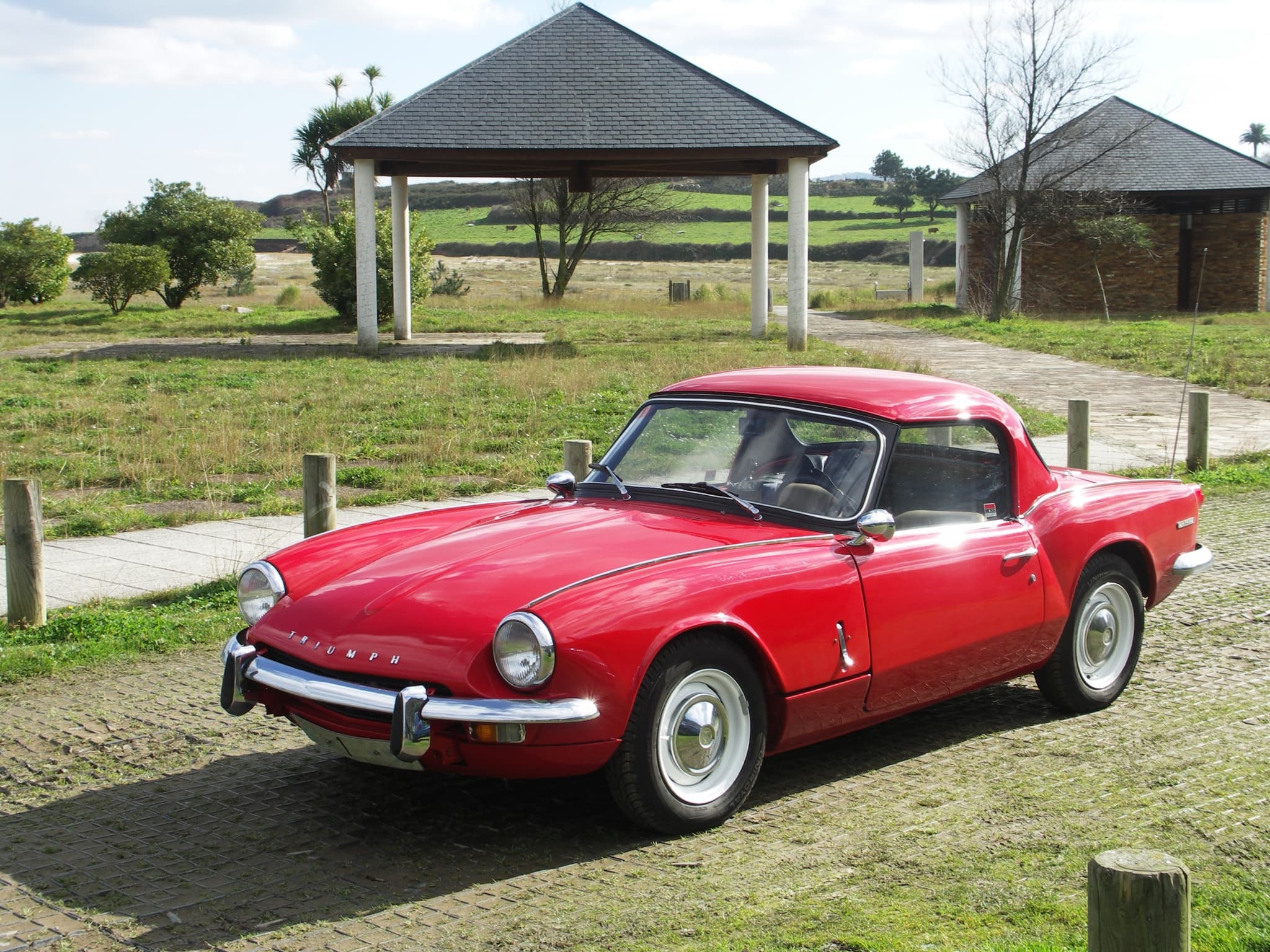
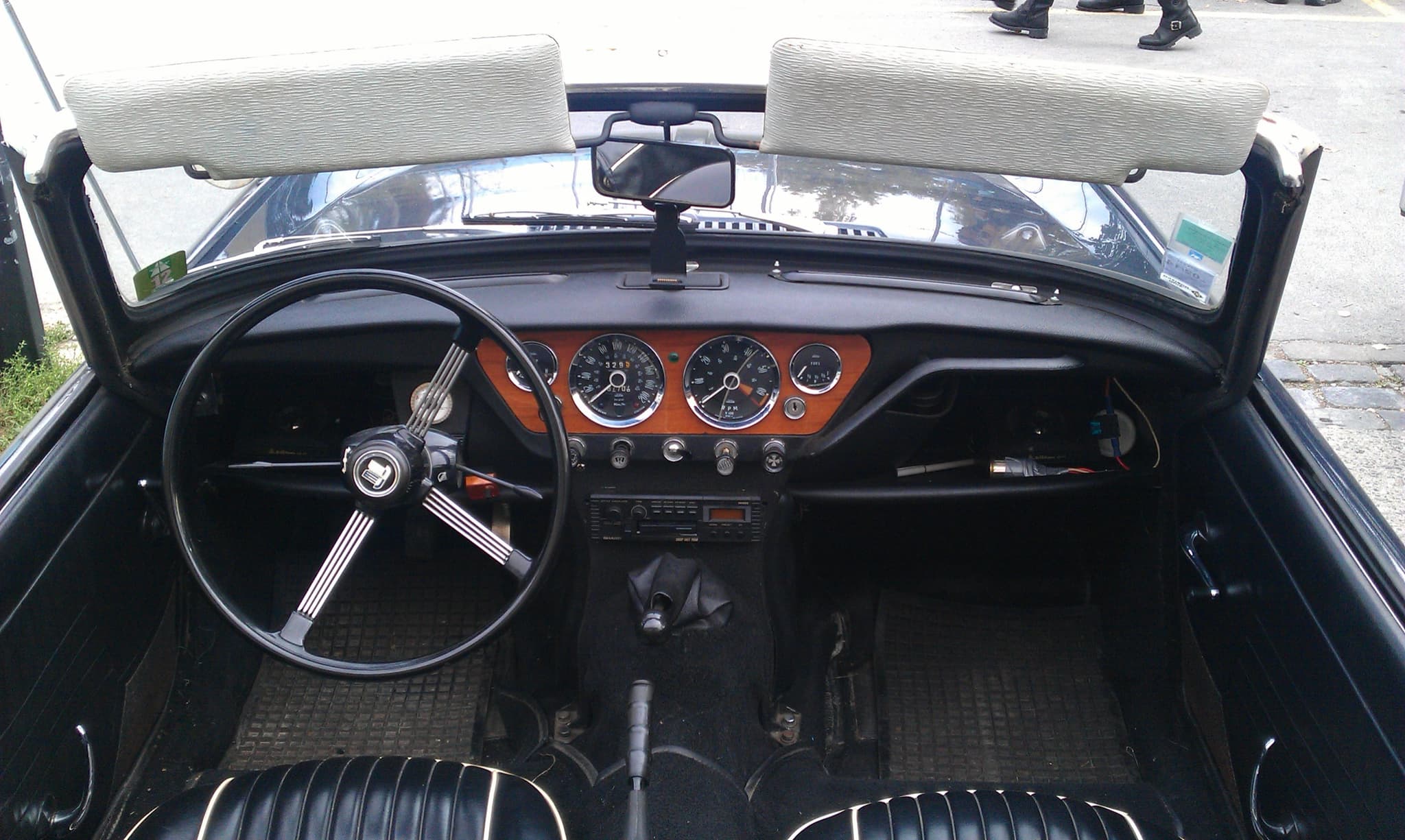
The hood (soft top) became part of the car. It folded away behind the seats under a cover, and one person could raise it in seconds, where the earlier cars had a removable frame kept in the boot (trunk). Inside, the instruments stayed in the centre, now set in a wood-veneer panel; cars for the United States moved them for the 1969 model year. First gear still had no synchromesh.source 5source 6source 4source 2source 7source 8
The federal cars, 1969–70
From the 1969 model year, Mk IIIs for the United States were "federalised". Their instruments moved from the centre of the dashboard to a black panel in front of the driver.
For the 1970 model year most federal cars had a single Zenith-Stromberg carburettor in place of the twin SUs, together with side-marker lamps, a steering-column lock, an evaporative-emissions canister and a one-year bonnet (hood) badge: SPITFIRE over an RAF roundel. triumphspitfire.com lists an FDU prefix for their commission numbers.
These cars are covered, with the later US models, on North American Spitfires.source 9source 10
Telling the years apart
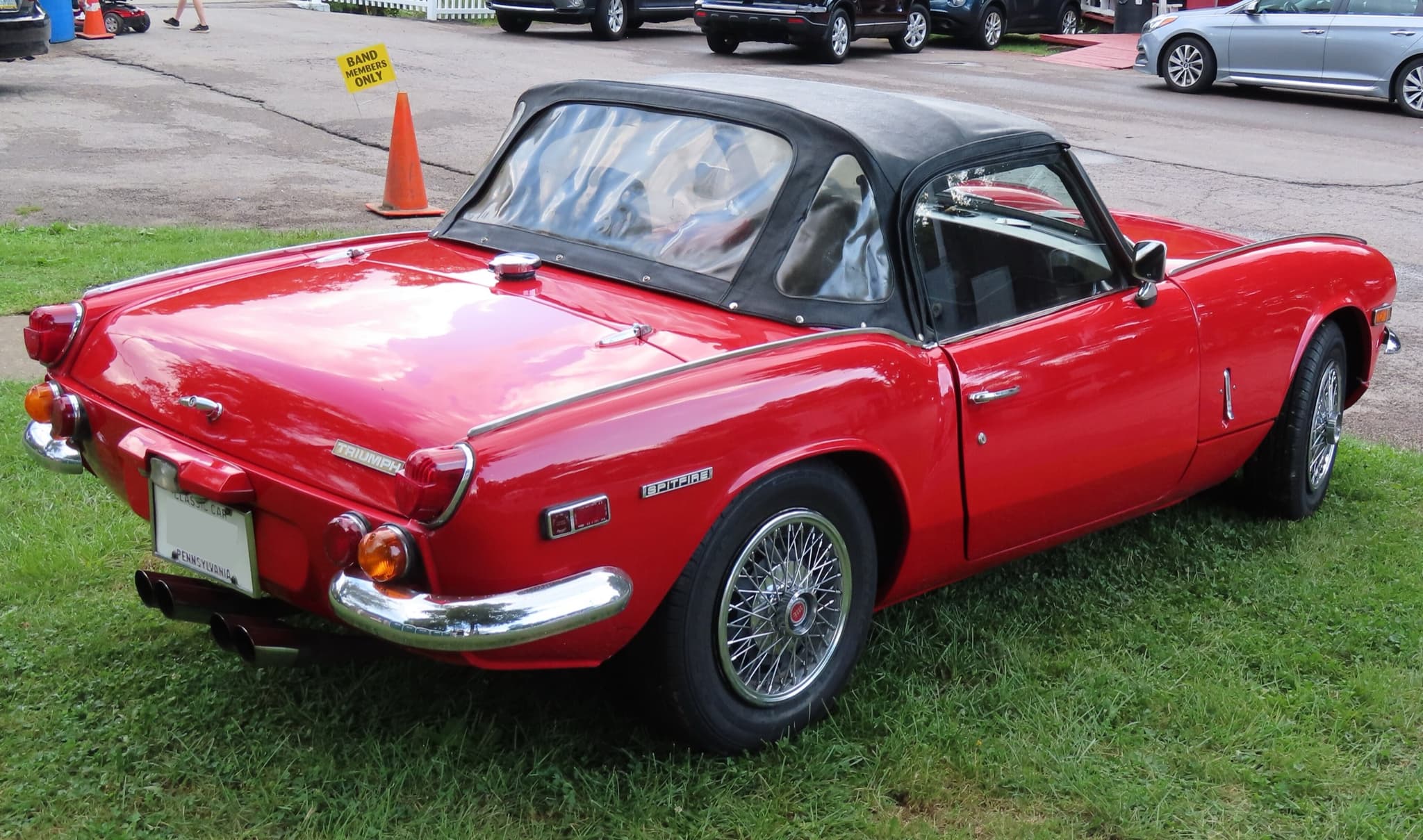
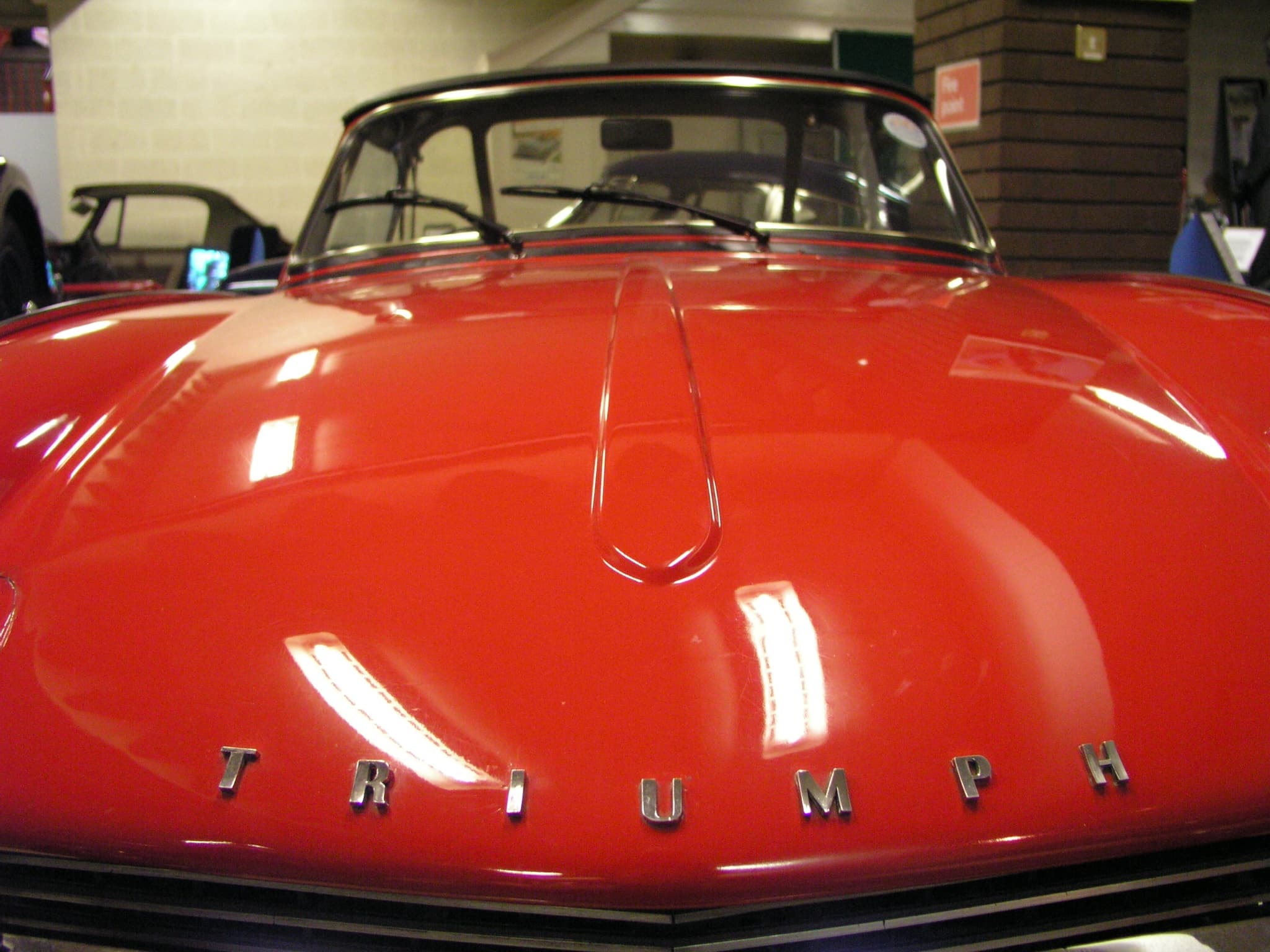
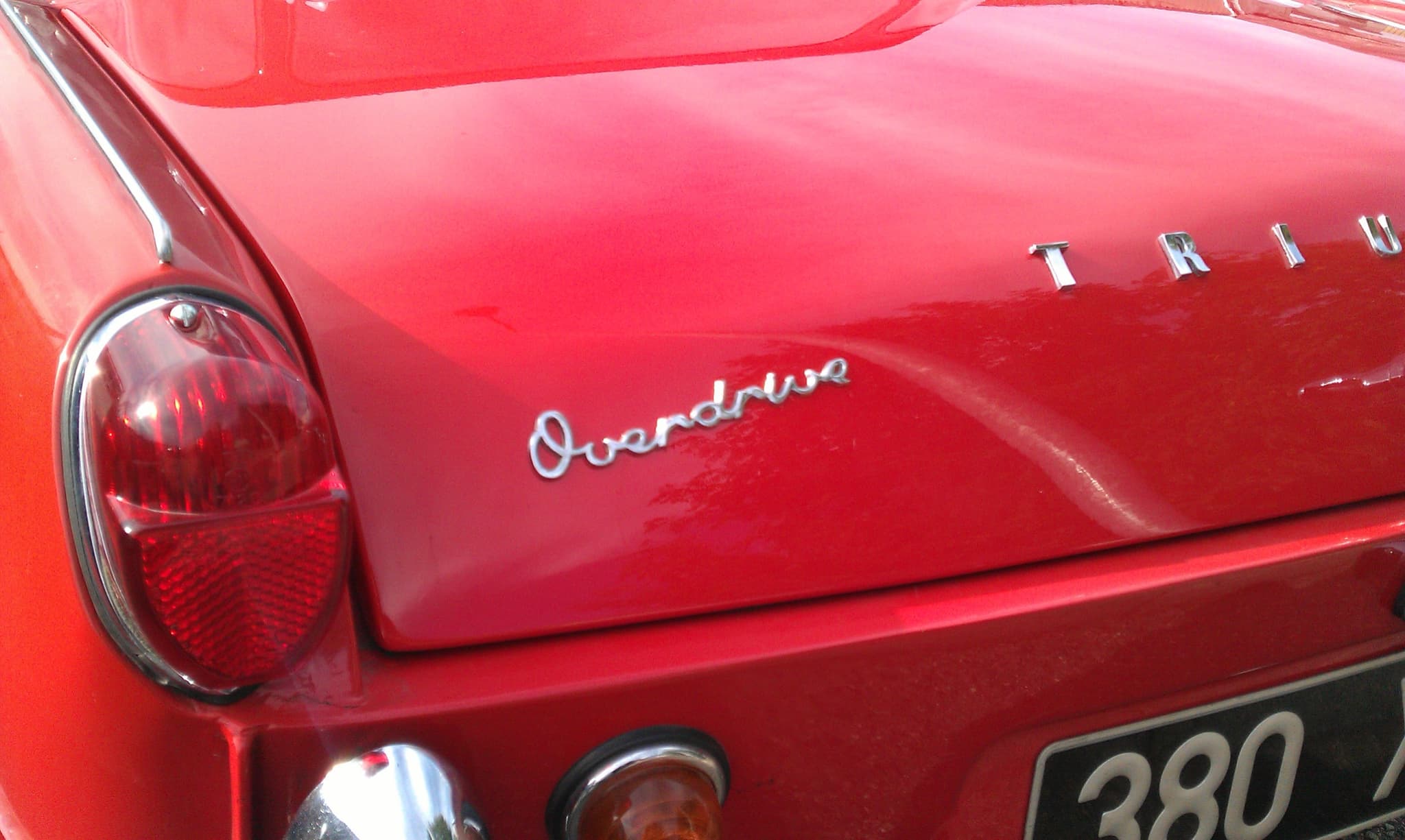
Cars of the 1970 model year changed in ways that make them easy to date. The Vintage Triumph Register records wider wheels and a "Spitfire" name plate on the bonnet in place of the TRIUMPH letters. triumphspitfire.com adds a black grille and windscreen (windshield) frame, a zip-out rear window, a single reversing lamp above the number plate (license plate) and a TRIUMPH plate on the tail.
Commission numbers begin FD, and so, by Canley Classics' chart, do engine numbers; triumphspitfire.com also lists an FE engine prefix for emission-controlled engines, which no other source confirms. Identification explains how to read the numbers and what a Heritage Certificate adds.source 9source 10source 11source 7
Production, price and options
Canley Classics, the Triumph Sports Six Club and Classic & Sports Car print the same production figure for the Mk III. Unlike the Spitfire 4's and the 1500's, it is not disputed; the production table below gives it with its sources.
Price lists can make the Mk III look cheaper than the Spitfire 4, but the gap is purchase tax, not the car. The Triumph Sports Six Club's figure for the Spitfire 4 is its launch price, which included the tax at its late-1962 rate, and the tax was cut within months. The Spitfire 4's prices from before and after the cut are on its own page.
Overdrive, working on third and top gears, and a steel hardtop were optional, and Cotton's car had both. According to a report in Autocar (15 February 1968), as cited by Wikipedia, the 100,000th Spitfire, a Mk III, left the Canley line on 8 February 1968, driven off by the general manager, George Turnbull.
Abroad, Leykor assembled the Mk III in South Africa from 1968, and Australian Motor Industries assembled it in Australia.source 1source 4source 2source 12source 8source 5source 13source 7source 14
On the road
Mike Cotton took a Mk III with the hardtop and overdrive from London to Milan, on to the Monaco Grand Prix and home again for Motor Sport's June 1967 issue, a trip of 3,154 km (1,960 miles). Despite its extra power he found it "somewhat heavy and lacking in sparkle", but it would hold high cruising speeds without tiring. The seats were comfortable, though their backrests yielded in hard cornering, and wind noise with the hardtop on was acceptably low.
Bumpy French roads found the old weakness: sometimes, when really bad surfaces came up unexpectedly at speed, the rear wheels "steered the car badly, almost to the point of taking control". On true mountain roads it was very good, with an amazing lock on hairpins. He wondered whether the next version could afford the trailing-link rear suspension of the Triumph 2000 saloon, and thought a close-ratio gearbox (transmission) with a lower axle ratio would help.
If two people can travel 680 miles in a single journey in a small sports car (save only two meal stops), and arrive without being unduly tired, then the car can be rated seriously as a means of transport, not just as a debs'-delight.
The Mk IV answered his worst complaint, if not in the way he suggested: its "swing spring" rear suspension tamed the swing axle, and its gearbox at last had synchromesh on first.source 5source 6source 15
Specification: Mk III
Engine
Sources for Engine, Mk III
- Capacity
- Good sources agree.Mike Cotton ("M.L.C."), "Triumph Spitfire to Monaco", Motor Sport, Jun 1967source 5; Canley Classics, "Engine Number Identification Chart"source 11; Triumph Spitfire Club (Netherlands), "Spitfire modellen", "Aankoop informatie", "Clubinfo", homesource 16
- Bore × stroke
- One good source.The same 1,296 cc engine, from the Mk IV road test. Bill Boddy ("W.B."), "Road test: The Triumph Spitfire Mk. IV", Motor Sport, Jan 1971source 6
- Compression ratio
- Several figures in print.triumphspitfire.com ("Spitfire & GT6 Magazine and Information Warehouse"), Reference pages (group): models and options; Mk I–1500 options-and-changes logs; engine numbers; 1979–80 VINs; what year is my car; final drive; general specification data; stock tyres; wheel alignment; lubrication; tuning; fuses; paint and trim codes; side stripes; decal and badge placements; wire wheels; head swaps; substitute parts; suppliers; new owner; pre-purchase checklist; spotters guide, pages modified 2023source 10; Wikipedia (DE), "Triumph Spitfire", 2026source 17
- Carburettors
- One good source.Non-US. Mike Cotton ("M.L.C."), "Triumph Spitfire to Monaco", Motor Sport, Jun 1967source 5
| Capacity | 1,296 cc |
|---|---|
| Bore × stroke | 73.7 × 76 mm |
| Compression ratio | 9.0:1 Compression ratio, Mk III Several figures in print.
|
| Carburettors | twin SU HS2 |
Performance
Sources for Performance, Mk III
- Power
- Good sources agree.Gross ("rather a gross figure"), at 6,000 rpm. Mike Cotton ("M.L.C."), "Triumph Spitfire to Monaco", Motor Sport, Jun 1967source 5; Classic & Sports Car, A–Z of classics: Triumph Spitfire I, II, III, MkIV, 1500source 2; Triumph Sports Six Club, Model pages: Spitfire 4/Mark II (model_ID=24), Mark III (23), Mark IV (25), 1500 (26)source 4; Practical Classics, "Buyers Guide: Triumph Spitfire", May 2000source 18; Classic Car Africa, "The Wallflower"source 7
- Torque
- Good sources agree.At 4,000 rpm. Practical Classics, "Buyers Guide: Triumph Spitfire", May 2000source 18; Triumph Sports Six Club, Model pages: Spitfire 4/Mark II (model_ID=24), Mark III (23), Mark IV (25), 1500 (26)source 4; Classic Car Africa, "The Wallflower"source 7
- Torque peak
- Not yet confirmed.Torque peak. Wikipedia (EN), "Triumph Spitfire", 2026source 13; Wikipedia (DE), "Triumph Spitfire", 2026source 17
- Top speed
- Several figures in print.Triumph Sports Six Club, Model pages: Spitfire 4/Mark II (model_ID=24), Mark III (23), Mark IV (25), 1500 (26)source 4; Classic & Sports Car, A–Z of classics: Triumph Spitfire I, II, III, MkIV, 1500source 2; Mike Cotton ("M.L.C."), "Triumph Spitfire to Monaco", Motor Sport, Jun 1967source 5; Practical Classics, "Buyers Guide: Triumph Spitfire", May 2000source 18; Wikipedia (DE), "Triumph Spitfire", 2026source 17; Classic Car Africa, "The Wallflower"source 7
- 0–60 mph
- Several figures in print.Triumph Sports Six Club, Model pages: Spitfire 4/Mark II (model_ID=24), Mark III (23), Mark IV (25), 1500 (26)source 4; Practical Classics, "Buyers Guide: Triumph Spitfire", May 2000source 18; triumphspitfire.com, "Top Speed and Track Test Results", 2023source 19; Wikipedia (EN), "Triumph Spitfire", 2026source 13
| Power | 75 bhp |
|---|---|
| Torque | 75 lb ft |
| Torque peak | 4,000 rpm |
| Top speed | 95 mph Top speed, Mk III Several figures in print.
|
| 0–60 mph | 14.5 s 0–60 mph, Mk III Several figures in print.
|
Running gear
Sources for Running gear, Mk III
- Gears
- One good source.4-speed, no synchromesh on 1st. Mike Cotton ("M.L.C."), "Triumph Spitfire to Monaco", Motor Sport, Jun 1967source 5
- Overdrive
- One good source.Mike Cotton ("M.L.C."), "Triumph Spitfire to Monaco", Motor Sport, Jun 1967source 5; triumphspitfire.com ("Spitfire & GT6 Magazine and Information Warehouse"), Reference pages (group): models and options; Mk I–1500 options-and-changes logs; engine numbers; 1979–80 VINs; what year is my car; final drive; general specification data; stock tyres; wheel alignment; lubrication; tuning; fuses; paint and trim codes; side stripes; decal and badge placements; wire wheels; head swaps; substitute parts; suppliers; new owner; pre-purchase checklist; spotters guide, pages modified 2023source 10
- Front brakes
- Several figures in print.Mike Cotton ("M.L.C."), "Triumph Spitfire to Monaco", Motor Sport, Jun 1967source 5; Triumph Sportscars (Australia; closed end of 2016), "Spitty Tips" 2, 3, 4, 5, 6, 8, 19source 14; Classic & Sports Car, A–Z of classics: Triumph Spitfire I, II, III, MkIV, 1500source 2
- Rear brakes
- One good source.All models. Triumph Sportscars (Australia; closed end of 2016), "Spitty Tips" 2, 3, 4, 5, 6, 8, 19source 14
- Tyres
- Not yet confirmed.triumphspitfire.com ("Spitfire & GT6 Magazine and Information Warehouse"), Reference pages (group): models and options; Mk I–1500 options-and-changes logs; engine numbers; 1979–80 VINs; what year is my car; final drive; general specification data; stock tyres; wheel alignment; lubrication; tuning; fuses; paint and trim codes; side stripes; decal and badge placements; wire wheels; head swaps; substitute parts; suppliers; new owner; pre-purchase checklist; spotters guide, pages modified 2023source 10
- Wheels
- Several figures in print.Vintage Triumph Register, "Spitfire" (production history, production dates and numbers, buyer's guide tabs)source 9; Triumph Sportscars (Australia; closed end of 2016), "Spitty Tips" 2, 3, 4, 5, 6, 8, 19source 14; triumphspitfire.com ("Spitfire & GT6 Magazine and Information Warehouse"), Reference pages (group): models and options; Mk I–1500 options-and-changes logs; engine numbers; 1979–80 VINs; what year is my car; final drive; general specification data; stock tyres; wheel alignment; lubrication; tuning; fuses; paint and trim codes; side stripes; decal and badge placements; wire wheels; head swaps; substitute parts; suppliers; new owner; pre-purchase checklist; spotters guide, pages modified 2023source 10
- Clutch
- Good sources agree.Mike Cotton ("M.L.C."), "Triumph Spitfire to Monaco", Motor Sport, Jun 1967source 5; Triumph Sports Six Club, Model pages: Spitfire 4/Mark II (model_ID=24), Mark III (23), Mark IV (25), 1500 (26)source 4
| Gears | 4 |
|---|---|
| Overdrive | Laycock D-type, on 3rd and top, optional |
| Front brakes | discs Front brakes, Mk III Several figures in print.
|
| Rear brakes | 7 in (178 mm) drums |
| Tyres | 5.20-13 cross-ply; 145-13 radial option |
| Wheels | 3.5J × 13 to FD75000; 4.5J × 13 after Wheels, Mk III Several figures in print.
|
| Clutch | diaphragm spring |
Dimensions and weight
Sources for Dimensions and weight, Mk III
- Length
- Several figures in print.Triumph Sports Six Club, Model pages: Spitfire 4/Mark II (model_ID=24), Mark III (23), Mark IV (25), 1500 (26)source 4; Practical Classics, "Buyers Guide: Triumph Spitfire", May 2000source 18; Wikipedia (DE), "Triumph Spitfire", 2026source 17
- Width
- Several figures in print.Triumph Sports Six Club, Model pages: Spitfire 4/Mark II (model_ID=24), Mark III (23), Mark IV (25), 1500 (26)source 4; Wikipedia (DE), "Triumph Spitfire", 2026source 17
- Height
- Several figures in print.Triumph Sports Six Club, Model pages: Spitfire 4/Mark II (model_ID=24), Mark III (23), Mark IV (25), 1500 (26)source 4; Wikipedia (DE), "Triumph Spitfire", 2026source 17
- Kerb weight
- Good sources disagree.Triumph Sports Six Club, Model pages: Spitfire 4/Mark II (model_ID=24), Mark III (23), Mark IV (25), 1500 (26)source 4; Practical Classics, "Buyers Guide: Triumph Spitfire", May 2000source 18; Wikipedia (DE), "Triumph Spitfire", 2026source 17
- Wheelbase
- One good source.83 in. Triumph Sports Six Club, Model pages: Spitfire 4/Mark II (model_ID=24), Mark III (23), Mark IV (25), 1500 (26)source 4
| Length | 3,734 mm Length, Mk III Several figures in print.
|
|---|---|
| Width | 1,448 mm |
| Height | 1,207 mm |
| Kerb weight | 749 kg Kerb weight, Mk III Good sources disagree.
|
| Wheelbase | 2,108 mm |
Specification: US
Engine
Sources for Engine, US
- Compression ratio
- Not yet confirmed.US 1969–70. Wikipedia (EN), "Triumph Spitfire", 2026source 13; triumphspitfire.com ("Spitfire & GT6 Magazine and Information Warehouse"), Reference pages (group): models and options; Mk I–1500 options-and-changes logs; engine numbers; 1979–80 VINs; what year is my car; final drive; general specification data; stock tyres; wheel alignment; lubrication; tuning; fuses; paint and trim codes; side stripes; decal and badge placements; wire wheels; head swaps; substitute parts; suppliers; new owner; pre-purchase checklist; spotters guide, pages modified 2023source 10
- Carburettors
- Several figures in print.Vintage Triumph Register, "Spitfire" (production history, production dates and numbers, buyer's guide tabs)source 9; triumphspitfire.com ("Spitfire & GT6 Magazine and Information Warehouse"), Reference pages (group): models and options; Mk I–1500 options-and-changes logs; engine numbers; 1979–80 VINs; what year is my car; final drive; general specification data; stock tyres; wheel alignment; lubrication; tuning; fuses; paint and trim codes; side stripes; decal and badge placements; wire wheels; head swaps; substitute parts; suppliers; new owner; pre-purchase checklist; spotters guide, pages modified 2023source 10
| Compression ratio | 8.5:1 |
|---|---|
| Carburettors | single Zenith-Stromberg Carburettors, US Several figures in print.
|
Performance
| Power | 68 bhp |
|---|---|
| Torque | 73 lb ft |
Running gear
Sources for Running gear, US
- Wheels
- One good source.1970 model year only, so not written to specs. Vintage Triumph Register, "Spitfire" (production history, production dates and numbers, buyer's guide tabs)source 9
| Wheels | 4.5 in wide |
|---|
Production
Production: how far the sources agree
- 65,320, Mk III, Jan 1967–Dec 1970 (federal 1969–70 cars included)
- Good sources agree.
- 632, of which sold in South Africa, 1968–71 (NAAMSA)
- One good source.
65,320Mk III, Jan 1967–Dec 1970 (federal 1969–70 cars included)
Canley Classics, "Production Figures"source 1; Triumph Sports Six Club, Model pages: Spitfire 4/Mark II (model_ID=24), Mark III (23), Mark IV (25), 1500 (26)source 4; Classic & Sports Car, A–Z of classics: Triumph Spitfire I, II, III, MkIV, 1500source 2; Wikipedia (EN), "Triumph Spitfire", 2026source 13; Triumph Spitfire Club (Netherlands), "Spitfire modellen", "Aankoop informatie", "Clubinfo", homesource 16; triumphspitfire.com ("Spitfire & GT6 Magazine and Information Warehouse"), Reference pages (group): models and options; Mk I–1500 options-and-changes logs; engine numbers; 1979–80 VINs; what year is my car; final drive; general specification data; stock tyres; wheel alignment; lubrication; tuning; fuses; paint and trim codes; side stripes; decal and badge placements; wire wheels; head swaps; substitute parts; suppliers; new owner; pre-purchase checklist; spotters guide, pages modified 2023source 10
632of which sold in South Africa, 1968–71 (NAAMSA)
Classic Car Africa, "The Wallflower"source 7
Sources
Sources are given as plain text; their addresses are on the sources page.
- Primarymade at the time, by the maker or by people who were there
- Referenceserious later work: clubs, specialists, magazines, books
- Uncheckedencyclopaedias and enthusiast sites: cited beside a good source, named in the sentence, or marked Unchecked
- Canley Classics, "Production Figures", Spitfire Mk III, January 1967–December 1970; Spitfire Mk III row; Production Figures table, row "Spitfire MK III". Reference
- Classic & Sports Car, A–Z of classics: Triumph Spitfire I, II, III, MkIV, 1500, Spitfire III; A–Z entry. Reference
- Malcolm McKay, "Triumph Spitfire buyer's guide: what to pay and what to look for", Classic & Sports Car, 10 May 2019. Reference
- Triumph Sports Six Club, Model pages: Spitfire 4/Mark II (model_ID=24), Mark III (23), Mark IV (25), 1500 (26), Mark III page; Mark III and Spitfire 4/Mark II pages, cost when new; model_ID=23 (Mark III page); model_ID=23, "Dimensions"; model_ID=23, "Weight"; model_ID=23, "Quantity". Reference
- Mike Cotton ("M.L.C."), "Triumph Spitfire to Monaco", Motor Sport, Jun 1967, p. 26; test car; pp. 26–27; Jun 1967 p. 26, text; Jun 1967 p. 26, final paragraph. Primary
- Bill Boddy ("W.B."), "Road test: The Triumph Spitfire Mk. IV", Motor Sport, Jan 1971, p. 59, engine; p. 59; Jan 1971 p. 59, engine paragraph. Primary
- Classic Car Africa, "The Wallflower", Mk III section. Reference
- Bill Boddy ("W.B."), "Sports cars under £700: the £641 Triumph Spitfire 4", with data panel "The Triumph Spitfire 4", Motor Sport, Apr 1963, hood; final paragraph. Primary
- Vintage Triumph Register, "Spitfire" (production history, production dates and numbers, buyer's guide tabs), 1969–70 identification; production dates and numbers; 1970; Spitfire page, 1970 notes; Spitfire page, 1970 model-year notes. Reference
- triumphspitfire.com ("Spitfire & GT6 Magazine and Information Warehouse"), Reference pages (group): models and options; Mk I–1500 options-and-changes logs; engine numbers; 1979–80 VINs; what year is my car; final drive; general specification data; stock tyres; wheel alignment; lubrication; tuning; fuses; paint and trim codes; side stripes; decal and badge placements; wire wheels; head swaps; substitute parts; suppliers; new owner; pre-purchase checklist; spotters guide, pages modified 2023, Mk III options-and-changes log; models page; Mk III options-and-changes log; engine page; options log; stock tyre page; Mk III change log; engine page (FE prefix); general spec; models page. Unchecked
- Canley Classics, "Engine Number Identification Chart", FD; engine chart, prefix FD. Reference
- Standard-Triumph, "New Triumph Spitfire" (Standard-Triumph advertisement), Motor Sport, Nov 1962, p. 32. Primary
- Wikipedia (EN), "Triumph Spitfire", 2026, Mk III section, citing Autocar, 15 February 1968; Mk III section; production figures, citing Robson 1982 p. 187. Unchecked
- Triumph Sportscars (Australia; closed end of 2016), "Spitty Tips" 2, 3, 4, 5, 6, 8, 19, Spitty Tips 19; Spitty Tips, brakes; Spitty Tips 5. Reference
- John Kipping (overdrive articles), Technical articles (group): "Swing Springs", "Rear End Noises", "Propshaft Problems", "Oil Consumption", "Unleaded Engines", "The D-Type Overdrive", "The J-Type Overdrive", "Different Differentials", "Close Ratio Gearboxes For Spitfire MkIV/1500", "Chrome Bumpers", "Spitfire Tuning Kits", "Fitting Le Mans Style Bonnet Vents", Canley Classics, "Swing Springs". Reference
- Triumph Spitfire Club (Netherlands), "Spitfire modellen", "Aankoop informatie", "Clubinfo", home, engine-number table, prefix FD; "Spitfire modellen" page, production figures. Reference
- Wikipedia (DE), "Triumph Spitfire", 2026, Datenblatt. Unchecked
- Practical Classics, "Buyers Guide: Triumph Spitfire", May 2000, p. 83 spec table. Reference
- triumphspitfire.com, "Top Speed and Track Test Results", 2023, test-results table. Unchecked