Triumph Spitfire in North America
America was the Spitfire's biggest market, and from the 1968 model year its Spitfires were built to American rules: federal Mk IIIs, Mk IVs with emission controls, and 1500s before Britain had them. A car's title may give the wrong year; its number dates it.
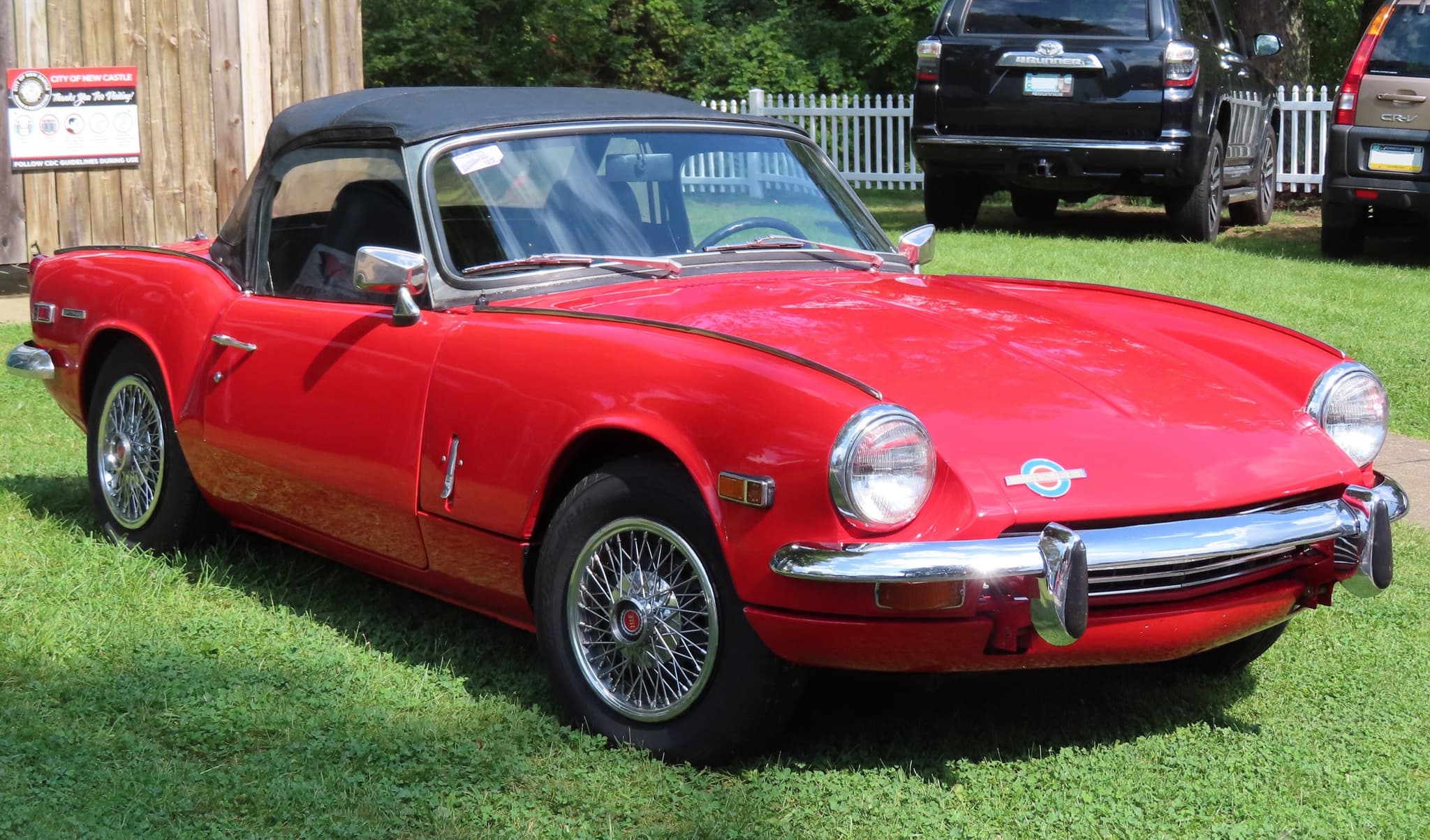
Triumph's dealers in North America had one sports car to sell in 1961, the TR3A, by Graham Robson's account. Five or six years later the same showrooms held the Spitfire, the GT6 and the TR250 too. Classic & Sports Car puts the US share at 80%, and according to a report in Autocar (15 February 1968), as cited by Wikipedia, 45% of the first 100,000 Spitfires had gone to the United States. Graham Robson wrote that in America the Spitfire outsold the Sprite and Midget together for 17 years from the start; triumphspitfire.com counters that it outsold the Midget in every year but one, and neither source gives figures.
British Leyland Motors Inc., of Leonia, New Jersey, published the American brochure for the 1974 model year. It claimed a class win at the first American Road Race of Champions and many championships since, and named Kas Kastner and Bob Tullius among the men behind them; racing has the results.
Canada answered to the same office. British Leyland Motors Canada, at Burlington, Ontario, reported to the American head office at Leonia, and at the start of the 1970s, AROnline says, British Leyland could claim 80% of Canada's sports-car market. Canada began to follow the American rules from 1968 and over time copied most of them, but no source read describes a Canadian Spitfire's mechanical specification. What AROnline does record is the dress: Canadian brochures differed from American ones "with features like striping and accessory wheels often being unique to Canada", a remark it makes of the Spitfire and the TR7 together, and Spitfires on both sides of the border wore the same heavy bumpers for the 1979 and 1980 model years.
American safety and emission rules shaped the car more and more, most visibly from the 1969 model year. Robson described the cost:
Then, slowly at first, but more and more obviously in the years which followed, the ever-increasing USA legislation, which enforced new exhaust emissions, crash tests, and secondary laws, began to affect the sale of all British cars. To meet the cost of all these new rules, prices had to rise, performance went down, and the cars became less attractive to buyers.
Model years and titles
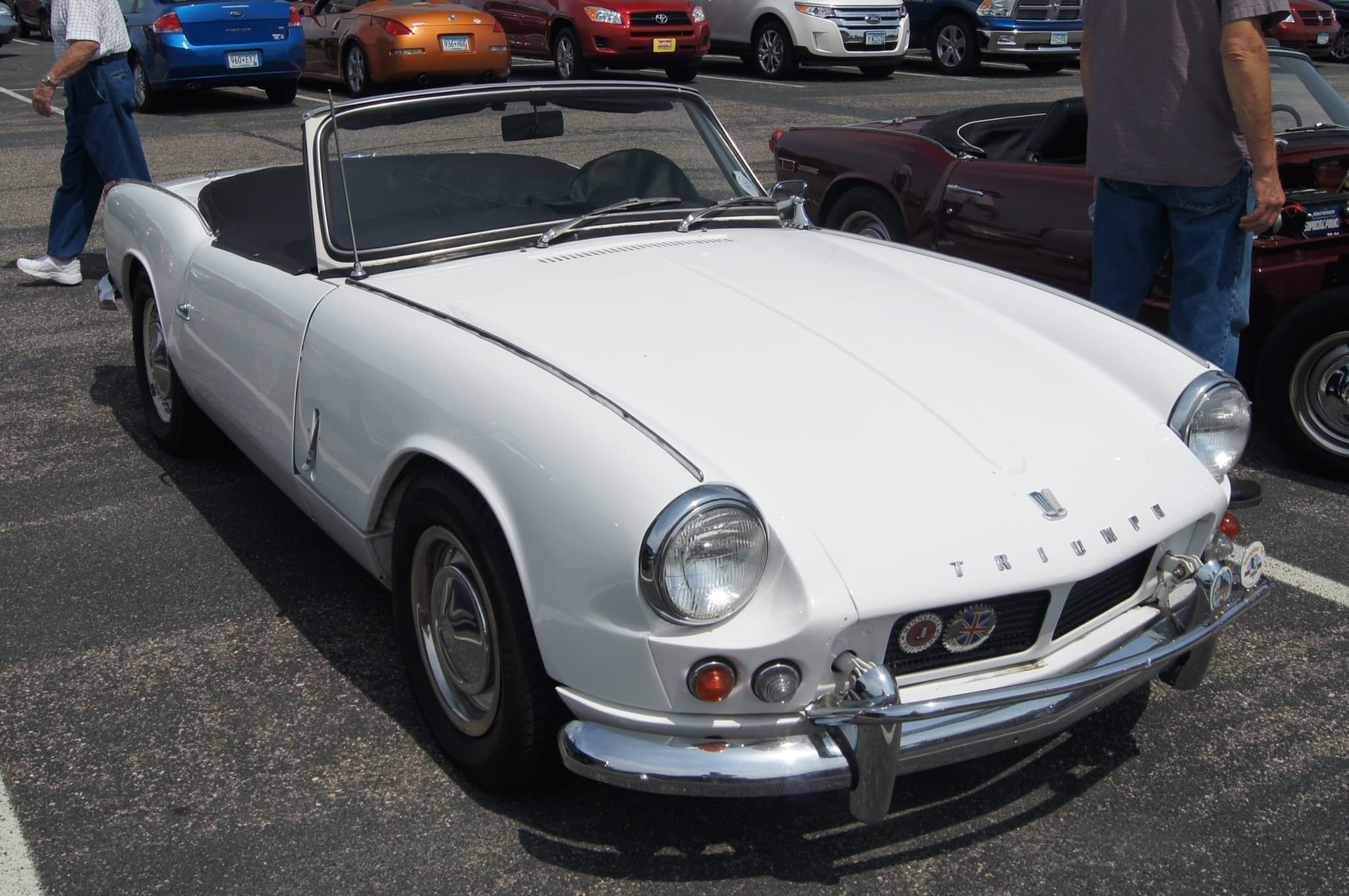
An American Spitfire's year can mean three things: the calendar year it was built, the model year it was built for and the year on its title. An American model year began at Canley months before the year it was named for: a car built after about September 1974, for example, was a 1975 model, according to triumphspitfire.com, whose table of model years, compiled from owners' Heritage look-ups, dates the starts from June to December. By AROnline's account, an American model year began, in general terms, in September of the calendar year before, when the American makers brought out their new models, and importers often struggled to keep to it. The Vintage Triumph Register labels its own lists of versions and numbers by model year.
The factory's own record settles the question. The British Motor Industry Heritage Trust keeps the build records for Triumphs made between 1946 and 1981, and its Heritage Certificate gives a car's build and despatch dates; identification explains what else it shows, and production years goes through the years one by one.source 9source 6source 10source 11
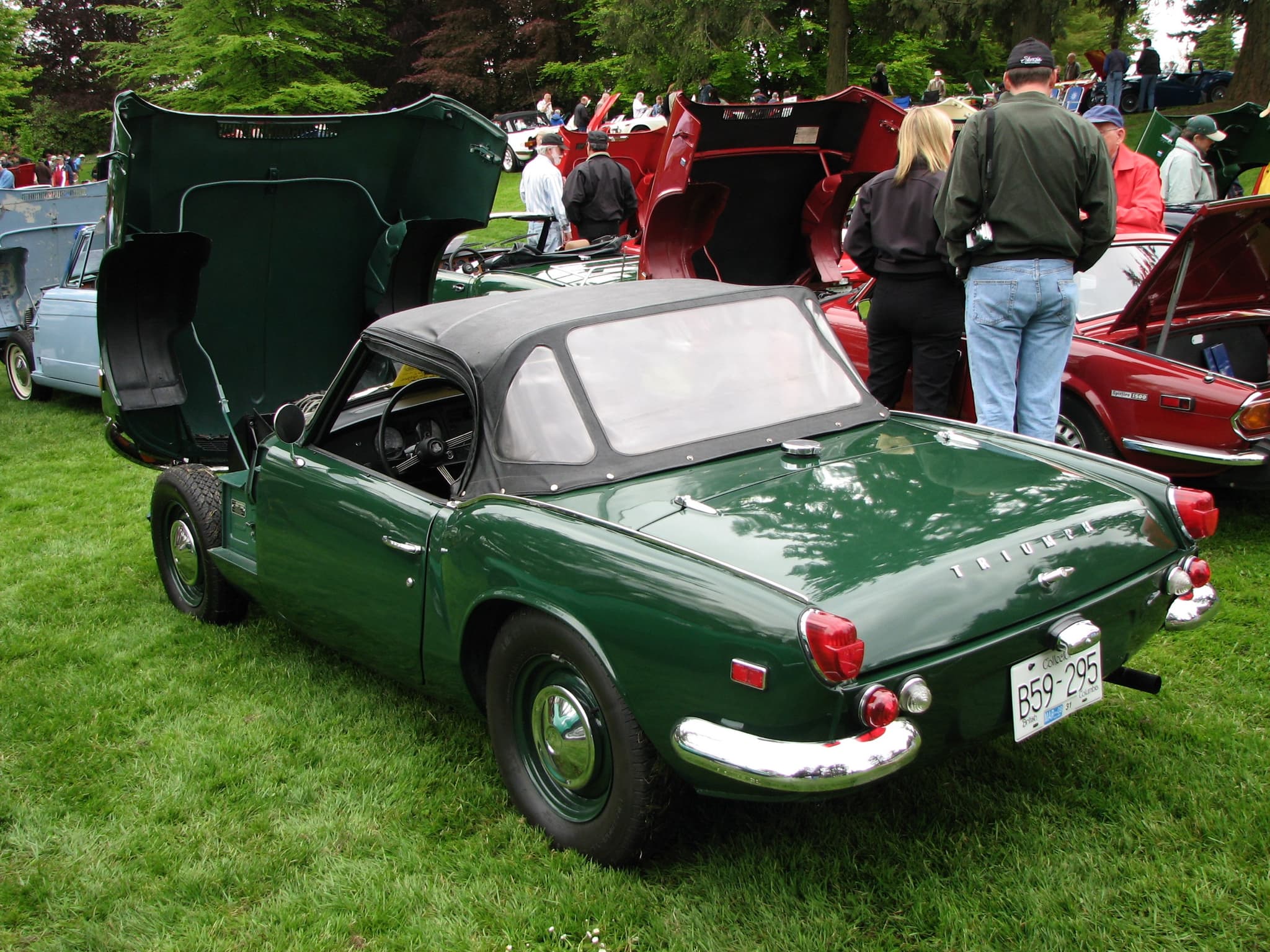
The federal Mk III, 1969–70
California came first: AROnline dates its emission controls to 1967, a year before the rest of the country. American Mk IIIs were built to federal safety and emission rules from the 1968 model year, according to AROnline; the Vintage Triumph Register dates the change inside the car a year later:
1969 was the first year of the "Federal" (speedo and tach in front of driver as in Mk.IV Spitfires) dashboard in the U.S.
Wikipedia adds new seats with built-in head restraints and a lower compression ratio for those cars.
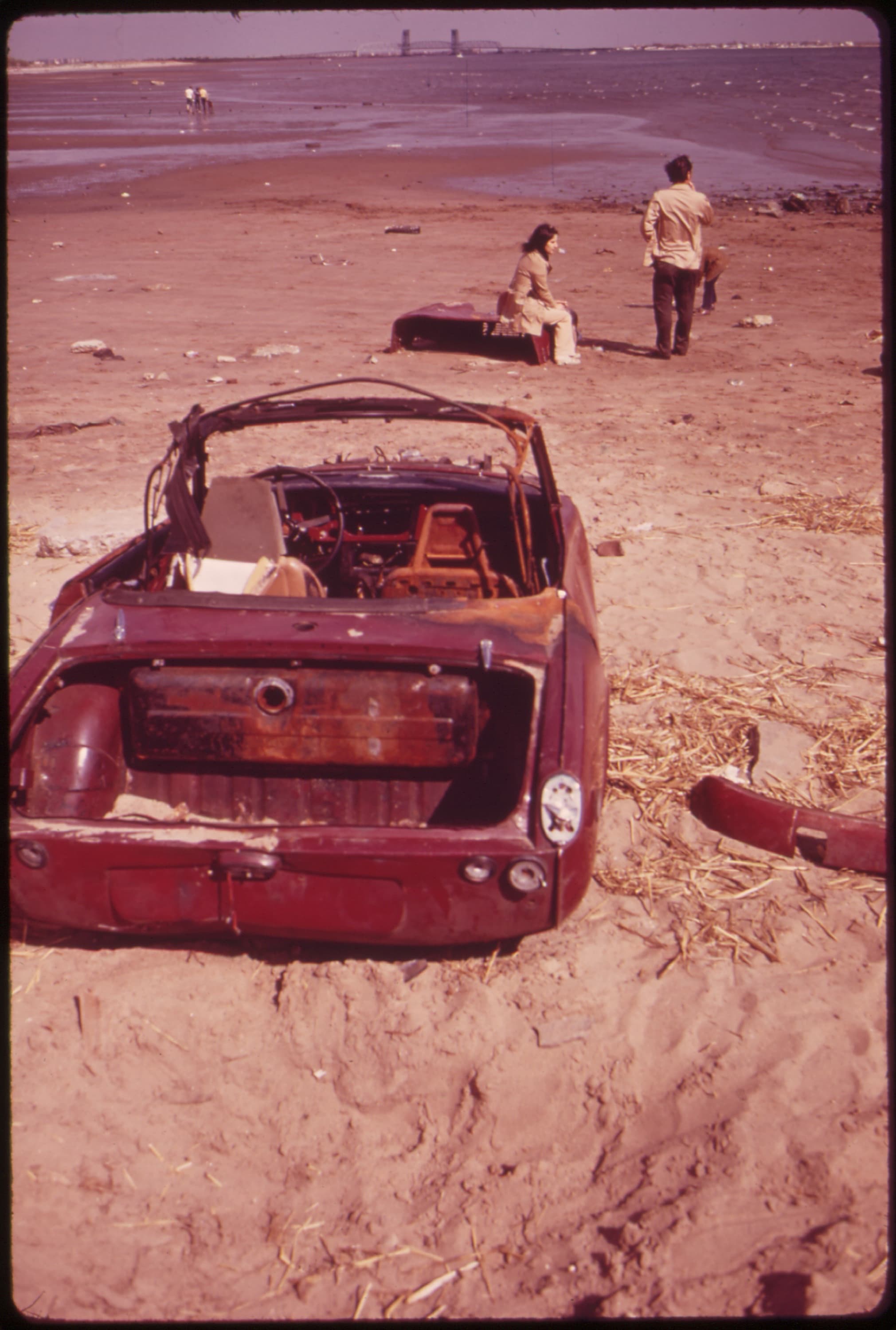
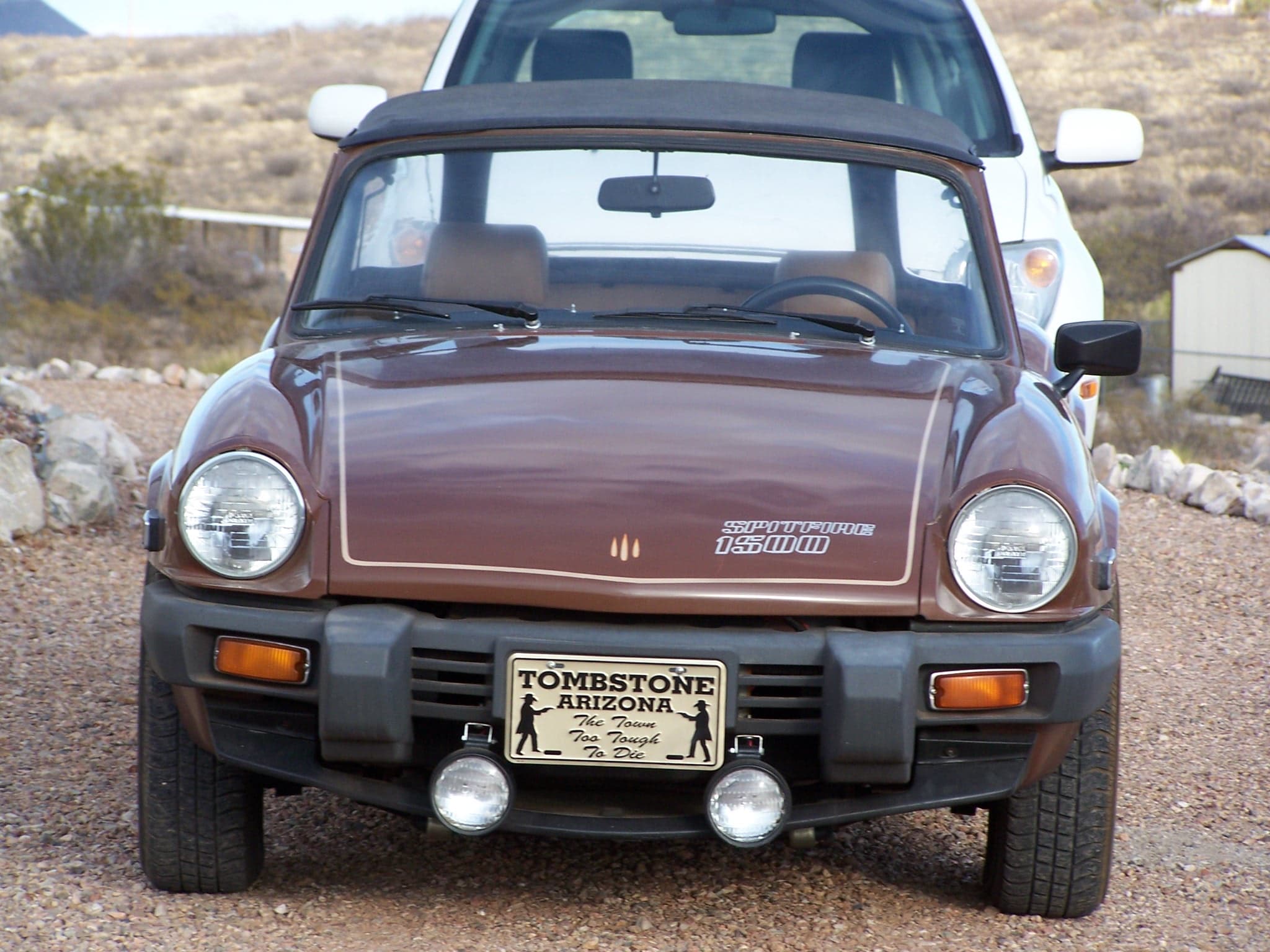
The cars of the 1970 model year, numbered from 75001 in the Register's notes, are easier to spot. Like every Mk III from that number they had wider wheels and no TRIUMPH letters on the bonnet (hood); theirs carried SPITFIRE over an RAF roundel, a badge the Register says was fitted for that model year alone, though Wikipedia says only some cars had it. The Register adds side-marker lamps and reflectors on the wings (fenders), a lock on the steering column and, inside the boot (trunk), a squarish cut-out in an inner panel, the right-hand one as it recalls, for the canister of an evaporative-emissions system. Most of these cars, it says, had a single Stromberg carburettor where British Mk IIIs kept twin SUs.source 6source 4source 9source 12
The American Mk IV, 1971–72
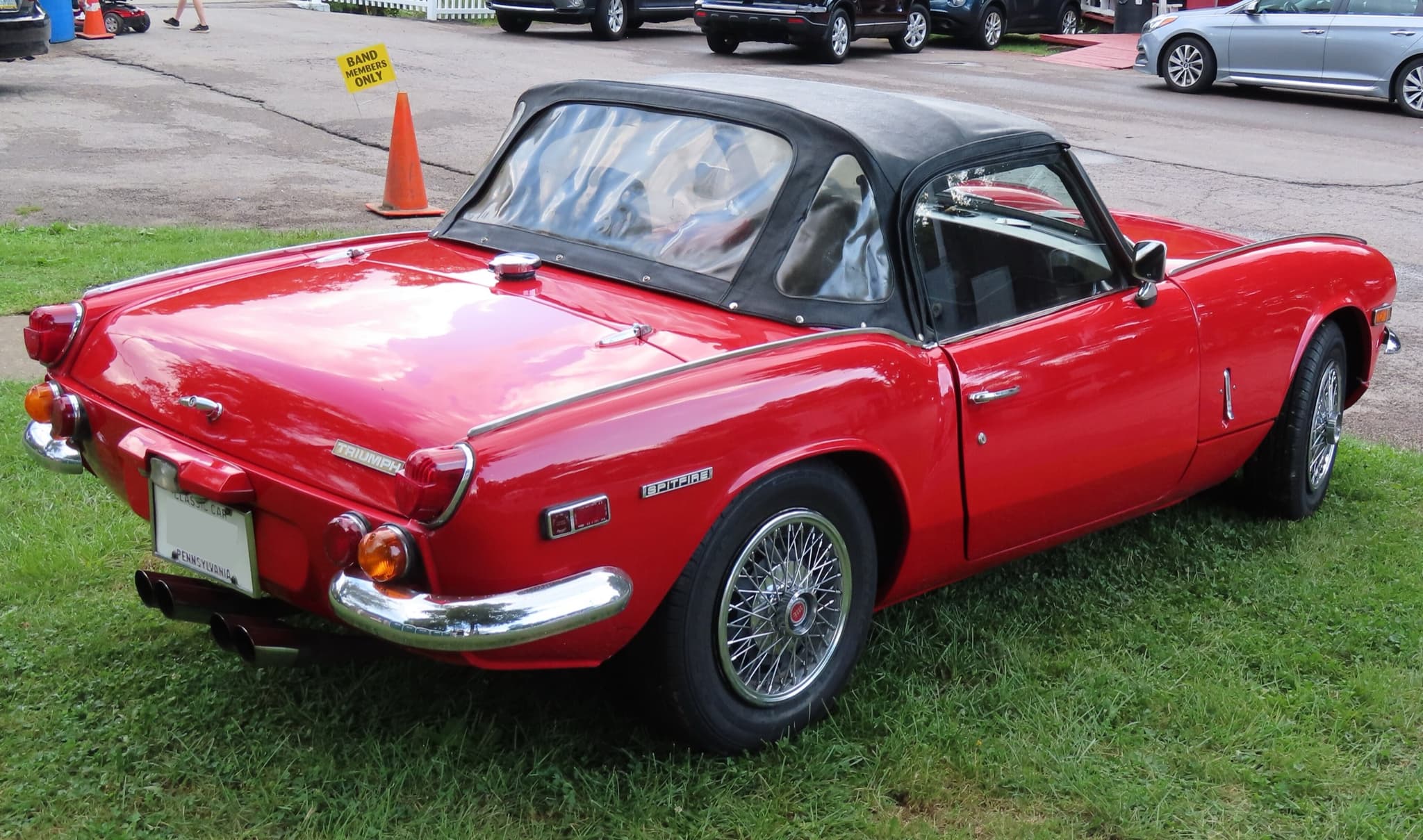
The Mk IV reached America for the 1971 model year, with its new body and the swing spring at the back, which the Register lists for the 1971 and 1972 model years together with a larger front anti-roll (sway) bar. Its engine was the British car's in size but not in tune. triumphspitfire.com gives the American cars a single carburettor and a prefix of their own, FK, and lower gearing for the 1972 model year. Classic & Sports Car says emission equipment lowered their power, and the Mk IV's page shows the readings, which differ on the compression ratio too.
Road & Track, testing the Mk IV in 1970, put the loss plainly, as AROnline quotes the magazine:
The engine has actually lost power since our last test. The two SU carbs formerly used (and still used in Triumph's home market) have been replaced by a single Stromberg CD emissions-control unit and the power rating has gone down from 75 to 68 bhp. That's the breaks: Triumph's approach to emission control is to keep it simple and trim power.
The higher of its two figures is the gross rating Triumph gave the twin-carburettor engine; the lower is Road & Track's figure for the single-carburettor American engine, and, like the other figures in print for the American Mk III and Mk IV, it carries no rating.source 6source 9source 3source 13source 11
The 1500 in the Mk IV's body, 1973–74
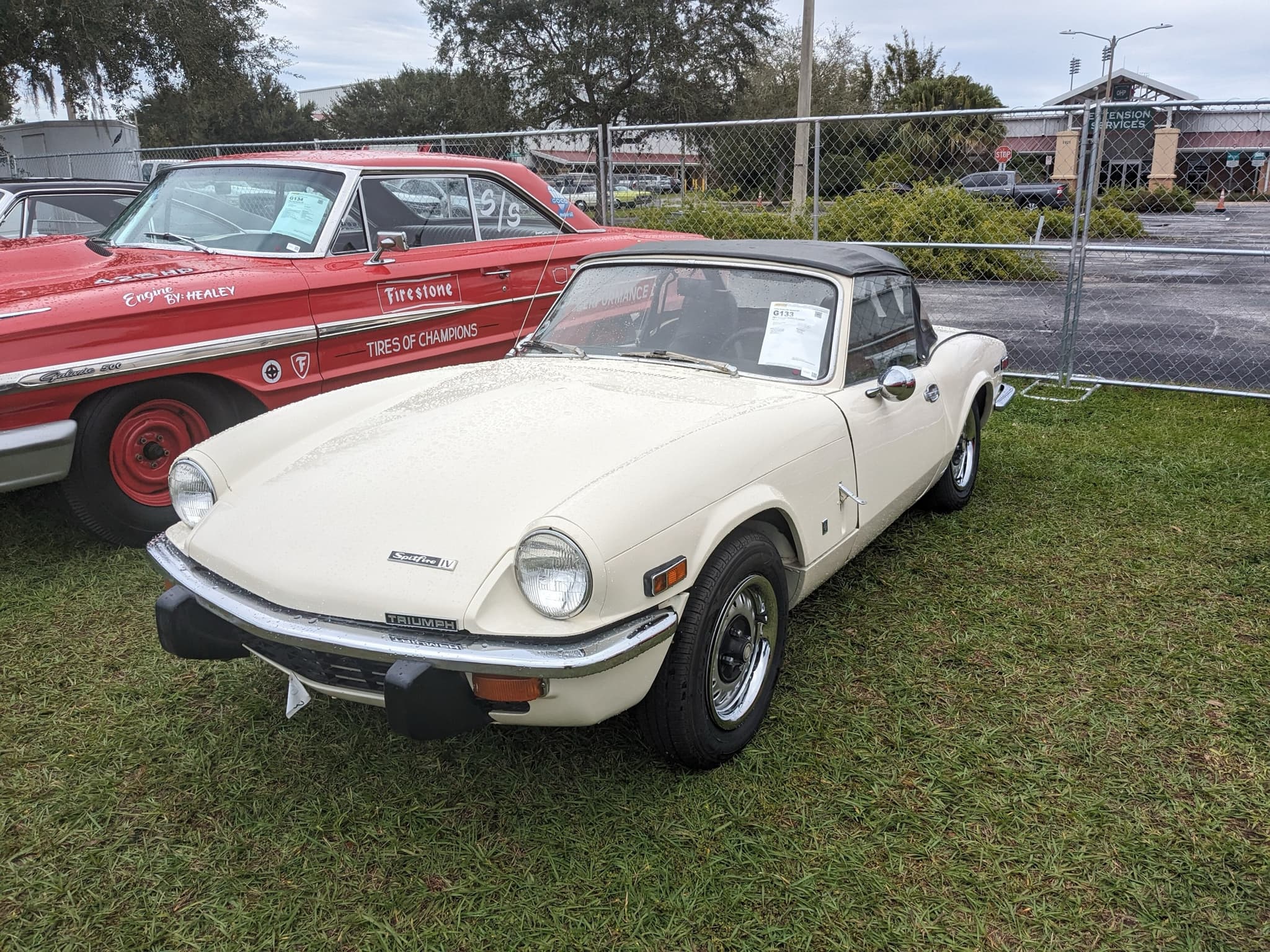
For the 1973 model year American cars took a bigger engine, the longer-stroke four that the rest of the world would not have until late 1974. They kept the Mk IV's body, under the name Spitfire 1500; triumphspitfire.com dates the first, FM1, to August 1972. An American advertisement for that model year promised more engine, a wider track, taller gearing and a bigger clutch, and tied the car's name to the fighter, as in culture shows. Classic & Sports Car counts these two model years as Mk IVs, but their commission numbers, beginning FM, put them with the 1500s that followed.
AROnline records British Leyland advertising for the American 1500 in September 1972, with the car pictured beside a Spitfire fighter. Another advertisement of 1973, dated by its uploader to Time of 26 March 1973, sold the new car on the old one's racing:
Win after win. Race after race. 30 times last year the Triumph Spitfire showed the world what a championship sports car is made of.
On that dating, the 30 wins are the maker's claim for 1972; the racing page has the results the sources record.
British Leyland's brochure for the 1974 model year, the only American brochure among the sources read, describes the car in detail: a single Stromberg carburettor with exhaust-gas recirculation, a front spoiler, rubber overriders (bumper guards) front and rear on stronger bumpers, an aerial and speaker built in, a day/night mirror, dimmable instrument lighting, and a seat-belt interlock that kept the engine from starting until both belts were buckled. Its options ran from overdrive and radial tyres to a chrome luggage rack, a ski carrier, Koni dampers (shock absorbers) and a striping kit. The colours it offered are listed on colours.
One milestone falls in these years: triumphspitfire.com records that the 200,000th Spitfire, a US-market car, was built on 9 July 1973. Not every American car came from Canley. Many Spitfires sold in the United States, AROnline says, were assembled in Belgium, at Mechelen (Malines), usually ahead of the busiest seasons, and a news report of June 1974 confirms that the plant was building Spitfires; it was then to close that December, and its story is on history. triumphspitfire.com adds that a few American cars of the 1974 model year were assembled at Seneffe, which the same news report calls British Leyland's main Belgian plant, with a 1FM prefix and an IU suffix; no other source read says Seneffe built Spitfires.
The American 1500, 1975–80
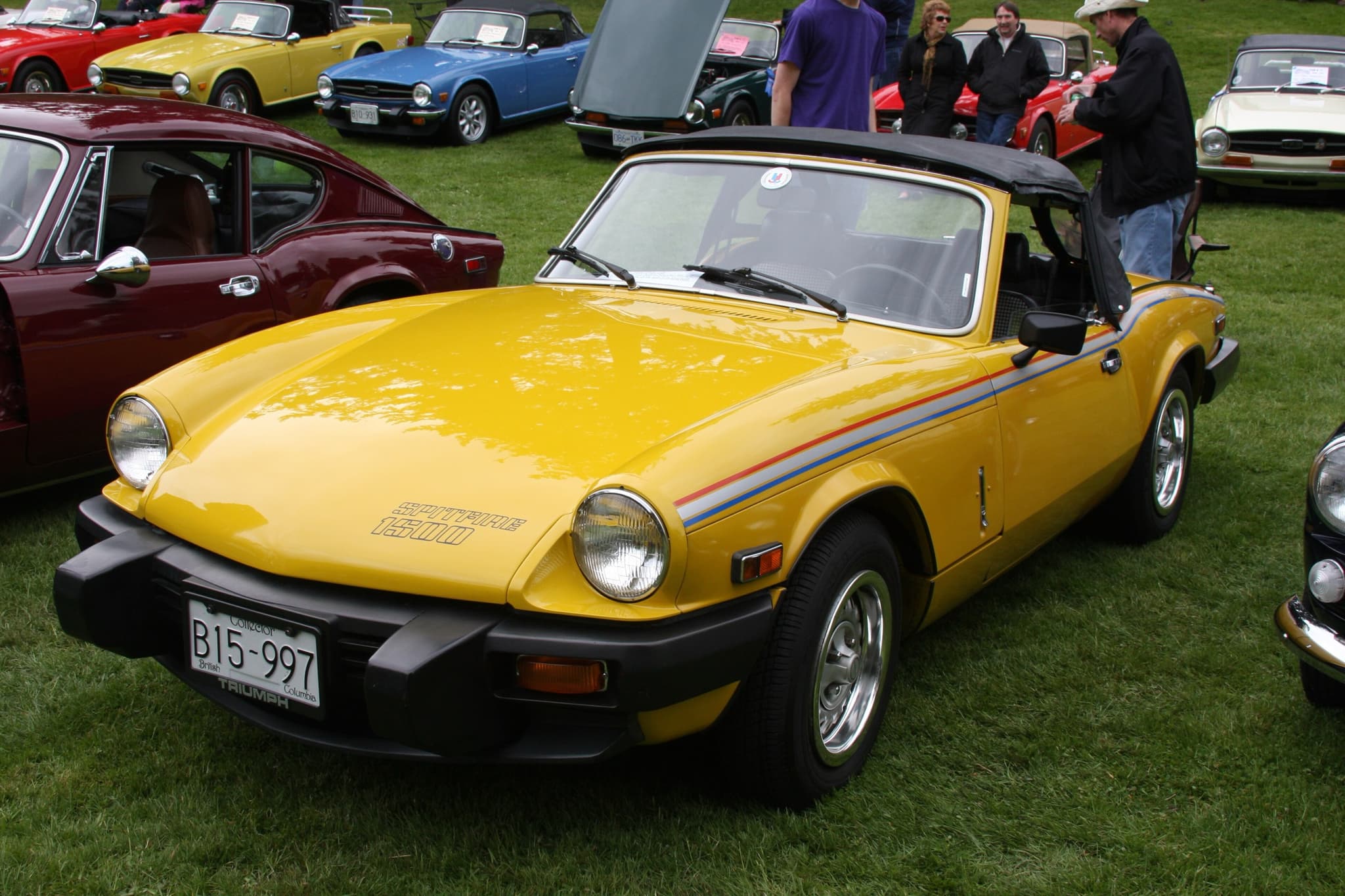
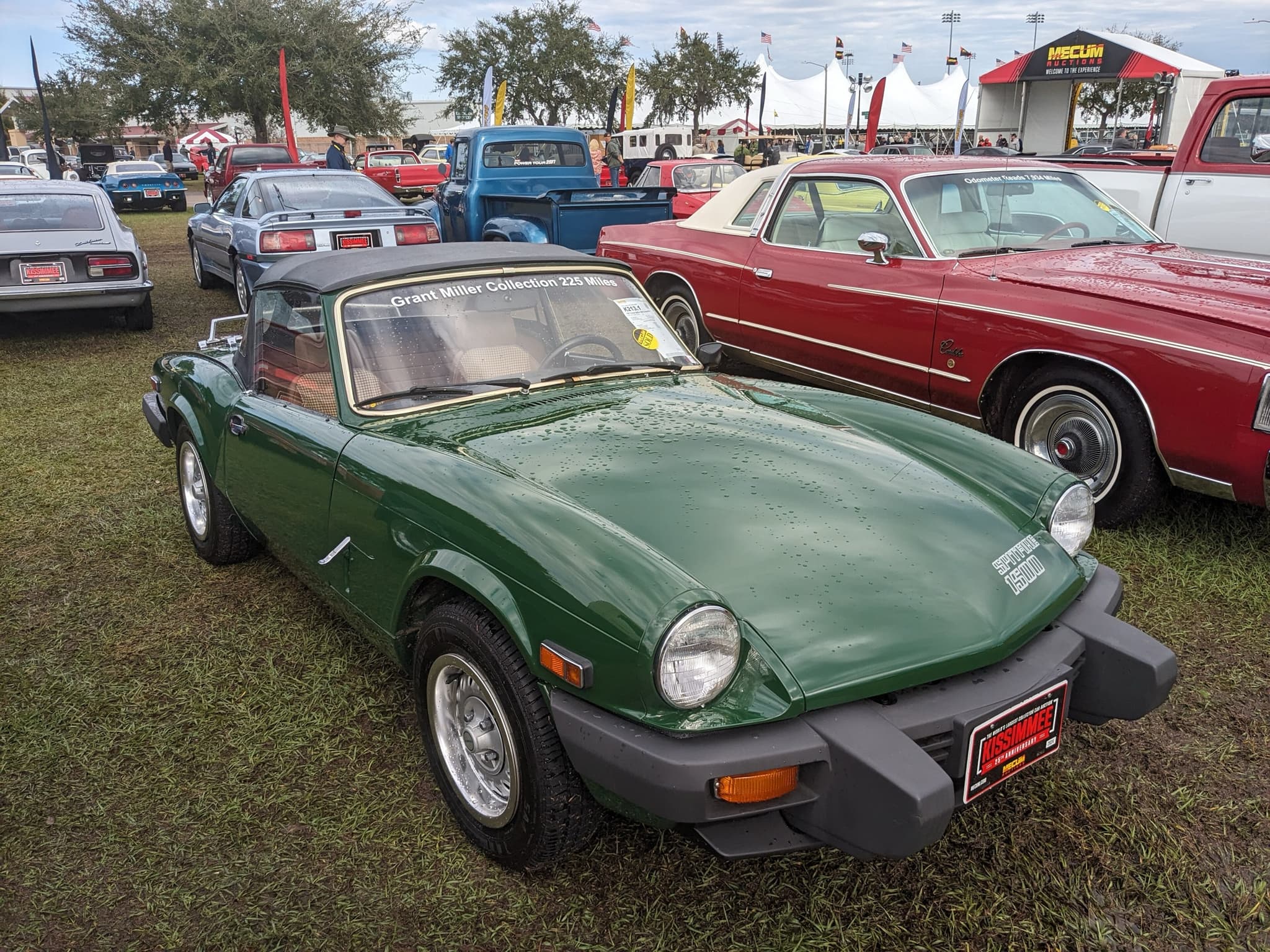
From late 1974 British and European buyers had the 1500 too, but the American car kept a specification of its own. The table gives each model year of the American 1500 from the first, with the commission number at which triumphspitfire.com's table starts it. Two of those numbers, FM10002 and FM60006, are only the earliest that owners' look-ups have turned up, and the site's own table contradicts itself in places.
| Model year | First number | New for American cars | Changes recorded by |
|---|---|---|---|
| 1973 | FM1 | The 1500's engine, in the Mk IV's body | The Vintage Triumph Register |
| 1974 | FM10002 | A front spoiler, rubber overriders and a seat-belt interlock | The American brochure for the 1974 model year |
| 1975 | FM28001 | In California, a catalytic converter; the site numbers Californian engines from FM34714UCE | triumphspitfire.com |
| 1976 | FM40001 | A higher compression ratio, for this model year alone by triumphspitfire.com's account and, outside California, to the 1978 model year by Moss Motors' data | triumphspitfire.com; Moss Motors |
| 1977 | FM60006 | A catalytic converter on every car, column stalks and cloth seats | triumphspitfire.com |
| 1978 | FM70001 | Black mirrors and a safety catch on the bonnet | triumphspitfire.com |
| 1978½ | FM90001 | A half model year, built from June 1978 | triumphspitfire.com |
| 1979 | FM95001 | Full-width black rubber bumpers, from some point in the model year | AROnline; Wikipedia; triumphspitfire.com, which gives two different starts |
| 1980 | FM110001 | Side-impact bars in the doors, and VINs from October 1979 | triumphspitfire.com |
The open car itself became a selling point. In 1975, AROnline reports, Americans bought 17,000 convertible Triumphs, TR6s and Spitfires together, helped by a belief that convertibles were soon to be banned and by British Leyland's advertising line "Save an endangered species: Buy one".
Classic & Sports Car's buyer's guide is blunt about the later cars:
Later American-spec models are even more hampered, with 5mph bumpers, extra rear outriggers and a single carb; the speedo only goes up to 80mph.
Hardtops and options describes the dealers' stripe kits.source 6source 9source 5source 13source 4source 3source 11
The 1978½ cars
According to triumphspitfire.com's table, compiled from owners' Heritage look-ups, Canley began a half model year in June 1978: cars numbered from FM90001 were sold as "1978½" Spitfires. The table's last 1978½ number is FM93189, the 1979 model year began at FM95001 in August or September, and the table warns that a 1978½ car may be listed as a 1979 model. No other source read mentions the half year, and none says what, if anything, set the cars apart from the 1978 models.source 9
How to tell an American Spitfire
The commission number
An American prefix or suffix: FDU, FK or FM before the serial, or U or UC after it, as the next section explains.
The door pillar
On later American cars, the car's number beside the driver's door striker, by Moss Motors' data.
The dashboard
On a Mk III of the 1969 or 1970 model year, the instruments face the driver instead of sitting in the centre.
The 1970 badge
SPITFIRE over an RAF roundel on the bonnet.
The boot
On a car of the 1970 model year, a squarish cut-out in an inner panel for the emissions canister.
The wings
Side-marker lamps or reflectors, which the Register lists among the 1970 cars' marks.
The bumpers
Rubber overriders from the 1974 model year, and full-width black rubber bumpers on cars of the 1979 and 1980 model years.
Under the bonnet
On most cars from the 1970 model year, one Stromberg carburettor where British cars had twin SUs.
The VIN
From October 1979, by triumphspitfire.com's key, a third letter V for an American car, Z for a Californian one and L for a Canadian one.source 6source 13source 9source 5source 4
Commission numbers
Until October 1979 an American Spitfire, like every other, was identified by its commission number, and its prefix names the car. Only one of the American prefixes is confirmed outside triumphspitfire.com:
| Prefix | Cars | Who lists it |
|---|---|---|
| FDU | American Mk III; the site gives no model years | triumphspitfire.com |
| FK | American Mk IV, 1971 and 1972 model years | triumphspitfire.com; the Vintage Triumph Register lists the Mk IV's FH numbers against those years instead |
| FM | American 1500, from the 1973 model year to October 1979 | The Vintage Triumph Register; triumphspitfire.com |
| 1FM | American 1500s reported as assembled in Belgium, 1974 model year | triumphspitfire.com |
After the serial, U marks a car built to American specification, UC one built for California, O one with overdrive and L one with left-hand drive, as Practical Classics gives them. triumphspitfire.com gives engine numbers with an E at the end, as in FM28001UE. For an FM car, the model year is the latest in the 1500 table above whose first number is at or below its own; no source read gives the FK cars' numbers year by year. For Canadian cars' numbers the sources read say little: triumphspitfire.com gives later Canadian cars an L in the VIN, and no other source read confirms it.source 9source 6source 19
FM40001U
- FMPrefix: a Spitfire 1500 built for America
- 40001Serial: the first car of the 1976 model year
- USuffix: built to American specification
VINs, 1979–80
From October 1979, triumphspitfire.com says, a VIN (vehicle identification number) plate took the place of the commission plate, and the last American commission number in its table is FM111120. A VIN has 14 characters: eight that describe the car, then a six-figure serial. Practical Classics confirms that the late VINs begin TF and reads two of the figures for drive and overdrive; the rest of the key is triumphspitfire.com's, and the site misprints some of its own prefixes. Identification decodes a whole number.
The VINs had barely begun when the line stopped. Production ended at Canley in August 1980, and the last Spitfire of all, which the British Motor Museum keeps, has a VIN recorded by triumphspitfire.com as TFADW5AT009898: by the same key, an A in the third place, the mark of a car for Britain and Europe.source 9source 19source 16source 6source 20
TFZDW6AT
- TTriumph
- FSpitfire
- ZMarket: Z for California, V for other American cars, L for Canada, A for Britain and Europe
- DA two-seat convertible
- WThe 1500's engine
- 6Left-hand drive with overdrive; 2 without it
- AThe 1980 model year; the key gives 9 for the 1979 model year
- TBuilt at Canley
Sources
Sources are given as plain text; their addresses are on the sources page.
- Primarymade at the time, by the maker or by people who were there
- Referenceserious later work: clubs, specialists, magazines, books
- Uncheckedencyclopaedias and enthusiast sites: cited beside a good source, named in the sentence, or marked Unchecked
- Graham Robson, "One Design, Many Derivatives", Moss Motoring, 26 Oct 2022, North American dealers; sales against the Sprite and Midget; the American legislation. Reference
- triumphspitfire.com, "Did You Know?", modified 3 Aug 2023, sales against the Midget. Unchecked
- Malcolm McKay, "Triumph Spitfire buyer's guide: what to pay and what to look for", Classic & Sports Car, 10 May 2019, US section. Reference
- Wikipedia (EN), "Triumph Spitfire", 2026, Mk III section, citing Autocar, 15 February 1968; Mk III section; 1500 section: bumpers; power; 1500 section: bumpers and reflectors. Unchecked
- British Leyland Motors Inc., Spitfire 1500 (sales brochure), USA, 1974 model year, SP741, 1973, back cover; competition page; p. USA-5; "New for 1974"; options; "New for 1974"; p. USA-5; "New for 1974". Primary
- Vintage Triumph Register, "Spitfire" (production history, production dates and numbers, buyer's guide tabs), 1969 federal dashboard; production dates and numbers, labelled by model year; 1969 federal dashboard; 1970 identification; production dates and numbers: 1971–1972; production dates and numbers: 1973–1974; production dates and numbers: 1975–1980; production dates and numbers; end of production. Reference
- Chris Cowin, "History: Exporting British cars to Canada – Part One: Commonwealth Preference?", AROnline, 2 Aug 2025, British Leyland Motors Canada; "eighty per cent"; 1968; "carbon copy". Reference
- Chris Cowin, "History: Exporting British cars to Canada – Part Two: The British Leyland Years", AROnline, 19 Aug 2025, Canadian brochures; the 1979–80 bumpers. Reference
- triumphspitfire.com ("Spitfire & GT6 Magazine and Information Warehouse"), Reference pages (group): models and options; Mk I–1500 options-and-changes logs; engine numbers; 1979–80 VINs; what year is my car; final drive; general specification data; stock tyres; wheel alignment; lubrication; tuning; fuses; paint and trim codes; side stripes; decal and badge placements; wire wheels; head swaps; substitute parts; suppliers; new owner; pre-purchase checklist; spotters guide, pages modified 2023, "What year is my car?"; 1500 half-year table; Mk III options-and-changes log, FD75000; models page; engine numbers; final drive; 1500 half-year table; Mk IV options-and-changes log; models page; 1500 half-year table; 1500 options-and-changes log; general specification data; 1500 half-year table; plates; 1979–80 VINs; models page; engine numbers; 1500 half-year table; 1979–80 VINs; 1500 half-year table. Unchecked
- British Motor Museum (BMIHT), "Heritage Certificates", service description. Primary
- Chris Cowin, "History: Exporting British cars to the USA – Part Two", AROnline, 31 May 2025, updated 21 Oct 2025, the American model year; Road & Track's 1970 road test of the Spitfire Mk IV, quoted; 1500 advertising, September 1972; Spitfires assembled at Mechelen/Malines; 1975 sales and advertising; the 1979 bumpers. Reference
- Chris Cowin, "History: Exporting British cars to the USA – Part One", AROnline, 31 May 2025, updated 20 Feb 2026, "The rise of regulation": California 1967, the rest of the USA 1968. Reference
- Moss Motors, "Car Specifications – Triumph Spitfire Mk IV 1971–1974"; "…Spitfire 1500 (1975–1980)", Spitfire Mk IV 1971–1974, compression ratio; Spitfire 1500 (1975–1980), compression ratio; Mk IV and 1500 spec pages, the door-pillar plate. Reference
- British Leyland Motors Inc., Leonia NJ, "You not only get a car and a girl but a piece of history." (advertisement, Triumph Spitfire 1500), US, 1973 model year, 1972, advertisement copy. Primary
- Classic & Sports Car, A–Z of classics: Triumph Spitfire I, II, III, MkIV, 1500, Triumph Spitfire MkIV. Reference
- Canley Classics, "Production Figures", Spitfire MK IV and Spitfire 1500 rows; Spitfire 1500 row. Reference
- Honest John Classics news archive (period news reproduced; original paper not named), "Belgian set-back" (news item, 29 June 1974), 29 Jun 1974, para. 1: Malines and Seneffe. Reference
- British Leyland Motors Inc., Leonia NJ, "You don't stay a champion by resting on your laurels. Introducing the Triumph Spitfire 1500." (advertisement), *Time*, 26 Mar 1973, body copy (scan undated; dated by its uploader). Primary
- Practical Classics, "Buyers Guide: Triumph Spitfire", May 2000, p. 84, suffixes; p. 84, the late VINs. Reference
- British Motor Museum, "Spitfire 1500 (last of line), 1980", accession 1980-1-190, object record. Primary