Triumph Spitfire Production Years
Five versions between 1962 and 1980, and two ways of dating them: Canley built by the calendar, while American cars were sold by model year. Each year in turn, with the version on the line, what changed and how the American cars differed.
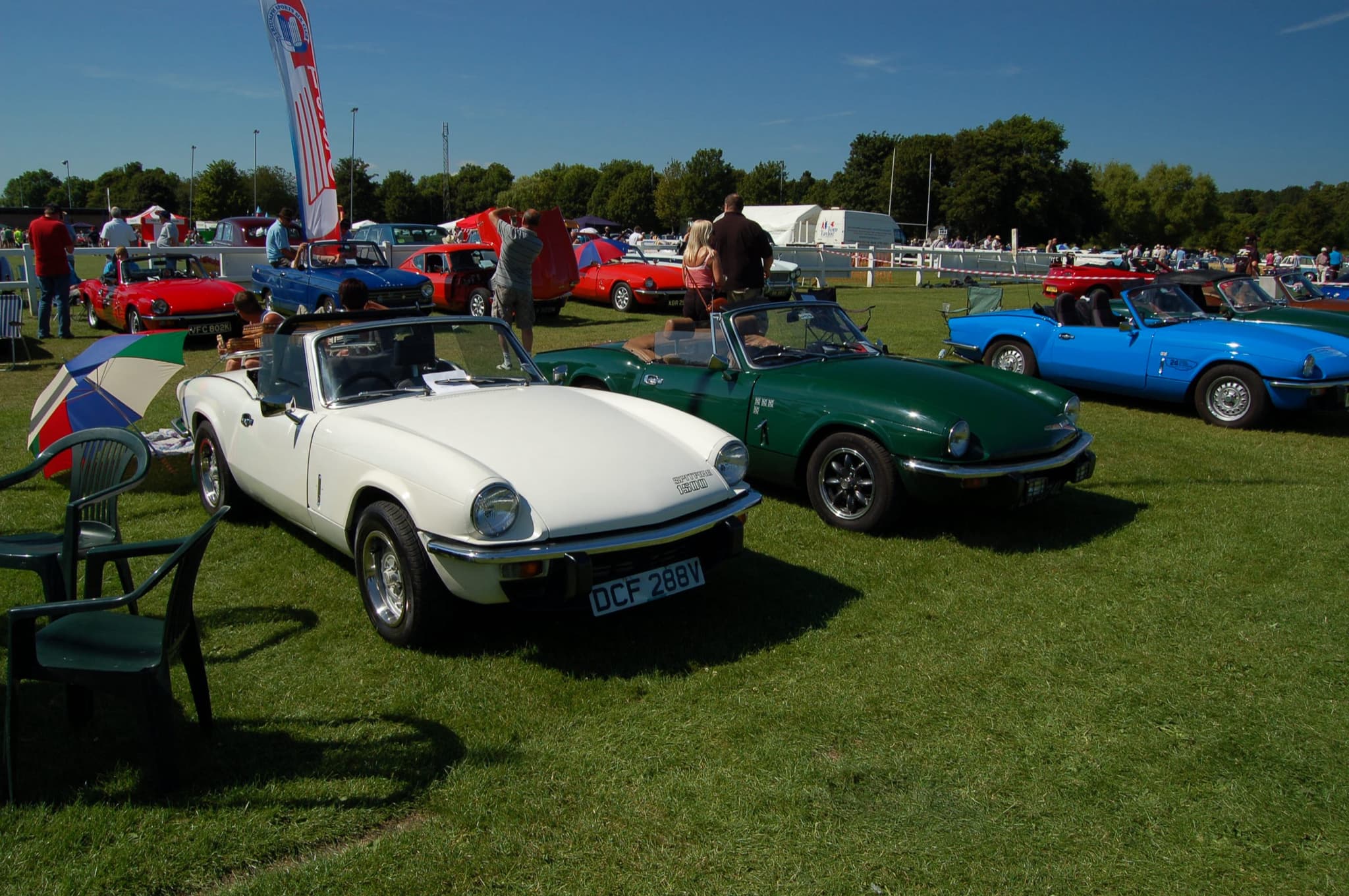
Canley, in Coventry, began building the Spitfire 4 in October 1962 and built the last Spitfire, a 1500, in August 1980. Between those two months it made five versions, and kept changing each of them while it was in production.
The calendar tells only part of that story. Classic & Sports Car puts the US share of all Spitfires at 80%. American cars were sold by model year.source 1source 2source 3source 4source 5source 6
Calendar years and model years
Each year below is a calendar year at Canley: the version on the line, what changed, and then the American cars. According to triumphspitfire.com, an American model year usually began in about the September before the year it was named for, and cars of two model years could leave the line at the same time.
For the American 1500s, the same site's table, compiled from owners' Heritage look-ups, gives the first commission number of each model year. The Vintage Triumph Register starts two of them at the same numbers, FM1 and FM28001.
| Model year | First commission number | Built from |
|---|---|---|
| 1973 | FM1 | August 1972 |
| 1974 | FM10002 | October 1973 |
| 1975 | FM28001 | September 1974 |
| 1976 | FM40001 | September 1975 |
| 1977 | FM60006 | December 1976 |
| 1978 | FM70001 | October 1977 |
| 1978½ | FM90001 | June 1978 |
| 1979 | FM95001 | August or September 1978 |
| 1980 | FM110001 | June 1979 |
FM10002 and FM60006 are the lowest numbers those look-ups found, not known starts, and the table is not consistent with itself in places. A car's title can give yet another year: North American Spitfires explains why, and how to date a car by its number.
1962
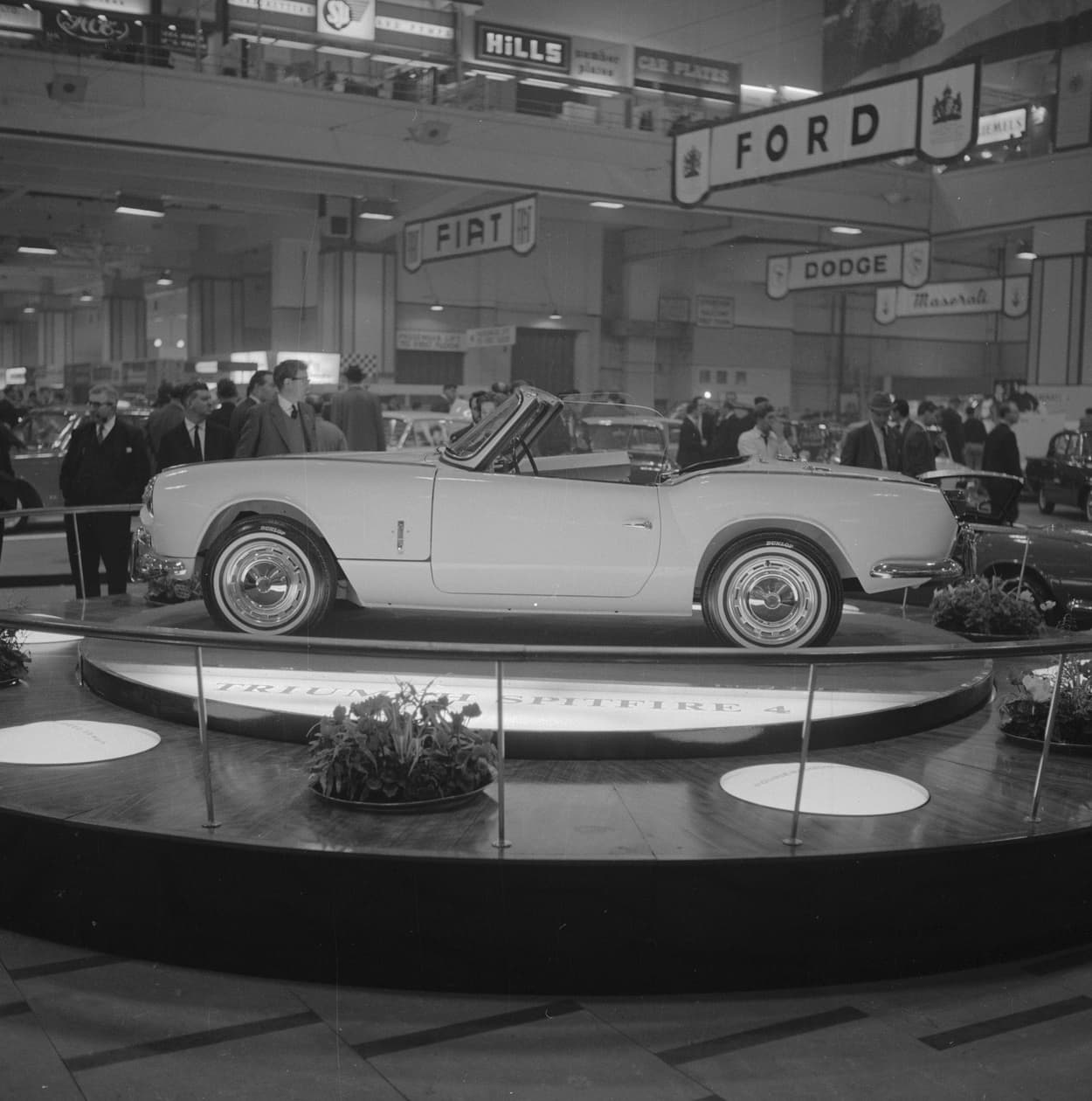
Production began in October at commission number FC1, and the car made its debut at the London Motor Show at Earls Court the same month. Under its body by Giovanni Michelotti it was mostly a Triumph Herald, on a shortened chassis, and the 4 of its name counted its cylinders. The history tells how it came to be built.
In North America, Graham Robson wrote, Triumph's dealers had had only the TR3A to sell in 1961; within five or six years they had the Spitfire, the GT6 and the TR250.source 1source 4source 2source 3source 6source 10source 11
1963
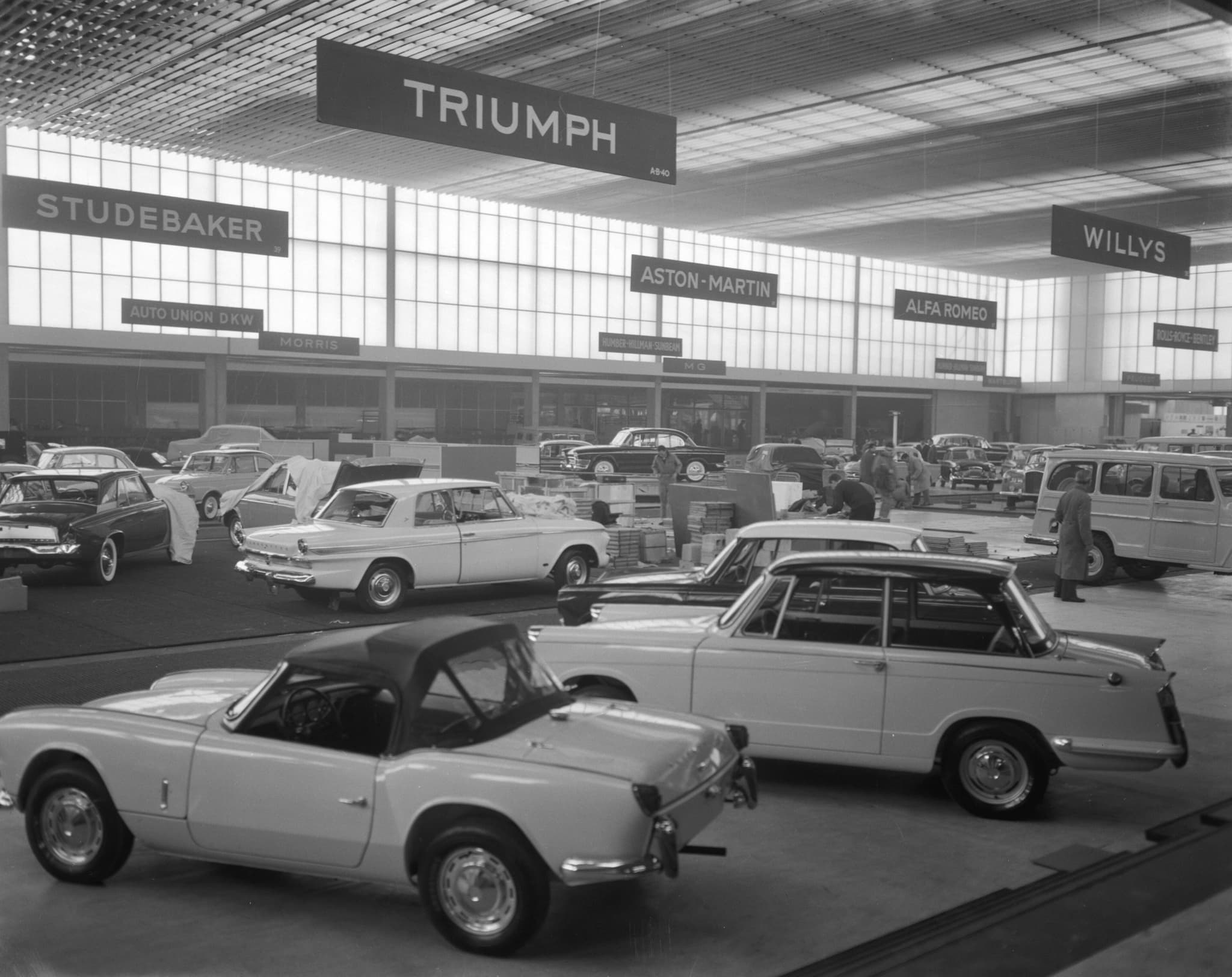
The first full year. Bill Boddy tried two press cars for Motor Sport's April issue and liked them, though the frame of the second car's passenger seat broke. The price Boddy quoted was lower than the launch price, after a cut in purchase tax; the specifications give both prices. In July, Motor Assemblies in Durban began building Spitfire 4s from kits for South Africa, and in October overdrive joined the extras, for the 1964 model year.
In the United States, Robson notes, the Spitfire cost less than Triumph's TR4.source 12source 13source 3source 9source 14source 11
1964
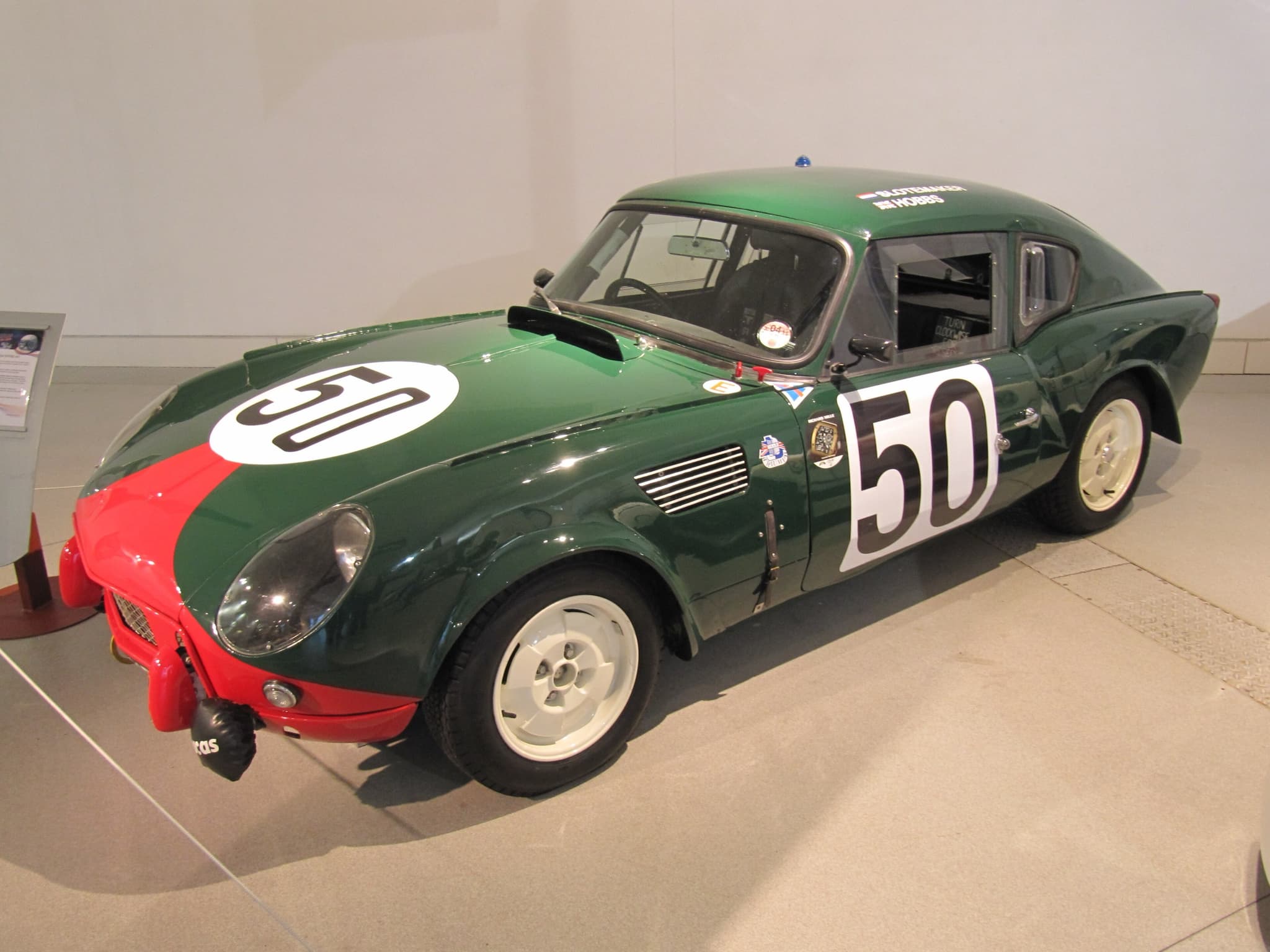
Wire wheels and a steel hardtop joined the options; Classic & Sports Car's buyer's guide dates them to February. It was the works team's first season. At Le Mans in June one of three works cars finished, 21st overall; in September Rob Slotemaker and Terry Hunter took the Tour de France's GT class for cars up to 1,300 cc; and on the Geneva Rally Hunter finished second overall. Racing covers both works seasons. In December the Spitfire 4 Mk II took the Spitfire 4's place on the line, from FC50001.
In the United States, Kas Kastner set up Standard-Triumph's competition department in 1963–64, the first of any foreign maker there, he said. In November Ed Barker won the national G Production title in a Spitfire at the first American Road Race of Champions, at Riverside.source 14source 6source 15source 16source 17source 18source 1source 4source 19source 20source 8
1965
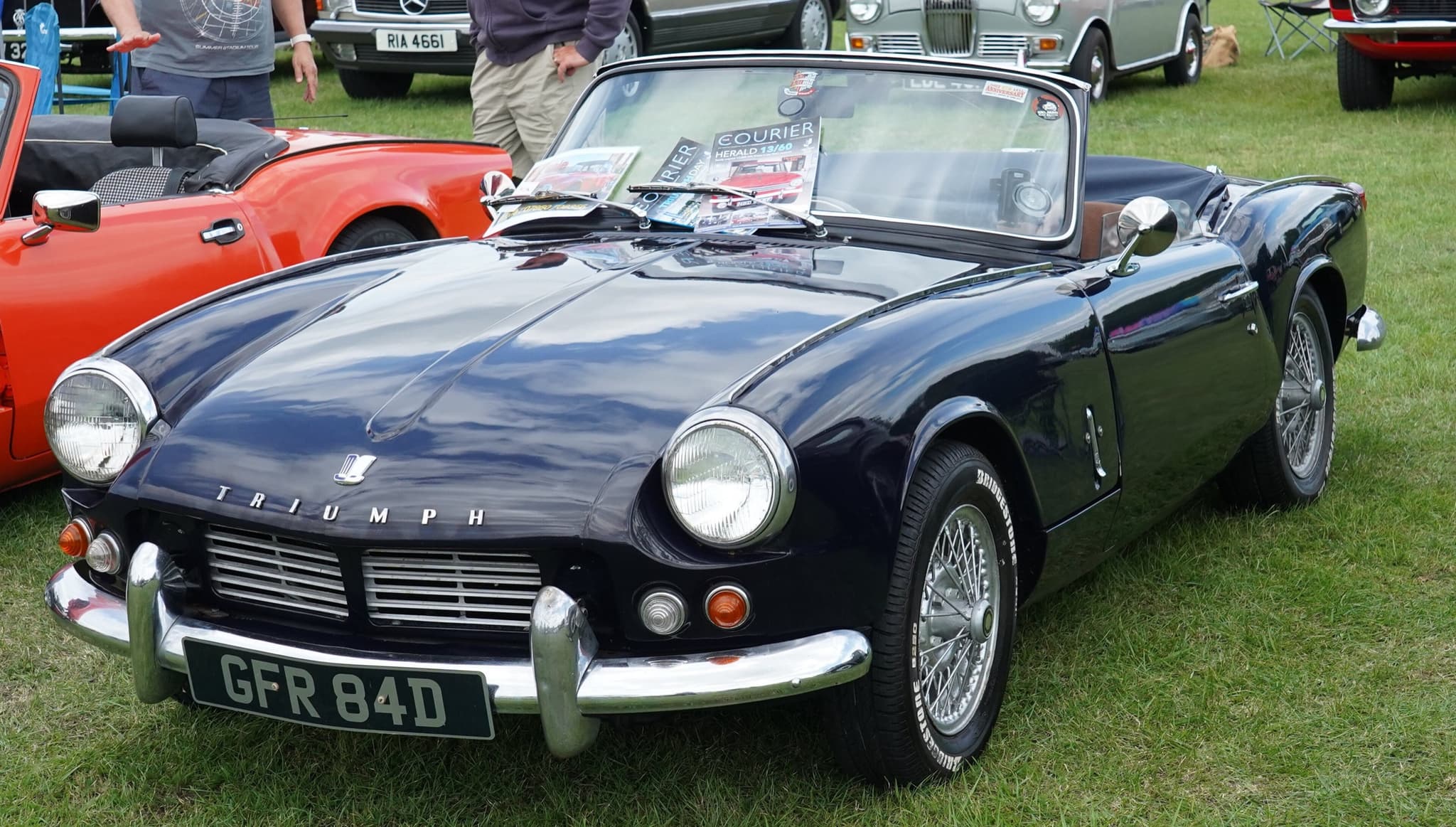
The Mk II was launched in March. Most of its changes were mechanical or inside the car: more power from a new camshaft and exhaust manifold, a lighter clutch pedal, and thicker-padded seats and moulded carpets in place of rubber mats. Outside, a grille of horizontal bars and the letters "Mk II" on the boot (trunk) lid marked it.
In June two works cars finished first and second in their class at Le Mans, and in July works cars were first and second in the Prototype category of the Coupe des Alpes.
In the United States, three of the Le Mans cars ran in the Sebring 12 Hours in March for Standard-Triumph's American company, prepared under Kastner; two finished, second and third in their class.source 9source 3source 14source 21source 4source 22source 19source 23source 24source 25source 26source 27source 28
1966
The Mk II stayed in production all year. In July production of the GT6 began on the same chassis: a fastback coupé with the six-cylinder engine of the Triumph Vitesse, sold as a model of its own. In South Africa the Mk II was announced the same month, to be assembled at Durban.
The Vintage Triumph Register, whose list is labelled by American model year, files the Mk II under the 1965 and 1966 model years.source 1source 11source 3source 4
1967
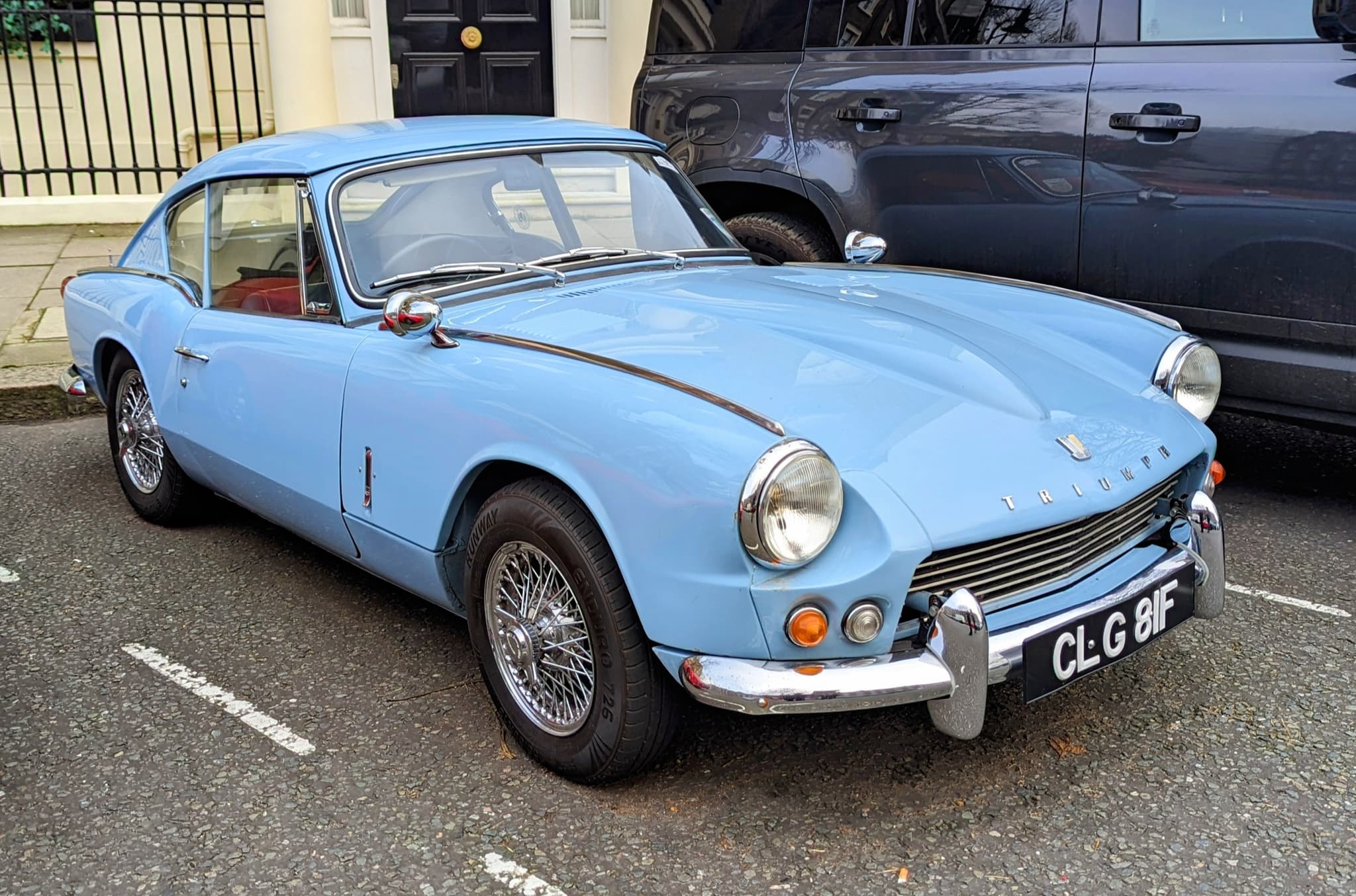
The Mk II ended in January, and the Mk III began at FD1, to be introduced in March. It changed more than any version before it. Its engine was bored out and given an eight-port cylinder head; its front bumper was raised to cross the grille, and the overriders (bumper guards) at the back were dropped; a folding hood (soft top) now stayed on the car; and a wood-veneer panel held the instruments. Motor Sport's Mike Cotton drove one to the Monaco Grand Prix by way of Milan, and wrote it up in June. In South Africa, Motor Assemblies built its last Spitfires at Durban in September.
Classic Car Africa and the Triumph Sports Six Club both put the higher bumper down to American safety rules.source 1source 4source 14source 6source 29source 9source 3
1968
According to a report in Autocar (15 February 1968), as cited by Wikipedia, Standard-Triumph's general manager, George Turnbull, drove the 100,000th Spitfire off the Canley line on 8 February, by which time more than three-quarters of them had been exported. Leyland became British Leyland the same year, and in September Leykor announced that it would assemble the Mk III in South Africa.
The same report put the American share of those first 100,000 at 45%. In November, at Riverside, Don Devendorf won the G Production title of the American Road Race of Champions in a Spitfire.source 30source 11source 3source 20
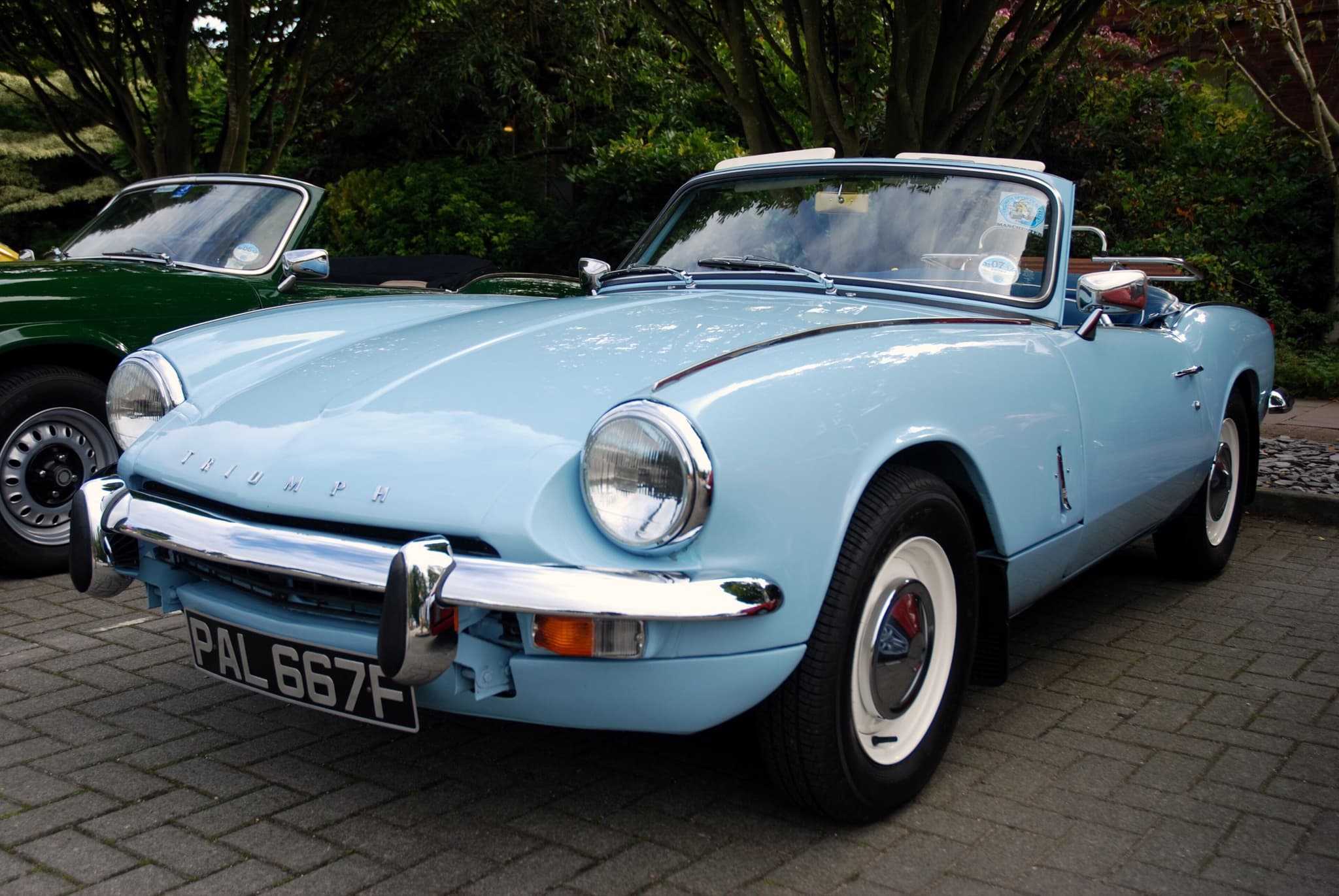
1969
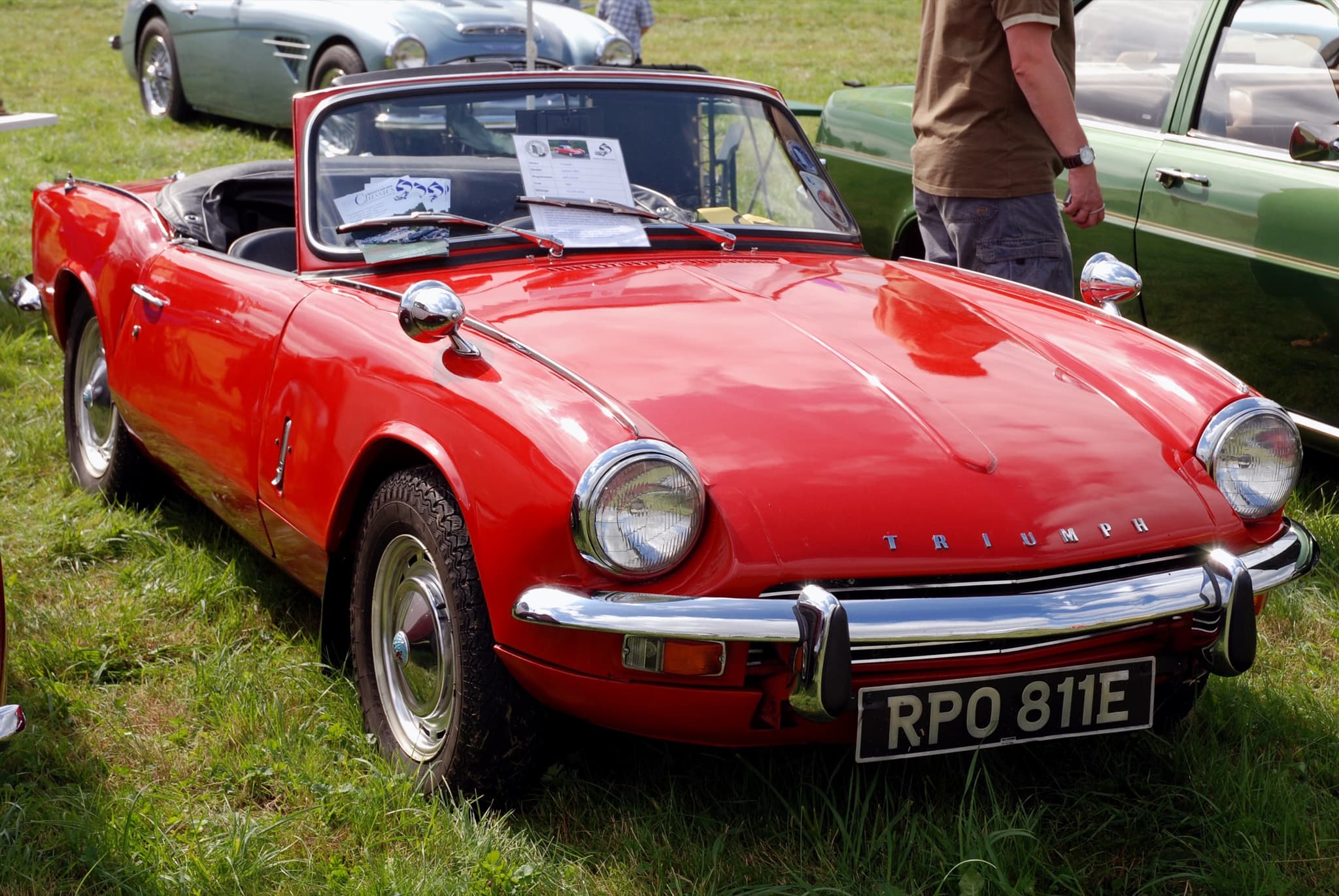
American cars of the 1969 model year had the first "federal" dashboard, with the speedometer and rev counter (tachometer) in front of the driver; other cars kept their instruments in the centre.
From about FD75000, in October by triumphspitfire.com's log, the Mk III changed again. In the United States these were the cars of the 1970 model year.source 4source 7
| Change | Recorded by |
|---|---|
| Wider wheels | triumphspitfire.com; the Vintage Triumph Register, for American cars |
| A SPITFIRE name plate on the bonnet (hood) in place of the TRIUMPH letters | triumphspitfire.com; the Vintage Triumph Register, for American cars |
| A black grille and windscreen (windshield) frame | triumphspitfire.com |
| A zip-out rear window | triumphspitfire.com |
| One reversing lamp, above the number plate (license plate) | triumphspitfire.com |
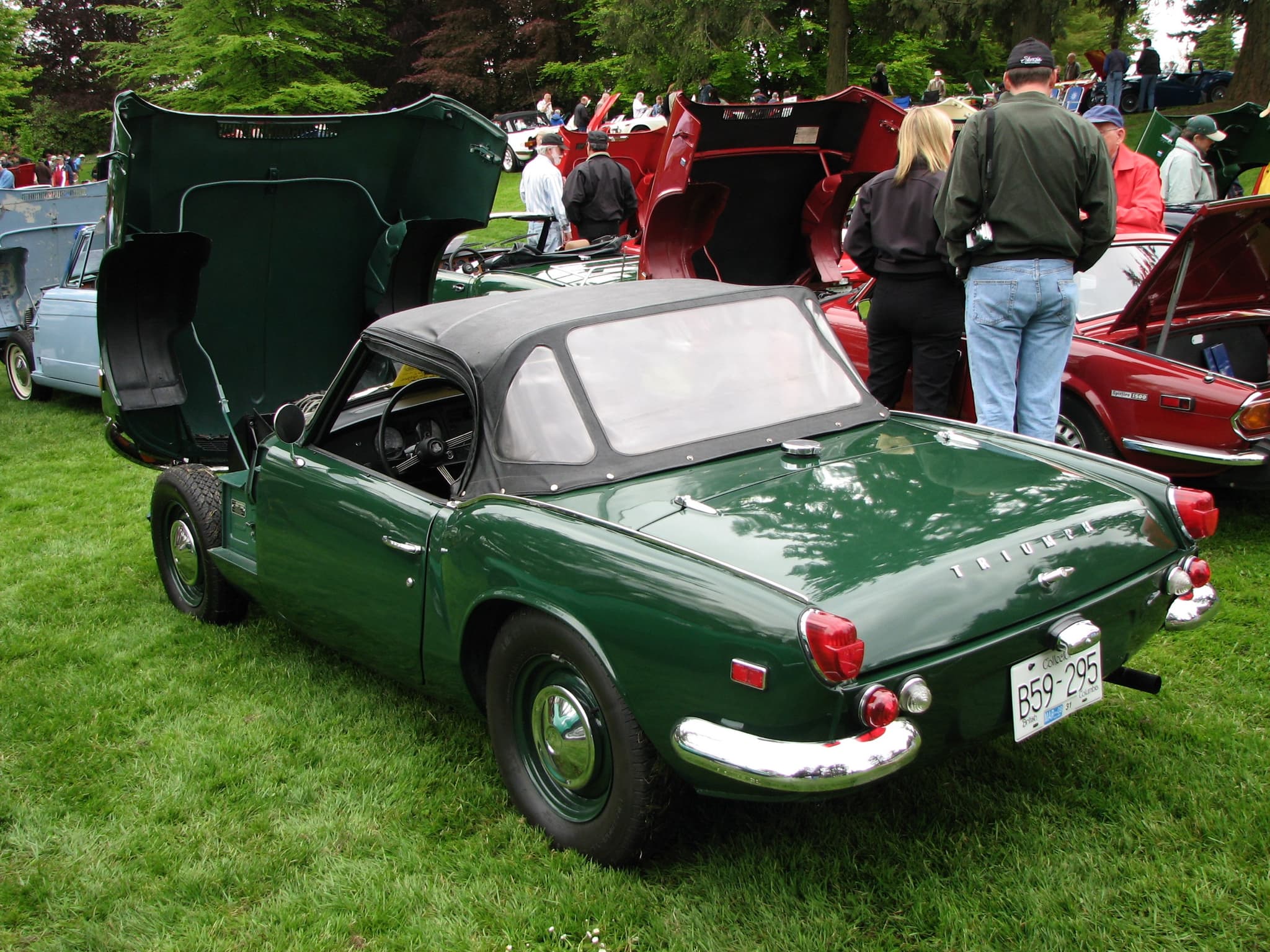
1970
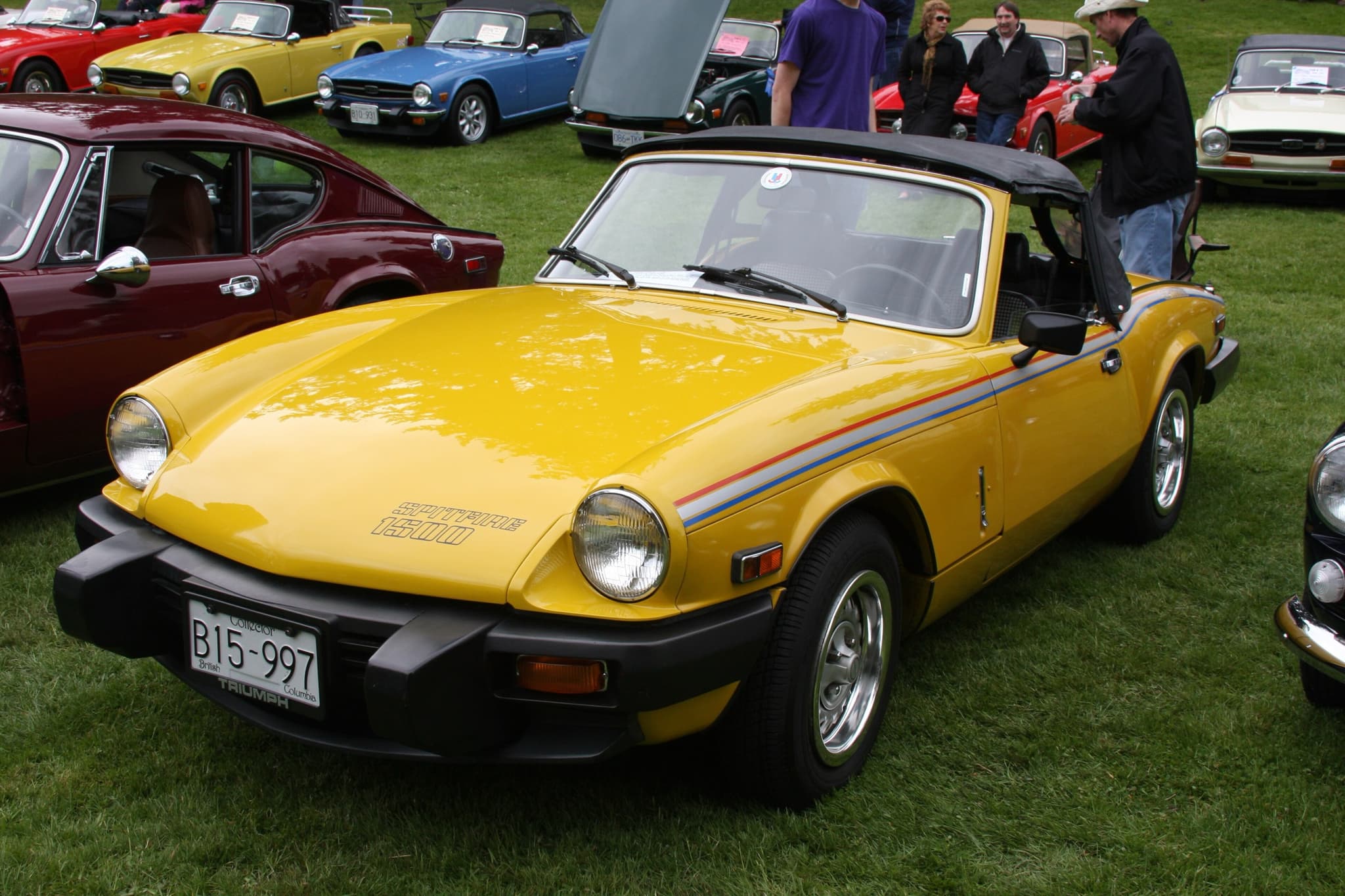
American cars of the 1970 model year are told by their bonnet badge, SPITFIRE over an RAF roundel, which the Vintage Triumph Register calls a one-year badge; Wikipedia has it on a limited number of cars only. The Register adds side-marker lamps, a steering-column lock and a cut-out in the boot for an evaporative-emissions canister, and says most had a single carburettor in place of the twin SUs.
The Mk IV was announced in October and built from November. Michelotti had restyled it, with a cut-off tail in the manner of the Triumph Stag, and it had a "swing spring" rear suspension, synchromesh on first gear and its instruments in front of the driver. Motor Sport tried one at Silverstone for its November issue. The last Mk IIIs were built in December.
In the United States, the Register's list starts the Mk IV with the 1971 model year.source 4source 30source 6source 1source 31source 9source 32
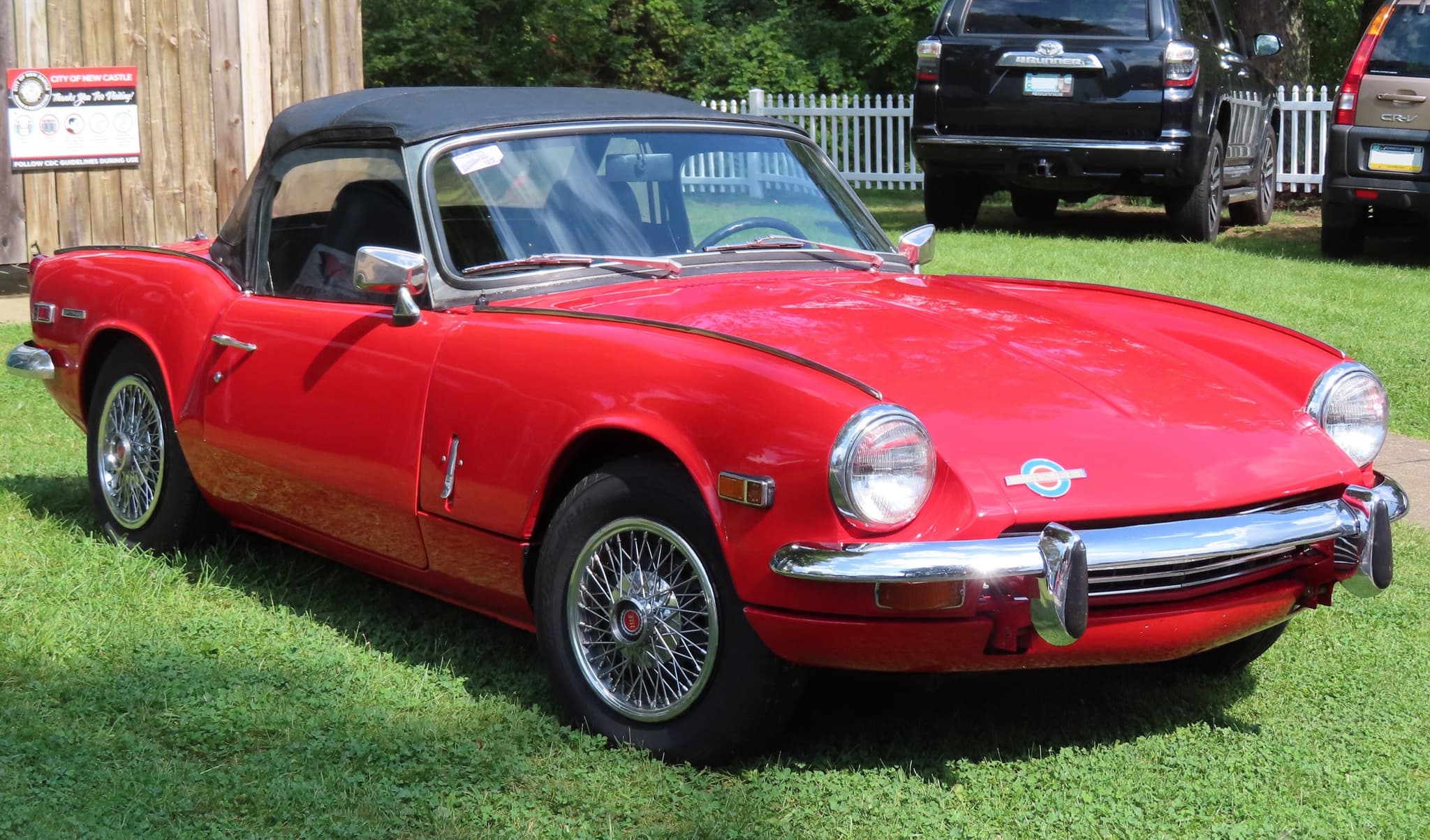
1971
The Mk IV's first full year. Bill Boddy, who tested one for Motor Sport's January issue, liked it, though it still had no oil-pressure gauge. Its optional overdrive was switched by a slide on the gear-lever knob.
American cars of the 1971 and 1972 model years were Mk IVs with emission controls, which, by Classic & Sports Car's account, cost them power. The Vintage Triumph Register lists the swing spring and a larger front anti-roll (sway) bar against them, and triumphspitfire.com lists an FK prefix for their commission numbers.source 31source 6source 7source 4
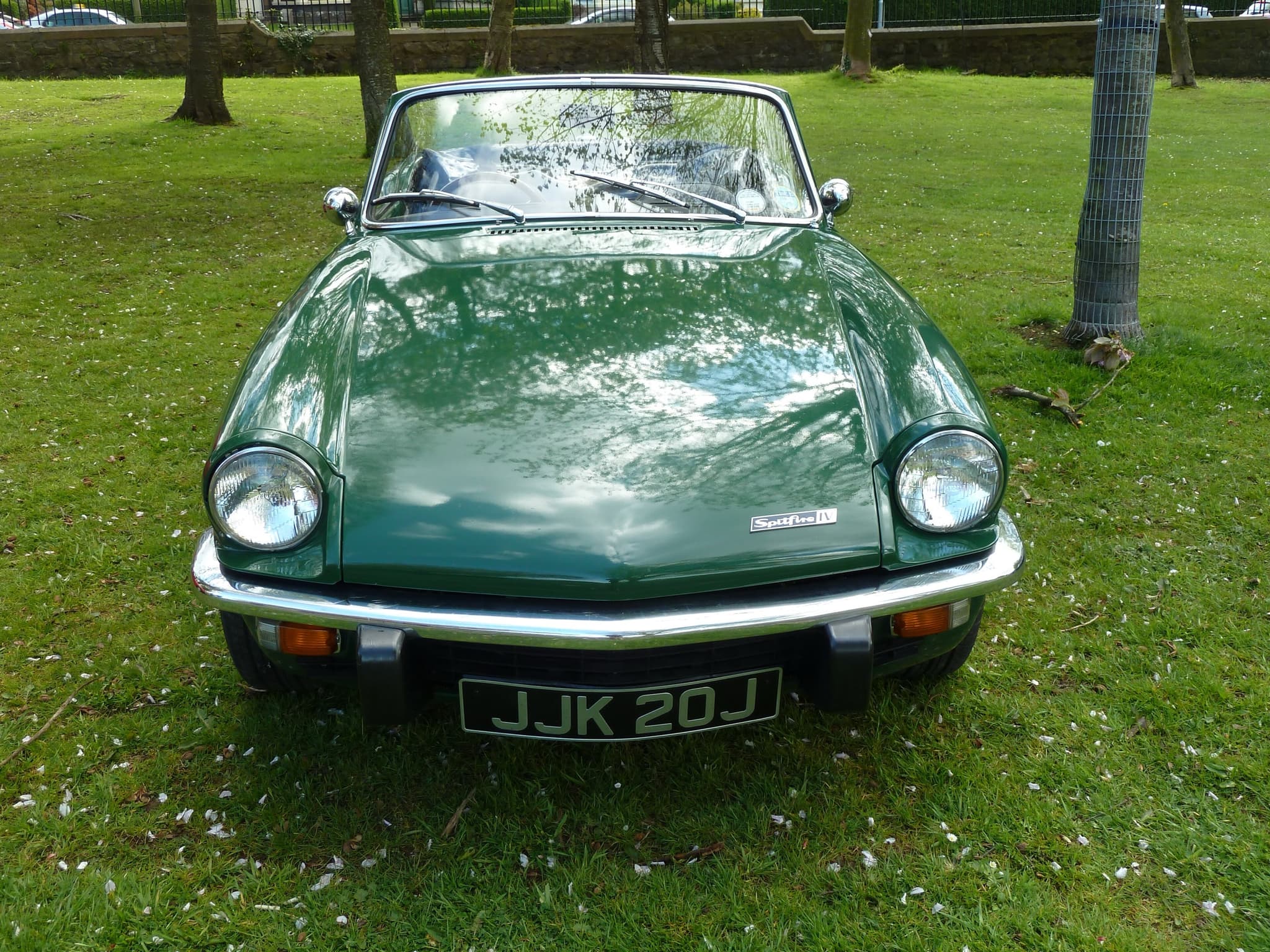
1972
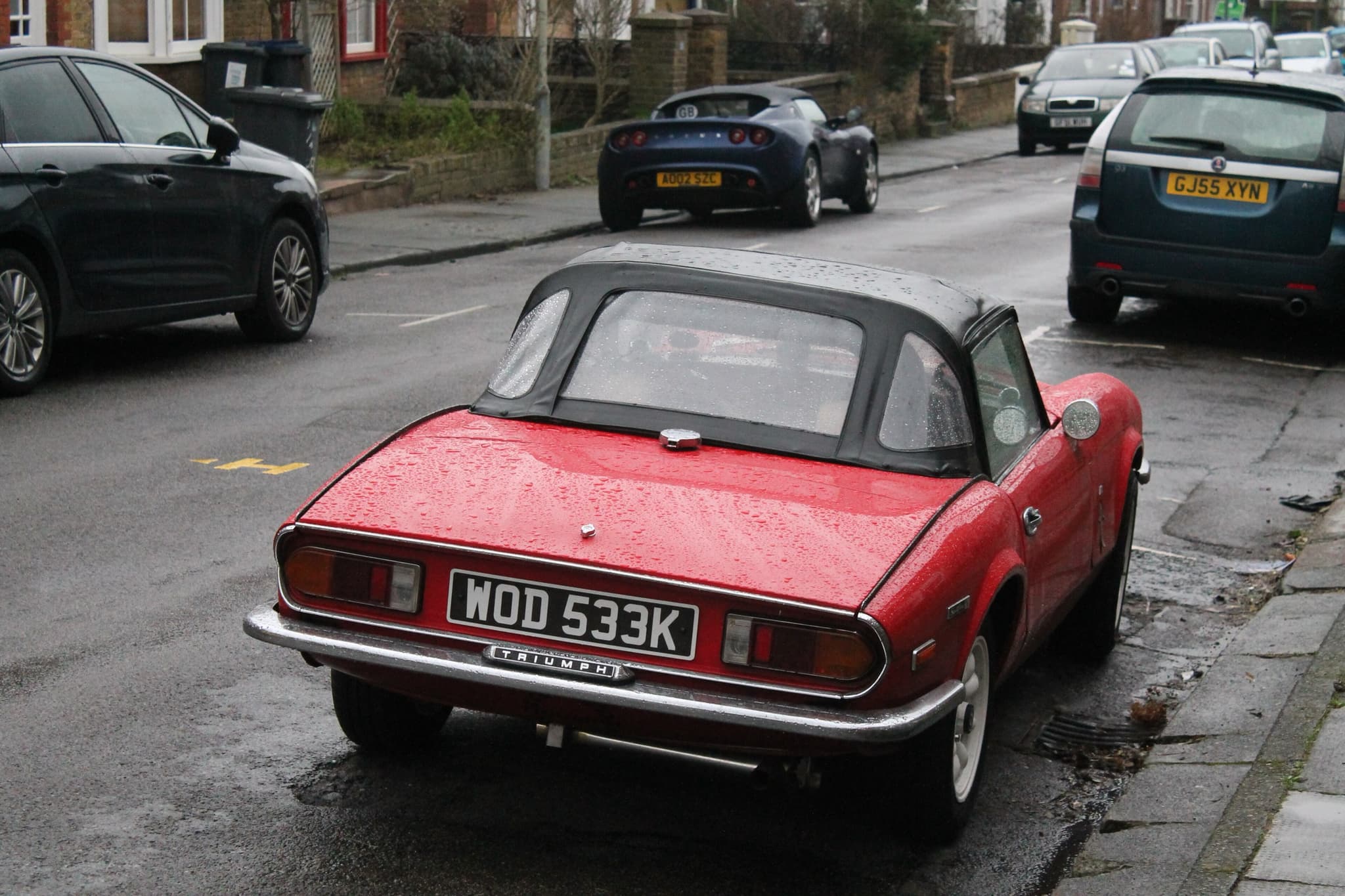
triumphspitfire.com's log dates a milder camshaft to this year, from about FH25000, and puts a smaller fuel tank a little later, from about FH28430, though the French brochure of November 1973 still lists the earlier tank.
In August, by the same site's account, Canley built FM1, the first American car of the 1973 model year. Cars of that model year paired the Mk IV body with the larger engine that every Spitfire would have from late 1974, and were sold in America as the Spitfire 1500. British Leyland's American advertising for that model year listed a bigger engine, a wider track, a higher axle ratio and a larger clutch.source 7source 33source 4source 8source 34source 35
1973
Early in the year the Mk IV was revised; triumphspitfire.com dates the changes to February, from FH50000 outside North America.
| Change | Recorded by |
|---|---|
| A wider rear track, from longer drive shafts and a longer rear spring | Motor Sport, March 1975 |
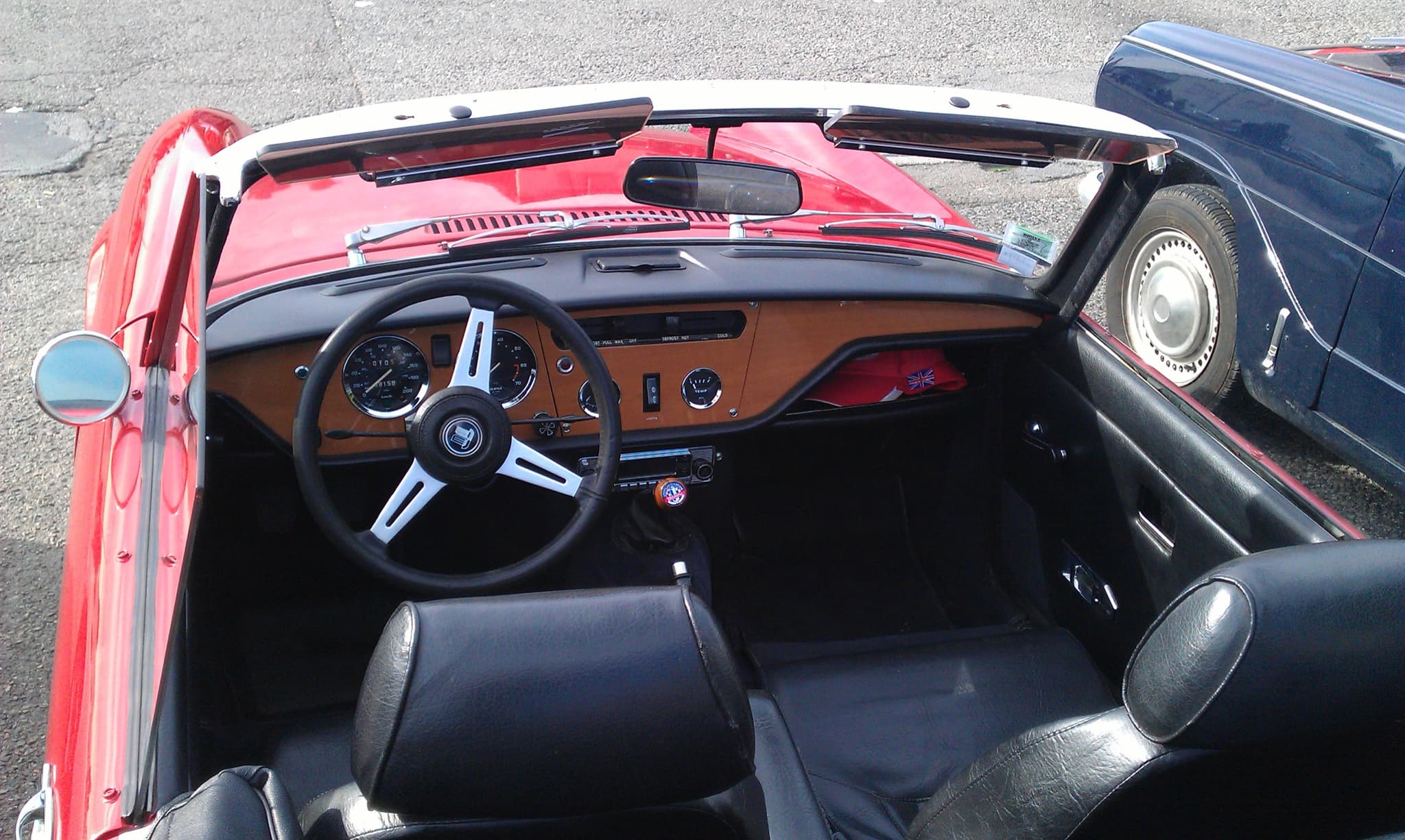
| A wood-veneer dashboard with green instrument lighting | The French Mk IV brochure, November 1973 |
| Reclining seats | triumphspitfire.com |
| A larger clutch | triumphspitfire.com |
The year's milestone rests on one source: triumphspitfire.com records that the 200,000th Spitfire, a US-market car, was built on 9 July 1973.
American cars of the 1974 model year, from October by the same site's table, added a front spoiler, rubber overriders front and rear on stronger bumpers, and a seat-belt interlock: their brochure says the engine would not start until both belts were fastened.source 7source 35source 33source 8
1974
The Mk IV wore a front spoiler for its last year, as Motor Sport later recorded. triumphspitfire.com says a tonneau cover became standard in January, though the American brochure for the 1974 model year lists it as an option, probably a difference between markets. The same site dates a changed front chassis, made for impact rules, to about FH60000, and a new type of overdrive, which Canley Classics also dates to that number.
Late in the year (Canley: December) the Spitfire 1500 replaced the Mk IV, from FH75001 by triumphspitfire.com's log, and every Spitfire now had the longer-stroke engine that American cars already had.
In September, by triumphspitfire.com's table, Canley began building the American cars of the 1975 model year, from FM28001.source 35source 8source 7source 32source 1source 4
1975
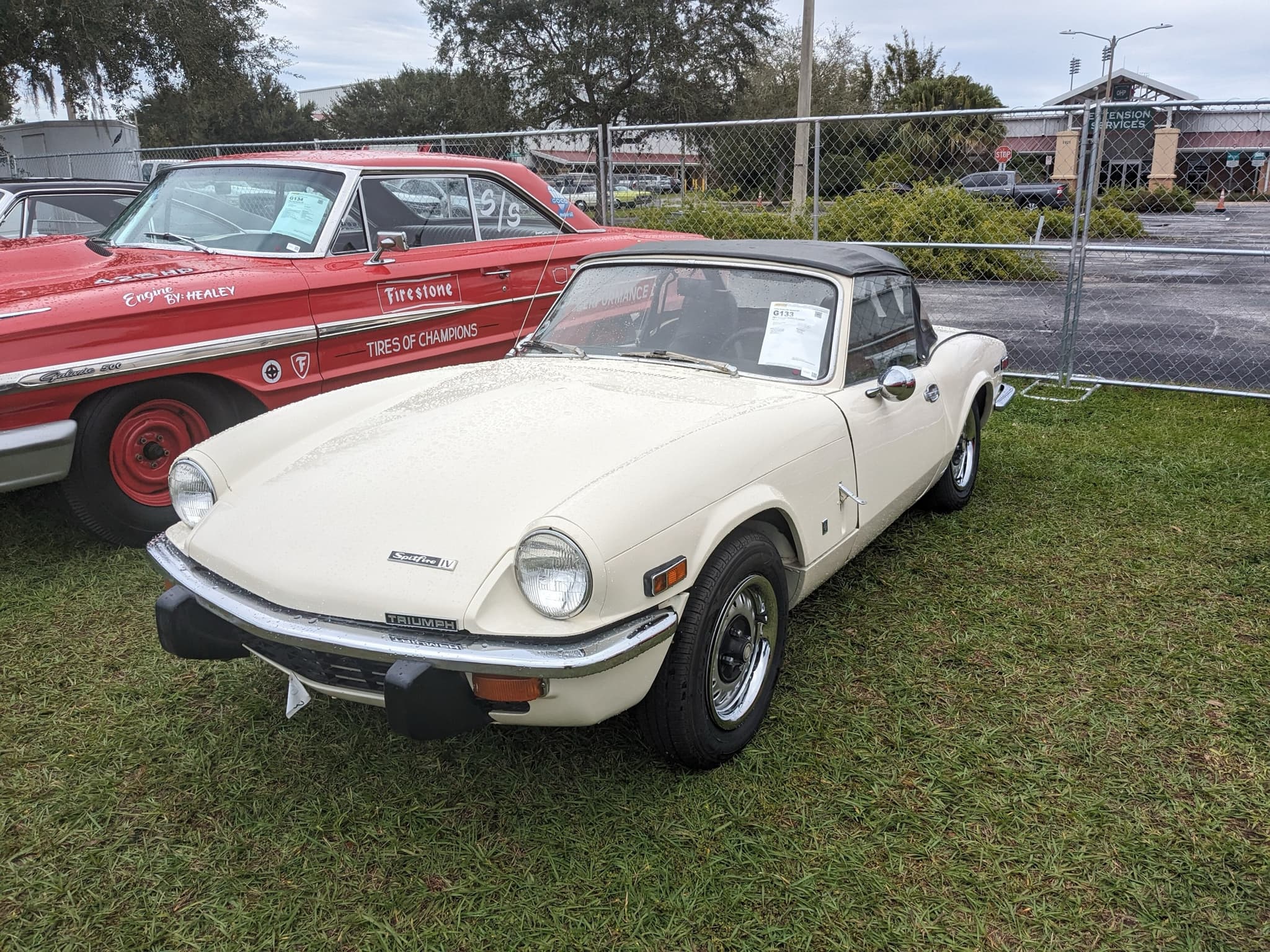
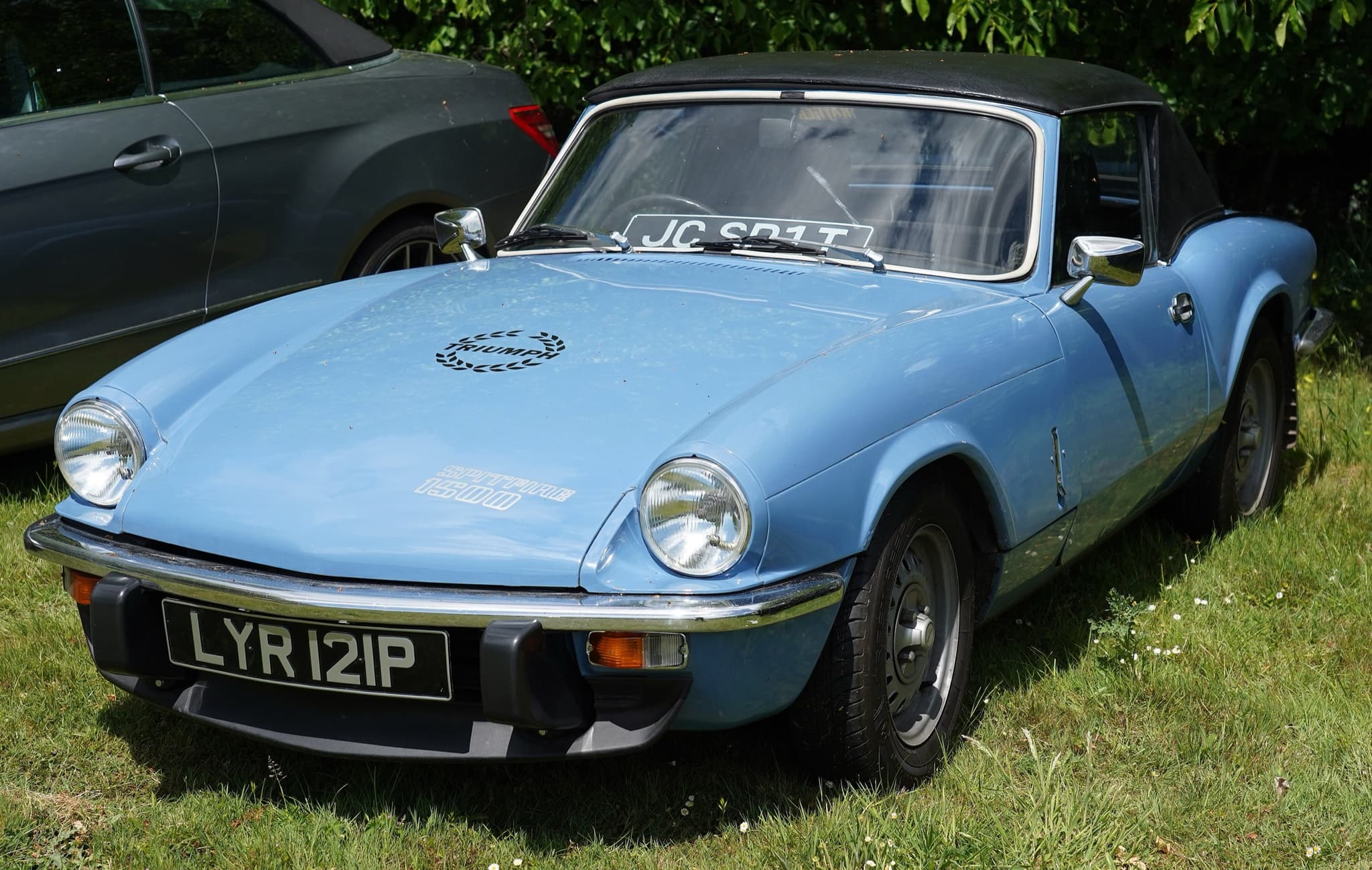
The 1500's first full year. Its engine kept the Mk IV's bore, with a longer stroke and bigger SU carburettors; outside North America it had a taller final drive, and it had a single-rail gearbox (transmission) and "Spitfire 1500" transfers (decals) on the bonnet and boot. Clive Richardson, who drove one for Motor Sport in March, found it steady and predictable, with seemingly less roll and a better ride than before, though the long-stroke engine grew harsh at high revs.
triumphspitfire.com dates the first Californian cars to the 1975 model year, with a catalytic converter and the UC suffix, their engines numbered from FM34714UCE.source 35source 36source 6source 7
1976
From about FH80000, in January by triumphspitfire.com's log, the option pack became standard outside North America: head restraints, inertia-reel seat belts, a centre armrest, a dipping (day/night) mirror, a driver's door mirror and a map light, items Motor Sport's 1975 test car had carried as an extra.
For American cars of the 1976 model year, triumphspitfire.com gives a higher compression ratio for that model year alone; Moss Motors' data keep it on federal cars to the 1978 model year.source 7source 35source 36source 37
1977
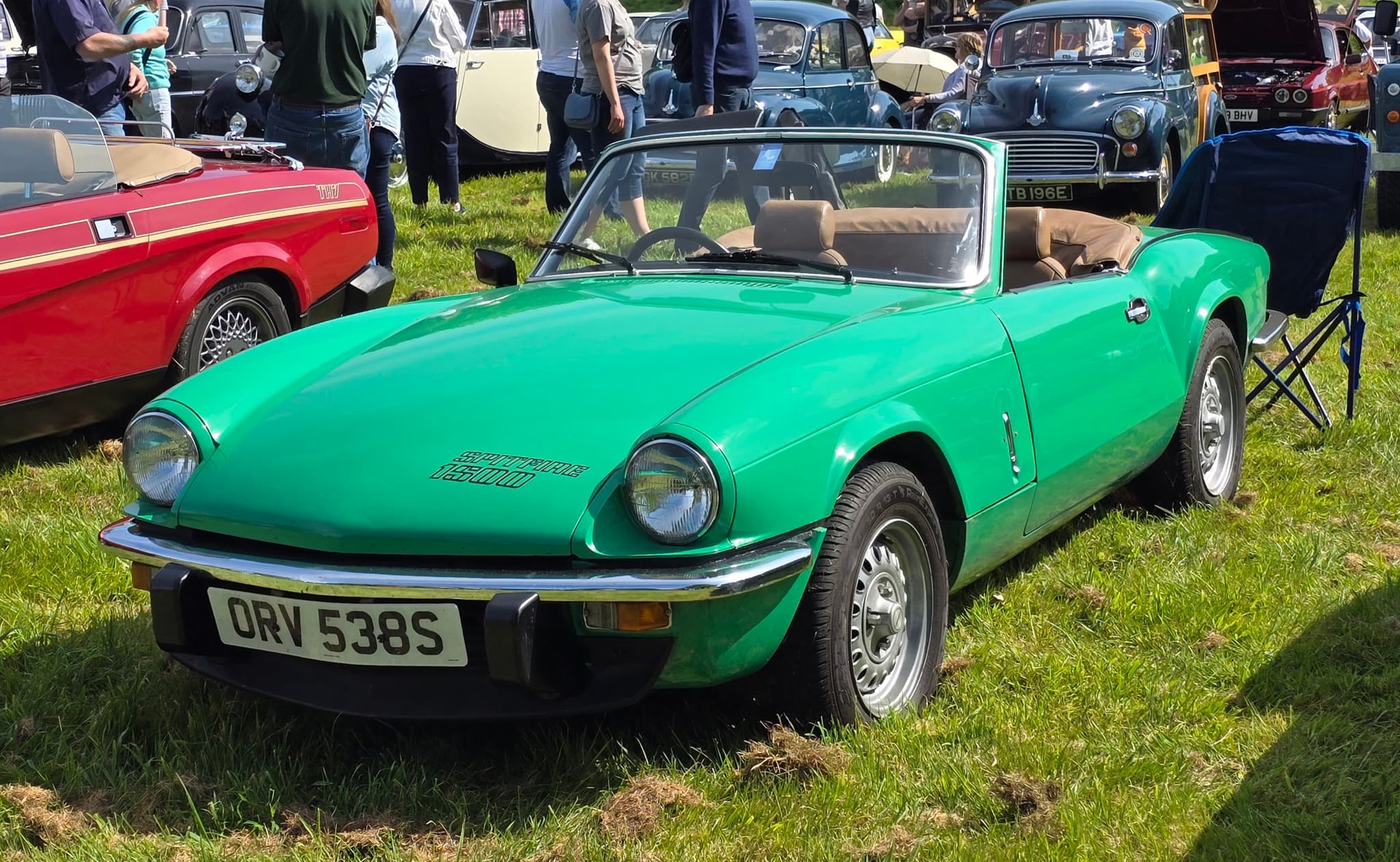
Early in the year the 1500 was given TR7-type stalks on the steering column for its lights, wipers and horn, electric screen washers and seats faced in houndstooth cloth. triumphspitfire.com dates them to March, from about FH100020, and Wikipedia cites a report in Motor of 5 March 1977; the British brochure of December 1978 lists all three. triumphspitfire.com dates the change from number to letter paint codes to March 1977; colours explains both kinds of code.
triumphspitfire.com says every American car of the 1977 model year had a catalytic converter.source 36source 7source 30
1978
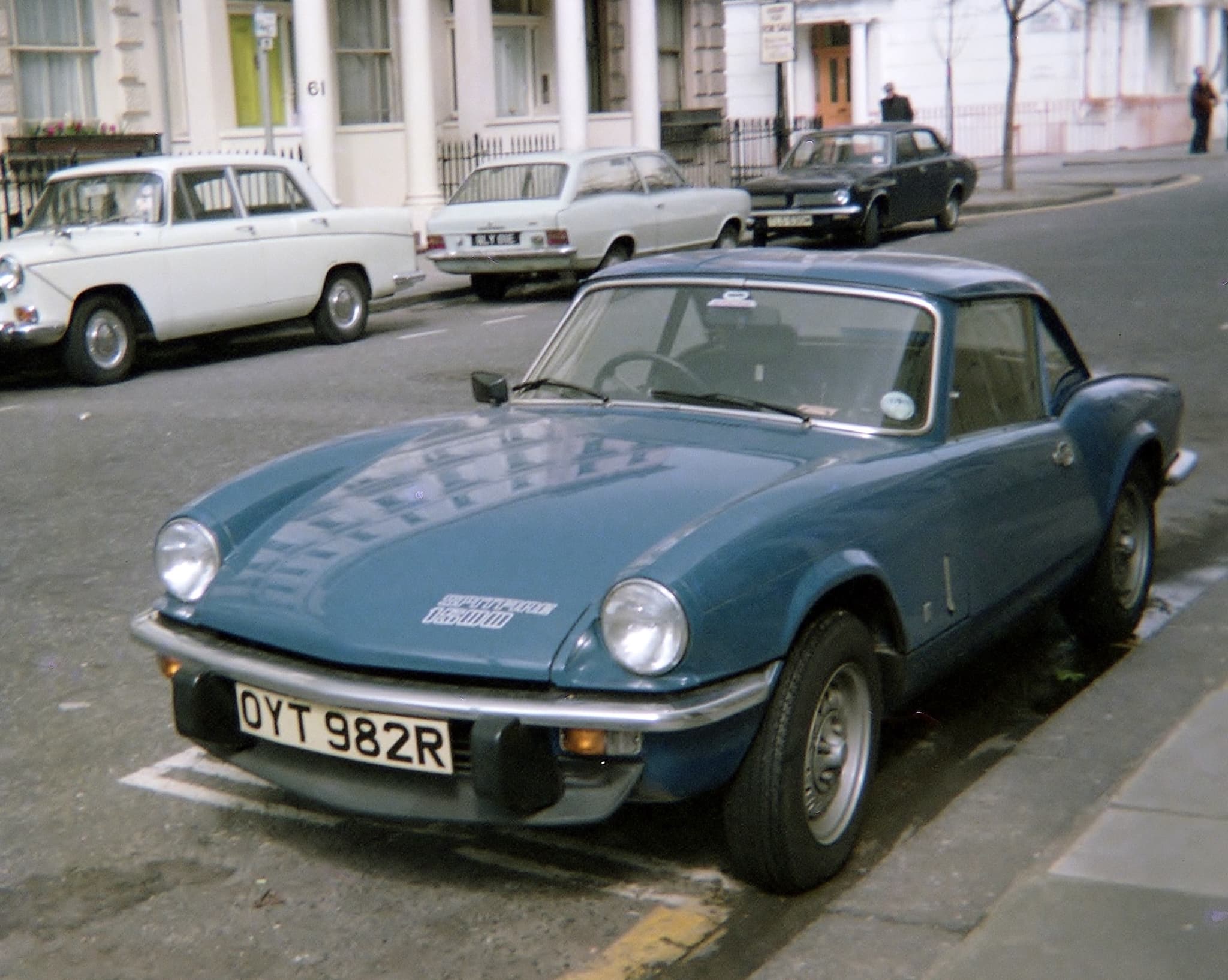
A laminated windscreen became standard, and the British brochure dated December listed overdrive as the only option.
In America, cars built from June, from FM90001, were sold as "1978½" models, and may be listed under the 1979 model year, according to triumphspitfire.com's table, compiled from owners' Heritage look-ups. The 1979 model year itself began in August or September.source 36source 7
1979
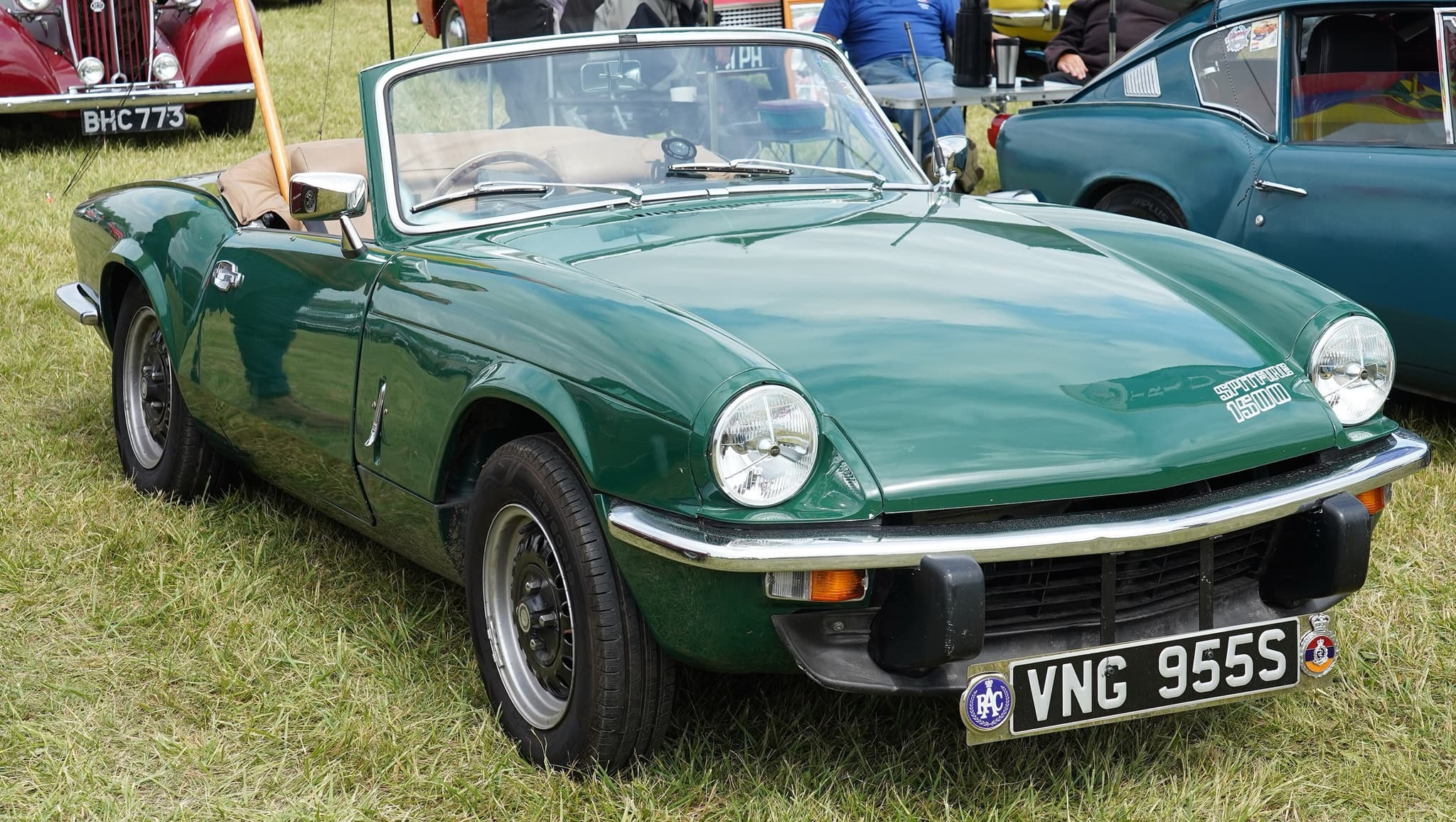
Cars outside North America gained dual-circuit brakes with a failure warning lamp, already listed in the British brochure of December 1978, and wider wheels; triumphspitfire.com dates both to January, from FH130000. In October, the same site says, plates with a VIN (vehicle identification number) replaced the commission plates. Identification reads both kinds of number.
American cars of the 1979 and 1980 model years had black rubber bumpers, Wikipedia and triumphspitfire.com agree, though the second contradicts itself on when in the 1979 model year they began.source 36source 7source 30
1980
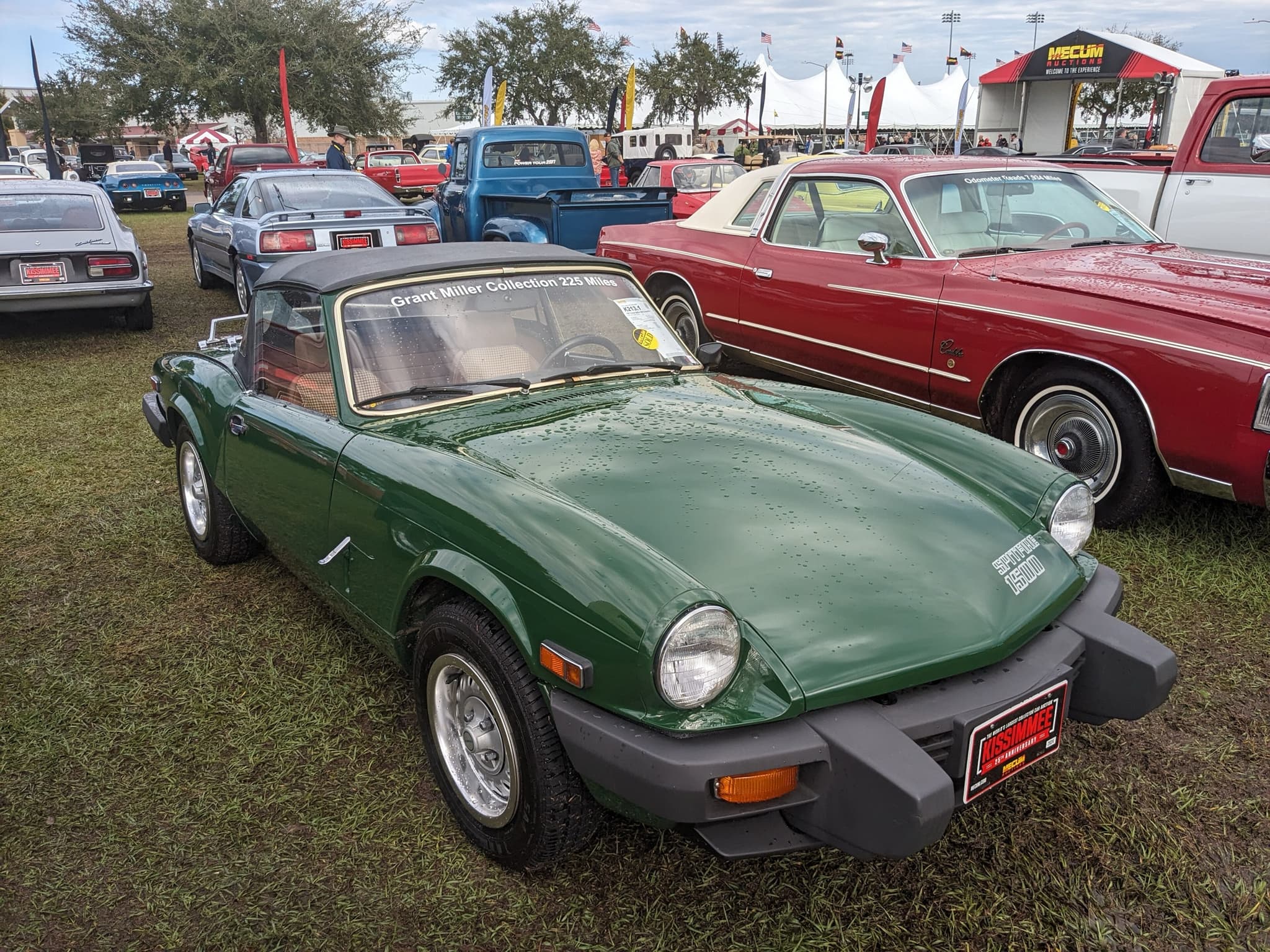
Production ended in August. triumphspitfire.com says American cars of the 1980 model year, the last, had side-impact bars in their doors, and by its key the third letter of their VIN, V or Z, marks a car for the United States or for California. A Spitfire still won a national title there that year: Jerry Barker took F Production at the Sports Car Club of America's Runoffs.
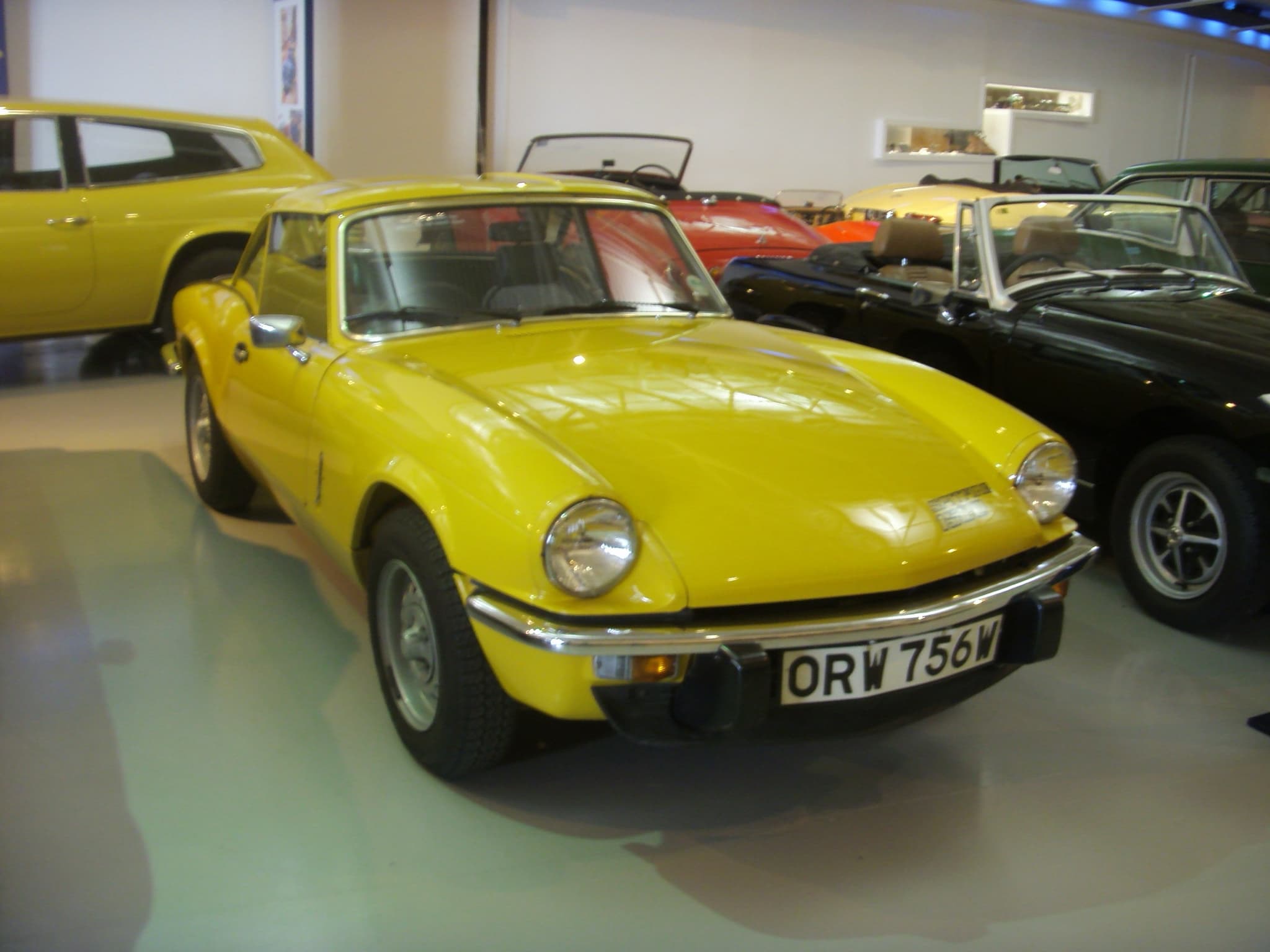
The last car built is a yellow 1500 with a hardtop. Its paint is Inca Yellow and its VIN TFADW5AT009898, both as triumphspitfire.com records them. It is in the British Motor Museum's collection at Gaydon, catalogued as the last of the line.source 1source 4source 7source 38source 5
Sources
Sources are given as plain text; their addresses are on the sources page.
- Primarymade at the time, by the maker or by people who were there
- Referenceserious later work: clubs, specialists, magazines, books
- Databaseresults and listings, entry by entry
- Uncheckedencyclopaedias and enthusiast sites: cited beside a good source, named in the sentence, or marked Unchecked
- Canley Classics, "Production Figures", Spitfire 4 and Spitfire 1500 rows; Spitfire rows; Spitfire 4, October 1962–December 1964; Spitfire 4 MK II, December 1964–January 1967; GT6 Mk I row; Spitfire 4 MK II and Spitfire MK III rows; Spitfire MK III and MK IV rows; Spitfire MK IV and Spitfire 1500 rows; Spitfire 1500, December 1974–August 1980. Reference
- Lancaster Insurance, "The Triumph Spitfire: a celebration", 29 Dec 2021, the 1962 Motor Show. Reference
- Classic Car Africa, "The Wallflower", Mk I section; Mk II section; Mk II and Mk III sections; Mk III section. Reference
- Vintage Triumph Register, "Spitfire" (production history, production dates and numbers, buyer's guide tabs), production history; end of production; production dates and numbers: 1973–1974 and 1975–1980; production dates and numbers: FC1; production dates and numbers: FC50001; Mk II: "Emblem on rear deck lid"; production dates and numbers: Mk II, 1965–1966; production dates and numbers: FD1; 1969 federal dashboard; 1970 identification; 1970 identification; 1971–1972; production dates and numbers: 1971–1972; production dates and numbers: 1973–1974; production dates and numbers: 1975–1980; end of production. Reference
- British Motor Museum, "Spitfire 1500 (last of line), 1980", accession 1980-1-190, object record; object record and title. Primary
- Malcolm McKay, "Triumph Spitfire buyer's guide: what to pay and what to look for", Classic & Sports Car, 10 May 2019, US section; introduction; timeline, February 1964; timeline, March 1967; timeline, October 1970; 1500 section. Reference
- triumphspitfire.com ("Spitfire & GT6 Magazine and Information Warehouse"), Reference pages (group): models and options; Mk I–1500 options-and-changes logs; engine numbers; 1979–80 VINs; what year is my car; final drive; general specification data; stock tyres; wheel alignment; lubrication; tuning; fuses; paint and trim codes; side stripes; decal and badge placements; wire wheels; head swaps; substitute parts; suppliers; new owner; pre-purchase checklist; spotters guide, pages modified 2023, "What year is my car?"; 1500 half-year table; Mk III options-and-changes log; models page; engine numbers; Mk IV options-and-changes log; 1500 half-year table; Mk IV and 1500 options-and-changes logs; 1500 half-year table; 1500 options-and-changes log; 1500 options-and-changes log; general specification data; 1500 options-and-changes log; paint and trim codes; 1500 options-and-changes log; 1500 half-year table; 1500 options-and-changes log; 1979–80 VINs; 1500 options-and-changes log; 1979–80 VINs; 1500 page. Unchecked
- British Leyland Motors Inc., Spitfire 1500 (sales brochure), USA, 1974 model year, SP741, 1973, cover, 1974 model year; competition page, the first American Road Race of Champions; cover and p. USA-5; "New for 1974"; "New for 1974"; options. Primary
- Triumph Sports Six Club, Model pages: Spitfire 4/Mark II (model_ID=24), Mark III (23), Mark IV (25), 1500 (26), quantities, Spitfire 4/Mark II and 1500 pages; Spitfire 4/Mark II page, transmission; Spitfire 4/Mark II page; Mark III page; Mark IV page. Reference
- Graham Robson, "Harry Webster – My Technical Mentor", Moss Motoring (Moss Motors), 12 Jun 2019, Michelotti and the Herald sports car. Reference
- Graham Robson, "One Design, Many Derivatives", Moss Motoring, 26 Oct 2022, North American dealers; US prices, 1963; the GT6; British Leyland. Reference
- Bill Boddy ("W.B."), "Sports cars under £700: the £641 Triumph Spitfire 4", with data panel "The Triumph Spitfire 4", Motor Sport, Apr 1963, pp. 20, 26. Primary
- Standard-Triumph, "New Triumph Spitfire" (Standard-Triumph advertisement), Motor Sport, Nov 1962, p. 32. Primary
- Classic & Sports Car, A–Z of classics: Triumph Spitfire I, II, III, MkIV, 1500, Spitfire I; Spitfire II; Spitfire III. Reference
- racingsportscars.com, Le Mans 24 Hours 1964, results, results, No. 50. Database
- Denis Jenkinson, "The 24 Hours of Le Mans", Motor Sport, Jul 1964, p. 22. Primary
- racingsportscars.com, Tour de France Automobile 1964, results, results, No. 131. Database
- John Davenport, "Geneva Rally", Motor Sport, Dec 1964, p. 45. Primary
- Moss Motoring, "Kas Kastner – The legend and the legacy", 30 Nov 2011, the competition department; Sebring. Reference
- racingsportscars.com, "Triumph Spitfire – All Results" (9 pages, 880 entries, 1962–87), ARRC Riverside, 14 November 1964; ARRC Riverside, November 1968. Database
- Standard-Triumph, Spitfire Mk. II (sales brochure), Italy, Ref. 352/666/IT-DUC, 1966, interior. Primary
- racingsportscars.com, Sebring 12 Hours 1965, results, results, Nos 65–67. Database
- Canley Classics, "Spitfire ADU 1B Le Mans", Sebring 1965. Reference
- Canley Classics, "Spitfire ADU 2B Le Mans", Sebring 1965. Reference
- Canley Classics, "Spitfire ADU 4B Le Mans", Sebring 1965. Reference
- racingsportscars.com, Le Mans 24 Hours 1965, results, results, Nos 60 and 54. Database
- Denis Jenkinson, "Le Mans 24-hour race", Motor Sport, Jul 1965, p. 11. Primary
- John Davenport, "Coupe des Alpes", Motor Sport, Sep 1965, p. 30. Primary
- Mike Cotton ("M.L.C."), "Triumph Spitfire to Monaco", Motor Sport, Jun 1967, pp. 26–27. Primary
- Wikipedia (EN), "Triumph Spitfire", 2026, Mk III section, citing Autocar, 15 February 1968; Mk III section; 1500 section, citing Motor, 5 March 1977; 1500 section. Unchecked
- Bill Boddy ("W.B."), "Road test: The Triumph Spitfire Mk. IV", Motor Sport, Jan 1971, p. 59. Primary
- John Kipping (overdrive articles), Technical articles (group): "Swing Springs", "Rear End Noises", "Propshaft Problems", "Oil Consumption", "Unleaded Engines", "The D-Type Overdrive", "The J-Type Overdrive", "Different Differentials", "Close Ratio Gearboxes For Spitfire MkIV/1500", "Chrome Bumpers", "Spitfire Tuning Kits", "Fitting Le Mans Style Bonnet Vents", Canley Classics, "Swing Springs"; "The J-Type Overdrive". Reference
- British Leyland (France), Triumph Spitfire Mk4 (sales brochure), France, 11/1973, T.919, "Capacités"; description: rear track and dashboard. Primary
- British Leyland Motors Inc., Leonia NJ, "You not only get a car and a girl but a piece of history." (advertisement, Triumph Spitfire 1500), US, 1973 model year, 1972, advertisement copy. Primary
- Clive Richardson ("C.R."), "Road Impressions – The Triumph Spitfire 1500", Motor Sport, Mar 1975, p. 25, the engine; p. 25, the rear track; p. 25, the front spoiler; pp. 25–26; p. 25, the option pack. Primary
- BL Cars / Jaguar Rover Triumph Ltd, Triumph Spitfire 1500 (sales brochure), UK, 12/1978, Publication No. 3254/D, "Specifications"; standard equipment; standard equipment; options; "Specifications", brakes. Primary
- Moss Motors, "Car Specifications – Triumph Spitfire Mk IV 1971–1974"; "…Spitfire 1500 (1975–1980)", Spitfire 1500 (1975–1980), compression ratio. Reference
- zoompics.com, "1980 Runoffs" photo report, F Production. Reference