Notable Triumph Spitfires
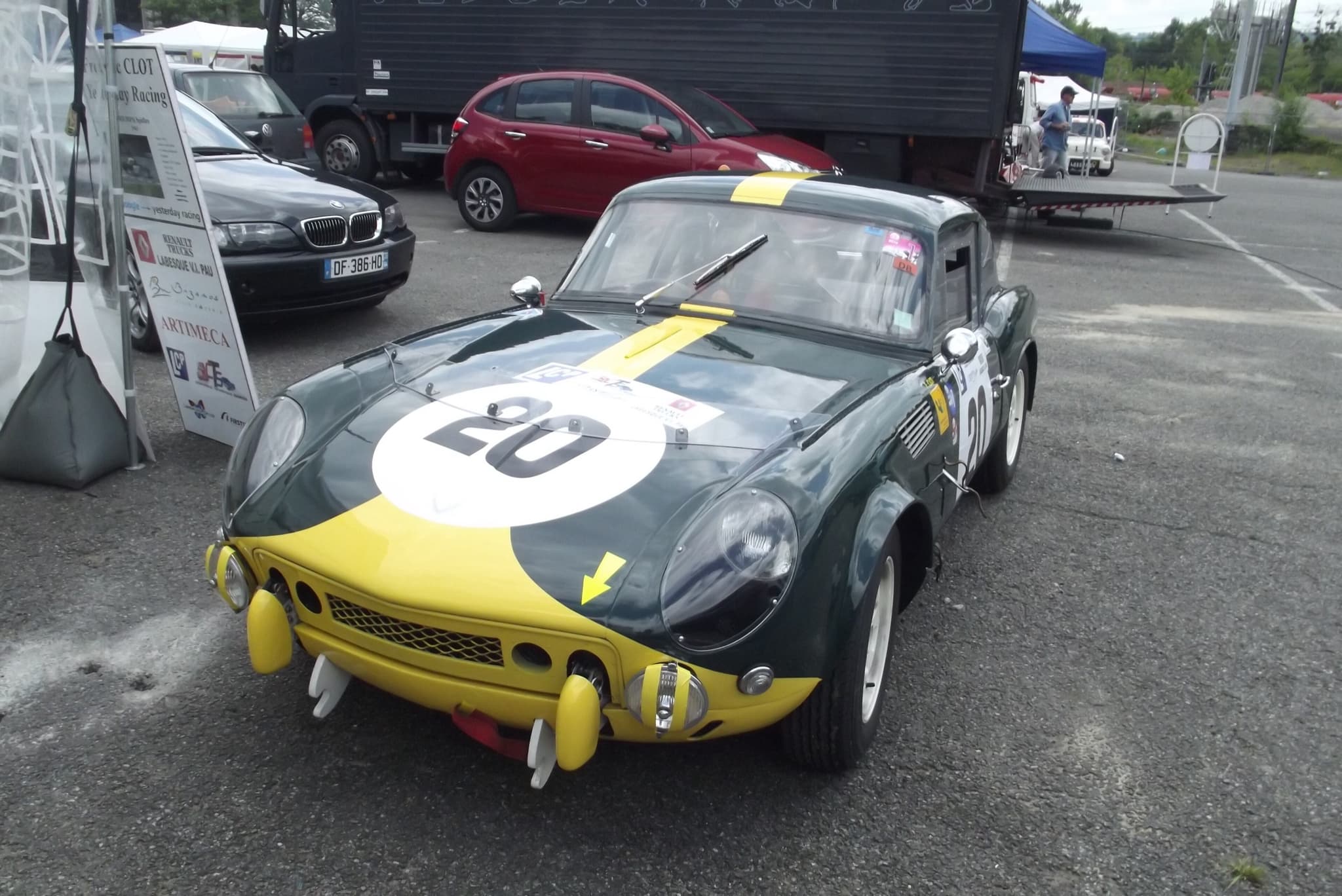
Triumph's works team raced and rallied Spitfires in 1964 and 1965. One of its four Le Mans cars survives complete; others survive in parts or abroad, and several of their registrations have been carried by other cars.
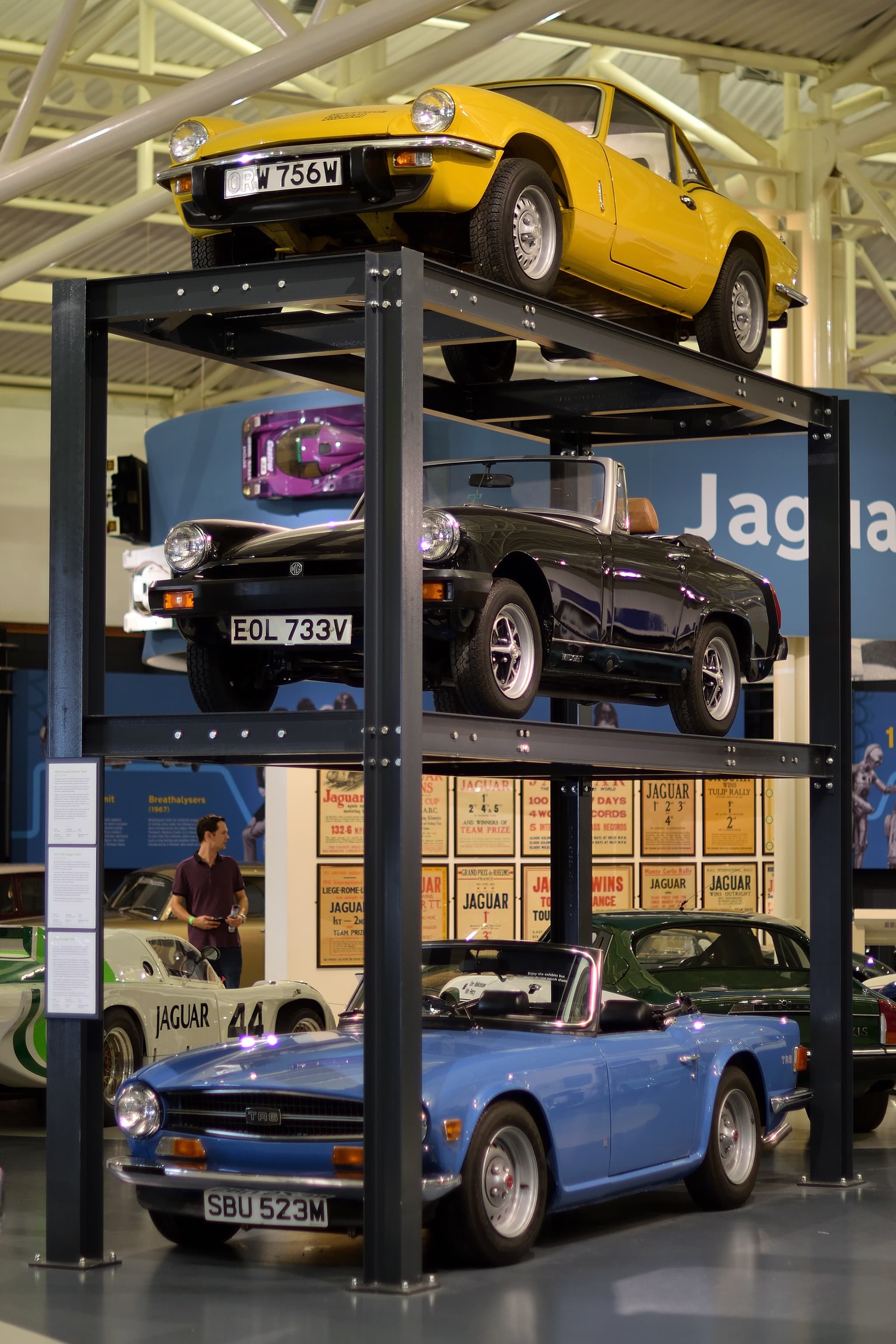
On 1 June 1964 four racing Spitfires built in Triumph's experimental department at Canley were registered as ADU 1B, ADU 2B, ADU 3B and ADU 4B. They were made for Le Mans, and with the next four registrations, ADU 5B, ADU 6B, ADU 7B and ADU 8B, they were the core of a works fleet of about a dozen cars that raced and rallied for two seasons.
This register follows those cars and a handful of others: the Macau Spitfire, a single-seater built for one race, the milestones of production and the last Spitfire of all. It also deals with the register's main trap, the cars that carry works registrations without being works cars.source 1source 2source 3source 4source 5source 6source 7source 8source 9source 10source 11source 12source 13source 14
- Le Mans cars
- 4Built at Canley and registered on the same day in 1964
- Le Mans cars complete today
- 1ADU 4B, the 1965 class winner
- Works registrations on other cars
- 5Carried by cars that are not the works cars, in the sources read
The Le Mans cars
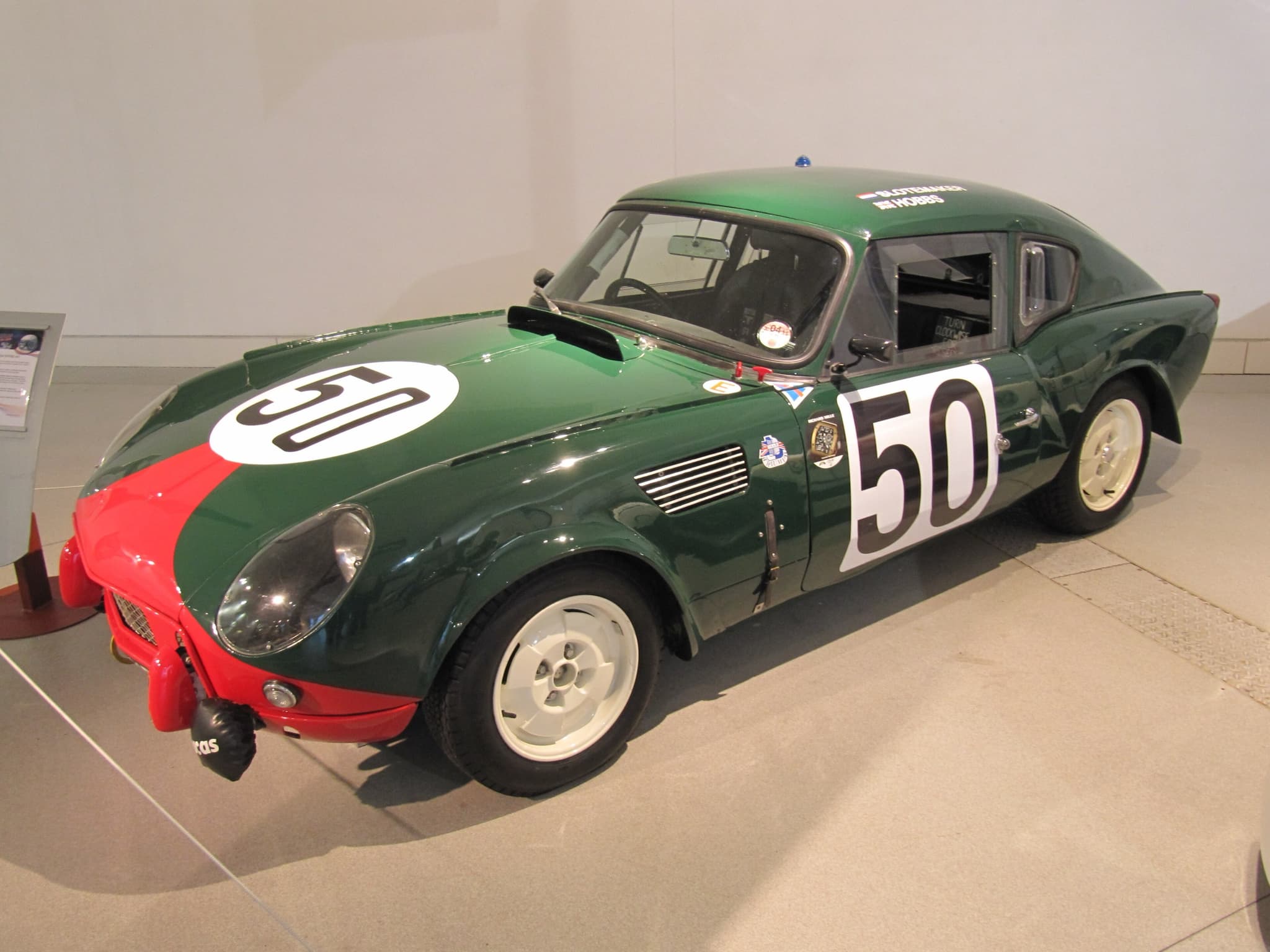
They looked like Spitfires with a fastback roof, but they were built differently: an aluminium bulkhead, floors and sills (rocker panels), with glass-fibre panels riveted to them, on a lightweight chassis, with long-range aluminium fuel tanks. Canley's records of the build number them "Le Mans No1" to "No4", though not in the order of their registrations: ADU 4B was No1 and ADU 2B was No4.
Three started the 1964 race and one finished: ADU 2B, 21st overall for David Hobbs and Rob Slotemaker. ADU 1B and ADU 3B crashed. In March 1965 ADU 1B, ADU 2B and ADU 4B raced in the Sebring 12 Hours for Triumph's American company, and in June four works Spitfires started at Le Mans in the 1.15-litre GT class. ADU 4B won it, and No. 54, probably ADU 3B, was 2nd.
The works team stopped racing after 1965, and Bill Bradley kept the circuit cars going, with the factory's help, into 1967. By then, Canley Classics warns, parts and identities were moving between the cars.
ADU 4B is the only one still complete. ADU 3B's bodyshell survives in France. Substantial parts of ADU 1B and ADU 2B survive in Warwickshire with the remains of ERW 412C, a fifth car the factory built for Bradley in 1965 that never ran at Le Mans, and Canley says there are enough of those parts to build one complete, authentic car.
The rally cars
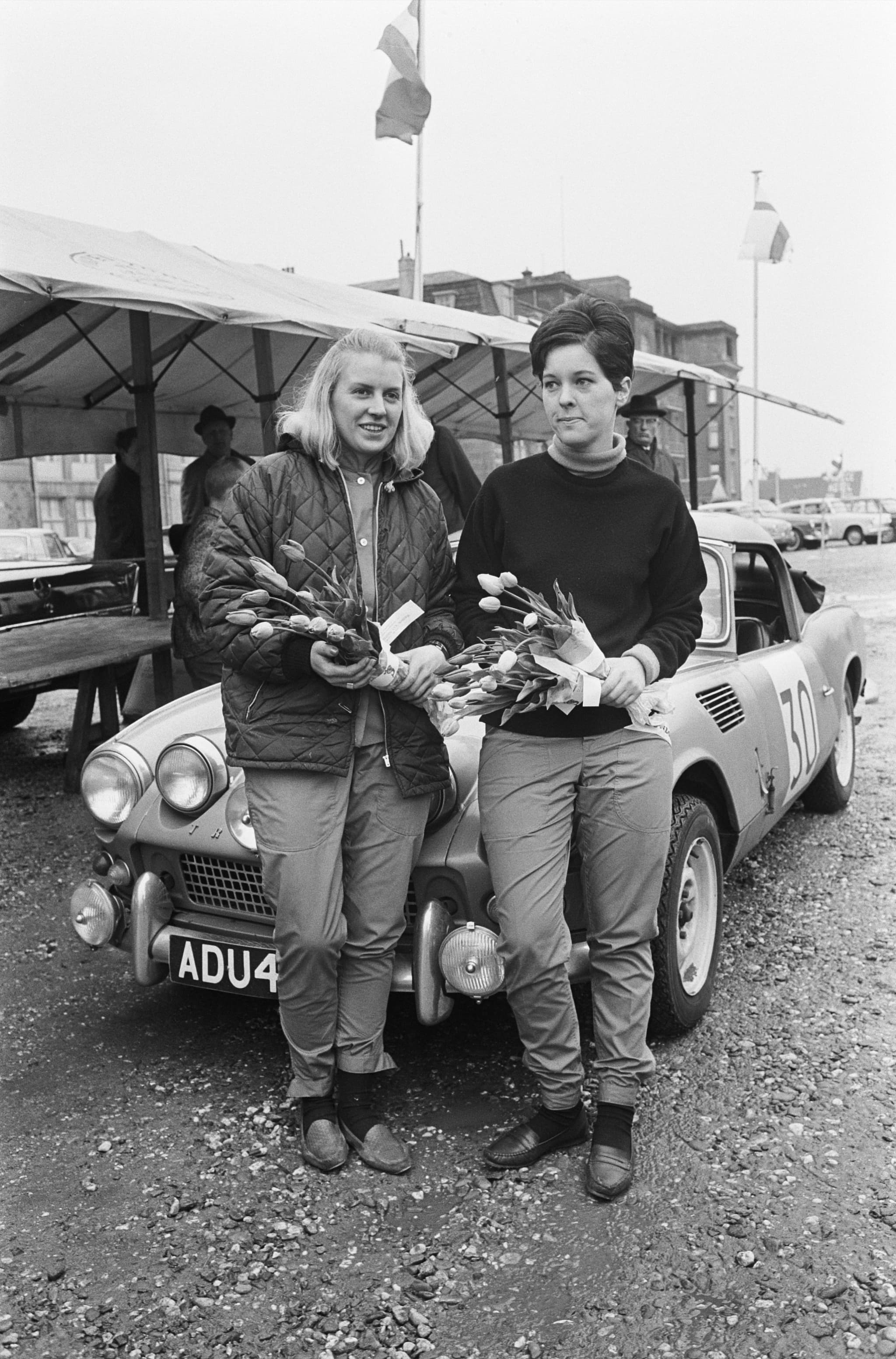
The rally cars were a different kind of machine. Triumph's competition department prepared them in 1964 from steel production Spitfires on ordinary FC commission numbers, painted powder blue, with aluminium panels, a long nose and a four-headlamp aluminium bonnet (hood); in 1965 most were given a glass-fibre fastback hardtop.
Their best results were a win in the up-to-1,300 cc GT class on the 1964 Tour de France, 2nd overall on the 1964 Geneva Rally, and 1st and 2nd places in the Prototype category of the 1965 Coupe des Alpes. The sources read mostly do not say which registration ran under which crew; the racing page has the events.
ADU 5B survives and has been back on the road since 2007. Canley says the real ADU 6B is "alive and well in France". ADU 7B was re-registered in France in 1966 as 166RF62, and no source read follows it there. Canley calls ADU 8B a test and spare car, while New Zealand Classic Car calls it a rally car, fully restored; no source read gives its numbers.
Two more cars ran alongside the team. ADU 467B, built in the competition department, was run by Stirling Moss's SMART team for his secretary, Valerie Pirie. New Zealand Classic Car names AVC 654B as Simo Lampinen's rally car of 1965; no source read ties it to a particular event.source 5source 10source 21source 22source 23source 24source 6source 25source 7source 26
One-offs and milestones
Beyond the works fleet, the register is a handful of single cars. The milestones of production rest on thinner evidence than the racing cars, so each is given in its source's own terms.
- 1965
The Macau single-seater
An open single-seater on a Le Mans tub, built for the Macau Grand Prix of 28 November 1965 for Walter Sulke of Z.F. Garages, Standard-Triumph's distributor in Hong Kong. Canley Classics has owned it since 2001.
- 1968
The Gold Seal racers
Two ex-works mechanics, Peter Cox and Peter Clarke, built and ran three Spitfires for the Gold Seal Car Company in 1968 and 1969, the first of them a much-modified ADU 467B. Canley Classics holds a glass-fibre one, "possibly the only surviving" example, whose steel bulkhead, Canley says, is probably all that is left of one of the original prototype Spitfires.
- 1968
The 100,000th Spitfire
According to a report in Autocar (15 February 1968), as cited by Wikipedia, it left the Canley line on 8 February 1968, driven off by the general manager, George Turnbull.
- 1973
The 200,000th Spitfire
triumphspitfire.com records that the 200,000th Spitfire, a US-market car, was built on 9 July 1973.
- 1980
Real or replica
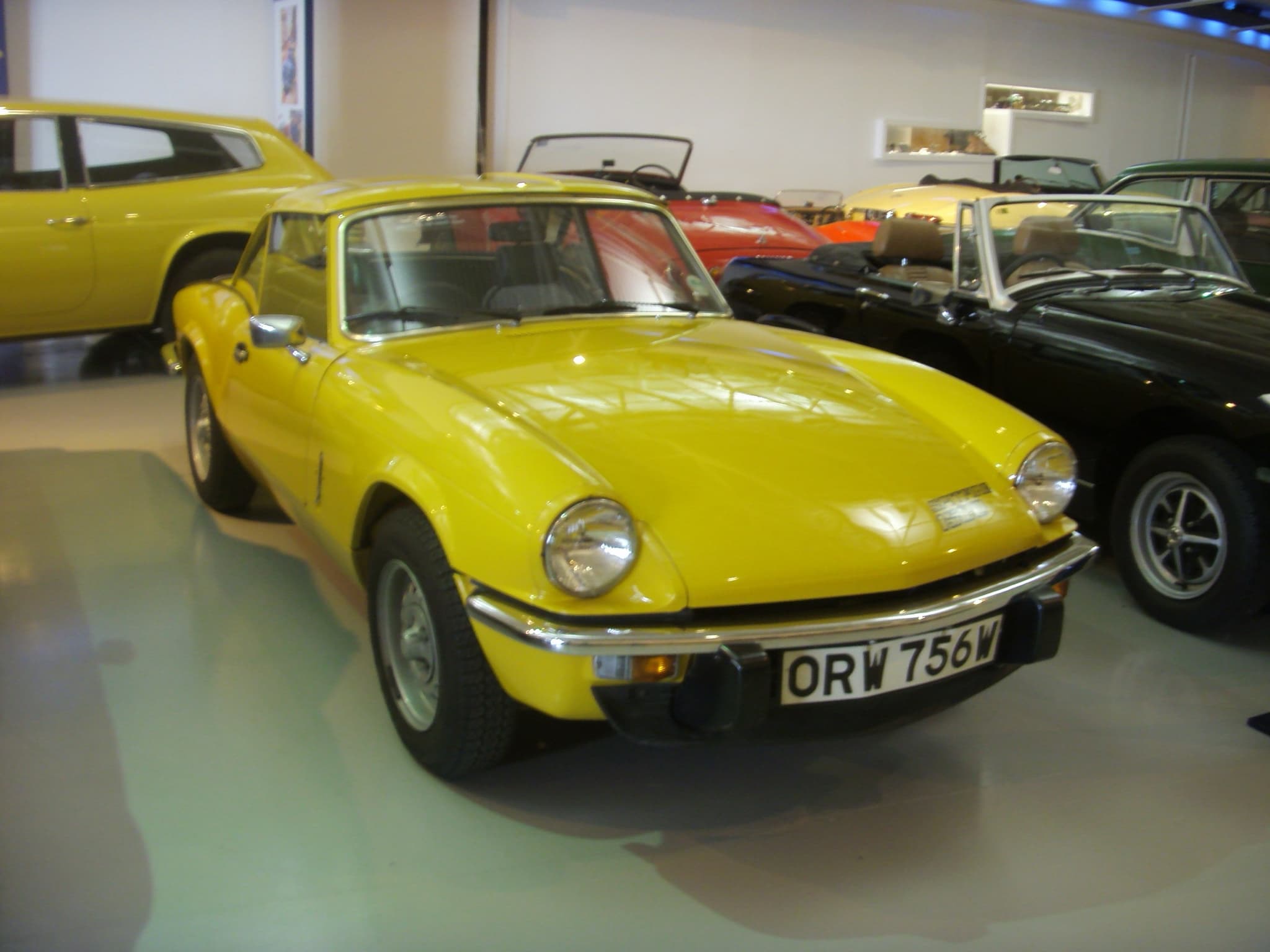
A works registration proves much less than it seems. By 1966 parts and identities were already moving between the real cars, and works registrations have since turned up on other cars. For the Le Mans cars, Canley Classics, which owns ADU 4B, offers a simpler test:
If you are ever in the lucky position of looking to buy one of these cars take a magnet when you go to view. If you find much in the way of steel (inside or out) then walk away, it ain't genuine!
In the sources read, five works registrations have been carried by other cars:
| Registration | The other car | The works car |
|---|---|---|
| ADU 1B | A Le Mans replica first raced at the 2004 Le Mans Classic and documented as a replica, according to Triumph World as reported by gt6mk2.com | Substantial parts survive in Warwickshire |
| ADU 2B | A car that took the registration in the 1980s and has no works parts, Canley says | Substantial parts survive in Warwickshire |
| ADU 5B | A 1980s replica, later dismantled and broken up; its works parts went to genuine cars | Back on the road since 2007 |
| ADU 6B | A Coventry-registered Spitfire 4 Mk II with a genuine works rally bonnet, rebuilt as a rally replica in the 1990s, which has rallied in Italy as ADU 6B | In France, Canley says |
| ADU 7B | A car Fred Nicklin built from leftover works parts, which took the number after the original went to France; since sold to Japan | Re-registered in France in 1966; no source read follows it there |
Notable cars
Built 1964
ADU 6B
Survives
ADU 8B
Whereabouts unknown
Built 1965
AVC 654B
Whereabouts unknown
Built 1965
ERW 412C
Parts survive
Sources
Sources are given as plain text; their addresses are on the sources page.
- Primarymade at the time, by the maker or by people who were there
- Referenceserious later work: clubs, specialists, magazines, books
- Databaseresults and listings, entry by entry
- Uncheckedencyclopaedias and enthusiast sites: cited beside a good source, named in the sentence, or marked Unchecked
- Canley Classics, "Spitfire ADU 1B Le Mans", para. 1. Reference
- Canley Classics, "Spitfire ADU 2B Le Mans", para. 1. Reference
- Canley Classics, "Spitfire ADU 3B Le Mans", para. 1. Reference
- Canley Classics, "Spitfire ADU 4B Le Mans", para. 1; para. 1; "Our Museum". Reference
- Canley Classics, "Spitfire ADU 5B Rally", paras 1–2; paras 1–2, 4. Reference
- Canley Classics, "Spitfire ADU 7B Rally", para. 1; para. 2. Reference
- New Zealand Classic Car, "Getting the facts straight: Spitfires at Le Mans", 4 Nov 2015. Reference
- Canley Classics, "Le Mans Fuel Tanks", para. 1. Reference
- Canley Classics, "Macau Spitfire". Reference
- Chic Doig and John Kipping, "Survivors, replicas, fakes, and other funny business", Canley Classics, four-headlamp bonnets; ADU 6B. Reference
- Classic Car Weekly, "Le Mans Spitfire comes home after extended holiday", 2004. Reference
- Canley Classics, "Production Figures", Spitfire 1500 row. Reference
- Vintage Triumph Register, "Spitfire" (production history, production dates and numbers, buyer's guide tabs), production history. Reference
- British Motor Museum, "Spitfire 1500 (last of line), 1980", accession 1980-1-190, accession 1980-1-190; record and photograph. Primary
- Canley Classics, "Spitfire ADU ~B Le Mans". Reference
- racingsportscars.com, Le Mans 24 Hours 1964, results, results, 21st; DNF table. Database
- racingsportscars.com, Sebring 12 Hours 1965, results, results. Database
- racingsportscars.com, Le Mans 24 Hours 1965, results, results, 13th and 14th. Database
- Revs Institute, Revs Institute digital library, photo captions, Le Mans 1965, No. 54. Unchecked
- Canley Classics, "ERW 412C". Reference
- Graham Robson, "One Design, Many Derivatives", Moss Motoring, 26 Oct 2022. Reference
- racingsportscars.com, Tour de France Automobile 1964, results, results, 15th. Database
- John Davenport, "Geneva Rally", Motor Sport, Dec 1964, p. 45. Primary
- John Davenport, "Coupe des Alpes", Motor Sport, Sep 1965, p. 30. Primary
- Canley Classics, "Spitfire ADU 8B Test / Spare Car". Reference
- Canley Classics, "Spitfire ADU 467B Rally", para. 1. Reference
- Art "Dutch" Van Diggelen, "10 Years in the Making: A Recreation of the Macau Spitfire #3", Moss Motoring, 24 Sep 2025. Reference
- Canley Classics, "Spitfire Gold Seal Racing". Reference
- Wikipedia (EN), "Triumph Spitfire", 2026, Mk III section, citing Autocar, 15 February 1968. Unchecked
- triumphspitfire.com ("Spitfire & GT6 Magazine and Information Warehouse"), Reference pages (group): models and options; Mk I–1500 options-and-changes logs; engine numbers; 1979–80 VINs; what year is my car; final drive; general specification data; stock tyres; wheel alignment; lubrication; tuning; fuses; paint and trim codes; side stripes; decal and badge placements; wire wheels; head swaps; substitute parts; suppliers; new owner; pre-purchase checklist; spotters guide, pages modified 2023, Spitfire Mk 4 Options and Changes. Unchecked
- gt6mk2.com, "Some notable GT6s (and Spitfires)", citing Triumph World. Unchecked