Triumph Spitfire Mk1
The first Spitfire, sold as the Triumph Spitfire 4 and built from 1962 to 1964: a Herald underneath, a body by Michelotti, and wind-up windows that the Sprite and Midget lacked. It is now known as the Mk I, also written Mk1 or Mark 1, though it was never badged so.
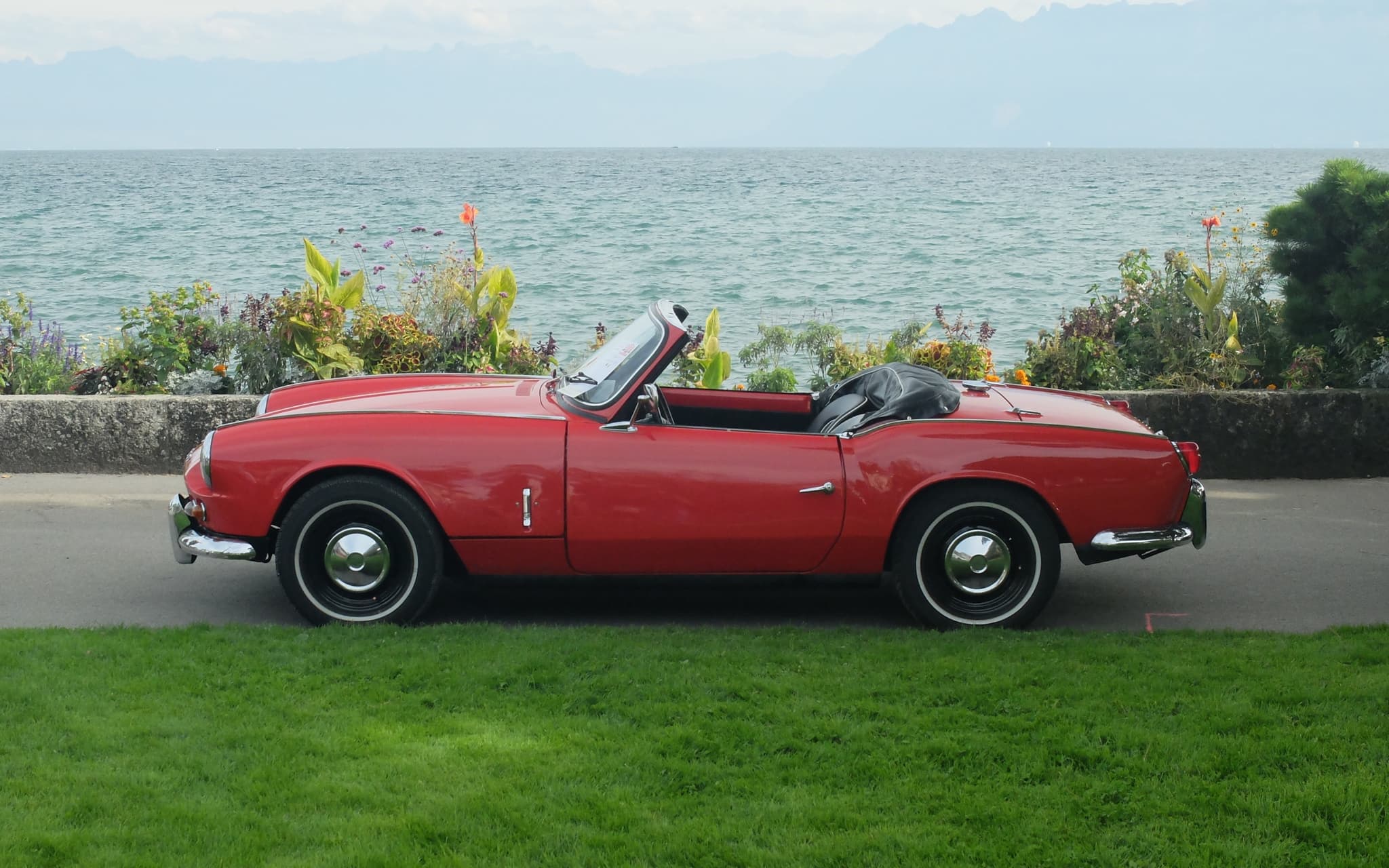
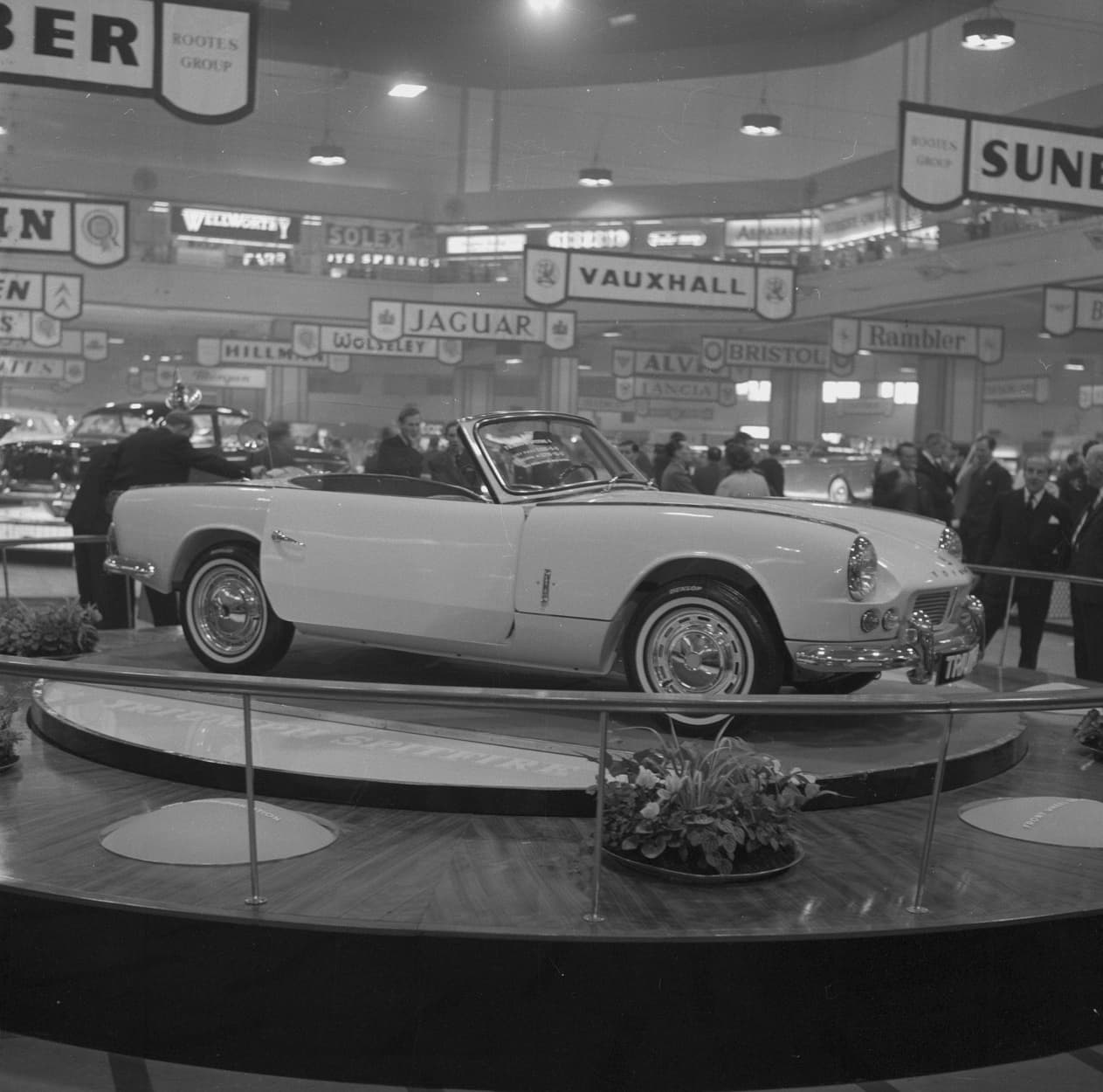
In October 1962 Standard-Triumph showed a small new sports car at the London Motor Show at Earls Court, and its Canley works began building it that month. It was the Triumph Spitfire 4, and the 4 counted its cylinders.
Although never badged or promoted as a Mk1 this name stuck as the later models arrived.
Canley built it until December 1964, when the Spitfire 4 Mk II replaced it. It is not the Mk IV, a different car of 1970; the versions page sorts out the names.source 1source 2source 3
What it was
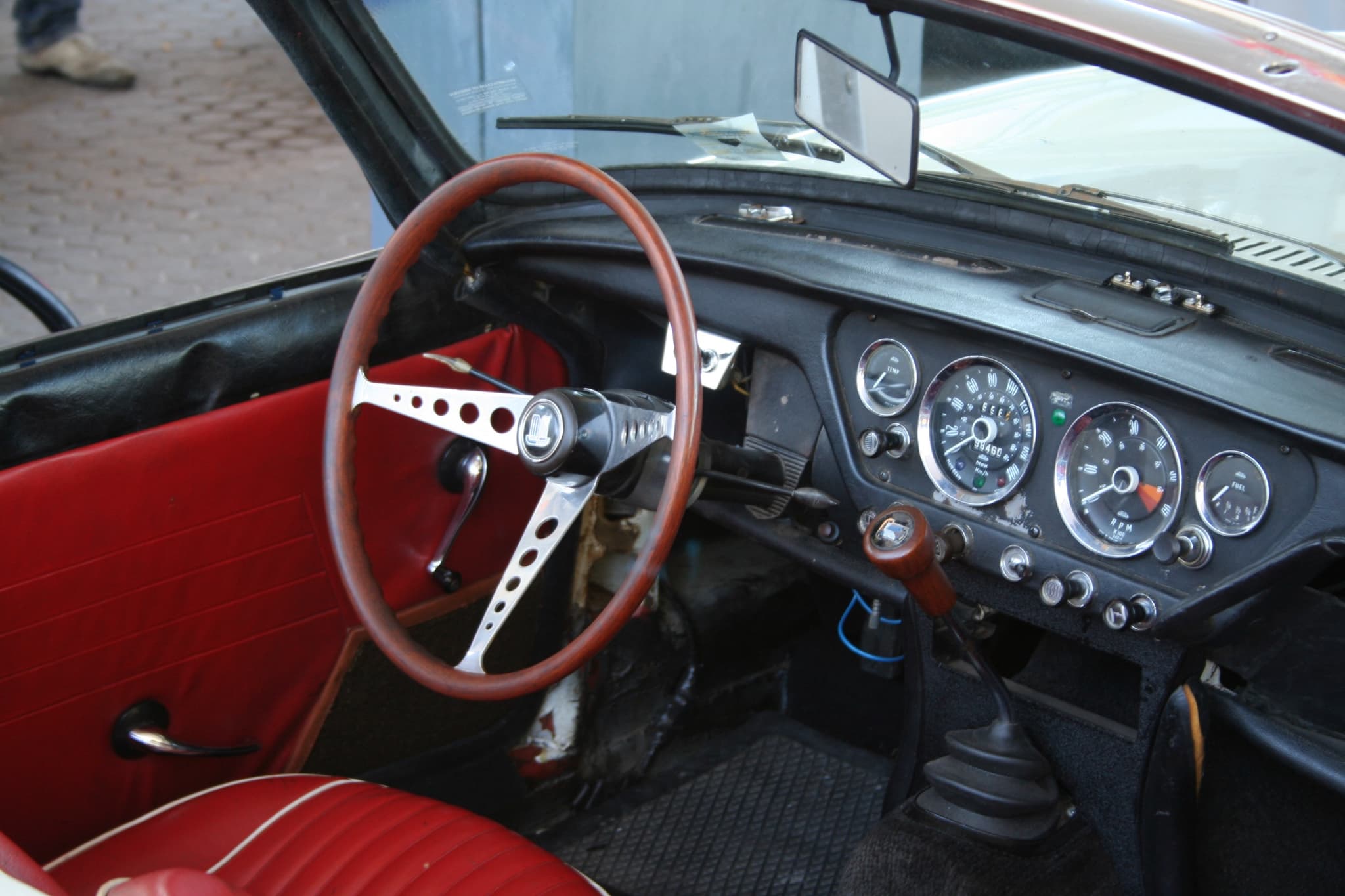
Harry Webster, Standard-Triumph's technical chief, wanted a sports car made from the Herald to take on the Austin-Healey Sprite. The Spitfire 4 was that car: mostly Herald underneath, so that little new tooling was needed, under a body by Giovanni Michelotti. Graham Robson points out why a separate chassis made sense: a body on a frame was much cheaper than a monocoque, and a restyle, or a shorter frame, would not take years or cost millions.
The frame was the Herald's backbone, shortened, with its outer rails and rear outriggers cut away, and the sills (rocker panels) were made structural in their place. The front suspension, with double wishbones and coil springs, came from the Herald, and so did the swing axles on a transverse leaf spring at the back. Discs braked the front wheels and a rack and pinion steered them, and to reach the engine the bonnet (hood) and both front wings (fenders) swung forward as one.
Its doors had exterior handles and wind-up glass windows, which neither the Sprite nor the MG Midget then offered, and the doors and boot (trunk) locked. The windscreen (windshield) had washers, the steering column could be set for reach with a spanner, and the instruments sat together in the middle of the dashboard, so that the car could be built with its steering wheel on either side. A heater was an extra. In its launch advertisement Standard-Triumph made a selling point of the turning circle:
TIGHTER TURNING Whip the Spitfire round in one go (24 ft is all you need) while other cars are making the 3-point turns!
The same car was the starting point for the works team's Le Mans and rally Spitfires of 1964 and 1965, whose story is on the racing page. How the Spitfire came to be built, and the rivals it was sold against, are on the history page.source 4source 1source 5source 6source 3source 7source 8source 9source 10
How to spot a Spitfire 4
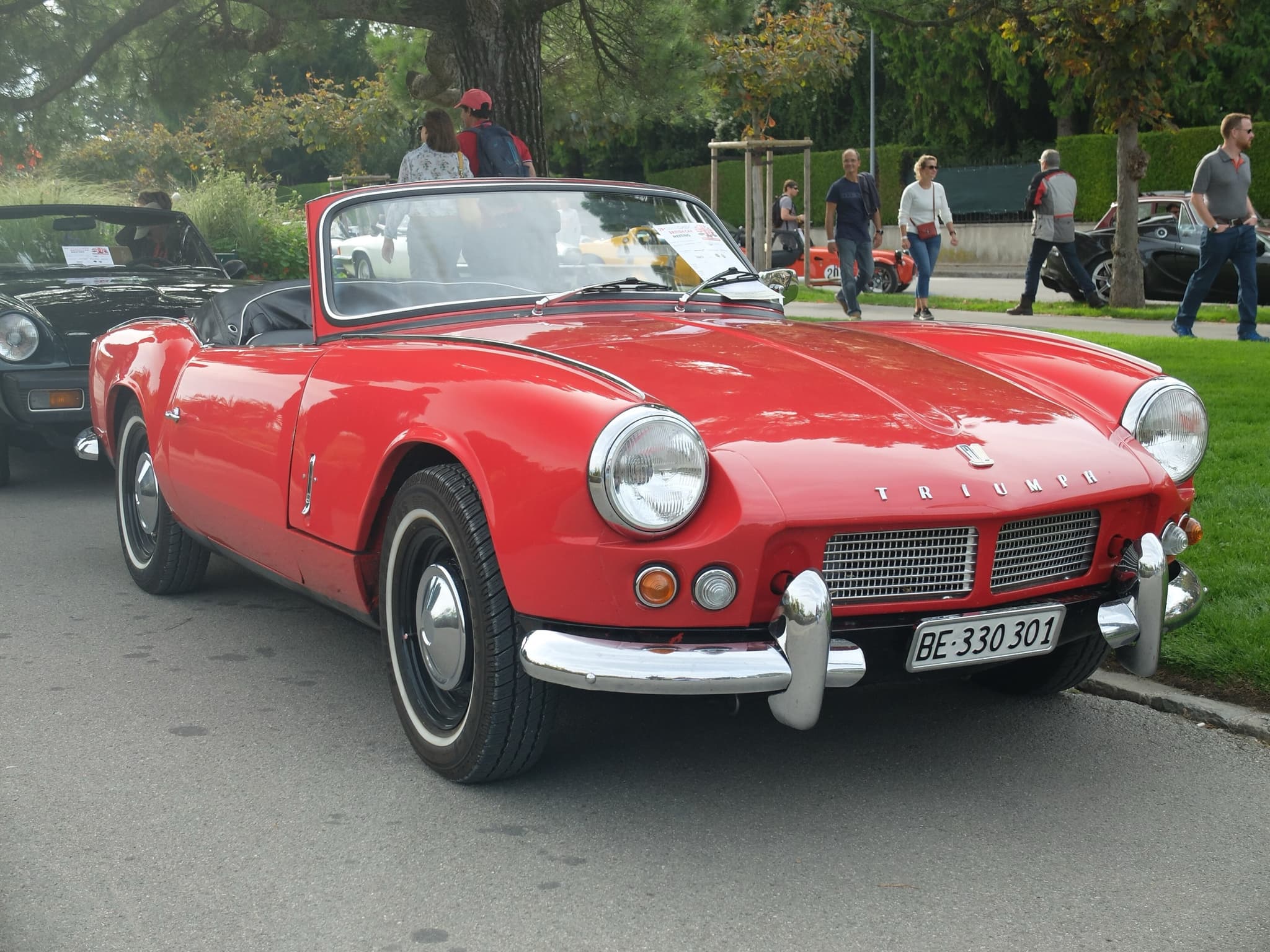
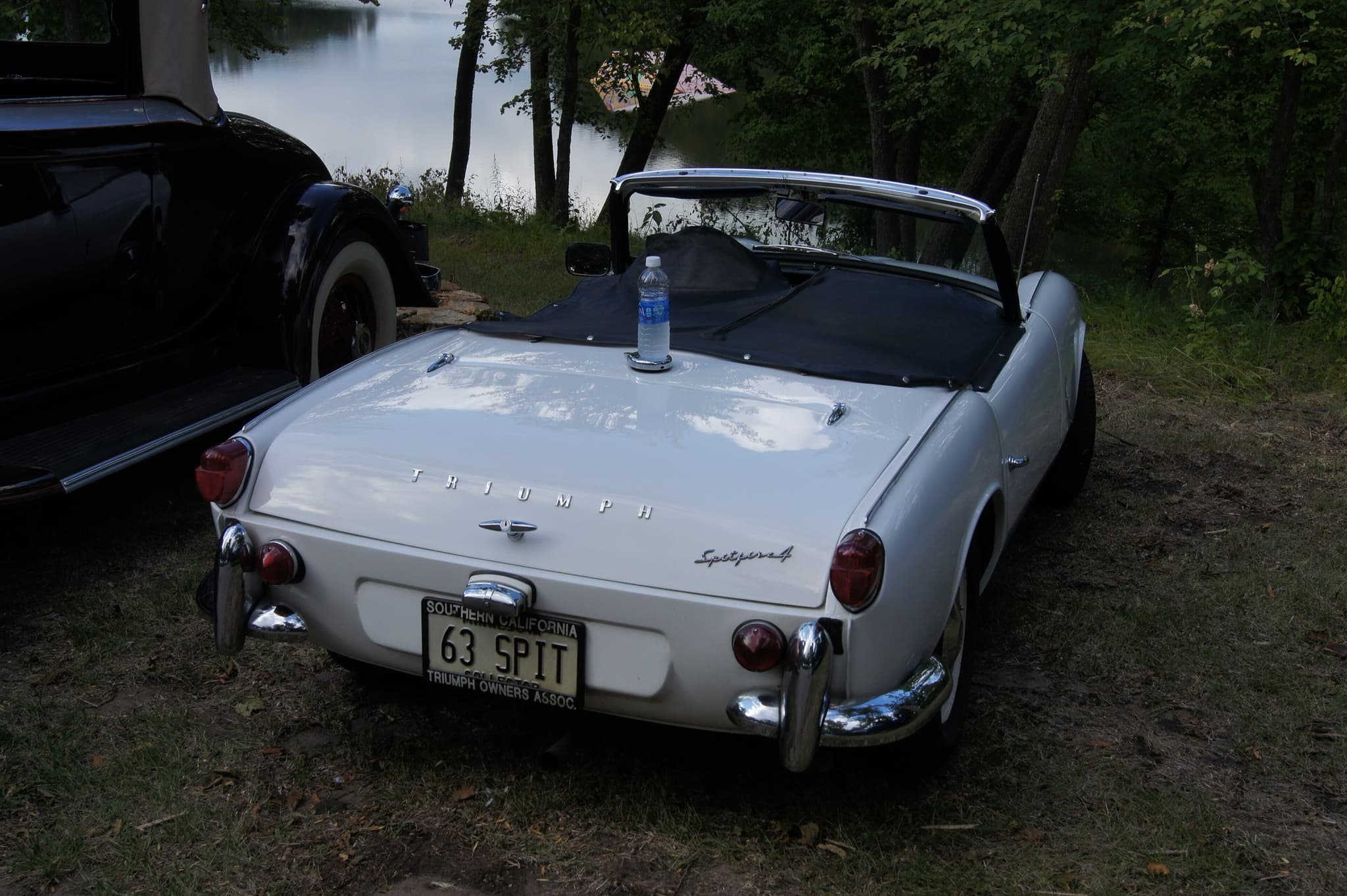
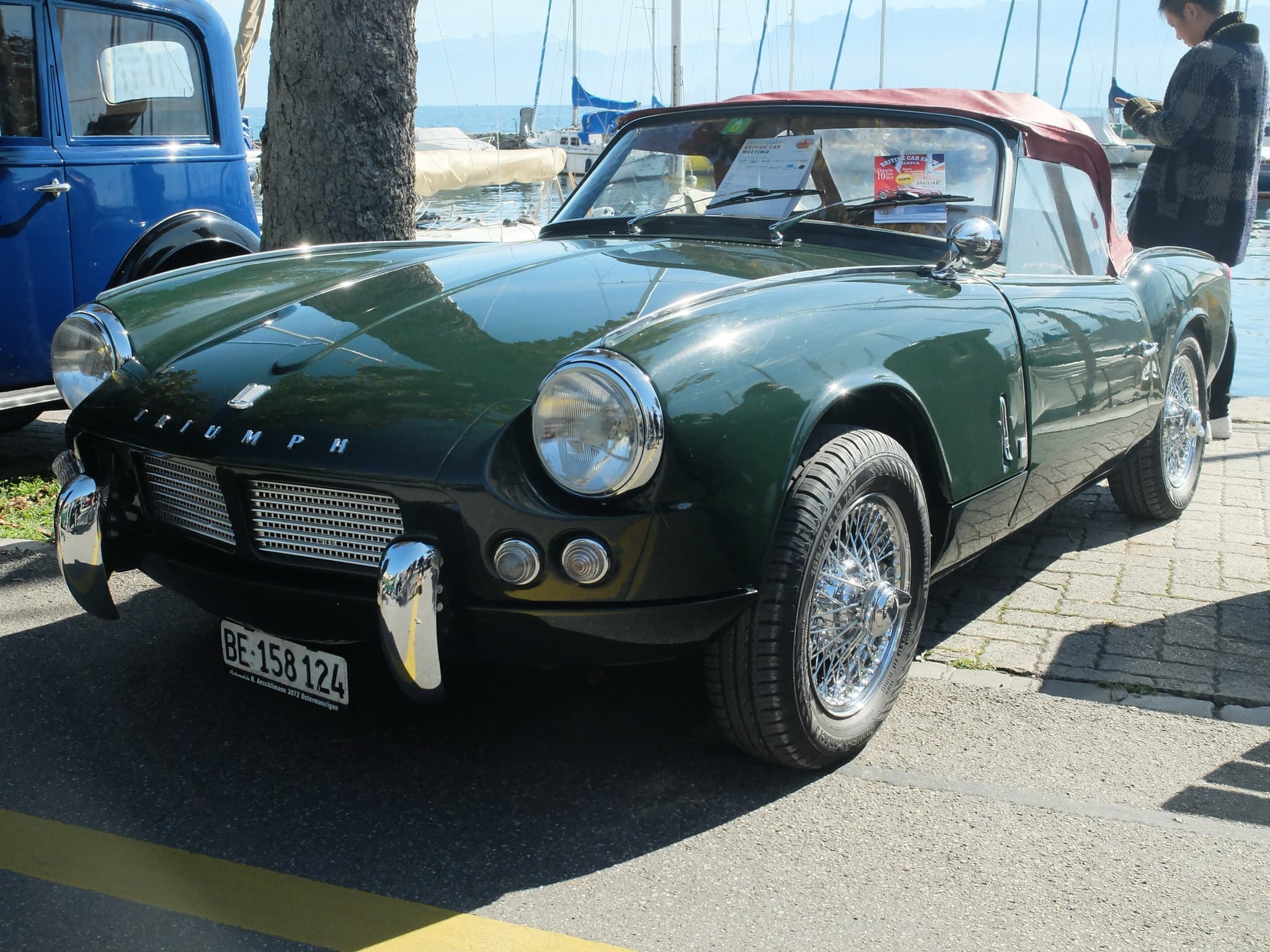
The Spitfire 4 and the Mk II share a body, so telling them apart comes down to a few details, and the commission number settles it.
The grille
Two halves of fine mesh, as German Wikipedia describes them. The Mk II has horizontal bars.
The bumpers
Low at both ends, with overriders (bumper guards) front and rear. The Mk III raised the front bumper to cross the grille.
The boot lid
No Mark on it. The Mk II's lid carries its Mark.
The floor
Rubber mats. Moulded carpets came with the Mk II.
The hood
A hood (soft top) on separate sticks, stowed in the boot when down. The folding hood came with the Mk III.
The number
A commission number between FC1 and FC44656, by the Vintage Triumph Register's list. The Mk II's begin at FC50001.
Within the run, triumphspitfire.com's change log, which cites no sources, records smaller changes by commission number, among them a larger clutch from about FC17136 and the end of the separate header tank at about FC39925. How to read the plate, and what a British Motor Museum Heritage Certificate adds, are explained on Identification.source 11source 3source 12source 13source 9source 14source 15source 16
How many were built
Two production figures for the Spitfire 4 are in print, made of the same digits in a different order. The Triumph Sports Six Club and Classic & Sports Car print the one the production figures below lead with, and Wikipedia cites Graham Robson's book of 1982 for it; Canley Classics prints the other, and the Dutch Triumph Spitfire Club copies Canley's table. None of them says what it counts. The commission numbers do not settle it either: the Spitfire 4's range holds fewer numbers than either figure, no source read explains why, and the identification page sets them side by side.
Some Spitfire 4s were put together abroad from kits. In South Africa, Motor Assemblies of Durban began building them in July 1963, and Classic Car Africa, using NAAMSA sales figures, counts those sold there; that count is among the production figures below. In Australia, Australian Motor Industries assembled them and painted them in its own Dulux colours.source 12source 14source 17source 2source 18source 13source 3source 19
Price and options
The price came down within six months of the launch. Standard-Triumph's advertisement of November 1962 gave one price and Motor Sport a lower one in April 1963, both including purchase tax, the second after a cut in the tax. The specification below gives both, with their sources.
Overdrive followed: a Laycock unit working on third and top gears, offered from October 1963 for the 1964 model year. Wire wheels and a steel factory hardtop were added for the same model year, and from 1964 the factory sold tuning kits, usually through SAH, mainly to satisfy the homologation rules for its racing.source 8source 9source 12source 14source 7source 20
On the road
Bill Boddy drove two Spitfires for Motor Sport's April 1963 issue and took his performance figures with two people aboard; they are in the specification below.
The little 1,147-c.c. Triumph is purely a sports car, lively, fun to drive, making appropriate noises—a travelling motor-race—and sticking well to the road.
He liked the gearchange, with synchromesh on the top three gears, the light and accurate steering and a turning circle he called astonishing. The lower gears he thought too low: first and second ran out at 40 and 71 km/h (25 and 44 mph). In corners the swing axles turned mild understeer into oversteer once the rear wheels reached positive camber, and he found the suspension fairly hard, enough for bad roads to set the car rattling. He missed an oil-pressure gauge, and the brakes wanted a firm push.
Road & Track tested the Spitfire 4 in April 1963, and Autocar tested it too, but no source read reprints either test: triumphspitfire.com's uncited table gives their figures, and Practical Classics printed the same figures in 2000 without naming a source. The road tests page sets the period tests side by side.
The Mk II of December 1964 kept the gearbox (transmission) and the swing axles, and gave the car more power and thicker-padded seats.source 9source 21source 3source 14
Specification
Production
Sources for Production, Spitfire 4
- Price new
- Several figures in print.Standard-Triumph, "New Triumph Spitfire" (Standard-Triumph advertisement), Motor Sport, Nov 1962source 8; Bill Boddy ("W.B."), "Sports cars under £700: the £641 Triumph Spitfire 4", with data panel "The Triumph Spitfire 4", Motor Sport, Apr 1963source 9; triumphspitfire.com ("Spitfire & GT6 Magazine and Information Warehouse"), Reference pages (group): models and options; Mk I–1500 options-and-changes logs; engine numbers; 1979–80 VINs; what year is my car; final drive; general specification data; stock tyres; wheel alignment; lubrication; tuning; fuses; paint and trim codes; side stripes; decal and badge placements; wire wheels; head swaps; substitute parts; suppliers; new owner; pre-purchase checklist; spotters guide, pages modified 2023source 15; Graham Robson, "One Design, Many Derivatives", Moss Motoring, 26 Oct 2022source 5; Wikipedia (DE), "Triumph Spitfire", 2026source 11; Classic Car Africa, "The Wallflower"source 3
| Price new | £729 15s 3d Price new, Spitfire 4 Several figures in print.
|
|---|
Engine
Sources for Engine, Spitfire 4
- Capacity
- Good sources agree.Bill Boddy ("W.B."), "Sports cars under £700: the £641 Triumph Spitfire 4", with data panel "The Triumph Spitfire 4", Motor Sport, Apr 1963source 9; Canley Classics, "Engine Number Identification Chart"source 22; Triumph Spitfire Club (Netherlands), "Spitfire modellen", "Aankoop informatie", "Clubinfo", homesource 18
- Bore × stroke
- One good source.Bill Boddy ("W.B."), "Sports cars under £700: the £641 Triumph Spitfire 4", with data panel "The Triumph Spitfire 4", Motor Sport, Apr 1963source 9
- Compression ratio
- Several figures in print.Bill Boddy ("W.B."), "Sports cars under £700: the £641 Triumph Spitfire 4", with data panel "The Triumph Spitfire 4", Motor Sport, Apr 1963source 9; triumphspitfire.com ("Spitfire & GT6 Magazine and Information Warehouse"), Reference pages (group): models and options; Mk I–1500 options-and-changes logs; engine numbers; 1979–80 VINs; what year is my car; final drive; general specification data; stock tyres; wheel alignment; lubrication; tuning; fuses; paint and trim codes; side stripes; decal and badge placements; wire wheels; head swaps; substitute parts; suppliers; new owner; pre-purchase checklist; spotters guide, pages modified 2023source 15
- Carburettors
- Several figures in print.Bill Boddy ("W.B."), "Sports cars under £700: the £641 Triumph Spitfire 4", with data panel "The Triumph Spitfire 4", Motor Sport, Apr 1963source 9; Classic Car Africa, "The Wallflower"source 3
| Capacity | 1,147 cc |
|---|---|
| Bore × stroke | 69.3 × 76 mm |
| Compression ratio | 9.0:1 Compression ratio, Spitfire 4 Several figures in print.
|
| Carburettors | twin SU HS2, side-draught Carburettors, Spitfire 4 Several figures in print. |
Performance
Sources for Performance, Spitfire 4
- Power
- Several figures in print.Bill Boddy ("W.B."), "Sports cars under £700: the £641 Triumph Spitfire 4", with data panel "The Triumph Spitfire 4", Motor Sport, Apr 1963source 9; Classic & Sports Car, A–Z of classics: Triumph Spitfire I, II, III, MkIV, 1500source 14; Malcolm McKay, "Triumph Spitfire buyer's guide: what to pay and what to look for", Classic & Sports Car, 10 May 2019source 7; Practical Classics, "Buyers Guide: Triumph Spitfire", May 2000source 23; Wikipedia (DE), "Triumph Spitfire", 2026source 11
- Torque
- Good sources agree.At 3,500 rpm. Malcolm McKay, "Triumph Spitfire buyer's guide: what to pay and what to look for", Classic & Sports Car, 10 May 2019source 7; Triumph Sports Six Club, Model pages: Spitfire 4/Mark II (model_ID=24), Mark III (23), Mark IV (25), 1500 (26)source 12; Practical Classics, "Buyers Guide: Triumph Spitfire", May 2000source 23
- Torque peak
- One good source.Torque peak. Bill Boddy ("W.B."), "Sports cars under £700: the £641 Triumph Spitfire 4", with data panel "The Triumph Spitfire 4", Motor Sport, Apr 1963source 9
- Top speed
- Several figures in print.Bill Boddy ("W.B."), "Sports cars under £700: the £641 Triumph Spitfire 4", with data panel "The Triumph Spitfire 4", Motor Sport, Apr 1963source 9; Standard-Triumph, "New Triumph Spitfire" (Standard-Triumph advertisement), Motor Sport, Nov 1962source 8; Triumph Sports Six Club, Model pages: Spitfire 4/Mark II (model_ID=24), Mark III (23), Mark IV (25), 1500 (26)source 12
- 0–60 mph
- Several figures in print.Bill Boddy ("W.B."), "Sports cars under £700: the £641 Triumph Spitfire 4", with data panel "The Triumph Spitfire 4", Motor Sport, Apr 1963source 9; Triumph Sports Six Club, Model pages: Spitfire 4/Mark II (model_ID=24), Mark III (23), Mark IV (25), 1500 (26)source 12; triumphspitfire.com, "Top Speed and Track Test Results", 2023source 21; Practical Classics, "Buyers Guide: Triumph Spitfire", May 2000source 23
- Standing start
- Several figures in print.Bill Boddy ("W.B."), "Sports cars under £700: the £641 Triumph Spitfire 4", with data panel "The Triumph Spitfire 4", Motor Sport, Apr 1963source 9; Standard-Triumph, "New Triumph Spitfire" (Standard-Triumph advertisement), Motor Sport, Nov 1962source 8
| Power | 63 bhp Power, Spitfire 4 Several figures in print.
|
|---|---|
| Torque | 67 lb ft |
| Torque peak | 3,500 rpm |
| Top speed | 93 mph Top speed, Spitfire 4 Several figures in print.
|
| 0–60 mph | 15.6 s 0–60 mph, Spitfire 4 Several figures in print.
|
| Standing start | 19.55 s Standing start, Spitfire 4 Several figures in print.
|
Running gear
Sources for Running gear, Spitfire 4
- Steering
- One good source.Bill Boddy ("W.B."), "Sports cars under £700: the £641 Triumph Spitfire 4", with data panel "The Triumph Spitfire 4", Motor Sport, Apr 1963source 9
- Gears
- One good source.4-speed, synchromesh on 2nd–4th. Bill Boddy ("W.B."), "Sports cars under £700: the £641 Triumph Spitfire 4", with data panel "The Triumph Spitfire 4", Motor Sport, Apr 1963source 9; Wikipedia (DE), "Triumph Spitfire", 2026source 11
- Overdrive
- Good sources agree.Optional from Oct 1963 (1964 model year). Triumph Sports Six Club, Model pages: Spitfire 4/Mark II (model_ID=24), Mark III (23), Mark IV (25), 1500 (26)source 12; Classic & Sports Car, A–Z of classics: Triumph Spitfire I, II, III, MkIV, 1500source 14
- Front brakes
- Several figures in print.Bill Boddy ("W.B."), "Sports cars under £700: the £641 Triumph Spitfire 4", with data panel "The Triumph Spitfire 4", Motor Sport, Apr 1963source 9; Triumph Sportscars (Australia; closed end of 2016), "Spitty Tips" 2, 3, 4, 5, 6, 8, 19source 19
- Rear brakes
- One good source.All models. Triumph Sportscars (Australia; closed end of 2016), "Spitty Tips" 2, 3, 4, 5, 6, 8, 19source 19
- Tyres
- Several figures in print.Bill Boddy ("W.B."), "Sports cars under £700: the £641 Triumph Spitfire 4", with data panel "The Triumph Spitfire 4", Motor Sport, Apr 1963source 9; triumphspitfire.com ("Spitfire & GT6 Magazine and Information Warehouse"), Reference pages (group): models and options; Mk I–1500 options-and-changes logs; engine numbers; 1979–80 VINs; what year is my car; final drive; general specification data; stock tyres; wheel alignment; lubrication; tuning; fuses; paint and trim codes; side stripes; decal and badge placements; wire wheels; head swaps; substitute parts; suppliers; new owner; pre-purchase checklist; spotters guide, pages modified 2023source 15; Triumph Sportscars (Australia; closed end of 2016), "Spitty Tips" 2, 3, 4, 5, 6, 8, 19source 19
- Wheels
- Several figures in print.Triumph Sportscars (Australia; closed end of 2016), "Spitty Tips" 2, 3, 4, 5, 6, 8, 19source 19; triumphspitfire.com ("Spitfire & GT6 Magazine and Information Warehouse"), Reference pages (group): models and options; Mk I–1500 options-and-changes logs; engine numbers; 1979–80 VINs; what year is my car; final drive; general specification data; stock tyres; wheel alignment; lubrication; tuning; fuses; paint and trim codes; side stripes; decal and badge placements; wire wheels; head swaps; substitute parts; suppliers; new owner; pre-purchase checklist; spotters guide, pages modified 2023source 15
- Clutch
- Not yet confirmed.triumphspitfire.com ("Spitfire & GT6 Magazine and Information Warehouse"), Reference pages (group): models and options; Mk I–1500 options-and-changes logs; engine numbers; 1979–80 VINs; what year is my car; final drive; general specification data; stock tyres; wheel alignment; lubrication; tuning; fuses; paint and trim codes; side stripes; decal and badge placements; wire wheels; head swaps; substitute parts; suppliers; new owner; pre-purchase checklist; spotters guide, pages modified 2023source 15
| Steering | rack and pinion, 3¾ turns lock to lock (Alford & Alder) |
|---|---|
| Gears | 4 |
| Overdrive | Laycock, on 3rd and top |
| Front brakes | 9 in Girling discs Front brakes, Spitfire 4 Several figures in print.
|
| Rear brakes | 7 in (178 mm) drums |
| Tyres | 5.20-13 Dunlop C41, tubeless Tyres, Spitfire 4 Several figures in print.
|
| Wheels | 13 × 3½ in Wheels, Spitfire 4 Several figures in print.
|
| Clutch | 6.25 in coil-spring; 6.5 in from FC17136 |
Dimensions and weight
Sources for Dimensions and weight, Spitfire 4
- Length
- Several figures in print.Bill Boddy ("W.B."), "Sports cars under £700: the £641 Triumph Spitfire 4", with data panel "The Triumph Spitfire 4", Motor Sport, Apr 1963source 9; Triumph Sports Six Club, Model pages: Spitfire 4/Mark II (model_ID=24), Mark III (23), Mark IV (25), 1500 (26)source 12; Practical Classics, "Buyers Guide: Triumph Spitfire", May 2000source 23
- Width
- Good sources disagree.Triumph Sports Six Club, Model pages: Spitfire 4/Mark II (model_ID=24), Mark III (23), Mark IV (25), 1500 (26)source 12; Bill Boddy ("W.B."), "Sports cars under £700: the £641 Triumph Spitfire 4", with data panel "The Triumph Spitfire 4", Motor Sport, Apr 1963source 9
- Height
- Good sources disagree.Triumph Sports Six Club, Model pages: Spitfire 4/Mark II (model_ID=24), Mark III (23), Mark IV (25), 1500 (26)source 12; Bill Boddy ("W.B."), "Sports cars under £700: the £641 Triumph Spitfire 4", with data panel "The Triumph Spitfire 4", Motor Sport, Apr 1963source 9
- Kerb weight
- Good sources disagree.Triumph Sports Six Club, Model pages: Spitfire 4/Mark II (model_ID=24), Mark III (23), Mark IV (25), 1500 (26)source 12; Practical Classics, "Buyers Guide: Triumph Spitfire", May 2000source 23; Bill Boddy ("W.B."), "Sports cars under £700: the £641 Triumph Spitfire 4", with data panel "The Triumph Spitfire 4", Motor Sport, Apr 1963source 9; Standard-Triumph, Spitfire Mk. II (sales brochure), Italy, Ref. 352/666/IT-DUC, 1966source 24; Wikipedia (EN), "Triumph Spitfire", 2026source 17; Wikipedia (DE), "Triumph Spitfire", 2026source 11
- Wheelbase
- Several figures in print.Classic Car Africa, "The Wallflower"source 3; Triumph Sports Six Club, Model pages: Spitfire 4/Mark II (model_ID=24), Mark III (23), Mark IV (25), 1500 (26)source 12; Bill Boddy ("W.B."), "Sports cars under £700: the £641 Triumph Spitfire 4", with data panel "The Triumph Spitfire 4", Motor Sport, Apr 1963source 9
- Ground clearance
- Not yet confirmed.Laden; 5 in. Wikipedia (DE), "Triumph Spitfire", 2026source 11
- Fuel tank
- Several figures in print.Bill Boddy ("W.B."), "Sports cars under £700: the £641 Triumph Spitfire 4", with data panel "The Triumph Spitfire 4", Motor Sport, Apr 1963source 9; triumphspitfire.com ("Spitfire & GT6 Magazine and Information Warehouse"), Reference pages (group): models and options; Mk I–1500 options-and-changes logs; engine numbers; 1979–80 VINs; what year is my car; final drive; general specification data; stock tyres; wheel alignment; lubrication; tuning; fuses; paint and trim codes; side stripes; decal and badge placements; wire wheels; head swaps; substitute parts; suppliers; new owner; pre-purchase checklist; spotters guide, pages modified 2023source 15
| Length | 3,689 mm Length, Spitfire 4 Several figures in print.
|
|---|---|
| Width | 1,448 mm Width, Spitfire 4 Good sources disagree.
|
| Height | 1,207 mm Height, Spitfire 4 Good sources disagree.
|
| Kerb weight | 711 kg Kerb weight, Spitfire 4 Good sources disagree.
|
| Wheelbase | 211 cm Wheelbase, Spitfire 4 Several figures in print.
|
| Ground clearance | 125 mm |
| Fuel tank | 8 gal Fuel tank, Spitfire 4 Several figures in print.
|
Production
Production: how far the sources agree
- 45,753, Spitfire 4 (Mk I), 1962–64
- Disputed.
- 45,573, Spitfire 4 (Mk I), Oct 1962–Dec 1964
- Disputed.
- 626, of which sold in South Africa to Dec 1965 (NAAMSA-based estimate)
- One good source.
45,753Spitfire 4 (Mk I), 1962–64
Triumph Sports Six Club, Model pages: Spitfire 4/Mark II (model_ID=24), Mark III (23), Mark IV (25), 1500 (26)source 12; Classic & Sports Car, A–Z of classics: Triumph Spitfire I, II, III, MkIV, 1500source 14; Wikipedia (EN), "Triumph Spitfire", 2026source 17; triumphspitfire.com ("Spitfire & GT6 Magazine and Information Warehouse"), Reference pages (group): models and options; Mk I–1500 options-and-changes logs; engine numbers; 1979–80 VINs; what year is my car; final drive; general specification data; stock tyres; wheel alignment; lubrication; tuning; fuses; paint and trim codes; side stripes; decal and badge placements; wire wheels; head swaps; substitute parts; suppliers; new owner; pre-purchase checklist; spotters guide, pages modified 2023source 15
45,573Spitfire 4 (Mk I), Oct 1962–Dec 1964
Canley Classics, "Production Figures"source 2; Triumph Spitfire Club (Netherlands), "Spitfire modellen", "Aankoop informatie", "Clubinfo", homesource 18; triumphspitfire.com ("Spitfire & GT6 Magazine and Information Warehouse"), Reference pages (group): models and options; Mk I–1500 options-and-changes logs; engine numbers; 1979–80 VINs; what year is my car; final drive; general specification data; stock tyres; wheel alignment; lubrication; tuning; fuses; paint and trim codes; side stripes; decal and badge placements; wire wheels; head swaps; substitute parts; suppliers; new owner; pre-purchase checklist; spotters guide, pages modified 2023source 15
626of which sold in South Africa to Dec 1965 (NAAMSA-based estimate)
Classic Car Africa, "The Wallflower"source 3
Sources
Sources are given as plain text; their addresses are on the sources page.
- Primarymade at the time, by the maker or by people who were there
- Referenceserious later work: clubs, specialists, magazines, books
- Uncheckedencyclopaedias and enthusiast sites: cited beside a good source, named in the sentence, or marked Unchecked
- Lancaster Insurance, "The Triumph Spitfire: a celebration", 29 Dec 2021, the 1962 show. Reference
- Canley Classics, "Production Figures", row "Spitfire 4", October 1962–December 1964; row "Spitfire 4"; Production Figures table, row "Spitfire 4". Reference
- Classic Car Africa, "The Wallflower", Mk I section; Mk I section, chassis; Mk II section. Reference
- Graham Robson, "Harry Webster – My Technical Mentor", Moss Motoring (Moss Motors), 12 Jun 2019, the "Herald sports car". Reference
- Graham Robson, "One Design, Many Derivatives", Moss Motoring, 26 Oct 2022, separate chassis; Robson, "One design". Reference
- Fran Madigan (ed.), "Giovanni Michelotti", TRaction (Triumph Sports Owners Association Victoria), Apr–May 2023. Reference
- Malcolm McKay, "Triumph Spitfire buyer's guide: what to pay and what to look for", Classic & Sports Car, 10 May 2019, chassis and sills; timeline; spec box. Reference
- Standard-Triumph, "New Triumph Spitfire" (Standard-Triumph advertisement), Motor Sport, Nov 1962, p. 32; Nov 1962 p. 32, "All for only £729.15.3 including p.t."; Nov 1962 p. 32, advert. Primary
- Bill Boddy ("W.B."), "Sports cars under £700: the £641 Triumph Spitfire 4", with data panel "The Triumph Spitfire 4", Motor Sport, Apr 1963, p. 20, equipment and instruments; p. 20, cockpit and hood; data panel, p. 26; pp. 20–21 and data panel; Apr 1963 pp. 20, 26 (data panel); Apr 1963 test text; Apr 1963, engine paragraph; Apr 1963, performance figures; Apr 1963, steering paragraph; Apr 1963, gearbox paragraph; Apr 1963, chassis paragraph; Apr 1963 data panel; Apr 1963 data panel "Dimensions". Primary
- Canley Classics, "Spitfire ADU ~B Le Mans". Reference
- Wikipedia (DE), "Triumph Spitfire", 2026, Spitfire 4, grille; Spitfire 4 section; footnote; Datenblatt. Unchecked
- Triumph Sports Six Club, Model pages: Spitfire 4/Mark II (model_ID=24), Mark III (23), Mark IV (25), 1500 (26), Spitfire 4/Mark II and Mark III pages; Spitfire 4/Mark II page, "Quantity"; Spitfire 4/Mark II page, overdrive; model_ID=24 (Spitfire 4/Mark II page); model_ID=24 (Spitfire 4/Mark II page), "Overdrive became an option from October '63"; model_ID=24, "Dimensions"; model_ID=24, "Weight"; model_ID=24, "Quantity: 45,753/37,409". Reference
- Vintage Triumph Register, "Spitfire" (production history, production dates and numbers, buyer's guide tabs), production dates and numbers. Reference
- Classic & Sports Car, A–Z of classics: Triumph Spitfire I, II, III, MkIV, 1500, Spitfire III; Spitfire I, "Number produced"; Spitfire I; Spitfire II; A–Z entry; A–Z entry "Spitfire 4". Reference
- triumphspitfire.com ("Spitfire & GT6 Magazine and Information Warehouse"), Reference pages (group): models and options; Mk I–1500 options-and-changes logs; engine numbers; 1979–80 VINs; what year is my car; final drive; general specification data; stock tyres; wheel alignment; lubrication; tuning; fuses; paint and trim codes; side stripes; decal and badge placements; wire wheels; head swaps; substitute parts; suppliers; new owner; pre-purchase checklist; spotters guide, pages modified 2023, Mk 1 options-and-changes log; Spitfire 4 page, basic price; engine page; stock tyre page; Mk I change log; Mk IV change log; Mk I page; models page. Unchecked
- British Motor Museum (BMIHT), "Heritage Certificates". Primary
- Wikipedia (EN), "Triumph Spitfire", 2026, production figures, citing Robson 1982 p. 187; infobox. Unchecked
- Triumph Spitfire Club (Netherlands), "Spitfire modellen", "Aankoop informatie", "Clubinfo", home, "Spitfire modellen", production figures; engine-number table, prefix FC; "Spitfire modellen" page, production figures. Reference
- Triumph Sportscars (Australia; closed end of 2016), "Spitty Tips" 2, 3, 4, 5, 6, 8, 19, AMI cars; Spitty Tips, brakes; Spitty Tips 5. Reference
- John Kipping (overdrive articles), Technical articles (group): "Swing Springs", "Rear End Noises", "Propshaft Problems", "Oil Consumption", "Unleaded Engines", "The D-Type Overdrive", "The J-Type Overdrive", "Different Differentials", "Close Ratio Gearboxes For Spitfire MkIV/1500", "Chrome Bumpers", "Spitfire Tuning Kits", "Fitting Le Mans Style Bonnet Vents", Canley Classics, "Spitfire Tuning Kits". Reference
- triumphspitfire.com, "Top Speed and Track Test Results", 2023, Road & Track and Autocar tables; test-results table. Unchecked
- Canley Classics, "Engine Number Identification Chart", engine chart, prefix FC. Reference
- Practical Classics, "Buyers Guide: Triumph Spitfire", May 2000, p. 83 spec table. Reference
- Standard-Triumph, Spitfire Mk. II (sales brochure), Italy, Ref. 352/666/IT-DUC, 1966, 1966 brochure, "Peso". Primary