Triumph Spitfire Hardtop
The early hardtop came off with six bolts, and one tester found putting it back very tricky. This page covers the factory's two hardtops, the fastbacks and the options from overdrive to dealer stripes.
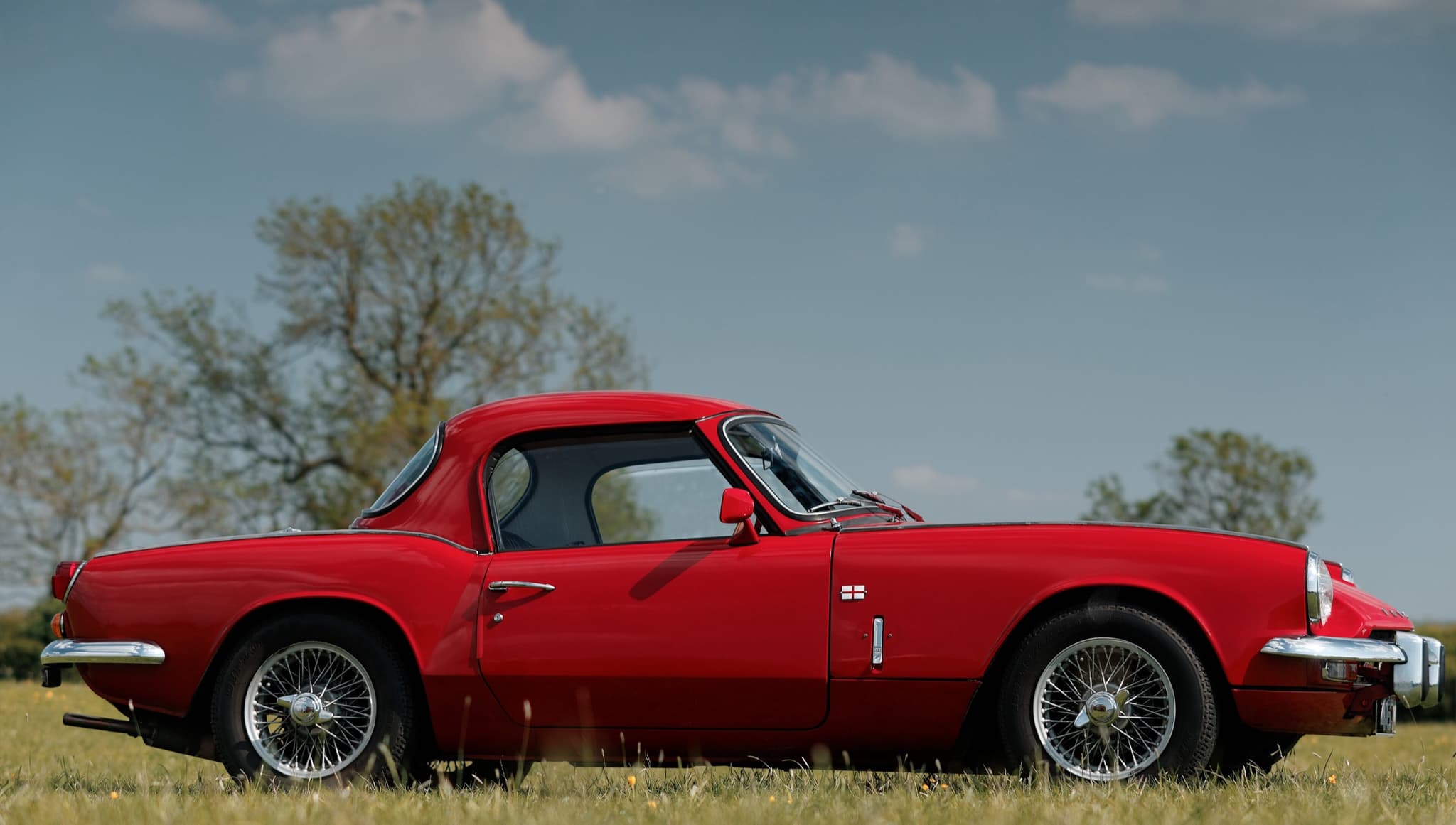
For most of its life a Triumph Spitfire could be ordered with a hardtop, which turned the open two-seater into a coupé. The factory made two designs: a steel top held by six bolts for the Spitfire 4, the Mk II and the Mk III, and a new top with opening rear quarter windows for the Mk IV and the Spitfire 1500.
Overdrive and wire wheels were first offered for the same model year as the hardtop. Later cars gained an option pack and, in the United States, dealer stripe kits.source 1source 2source 3source 4source 5source 6
The steel hardtop, 1964–70
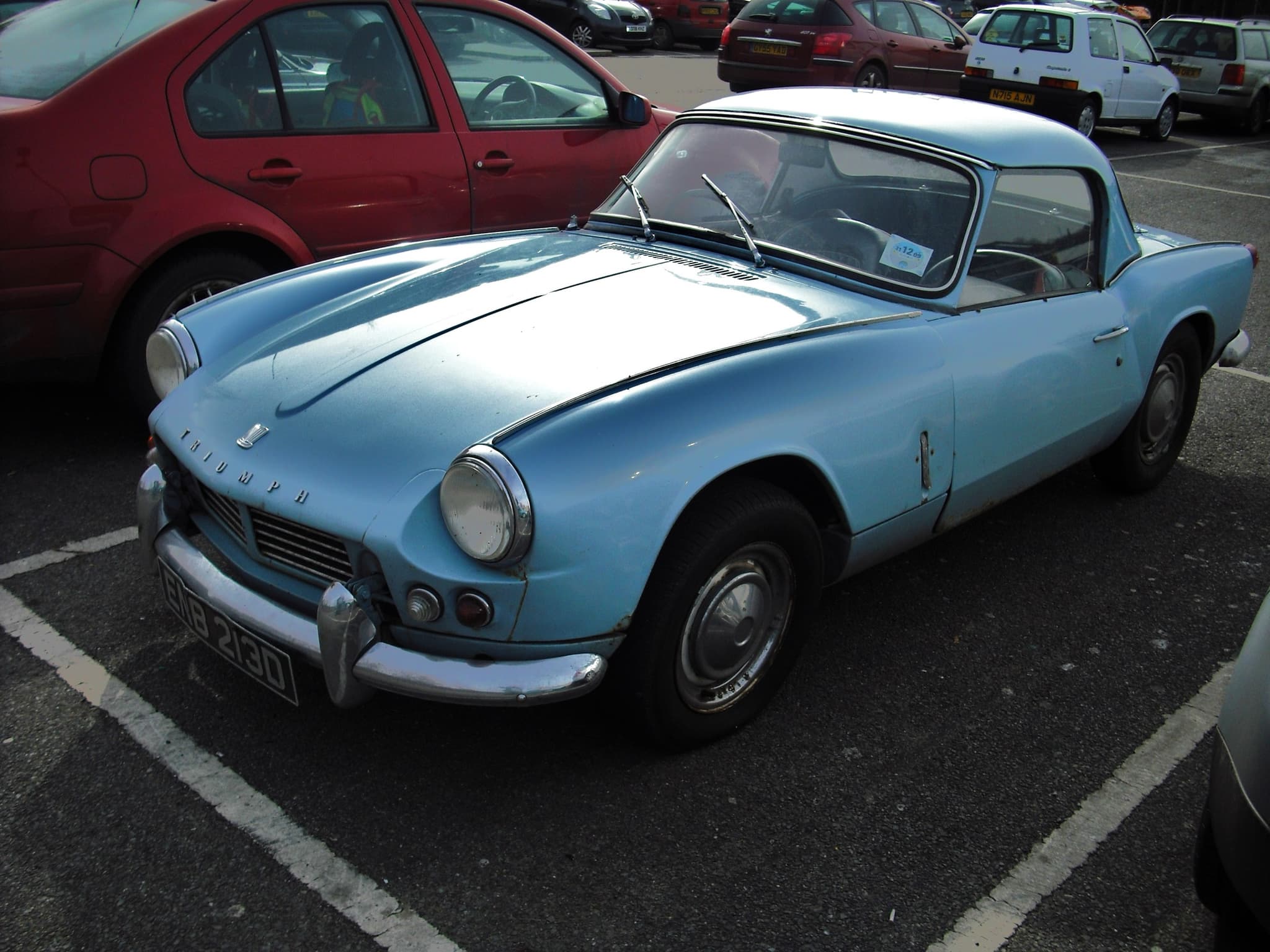
The first hardtop was pressed steel, offered from the 1964 model year. Standard-Triumph's Italian brochure of 1966, for the Mk II, lists it among the accessories to order and describes a top that one person could fit or remove in a couple of minutes by turning six bolts, two of them in the holes the hood (soft top) used, with a large curved rear window and a well-trimmed lining.
Mike Cotton had the hardtop on the Mk III he drove to the Monaco Grand Prix for Motor Sport in 1967:
The optional detachable steel hard-top adds to the appearance, and while this can be removed easily by unscrewing six bolts, replacement proved very tricky indeed, first in replacing the rubber seal around the trailing edge and then lining up the bolt-holes, but this is presumably done but once a year with the advent of winter.
triumphspitfire.com's option lists add a kit for converting a hardtop car to the soft top, for the Mk II and Mk III, and a heated panel for the rear window of the Mk II's hardtop.source 1source 2source 7source 3source 8source 9
The Mk IV and 1500 hardtop, 1970–80
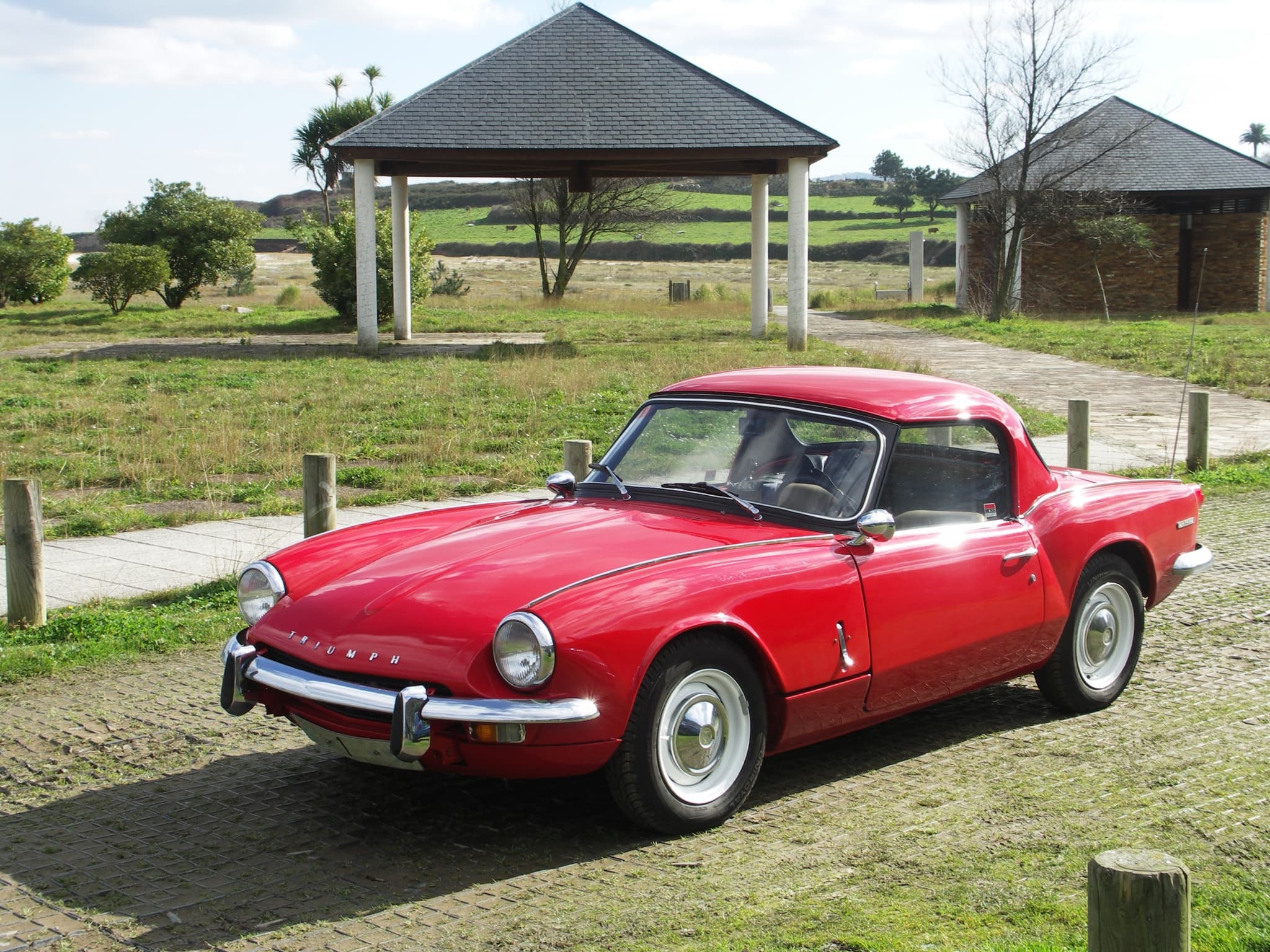
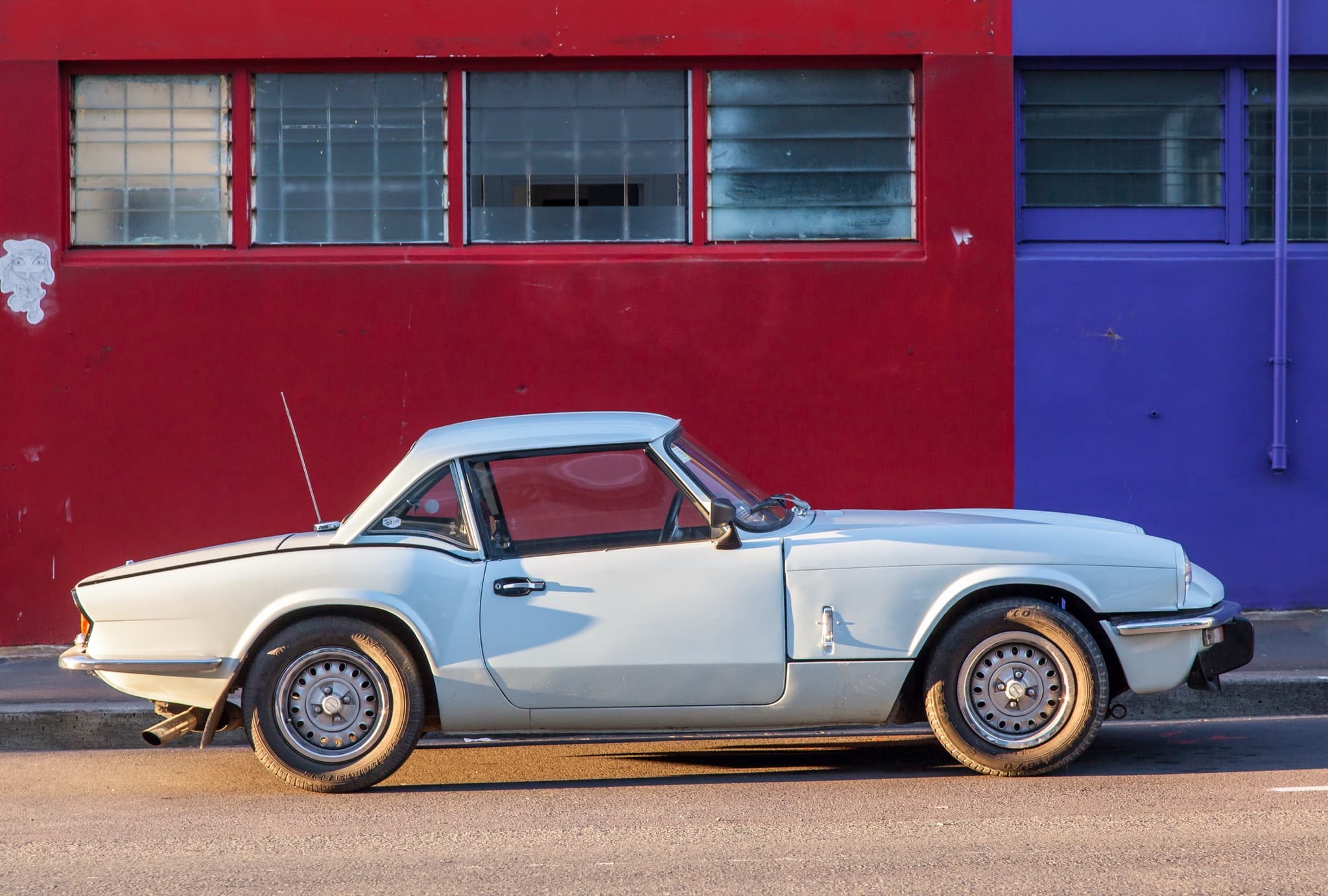
The Mk IV's new body brought a new hardtop. Its rear quarter windows were hinged at the front to open, its rear window was toughened glass and its lining washable leathercloth, as British Leyland's French brochure of 1973 described it. The American brochure for the 1974 model year listed it as "Optional hardtop, with forward hinged quarter lights and washable lining", and Bill Boddy's road test of January 1971 told readers who wanted a coupé that a hardtop was available.
The UK brochure of December 1978 still offered the 1500 with a soft top and tonneau cover or with the hardtop, and the last Spitfire, built in August 1980 and kept by the British Motor Museum, wears one.
triumphspitfire.com says the Mk IV's top came in the body colour with a beige lining, and gives a hardtop's weight as 26 kg (58 lb) without saying which one it weighed. No source read says whether an early steel top fits a Mk IV or 1500, or the later top an early car.source 4source 5source 10source 6source 11source 9
Fastbacks, Lenham and the Le Mans look
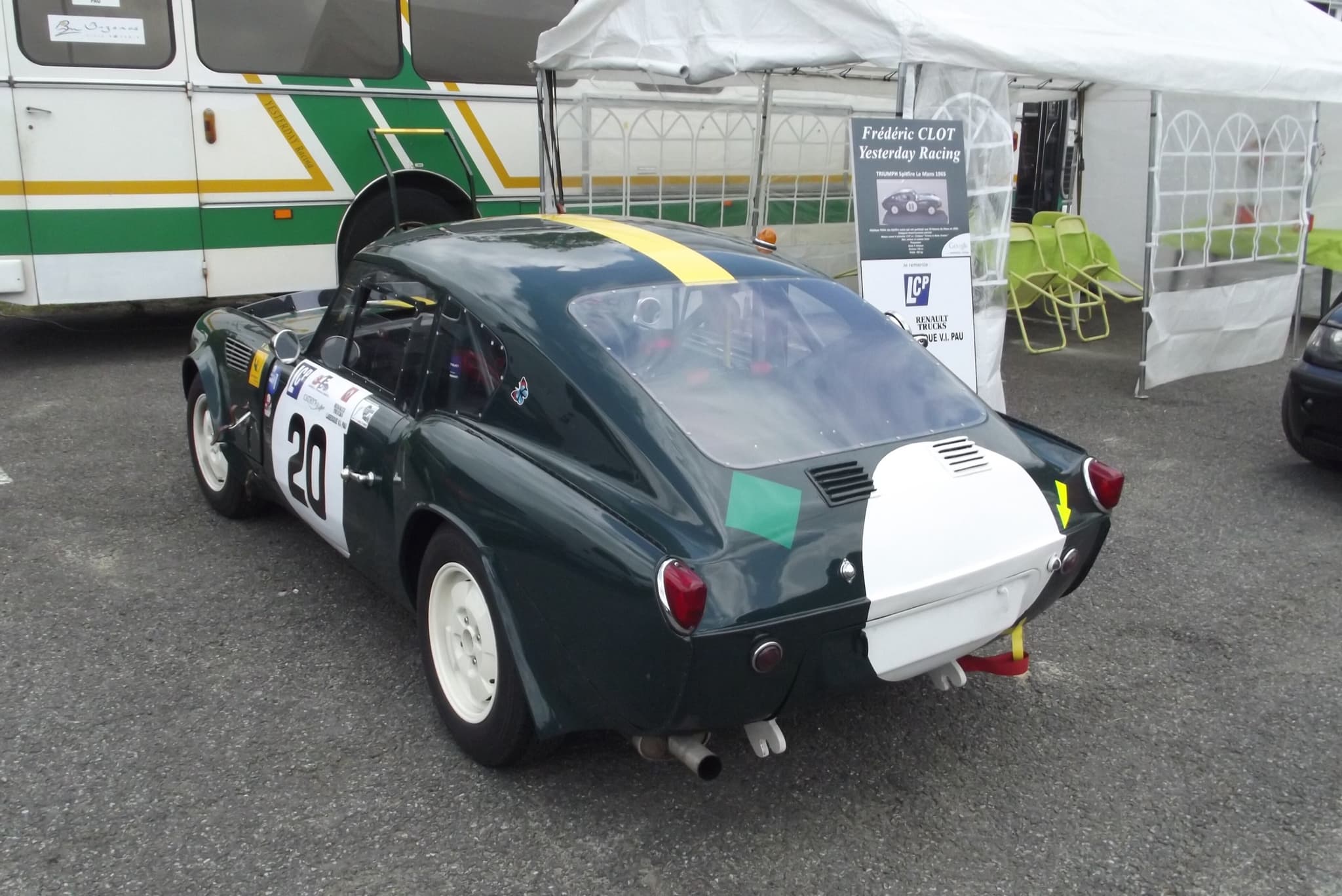
The factory's fastback Spitfire was a separate model. The GT6, built from 1966, put a six-cylinder engine and a fastback roof on the Spitfire's chassis and was sold under its own name; it is on the Spitfire in popular culture page with the car's other relatives. The works Le Mans cars of 1964 and 1965 had fastback roofs too, on bodies built for racing, and the racing page tells their story.
In the 1970s Lenham converted Spitfires with a sloping glass-fibre fastback. Practical Classics featured one in 2003, and its owner knew of no other Lenham fastback Spitfire that survived.
That sloping glassfibre roof makes the Spit look like a GT6 that's eaten too many pies
Lenham made hardtops as well. In January 1971 Motor Sport reported two aftermarket tops for the new Mk IV: Lenham's Torado, a glass-fibre top of the targa type, and a glazed hardtop from Heron Plastics. Rimmer Bros says it holds the sole rights to make and sell the Lenham hardtops for the Mk IV and 1500.source 12source 13source 14source 15source 16source 17
Overdrive
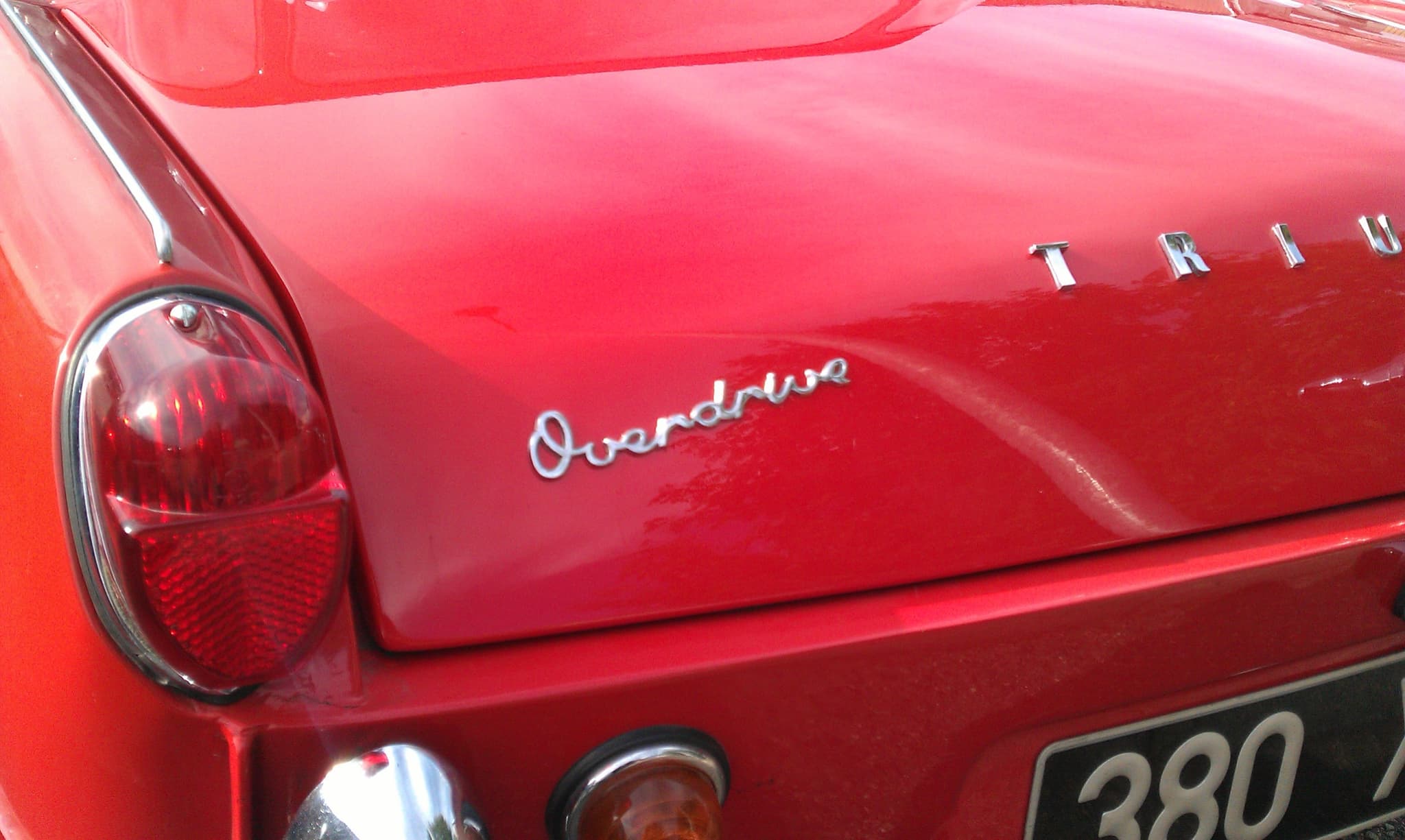
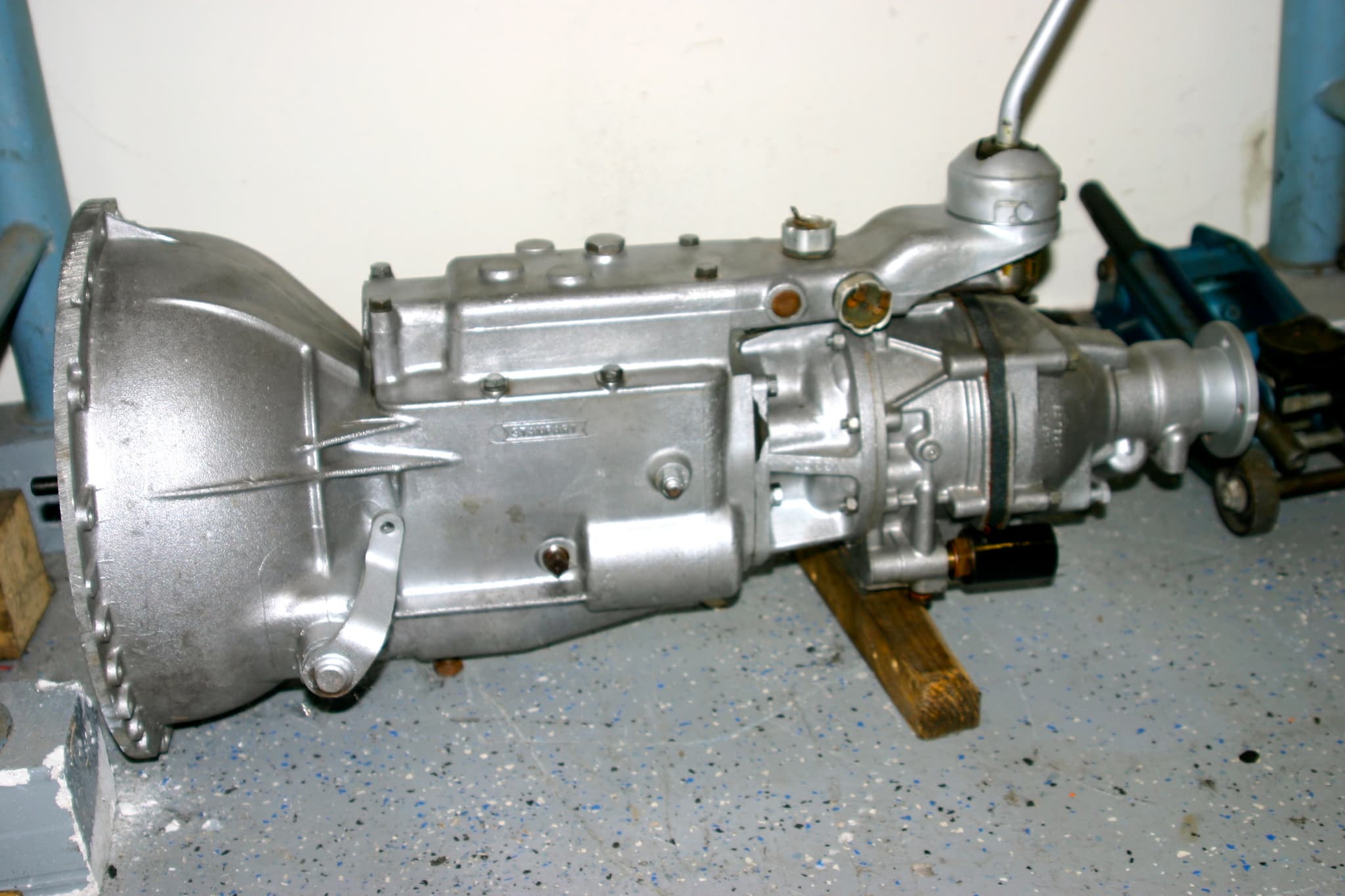
The Triumph Sports Six Club dates overdrive from October 1963, an option for the 1964 model year. It was a Laycock de Normanville unit, working on third and top gears.
The early cars had Laycock's D-type. Canley Classics says the J-type was standardised on all Triumphs from 1974, on the Spitfire from FH60000, and that its solenoid sits on the left of the unit where the D-type's was on the right. The J-type's step is 25 per cent on every Triumph but the 2.5-litre cars. Which other Triumphs' overdrives fit a Spitfire is on parts and specialists.
On the Mk IV that Motor Sport tested in January 1971 the overdrive was "selected by a slide on the gear-lever knob", and the 1500 that the magazine drove in 1975 had its switch in the knob too. triumphspitfire.com puts the switch on the steering column before FH60000, which does not fit the Mk IV the magazine tested; no source read says where it was on the earlier cars.
By December 1978 overdrive was the only optional extra that the UK brochure listed for the 1500.source 18source 2source 10source 5source 19source 20source 9source 6
Wire wheels
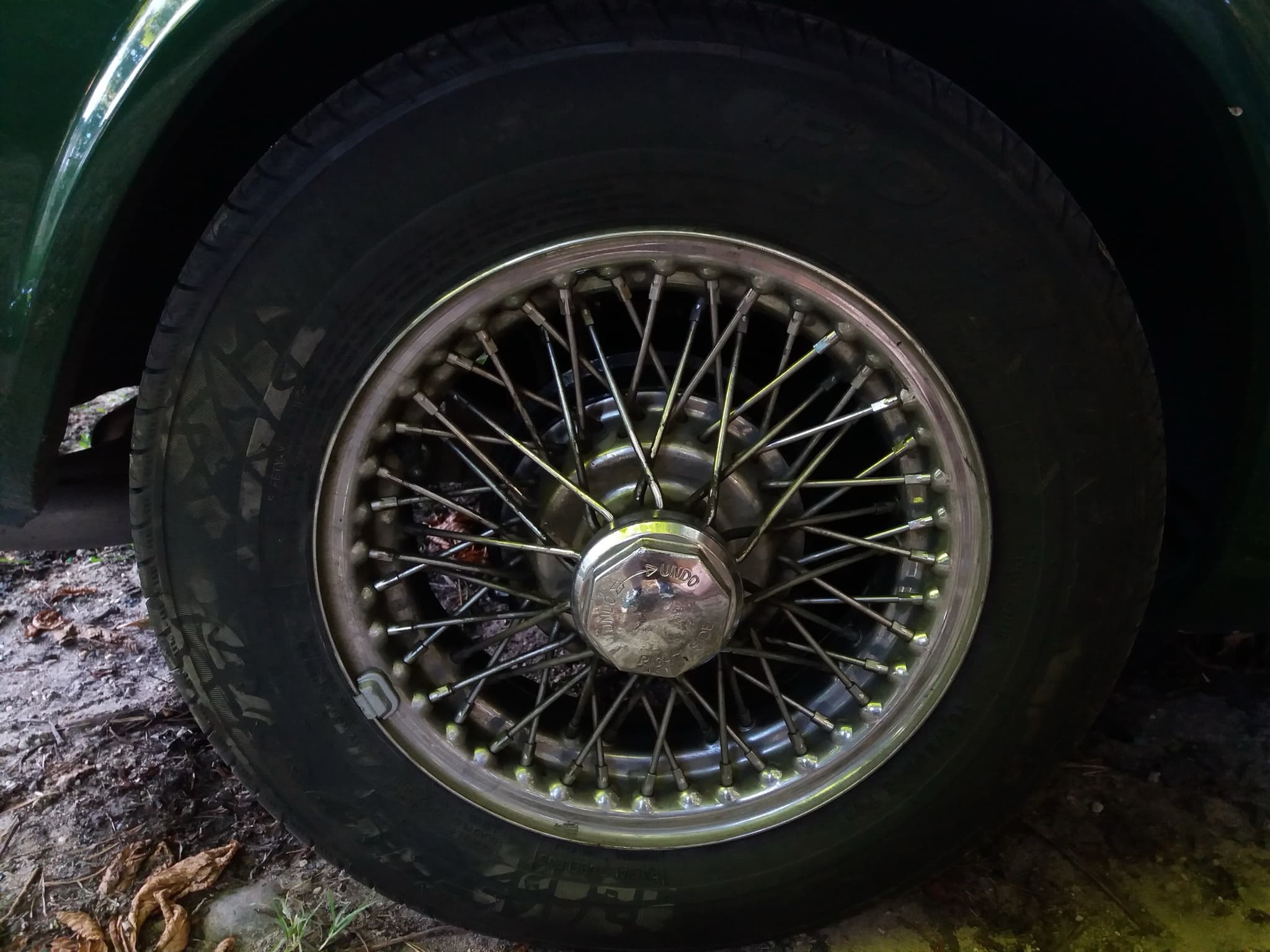
Centre-lock wire wheels were offered from the 1964 model year; the specifications give the wheel size. triumphspitfire.com dates the change from eared spinners to hexagonal ones to about FD11732, a Mk III number.
The Mk IV kept wire wheels as an extra, listed in Motor Sport's test of January 1971, and triumphspitfire.com says they were bolt-on wheels, fixed by nuts like the steel ones, until about FH60000.
The option pack and the stripes
The 1500 brought an option pack: a driver's door mirror, inertia-reel seat belts, head restraints, a map light, a centre armrest and a dipping rear-view mirror. triumphspitfire.com says it became standard on cars outside the United States from about FH80000, in January 1976, and the UK brochure of December 1978 lists every item as standard. Motor Sport priced the pack and the overdrive in March 1975.
- Overdrive on a 1500, 1975
- £113as Motor Sport priced it in March 1975
- Option pack on a 1500, 1975
- £39as Motor Sport priced it in March 1975
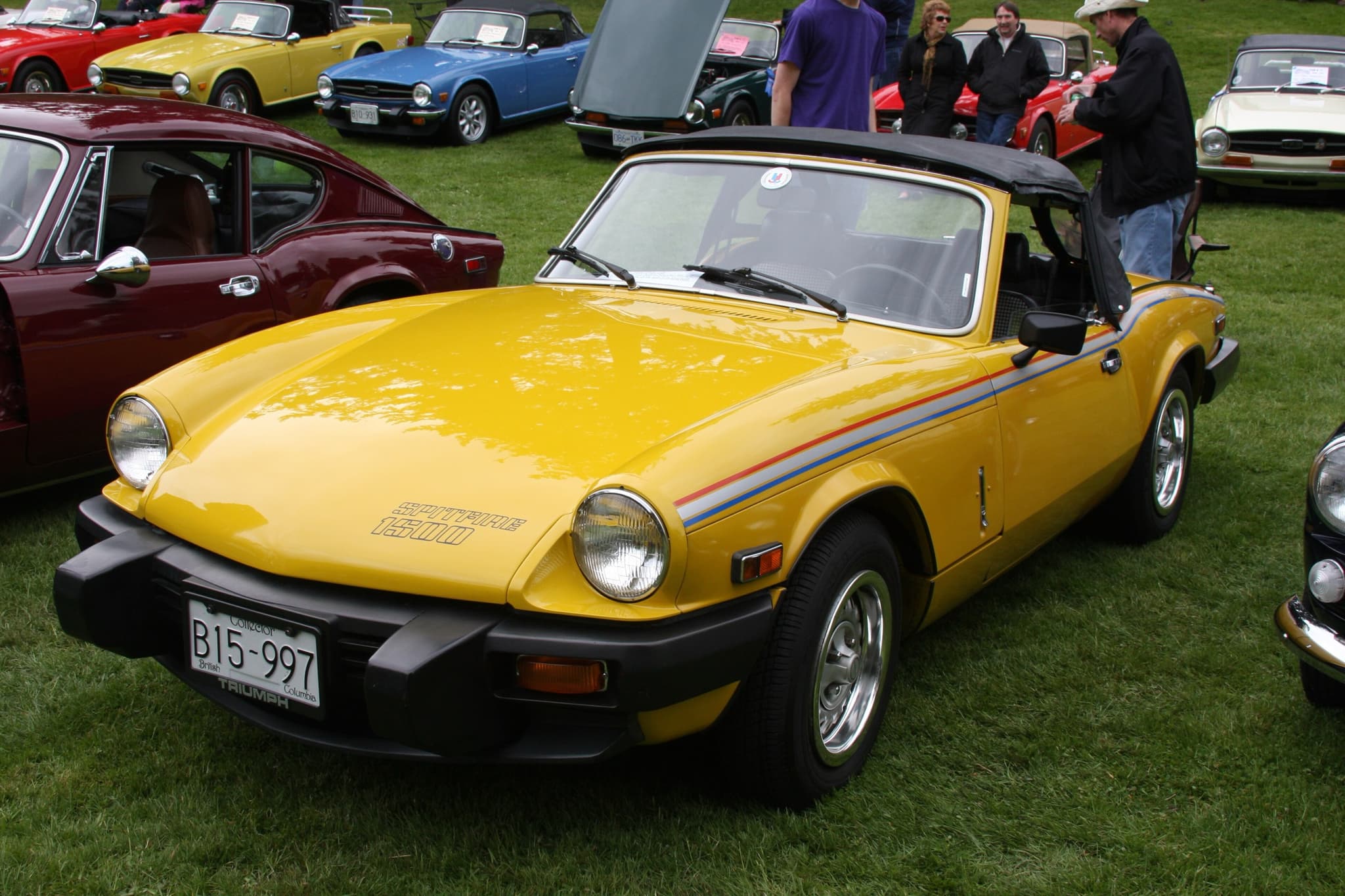
In the United States the options and dealer accessories in British Leyland's brochure for the 1974 model year ran from a radio and a chrome luggage rack to Koni adjustable dampers and a walnut gear knob, and included a "Striping kit in black, silver or gold."
triumphspitfire.com, citing dealer brochures, describes stripe kits in black, silver or gold in 1975 and black or silver in 1976, then two 3M kits from 1977 to 1980, one red, silver and blue (part BLM105206) and one yellow, black and silver (BLM105207), fitted by dealers or at the port of entry rather than on the line. It reports Michael Cook's book of 1981 as saying the kits were for the US market only, but also a British car that had one, so they were sold mainly, perhaps only, in the United States.source 20source 9source 6source 5
Competition parts
The factory's own tuning parts came as kits, and Canley Classics explains what they were for:
Triumph only really sold (usually through SAH) Spitfire Interim, and Spitfire Stage II kits to satisfy homologation regulations to justify the racing effort.
In the United States in the 1970s British Leyland backed Spitfire 1500 racers with about 40 competition parts, according to Triumph Sportscars of Australia, and British Leyland's brochure for the 1974 model year advertised a Racing Support Program. The racing page has the results.source 19source 22source 5
Sources
Sources are given as plain text; their addresses are on the sources page.
- Primarymade at the time, by the maker or by people who were there
- Referenceserious later work: clubs, specialists, magazines, books
- Uncheckedencyclopaedias and enthusiast sites: cited beside a good source, named in the sentence, or marked Unchecked
- Practical Classics, "Buyers Guide: Triumph Spitfire", May 2000, p. 82, Spitfire 4 panel; p. 82, caption. Reference
- Classic & Sports Car, A–Z of classics: Triumph Spitfire I, II, III, MkIV, 1500, Spitfire I. Reference
- Standard-Triumph, Spitfire Mk. II (sales brochure), Italy, Ref. 352/666/IT-DUC, 1966, "Capote Rigida"; "Accessori a richiesta: Capote rigida". Primary
- British Leyland (France), Triumph Spitfire Mk4 (sales brochure), France, 11/1973, T.919, coachwork; supplements. Primary
- British Leyland Motors Inc., Spitfire 1500 (sales brochure), USA, 1974 model year, SP741, 1973, "Interior"; "Options"; "Options"; Racing Support Program. Primary
- BL Cars / Jaguar Rover Triumph Ltd, Triumph Spitfire 1500 (sales brochure), UK, 12/1978, Publication No. 3254/D, coachwork; specifications; coachwork; specifications, "Optional extra"; specifications. Primary
- Malcolm McKay, "Triumph Spitfire buyer's guide: what to pay and what to look for", Classic & Sports Car, 10 May 2019. Reference
- Mike Cotton ("M.L.C."), "Triumph Spitfire to Monaco", Motor Sport, Jun 1967, p. 26. Primary
- triumphspitfire.com ("Spitfire & GT6 Magazine and Information Warehouse"), Reference pages (group): models and options; Mk I–1500 options-and-changes logs; engine numbers; 1979–80 VINs; what year is my car; final drive; general specification data; stock tyres; wheel alignment; lubrication; tuning; fuses; paint and trim codes; side stripes; decal and badge placements; wire wheels; head swaps; substitute parts; suppliers; new owner; pre-purchase checklist; spotters guide, pages modified 2023, Mk II and Mk III options and changes; Mk IV options and changes; general specification data; Mk IV and 1500 options and changes; "Wire Wheel Info"; Mk III, Mk IV and 1500 options and changes; 1500 options and changes; side stripes. Unchecked
- Bill Boddy ("W.B."), "Road test: The Triumph Spitfire Mk. IV", Motor Sport, Jan 1971, p. 59; p. 59, extras. Primary
- British Motor Museum, "Spitfire 1500 (last of line), 1980", accession 1980-1-190, record and photograph. Primary
- Canley Classics, "Production Figures", GT6 rows. Reference
- Graham Robson, "One Design, Many Derivatives", Moss Motoring, 26 Oct 2022. Reference
- Canley Classics, "Spitfire ADU ~B Le Mans". Reference
- Danny Hopkins, "Spit Roast", Practical Classics, Feb 2003, pp. 66–67. Reference
- Motor Sport, "Performance news", Jan 1971, p. 33. Primary
- Rimmer Bros, Product pages TT30431, TT30430 (5-speed kits), RL1100 (Lenham hardtop), RL1100. Reference
- Triumph Sports Six Club, Model pages: Spitfire 4/Mark II (model_ID=24), Mark III (23), Mark IV (25), 1500 (26), Spitfire 4/Mark II page. Reference
- John Kipping (overdrive articles), Technical articles (group): "Swing Springs", "Rear End Noises", "Propshaft Problems", "Oil Consumption", "Unleaded Engines", "The D-Type Overdrive", "The J-Type Overdrive", "Different Differentials", "Close Ratio Gearboxes For Spitfire MkIV/1500", "Chrome Bumpers", "Spitfire Tuning Kits", "Fitting Le Mans Style Bonnet Vents", Canley Classics, "The D-Type Overdrive"; "The J-Type Overdrive"; "Spitfire Tuning Kits". Reference
- Clive Richardson ("C.R."), "Road Impressions – The Triumph Spitfire 1500", Motor Sport, Mar 1975, p. 25; p. 25, last two paragraphs. Primary
- Triumph Spitfire Club (Netherlands), "Spitfire modellen", "Aankoop informatie", "Clubinfo", home, Spitfire modellen. Reference
- Triumph Sportscars (Australia; closed end of 2016), "Spitty Tips" 2, 3, 4, 5, 6, 8, 19, Spitty Tips 2. Reference