Triumph Spitfire Review
What the testers of the day made of each Triumph Spitfire, from a first drive in the rain in 1962 to the 1500's last reviews: who tested which version, which of their reports can still be read, and what the car is like to drive.
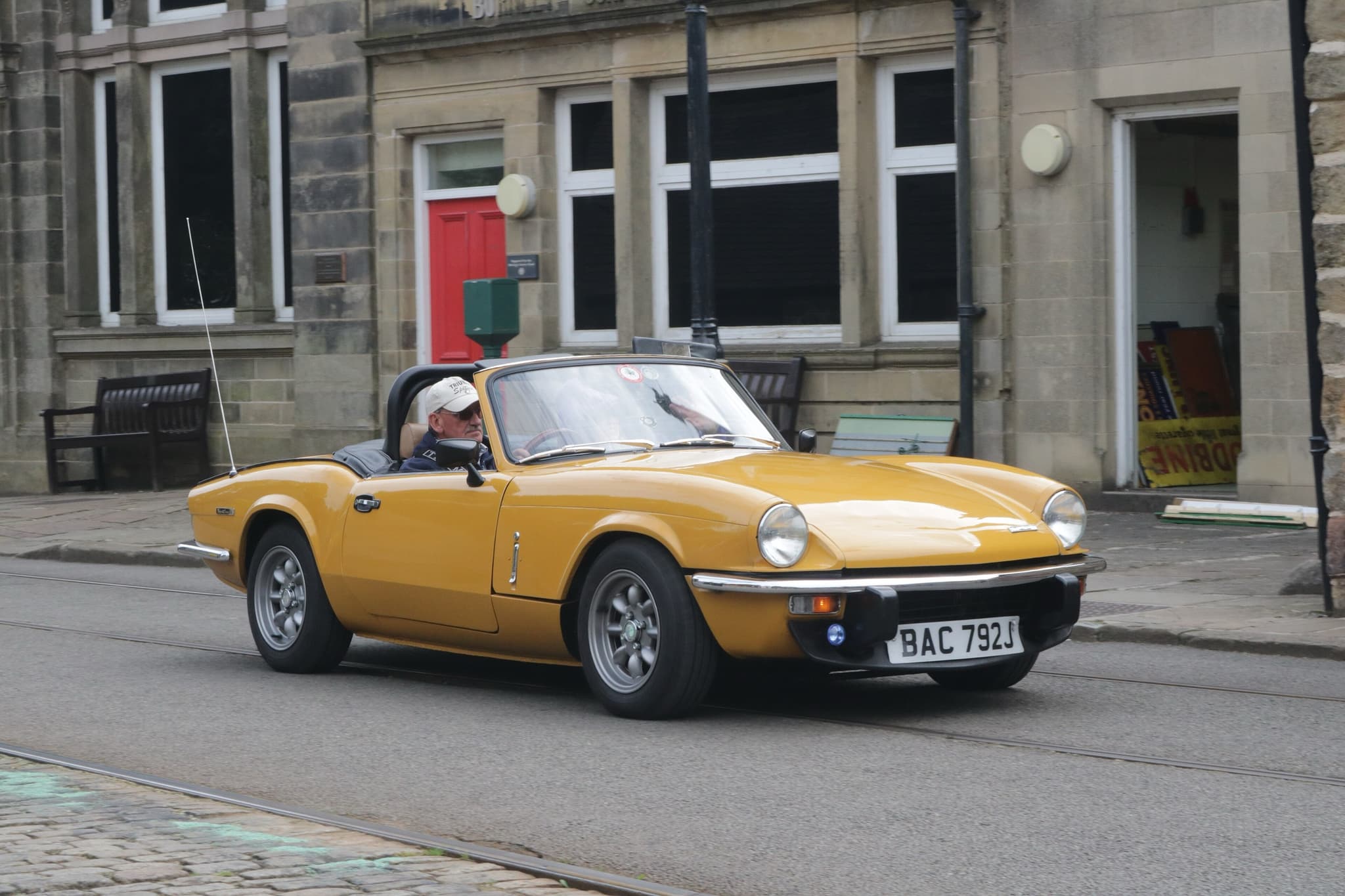
Motor Sport's first drive in a Spitfire was spoilt by the weather. In its show issue of November 1962 the magazine reported trying the first two cars off the production line for an hour or two round Coventry, in rain so heavy that it could reach no useful conclusions on handling or braking. It liked the car all the same, and so did most of the testers whose reports can be read today.
Those reports are uneven. Motor Sport's tests of the Spitfire 4, the Mk III, the Mk IV and the Spitfire 1500 survive in full, and they carry most of this page. The other magazines' tests reach us as entries in their indexes, as figures in later tables, or through enthusiasts' copies, and the page says which is which.source 1source 2source 3source 4source 5
At launch, 1962–63
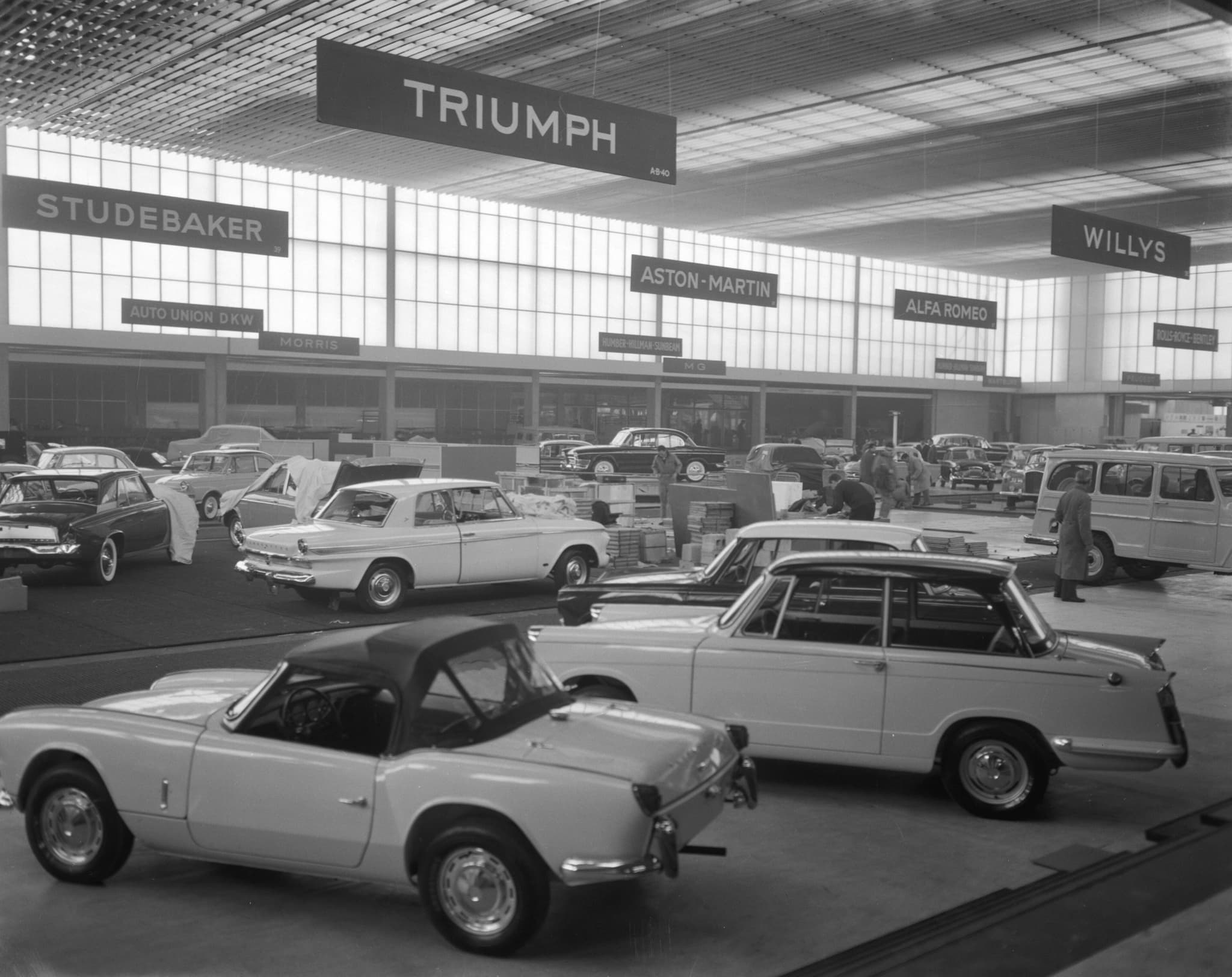
The press met the Spitfire 4 in the autumn of 1962, and Motor Sport's November issue reported it four times. The wet drive round Coventry found the car brisk, "if not as quickly as one might expect" from its quoted power, with good synchromesh and a hood (soft top) that let no rain in; the wind-up windows were "a great boon", but the suspension was stiffer than expected and rough roads brought scuttle shake. At a press day at Goodwood the magazine's M. L. T. found that it "accelerates reasonably briskly, has a pleasant gearbox, good brakes and handles well, although breaking away fairly early, albeit in a controllable fashion", and thought its success assured by orders worth several million dollars from the United States. The show report thought Triumph right to make much of it, if puzzled that the car on the stand had left-hand drive, and the leader closed on the small sports car's prospects: "the future of the small sports car is bright, providing Insurance Companies do not push them off the road with ridiculously inflated premiums".
Other magazines tested it, as later indexes and leads show; only Motor Sport's 1962–63 texts have been read. Road & Track in America and Autocar in Britain are known to have tested the Spitfire 4 only through figures in later tables, and no Motor report earlier than March 1965 has been identified. In the United States the car reached the showrooms early in 1963, beside the TR4, but no American magazine's text of that year has been read.
The first full road test that can be read is Bill Boddy's, in Motor Sport for April 1963. He had two cars in weather that stayed abnormally cold, kept their hoods up throughout, more from laziness, he admitted, than because the hood was awkward, and covered 900 km (560 miles) in them. Not everything held together. The first car, one the makers thought unfit for the press, had a dented tail, brakes that needed adjusting and a fast tick-over, and one of its tyres went soft when the spare was already flat. His verdict took that in its stride:
Those items, and a good many rattles, were the only shortcomings of a car that I found most enjoyable to drive, quick and sure through traffic, and comfortable to occupy in the coldest weather, the heater being unobtrusive but entirely adequate and the windows in the doors much appreciated.
The second car was more serious: a weld in the frame of its passenger seat broke and the seat collapsed. Had it been the driver's seat, Boddy wrote, the consequences "could have been highly inconvenient, even dangerous".
The following February the Editor's column, unsigned but Boddy's by the magazine's custom, looked back on 1963 and remembered "a very pleasant little car, admired for its looks". It put the verdict plainly: "The Spitfire should be a hit!"source 1source 6source 7source 8source 9source 10source 2source 11source 12
The Mk II and Mk III, 1965–67
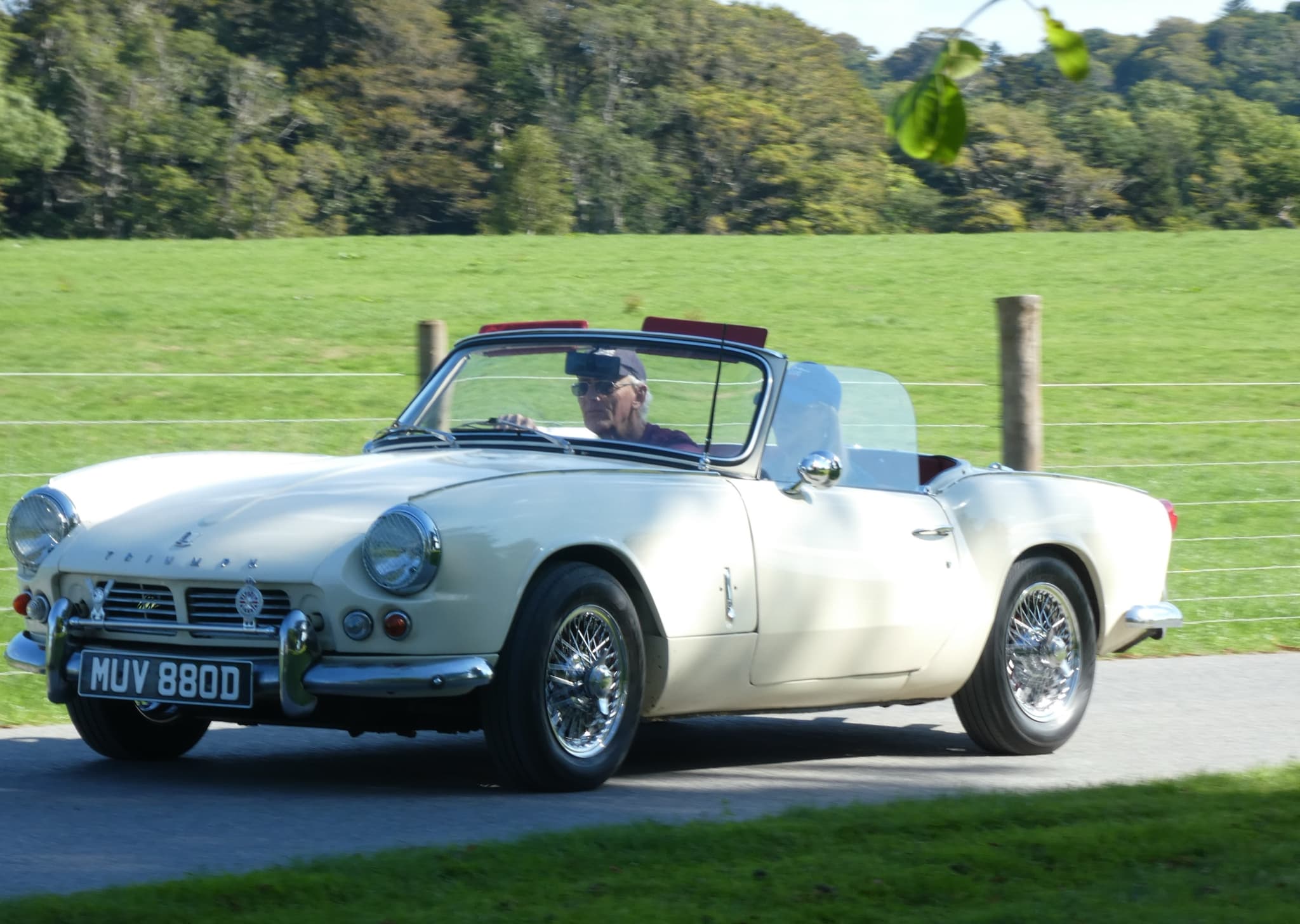
The Spitfire 4 Mk II, launched in March 1965, had almost no press reception that can be read today. Motor Sport could not accept Standard-Triumph's invitation to drive the new TR4A to Geneva, and said only this:
We hope to publish a report on the new TR4A and improved 67-b.h.p. Triumph Spitfire sports cars later on.
No such report has been found. The Mk II's other reports are known only at second hand. Motor reported on it with the TR4A on 13 March 1965, and Autocar road-tested one in its volume for the first half of 1966, a year after the launch, but both are known from index entries alone; Road & Track's test of June 1965 survives as figures in triumphspitfire.com's table. None of their verdicts has been read.
The Mk III of 1967 is better recorded, though mostly in the same way. Motor announced it on 18 March 1967, road-tested it on 19 August and set it beside the Honda S800 and the Austin-Healey Sprite on 14 October; all three are index entries, not texts read. The test that can be read is Mike Cotton's run to the Monaco Grand Prix and home for Motor Sport's June 1967 issue, in a Mk III with the hardtop and overdrive. He came back ready to take it seriously as transport: a fast cruise did not trouble it, two people could cover 1,090 km (680 miles) in one journey without undue fatigue, and the overdrive made long journeys quite relaxing.source 13source 9source 14source 10source 15source 16source 3
The Mk IV, 1970–71
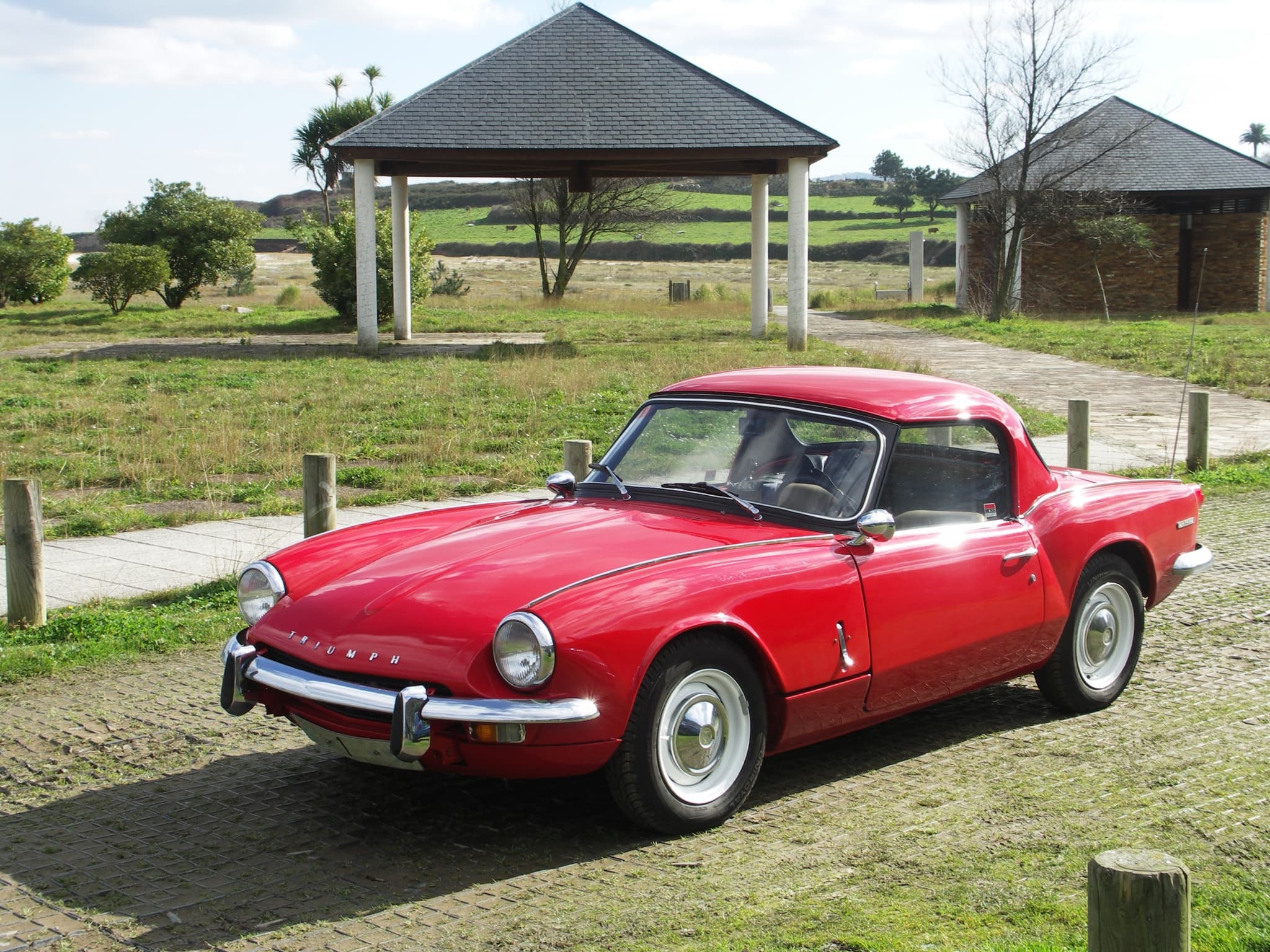
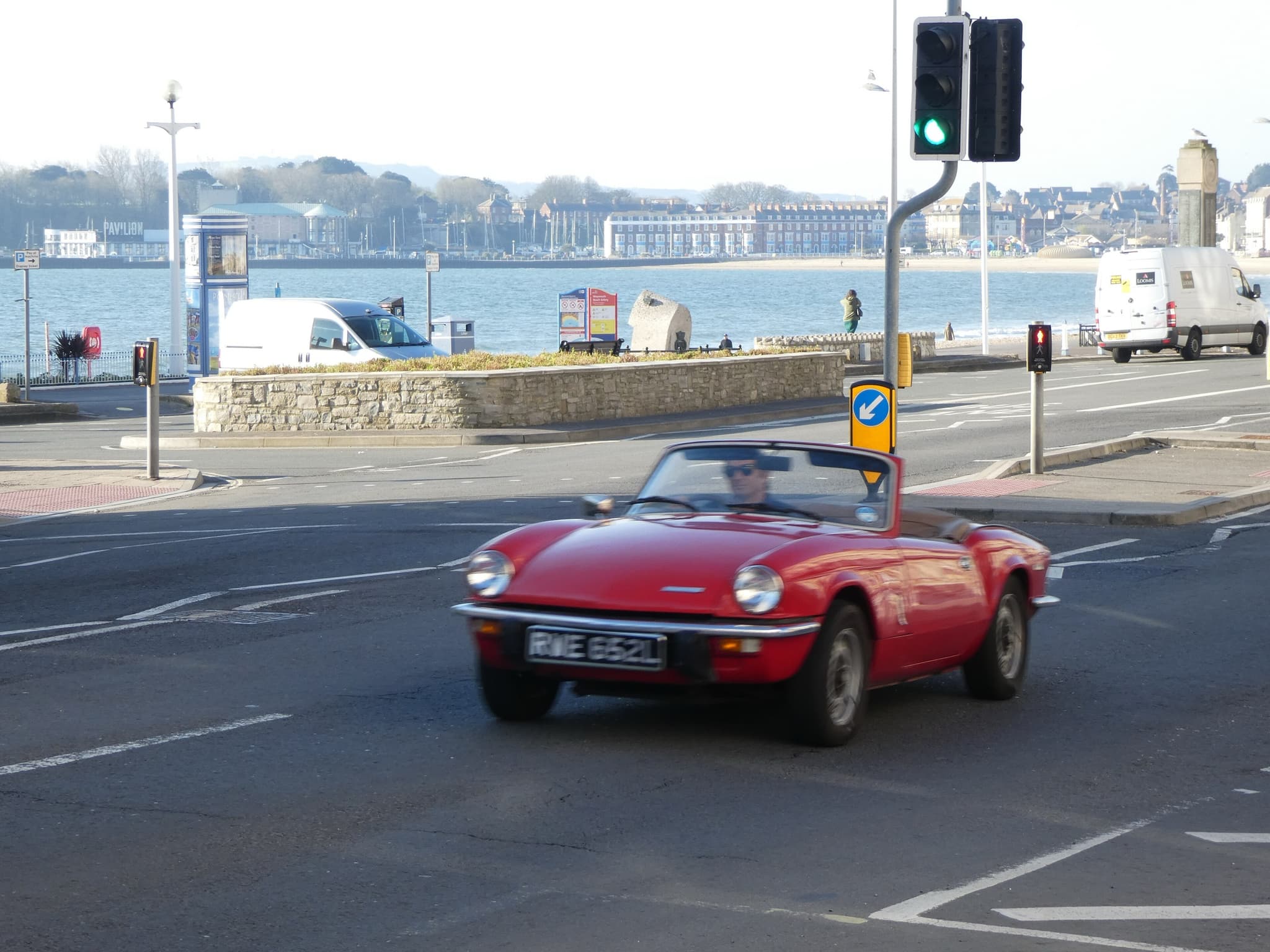
British Leyland let the press try the Mk IV at Silverstone, and Motor Sport's J. W. reported on the day in November 1970. He thought every change worthwhile, found the car quieter and much better in corners, and noted that it now had synchromesh on all four forward gears; British Leyland, he reported, had thought of giving it the GT6's rear suspension, but cost had ruled that out.
Bill Boddy tested a red Mk IV with overdrive for the January 1971 issue. He told readers that they "must not sneer at the Spitfire for being, in effect, a rebodied twin-carburetter Herald", called it "adequately fast", and placed it among British Leyland's other sports cars in his own way:
… I note that J. W. says Spridgets can still run rings round the Spitfire but for road use I regard the Triumph as more of a motor car, as it has larger dimensions, but fits very nicely between these really small BLMC sports models and the obviously more potent and more purposeful MG-B and Triumph TR6.
In his review of the year a month later, having reported on the car already, he summed it up in a line: "a well-contrived, pleasant-to-drive little sports car, which makes good avail of out-dated mechanicals".
America saw a different car. Road & Track, testing one of the emission-controlled North American Spitfires in 1970, found that the engine had lost power since its previous Spitfire test, as AROnline quotes it. The British and American magazines were describing different engines.source 17source 4source 18source 19
The American 1500, 1973
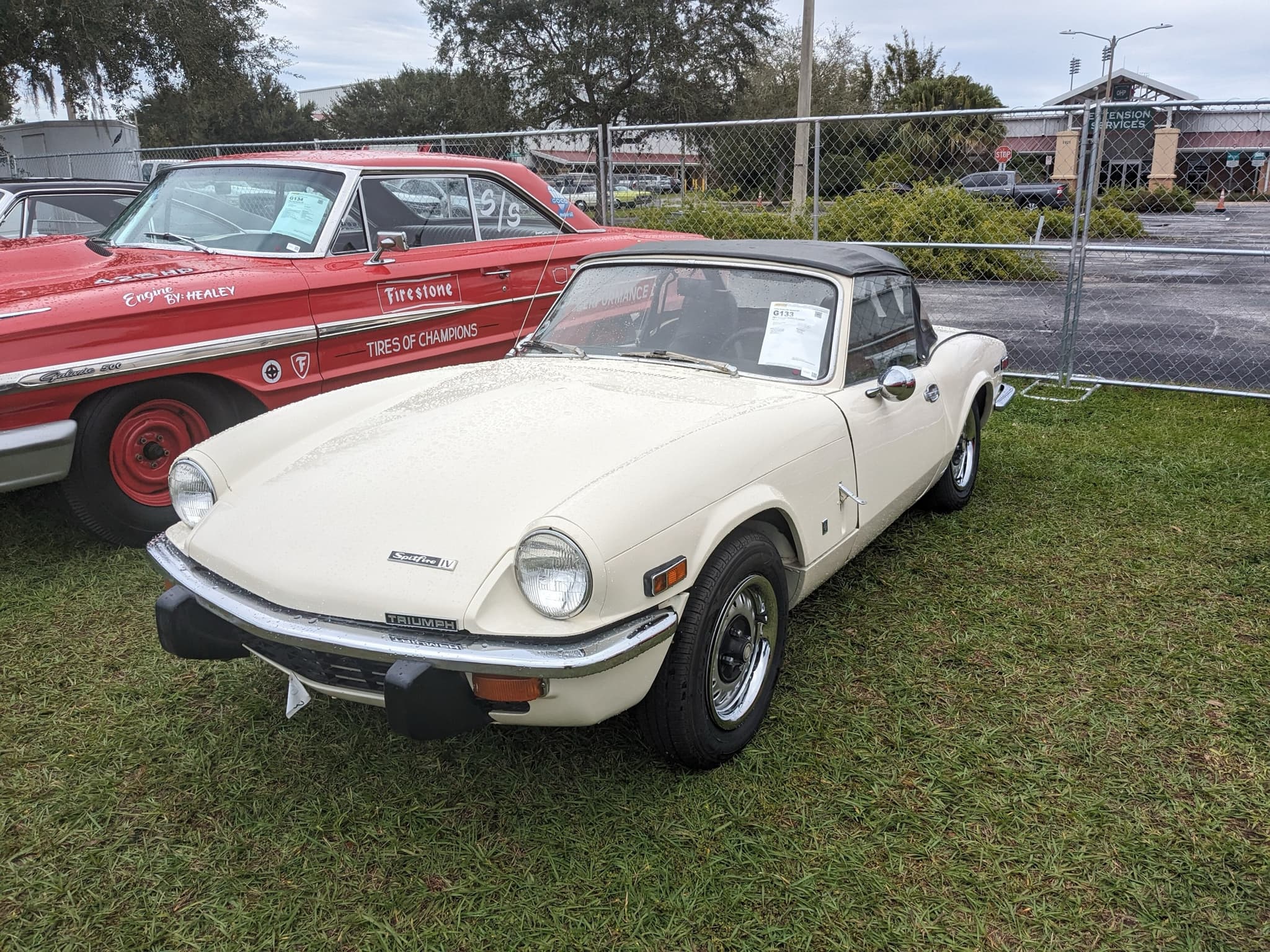
From the 1973 model year American Spitfires had the longer-stroke engine in the Mk IV's body and were sold as the Spitfire 1500. In their April 1973 issues two American magazines set the 1973 model-year car against its rivals on a track, each with the Sports Car Club of America's new Showroom Stock class in mind.
Car and Driver took eight cars to Ontario Motor Speedway. By an enthusiast's account of the test, the Spitfire was second slowest of the eight in acceleration but the best of all on the skidpad, on cross-ply tyres where most of the others had radials, and the Fiat 124 Spider won overall. The editors found it very close to neutral in corners, its tail jacking up through the turns and an inside wheel chattering near the limit, and wrote, as that enthusiast transcribed them:
The Triumph Spitfire is a changed automobile. Previous versions have earned it a reputation as a sports car that spends much of its time trying to tip over. But if any car has redeemed itself of past habits during this test, it is the Spitfire.
Road & Track's test in the same month's issue ran nine cars at Riverside. Curbside Classic's summary of it has the GT6 setting the fastest lap and the Spitfire judged "the most fun to drive". Neither magazine's own pages have been read.source 20source 21source 22
The Spitfire 1500, 1975–76
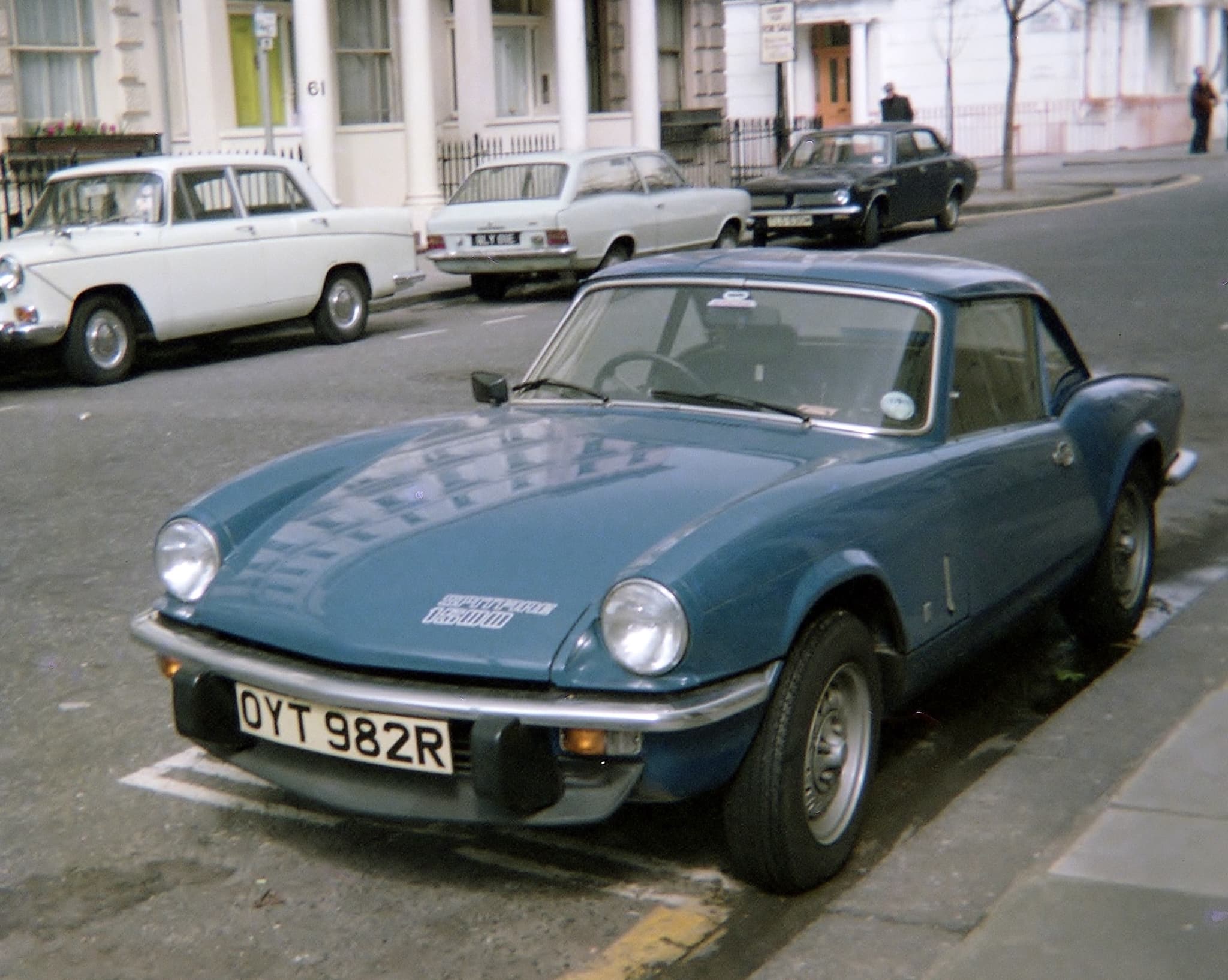
Britain had the longer-stroke engine from the end of 1974. Motor Sport's news pages greeted the 1500 in January 1975 with Triumph's claims for speed and economy, adding of an economy figure taken at a steady 80 km/h (50 mph), "though who is likely to be able, or want to, travel everywhere at a constant 50 m.p.h. we know not".
Clive Richardson's road impressions followed in March. On the strength of British Leyland's own figures he called the car, never quick before, "satisfyingly nimble", and he found its handling much improved and its engine far less obtrusive at speed. Revved hard, the engine was another matter:
Although the ultra-long-stroke engine's 6,000 r.p.m. recommended maximum is achieved easily, it is rough and harsh at the top end.
Later that year the magazine used a 1500 for a month, for 2,400 km (1,500 miles) of commuting, errands and narrow Welsh lanes. "Throughout, we found it more fun than a saloon", it wrote, and praised a smooth ride, a quiet car and "an exceedingly useful overdrive". Boddy, in the Editor's review of 1975, enjoyed his 1500 with the hood down "on fine days and foul", and judged that the Triumph, "however illogical, was great fun, handled effectively, and was therefore excellent value for today's money".
In America, by Curbside Classic's account of Road & Track's comparison of six affordable sports cars in 1976, the Fiat X1/9 came first, and the Spitfire was "the highest placed of the old guard".source 23source 5source 24source 25source 26
Who tested which Spitfire
The table lists the period road tests and launch reports of the Spitfire that the sources read name with a date or the version tested, the version where it is known, and how much of each has been read; some are known only from an index or from Wikipedia's references. Later writers also quote other tests without saying when they appeared or which Spitfire was tested, among them Small Car's and Autosport's. The figures the tests measured stand in the specification on each version's page, every reading with its source.
| Test | Version | What it found | What has been read |
|---|---|---|---|
| Illustrerad Motor Sport, John Blunsden, October 1962 | Spitfire 4 | A launch article, not known to be a test | Cited by Wikipedia; not read |
| Motor Sport, first drives, November 1962 | Spitfire 4 | Brisk, with good synchromesh and a dry hood; scuttle shake | The whole text |
| Motor Sport, Bill Boddy, April 1963 | Spitfire 4 | Most enjoyable to drive; low gears, rattles, no oil-pressure gauge | The whole text |
| Road & Track, April 1963 | Spitfire 4 | Not known | Its figures, in triumphspitfire.com's table |
| Autocar, date not known | Spitfire 4 | Not known | Its figures, in triumphspitfire.com's table and Practical Classics |
| Road & Track, 1964, as a later writer dates it | Spitfire 4 | Not known | Named by a later writer; perhaps the April 1963 test |
| CAR (South Africa), date not known | Spitfire 4 | Moderate performance, made up for by its cost, safety, handling and economy | Quoted by Classic Car Africa |
| Motor Sport, "Trying the new cars at Goodwood", December 1964 | A Spitfire tuned by SAH (Stage II) | Entertaining to throw around; the idling a little rough | The Spitfire paragraph |
| Motor, 6 March 1965 | Spitfire 4, a long-term report | Not known | An index entry |
| Motor, 13 March 1965 | Mk II, with the TR4A | A launch report, not known to be a test | An index entry |
| Motor, "Spot Check", 1 May 1965 | A used Spitfire | Not known | An index entry |
| Road & Track, June 1965 | Mk II | Not known | Its figures, in triumphspitfire.com's table |
| Which?, sports-car report, 1965 | A Spitfire, with the Sprite and Midget, an Alpine, an MGB, a TR4 and a Mini Cooper | The Sprite and Midget the most reliable and economical, as a reader reported | A reader's letter about it, Motor Sport, November 1968 |
| Autocar, first half of 1966 | Mk II | Not known | An index entry |
| Autocar, date not known | Mk II | Not known | Its figures, in triumphspitfire.com's table |
| Motor, 18 March 1967 | Mk III | A launch report, not known to be a test | An index entry |
| Motor Sport, Mike Cotton, June 1967 | Mk III, hardtop and overdrive | Somewhat heavy but untiring; the rear sometimes steers on bad roads | The whole text |
| Motor, 19 August 1967 | Mk III | Not known | An index entry |
| Road & Track, September 1967 | Mk III | Not known | Its figures, in triumphspitfire.com's table |
| Motor, 14 October 1967 | Mk III, with the Honda S800 and the Sprite | Not known | An index entry |
| Autocar, date not known | Mk III | Not known | Its figures, in triumphspitfire.com's table and Practical Classics |
| Motor Sport, J. W., November 1970 | Mk IV | Every change worthwhile; quieter | The whole text |
| Motor Sport, Bill Boddy, January 1971 | Mk IV | More of a motor car than a Spridget | The whole text |
| Road & Track, 1970 | Mk IV, American | Less power than before | A passage quoted by AROnline |
| Road & Track, May 1971 | Mk IV, American | Not known | Its figures, in triumphspitfire.com's table |
| Autocar, date not known | Mk IV | Not known | Its figures, in triumphspitfire.com's table |
| Autocar, 28 June 1973 | Mk III of 1970, a used-car test | Not known | Cited by Wikipedia; not read |
| Car and Driver, April 1973 | 1500, American, 1973 model year | Best of eight on the skidpad | An enthusiast's transcription |
| Road & Track, April 1973 | 1500, American, 1973 model year | The most fun of nine to drive | A summary on Curbside Classic |
| Road & Track, May 1973 | 1500, American, 1973 model year | Not known | Its figures, in triumphspitfire.com's table |
| Motor Sport, January 1975 | 1500 | Launch news: Triumph's claims for speed and economy, the economy figure's steady-speed basis questioned | The whole text |
| Motor Sport, Clive Richardson, March 1975 | 1500 | Nimble and stable; harsh when revved | The whole text |
| Autocar, March 1975 | 1500 | Not known | Its figures, in triumphspitfire.com's table and Practical Classics |
| Motor Sport, October 1975 | 1500, a month's use | More fun than a saloon (sedan) | The whole text |
| Road & Track, 1976 | 1500, American | Best of the older cars; the Fiat X1/9 first | A summary on Curbside Classic |
| Road & Track, June 1976 | 1500, American | Not known | Its figures, in triumphspitfire.com's table |
| Road & Track, 1980 | 1500, American | Not known | Its figures, in triumphspitfire.com's table |
| Sports & GT Cars, 1980 | 1500, American | Not known | Cited by Wikipedia; not read |
Brooklands Books has reprinted period road tests of the Spitfire in several collections, among them Triumph Spitfire Gold Portfolio 1962–80.source 1source 6source 2source 9source 14source 15source 16source 3source 17source 4source 19source 21source 22source 5source 24source 26source 10source 27source 28source 29source 30source 31source 23source 32source 33
How it drives
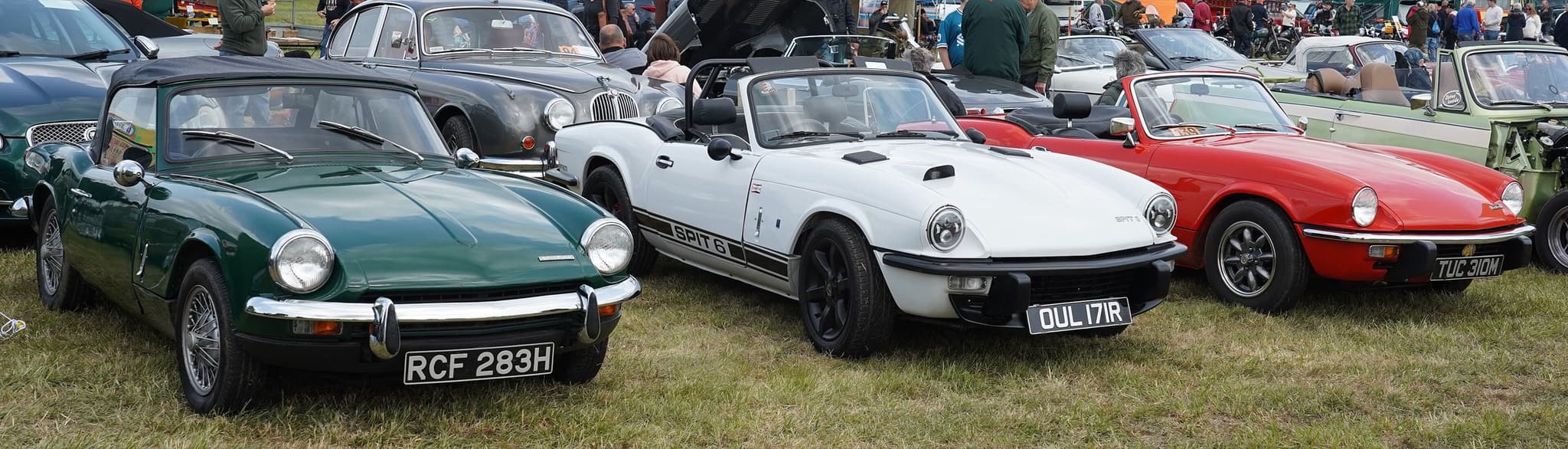
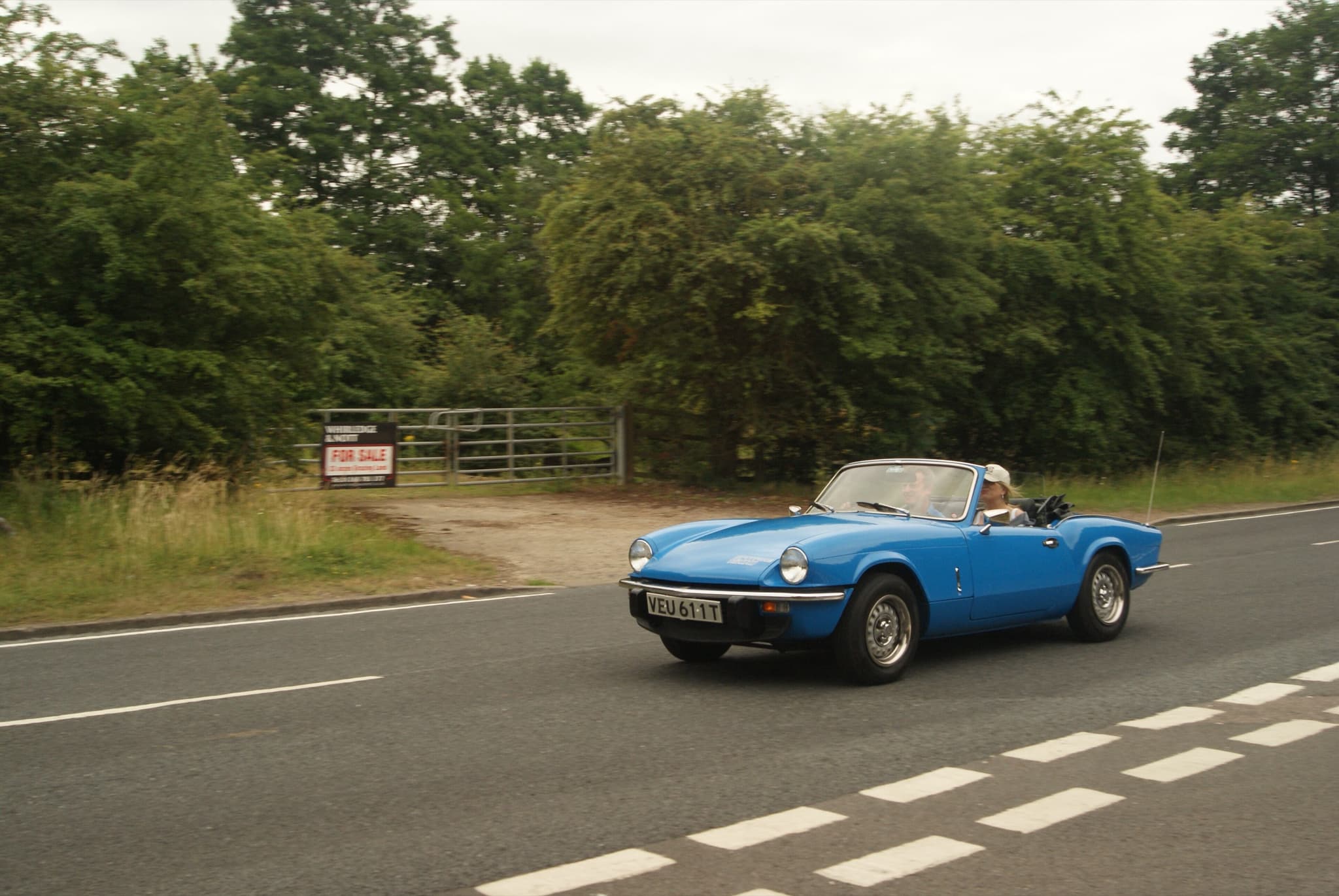
The swing axle runs through the tests before 1970. Boddy found in 1963 that only "in very sudden, tight changes of direction" did the back of the Spitfire 4 "feel at all squidgy", and that the quick steering caught a slide at once. Cotton's Mk III, four years later, handled very well on true mountain roads, but sometimes, on bad surfaces met unexpectedly at speed, its rear wheels steered the car. The Mk IV's swing spring changed the story: J. W. could no longer fault it at Silverstone, Richardson found the 1500's old habit of tucking a rear wheel under quite gone, and, by the enthusiast's account, Car and Driver's 1500 of the 1973 model year cornered harder on the skidpad than anything else in its test.
Later writers draw the same line at 1970. Hagerty's buying guide warns that on the earlier, round-tailed cars the inner rear wheel can tuck under in harsh braking or cornering, and calls the square-tailed cars "far more user friendly"; yet it adds that a driver with "the requisite talent", prepared "to start slowly and treat the car with respect", can "half drift the earlier cars around bends in a rather satisfying manner". A film of a 1972 Mk IV on British roads, made in 2025, shows one driven today, on the Mk IV page and the home page.
On speed the testers were frank. Boddy's Spitfire 4 would rev well into the red, but its first and second gears ran out early; Cotton found his Mk III a little heavy and short of life despite its extra power; and the Triumph Sports Six Club puts the Mk IV behind the Mk III, heavier and higher-geared. The 1500's longer stroke gave up some eagerness to rev for more pull in the middle of the range. What the tests praised again and again was the turning circle: 7.2 m (23.5 ft) on Boddy's Spitfire 4, 7.3 m (24 ft) on his Mk IV, and on Cotton's route a lock that impressed him on the hairpin bends.
Not that fast in real terms — especially the Mk I — but because you sit so low to the ground, it still feels exciting.
Living with one
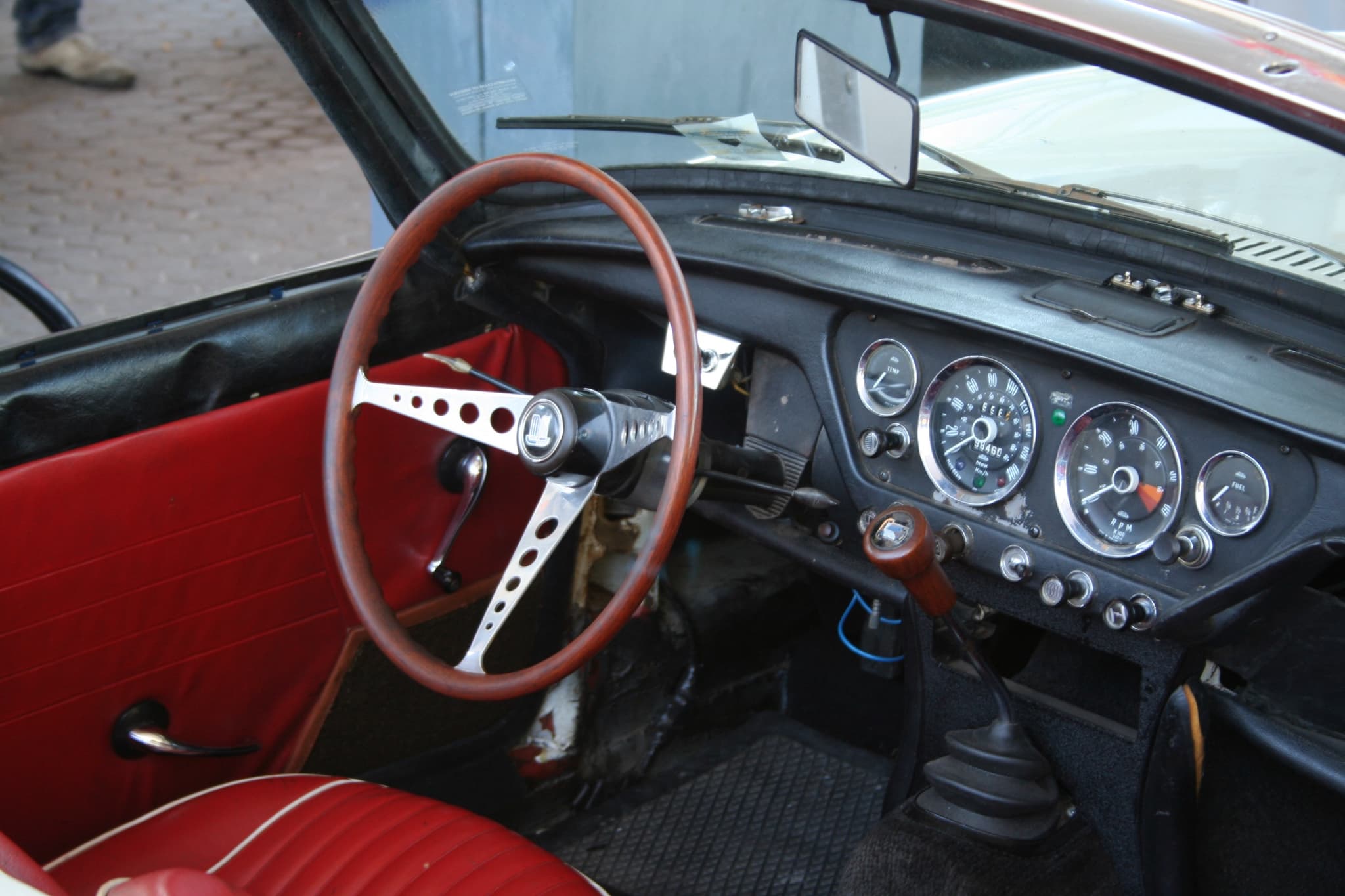
The ride was firm. Boddy's Spitfire 4 rattled and shook on bad roads, and his Mk IV, comfortable otherwise, juddered on them; the 1500 rode better, as Richardson found and the magazine's month with one confirmed, and Practical Classics later credited its extra weight with damping the ride. The weather stayed outside: Boddy called the Spitfire 4's weather protection first-class, Cotton found the Mk III's hardtop free of draughts and its wind noise acceptably low, and the 1500's hood kept the rain out, though Richardson found that it fitted nothing like as well as the TR6's.
It is a two-seater with a shelf behind the seats, and the testers found the boot (trunk) generous for the class. Hagerty advises anyone over 1.83 m (6 ft) tall to try one for size before buying, especially with the hood up. The same gaps turn up test after test: no oil-pressure gauge in 1963, 1971 or 1975; a stiff lever for the heater's temperature in 1971 and 1975; no brake servo in 1975; and, in Cotton's Mk III, seat backs that gave in hard corners.
The fuel the cars used barely changed in 12 years. These are Motor Sport's own figures, each from a single car:source 2source 3source 4source 5source 24source 27source 35
| Car | Litres per 100 km | Imperial mpg | How it was driven |
|---|---|---|---|
| Spitfire 4, April 1963 | 8.4 | 33.7 | In what Boddy called adverse conditions |
| Mk III, June 1967 | 8.4 | 33.8 | London to Monaco and back |
| Mk IV, January 1971 | 7.9 | 35.9 | Boddy's test |
| 1500, March 1975 | 8.3 | 34 | With London traffic and a misfire on delivery |
| 1500, a month in 1975 | 8.1 | 34.9 | Cross-country journeys |
Sources
Sources are given as plain text; their addresses are on the sources page.
- Primarymade at the time, by the maker or by people who were there
- Referenceserious later work: clubs, specialists, magazines, books
- Uncheckedencyclopaedias and enthusiast sites: cited beside a good source, named in the sentence, or marked Unchecked
- Motor Sport, "Some Of The New Cars" (Triumph Spitfire 4 section), Nov 1962, p. 49, p. 49, Triumph Spitfire 4; p. 49. Primary
- Bill Boddy ("W.B."), "Sports cars under £700: the £641 Triumph Spitfire 4", with data panel "The Triumph Spitfire 4", Motor Sport, Apr 1963, pp. 20, 26; p. 20, On the Road. Primary
- Mike Cotton ("M.L.C."), "Triumph Spitfire to Monaco", Motor Sport, Jun 1967, p. 26. Primary
- Bill Boddy ("W.B."), "Road test: The Triumph Spitfire Mk. IV", Motor Sport, Jan 1971, p. 59. Primary
- Clive Richardson ("C.R."), "Road Impressions – The Triumph Spitfire 1500", Motor Sport, Mar 1975, p. 25. Primary
- M. L. Twite ("M.L.T." and ATTRIBUTED from initials), "Car tests at Goodwood", Motor Sport, Nov 1962, p. 11, p. 11. Primary
- Motor Sport, "Random Reflections on – Earls Court 1962", Nov 1962, p. 17, p. 17. Primary
- Motor Sport, "Matters Of Moment, November 1962", Nov 1962, p. 9, p. 9, last paragraph. Primary
- Motor (Temple Press), via Internet Archive microfilm, Motor 1965, vol. 127, index, 1965, Triumph entries; Spitfire Mk. II, 13 March 1965, pp. 25–27. Primary
- triumphspitfire.com, "Top Speed and Track Test Results", 2023, Road & Track and Autocar tables; Road & Track table, June 1965. Unchecked
- the Editor (Bill Boddy and ATTRIBUTED), "My Year's Motoring", Motor Sport, Feb 1964, p. 36, p. 36. Primary
- Chris Cowin, "History: Exporting British cars to the USA – Part One", AROnline, 31 May 2025, updated 20 Feb 2026, the Spitfire in the US, early 1963. Reference
- Motor Sport, "Matters of moment, April 1965", Apr 1965, p. 11, p. 11. Primary
- Autocar (Iliffe), via Internet Archive, Autocar January–June 1966, vol. 124, index, 1966, road tests: Triumph Spitfire Mk. 2, pp. 433–438; road tests. Primary
- Motor, via Internet Archive, Motor 1967, vol. 131, index, 1967, Triumph Spitfire Mk. III, 18 March 1967, pp. 16–17; Triumph entries. Primary
- Motor, via Internet Archive, Motor 1967, vol. 132, index, 1967, road test, 19 August 1967, pp. 23–28; comparison, 14 October 1967, pp. 95, 96, 99; Triumph entries. Primary
- J. W., "British Leyland at Silverstone", Motor Sport, Nov 1970, p. 54, p. 54. Primary
- the Editor (Bill Boddy and ATTRIBUTED), "My year's motoring", Motor Sport, Feb 1971, p. 33, p. 33. Primary
- Chris Cowin, "History: Exporting British cars to the USA – Part Two", AROnline, 31 May 2025, updated 21 Oct 2025, Road & Track's 1970 test, as quoted. Reference
- Vintage Triumph Register, "Spitfire" (production history, production dates and numbers, buyer's guide tabs), production dates and numbers: 1973–1974, "Spitfire 1500". Reference
- michaeljay.tripod.com, "Car and Driver's Showroom Stock Sports Car Comparison Test – April, 1973" (enthusiast summary with transcribed quotations), the test, the skidpad results and the editors' words; the editors' words. Unchecked
- geelongvic and Paul Niedermeyer, "Vintage Review: Road & Track April 1973 – Testing Nine Showroom Stock Sports Cars As SCCA Racers" (geelongvic, 2018/2024) and "Vintage R&T Track Test: Nine Showroom Stock Sports Cars" (Paul Niedermeyer, 25 Mar 2022), Curbside Classic, 2024, Niedermeyer, 25 March 2022. Unchecked
- Motor Sport, "Around and About, January 1975" ("A 1500 c.c. Spitfire"), Jan 1975, p. 29, p. 29, "A 1500 c.c. Spitfire". Primary
- Motor Sport, "Matters of Moment, October 1975", Oct 1975, p. 19, p. 19. Primary
- the Editor (Bill Boddy and ATTRIBUTED), "My Year's Motoring", Motor Sport, Feb 1976, p. 36, p. 36. Primary
- Paul Niedermeyer, "Vintage R&T Review: Six Affordable Sports Cars – Which Would You Buy?", Curbside Classic, 23 Jun 2022 (first 2016), the results. Unchecked
- Practical Classics, "Buyers Guide: Triumph Spitfire", May 2000, p. 83, specification table; p. 84; pp. 83–84. Reference
- Brooklands Books (via automotobookshop.com.au, mossmotors.com), Product listings: Triumph Spitfire Road Test Portfolio; Gold Portfolio 1962–1980; Road Tests Collection No. 1; Road & Track on Triumph Sports Cars 1953–67, 1967–74, 1974–82, Spitfire titles. Reference
- Wikipedia (EN), "Triumph Spitfire", 2026, references: Illustrerad Motor Sport 1962, Autocar 1973, Sports & GT Cars 1980. Unchecked
- Motor Sport, "Trying the new cars at Goodwood", Dec 1964, p. 20, p. 20, the Spitfire paragraph. Primary
- readers (private and not named), "Letters from Readers, November 1968", Motor Sport, Nov 1968, p. 68, a reader on the Which? 1965 report. Primary
- Sam Dawson, "1962 Triumph Spitfire 4" (Sam Dawson; reprint of a Classic Cars feature), drives.today (scraped reprint), posted 18 Nov 2021, Small Car and Autosport, quoted; Road & Track (1964), named. Unchecked
- Classic Car Africa, "The Wallflower", CAR (South Africa), quoted. Reference
- Triumph Sports Six Club, Model pages: Spitfire 4/Mark II (model_ID=24), Mark III (23), Mark IV (25), 1500 (26), Mark IV and 1500 pages. Reference
- Sam Skelton, "Buying Guide: Triumph Spitfire (1962–1980)", Hagerty UK, 3 Feb 2021, driving. Reference