Triumph Spitfire ADU 3B
Its first Le Mans ended at the end of the pits, its driver overcome by exhaust fumes. A year later it was probably 2nd in its class there; then the works sold it in France, where its bodyshell survives.
About the pictureA replica of the 1965 works cars, not ADU 3B.
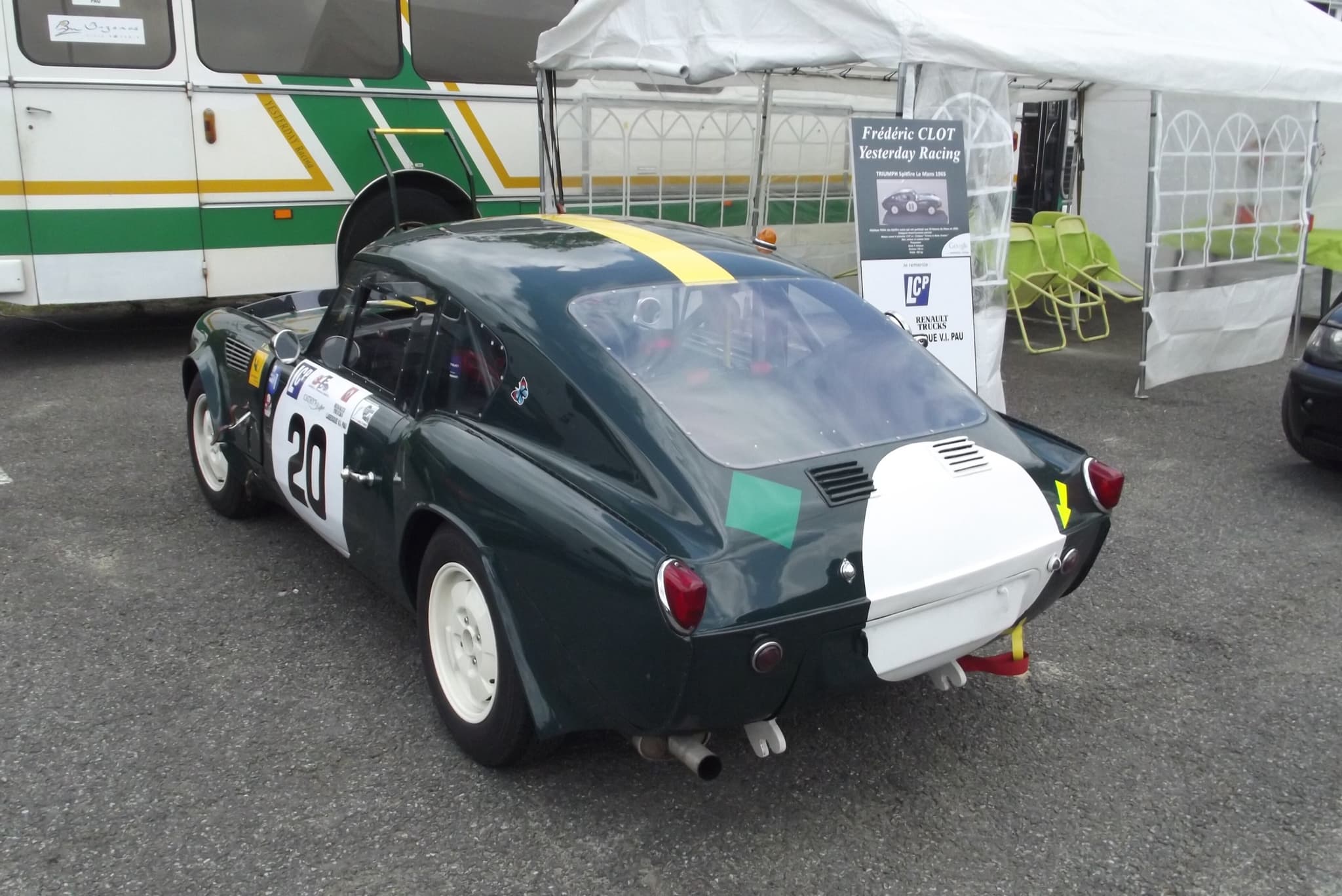
ADU 3B's first Le Mans ended in a crash at the end of the pits in June 1964, after 140 laps. Its last works race may have been its best: the evidence points to it as the Spitfire that finished 2nd in its class at Le Mans in 1965. Then the works sold it in France; in later life it lost its works chassis, and its body survives there.source 1source 2source 3source 4
Built for Le Mans
Sources for ADU 3B
Canley Classics, "Spitfire ADU 3B Le Mans"source 4; Canley Classics, "Spitfire ADU ~B Le Mans"source 5
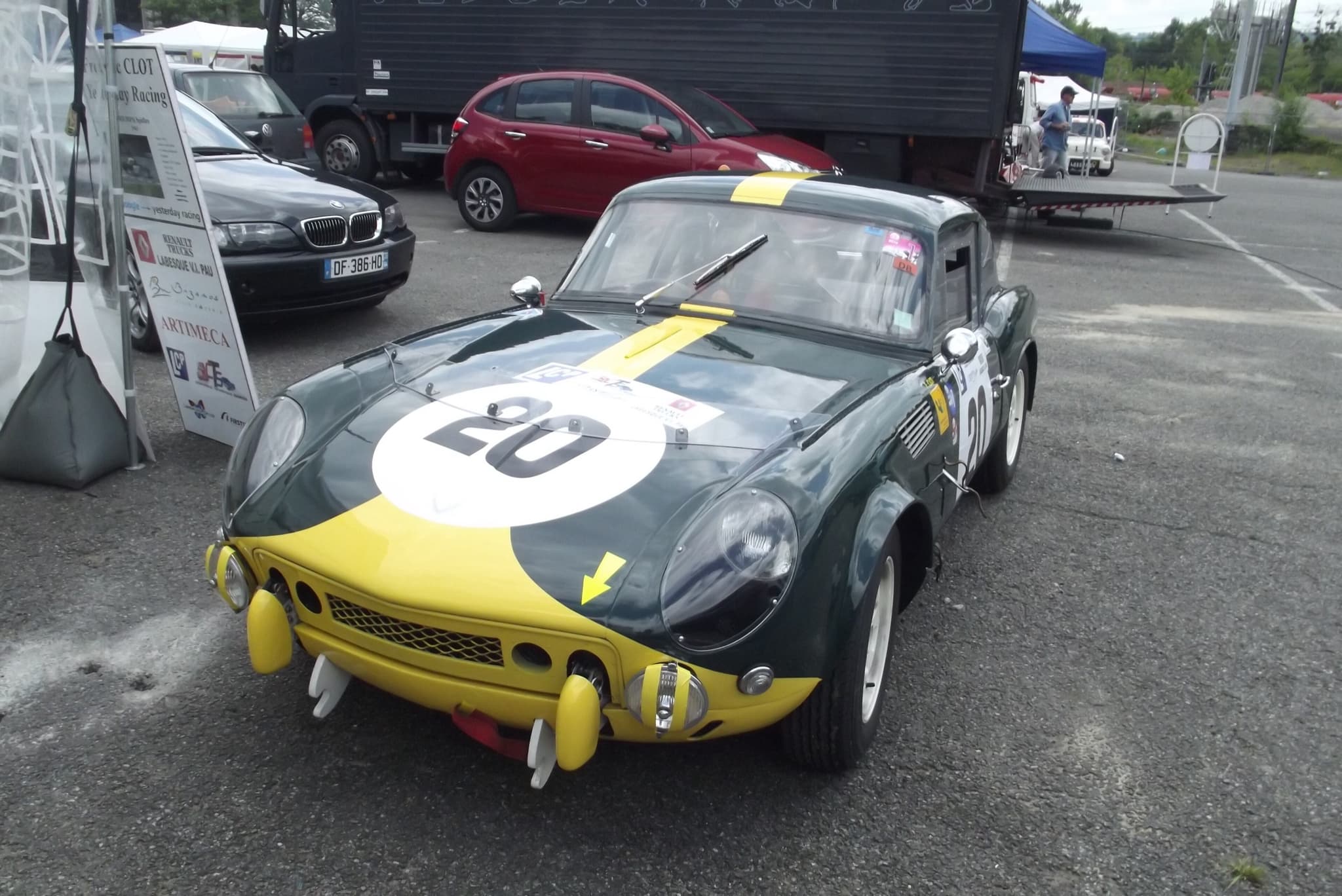
ADU 3B was one of the four Le Mans cars built in Triumph's experimental department at Canley in 1964, registered on 1 June that year with the commission number X728 and the engine number X937E. The prototype department's build sheets call it "Le Mans No2". Like the others it had an aluminium bulkhead, floors and sills (rocker panels), with glass-fibre panels riveted to them, on a lightweight chassis, and Canley Classics uses photographs of ADU 3B's bulkhead, taken during its restoration, to show how the Le Mans cars were built.source 4source 5
Le Mans, 1964
At Le Mans on 20–21 June 1964 it ran as No. 65 for two Frenchmen, Jean-François Piot and Jean-Louis Marnat, in the class for prototypes up to 3 litres. racingsportscars' chassis entry for No. 65, X937, matches the engine number Canley Classics gives for ADU 3B, and Canley says ADU 3B crashed that year.
Denis Jenkinson's report for Motor Sport says Marnat had damaged the car's tail, which let exhaust fumes into the cockpit:
Overcome by the fumes, he zig-zagged drunkenly all the way from Arnage … and then ricochetted from bank to bank across the track, and finally crashed at the end of the pits, by sheer good fortune not hitting any passing cars or people in the pit area.
The car was out after 140 laps.
Piot raced a Standard-Triumph Spitfire twice more that year: with a driver named Bertaut in the Reims 12 Hours in July, retiring with engine failure, and with Marnat in the Paris 1000 km at Montlhéry in October, where they won the 1.15-litre GT class and finished 22nd overall. No source read says which car they used.source 1source 4source 6source 7source 8
Le Mans, 1965
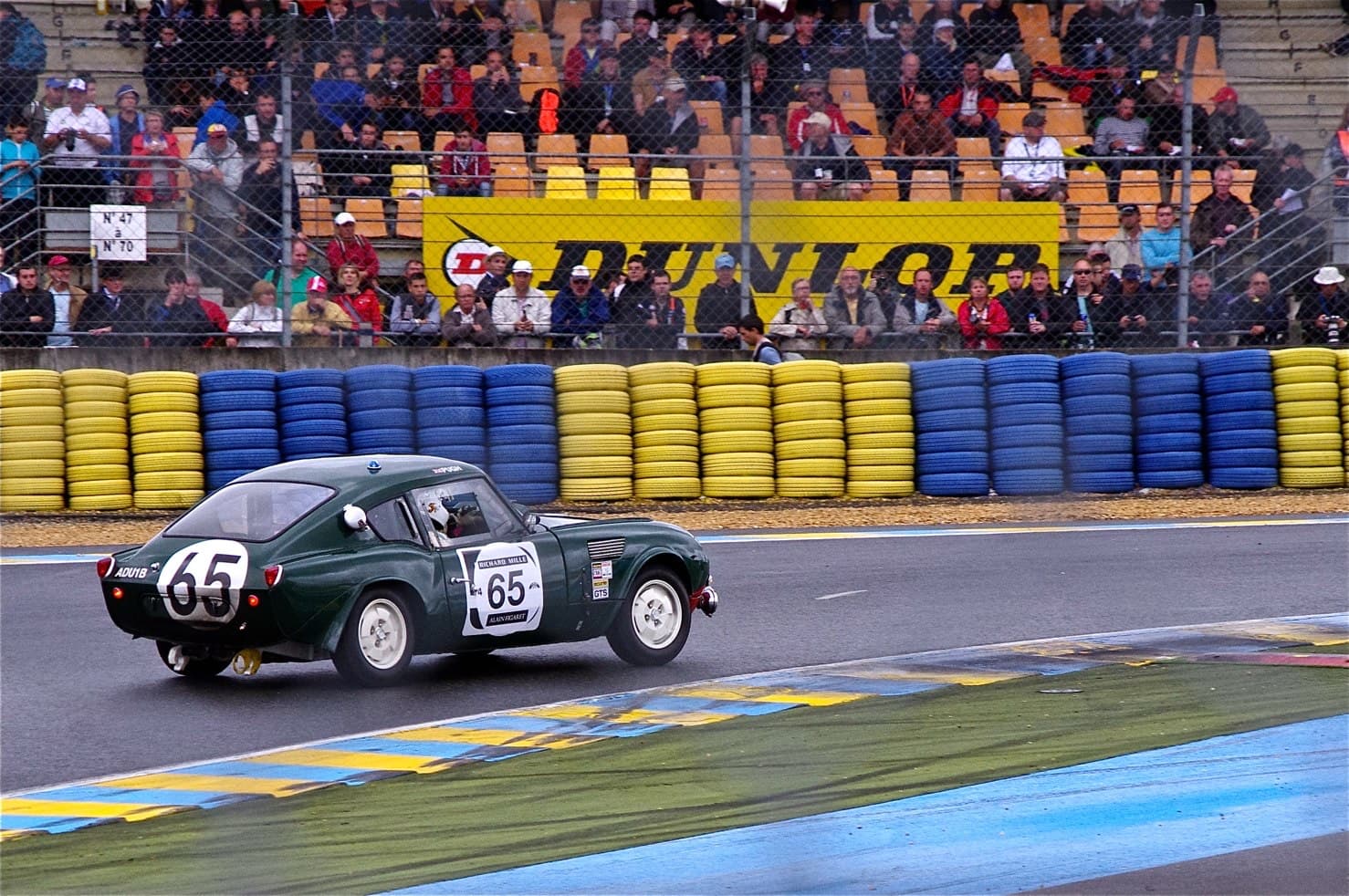
In 1965 four works Spitfires ran in the 1.15-litre GT class. No. 54, driven by Piot and the Belgian Claude Dubois, finished 14th overall, the last car classified, and 2nd in the class behind ADU 4B, after 263 laps.
Which car No. 54 was is less certain than in 1964. A Revs Institute photograph caption, seen only in a search result, and a blog both name it as ADU 3B, while Canley Classics' own history of the car does not give its 1965 result. racingsportscars' numbers for the 1965 cars appear to be engine numbers (two of the four carry the HE engine suffix), which do not identify the bodies.source 2source 9source 3source 10source 4
In France
After Le Mans in 1965 the works sold the car in France, where private owners raced it for many years. Along the way it lost its lightweight works chassis for a standard one, and its running gear for larger parts from later production cars.
The bodyshell survives, with its aluminium bulkhead, and has been under restoration in France. No source read gives the restoration's present state, and none reports a replica carrying the registration.
The chassis and running gear that raced at Le Mans are long gone; the riveted aluminium bulkhead that made it a Le Mans car is still there, in France.source 4source 5
Where it has been
- 1964
Registered ADU 3B
1 June 1964. One of the four 1964 Le Mans cars built in Triumph's experimental department at Canley, "Le Mans No2" on its build sheets: aluminium bulkhead, floors and sills and glass-fibre panels riveted together, on a lightweight chassis
Canley Classics, "Spitfire ADU 3B Le Mans"source 4; Canley Classics, "Spitfire ADU ~B Le Mans"source 5
- 1965
Sold in France by the works after Le Mans 1965
Raced there for many years by private owners (France); it lost its lightweight works chassis and running gear to later production parts. The bodyshell, with its aluminium bulkhead, survives and has been under restoration in France
Canley Classics, "Spitfire ADU 3B Le Mans"source 4
Results
- 1964
Sources
Sources are given as plain text; their addresses are on the sources page.
- Primarymade at the time, by the maker or by people who were there
- Referenceserious later work: clubs, specialists, magazines, books
- Databaseresults and listings, entry by entry
- Uncheckedencyclopaedias and enthusiast sites: cited beside a good source, named in the sentence, or marked Unchecked
- racingsportscars.com, Le Mans 24 Hours 1964, results, DNF table, No. 65; DNF table. Database
- racingsportscars.com, Le Mans 24 Hours 1965, results, results, 14th; results, 13th and 14th. Database
- Revs Institute, Revs Institute digital library, photo captions, Le Mans 1965, No. 54. Unchecked
- Canley Classics, "Spitfire ADU 3B Le Mans", para. 1. Reference
- Canley Classics, "Spitfire ADU ~B Le Mans". Reference
- Denis Jenkinson, "The 24 Hours of Le Mans", Motor Sport, Jul 1964, p. 22. Primary
- racingsportscars.com, Reims 12 Hours 1964, results, No. 56. Database
- racingsportscars.com, Paris 1000 km 1964 (Montlhéry), results, No. 57. Database
- Denis Jenkinson, "Le Mans 24-hour race", Motor Sport, Jul 1965, p. 11. Primary
- psychoontyres.co.uk, "White Yellow Red – Triumph Spitfire #ADU1B" (22 Jun 2014); "'64 TdF Class Winner – Triumph Spitfire" (21 Mar 2015), 2014. Unchecked